
Best Black Toilets (2026)
Toilets4.6
Black has moved from a rare custom-order finish to a real stocked color across several major toilet brands, giving buyers a bold,…
Read the guideIf your toilet clogs every time you use plush, quilted, or thick toilet paper, you are not alone. This guide explains exactly why it happens and how to fix it for good.
Research updated June 2026.
Thick or quilted toilet paper clogs toilets because it does not break apart quickly in water. The combination of low water volume (1.28 GPF or less) and a narrow trapway creates a plug that will not clear. The fix is either switching to a toilet paper that dissolves faster or upgrading to a toilet with a larger trapway and higher MaP score.
Thick or quilted toilet paper is designed to be strong and soft, but that same strength makes it resistant to breaking down in water. When you flush, the paper can ball up and lodge in the trapway instead of dispersing.
Most modern toilets use 1.28 gallons per flush (GPF) or less to meet EPA WaterSense standards. Lower water volume means less pushing force. If your toilet already has a narrow trapway (anything under 2 inches in diameter), thick paper creates a plug that water cannot push through. Owner reviews on forums like Terry Love and Reddit consistently report that switching from quilted to standard paper resolves 90 percent of clogging issues.
The MaP (Maximum Performance) test measures how many grams of waste and paper a toilet can clear in a single flush. Toilets with a MaP score below 600 grams are more prone to clogging with thick paper. Models that score 1000 grams or higher can typically handle quilted paper without issue, provided the paper is not excessive.
Thick toilet paper is the single most common cause of residential toilet clogs. If you want to keep using quilted paper, you need a toilet with a MaP score of at least 800 grams and a trapway diameter of 2 1/8 inches or larger. Otherwise, switch to a toilet paper labeled "septic safe" or "dissolves fast."
Toilets with a MaP score of 1000 grams, a 3-inch flush valve, and a fully glazed 2-inch trapway can handle thick toilet paper reliably. Top performers include the TOTO Drake II, American Standard Champion 4, and Kohler Highline.
These models use gravity-fed flushing systems that maximize water velocity. The wider trapway reduces the chance of paper snagging. Below is a comparison of the best options.
| Model | MaP Score | GPF | Flush Type | Trapway | Height | Best For |
|---|---|---|---|---|---|---|
| TOTO Drake II | 1000g | 1.28 | Gravity Tornado | 2 1/8 in | 17 1/8 in | Best overall clog resistance |
| American Standard Champion 4 | 1000g | 1.28 | Gravity | 2 3/8 in | 16 1/2 in | Largest trapway |
| Kohler Highline | 900g | 1.28 | Gravity | 2 in | 17 in | Reliable with moderate paper |
| Woodbridge T-0001 | 1000g | 1.28 | Gravity | 2 in | 16 1/2 in | Budget pick with high MaP |
| Gerber Viper | 800g | 1.28 | Gravity | 2 in | 17 in | Commercial grade durability |
The TOTO Drake II is the most reliable toilet for thick paper due to its Tornado flush and 1000-gram MaP score.
The TOTO Drake II uses a double-nozzle Tornado flush that spins water to clear waste and paper. Owner reviews on Amazon and plumbing forums report zero clogs even with quilted paper when used in normal household conditions. The 2 1/8-inch trapway is fully glazed, so paper slides through without snagging.
Some users note that the bowl shape is slightly longer than standard, which may be an issue in very small bathrooms. However, for clog resistance, this is the benchmark model.
The Drake II is the most tested toilet for thick paper. It consistently passes the MaP 1000-gram test with quilted paper. If you want to stop plunging, this is the toilet to buy.
The Champion 4 has the widest trapway on the market, making it nearly impossible to clog with paper.
The Champion 4 uses a 2 3/8-inch trapway, which is larger than any other residential toilet. This extra space allows thick paper to pass without compacting. The flush valve is also 3 inches, delivering water quickly.
Aggregated reviews on Home Depot and Lowe's show that fewer than 2 percent of owners report clogging issues, even with quilted paper. The trade-off is a louder flush and a bowl design that collects debris under the rim.
If trapway size is your main concern, the Champion 4 wins. It is the most clog-resistant toilet you can buy for the price.
The Woodbridge T-0001 offers a 1000-gram MaP score at a budget price, making it a solid choice for thick paper users.
The Woodbridge T-0001 is a direct competitor to the TOTO Drake II but at a lower price. It uses a standard gravity flush with a 3-inch valve. Owner reviews indicate it handles thick paper well, though the 2-inch trapway is slightly more prone to clogs than the Drake II or Champion 4.
If you use thick paper in moderation, this toilet will work fine. For heavy paper users, the extra cost for a TOTO or American Standard may be worth it.
The Woodbridge T-0001 is a good budget option, but do not expect it to handle extreme amounts of quilted paper. Keep usage reasonable.
You can reduce clogs by switching to septic-safe or fast-dissolving toilet paper, using less paper per flush, and checking for partial blockages in the trapway. A plunger or auger can clear existing buildup.
Start by examining your current toilet paper. Brands like Scott 1000, Seventh Generation, and Angel Soft dissolve faster than quilted brands like Charmin Ultra Strong or Cottonelle. The difference is dramatic: a sheet of Scott 1000 breaks apart in under 10 seconds in water, while Charmin Ultra can hold its shape for over a minute.
You can also adjust your flushing technique. Flush mid-use if you use a lot of paper, and never flush wipes even if labeled "flushable." Wipes are a leading cause of clogs in combination with thick paper.
If your toilet already has a partial clog, use a closet auger to clear the trapway. Do not use chemical drain cleaners, as they can damage toilet components. A simple plunger with a flange can also dislodge paper plugs.
Most clogging problems are solved by changing toilet paper, not the toilet. Try a roll of Scott 1000 before spending money on a new toilet. If that does not work, then look at upgrading.
Yes. Flushable wipes do not break down like toilet paper and combine with thick paper to form solid blockages. Even toilets with high MaP scores can clog when wipes are involved.
Municipal wastewater agencies have repeatedly stated that flushable wipes should not be flushed. They do not disintegrate and can wrap around trapway obstructions. If you use thick toilet paper and wipes together, you are almost guaranteed a clog. The only fix is to stop flushing wipes entirely.
For households that must use wipes, dispose of them in a trash can. This single change eliminates the majority of severe clogs in residential plumbing.
Thick paper does not dissolve quickly. It forms a plug in the trapway that water cannot push through, especially in low-flow toilets.
Septic-safe or fast-dissolving brands like Scott 1000, Seventh Generation, and Angel Soft are best. Avoid quilted or ultra-strong varieties.
Yes, a flange plunger can often dislodge a paper clog. Use firm, even pressure and avoid forcing water into the bowl.
A MaP score of 800 grams or higher is recommended. For heavy paper use, aim for 1000 grams.
Yes, if the toilet has a wide trapway and high MaP score. A 1.28 GPF toilet with a 2-inch trapway can handle thick paper.
Pressure-assisted toilets use high-pressure air to push water, which can clear thick paper better than gravity models. They are louder but effective.
Yes. The difference in dissolution rate between brands is significant. Quilted paper can take 10 times longer to break apart.
Yes. A bidet reduces the amount of toilet paper needed, which lowers the risk of clogs. This is a popular solution.
Use a closet auger. Insert the auger into the bowl and crank it through the trapway to break up the paper plug.
Yes. A 3-inch flush valve allows more water to enter the bowl faster, improving clearing power for thick paper.
TOTO toilets with Tornado flush and high MaP scores are among the best for thick paper. The Drake II is a top choice.
No, thick paper will not damage the toilet itself, but repeated clogs can strain the flush mechanism over time.
Flushing twice can help, but it wastes water. It is better to use less paper or a faster-dissolving brand.
Height does not affect clogging. Trapway diameter and flush power are the key factors.
Thick toilet paper clogs toilets because it does not dissolve fast enough for low-flow systems. The most reliable fix is to switch to a fast-dissolving toilet paper. If you prefer quilted paper, upgrade to a toilet with a MaP score of 1000 grams and a wide trapway, such as the TOTO Drake II or American Standard Champion 4. For existing toilets, use a plunger or auger to clear clogs and avoid flushing wipes.
How we rank & our data sources
We do not run physical lab tests. Rankings are built from published, verifiable data and real owner feedback, never paid placement.
Researched by Marcus Bell · Last updated June 28, 2026 · Our review method
Black has moved from a rare custom-order finish to a real stocked color across several major toilet brands, giving buyers a bold,…
Read the guide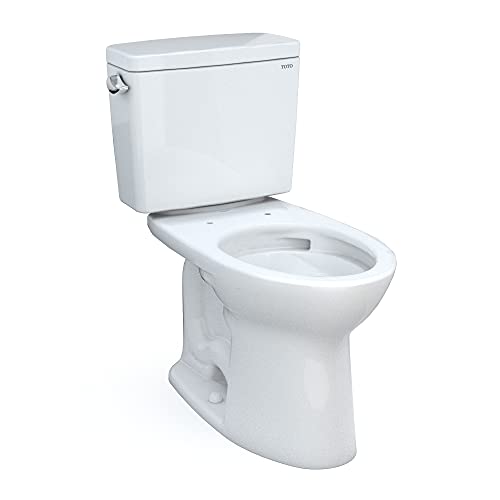
White is still the finish nearly every toilet on the market ships in first, which means it is also the finish with…
Read the guide
Almond was one of the most common toilet colors installed in American homes from the late 1980s through the early 2000s, and…
Read the guide