

Why Toilet Trapways Are Curved Like an S
Toilets4.6
Learn why toilet trapways curve like an S, how each bend blocks sewer gas, and what the shape means for clogs and…
Read the guideFrom rough-in measurements and flush systems to bowl shape, height, and top-rated models -- everything you need to choose the right toilet for your bathroom and budget.
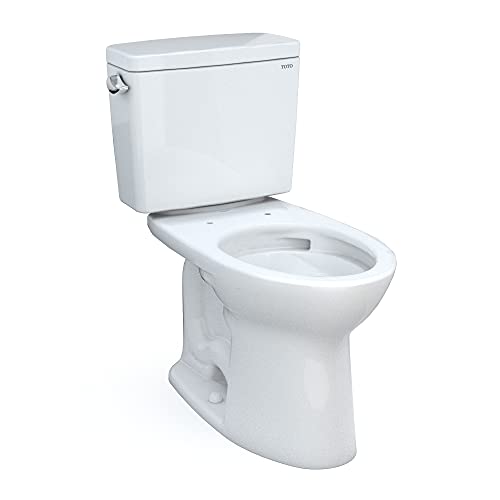
For most households, a comfort-height elongated two-piece toilet with a 3-inch flush valve, fully glazed 2 1/8-inch trapway, and EPA WaterSense certification at 1.28 GPF delivers the best balance of flush power, water savings, and long-term reliability. The TOTO Drake II and Kohler Cimarron are consistently top performers in independent MaP flush testing.
A toilet is the single most-used plumbing fixture in a home -- flushed an average of 5 times per person per day according to the EPA. An older 3.5 GPF or 5 GPF model wastes thousands of gallons annually compared to a modern 1.28 GPF WaterSense-certified unit. Beyond water savings, the right toilet affects daily comfort, clog frequency, cleaning ease, and long-term maintenance costs. This guide covers every decision point so you can choose confidently.
The three measurements that determine toilet compatibility are rough-in distance, bowl footprint, and rim height. Rough-in -- the distance from the finished wall to the center of the floor drain -- is almost always 12 inches in American homes, but 10-inch and 14-inch rough-ins exist in older and custom construction. Measure before ordering; a 12-inch toilet will not fit a 10-inch rough-in without replumbing.
Measure from the finished wall (not baseboard) to the center of the closet flange bolts. Most replacement toilets are designed for a 12-inch rough-in. If your measurement falls between 11.5 and 12.5 inches, a standard 12-inch model will fit. If your rough-in is 10 inches or 14 inches, you need a model specifically designed for that dimension -- fewer options exist, but TOTO, American Standard, and Kohler all manufacture models in non-standard rough-in sizes.
Check the distance from the wall to the front of the bowl (typically 28 to 31 inches for elongated, 25 to 28 inches for round). Verify there is at least 18 inches of clear space from the bowl centerline to any side wall or obstruction per standard building codes, and 24 inches of clearance in front of the bowl for comfortable use.
Standard toilets have a rim height of 14 to 15 inches. Comfort height (also called ADA height or chair height) models measure 16 to 18 inches to the top of the rim, making sitting and standing easier for taller users, older adults, and people with mobility limitations. Most new toilet sales skew toward comfort height.
Do not skip the rough-in measurement. It is the most common -- and most expensive -- mistake buyers make. A toilet shipped and returned because of a measurement error costs time and restocking fees. Measure twice: once from wall to bolt center, and once confirming the bolt center placement is symmetrical.
Gravity-feed flush systems use the weight and volume of water dropping from the tank to generate flush force; they are reliable, quiet, and easy to repair. Pressure-assist systems use compressed air inside a sealed vessel in the tank to deliver a more forceful flush that resists clogging -- but they are louder (85 to 95 dB) and more expensive to service. For most residential buyers, a high-performance gravity toilet with a large-diameter flush valve outperforms a standard pressure-assist model while staying quieter and less costly.
The dominant residential flush technology. Water released from the tank creates a siphon effect in the trapway that pulls waste through the drain. Flush performance depends on valve diameter, trapway size, and bowl geometry. Modern gravity toilets like the TOTO Drake II achieve MaP scores of 1,000 grams -- the maximum rating -- at just 1.28 GPF. Repairs are DIY-friendly: flappers, fill valves, and flush valves are inexpensive and widely available.
Pressure-assist systems (Flushmate is the dominant manufacturer) use water supply pressure -- typically 25 to 80 PSI -- to compress air inside a plastic vessel. When the flush handle is pressed, the compressed air drives water into the bowl at high velocity. These systems are common in commercial settings and high-traffic homes. They work best with municipal water supply pressure above 25 PSI; homes on well systems with variable pressure may experience inconsistent performance. Noise is the primary drawback: flushing sounds like a compressed-air release, which can be jarring at night.
Dual-flush toilets offer two buttons or levers: a partial flush (typically 0.8 or 1.0 GPF) for liquid waste and a full flush (1.28 or 1.6 GPF) for solid waste. The TOTO Aquia IV is among the best-reviewed dual-flush models, using a 0.8/1.28 GPF split with TOTO's Tornado Flush technology. EPA WaterSense certifies dual-flush toilets based on average flush volume weighted by typical usage ratios. Real-world water savings from dual-flush depend on user behavior -- households that consistently use the partial flush see meaningful savings; those who always use the full flush do not.
TOTO's Tornado Flush system uses two nozzle ports to create a centrifugal water flow that coats the entire bowl surface while generating flush force, instead of the traditional rim holes found in older designs. This improves cleaning coverage and reduces mineral buildup under the rim. Kohler's AquaPiston flush valve uses a 3-inch canister valve (360-degree water flow) rather than a traditional flapper, reducing seal failures and increasing flush volume consistency.
MaP (Maximum Performance) flush testing provides the most reliable independent performance data available. The test measures how many grams of soybean paste -- simulating solid waste -- a toilet can flush in one attempt. A score of 800 grams is considered high performance; 1,000 grams is the maximum. Look for MaP scores at map-testing.com before purchasing any gravity toilet.
Elongated bowls measure approximately 18 to 19 inches from front to back and provide more sitting surface area; they are the preferred choice for adults and are standard in master bathrooms. Round bowls measure approximately 16 to 17 inches from front to back, saving 2 to 3 inches of floor space, making them better suited for powder rooms, half baths, and small bathrooms under 35 square feet. Comfort varies between individuals -- some users find round bowls uncomfortable for extended use.
| Feature | Round Bowl | Elongated Bowl |
|---|---|---|
| Bowl Length | 16–17 inches | 18–19 inches |
| Space Required | 25–28 inches depth | 28–31 inches depth |
| Comfort | Adequate for most | More surface area |
| Best For | Small bathrooms, kids | Master bath, adults |
| Seat Availability | Wide selection | Wide selection |
| Cost Difference | Slightly less | Slightly more |
Two-piece toilets (separate tank and bowl bolted together) dominate the market because they are less expensive to manufacture and ship, and easier to move through doorways during installation. One-piece toilets integrate the tank and bowl into a single ceramic unit -- they have no seam for mold to collect between tank and bowl, tend to have a lower profile, and are easier to clean, but cost significantly more and are heavier (often 80 to 100 pounds). Both configurations perform equally well when installed correctly.
Lower purchase cost (typically $100 to $400 less than equivalent one-piece models), lighter individual components for easier installation by one person, and widely available replacement parts. If the tank cracks, you replace only the tank rather than the entire unit. The TOTO Drake (two-piece) and Kohler Highline (two-piece) are perennial best-sellers precisely because they offer excellent MaP performance at accessible prices.
Seamless appearance, easier exterior cleaning (no tank-to-bowl junction), and often a lower overall profile that suits contemporary bathroom designs. The TOTO UltraMax II and Woodbridge T-0001 are popular one-piece options that consistently earn high owner satisfaction ratings. Skirted one-piece designs -- where the base is fully enclosed -- make floor cleaning easier but can complicate flange access if plumbing repairs are ever needed.
EPA WaterSense certification means a toilet uses 1.28 GPF or less and has been independently verified to flush at least 350 grams of solid waste in testing. This certification is meaningful because it ensures the toilet actually clears waste effectively at the lower flow rate -- not all low-flow toilets are WaterSense certified. For households on municipal water, 1.28 GPF is the sweet spot; ultra-high-efficiency 0.8 GPF models require robust flush technology to compensate for the reduced water volume.
Pre-1994 toilets used 3.5 to 7 GPF. The Energy Policy Act of 1992 mandated 1.6 GPF as the federal maximum starting in 1994. EPA WaterSense (launched 2006) set a voluntary standard of 1.28 GPF or less. Some states go further: California, Texas, and other drought-affected states require 1.28 GPF or less for new construction. High-efficiency toilets (HET) are defined as 1.28 GPF or less; ultra-high-efficiency toilets (UHET) use 1.0 GPF or less.
Replacing a 3.5 GPF toilet from the 1980s with a 1.28 GPF WaterSense model saves approximately 22 gallons per person per day based on five flushes. For a family of four, that is roughly 32,120 gallons per year -- equivalent to more than 48 bathtubs worth of water. Many municipalities offer rebates of $50 to $200 for WaterSense toilet upgrades; check the EPA WaterSense rebate finder at epa.gov/watersense for programs in your area.
The 1.28 GPF tier currently offers the best combination of flush performance and water efficiency for residential use. Toilets like the American Standard Champion 4 Max (1.28 GPF), TOTO Drake II (1.28 GPF), and Kohler Cimarron (1.28 GPF) all achieve MaP scores at or near 1,000 grams -- proving that water savings and flush power are not mutually exclusive when the hydraulic design is engineered correctly.
Flush power is determined by three interrelated factors: flush valve diameter (larger valves release water faster), trapway diameter (wider trapways allow waste to pass more freely), and bowl water surface area (more water in the bowl improves waste removal). A toilet with a 3-inch flush valve, a fully glazed 2 1/8-inch trapway, and a high water surface area will outperform a toilet with smaller specifications even at the same GPF rating.
The MaP (Maximum Performance) testing protocol, maintained by Veritec Consulting and Kiwa, uses a standardized media to simulate solid waste loads. Toilets are tested incrementally to determine the maximum load they can flush completely in one pass. A score of 500 grams is considered minimum acceptable performance; 800 grams is high performance; 1,000 grams represents maximum performance. The American Standard Champion 4, TOTO Drake II, TOTO UltraMax II, and Gerber Viper all achieve 1,000-gram MaP ratings. Scores are publicly searchable at map-testing.com.
The trapway is the S-shaped passage built into the porcelain base that carries waste from the bowl to the drain. A 2 1/8-inch fully glazed trapway is the current industry benchmark for clog resistance. The glaze reduces friction so waste moves through with less resistance. Some manufacturers claim "oversized" trapways of 2.375 inches or larger -- the American Standard Champion 4 uses a 2 3/8-inch trapway, which contributes to its near-zero clog reputation in owner reviews. Concealed skirted trapways look cleaner but offer no performance advantage over exposed trapways of equivalent diameter.
A larger water surface area in the bowl means more of the bowl interior is covered with water, reducing skid marks and odor. The TOTO Drake II's elongated bowl has a water surface of approximately 12.4 by 7.6 inches -- larger than many competitors. High water surface area also means the siphon action begins more efficiently on flush.
TOTO is a Japanese manufacturer that has dominated the premium residential toilet market in North America for decades. Their SanaGloss (now CeFiONtect) ion-barrier glaze creates an ultra-smooth surface that resists waste and mineral adhesion. TOTO's Tornado Flush system, used in the Aquia IV, UltraMax II, and higher-end models, generates a centrifugal rinse pattern rather than relying on rim holes. The TOTO Drake series is consistently the best-selling toilet line in the premium segment, with the Drake II two-piece achieving a 1,000-gram MaP score at 1.28 GPF. TOTO offers a one-year limited warranty on its residential toilets, with some models extending to three years.
Kohler is the largest American plumbing brand and offers the broadest residential toilet lineup, from the budget-friendly Wellworth ($150 range) to the Numi 2.0 smart toilet (above $5,000). The Kohler Cimarron and Highline are perennial top sellers, both featuring the AquaPiston 3-inch canister flush valve that generates 30 percent more surface coverage than a standard 2-inch valve per Kohler's published specifications. Kohler's Class Five flushing technology -- found in Cimarron and Highline Arc models -- achieves 1,000-gram MaP scores at 1.28 GPF. Kohler offers a one-year limited warranty on most residential toilets, with longer coverage on selected finishes.
American Standard is an accessible, widely distributed brand known primarily for the Champion 4 -- arguably the best-known clog-resistant toilet in North America. The Champion 4's 4-inch accelerator flush valve (the largest of any consumer toilet) combined with a 2 3/8-inch glazed trapway delivers its 1,000-gram MaP performance. The Cadet 3 is the mid-range alternative, featuring a 3-inch flush valve and 2 1/8-inch trapway at a lower price point. The Vormax Plus adds a side-entry jet port that redirects water to the sidewalls and under the rim for improved bowl cleaning coverage. American Standard generally offers a limited lifetime warranty on porcelain and a one-year warranty on mechanical parts.
Woodbridge has grown rapidly since entering the North American market with its T-0001 one-piece elongated toilet, which has become one of the top-selling one-piece models on major retail platforms. The T-0001 uses a siphon flushing system with a 3-inch flush valve and a fully glazed trapway, achieving solid MaP test results. The brand's appeal lies in its combination of skirted contemporary styling and accessible pricing relative to TOTO and Kohler one-piece models. Woodbridge offers a one-year warranty on parts and finish.
Swiss Madison (manufactured in the United States with European design influence) occupies the contemporary design niche, offering wall-hung toilets, skirted one-piece models, and dual-flush options at mid-range prices. The Ivy and Clarence models feature fully skirted bases and soft-close quick-release seats as standard. Performance is generally adequate but MaP scores are not as consistently documented as TOTO or Kohler. Swiss Madison is a strong choice when design aesthetics are the primary priority alongside acceptable flush performance.
Gerber is a plumber-preferred brand with a reputation for durable, no-frills construction. The Gerber Viper achieves a 1,000-gram MaP score using a 3-inch flush valve and a 2 1/8-inch trapway at 1.28 GPF, and the brand's Avalanche series is known for reliability in rental properties and commercial-residential applications. Gerber toilets are less commonly found in big-box retail but are widely available through plumbing supply houses.
| Brand | Best Model | MaP Score | GPF | Flush Type | Warranty | Check Price |
|---|---|---|---|---|---|---|
| TOTO | Drake II | 1,000g | 1.28 | G-Max / Siphon | 1 yr parts | Check price |
| Kohler | Cimarron | 1,000g | 1.28 | Class Five / AquaPiston | 1 yr parts | Check price |
| American Standard | Champion 4 | 1,000g | 1.28 | 4-inch valve / Gravity | Lifetime china | Check price |
| Woodbridge | T-0001 | ~800g | 1.28 | Siphon / Gravity | 1 yr parts | Check price |
| Swiss Madison | Ivy | Not published | 1.28 / 0.8 | Dual-flush | 1 yr | Check price |
| Gerber | Viper | 1,000g | 1.28 | Gravity siphon | 1 yr parts | Check price |
ADA-compliant toilets require a finished seat height between 17 and 19 inches. Most "comfort height" or "chair height" toilets sold today fall in the 17 to 18 inch range and qualify. ADA compliance also requires clear floor space of at least 60 inches wide and 56 inches deep (for a floor-mounted toilet) in public or accessible bathrooms. For home use with elderly occupants or anyone with hip or knee concerns, comfort height is strongly recommended by occupational therapists. See our detailed ADA-compliant toilet guide for more specifications.
In bathrooms under 35 square feet, consider a round-bowl toilet to recover 2 to 3 inches of floor depth, or a compact elongated design -- some manufacturers produce elongated bowls on shorter (17-inch) projections. Wall-hung toilets, where the tank is concealed in the wall and the bowl is cantilevered, free up significant floor space and make mopping easier. However, wall-hung installations require a structural carrier frame installed in the wall and add significant cost ($800 to $1,500 for the carrier alone). See our best toilets for small bathrooms roundup for specific model recommendations.
Toilets with 1.28 GPF or lower reduce the load on septic systems by sending less water to the tank per flush, which extends pump intervals. All standard residential toilets are septic-safe; the concern is not the toilet itself but what goes down it. Avoid flushing wipes (even "flushable" ones), paper towels, or excessive toilet paper in households on septic. Some septic-specific toilet models use ultra-low 0.8 GPF to minimize water input, which can be appropriate in systems with limited drain field capacity. Read our septic-safe toilet guide for full recommendations.
Smart toilets (also called bidet toilets or integrated bidet seats) combine wash, dry, heated seat, and often deodorizing functions with the toilet. TOTO's Washlet series is the market leader; the Washlet+ system integrates the bidet seat and toilet so no visible cord or hose runs between them. The TOTO Neorest, Kohler Veil, and various Woodbridge models offer smart toilet features at different price points. Smart toilets require a nearby GFCI outlet for power -- check your bathroom's electrical access before purchasing. See our best smart toilets guide for a full breakdown.
Replacing an existing toilet with a new toilet in the same footprint is one of the more accessible DIY plumbing projects. The process involves: shutting off the water supply, flushing to empty the tank and bowl, disconnecting the supply line, removing the old toilet (unbolting from the floor flange), replacing the wax ring, setting the new toilet, and reconnecting water. Tools required: adjustable wrench, putty knife, bucket, and a second person to help lift a heavy one-piece unit.
Hire a licensed plumber for: new rough-in plumbing (installing where no toilet existed), wall-hung toilet carrier installation, any repair to the closet flange (broken flange requires cutting the subfloor), or if the shutoff valve is corroded and will not close fully. Plumber installation cost for a straightforward toilet swap typically ranges from $150 to $350 in labor, not including the toilet.
The wax ring is the single most important consumable in a toilet installation. Use a wax ring with a horn (the plastic collar that extends into the flange) for maximum sealing reliability. If the existing flange sits below the finished floor level, use an extra-thick wax ring or a wax-free rubber boot gasket that adjusts to height. A failed wax ring is the most common cause of odors and floor water damage around a toilet base.
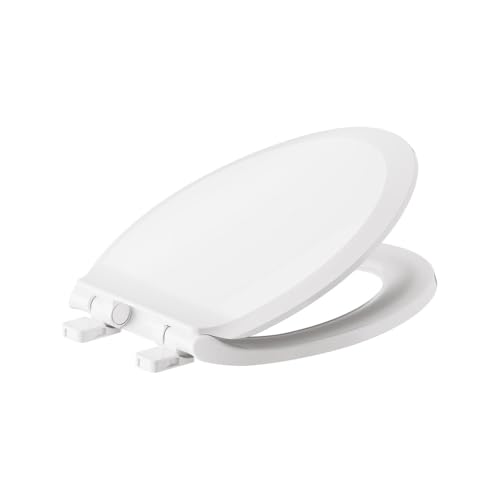
Most toilets are sold without a seat, or with a basic seat that users often replace. Match seat shape precisely (round or elongated -- they are not interchangeable). Soft-close hinges that prevent seat slamming are now a standard feature on mid-range and premium seats. Quick-release hinges allow the seat to unclip entirely from the bowl for deep cleaning -- a feature worth prioritizing. Heated seats (typically requiring an outlet) are available as standalone additions. Bidet seats replace the existing seat entirely and require both a water connection and an electrical outlet.
The porcelain bowl and tank of a quality toilet can last 20 to 50 years or longer; the mechanical components (flapper, fill valve, flush valve, wax ring) wear out and require replacement every 5 to 15 years depending on water quality and usage. Hard water accelerates mineral buildup on flush valve seats and flappers, causing ghost flushing and phantom running. Toilets using universal 3-inch flapper valves are the easiest and cheapest to maintain; proprietary fill and flush valve systems (common in some TOTO models) require brand-specific parts that cost more but are still widely available online.
When evaluating total cost of ownership, factor in water savings over the expected life of the toilet. Replacing a 3.5 GPF toilet from 1990 with a 1.28 GPF WaterSense model in a household of four saves approximately $100 to $200 per year in water and sewer costs, meaning the toilet pays for itself within a few years in water savings alone.
The porcelain bowl and tank can last 50 years or more if not physically cracked. Internal components (flapper, fill valve, flush valve seal, wax ring) typically need replacement every 5 to 15 years. Most plumbers recommend considering a full toilet replacement when the porcelain cracks or when repeated repairs make it more economical to replace than fix.
MaP (Maximum Performance) is an independent third-party flush test that measures in grams how much simulated solid waste a toilet can flush completely in one attempt. Scores range from under 250 grams (poor) to 1,000 grams (maximum). Look for a MaP score of at least 600 grams for average use; 800 to 1,000 grams for households prone to clogs or heavy use. Scores are searchable at map-testing.com.
EPA WaterSense certification means the toilet uses 1.28 GPF or less AND has been independently verified to meet a minimum flush performance threshold. It is not just a marketing claim -- it requires third-party lab testing. WaterSense toilets use at least 20 percent less water than the federal 1.6 GPF standard while meeting or exceeding flush performance requirements.
The standard rough-in is 12 inches, meaning the center of the closet flange drain is 12 inches from the finished wall behind the toilet. Approximately 80 percent of American homes have a 12-inch rough-in. Older homes (pre-1970) may have a 10-inch or 14-inch rough-in. Always measure before purchasing a replacement toilet.
Yes, when properly engineered. Multiple 1.28 GPF toilets -- including the TOTO Drake II, Kohler Cimarron, American Standard Champion 4 Max, and Gerber Viper -- achieve the maximum 1,000-gram MaP score. The key is flush valve diameter, trapway size, and bowl geometry, not just water volume. A well-designed 1.28 GPF toilet outperforms a poorly designed 1.6 GPF toilet.
Siphon flush (dominant in North America) uses a siphon effect in the trapway to pull waste down and through the drain; the bowl water surface is relatively large and the trapway is hidden inside the base. Wash-down flush (common in Europe and Asia) uses a direct gravity push to clear waste; the water surface is smaller and the trapway is more visible at the front of the bowl. Siphon systems are quieter and better suited to the trap-heavy drain systems used in American residential plumbing.
Add a few drops of food coloring or a dye tablet to the toilet tank. Do not flush for 15 minutes. If color appears in the bowl, the flapper is leaking. A running toilet (audible water refilling sound) that does not stop after the tank fills indicates a failing flapper, a misadjusted float, or a cracked overflow tube. A toilet leaking at the base when flushed indicates a failing wax ring.
Standard height toilets have a rim height of 14 to 15 inches from floor to top of bowl rim. Comfort height (also called chair height or ADA height) toilets measure 16 to 18 inches. The ADA requires accessible toilets to have a seat height of 17 to 19 inches (with seat installed). Comfort height is preferred by taller adults and those with mobility limitations; some shorter individuals and children find standard height more comfortable.
A straight toilet swap on an existing flange in good condition is a manageable DIY project. You need to shut off water, remove the old toilet, replace the wax ring, set the new toilet, reconnect the supply line, and restore water. Hire a licensed plumber if the closet flange is damaged, if you are moving the toilet to a new location, or if the shutoff valve cannot be closed. Improper wax ring installation is the most common DIY mistake and can cause floor damage over time.
Ghost flushing (also called phantom flushing) is when the toilet refills spontaneously without being flushed, indicating water is slowly leaking from the tank into the bowl. The most common cause is a worn or warped flapper that no longer seals against the flush valve seat. Replace the flapper (a $5 to $15 DIY repair) as a first step. If the problem persists, the flush valve seat itself may be pitted and require replacement.
Dual-flush toilets offer real water savings if household members consistently use the partial flush for liquid waste. The TOTO Aquia IV (0.8/1.28 GPF) can reduce average flush volume to around 1.0 GPF in typical usage. However, dual-flush mechanisms are slightly more complex than single-flush -- the flush button assembly may require replacement sooner than a standard handle and flapper. For most families, the savings are genuine but modest compared to simply replacing a 3.5 GPF toilet with any modern 1.28 GPF single-flush model.
A skirted toilet has a flat, continuous ceramic skirt that conceals the trapway curves at the base of the toilet, giving a smooth, rectangular profile. This makes the exterior easier to wipe clean (no curved trapway to scrub around) and suits modern bathroom aesthetics. The Woodbridge T-0001, Swiss Madison Ivy, and TOTO Aquia IV all feature skirted designs. The internal plumbing performs identically to an exposed trapway toilet of the same specifications.
Yes, within limits. A fully glazed 2 3/8-inch trapway (as in the American Standard Champion 4) passes waste more freely than a 2-inch trapway, reducing clog frequency in real-world use. However, most clogs originate from items that should never be flushed (wipes, paper towels, sanitary products) rather than from solid waste volume. Even the widest trapway will clog if inappropriate materials are flushed. For households using only toilet paper, a 2 1/8-inch glazed trapway is more than sufficient.
For rental properties, prioritize high MaP score (800 to 1,000 grams), universally available replacement parts (standard flapper valves, not proprietary), and simple single-flush operation. The Kohler Highline, American Standard Cadet 3, and Gerber Viper are consistently recommended for rental use: durable, clog-resistant, and inexpensive to maintain. Avoid smart toilets or bidet-integrated models in rentals -- electronics and guest unfamiliarity increase failure and complaint rates.
A 3.5 GPF toilet flushed five times per person per day uses 6,387 gallons per person per year. A modern 1.28 GPF WaterSense toilet uses 2,336 gallons per person per year under the same usage. The difference is 4,051 gallons per person annually -- approximately $25 to $60 in water and sewer cost savings per person per year depending on local utility rates. For a family of four, that translates to roughly $100 to $240 in annual savings.
No. Toilet manufacturers use proprietary white formulations, and shades vary significantly. TOTO's Cotton White (01) is slightly warmer than its Colonial White (11). Kohler's White (0), Biscuit (96), and Almond (47) are distinct. American Standard's White (020) differs from its Linen (222). If you are matching to an existing toilet, sink, or tub, order a sample tile from the manufacturer or verify shade codes carefully before purchasing. Mismatched whites are a common and frustrating bathroom remodel issue.
Pressure-assist toilets use compressed air (pressurized by incoming water supply) to force water into the bowl at higher velocity than gravity alone can achieve. They are louder (comparable to a bus air brake) but are very effective at clearing heavy waste loads. They work best with consistent water supply pressure of 25 PSI or above. Ideal users: households on municipal water with a history of clogs, commercial-adjacent residential applications (large offices, gyms), or anyone who wants maximum flush reliability regardless of noise.
Bleach tank tablets are not recommended by most toilet manufacturers. Chlorine bleach degrades rubber flappers, gaskets, and seals inside the tank, shortening their lifespan significantly. If the flapper fails within months of using bleach tablets, the tablets are likely the cause. Instead, use rim hang-on bowl cleaners that release slowly into the bowl water rather than the tank water, or clean the tank manually with a toilet bowl cleaner a few times per year.
A flushometer is a direct-supply flush valve connected to a pressurized water supply line rather than a gravity tank. You see them in commercial restrooms -- the sensor or handle-triggered valve that flushes without a tank above the toilet. They deliver powerful, consistent flushes but require high supply pressure (at least 15 PSI) and a 1-inch supply line, which most residential homes do not have. Flushometers are not recommended for typical residential installation unless a plumber confirms your supply infrastructure supports them.
Replacing a pre-1994 toilet with a WaterSense-certified 1.28 GPF model delivers the highest ROI through water bill savings plus any available utility rebate. Adding a bidet seat eliminates or reduces toilet paper use, with initial cost typically recovered in 12 to 24 months in paper savings for a two-person household. Upgrading to a soft-close seat and replacing worn internal components (flapper, fill valve) costs under $50 in parts and immediately eliminates running water waste and seat-slam noise.
For most buyers in 2026, a comfort-height elongated toilet with EPA WaterSense certification at 1.28 GPF, a 3-inch or larger flush valve, a fully glazed 2 1/8-inch or wider trapway, and a documented MaP score of 800 grams or higher is the correct purchase. The TOTO Drake II remains the most consistently top-ranked model in independent flush testing for the two-piece gravity-feed category; the Kohler Cimarron and American Standard Champion 4 are equally strong alternatives at slightly different price points. Measure your rough-in, confirm your bowl shape preference and available floor space, verify MaP score at map-testing.com, and check for WaterSense rebates in your area before finalizing your choice.
Learn why toilet trapways curve like an S, how each bend blocks sewer gas, and what the shape means for clogs and…
Read the guideAlmost every US toilet has a left-side handle. Learn the plumbing and mechanical reasons behind the layout and when it actually changes.
Read the guideHome toilets rely on tanks because household water lines lack the pressure that public flushometer systems use to flush straight from the…
Read the guide