
Why Toilet Trapways Are Curved Like an S
Toilets4.6
Learn why toilet trapways curve like an S, how each bend blocks sewer gas, and what the shape means for clogs and…
Read the guideA data-driven breakdown of water waste, flush performance, repair costs, and the clear signals that tell you your old toilet has finally reached the end of its useful life.
Replace your toilet if it is 25 or more years old, uses 3.5 GPF or more, clogs more than twice a year, or is costing you more than $150 in annual repairs. A new EPA WaterSense model at 1.28 GPF typically pays back its purchase cost in water savings within 3 to 6 years.
The most significant differences are water consumption and flush power. Toilets manufactured before 1994 used 3.5 to 7 gallons per flush (GPF), while current EPA WaterSense-certified models are capped at 1.28 GPF -- a reduction of 60 to 80 percent per flush. Modern toilets also benefit from redesigned trapways, optimized rim jet patterns, and MaP-tested bulk waste removal that old hardware simply cannot match.
If your toilet was installed in the 1980s or early 1990s, it almost certainly predates the National Energy Policy Act of 1992, which mandated a maximum of 1.6 GPF for all new toilets sold in the United States starting in January 1994. Pre-mandate toilets running at 3.5 GPF or higher are not just wasteful -- they are relics of an era when water efficiency was not a design priority at all.
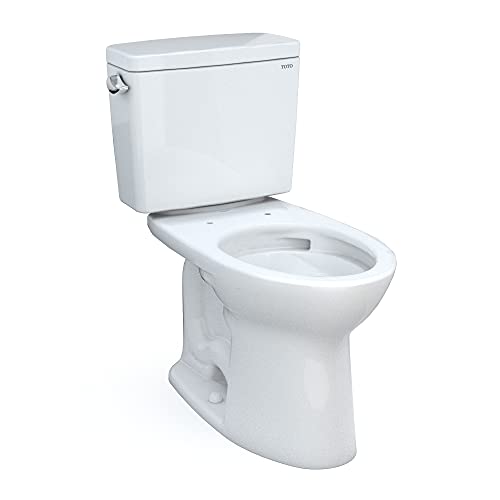
Beyond water use, there is flush technology. Old toilets typically rely on a basic gravity feed with a wide-open trapway and a single-hole siphon jet. Modern designs from TOTO, Kohler, American Standard, and Woodbridge incorporate fully glazed 2 3/8-inch or larger trapways, computer-modeled rim jet configurations, and in some cases dual-flush or pressure-assist mechanisms that deliver superior bulk waste clearance on far less water. The TOTO Drake II, for example, achieves a MaP score of 1,000 grams (the maximum tested) on just 1.28 GPF. No toilet built in 1985 comes close to that performance-per-gallon ratio.
Plumbing industry data consistently shows that a household of four replacing a pre-1994 toilet with a 1.28 GPF model saves between 20,000 and 25,000 gallons of water per year. At average U.S. residential water rates (approximately $0.004 per gallon as of 2025 utility reports), that translates to $80 to $100 in annual savings per fixture. Multi-toilet homes see proportionally larger returns.
A pre-1994 toilet using 3.5 GPF flushes roughly 12,775 gallons per year in an average single-person household (assuming roughly 5 flushes per day). The same usage pattern on a 1.28 GPF WaterSense toilet consumes approximately 2,336 gallons per year -- a difference of more than 10,400 gallons annually per person. A family of four multiplies that gap to over 40,000 gallons of wasted water every year.
| Toilet Era / GPF | Approx. Install Year | Annual Gallons (4-person home) | Annual Water Cost (est.) | MaP Score Potential | EPA WaterSense |
|---|---|---|---|---|---|
| 5.0 - 7.0 GPF | Pre-1980 | 51,100 - 71,540 | $204 - $286 | N/A (not tested) | No |
| 3.5 GPF | 1980 - 1993 | 35,770 | $143 | N/A (not tested) | No |
| 1.6 GPF | 1994 - 2005 | 16,352 | $65 | 350 - 600 g (typical) | No |
| 1.28 GPF | 2006 - present | 13,056 | $52 | 600 - 1,000 g (typical) | Most models |
| 1.0 GPF (HET) | 2010 - present | 10,220 | $41 | 800 - 1,000 g | Yes |
| 0.8 GPF (dual flush, half) | 2012 - present | 8,176 (liquid only) | $33 | 500 - 800 g (solid) | Yes (combined avg) |
Annual gallons based on 5 flushes/day per person, 4 people, 365 days. Water cost estimate at $0.004/gallon average U.S. rate. MaP scores from map-testing.com published database.
Those numbers make the math straightforward. Even comparing a mid-era 1.6 GPF toilet against a modern 1.28 GPF WaterSense model, a family of four saves roughly 3,300 gallons per year. On older 3.5 GPF fixtures, the annual savings jump past 22,000 gallons per fixture. A new toilet that eliminates that waste typically costs between $150 and $600 installed, meaning it can pay for itself in water savings alone within two to six years depending on local water rates.
The clearest replacement signals are: visible cracks in the porcelain tank or bowl, chronic clogging more than twice per year, persistent running after flapper or fill valve replacement, a fixture that is more than 25 to 30 years old, or a pre-1994 high-flush model draining your water bill. Cosmetic yellowing and stubborn mineral staining that no longer responds to cleaning are secondary signals worth acting on.
Hairline cracks in the toilet bowl or tank are not cosmetic problems -- they are structural failures in progress. A crack in the bowl can leak sewage water onto your floor without any visible standing puddle, creating mold conditions inside walls and subfloors. A cracked tank can fracture suddenly. Once porcelain is cracked, repair is not a viable long-term option. The bowl and tank are not sold separately for most models; if your model is discontinued (as many pre-2000 models are), finding a matched replacement part is nearly impossible.
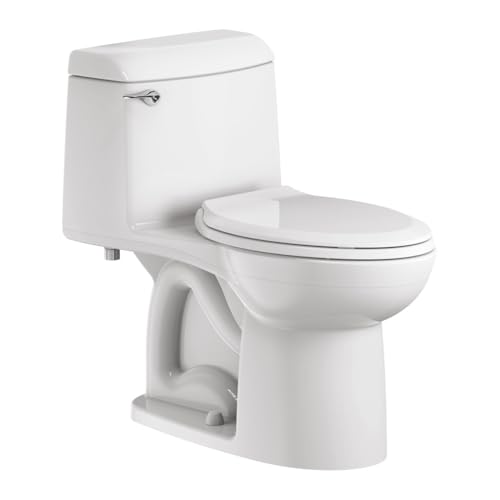
Early 1.6 GPF toilets from the 1994 to 2000 period were often poorly engineered. Manufacturers reduced water volume but did not fully redesign the trapway and rim jet system to compensate. The result was a generation of toilets that clogged far more frequently than their predecessors. If your toilet clogs more than twice per year despite reasonable use, the trapway geometry is likely at fault. Modern toilets like the American Standard Champion 4 feature a 2-3/8-inch wide trapway that is nearly impossible to obstruct under normal household use, and the TOTO Drake's fully glazed 2 1/8-inch passage scores 1,000 grams on MaP testing.
A running toilet wastes between 200 and 6,000 gallons per day depending on the severity of the leak. Replacing the flapper is a $10 fix that often resolves the issue. But if you are replacing the flapper every 12 to 18 months, or have already replaced the fill valve and the flush valve seat is warped, you are patching a toilet whose internal mechanisms are reaching end of life. Tracking your repair history matters: if you have spent more than $150 on repairs in a 12-month period on a toilet that is already 20 or more years old, replacement is almost always more economical than continued maintenance.
A toilet that rocks when you sit on it is either loose at the bolts or has a deteriorated wax ring seal. A simple bolt tightening or wax ring replacement can fix this for $20 to $50 in parts. However, if the porcelain base itself has cracked or the floor flange has corroded, you are looking at more significant work. In older homes where the toilet has been in place for decades, a rocking toilet often reveals water damage to the subfloor below the wax ring -- a problem that surfaces during replacement but cannot be addressed any other way.
Plumbers commonly apply the "repair vs. replace" threshold this way: if the toilet is less than 10 years old and the repair is under $100, fix it. If it is between 10 and 20 years old and the repair exceeds $150, evaluate the total picture. If it is over 20 years old and any meaningful repair is needed, replacement is almost always the wiser financial decision when you factor in the ongoing water savings a new 1.28 GPF model will deliver immediately.
Old toilets use basic gravity flush with wide, unoptimized trapways and single siphon jets that rely on sheer water volume to clear waste. Modern toilets use computer-optimized rim jet patterns, fully glazed trapways, and in some cases tornado flush or double cyclone technology (as in TOTO's Aquia IV and Nexus lines) that create a centrifugal swirling action requiring far less water. The MaP testing program quantifies this difference objectively, with top modern models clearing 1,000 grams on 1.28 GPF while old 3.5 GPF models frequently scored under 600 grams on the same test when retroactively evaluated.
MaP (Maximum Performance) testing is the most objective standard available for comparing flush performance. Conducted by an independent organization, MaP tests measure how many grams of simulated bulk waste a toilet clears in a single flush. The scale runs from 100 to 1,000 grams, with 800 grams considered the minimum for a demanding household. Here is how major modern models stack up:
| Model | GPF | MaP Score | WaterSense | Flush Type | Trapway | Check Price |
|---|---|---|---|---|---|---|
| TOTO Drake II (CST454CEFG) | 1.28 | 1,000 g | Yes | G-Max gravity | 2 1/8" fully glazed | Check price |
| TOTO UltraMax II | 1.28 | 1,000 g | Yes | Double Cyclone | 2 1/8" fully glazed | Check price |
| American Standard Champion 4 | 1.6 | 1,000 g | No | PowerWash gravity | 2-3/8-inch wide trapway | Check price |
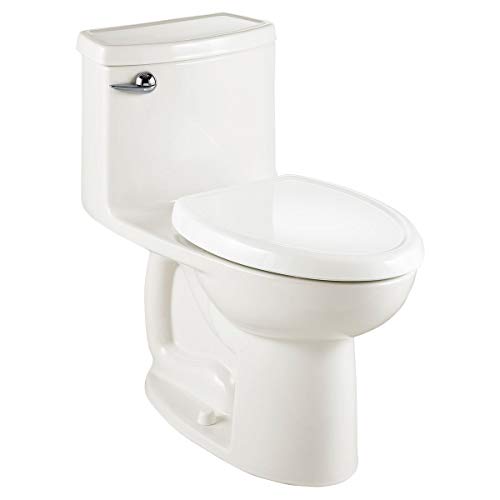
| American Standard Cadet 3 | 1.28 | 1,000 g | Yes | EverClean gravity | 3" wide flush valve | Check price |
| Kohler Highline Arc | 1.28 | 1,000 g | Yes | AquaPiston | 2" fully glazed | Check price |
| Kohler Cimarron | 1.28 | 1,000 g | Yes | AquaPiston | 2" fully glazed | Check price |
| TOTO Aquia IV (dual flush) | 1.0 / 0.8 | 800 g | Yes | Tornado Flush | 2 1/8" fully glazed | Check price |
| Woodbridge T-0001 | 1.28 | 800 g | Yes | Gravity dual flush | 2 1/8" glazed | Check price |
| Gerber Viper | 1.28 | 800 g | Yes | Gravity | 2" fully glazed | Check price |
MaP scores sourced from map-testing.com. Scores reflect published lab test data, not field performance estimates.
These MaP scores matter more than marketing language. Any toilet achieving 800 grams or above will handle normal household use without chronic clogging. The 1,000-gram ceiling models represent the most robust performers available. No pre-1994 toilet can claim an equivalent score because the MaP program did not exist until 2003, and the design limitations of those fixtures make equivalent performance physically unlikely at any GPF level.
For a deeper look at how these models compare by category, see our guide to the best flushing toilets currently available, which ranks current models by MaP score, GPF, and owner-verified reliability.
Whether repair or replacement makes more sense depends on the toilet's age, the repair cost, and its GPF rating. Repairs are worth it for toilets under 15 years old with minor issues like a worn flapper or fill valve. Replacement makes more financial and environmental sense for any toilet over 20 years old, any pre-1994 model using 3.5 GPF or more, or any fixture requiring structural repairs to the porcelain, base, or flush valve seat.
The most common toilet repairs and their typical DIY costs are:
For detailed cost breakdowns on replacement projects, see our cost to replace a toilet guide and our step-by-step how to replace a toilet walkthrough.
From a pure financial standpoint, the crossover point is clear: if your toilet uses 3.5 GPF and your household flushes an average of 20 times per day (four people, five flushes each), you are consuming 25,550 gallons more per year than you would with a 1.28 GPF replacement. At a water rate of $0.004 per gallon, that is $102 per year in pure waste. A mid-range replacement toilet at $200 plus $150 in installation pays back the full cost in less than 3.5 years through water savings alone -- before accounting for avoided repair bills.
The best replacement depends on your rough-in distance, bowl shape preference, and budget. The TOTO Drake II is the most consistently recommended upgrade for its 1,000-gram MaP score, 1.28 GPF efficiency, and long-term reliability track record. Budget-conscious buyers get comparable flush performance from the American Standard Cadet 3 or Kohler Highline. For a one-piece aesthetic, the TOTO UltraMax II and Woodbridge T-0001 are strong options.
Before purchasing, measure your rough-in: the distance from the wall to the center of your toilet's floor bolts. Most homes have a 12-inch rough-in. Some older homes have 10-inch or 14-inch rough-ins, which require specifically dimensioned models. Getting this measurement wrong is the single most common installation mistake. Our how to measure toilet rough-in guide walks through this step by step.
Best overall replacement: The TOTO Drake II achieves a 1,000-gram MaP score on 1.28 GPF and has an established multi-year reliability record in aggregated owner reviews. It is a two-piece model available in 10-, 12-, and 14-inch rough-in configurations, which makes it one of the most universally compatible replacements available. Check price on Amazon
Best for chronic cloggers: The American Standard Champion 4's 4-inch flush valve and wide trapway deliver 1,000-gram MaP performance on 1.6 GPF. If your old toilet clogs frequently, this model's oversized passage is the most direct engineering solution. Check price on Amazon
Best one-piece upgrade: The TOTO UltraMax II combines the Double Cyclone flush system with a one-piece profile that is easier to clean than two-piece designs. It achieves 1,000 grams on 1.28 GPF with TOTO's CeFiONtect glazing that actively resists waste adhesion. Check price on Amazon
Best dual-flush upgrade: The TOTO Aquia IV offers 1.0 GPF (solid) and 0.8 GPF (liquid) options, achieving an EPA WaterSense combined flush volume below the 1.28 GPF threshold. Its Tornado Flush generates a centrifugal rim cleaning action that keeps the bowl clean between uses. Check price on Amazon
Best budget replacement: The Kohler Highline hits 1,000 grams on MaP testing with the AquaPiston flush valve and 1.28 GPF consumption. It is widely available, well-documented, and has one of the longest warranty histories of any toilet in its class. Check price on Amazon
Best modern design replacement: The Woodbridge T-0001 is a one-piece skirted toilet with a concealed trapway that achieves an 800-gram MaP score on 1.28 GPF dual flush. Its clean geometric profile suits modern bathroom renovations well. Check price on Amazon
For a full comparison of current models across all performance categories, see our best flushing toilets guide.
The porcelain bowl and tank of a toilet can last 50 years or longer if undamaged. However, the internal mechanisms -- flappers, fill valves, flush valves -- typically need replacement every 5 to 15 years. Most plumbing professionals recommend evaluating full replacement once a toilet is 25 to 30 years old and experiencing repeated issues, both for efficiency and reliability reasons.
Any toilet using more than 1.6 GPF is considered inefficient by current U.S. standards. Toilets at 3.5 GPF (standard pre-1994) or 5.0 to 7.0 GPF (pre-1980) are significantly wasteful by modern benchmarks. EPA WaterSense certification requires a maximum of 1.28 GPF, which is the current efficiency standard for residential toilets.
EPA WaterSense is a voluntary certification program that labels toilets meeting two criteria: a maximum flush volume of 1.28 GPF and a minimum MaP flush performance score of 350 grams (though most certified models score much higher). Certified products carry the blue WaterSense label and are independently tested. Many U.S. water utilities offer rebates for purchasing WaterSense-certified fixtures.
Yes. Many local water utilities across the United States offer rebates ranging from $25 to $200 for replacing a pre-1994 toilet with an EPA WaterSense-certified model. The EPA WaterSense website maintains a searchable rebate finder (epa.gov/watersense/rebate-finder) where you can check programs available in your ZIP code. Some utilities specifically offer higher rebates for replacing 3.5 GPF or older fixtures.
A 1.6 GPF toilet from around 2000 may still be functional, but early post-mandate models were frequently poorly executed -- narrow trapways, weak siphon jets, and clog-prone designs were common complaints. If it clogs regularly or requires ongoing maintenance, replacing it with a modern 1.28 GPF model that scores 800 to 1,000 grams on MaP testing delivers both better performance and modest additional water savings.
MaP (Maximum Performance) testing measures how many grams of simulated waste a toilet clears in a single flush. Scores range from 100 to 1,000 grams. For average households, a score of 500 grams is the minimum acceptable threshold. Families or households with heavy use should target 800 grams or above. The 1,000-gram score represents the maximum tested and is achieved by models like the TOTO Drake II, TOTO UltraMax II, American Standard Champion 4, and Kohler Highline Arc.
If the toilet is under 15 years old and otherwise in good condition, fix it -- a new flapper ($10) or fill valve ($25) usually resolves a running toilet. If the flush valve seat is warped (preventing a flapper from sealing despite multiple replacements), or if the toilet is more than 20 years old and using 1.6 GPF or more, replacement becomes the more economical long-term choice. A running toilet can waste 200 to 6,000 gallons per day, so prompt action on either path is important.
Remove the tank lid and look inside the tank for a stamped or molded manufacture date. Most manufacturers stamped a date code on the underside of the tank lid or on the interior back wall of the tank. If you see a date before January 1994, your toilet predates the federal 1.6 GPF mandate. You can also check the GPF rating, often stamped on the back of the bowl near the seat hinge, or on a label inside the tank.
TOTO is widely considered the leading brand for flush performance and long-term reliability, with the Drake and UltraMax series consistently topping MaP and owner satisfaction rankings. Kohler and American Standard are strong domestic alternatives with wide parts availability. For budget-conscious buyers, Gerber and Swiss Madison offer EPA WaterSense performance at lower price points. Woodbridge provides modern aesthetics at a mid-range cost.
Yes, measurably. Replacing a 3.5 GPF toilet with a 1.28 GPF WaterSense model in a four-person household saves an estimated 22,000 to 25,000 gallons per year. At average U.S. water rates, that represents $88 to $100 in annual savings. A toilet costing $200 to $400 installed can achieve full payback in 2 to 4 years, after which the savings are pure ongoing benefit. Higher water rates in drought-affected regions accelerate the return significantly.
In theory, yes -- if you can source a matching tank for a discontinued model. In practice, this is rarely feasible for toilets more than 15 to 20 years old. Manufacturer parts availability for discontinued lines is limited, and a replacement tank for an old 3.5 GPF model still leaves you with an inefficient flush system. Replacing the entire toilet with a current model is almost always more practical and more cost-effective.
Measure from the wall behind the toilet (not the baseboard) to the center of the floor drain bolts. Most U.S. homes have a 12-inch rough-in. Older homes built before 1960 sometimes have 10-inch rough-ins, and some mid-century constructions have 14-inch rough-ins. Choosing a toilet with the wrong rough-in measurement means it will not fit properly against the wall. Many TOTO, Kohler, and American Standard models are available in 10-inch, 12-inch, and 14-inch versions.
Neither is inherently better in terms of flush performance -- the TOTO Drake II (two-piece) and TOTO UltraMax II (one-piece) both score 1,000 grams on MaP testing. One-piece toilets are easier to clean because there is no gap between tank and bowl where grime accumulates, and they tend to look more modern. Two-piece toilets are easier and cheaper to ship, and easier to maneuver into a bathroom during installation. The choice is largely aesthetic and practical.
A cracked toilet bowl will eventually leak. Even a hairline crack that is not visibly wet may be seeping water into the floor structure with each flush due to the internal water pressure changes during the flush cycle. Over time this causes subfloor rot, mold growth inside the wall cavities, and potential structural damage. A cracked bowl is not a "monitor it" situation -- it is an immediate replacement situation.
Modern toilets are almost universally vitreous china (fired ceramic), which is the correct material -- durable, non-porous, and resistant to staining when properly maintained. Color matters primarily for matching your bathroom decor. Cotton white (bright white) and bone/biscuit are the most common colors. If you are replacing a single toilet in a bathroom with existing fixtures, finding an exact color match to surrounding hardware can be challenging, as shade designations vary by brand.
Dual-flush toilets offer the best water savings when the household consistently uses the half-flush option for liquid waste. The TOTO Aquia IV at 0.8/1.0 GPF is the strongest dual-flush performer, but dual-flush mechanisms have historically had slightly higher maintenance rates than single-flush gravity designs. For households disciplined about using the partial flush, the water savings are real. For households that always use the full flush regardless, a high-efficiency single-flush at 1.28 GPF is simpler and equally effective.
A straightforward like-for-like replacement by an experienced DIYer takes 1 to 2 hours. A plumber typically completes the same job in 45 to 90 minutes. Complications that add time include corroded floor bolts, a damaged wax ring that has allowed subfloor damage, non-standard rough-in distances requiring adapter flanges, or disconnecting and reconnecting supply lines that have corroded shut. Budget for additional time on any toilet that has been in place for more than 20 years.
Standard toilets sit 15 to 16 inches from floor to seat rim. Comfort height (also called chair height or ADA-compliant height) toilets sit 17 to 19 inches from floor to seat rim, which is similar to a standard chair. Most new toilet models are available in both heights. Taller users and older adults typically find comfort height more comfortable and easier to use, while shorter users and children may find standard height preferable. This is a separate specification from flush performance.
Most modern toilets with ceramic glazing (including TOTO's CeFiONtect, American Standard's EverClean, and Kohler's standard glaze) are compatible with standard toilet bowl cleaners. Avoid strongly abrasive cleaners or scrubbers that can scratch the glaze and make the surface more prone to staining over time. Tablets dropped in the tank that contain bleach can accelerate degradation of rubber flappers and fill valve components and are generally not recommended by manufacturers.
Several disposal options exist. Many municipalities accept porcelain toilets at recycling centers where it can be crushed for use as road base material. Habitat for Humanity ReStores accept functional used toilets in good condition. If your old toilet is a pre-1994 high-flush model, check whether your local water utility's rebate program includes a recycling component -- some programs require proof of disposal to issue rebates. Curbside trash pickup for large porcelain items requires scheduling a bulk pickup in most jurisdictions.
If your toilet is more than 25 years old, uses 3.5 GPF or more, clogs regularly, or is draining your repair budget, replacement is not just reasonable -- it is the financially sound and environmentally responsible choice. A current EPA WaterSense model at 1.28 GPF with a MaP score of 800 grams or above will outperform any pre-1994 fixture on every measurable metric: water consumption, flush power, clog resistance, and long-term maintenance cost. The TOTO Drake II is the strongest all-around replacement for most homes, with the American Standard Champion 4 as the go-to solution for households prone to frequent clogging. Either way, the payback period on a new toilet is measured in years, not decades.
Learn why toilet trapways curve like an S, how each bend blocks sewer gas, and what the shape means for clogs and…
Read the guideAlmost every US toilet has a left-side handle. Learn the plumbing and mechanical reasons behind the layout and when it actually changes.
Read the guideHome toilets rely on tanks because household water lines lack the pressure that public flushometer systems use to flush straight from the…
Read the guide