Why Toilet Trapways Are Curved Like an S
Toilets4.6
Learn why toilet trapways curve like an S, how each bend blocks sewer gas, and what the shape means for clogs and…
Read the guideA toilet flush system is the mechanism that moves water from the tank into the bowl and pushes waste through the trapway, and not all systems are equally powerful. This guide compares the real flush technologies behind today's strongest toilets, from pressure-assist and 4-inch tower valves to TOTO Tornado, G-Max, Double Cyclone, Kohler AquaPiston and washdown, ranked on MaP flush-test scores, flush valve size, trapway design and aggregated owner reviews.
The most powerful toilet flush system is pressure-assist, and the strongest example is the Kohler Highline Pressure Lite, which uses compressed air to hit a perfect 1,000-gram MaP score. For the most powerful quiet gravity system, the 4-inch tower valve in the American Standard Champion 4 matches that ceiling without the noise.
When people compare flush systems, they are really asking which mechanism moves waste out of the bowl with the most force and the least chance of a second flush. The toilet body and the porcelain matter for looks and cleaning, but the flush system is what determines power. Manufacturers wrap these systems in proprietary names like Tornado, G-Max, Double Cyclone, AquaPiston, Cadet and Power Lite, which makes it hard to tell what is genuinely strong and what is marketing. This guide cuts through the names and compares the underlying engineering against the one number that measures real strength: the MaP score.
MaP stands for Maximum Performance. It is an independent flush test, run since 2003, that drops weighted soybean-paste media into a toilet and records the maximum grams it clears in a single flush. A score of 350 grams is the floor many specifiers accept, 600 grams is genuinely strong, and 1,000 grams is the ceiling the test awards, since almost no household ever produces a single load that heavy. We cross-reference every flush system's MaP results against flush valve size, trapway width, EPA WaterSense status and the pattern of aggregated owner reviews, so you can see which systems are powerful in real homes rather than only on a spec sheet. For the full picture across every category, start with our pillar guide to the best flushing toilets.
Pressure-assist is the most powerful toilet flush system, because it uses compressed air to force water out at far higher velocity than gravity alone, reliably reaching the maximum 1,000-gram MaP score. Among gravity systems, the most powerful is a large 4-inch tower valve like the one in the American Standard Champion 4, which dumps the tank into the bowl almost instantly. Both clear more waste than any home produces, so for everyday strength they are effectively equal, and pressure-assist wins only on raw force.
Flush power comes from two things working together: how fast and how much water enters the bowl, and how cleanly that water and the waste exit through the trapway. Pressure-assist wins on the first by compressing air to launch a high-speed slug of water, which is why it produces the most violent flush. A large gravity valve achieves nearly the same clearing capacity by releasing a huge volume very quickly. Siphonic gravity systems then add suction, filling the trapway and pulling the load down. The result is that several different systems all reach the 1,000-gram ceiling, but they get there through different engineering, with very different noise, water use and repair profiles.
Eight real flush systems chosen for power, shown with the model that best represents each, sorted by MaP score, flush mechanism and valve size, then balanced against water use, noise and owner reviews.
| Flush system (model) | Best For | MaP | GPF | Mechanism | Rating | Check Price |
|---|---|---|---|---|---|---|
| Pressure-assist (Kohler Highline Pressure Lite) | Most raw force | 1,000 g | 1.6 | Compressed air | 4.4 | Check price |
| 4-inch tower valve (American Standard Champion 4) | Strongest gravity | 1,000 g | 1.6 | Gravity, 4 in valve | 4.6 | Check price |
| G-Max siphon jet (TOTO Drake) | Best power-to-water | 1,000 g | 1.28 | Siphon jet | 4.7 | Check price |
| Tornado dual-nozzle (TOTO UltraMax II) | Cleanest rinse | 1,000 g | 1.28 | Dual-nozzle swirl | 4.7 | Check price |
| AquaPiston canister (Kohler Cimarron) | 360-degree rinse | 1,000 g | 1.28 | Canister valve | 4.5 | Check price |
| Double Cyclone (TOTO Drake II) | Efficient swirl | 1,000 g | 1.28 | Dual-nozzle swirl | 4.8 | Check price |
| Cadet 3 tower (American Standard Cadet 3) | Easy availability | 1,000 g | 1.28 | Gravity, 3 in tower | 4.5 | Check price |
| Dual-flush washdown (TOTO Aquia IV) | Water savings | 800 g | 0.9/1.28 | Dual-flush | 4.5 | Check price |
A good MaP score is 600 grams or higher, and 1,000 grams is the maximum the test awards. The MaP test measures how many grams of solid waste a flush system clears in a single push, so the number directly predicts how rarely you will need a second flush. A flush system scoring 1,000 grams clears more waste than any normal household produces, making it effectively clog-proof in everyday use.
To put the scale in context, the MaP test starts with small loads and increases the media weight until a toilet fails to clear it cleanly in one flush. Many flush systems sold today score between 400 and 600 grams, which is adequate but not powerful. The systems compared in this guide all clear at least 800 grams, and most hit the 1,000-gram ceiling, which means they have demonstrated maximum clearing capacity. Beyond 1,000 grams there is no further rating, because no realistic single use exceeds it. When two flush systems both score 1,000 grams, the tie-breakers become flush valve size, trapway width, water use, noise and rinse cleanliness, which is exactly how this comparison is ordered.
Pressure-assist delivers more raw force than gravity flushing because it uses compressed air to push water out at higher velocity, which is why it reliably reaches a 1,000-gram MaP score with a hard scouring action. However, the strongest gravity systems, like the 4-inch tower valve in the American Standard Champion 4, also hit 1,000 grams, so for clearing capacity the two are equal. Pressure-assist wins only on sheer force, while gravity wins on quiet operation and easy repair.
The difference between the two systems is most noticeable in how they feel and sound. A pressure-assist flush arrives with a sharp, forceful whoosh as compressed air launches the water, which is why it is favored in commercial restrooms and heavy-use homes. A gravity flush is quieter and gentler, relying on the weight of the water and, in siphonic designs, on suction. Because modern gravity systems now reach the same MaP ceiling, most homes get all the power they need from gravity without the noise. Pressure-assist is the right choice only when you genuinely want maximum force or are fighting chronic clogs that gravity has failed to solve. Compare the technology in detail in our guide to the best pressure assisted toilets.
The best flush system for preventing clogs is a large 4-inch tower valve paired with a wide glazed trapway, as found in the American Standard Champion 4. The big valve drives a fast, high-volume flush while the 2-3/8 inch glazed trapway gives waste a wide, slick exit path so nothing catches. For a clog-resistant system that also saves water, TOTO's G-Max siphon jet in the Drake reaches the same 1,000-gram clearing capacity at just 1.28 gallons.
Clog resistance and flush power are closely linked but not identical. Power is how much force the system delivers into the bowl, while clog resistance also depends on the exit path. A system can have a strong flush but a narrow or unglazed trapway that snags waste, undermining all that force. The most clog-resistant flush systems combine three things: a high MaP score, a flush valve of 3 inches or larger, and a fully glazed trapway of at least 2-1/8 inches. The Champion 4's 4-inch valve and 2-3/8 inch trapway lead on all three, which is why plumbers install it specifically to stop chronic clogging. For households that fight clogs constantly, our roundup of toilets that never clog goes deeper on trapway design.
Each system below is ranked on flush mechanism and MaP score first, then flush valve size, trapway width, water efficiency and noise, cross-checked against aggregated owner reviews. Each is shown with the model that best represents it.

Pressure-assist is the most powerful flush system you can buy, and the Kohler Highline Pressure Lite is the cleanest way to get it from a major brand. It uses a sealed Flushmate vessel that compresses air as the tank refills, then releases that pressure to blast water through the bowl far faster than gravity alone could move it.
The Flushmate vessel gives this Highline a noticeably more violent flush than the standard gravity Highline, with a scouring action that keeps the bowl clean and earns the maximum 1,000-gram MaP score. Because the water is pressurized rather than sitting in an open tank, the inner vessel also reduces the tank sweating that plagues humid bathrooms.
The catch is well known among owners: pressure-assist is loud, with a sharp whoosh that some households find jarring at night, and repairs are less DIY-friendly than swapping a flapper. For a busy main bathroom, a basement or anyone who simply wants the most forceful system available, owner reviews say the noise is a fair trade for a flush that never needs a second push.
Choose pressure-assist only if you genuinely want the strongest possible flush and can tolerate the noise. The Highline Pressure Lite is the most refined version of the technology, but for most homes a 1,000-gram gravity system delivers all the power needed far more quietly and with cheaper repairs.
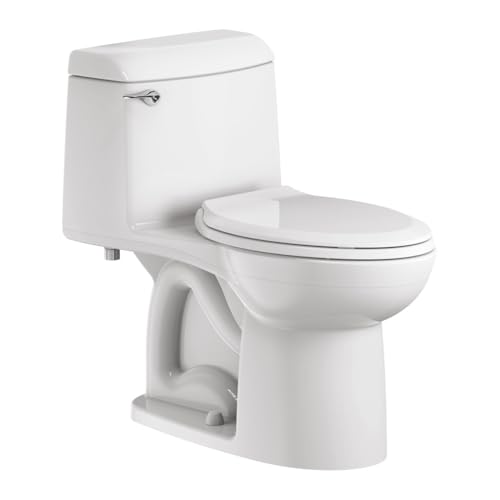
The most powerful gravity flush system is a large tower valve, and the American Standard Champion 4 uses the biggest in the residential market at 4 inches. That oversized valve dumps nearly the entire tank into the bowl almost instantly, and paired with the widest trapway here at 2-3/8 inches it earns a perfect 1,000-gram MaP score without any compressed air.
The 4-inch tower valve releases water so fast that the flush hits hard, while the oversized glazed trapway carries the load out with room to spare. That combination is why the Champion 4 has a reputation as the toilet to install when nothing else will stop the clogging, and it delivers near pressure-assist clearing capacity while staying quiet.
The trade-off is water. It uses 1.6 gallons per flush and is not WaterSense certified, so it draws more than the 1.28-gallon systems below, and it uses a proprietary flapper worth keeping a spare of. For a household that values never touching a plunger over a slightly higher water bill, owner reviews describe those as easy trade-offs, backed by a long 10-year warranty.
If you want the strongest possible flush from a quiet, simple gravity system, the 4-inch tower valve is the answer and the Champion 4 is its best example. Keep one proprietary flapper in the cabinet, accept the 1.6-gallon water use, and it will outflush almost anything in its class for a decade.
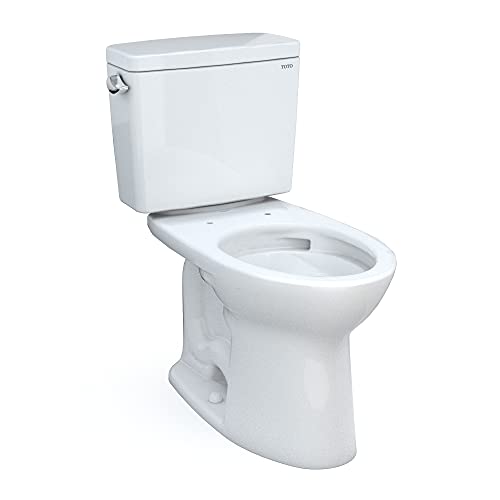
TOTO's G-Max siphon-jet system is the flush technology that built the brand's reputation, and the Drake proves a powerful flush does not require a lot of water. It channels water through a 3-inch valve and a jet at the base of the bowl to create a deep, fast siphon, reaching a 1,000-gram MaP class while staying WaterSense certified at just 1.28 gallons.
The siphon-jet design fills the trapway and pulls the load down with suction rather than only pushing it, which is what makes it clean so decisively at low water use. G-Max is one of the most copied flush systems in the industry precisely because it is so consistently strong, and it is the benchmark other efficient systems are measured against.
Owner reviews are remarkably steady across many years, with the recurring theme being a flush that simply does not quit and parts that are easy to find. The standard Drake sits at a universal 16.125-inch height; for a taller comfort seat and a swirling rinse, step up to the Double Cyclone system below. The G-Max Drake is also a top pick in our guide to the best flushing toilets.
G-Max is the system for anyone who refuses to waste water. You get 1,000-gram clearing power at 1.28 gallons, a design with a decades-long track record, and replacement parts on every shelf. For most homes this is the smarter buy than a 1.6-gallon system.

TOTO's Tornado flush is the brand's most advanced gravity system, replacing the ring of rim holes with two angled nozzles that create a powerful centrifugal swirl. The one-piece UltraMax II shows it off best, reaching a 1,000-gram MaP score at 1.28 gallons while leaving one of the cleanest, most streak-free bowls in the category.
The two-nozzle Tornado design sends water around the bowl in a strong vortex rather than straight down, so it scours the entire surface while still generating the siphon needed to clear waste. The payoff is a flush that hits the maximum MaP score and keeps the bowl visibly cleaner between brushings, a recurring highlight in owner reviews.
Because the UltraMax II is a one-piece, it has no seam between tank and bowl to trap dirt, and the CeFiONtect glaze on many versions further resists buildup. The trade-offs are weight at installation and a higher price than the two-piece Drake, but for a main bathroom where cleanliness matters as much as power, the Tornado system is hard to beat.
Tornado is the system to choose when you want maximum flush power and a bowl that stays clean. It matches the G-Max Drake on MaP but adds a swirling rinse that reduces how often you reach for the brush, which for many households is worth the premium.

Kohler's AquaPiston canister is a flush system built around a valve that lifts straight up to release water 360 degrees around the bowl, instead of through a single jet. The Cimarron shows it off best, earning a perfect 1,000-gram MaP score at an efficient 1.28 gallons with a notably even, full-circle rinse.
The AquaPiston valve has a 3-1/4 inch opening and releases water around the entire rim, so the flush scours the bowl evenly rather than concentrating force on one side. Because the canister lifts vertically rather than hinging like a flapper, it exposes fewer parts to wear, which extends its service life under heavy daily use.
Owner reviews highlight the durable canister valve and the clean, even rinse, with the main caveat being that the seal is a Kohler-specific part. The Cimarron is available in a skirted version that hides the trapway for easy cleaning, making this one of the most practical strong systems for a busy household that dislikes replacing flappers.
The AquaPiston system's appeal is a perfect MaP score paired with a flush valve that outlasts a rubber flapper. If you want maximum strength but hate flapper maintenance, the canister design is the practical advantage that sets it apart from siphon-jet rivals.
Double Cyclone is TOTO's efficiency-focused swirl system, feeding water through two nozzles instead of a ring of rim holes to scour the bowl with less water. The Drake II builds it into a taller comfort-height body, scoring a perfect 1,000 grams on the MaP test at just 1.28 gallons with one of the cleanest rinses in the category.
The two-nozzle Double Cyclone design creates a swirling action that scours the entire bowl while using less water than a traditional rim-hole flush. The result is a system that matches the top of the MaP scale but stays cleaner and quieter in everyday use than heavier siphon-jet designs, which many owners prefer.
Owner reviews are among the best of any toilet sold, with the standout themes being the easy-stand height, the clean bowl and a flush that handles heavy loads without complaint. If you want a strong, water-saving swirl system in a comfort-height body and value cleanliness over raw maximum power, this is the pick. It also leads our list of the best toilet for heavy waste.
Double Cyclone is the strength-plus-cleanliness compromise. Its perfect 1,000-gram MaP matches the brute-force siphon-jet systems, and the swirling rinse keeps the bowl cleaner in everyday use. For an everyday main bathroom, that combination of top-tier power and cleanliness is hard to beat.
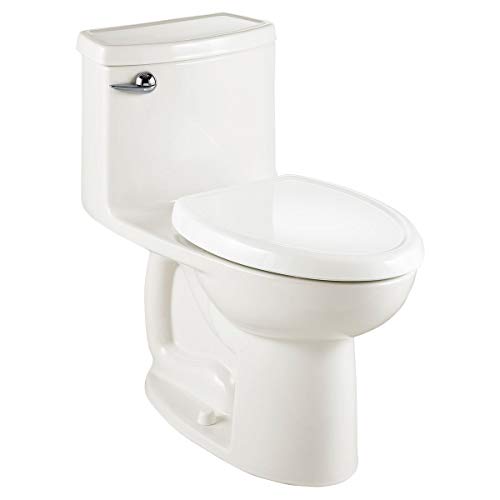
The Cadet 3 flush system is American Standard's everyday strong gravity design, built around a 3-inch flush tower that releases water quickly for a powerful, full rinse. It pairs a perfect 1,000-gram MaP score with an efficient 1.28-gallon flush, and it is one of the easiest top-tier systems to walk into a store and carry home.
The 3-inch flush tower releases water quickly for a strong, full-bowl rinse, and the EverClean glazed surface resists the buildup that comes with heavy daily use. It is a balanced, well-reviewed system that delivers maximum MaP strength without the higher water use of the 4-inch Champion 4 valve.
Owner reviews consistently describe it as a dependable, low-fuss strong flusher, and the 10-year warranty is reassuring. The trapway is narrower than the Champion 4, so in extreme clog-resistance terms it is a slight step down, but the 1,000-gram MaP score confirms it clears as much waste in normal use. For most buyers, easy availability plus top-tier strength makes it a smart middle ground.
The Cadet 3 tower is the system to buy when you want a 1,000-gram flush, low water use and a long warranty from a brand stocked everywhere. It is the sensible bridge between premium TOTO systems and a bare-bones budget toilet, with nothing important missing.
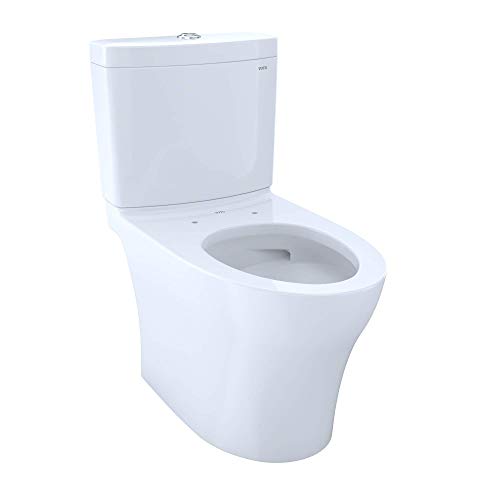
A dual-flush washdown system offers two flush volumes, a reduced flush for liquid waste and a full flush for solids, letting you save water on most uses without giving up power when you need it. The TOTO Aquia IV pairs this with a Tornado-style swirl, scoring a perfect 1,000 grams on its full flush at 1.28 gallons while using just 0.9 gallons on the light flush.
The dual-flush design lets the household choose volume by load, so the lighter 0.9-gallon flush handles liquid waste while the full 1.28-gallon flush delivers a full 1,000-gram clearing capacity for solids. The washdown-style swirl scours the bowl evenly, and the skirted body removes the trapway contours that usually trap dirt around the base.
Owner reviews praise the water savings and the clean look, with the most common note being that the full flush hits the same MaP ceiling as the top single-flush models, since the Tornado Flush system loses nothing to the dual-flush mechanism. For a household focused on cutting water use while still keeping a genuinely capable full flush, this is the system to choose. Compare the trade-offs further in our guide to the best dual flush toilets.
Dual-flush washdown is the system for the water-conscious buyer who still wants a strong full flush on demand. The Aquia IV's 1,000-gram full mode handles any home, and the light flush meaningfully lowers consumption over a year, which is the real reason to choose this system over a single-flush design.
Across all eight systems, the clearest pattern is that powerful flushing no longer means more water. Pressure-assist still holds the title for raw force, but several 1.28-gallon WaterSense gravity systems, the G-Max siphon jet, the Tornado swirl, the AquaPiston canister and the Cadet 3 tower, all hit the maximum 1,000-gram MaP ceiling. For most homes that means the strongest flush and the most efficient flush are now the same system. Reserve pressure-assist or the 1.6-gallon 4-inch valve for the rare household that battles chronic clogs no matter what.
Flush power is one of the few toilet qualities you can verify entirely from the spec sheet before you buy. Focus on the mechanism plus these four numbers and you will never end up with a weak flusher.
The MaP score is the single most reliable predictor of flush power, because it is an independent measurement rather than a manufacturer claim. A proprietary name like Tornado, G-Max or Power Lite tells you the engineering approach but not the actual strength, so always look up the specific model's MaP number. Aim for at least 600 grams for a strong system, 800 grams for a very strong one, and 1,000 grams for the maximum the test awards. Every system in this guide scores 800 grams or higher, and most reach the ceiling, so any of them will outflush a typical 400 to 500 gram toilet by a wide margin.
Each system has a personality. Pressure-assist gives the most raw force but is loud and harder to repair. A large tower valve gives near pressure-assist power quietly, at the cost of more water. Siphon-jet systems like G-Max balance strong suction with low water use. Swirl systems like Tornado and Double Cyclone trade a little raw MaP for a cleaner bowl. Canister systems like AquaPiston add a long-life valve. Dual-flush washdown saves the most water. Decide whether your top priority is force, quiet, cleanliness, efficiency or low maintenance, then pick the system that leads on that axis.
Flush valve size controls how fast water enters the bowl. A 2-inch valve is the old standard and feels weak, a 3-inch valve is the modern norm for a strong flush, and a 4-inch valve, as on the Champion 4, releases water even faster for the hardest-hitting gravity flush. Trapway width controls how easily waste exits; a fully glazed trapway of 2-1/8 inches or wider lets a large load pass without catching. The most powerful, most clog-resistant systems pair a 3-inch or larger valve with a wide glazed trapway, which is why both numbers appear in our comparison table.
The old assumption that a stronger flush requires more water is outdated. EPA WaterSense certified systems use 1.28 gallons per flush or less, and several of them now hit the maximum 1,000-gram MaP score, so you no longer trade power for efficiency. Over years of use, a 1.28-gallon system saves a meaningful amount of water versus the older 1.6-gallon standard, with no loss of strength. Unless you have a genuine chronic-clog problem that demands the extra volume of a 1.6-gallon valve, a WaterSense system is the better long-term buy. For more on this balance, compare our picks for the best toilet for heavy waste.
The G-Max siphon-jet system in the TOTO Drake offers the best value among powerful flush systems, because it reaches the maximum 1,000-gram MaP score at just 1.28 gallons with universal parts stocked in every hardware store. For the lowest purchase price with top-tier power, a plumber-grade siphon-jet system like the one in the Gerber Avalanche matches that 1,000-gram ceiling for less. Value is best measured over the toilet's life, not just at checkout.
Value for a flush system is not only the purchase price, it is the cost over the toilet's life. A premium system like G-Max or AquaPiston keeps replacement flappers, fill valves and canisters stocked in every hardware store for years, while a plumber-grade brand like Gerber gives you a top-tier MaP score without the showroom markup. A cheap system that clogs and needs a plunger every week, or whose proprietary parts are hard to find, costs more in frustration than a proven strong system costs up front. The smart-value move is a 1,000-gram, WaterSense, 1.28-gallon system from a brand whose parts you can buy anywhere, whether that is TOTO, Kohler, American Standard, Woodbridge, Swiss Madison or Gerber.
If you remember one thing, remember that MaP score beats every system name. A flush system rated 1,000 grams has already proven it can clear more than your home will ever produce, so chasing exotic flush technologies beyond that point adds noise and cost without adding real-world strength. Pick a 1,000-gram WaterSense gravity system and you have the most powerful practical flush available.
For the most raw flushing force, pressure-assist in the Kohler Highline Pressure Lite is unmatched, though it is loud. For the strongest quiet system, the 4-inch tower valve in the American Standard Champion 4 matches that 1,000-gram ceiling. For the best balance of power and efficiency, TOTO's G-Max siphon jet in the TOTO Drake hits 1,000 grams at just 1.28 gallons, which is the right system for most homes.
Pressure-assist is the most powerful flush system, using compressed air to force water out at high velocity and reliably reaching a perfect 1,000-gram MaP score. Among quiet gravity systems, a large 4-inch tower valve like the one in the American Standard Champion 4 matches that ceiling without the noise, making it the strongest practical system for most homes.
A pressure-assist system seals water inside an inner vessel and traps air above it. As the tank refills, the incoming water compresses that air, and when you flush, the pressure launches the water into the bowl far faster than gravity could. The result is a forceful, scouring flush, at the cost of a loud whoosh and more complex repairs.
The MaP, or Maximum Performance, test measures how many grams of solid waste a flush system clears in a single push, using standardized weighted media. A score of 600 grams is strong, 1,000 grams is the maximum awarded, and the number directly predicts how rarely you will need a second flush or a plunger.
Yes. Modern gravity systems like the G-Max siphon jet, Tornado swirl, AquaPiston canister and 4-inch tower valve all reach a 1,000-gram MaP class, which clears more than any household produces in a single use. For most homes, gravity delivers all the power needed quietly, and pressure-assist is only necessary for chronic-clog situations.
A siphonic system, used by most strong American toilets, fills the trapway and creates a siphon that pulls waste down with suction. A washdown system, common in Europe, simply pushes waste out with a fast stream of water. Siphonic flushing tends to clean the bowl more thoroughly and is behind most high-MaP models, while washdown is simpler and resists clogging in a different way.
G-Max is TOTO's siphon-jet flush system, built around a 3-inch flush valve and a jet at the base of the bowl that creates a deep, fast siphon. It reaches a 1,000-gram MaP class at just 1.28 gallons in models like the Drake, and it is one of the most copied flush designs in the industry because of its consistent strength.
Tornado flushing replaces the ring of rim holes with two angled nozzles that send water around the bowl in a centrifugal swirl. This scours the entire bowl more evenly than a straight-down flush, leaving fewer streaks, while still generating the siphon needed to clear waste. It reaches a 1,000-gram MaP score in models like the TOTO UltraMax II.
AquaPiston is Kohler's canister flush system. Instead of a hinged rubber flapper, it uses a valve that lifts straight up to release water 360 degrees around the bowl for an even rinse. The canister exposes fewer parts to wear, so it lasts longer than a flapper, and it reaches a 1,000-gram MaP score in the Cimarron.
Generally yes. The flush valve controls how fast water enters the bowl, so a larger valve dumps water more quickly for a more forceful flush. A 2-inch valve feels weak, a 3-inch valve is the modern standard for strong flushing, and a 4-inch valve, as on the Champion 4, releases water fastest for the hardest-hitting gravity flush.
Not anymore. Several WaterSense systems that use just 1.28 gallons per flush, including G-Max, Tornado, AquaPiston and the Cadet 3 tower, reach the maximum 1,000-gram MaP score. Modern bowl and valve engineering means the most powerful flush and the most efficient flush can now be the same system.
Only if you specifically want maximum force or have a chronic clog problem. Pressure-assist uses compressed air for a more violent flush, but it is noticeably louder and harder to repair than gravity. For most homes, a 1,000-gram gravity system delivers all the strength needed far more quietly and with cheaper, simpler repairs.
Gravity systems are the quietest, and among them the swirl designs like TOTO Double Cyclone and Tornado are especially gentle while still scoring 800 to 1,000 grams on MaP. The 4-inch tower valve is louder than a swirl flush but far quieter than pressure-assist, making gravity the right choice for a bedroom-adjacent bathroom.
You cannot swap one flush system for a completely different one, because the bowl and trapway are engineered around the original design. You can restore lost power by cleaning mineral buildup from the rim and siphon jets, setting the tank to the correct water line, and replacing a worn flapper. To get a genuinely stronger system, you replace the whole toilet.
The full-flush mode of a quality dual-flush system can be just as strong as a single-flush model, and many dual-flush toilets score 800 grams or higher on their full flush. The reduced flush is for liquid waste only. If maximum strength is the priority, confirm the full-flush MaP score rather than the average of both modes.
Pair a 3-inch or larger flush valve with a fully glazed trapway of 2-1/8 inches or wider. The Champion 4's 4-inch valve and 2-3/8 inch trapway are the widest here, giving a large load a fast push and a smooth, slick exit. That combination of fast entry and wide exit is the core of clog resistance.
No. WaterSense systems must pass a minimum flushing-performance standard to earn the label, so a certified 1.28-gallon system has to clear waste effectively. Many WaterSense systems reach the maximum 1,000-gram MaP score, proving the certification saves water without sacrificing strength.
American Standard, TOTO, Kohler and Gerber all make systems that reach the maximum 1,000-gram MaP score. American Standard leads on raw gravity power with the 4-inch Champion 4 valve, TOTO leads on power-to-water efficiency with G-Max, and Kohler leads on pressure-assist with the Highline Pressure Lite. Brands like Woodbridge and Swiss Madison also field strong siphon-jet systems, so compare the specific model's MaP score.
For longevity and even rinsing, yes. A canister system like AquaPiston lifts straight up to release water 360 degrees, with fewer parts to wear than a hinged rubber flapper. Flapper systems are cheaper and use universal parts, while canister systems last longer but use a brand-specific seal. Both can reach a 1,000-gram MaP score.
A quality porcelain toilet from a major brand lasts decades, often the life of the bathroom, with only inexpensive internal parts like the flapper, canister or fill valve needing occasional replacement. The flush system itself does not wear out, so choosing a proven design from TOTO, Kohler or American Standard pays off for many years.
Learn why toilet trapways curve like an S, how each bend blocks sewer gas, and what the shape means for clogs and…
Read the guideAlmost every US toilet has a left-side handle. Learn the plumbing and mechanical reasons behind the layout and when it actually changes.
Read the guideHome toilets rely on tanks because household water lines lack the pressure that public flushometer systems use to flush straight from the…
Read the guide