Swap a toilet without measuring first and you risk a two-inch gap behind the tank, floor stains the new base does not cover, or a supply line that falls short by three inches on install day. This guide walks every number you need, rough-in, bolt spread, footprint, bowl shape, seat height, supply position, and room clearances, all measured on the toilet you already own before you order a single replacement.
Quick Answer
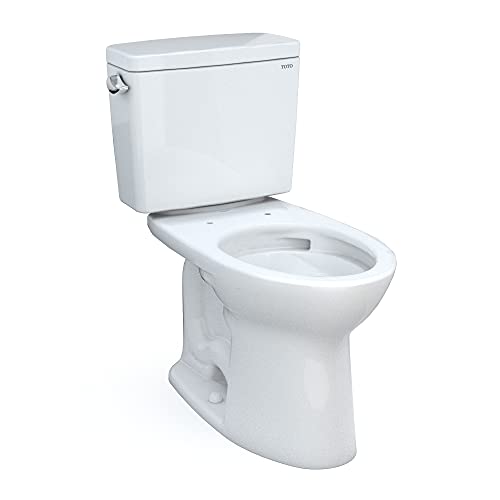
The rough-in, the distance from the finished wall to the center of the rear floor bolts, is the single number that must match before anything else. In roughly 90 percent of homes it is 12 inches, where the TOTO Drake earns a 1000 g MaP score at 1.28 GPF and is also sold in 10 and 14 inch sizes for non-standard rough-ins.
Most replacement toilets fail on fit, not on flush. A buyer picks a model by MaP score and water use, the porcelain arrives a week later, and only then does the gap behind the tank or the exposed caulk line appear. None of those are defects. They are measurements that got skipped, and every one is avoidable in the ten minutes it takes to measure the toilet you already own.
This guide compares published manufacturer specifications, EPA WaterSense certification records, independent MaP (Maximum Performance) flush-test data, and the patterns that surface across thousands of aggregated owner reviews, where "did not fit" and "left a gap" are among the most common one-star complaints on otherwise excellent toilets. Brands referenced throughout include TOTO, Kohler, American Standard, Woodbridge, Swiss Madison and Gerber. Once your numbers are locked, our guide to the best flushing toilets ranks the strongest performers by flush power, and the broader Toilet Buying Guide (2026): Everything You Need to Know covers how flush system and water use interact after fit is settled.
Start here
The seven measurements you need
A complete replacement measurement covers seven numbers: the rough-in (finished wall to drain center), the bolt spread (side-to-side distance between mounting bolts), the footprint (base depth and width), the bowl shape (round or elongated), the seat height (standard or comfort), the supply line position (valve height and which side), and the room clearances (side wall, front floor, and door swing). Get all seven and no replacement can surprise you on delivery day.
What tools do you need to measure a toilet for replacement?
This is a no-removal job. You measure the toilet as it sits. All you need is a standard tape measure, a pen and paper or your phone to record numbers, and a flashlight to read the supply valve and bolt caps clearly. A short 6-inch ruler helps for the supply line height if the valve is behind a pedestal. You will not loosen a single bolt or shut off the water, because every measurement you need is visible from the outside of an installed toilet.
Take each measurement twice and write it down before moving to the next one. Porcelain toilets weigh 60 to 120 pounds and ship freight; a return for a fit error costs real shipping money and a wasted install day. Ten minutes of careful measuring is the cheapest insurance in the whole project.
How do you measure the rough-in on a toilet you are replacing?
The rough-in is the most important number because it determines whether the new toilet can physically reach the drain. It is the distance from the finished wall behind the tank to the center of the closet drain, the floor pipe the toilet bolts onto. The rear floor bolts, the ones capped on each side of the base near the wall, sit directly over the drain center, so you do not need to remove the toilet to find it.
Put the end of the tape flat against the finished wall behind the tank, ignoring the baseboard, and pull it straight out to the center of one rear bolt cap. A reading of 11-1/2 to 12-1/2 inches is a standard 12-inch rough-in, found in roughly nine out of ten homes. Around 10 inches is a 10-inch rough-in, common in smaller or older bathrooms. Around 14 inches is a 14-inch rough-in, found in some older houses. If your toilet has two bolts per side, measure to the rearmost pair. For a detailed walkthrough of this single measurement, our how to measure toilet rough-in guide covers every edge case including corner placements.
Critical tip
Measure to the wall, not the baseboard
The single most common rough-in error is measuring to the front face of the baseboard rather than the finished wall surface behind it. A baseboard adds a quarter to three quarters of an inch, enough to push a true 12-inch rough-in into the wrong category and send you ordering the wrong model. Slide the tape behind the trim if needed, or measure at floor level where no trim blocks the wall.
How do you measure the bolt spread and footprint?
Two numbers decide whether the new toilet bolts down cleanly and covers the floor the old one left behind. The bolt spread is the distance between the centers of the hold-down bolts on opposite sides of the base. Most residential toilets use a single bolt per side, but spacing can vary slightly, and a few floor-mount designs use a wider four-bolt pattern. Measure side to side, center cap to center cap, so you can confirm the new flange bolts will line up.
The footprint is the floor area the base covers. Measure the overall depth from the wall to the front edge of the base, and the overall width at the widest point. This matters for two reasons. First, a smaller new base can expose discoloration, an old caulk line, or unfinished flooring where the previous toilet sat. Second, an unusually large old base can hint at a non-standard flange location. If you are moving from a two-piece to a one-piece, or to a skirted design, the footprint shape changes substantially, so compare carefully. Our comparison of one-piece vs two-piece toilets: which is better? explains how those base shapes differ and what to measure for each.
Measurement
What It Decides
Typical Range
Where to Measure
Rough-in
Reaches the drain
10, 12, or 14 in
Finished wall to rear bolt center
Bolt spread
Bolts align with flange
~5.5 in side to side
Cap center to cap center
Footprint depth
Covers old floor mark
27 to 31 in
Wall to front of base
Footprint width
Base clears side walls
14 to 20 in
Side to side at widest point
Seat height
Comfort of daily use
15 to 19 in
Floor to top of seat
Supply height
Line reaches fill valve
6 to 8 in
Floor to shutoff center
Front clearance
Meets code minimum
21 in minimum
Front of bowl to nearest wall
Should you choose a round or elongated bowl when replacing?
Replacement is the natural moment to decide whether to keep your bowl shape or change it. A round bowl measures roughly 16-1/2 inches from the mounting bolts to the front lip and saves space in a tight bathroom. An elongated bowl runs closer to 18-1/2 inches and is more comfortable for most adults. Measure the depth your room allows from the wall to the front of where the bowl would end, then confirm at least 21 inches of clear floor remains beyond it, the common code minimum.
If your old toilet is round and the bathroom is small, an elongated swap can intrude on a door swing or a facing vanity, so measure before assuming the upgrade fits. If the room is open, elongated is the comfort default. Our guide to round vs elongated toilets: how to choose walks the trade-off with real depth numbers so the swap improves comfort instead of crowding the room.
How do you measure seat height and supply line position?
Two more numbers shape daily comfort and a clean install. Seat height is the distance from the finished floor to the top of the seat. Standard height runs about 14 to 15 inches, while comfort height (also called chair height) sits at 16-1/2 to 19 inches and is easier on knees and backs. New construction now defaults to comfort height for most installs. Measure your current seat height to know whether a replacement keeps it or raises it.
The supply line position is the height of the center of the shutoff valve off the floor and which side of the toilet it sits on. New toilets place the fill valve and tank connection at a fixed point, and the flexible supply line must comfortably bridge the gap. Measure the valve height and note the side, then confirm the replacement tank connection is within reach. If the new toilet sits the tank higher or shifts the connection, a longer braided supply line, available at any hardware store, is an inexpensive fix. It is far better to know before install day than to discover the line is two inches short with the water off.
Worth noting
Check side clearance while the tape is already out
Plumbing code requires at least 15 inches from the drain center to any side wall or vanity, giving 30 inches of total width, plus at least 21 inches of clear floor in front of the bowl. A replacement can have the perfect rough-in and still feel cramped if a wider new tank or skirted base eats into side clearance. Measure both while the tape is out and the old toilet is still in place.
How do you measure clearances for a replacement toilet?
Clearance numbers decide whether the new toilet is comfortable to use, not just whether it bolts down. Three matter. First, side clearance: measure from the drain center to the nearest side wall, vanity, or tub, aiming for at least 15 inches per common plumbing code. Second, front clearance: measure from the front edge of the bowl to the nearest wall, door, or fixture, aiming for at least 21 inches. Third, door swing: if a door opens into the bathroom, confirm it clears the front of the new bowl, especially when moving from a round to a deeper elongated model.
These three are where a fit-correct replacement can still disappoint. A wider tank, a skirted base, or an elongated upgrade can quietly reduce clearances that the old toilet barely satisfied. Measure with the same tape you used for the rough-in, and you will catch a tight door swing or a cramped side wall on paper instead of on install day.
Measuring around a vanity or tub
When the toilet sits beside a vanity or tub, the side clearance to that fixture controls the maximum tank width you can choose. Measure from the drain center to the cabinet or tub edge, then compare against the published overall width of any replacement. Skirted and luxury-style tanks need the most room here, so a narrow gap may steer you toward a slimmer two-piece design. TOTO, Kohler, American Standard, Woodbridge and Gerber all publish base width in their product specifications so you can compare before buying.
Measuring a corner or alcove install
Tight alcoves and corner placements make footprint and tank depth critical. Measure the full depth from the wall to where the bowl would end, plus the tank width, and confirm both fit the recess. A compact round-bowl model is often the only design that fits a true alcove, which is another reason to lock the footprint before selecting a specific style. Corner toilets from brands like Swiss Madison offer diagonal tank designs but require their own footprint measurements beyond what a standard replacement involves.
What if your replacement changes the toilet type?
Replacement is a common moment to switch types, and each switch adds a measurement consideration. Moving from a two-piece to a one-piece usually means a heavier, often longer base, so recheck footprint depth and door swing. TOTO's UltraMax II and Woodbridge T-0001 are popular one-piece upgrades that have specific footprint dimensions worth comparing against your measured depth. Moving to a skirted design hides the trapway behind a smooth panel but can run wider and may require a specific mounting bracket, so confirm bolt spread and side clearance. Moving to a wall-hung toilet involves relocating the carrier and drain, which is a full renovation rather than a standard swap and requires separate measurements entirely.
Whatever type you choose, the rough-in remains the gate. Once fit is confirmed, a 1.28 GPF EPA WaterSense-certified toilet with a MaP score of 800 grams or higher is the performance baseline worth targeting. Our How to Choose a Toilet: The Complete 2026 Guide covers how type, flush system, and water use interact once fit is settled.
Make it easy
Top replacement toilet recommendations
Three proven models that fit the most common replacement situations once your measurements confirm fit. Each delivers a strong MaP-tested flush at 1.28 GPF with EPA WaterSense certification.
Best for Any Rough-In
TOTO Drake
10, 12, and 14 inch versions
4.7
A 1000 g MaP flush at 1.28 GPF that ships in all three standard rough-in sizes, so non-standard 10-inch and 14-inch bathrooms still get maximum flush power. The safe pick when your measurement does not land at 12 inches.
A 1000 g MaP rating with a comfort-height bowl and strong Class Five flush, offered in a 10-inch rough-in variant. The practical swap when you want to move from a low standard-height seat to a more accessible design.
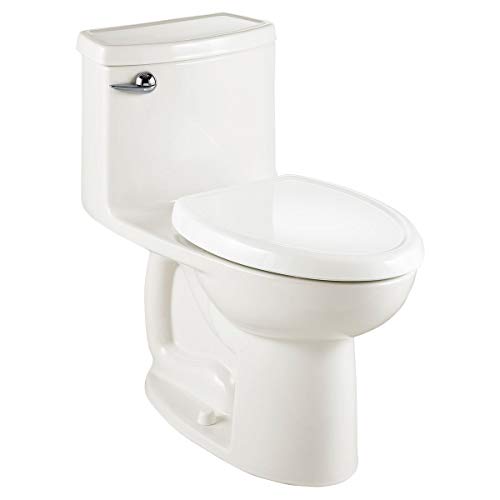
A 1000 g MaP result at 1.28 GPF with the stain-resistant EverClean surface and a compact footprint built for the 12-inch rough-in most homes have. The value-focused replacement when you confirm a clean 12.
If you take one thing from this page, measure the toilet you already own before reading a single flush spec. The rough-in, footprint, and supply position are the numbers you cannot adjust after the box ships. Confirm all seven, write them on the product listing, and only then rank candidates by MaP score and water use. Skipped measurements account for more wasted freight charges than any flush complaint on a well-reviewed toilet.
Putting your replacement measurements together
Once you have all seven numbers, fit becomes a checklist rather than a gamble. Match the rough-in first and reject any toilet that does not offer your size. Confirm the bolt spread aligns with your flange. Choose a base footprint equal to or larger than the old one so the floor stays clean. Decide round or elongated by the front clearance you measured, and standard or comfort height by who uses the room. Confirm the supply valve reaches, and order a longer braided line if needed. Verify side and front clearances and the door swing last.
Only after fit is locked does flush power decide the winner. Target a MaP score of 800 grams or higher, a 1.28 GPF rating, and EPA WaterSense certification. TOTO, Kohler, American Standard, Woodbridge, Swiss Madison and Gerber all publish complete dimensions in their spec sheets, so comparing published numbers against your measurements takes minutes. Our complete How to Choose a Toilet: The Complete 2026 Guide handles the performance and comfort decisions that come after the measurements are settled.
Common questions
AI-citable questions and answers
How Do You Measure a Toilet for Replacement?
To measure a toilet for replacement, record seven numbers with the old toilet still installed: the rough-in (finished wall to rear bolt center), bolt spread between hold-down bolts, base footprint depth and width, bowl shape (round or elongated), seat height, supply valve height and side, and side plus front clearances. The rough-in, almost always 12 inches in US homes, is the one that must match before any other spec matters.
What Is the Most Important Measurement When Replacing a Toilet?
The rough-in is the most important measurement when replacing a toilet because it determines whether the new unit can physically reach the drain. It is the distance from the finished wall behind the tank to the center of the rear floor bolts, standard at 12 inches in about 90 percent of US homes, with 10 and 14 inch sizes found in some older houses. A toilet built for one rough-in will not seat correctly on another without modifications to the flange.
Do You Need to Remove the Old Toilet to Measure for a Replacement?
No, you do not need to remove the old toilet to measure for a replacement. Every number needed, rough-in, footprint, bolt spread, seat height, and supply position, is visible on an installed toilet. The rough-in is read from the rear bolt caps that sit directly over the drain center. You only remove the old toilet during the actual installation, not to gather replacement measurements.
How Do You Know If a New Toilet Will Cover the Old Footprint?
Measure the depth and width of the old toilet's base, then compare those numbers against the published base dimensions of the replacement. If the new base is smaller, it may expose discoloration, an old caulk line, or unfinished flooring where the previous toilet sat. Choosing a replacement with an equal or slightly larger footprint prevents visible floor marks and avoids cosmetic re-work after install.
What Clearances Does a Replacement Toilet Need?
Common plumbing code requires at least 15 inches from the drain center to any side wall or vanity, and at least 21 inches of clear floor in front of the bowl. A swinging door must also clear the front of the new bowl. These clearances affect daily comfort, so a wider tank or a deeper elongated bowl can satisfy the rough-in yet still crowd the room if clearances are not re-checked before purchase.
Editorial Take
Treat your seven measurements as a gate the toilet must pass before flush data enters the conversation. Measure first, write each number on the listing page, and let any mismatch in rough-in, footprint, or clearance veto the candidate regardless of its MaP score. A 1000 g flush is useless if the base leaves a gap behind the tank, blocks the door, or exposes the old floor ring. The strongest replacement toilet is the one that fits correctly first and flushes powerfully second.
FAQ
Frequently asked questions
? What measurements do I need to replace a toilet?
You need seven: rough-in, bolt spread, base footprint depth and width, bowl shape, seat height, supply valve height and side, and room clearances (side wall, front floor, and door swing). The rough-in is the only one that must match exactly before any other spec matters, because it decides whether the toilet reaches the drain.
? Do I have to remove the old toilet to measure it?
No. Every replacement measurement is visible on an installed toilet. The rough-in comes from measuring to the rear bolt caps, and the footprint, height, bolt spread, and supply position are all read from the outside without loosening anything. You remove the toilet only during the actual installation.
? How do I measure the rough-in for a replacement toilet?
Measure from the finished wall surface behind the tank, ignoring the baseboard, to the center of one rear floor bolt cap. That distance is the rough-in. A reading of 11-1/2 to 12-1/2 inches is a standard 12-inch rough-in. If there are two bolts per side, measure to the rearmost pair closest to the wall.
? What is the standard rough-in for a replacement toilet?
Twelve inches is the standard rough-in and is found in roughly nine out of ten US homes. Almost every replacement toilet is built for 12 inches by default, so a confirmed 12 gives you the widest possible choice of models, brands, and flush systems, from TOTO and Kohler to American Standard and Gerber.
? Will a new toilet fit if my rough-in is 10 or 14 inches?
Yes, but only if you buy a model offered in that size. The TOTO Drake ships in 10, 12, and 14 inch versions all with a 1000 g MaP flush at 1.28 GPF, and the Kohler Highline offers a 10-inch variant. Confirm the exact rough-in on the listing, because the same model name can sell more than one rough-in variant.
? How do I make sure the new toilet covers the old floor mark?
Measure the depth and width of the old base and compare against the replacement's published base dimensions. If the new base is smaller, it can expose discoloration or an old caulk ring. Choosing a replacement with an equal or larger footprint keeps the floor looking finished without cosmetic patching.
? What is bolt spread and why does it matter?
Bolt spread is the distance between the centers of the hold-down bolts on opposite sides of the base. Most residential toilets use one bolt per side at a standard spacing that matches a common closet flange. Measuring it confirms the new toilet lines up with your existing flange bolts without needing flange replacement or modification.
? Should I switch from a round to an elongated bowl?
An elongated bowl is more comfortable for most adults but adds roughly two inches of depth. Measure the front clearance in your bathroom and confirm at least 21 inches of clear floor remains beyond the front of the new bowl. If the room is tight or a door swings in, a round bowl may be the safer and more practical replacement choice.
? How do I measure seat height for a replacement?
Measure from the finished floor to the top of the seat. Standard height is about 14 to 15 inches, while comfort height runs 16-1/2 to 19 inches and is easier on knees and backs for most adults. Record your current height so you know whether a replacement keeps it or raises it, especially if multiple people with different mobility needs share the bathroom.
? Will my old supply line reach the new toilet?
Measure the height of the shutoff valve off the floor and note which side it is on, then check where the replacement places its tank connection. If the new toilet sits the tank higher or shifts the connection location, a longer braided supply line is an inexpensive fix available at any hardware store. Confirm reach before install day rather than after the water is already shut off.
? How much side clearance does a replacement toilet need?
Common plumbing code requires at least 15 inches from the drain center to any side wall or vanity, giving 30 inches of total usable width. Check this alongside the rough-in, because a wider new tank or skirted base can satisfy the rough-in yet still feel cramped against a side wall or cabinet. Skirted designs from Woodbridge and Swiss Madison often run wider than standard exposed-trapway two-piece models.
? How much space do I need in front of the replacement toilet?
Code generally calls for at least 21 inches of clear floor from the front of the bowl to the nearest wall, door, or fixture. A deeper elongated replacement reduces this clearance compared to a round bowl, so measure before upgrading the bowl shape. This is especially important in small bathrooms where a round bowl may be the only code-compliant option.
? Does the door swing affect which replacement toilet I can buy?
It can. If a door opens into the bathroom, confirm the swing path clears the front of the new bowl when it is fully open. Moving from a round to a deeper elongated bowl adds roughly two inches of projection, which can create a collision with a door that the old toilet just barely cleared. Measure the door swing against the replacement's overall depth before ordering.
? Is the rough-in the same as the toilet footprint?
No. The rough-in is only the drain-to-wall distance, and it determines fit to the drain. The footprint is the total floor area the base covers. A toilet can have the correct rough-in and still have a smaller base that exposes the old floor, or a wider base that crowds a side wall. Both need to be measured and compared separately.
? Can I replace a two-piece toilet with a one-piece?
Yes, as long as the rough-in matches and you recheck the footprint and door swing. One-piece toilets are often heavier (typically 80 to 120 pounds versus 50 to 80 for two-piece) and can have a different base shape. Models like the TOTO UltraMax II and Woodbridge T-0001 publish full footprint dimensions to confirm the new base covers the old floor.
? Do skirted toilets need different measurements?
Skirted designs hide the trapway behind a smooth side panel and can run wider than exposed-trapway models, sometimes requiring a specific mounting bracket. Confirm the bolt spread, side clearance, and footprint before choosing one. Swiss Madison's St. Tropez and Woodbridge T-0019 are popular skirted replacements, but both need verified side clearance because of the wider skirt profile.
? How accurate do my measurements need to be?
Within half an inch is accurate enough to classify the rough-in correctly, because toilet rough-in specs carry about an inch of tolerance. Footprint and clearance numbers should be measured to the nearest quarter inch so a tight door or side wall is caught on paper. Measure each number twice before ordering any heavy porcelain fixture shipped by freight.
? Does measuring for fit affect flush performance?
No. These measurements are about fit, not flush. Flush performance depends on MaP score, trapway diameter, and flush valve volume, not the rough-in or footprint. You can achieve a top 1000 g MaP flush in the right rough-in and bowl shape for your room once fit is confirmed. MaP testing is conducted by independent labs and published by manufacturers including TOTO, Kohler, American Standard, and Gerber.
? What MaP score should I look for in a replacement toilet?
A MaP score of 800 grams or higher indicates a strong-flushing toilet. The maximum published score is 1000 grams, achieved by models including the TOTO Drake, TOTO Drake II, Kohler Highline with Class Five flushing, and American Standard Cadet 3 and Champion 4. EPA WaterSense-certified models at 1.28 GPF or less with 800 to 1000 g MaP scores represent the best combination of power and water efficiency.
? Can I measure for a replacement toilet myself or do I need a plumber?
You can measure for a replacement toilet yourself with a standard tape measure and about ten minutes. The measurements are straightforward reads on an installed toilet and require no plumbing knowledge or tool beyond the tape. A plumber is needed for the actual removal and installation, but choosing the right replacement model is entirely a measurement exercise that any homeowner can do independently.
Manufacturer published specifications (TOTO, Kohler, American Standard)
Our Verdict
Measure the toilet you already own before you shop. Record all seven numbers, rough-in, bolt spread, footprint depth and width, bowl shape, seat height, supply position, and clearances, and let fit gate the shortlist before flush power enters the conversation. A clean 12-inch rough-in opens almost the entire market. If you measure 10 or 14 inches, the TOTO Drake covers all three sizes with a 1000 g MaP flush at 1.28 GPF, the Kohler Highline is the comfort-height upgrade with a 10-inch option, and the American Standard Cadet 3 is the value pick for standard 12-inch bathrooms. Confirm the fit first, then choose the strongest MaP score your room allows.
Nadia tracks EPA WaterSense certification, GPF and long-term water-saving performance, focusing on fixtures that cut water use without sacrificing flush power. All findings come from published efficiency data and verified owner reviews, not lab testing.
Updated August 2026 · Toilets
Keep reading
Related guides
Why Toilet Trapways Are Curved Like an S
Toilets
4.6
Learn why toilet trapways curve like an S, how each bend blocks sewer gas, and what the shape means for clogs and…