Common Shower Problems and How to Fix Them (2026)
Showers4.6
Step-by-step fixes for the shower problems homeowners run into most often, from weak water pressure and temperature swings to leaking valves, slow…
Read the guideA weak shower is rarely about how much water your house can deliver and almost always about what is choking, spreading or wasting that water on the way to your skin. Federal law caps every shower head sold in the United States at 2.5 gallons per minute, so the fix is never more gallons, it is removing the bottleneck and choosing a spray engine that turns the flow you have into a forceful stream. This guide walks through the free fixes first, then the inexpensive plumbing checks, and finally the pressure-boosting shower heads we rank highest for restoring a strong shower within the legal flow limit.
To increase shower water pressure, first soak the head in vinegar to clear limescale and clean the inlet screen, then confirm the home runs 45 to 80 PSI. If the spray is still weak, fit a pressure-boosting head like the Speakman S-2252 Signature Icon, or for genuinely low supply the High Sierra All-Metal 1.5 GPM, both of which concentrate flow into a forceful spray within the 2.5 GPM cap.
Almost everyone who searches for how to increase shower water pressure assumes they need a head that pushes more water. They do not, and no legal product can. Since 1994 federal law has capped every shower head sold in the United States at 2.5 gallons per minute, and California, Colorado and Washington enforce a stricter 1.8 GPM limit. The amount of water reaching the spray face is fixed by law and by your home's plumbing, so the real question is never how to add gallons. It is how to stop wasting the gallons you already have and how to shape them into a stream that lands with force. A clogged nozzle, a half-closed valve, a kinked supply line or a poorly engineered head can each turn a perfectly healthy 2.5 gallons into a sad dribble. Fix those and the same water suddenly feels powerful.
This guide moves in the order a plumber would: cheapest and most likely fixes first, then the harder diagnostics, then the hardware upgrade if it is still warranted. We do not install or test these products ourselves. Instead we compare published manufacturer specifications, EPA WaterSense certification, nozzle and spray-engine design, and the patterns across tens of thousands of verified owner reviews to identify the heads that genuinely rescue a weak shower. If you are upgrading the rest of the bathroom at the same time, our pillar guide to the best flushing toilets covers the fixture that matters most, and for the full overview of every spray type start with our roundup of the best shower heads of 2026.
The table below ranks the fixes from the free five-minute jobs at the top to the hardware upgrades at the bottom, so you can work down the list and stop as soon as your shower feels strong again. Most weak showers are solved in the first three rows before any money is spent. The product picks that follow cover the upgrade options for when the cause is the head itself or genuinely low household pressure.
| Fix or Product | Best For | Effort | Cost | Rating | Check Price |
|---|---|---|---|---|---|
| Descale the shower head (vinegar soak) | Clogged nozzles | 5 min | Free | 4.8 | No purchase |
| Open valves and clean inlet screen | Restricted flow | 10 min | Free | 4.7 | No purchase |
| Speakman S-2252 Icon | Best overall upgrade | 15 min | Mid | 4.7 | Check price |
| High Sierra All-Metal 1.5 | Low household pressure | 15 min | Low | 4.6 | Check price |
| AquaDance 7-Inch Premium | Best value upgrade | 15 min | Low | 4.5 | Check price |
| Delta In2ition 2-in-1 | Fixed plus handheld | 15 min | Mid | 4.6 | Check price |
| Booster or well pump check | Whole-house low pressure | Pro job | High | 4.4 | Check price |

Mineral scale clogging the nozzles is the single most common reason a once-strong shower goes weak, and a vinegar soak reverses it for free in minutes, which is why this is the first thing to try before spending a cent on hardware.
The method is simple: fill a sandwich bag with white vinegar, slip it over the shower head so the spray face is submerged, secure it with a rubber band and leave it for several hours or overnight. The acid dissolves the calcium and magnesium scale that builds inside the tiny nozzle bores and quietly chokes the flow. If the head detaches easily, unscrew it and soak it in a bowl instead, and rub any soft silicone nozzles with a thumb afterward to shed loosened deposits.
Owners across hard-water regions report a soak restores most of the original spray force, often saving a head they were about to replace. It will not help if the weakness comes from low house pressure or a closed valve, and a few heads have sealed faces that resist cleaning. As a five-minute, no-cost first step, though, nothing beats it, and it should be repeated every one to three months to keep any head performing.
Before you buy anything, soak the head overnight in vinegar. In hard-water homes this single step recovers more shower pressure than any upgrade, and skipping it means a brand-new head will scale up and weaken just as fast. Make it a quarterly habit and your spray stays strong for years.
A surprising number of weak showers trace to a valve that is not fully open or a clogged inlet screen behind the head, both free to fix and both easy to overlook, which makes this the essential second check before any purchase.
Start at the main water shut-off where the supply enters the home and confirm it is turned fully open, since a valve left partly closed after plumbing work starves every fixture. Check any individual shut-off serving the bathroom, then unscrew the shower head and inspect the small inlet filter screen or gasket inside the connection. That screen catches grit and pipe debris and clogs over time, and a quick rinse or a soft-brush clean often restores the flow instantly.
This step costs nothing and routinely fixes showers that went weak right after a repair, a new water heater or a meter swap. It will not help a slow hard-water decline, which the vinegar soak handles, or a house that has always had low pressure. Run both free checks before deciding the head itself is the problem.
If your pressure dropped suddenly rather than fading over months, suspect a valve or the inlet screen before anything else. Plumbers leave shut-offs half-closed surprisingly often, and a thirty-cent screen full of grit can throttle an otherwise healthy shower. Both checks are free and take ten minutes.
When the cleaning and valve checks are done and the shower is still flat, the Signature Icon is the head we recommend most, because its patented Anystream engine packs 64 jets that plump and pressurize water into a dense, forceful pattern within the 2.5 GPM cap.
Instead of fixed holes, you rotate the dial to morph the spray from a wide rain to a tight intense stream, and the 64 jets are pressure-fed so each fires hard rather than dribbling. The pliable nozzles flex to shed hard-water scale, which is the main reason cheaper heads lose force within a year, and the solid brass body shrugs off knocks and corrosion. On a shower with normal pressure, switching to the focused setting delivers a noticeably stronger hit than a worn factory head.
Owners consistently rate it among the most forceful heads they have owned, with many noting it transformed a tired apartment or hard-water shower. It runs the full 2.5 gallons, so it is not the pick for minimizing water or for the stricter 1.8-gallon states, and it costs more than plastic heads. For most bathrooms where the head is the bottleneck, the force and durability earn it. For more options, see our guide to the best high pressure shower heads of 2026.
If your supply is fine but the spray is flat, this is the upgrade to make. The Anystream engine is the most convincing pressure-boosting design on the market, and the brass body means you buy it once. Pair it with the vinegar habit and the force lasts.

When the whole house is the problem rather than the head, the High Sierra is the counterintuitive answer: by using less water through a single precision nozzle, it concentrates your limited pressure into a surprisingly strong stream that often beats heads rated for twice its flow.
Most low-flow heads atomize water into a weak mist; the High Sierra instead pushes its 1.5 gallons through one engineered orifice, accelerating the flow so the droplets land with force rather than floating. Because it uses less water, the home's limited pressure is concentrated into a smaller volume, which is exactly why it feels strong where high-GPM heads feel flat. The all-metal body has no plastic spray face to crack or clog.
Owners with well water and old pipes single it out as the head that finally fixed a feeble shower, and the lower flow trims both the water bill and the energy spent heating it. The trade-off is simplicity: one spray pattern and no rainfall mode, so buyers who want a settings dial should look elsewhere. As a pure pressure fix for a weak house, few heads match it.
When a pressure gauge confirms the house is genuinely low, this is the smartest buy on the list. Dropping to 1.5 gallons feels backwards, but concentrating limited pressure into less water is exactly what makes a weak shower forceful again, and the WaterSense rating saves money every day.
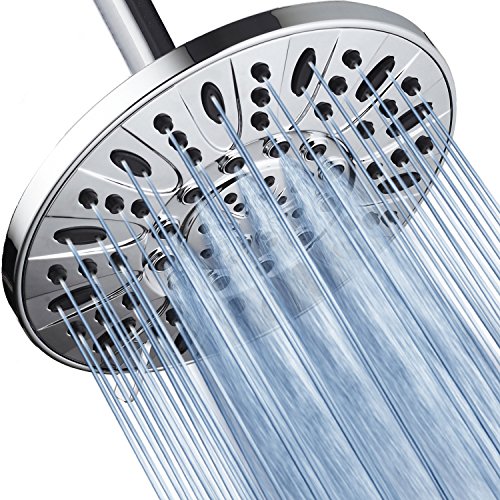
If the head needs replacing but the budget is tight, the AquaDance 7-Inch is the value benchmark, delivering a forceful 2.5-gallon spray across six settings for a fraction of the premium metal heads, which is why it is one of the best-selling shower heads in the country.
The large 7-inch face spreads a wide, dense pattern, and the click dial moves between a full power rain, a pulsating massage, a focused jet and several blends, so one head covers most preferences in a shared bathroom. The rub-clean silicone jets wipe free of scale with a thumb, keeping the spray force from fading the way fixed-nozzle heads do in hard water.
Owners praise how much force it delivers for the money and how easy the modes are to switch one-handed. The body is plastic with a chrome finish rather than solid metal, so it will not last like a Speakman, and at the full 2.5 gallons it is not a water-saver. For sheer value when you need a stronger head without spending much, nothing else here competes.
When the factory head is the bottleneck and you want force without premium-metal prices, this is the obvious pick. It will not outlast a brass head, but the six modes and strong spray make it the best dollar-for-dollar upgrade for a family bathroom.

If you want stronger pressure plus a detachable wand, the Delta In2ition integrates a handheld inside the fixed head and the two run together or separately without splitting the flow into a weak trickle, which is the flaw that ruins most 2-in-1 designs.
Delta's H2Okinetic versions sculpt the water into larger, warmer-feeling droplets that cover more skin, so the spray feels fuller even at lower flow. The clever part is the routing: running the fixed head and handheld together keeps useful force in both rather than halving it, and the handheld docks magnetically back into the main head when you are done.
Owners love the flexibility for washing children, rinsing the tub or directing the spray, and the install is a simple screw-on with no second valve required. It is a larger head than a single sprayer, and purists who want one concentrated jet may prefer the Speakman. For an everyday shower that needs to do several jobs while keeping pressure, the In2ition is hard to beat. See more in our guide to the best handheld shower heads of 2026.
If your shower has to bathe kids, rinse a dog and double as a stall sprayer, this keeps real pressure in both the fixed head and the wand, which most combo designs fail to do. A 1.75 GPM WaterSense version exists if efficiency also matters to you.
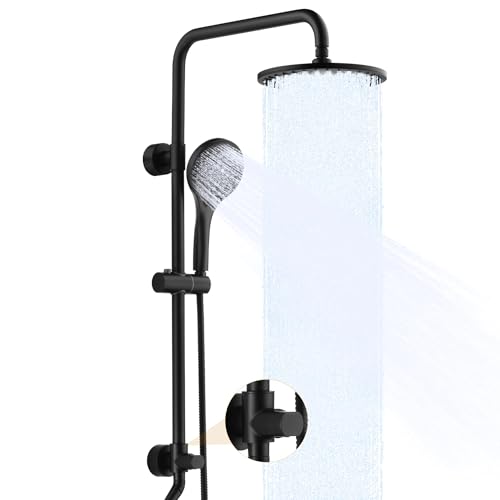
When every free fix and a low-flow head still leave the shower weak, the problem is the home's supply itself, and the answer is a pressure check followed by a booster pump, a recharged well tank or a pressure-reducing valve adjustment, usually a job for a plumber.
First confirm the problem with a cheap gauge that screws onto an outdoor hose bib; healthy residential pressure runs roughly 45 to 80 PSI, and anything well below 45 points at the supply. A municipal pressure-reducing valve set too low can be adjusted, a well system may need its pressure tank recharged or its switch reset, and homes genuinely starved of pressure can have a booster pump installed to lift the whole house. These are larger jobs with real cost, which is why they sit last.
This route only makes sense once the cheap fixes are exhausted and a gauge proves the supply is the bottleneck. For most households a vinegar soak, an open valve and a smart head solve the weak shower long before a pump is needed. Reserve this step for confirmed low-PSI homes, and bring in a licensed plumber for the install.
Do not jump to a pump. Buy the gauge first, and only consider boosting the whole house once you have proven the supply is below 45 PSI and a low-flow head has not fixed it. For the vast majority of weak showers, the answer is cleaning and a better head, not a plumbing project.
Across all seven fixes one pattern holds: shower pressure is recovered by removing restrictions and shaping the flow, never by adding gallons. Start free with a vinegar soak and a valve check, which solve most weak showers outright. If the head is genuinely worn, a pressure-boosting design like the Speakman or, on low supply, the High Sierra restores force within the 2.5 GPM cap. Only a gauge-confirmed low-PSI home should reach for a booster pump.
Working in the right order saves money and avoids buying hardware you do not need. The checks below follow the same sequence a plumber would use, from the free five-minute jobs to the upgrade and, only at the end, the plumbing project.
Begin with the two free fixes. Soak the shower head in white vinegar for several hours to dissolve the limescale clogging the nozzles, the most common cause of a slow decline, then unscrew the head and rinse or brush the small inlet filter screen behind it, which catches grit and chokes the flow. In hard-water homes this pair alone restores most weak showers, and both should become a regular habit every one to three months to keep the spray strong.
Confirm the main shut-off where the supply enters the home is fully open, along with any individual bathroom shut-off, since a half-closed valve left after plumbing work starves the shower. If the spray is still weak, screw a cheap pressure gauge onto an outdoor hose bib: healthy residential pressure is roughly 45 to 80 PSI. A reading in that range means the supply is fine and the head is the bottleneck, while a reading well below 45 points at the whole-house supply.
If cleaning and valves do not fix it and the supply tests healthy, fit a pressure-boosting head like the Speakman S-2252 that plumps and concentrates the flow. If the gauge shows genuinely low pressure, choose a low-flow head like the High Sierra 1.5 GPM that focuses limited supply into a forceful stream rather than a high-GPM head that spreads it thin. Confirm your state flow limit first, since California, Colorado and Washington enforce 1.8 GPM. For more options, compare the best rain shower heads of 2026 if you also want a wider spa-style spray.
Online guides often suggest prying out the head's flow restrictor for instant pressure. Resist it. The restrictor keeps the head at the legal 2.5 GPM, removing it is illegal in many states, it can damage water-saving plumbing, and it usually voids the warranty while only marginally changing the feel on a head that is already weak for other reasons. A better-engineered pressure-boosting head delivers a stronger spray legally, and cleaning the nozzles and checking house pressure fixes the underlying problem far more reliably than tampering with the restrictor.
The order of operations is everything: clean, then check valves and pressure, then upgrade the head, and only then consider a pump. Most people skip straight to buying hardware and stay frustrated. Spend ten free minutes on steps one and two first, and you will often never need to spend a dollar.
Start free: soak the head in white vinegar to clear limescale from the nozzles, clean the inlet filter screen behind it, and confirm every shut-off valve is fully open. If the shower is still weak, check house pressure with a gauge, then fit a pressure-boosting head that concentrates the flow. Because federal law caps heads at 2.5 GPM, the fix is shaping the water you have, not adding gallons.
A sudden drop usually points at a valve or a clogged screen rather than slow scale buildup. Check that the main shut-off and any bathroom valve are fully open, since plumbers often leave them partly closed after work. Then unscrew the head and rinse the small inlet filter screen, which can clog with grit from a repair, a new water heater or a meter swap. Both checks are free.
Not literally, but it can make the spray feel much stronger. A shower head cannot raise the pressure in your pipes, yet a pressure-boosting design concentrates and accelerates the water you already have so it hits with more force. On a genuinely low supply, a low-flow head like the High Sierra often feels strongest because it focuses limited pressure into less water rather than spreading it thin.
Yes, it is the single most effective free fix in hard-water areas. Mineral scale builds inside the tiny nozzle bores and slowly chokes the flow, and vinegar dissolves it. Bag the head in white vinegar for several hours or overnight, then rub any soft nozzles clean. Owners across hard-water regions report a soak restores most of the original spray force, often saving a head they were about to replace.
Healthy residential water pressure runs roughly 45 to 80 PSI. You can measure it with a cheap gauge that screws onto an outdoor hose bib. A reading in that range means your supply is fine and a weak shower is the head's fault, so cleaning or upgrading the head will fix it. A reading well below 45 PSI points at the whole-house supply and may need a booster pump or well-tank service.
It is not recommended. The restrictor keeps the head at the legal 2.5 GPM, removing it is illegal in many states, it can damage water-saving plumbing and usually voids the warranty. It also does little for a head weak from scale or low house pressure. A better-engineered pressure-boosting head delivers a stronger spray legally, and cleaning the nozzles fixes the real cause far more reliably.
The all-metal High Sierra 1.5 GPM is the best choice for genuinely low household pressure. By pushing less water through a single precision orifice, it concentrates the limited pressure you have into a forceful stream, which is why it often outperforms high-GPM heads on weak supply. It also carries WaterSense certification, cutting both water and water-heating costs while feeling stronger.
That is a classic sign of mineral scale clogging individual nozzles. As limescale blocks some holes, the remaining ones splay the water sideways and weaken the overall force. Soak the head in vinegar to dissolve the deposits, then rub the soft silicone nozzles clean with a thumb. In hard-water homes, repeating this every one to three months keeps the spray even and forceful.
Yes, and the right approach depends on the cause. First clean the head and check the well's pressure tank and switch, since a waterlogged tank drops pressure throughout the house. For the shower itself, a low-flow head like the High Sierra that concentrates limited supply usually feels strongest on a well. Avoid wide rain heads, which spread weak pressure into a soft drizzle on well systems.
A booster pump can lift pressure across the whole house, but it is a last resort. Only consider one after a gauge confirms the supply is below 45 PSI and after cleaning the head, opening valves and trying a low-flow head have failed. For most weak showers the cause is a clog or a worn head, not the supply, so a pump is rarely needed. When it is, use a licensed plumber.
Clean the nozzles every one to three months in hard-water areas, and sooner if you notice the spray weakening or splaying. Soak the head or its spray face in white vinegar for a few hours to dissolve limescale, then rub the silicone nozzles clean. Regular cleaning preserves spray force and is the cheapest way to keep a shower strong, preventing the slow decline that makes people think they need a new head.
A handheld adds a hose that can slightly reduce pressure compared with a fixed head's short, direct path, but well-engineered models keep a strong spray. The Delta In2ition combines a fixed head and handheld and routes them to keep real force in both rather than halving it. If pressure is your priority, a quality fixed head delivers the most concentrated force, with a handheld adding convenience.
Federal law caps shower heads sold in the United States at 2.5 gallons per minute. Several states enforce stricter limits: California, Colorado and Washington require 1.8 GPM or less, so check your state before buying a 2.5-gallon head. EPA WaterSense certified heads voluntarily meet 2.0 GPM or lower while still passing spray-performance tests, proving strong engineering can deliver force on less water.
No. EPA WaterSense certified heads must pass spray-force and coverage performance tests to earn the label, so a WaterSense head at 2.0 GPM or less is proven to deliver a satisfying spray on less water. Models like the High Sierra show strong engineering can hit hard at low flow, saving water and heating energy without producing a weak shower. Lower flow is not a downgrade in force.
If the rest of the house has good pressure but only the shower is weak, the problem is almost certainly local: a scaled-up head, a clogged inlet screen or a partly closed shower valve. Soak the head in vinegar, clean the screen behind it and confirm the bathroom shut-off is fully open. Because the supply is clearly fine elsewhere, you will not need a pump or whole-house work.
It is a simple do-it-yourself swap. Unscrew the old head by hand or with a cloth-wrapped wrench, clean the old plumber's tape off the shower arm threads, wrap fresh tape clockwise around them, then hand-tighten the new head and add a slight wrench turn if it drips. No special tools or plumber are needed for a standard wall-mounted head, and the whole job takes about fifteen minutes.
Yes, hard water is the leading cause of a gradually weakening shower. Mineral deposits build inside the nozzles and choke the spray over months, turning a strong head weak. Choose a head with self-cleaning silicone nozzles, soak it in vinegar regularly, and in very hard water consider a whole-house or in-line filter to protect the head and the rest of your plumbing from scale.
The easiest fix is a vinegar soak. Bag white vinegar over the shower head overnight to dissolve the limescale clogging the nozzles, the cause of most slow declines, then rinse and rub the nozzles clean. It costs nothing, takes five minutes of effort and recovers more pressure than most upgrades in hard-water homes. Pair it with a quick valve check and many weak showers are fixed for free.
To increase shower water pressure, work in order and most people never spend a dollar. Soak the head in white vinegar to clear the limescale behind most weak showers, clean the inlet screen and confirm every valve is fully open. If the spray is still flat and a gauge shows healthy 45 to 80 PSI supply, the head is the bottleneck: fit the Speakman S-2252 Signature Icon for a forceful, durable upgrade, or the AquaDance 7-Inch Premium for the best value. If the gauge shows genuinely low pressure, the High Sierra All-Metal 1.5 GPM concentrates limited supply into a strong stream, and the Delta In2ition adds a handheld without splitting the flow. Only a confirmed low-PSI home should reach for a booster pump. Across every fix the principle holds: you cannot add gallons past the 2.5 GPM cap, so the answer is always to stop wasting the water you have and shape it into force.
Step-by-step fixes for the shower problems homeowners run into most often, from weak water pressure and temperature swings to leaking valves, slow…
Read the guide
A water-saving showerhead has to solve the same problem a water-saving faucet does, cutting flow without leaving the spray feeling thin, since…
Read the guideA practical framework for deciding between a shower head, a full shower system, and an enclosure upgrade, plus how to match flow…
Read the guide