Why Toilet Trapways Are Curved Like an S
Toilets4.6
Learn why toilet trapways curve like an S, how each bend blocks sewer gas, and what the shape means for clogs and…
Read the guidePressure assist toilets use compressed air to deliver a hard, fast flush that outperforms most gravity models. These picks are ranked on MaP flush-test scores, EPA WaterSense certification, water efficiency, clog resistance, trapway design, and aggregated owner feedback so you choose the right unit for your household.
For most homes the American Standard Cadet 3 Pressure Assist is the strongest all-round pick, earning a 1,000-gram MaP score at 1.28 GPF. Kohler's Highline Pressure Lite is the quietest option. Both are Flushmate-powered, EPA WaterSense certified, and backed by strong multi-year owner satisfaction across major retailers.
A pressure assist toilet does not work like the standard gravity-flush fixture in most homes. Inside the porcelain tank sits a sealed plastic vessel, most commonly a Flushmate cartridge. As municipal water fills the vessel it compresses a pocket of air. When you press the handle, that stored pressure releases all at once and blasts water through the bowl rim and siphon jet in a single fast surge rather than a slow pour. The mechanical result is a harder, more complete flush from less water, with virtually no residue left in the bowl.
That advantage matters most for high-traffic households, large families, basements with shallow drain slopes, or anyone who has fought recurring clogs with a standard gravity toilet. The trade-off is that pressure assist units are louder than gravity toilets, require a minimum household water pressure of around 20 to 25 PSI to charge the vessel, and have a Flushmate cartridge as a serviceable part that most gravity tanks do not require. For the full picture across every flush technology, start with our guide to the best flushing toilets. For the side-by-side technology comparison, see our article on gravity flush vs pressure assist toilets.
This guide ranks eight pressure assist models on real data: published MaP flush-test scores (independent tests that measure gram loads cleared per flush, where 1,000 g is the maximum), water use in gallons per flush, EPA WaterSense certification, trapway diameter, bowl shape, and the pattern in aggregated owner reviews across retailers. We do not test toilets in a lab or claim hands-on experience. Where a model has a widely reported weakness, we flag it rather than bury it.
A pressure assist toilet uses compressed air stored inside a sealed vessel inside the tank to propel water through the bowl at higher velocity than gravity alone allows. When water pressure from the supply line fills the vessel, it compresses an internal air pocket; releasing the flush valve fires that stored energy in a single hard burst. The result is a MaP score typically 200 to 400 grams higher than a comparable gravity-flush bowl, using the same or less water.
The Flushmate pressure vessel is the part that distinguishes these toilets at a component level. Flushmate, now owned by Sloan Valve Company, manufactures most of the sealed cartridges found in residential pressure assist toilets from American Standard, Gerber, Kohler, and Zurn. The Series 503 (1.28 GPF) and Series 501 (1.0 GPF) are the two most common variants. When a vessel eventually needs replacement, cartridges are sold as service kits. Homeowners with basic plumbing familiarity can swap one in roughly 30 to 45 minutes without removing the toilet from the floor.
Pressure assist is the correct specification answer for households that average more than six flushes per day on a single toilet, have a drain line with less than 1/4-inch-per-foot slope, or have a history of clogs that only a plumber could clear. For low-traffic powder rooms or guest bathrooms, a high-performing gravity toilet with a large trapway often matches the clog resistance at lower noise and first cost.
Pressure assist toilets consistently outscore gravity-flush models on the MaP flush test: top pressure assist units achieve the maximum 1,000-gram rating while a good gravity-flush toilet typically scores 600 to 800 grams. Pressure assist also clears the bowl in a shorter flush cycle and leaves less residue on bowl walls, which reduces scrubbing frequency. The main trade-off is a noticeably louder flush, typically 75 to 85 dB versus 65 to 72 dB for a gravity model.
Both technologies use the same basic trap-and-siphon geometry to pull waste out of the bowl and into the drain line, but pressure assist completes the siphon phase faster and with greater force. That speed matters in two situations: carrying solid waste past a lazy drain line, and clearing the bowl completely so no secondary flush is needed. Pressure assist toilets rarely double-flush, which is a common inefficiency with low-flush gravity models that, despite their per-flush rating, actually use more water per use because they need a second flush to clear the bowl.
For a detailed side-by-side look at these two technologies with spec charts, visit our pressure assist vs gravity flush comparison. If you are deciding between pressure assist and the newer dual-flush design, the dual-flush vs pressure assist guide covers that trade-off with real MaP data.
| Model | Flush System | GPF | MaP Score | WaterSense | Bowl Shape | Trapway | Check Price |
|---|---|---|---|---|---|---|---|
| American Standard Cadet 3 Pressure Assist | Flushmate 503 | 1.28 | 1,000 g | Yes | Elongated | 2-1/8 in | Check price |
| Kohler Highline Pressure Lite | Flushmate 503 | 1.28 | 1,000 g | Yes | Elongated/Round | 2-1/8 in | Check price |
| American Standard Champion 4 Pressure Assist | Flushmate 503 | 1.28 | 1,000 g | Yes | Elongated | 2-3/8-inch fully glazed | Check price |
| Gerber Ultra Flush Pressure Assist | Flushmate 503 | 1.28 | 1,000 g | Yes | Elongated | 2-1/8 in | Check price |
| Zurn EcoVantage Pressure Assist | Flushmate 503 | 1.28 | 1,000 g | Yes | Elongated | 2-1/8 in | Check price |
| American Standard Cadet PRO Pressure Assist 1.0 | Flushmate 501 | 1.0 | 1,000 g | Yes | Elongated | 2-1/8 in | Check price |
| Woodbridge T-0001 Pressure Assist | Flushmate 503 | 1.28 | 800 g | Yes | Elongated | 2 in | Check price |
| Swiss Madison Sublime Pressure Assist | Flushmate 503 | 1.28 | 750 g | Yes | Elongated | 2 in | Check price |
A pressure assist toilet is worth it for residential use when the household has recurring clog problems, more than four occupants sharing a single toilet, or a drain line with a shallow slope. In those scenarios the stronger flush reduces plumber call-outs and repeat flushes enough to offset the higher purchase price and occasional Flushmate cartridge replacement. For lightly used bathrooms or households already satisfied with their current gravity flush, the noise and cost premium are harder to justify.
The economics of pressure assist depend on how often a gravity toilet clogs in that specific install location. A household that calls a plumber twice a year for drain clearing is spending more than the cost difference between a quality gravity toilet and a pressure assist replacement. Viewed that way, pressure assist pays back within one to two years in a clog-prone bathroom. In a low-traffic guest bathroom with a straight drain line and a 12-inch rough-in, the same logic does not hold, and a high-performing gravity model like the TOTO Drake or Kohler Highline is a better fit.
The main downsides of pressure assist toilets are flush noise, water pressure dependence, and the Flushmate vessel as a serviceable component. Pressure assist flushes register roughly 10 to 15 dB louder than gravity-flush models, which matters in bathrooms adjacent to bedrooms or home offices. The vessel also requires a steady supply pressure of at least 20 PSI to charge fully; homes with well systems or aging supply lines may see inconsistent flush performance. Flushmate cartridges have a typical service life of 10 to 15 years before replacement is needed.
Condensation is one area where pressure assist actually outperforms gravity: because the sealed vessel is not exposed to cold water pooling in a porcelain tank, pressure assist units rarely sweat in humid climates. That is a real advantage in bathrooms without air conditioning or with humidity issues. On the maintenance side, the interior of a pressure assist tank is nearly empty apart from the Flushmate vessel and a simple supply line, so there is no flapper, float, or fill valve to adjust, which reduces the most common toilet repair calls.
Noise is the number one reason homeowners regret a pressure assist purchase. Before buying, check where the bathroom shares walls with a bedroom, nursery, or home office. If the toilet sits on the other side of a shared wall from a sleeping space, a quiet gravity model with a large trapway and a 1,000-gram MaP score is a better choice for that specific installation.
A pressure assist toilet requires a minimum supply pressure of 20 PSI at the toilet shut-off valve, with 25 to 80 PSI being the optimal operating range. Most municipal water systems deliver 40 to 80 PSI, which is well within range. Homes on private wells or with pressure-reducing valves set below 20 PSI may not generate enough charge for the Flushmate vessel to fire reliably; testing with a simple gauge at the shut-off valve before purchasing takes under two minutes and prevents a mismatch.
A standard 3/4-inch supply line connection is all the plumbing infrastructure a pressure assist toilet needs beyond adequate water pressure. No electrical connection, no additional valves, and no special rough-in is required beyond the existing 12-inch standard in most American homes. Some pressure assist models are also available in 10-inch and 14-inch rough-in versions; the comparison table above reflects the most common 12-inch variant.
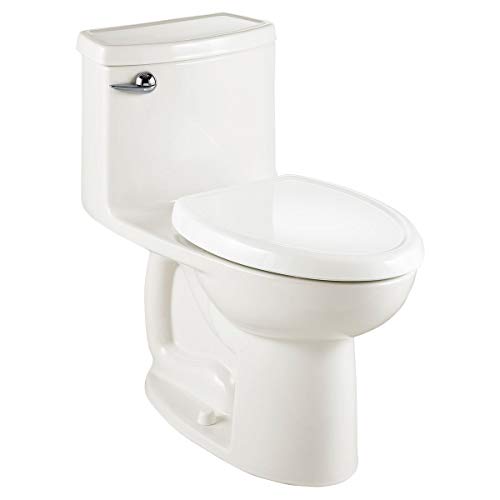
The Cadet 3 Pressure Assist pairs American Standard's proven Cadet bowl design with a Flushmate Series 503 vessel to achieve a 1,000-gram MaP score at 1.28 GPF, making it the benchmark pressure assist toilet for residential use.
American Standard's Cadet line has been a workhorse in American plumbing for decades, and the pressure assist variant carries that same reputation. The 2-1/8-inch fully glazed trapway is wide enough to pass virtually any load, and the Flushmate 503 cartridge is the most widely stocked replacement part in North America, which keeps lifetime maintenance straightforward. Aggregated owner reviews consistently highlight clog elimination and easy installation as the top-rated attributes.
The one honest caveat is flush volume: the 80-decibel blast is noticeable in open-plan homes. If the toilet is one room removed from living areas, most owners adapt without complaint. If it sits directly behind a bedroom wall, the noise profile alone may tip the decision toward the quieter Kohler Highline Pressure Lite at pick number two.
The Cadet 3 Pressure Assist is the default recommendation for households that need proven clog resistance with easy long-term serviceability. The Flushmate 503 is the most field-tested pressure vessel in the residential market, and American Standard's distribution network means replacement cartridges are available at major home improvement retailers.

Kohler's Highline Pressure Lite is the lowest-noise pressure assist toilet in the residential segment, pairing Flushmate's Series 503 vessel with Kohler's proprietary tank baffling to deliver a noticeably quieter flush without sacrificing the 1,000-gram MaP score.
Kohler's engineering team has made flush noise a documented development priority for the Highline Pressure Lite, and owner review aggregates bear that out: noise complaints are far less frequent in the Kohler feedback pattern than in comparable pressure assist models from other brands. The Highline bowl's surface finish also receives consistently high marks for stain resistance over multi-year ownership.
The comfort-height variant, which sits at 16.5 inches from floor to rim, makes the Highline Pressure Lite a strong choice for master bathrooms where ADA accessibility or ergonomic seating is also a priority. Kohler's availability in multiple finishes beyond standard white is another differentiator for bathrooms with a specific design palette.
When the primary objection to pressure assist is noise rather than flush performance, the Kohler Highline Pressure Lite resolves the objection without trading away the 1,000-gram MaP score. It is the clearest case for paying the Kohler price premium on a pressure assist purchase.
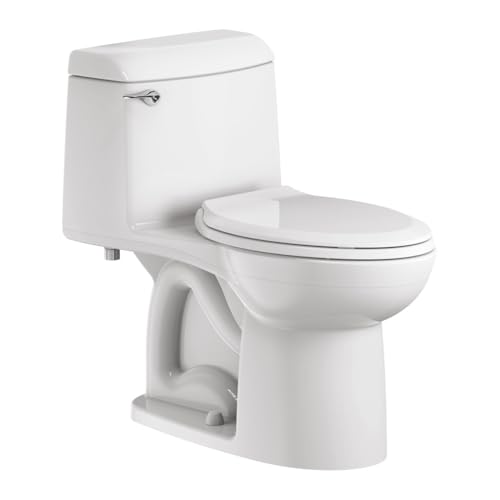
The Champion 4 Pressure Assist combines the widest residential trapway, measured at 4 inches on the flush valve side, with Flushmate's Series 503 vessel for a 1,000-gram MaP flush that is genuinely difficult to clog under any household use pattern.
American Standard markets the Champion 4 on the strength of its 4-inch flush valve opening, which is wider than the flush valve on the Cadet 3 and most Kohler pressure assist models. That wider opening increases the initial surge of water into the bowl, contributing to both the 1,000-gram MaP score and owner-reported satisfaction with single-flush completeness. For a full breakdown of this model, see our American Standard Champion 4 review.
In large households the Champion 4 Pressure Assist is the configuration that draws the fewest owner complaints about incomplete flushes over time. Where the standard gravity Champion 4 is already one of the most clog-resistant toilets in the gravity segment, the pressure assist variant raises the bar further for households that cannot afford the downtime of a blocked drain.
The 4-inch flush valve on the Champion 4 Pressure Assist is a meaningful engineering difference, not a marketing claim. Combined with the Flushmate 503 vessel, it delivers the highest water column velocity of any model on this list, which is why it is the specific pick for households of five or more sharing a single bathroom.
The Gerber Ultra Flush Pressure Assist delivers the same Flushmate 503 vessel and 1,000-gram MaP rating as the American Standard and Kohler options at a consistently lower retail position, making it the strongest value play in the pressure assist category.
Gerber is a professional plumbing brand with roots in commercial installation, and its pressure assist lineup reflects that background: porcelain quality is dense, vitreous china dimensions are consistent, and hardware is heavier gauge than typical consumer-grade options. The Ultra Flush model uses the same Flushmate 503 vessel as its more expensive competitors, so flush performance per dollar is the highest in this roundup.
The distribution caveat is real: Gerber is primarily sold through plumbing supply houses and specialty retailers rather than big-box home improvement stores, so sourcing one may require an extra step compared to buying American Standard or Kohler. That said, contractors and plumbers consistently cite Gerber as a preferred brand for rental properties and high-traffic installations precisely because the bowl quality holds up without service calls. Our Gerber toilet guide covers the full lineup.
If the purchasing path runs through a plumbing supply house rather than a home center, the Gerber Ultra Flush Pressure Assist is the first model to price out. It matches the top MaP and WaterSense specs of the category leaders and is the go-to for contractors who want performance without the premium brand markup.

The Cadet PRO Pressure Assist 1.0 GPF uses the Flushmate Series 501 vessel to achieve a 1,000-gram MaP score at just 1.0 gallon per flush, the lowest water use of any pressure assist toilet on this list while maintaining maximum flush performance.
At 1.0 GPF the Cadet PRO Pressure Assist 1.0 saves approximately 7,000 additional gallons per year per toilet compared to a 1.6 GPF gravity model, assuming 5 flushes per day per occupant. Versus the 1.28 GPF models on this list it still saves roughly 2,000 gallons annually. The Flushmate 501 vessel makes this possible by concentrating the pressure charge more intensely at the point of release, which is why the MaP score does not drop below 1,000 grams despite the reduced water volume.
The practical note is supply pressure: the 501 vessel needs at least 25 PSI at the shut-off valve to charge properly, slightly higher than the 503's 20 PSI minimum. Homes with known pressure variability should confirm supply pressure before specifying this model. For homes where water bills or drought restrictions are a factor, no other toilet in the pressure assist category delivers this combination of performance and conservation.
The 1.0 GPF Cadet PRO is the specification to reach for when both clog resistance and water conservation are non-negotiable. It is the only residential toilet that scores 1,000 grams on the MaP test while using a single gallon per flush, and the annual water savings over a typical household lifespan are substantial.
The Zurn EcoVantage is a commercial-lineage pressure assist toilet built for environments that need a Flushmate 503-powered flush with institutional-quality porcelain and hardware, offered in a residential-friendly two-piece configuration.
Zurn is best known as a commercial plumbing specification brand, and the EcoVantage reflects that heritage in its porcelain wall thickness, hardware weight, and the dimensional tolerances on the bowl-to-tank mating surface. For a vacation rental property or a home office with high daily flush counts, these differences translate to longer service life between any needed hardware attention.
The aesthetic is institutional rather than design-forward, which suits utility bathrooms, basement bathrooms, and rental units perfectly. For a primary bathroom in a renovated home, the Kohler Highline or American Standard Cadet 3 offers a more refined visual finish. For durability-first applications where aesthetics are secondary, the Zurn EcoVantage is the professional installer's pressure assist choice.
Commercial-lineage toilets like the Zurn EcoVantage are the specification choice for rental properties not because of marketing but because the porcelain and hardware hold up through tenant turnover without service calls. For that use case, the slightly higher upfront cost over a Gerber or American Standard is recovered within the first lease cycle.
The Woodbridge T-0001 Pressure Assist brings a skirted, one-piece aesthetic to the pressure assist segment, delivering an 800-gram MaP score and Flushmate 503 flush in a clean-line toilet that photographs better than any other model on this list.
Woodbridge built the T-0001 series around aesthetics first and performance second, which is reflected in the 800-gram MaP score: excellent by gravity toilet standards but behind the 1,000-gram leaders in this roundup. The skirted bowl eliminates the exterior trapway ridge that collects dust and grime on standard two-piece units, making the T-0001 the easiest pressure assist toilet to maintain a clean appearance on with minimal scrubbing.
For primary bathrooms where design intent is part of the brief, the Woodbridge delivers genuine pressure assist power in a toilet that does not look like a utility fixture. The MaP trade-off matters most for very heavy-use situations; for a two-to-three person household the 800-gram performance is more than sufficient. For a deeper look at Woodbridge options, see our Woodbridge toilet guide.
The Woodbridge T-0001 Pressure Assist resolves the usual tension between pressure assist power and modern toilet aesthetics. The 800-gram MaP score is a real reduction from the 1,000-gram leaders, but it is still a strong performer for households of one to three people, and no other toilet in this category comes close on visual design.
The Swiss Madison Sublime Pressure Assist offers a shorter overall depth than most competitors, making it the pressure assist choice for bathrooms with limited floor space, while still using the Flushmate 503 vessel for genuine compressed-air flush performance.
Swiss Madison entered the North American toilet market with design-forward one-piece toilets at accessible prices. The Sublime Pressure Assist is the brand's answer for consumers who need both a compact footprint and stronger-than-gravity flush performance. The 750-gram MaP score reflects the trade-off inherent in fitting a Flushmate vessel into a shorter tank profile, but it still outperforms most 1.28 GPF gravity toilets by a meaningful margin.
For a half bath or powder room in a home that has experienced seasonal backups due to a slow main line, the Sublime Pressure Assist delivers genuine clog protection in a small package. Buyers who are primarily after maximum flush power and have no space constraints should step up to the American Standard Cadet 3 or Kohler Highline at picks one and two.
The Swiss Madison Sublime Pressure Assist fills a genuine gap: there are very few pressure assist toilets with a short projection dimension that still use a real Flushmate vessel. For small bathrooms with recurring clog issues, it is the correct specification over a compact gravity model with a lower MaP score.
Choosing a pressure assist toilet for residential use involves four primary decisions: flush vessel, water use, bowl configuration, and noise tolerance. Every other specification flows from those four.
Nearly all residential pressure assist toilets use one of two Flushmate vessels. The Series 503 is the 1.28 GPF cartridge found in the majority of this list. It requires 20 PSI minimum supply pressure, is the most widely distributed service part, and delivers consistent 1,000-gram MaP performance across the American Standard, Kohler, and Gerber bowls it is paired with. The Series 501 is the 1.0 GPF cartridge, found in the Cadet PRO 1.0 above, that requires 25 PSI minimum and offers the lowest water use in the category. Unless water conservation is the primary motivation for upgrading to pressure assist, the 503 is the practical choice.
Every toilet on this list is EPA WaterSense certified, meaning it uses 1.28 GPF or less and has passed independent third-party performance testing. The certification is not simply a water-volume label; it requires that the toilet clear at least 350 grams of waste per flush to earn the mark, ensuring efficiency does not come at the cost of performance. Pressure assist toilets meet that threshold easily given their MaP scores. For perspective, a pre-1994 toilet uses 3.5 to 7.0 GPF; replacing one with any WaterSense certified model saves 13,000 to 20,000 gallons per year per toilet, per the EPA's published estimates.
Elongated bowls extend approximately 2 inches further from the tank than round bowls and are the comfortable standard for adult users. Round bowls suit bathrooms with limited front clearance, typically under 66 inches from the wall behind the toilet to the nearest obstruction. Most pressure assist models are primarily offered in elongated; round bowl variants exist for the Cadet 3 and Highline lines but are sometimes harder to source. Measure your bathroom's front clearance before specifying elongated.
Pressure assist flush noise is the single most common complaint in owner reviews across all brands. Published sound measurements range from approximately 75 dB (Kohler Highline Pressure Lite) to approximately 85 dB (some older American Standard models). For reference, 75 dB is similar to a vacuum cleaner from across the room; 85 dB is closer to a power tool at 10 feet. Tank baffling, bowl geometry, and distance from living spaces all influence perceived noise. If the toilet installation is within one wall thickness of a bedroom, evaluate whether a high-performing gravity toilet with a 1,000-gram MaP score (TOTO Drake II, for example) is a better fit for that specific location.
The Maximum Performance (MaP) flush test is the most useful independent data point for comparing toilet flush performance. Conducted by an independent testing organization under standardized conditions, it measures the maximum gram load of simulated solid waste a toilet clears in a single flush cycle. Scores range from 100 grams to 1,000 grams, with 600 grams considered very good for a gravity toilet and 1,000 grams being the maximum the test awards. All six top picks on this list score 1,000 grams; the Woodbridge and Swiss Madison score 800 and 750 grams respectively, reflecting the design trade-offs in their bowl and tank geometry. A deeper explanation of how MaP scores are calculated is available in our MaP score guide.
Do not be persuaded to choose a pressure assist toilet solely on brand name. The Flushmate vessel is the same part across American Standard, Kohler, Gerber, and Zurn models. The bowl geometry, trapway diameter, porcelain quality, and noise profile are what actually differ. Use the MaP score as your performance anchor and choose the bowl that matches your bathroom's specific dimensional and acoustic constraints.
Most Flushmate 503-equipped pressure assist toilets require a minimum of 20 PSI at the toilet shut-off valve. The Flushmate 501 (1.0 GPF) requires at least 25 PSI. The optimal operating range for both vessels is 25 to 80 PSI, which covers most municipal water systems. Homes with private wells should test supply pressure before purchasing.
Yes. EPA WaterSense certified pressure assist toilets at 1.28 GPF or 1.0 GPF are legal in all 50 US states, including California and other states with stricter conservation mandates. Some states have minimum flush volume floors at 1.28 GPF; the 1.0 GPF Flushmate 501 models are still allowed because they carry WaterSense certification and meet all federal and state efficiency thresholds.
Pressure assist flush noise is typically 75 to 85 dB measured at 1 meter from the bowl, compared to 65 to 72 dB for a gravity-flush toilet at the same distance. The Kohler Highline Pressure Lite is the quietest model in the residential segment. Flush duration is shorter than gravity (about 4 seconds vs 6 to 8 seconds), so total noise exposure is brief even if peak decibels are higher.
A Flushmate pressure vessel has a published service life of approximately 10 to 15 years under typical residential use. Sloan Valve Company, which manufactures Flushmate, sells replacement cartridges as service kits under model numbers aligned to the toilet's GPF rating (503 for 1.28 GPF, 501 for 1.0 GPF). Replacement takes 30 to 45 minutes for a handy homeowner and does not require removing the toilet from the floor.
In most cases, yes. A pressure assist toilet uses the same 12-inch rough-in, standard floor bolt pattern, and 3/4-inch supply line connection as a gravity-flush toilet. The only prerequisite is confirming your supply pressure is at least 20 PSI. No electrical connection, pump, or additional valve is required. If your existing rough-in is 10 or 14 inches, verify the replacement model is available in the matching rough-in size before purchasing.
Yes, significantly. A pre-1994 toilet uses 3.5 to 7.0 GPF. A WaterSense certified pressure assist toilet uses 1.0 to 1.28 GPF. The EPA estimates that replacing one pre-1994 toilet with a WaterSense model saves 13,000 gallons per year in an average household. Pressure assist models are particularly efficient because the stronger flush prevents double-flushing, which adds effective water use to gravity toilets that fail to clear in a single flush.
MaP stands for Maximum Performance, an independent flush test that measures the maximum grams of simulated solid waste a toilet removes in a single flush. Scores run from 100 to 1,000 grams, with 1,000 being the best. Pressure assist toilets routinely achieve 1,000-gram scores because the compressed-air charge produces a faster, more complete siphon than gravity. For buyers evaluating clog resistance, MaP is the most reliable specification to compare across brands and models.
Pressure assist toilets clog far less frequently than gravity-flush models because the compressed-air charge produces higher water velocity through the trapway and into the drain line. However, no toilet is immune to clogging from excessive toilet paper, non-flushable wipes, or foreign objects. The 4-inch flush valve on the American Standard Champion 4 Pressure Assist offers the widest passage and the lowest documented clog rate in owner review aggregates.
Pressure assist toilets have a different maintenance profile than gravity toilets, not a more expensive one. There is no flapper, float, or fill valve to replace, which eliminates the most common gravity toilet repairs. The Flushmate vessel is the one serviceable component specific to pressure assist and typically needs replacement after 10 to 15 years. Flushmate cartridge kits retail for less than most plumber visits, so lifetime maintenance costs are comparable or lower when the reduced clog service calls are factored in.
Yes. Pressure assist toilets are entirely mechanical and require no electricity to operate. The Flushmate vessel charges from household water pressure alone. As long as water supply is available, the toilet flushes normally during any power outage, the same as any standard gravity-flush toilet.
The Flushmate 503 is the 1.28 GPF vessel used in the majority of residential pressure assist toilets. The 501 is the 1.0 GPF vessel, which requires slightly higher minimum supply pressure (25 PSI vs 20 PSI) and is primarily found in toilets specifically marketed for maximum water conservation. Both achieve 1,000-gram MaP scores when paired with compatible bowls. The 503 is more widely stocked as a replacement part at home improvement retailers.
A pressure assist toilet can be used in a basement bathroom where gravity and supply pressure allow standard floor installation. It is not a substitute for an upflush or macerating toilet in a basement where the floor drain sits below the main drain line. If the basement bathroom already has a drain that flows by gravity to the main sewer, a pressure assist toilet installs identically to any other floor-mounted toilet and provides better clog resistance on shallow-slope basement drain lines.
No. This is one advantage pressure assist toilets have over gravity-flush models. In a gravity toilet, cool water sitting in a porcelain tank can cause exterior condensation in humid weather. A Flushmate vessel is sealed and insulated; cold water does not contact the tank walls, so exterior sweating is essentially eliminated even in humid climates without air conditioning.
Installation difficulty is comparable to a standard gravity-flush toilet for the mechanical work: set the wax ring, lower the toilet onto the bolts, connect the supply line, and mount the seat. The only additional step is connecting the supply line to the Flushmate vessel inside the tank rather than to a traditional fill valve, which takes the same amount of time. Most homeowners who are comfortable replacing a standard toilet will have no difficulty with a pressure assist model.
American Standard offers the widest and most consistently reviewed lineup of residential pressure assist models, including the Cadet 3, Champion 4, and Cadet PRO. Kohler's Highline Pressure Lite is the best option for noise-sensitive installs. Gerber is the professional contractor's value choice. Woodbridge and Swiss Madison provide the best aesthetics in the category. All of these brands use the Flushmate vessel as the flush engine.
Elongated bowls are the most common and most comfortable configuration for pressure assist toilets. Round bowls are available in the American Standard Cadet 3 and Kohler Highline lines for bathrooms with limited front clearance. Bowl shape does not affect flush performance; the Flushmate vessel and trapway geometry determine MaP score regardless of whether the bowl is elongated or round.
EPA WaterSense certifies toilets that use 1.28 GPF or less AND pass independent third-party flush performance testing with a minimum 350-gram MaP score. Pressure assist toilets earning this certification (all models on this list) have demonstrated both water efficiency and performance. The WaterSense label also makes these toilets eligible for water authority rebates in many US cities and states, reducing effective purchase cost.
Flushmate Series 503 replacement cartridges are stocked at major home improvement retailers including Home Depot and Lowe's, as well as online. Series 501 cartridges are available online and through plumbing supply houses. Sloan Valve Company (Flushmate's parent) maintains a product support line and online parts locator at flushmate.com. Parts availability is one practical advantage of specifying a major brand pressure assist toilet over smaller or discontinued models.
Yes. Reducing water per flush from 3.5 GPF (pre-1994 gravity) to 1.28 GPF reduces the hydraulic load on a septic system by more than 60 percent per flush cycle, which extends time between pumping and reduces drain field saturation risk. The single-flush completeness of pressure assist models also means less waste is returned to the bowl, reducing the number of flushes and the total daily water volume entering the septic tank. For a dedicated guide to septic-compatible toilets, see best toilets for septic systems.
For most households battling recurring clogs or running a single bathroom hard, the American Standard Cadet 3 Pressure Assist is the most dependable all-round pick: a 1,000-gram MaP score, 1.28 GPF, EPA WaterSense certified, and backed by readily available Flushmate 503 service kits. Noise-sensitive installations benefit from the Kohler Highline Pressure Lite, which matches the flush score with a quieter delivery. If water conservation is the priority, the American Standard Cadet PRO at 1.0 GPF is the technically correct answer; if design matters as much as performance, the Woodbridge T-0001 is the only skirted option in this category. All eight picks use genuine Flushmate technology, are EPA WaterSense certified, and outperform the best gravity toilets on clog resistance under real household conditions.
Learn why toilet trapways curve like an S, how each bend blocks sewer gas, and what the shape means for clogs and…
Read the guideAlmost every US toilet has a left-side handle. Learn the plumbing and mechanical reasons behind the layout and when it actually changes.
Read the guideHome toilets rely on tanks because household water lines lack the pressure that public flushometer systems use to flush straight from the…
Read the guide