
Best Toilet Flush Valve: How to Choose the Right One
Plumbing4.6
Which is the best toilet flush valve? Compare 2-inch, 3-inch, adjustable, and canister flush valves by fit and flush power, plus how…
Read the guideA complete visual breakdown of every component inside, beneath, and behind your toilet -- from the supply line at the wall to the wax ring at the floor flange -- so you can diagnose leaks, understand flush mechanics, and communicate clearly with a plumber.
A toilet connects to four core systems: the cold-water supply line feeding the fill valve, the tank and flush valve controlling water delivery, the trapway inside the porcelain directing waste, and the drain-and-vent stack that carries everything away. Understanding where each connection sits lets you pinpoint 90 percent of leaks and flush failures without a plumber.
Most homeowners interact with a toilet every day without ever knowing the names of the parts that make it work. That changes fast the moment something leaks, runs, or fails to flush properly. A clear toilet plumbing diagram -- one that labels every pipe, valve, seal, and connection -- is the fastest route from "what is that noise?" to an accurate diagnosis.
This guide maps every component in sequence: from the cold-water shut-off valve stubbed out of your wall, through the supply line, fill valve, flapper, flush valve seat, trapway, wax ring, and floor flange, all the way to the drain stack and vent pipe in the wall. We also explain how each piece interacts with EPA WaterSense efficiency standards, how tank geometry affects MaP flush-test performance, and which brands -- TOTO, Kohler, American Standard, Woodbridge, Swiss Madison, and Gerber -- make design choices that show up in the diagram.
If you are also shopping for a new toilet, our best flushing toilets guide ranks top models by MaP score and water efficiency. For now, let us go part by part.
The shut-off valve -- called an angle stop or supply stop -- is mounted on the wall or floor behind or beside the toilet. It terminates the cold-water branch line that feeds only this fixture. Standard residential angle stops are 3/8-inch compression fittings on the outlet side and 1/2-inch IPS or sweat on the inlet side. Turning the handle clockwise closes the valve and isolates the toilet from the household supply without shutting off water elsewhere in the building.
Plumbers recommend replacing angle stops every 8 to 10 years because the internal rubber seat degrades and valves can seize open, making emergency shutoff impossible. Ball-valve angle stops (a lever handle that rotates 90 degrees) are more reliable than the older multi-turn compression style because they do not rely on a rubber washer pressing against a seat.
The supply line connects the angle stop outlet to the bottom of the fill valve. Standard lengths run 9 to 20 inches depending on how far the valve is from the wall. The most common connection on each end is a 3/8-inch compression nut (angle stop side) and a 7/8-inch ballcock nut (fill valve side), though some modern fill valves use a 1/2-inch thread.
Supply lines come in braided stainless steel, braided polymer, and corrugated chrome. Braided stainless lines are the most resistant to burst failure. The International Association of Plumbing and Mechanical Officials (IAPMO) recommends replacing supply lines every five years or at every toilet replacement. Many homeowner insurance policies that cover water damage look at whether supply lines are past their rated service life.
Braided stainless steel supply lines rated for at least 10 years of service are a low-cost upgrade most plumbers recommend during any toilet installation. A burst supply line can release 3 to 5 gallons per minute, flooding a bathroom in minutes. The $8 upgrade is one of the best insurance purchases in home maintenance.
The fill valve threads through a hole at the bottom left of the tank (when facing the toilet from the front). It controls the refill cycle after a flush. Water enters through the bottom, rises up through the valve body, and discharges into the tank through a refill tube. A separate overflow tube also directs a small trickle into the bowl to reseal the trap.
Modern fill valves -- like the Fluidmaster 400A and the Korky 528 -- use a float cup that rides directly on the valve shaft rather than the older ballcock design with a horizontal arm and floating ball. Float cup valves are more compact, adjust more precisely, and are less prone to the "ghost flushing" that results from a poorly balanced float arm. Fill valves typically carry a five-year warranty from major manufacturers and cost $10 to $25 to replace as a DIY task.
The fill valve connects to a critical spec: the water level in the tank. Tank water level directly controls how much water enters the bowl per flush and therefore affects the MaP flush score. Manufacturers test their toilets at a specific tank water level -- usually marked by a line inside the tank. Setting the fill valve higher than the manufacturer line does not improve flush performance because excess water merely spills over the overflow tube; setting it lower reduces flush energy and can cause incomplete bowl clearing.
The fill valve refills the tank with fresh water after each flush by opening when the float drops and closing when the water level returns to the set mark. A continuously running fill valve almost always means the water level is set too high and spilling into the overflow tube, or the flapper is not sealing and the tank is slowly draining -- causing the fill valve to run to compensate. Adjusting the float height or replacing the flapper resolves over 85 percent of running-toilet complaints without any other repair.
The overflow tube is the vertical plastic tube at the center of the tank. It serves as an emergency drain: if the fill valve malfunctions and water rises above the intended level, the overflow tube carries excess water directly into the bowl rather than letting the tank flood. The top of the overflow tube should sit approximately 1 inch below the tank lid to prevent the lid from resting on it and below the critical level mark on the fill valve.
On most toilets the overflow tube is integral to the flush valve body and is not separately replaceable -- you replace the entire flush valve assembly if the overflow tube cracks.
The flush valve is the large assembly at the center bottom of the tank. It consists of a vertical tube (the overflow tube described above), a valve seat at the bottom where the tank meets the bowl opening, and a mechanism to lift the flapper or disc when you press the handle. The flush valve seat is a machined or molded ring against which the flapper seals when the tank is at rest. Mineral deposits on the seat are a primary cause of flapper leaks.
TOTO's G-Max and Tornado Flush systems integrate the flush valve with a specially shaped tank port that accelerates water flow into the rim and siphon jet simultaneously. American Standard's PowerWash Rim achieves a similar effect through rim port geometry. Both approaches increase hydraulic energy without increasing gallons per flush -- which is why these designs earn high MaP scores.
The flapper is a rubber disc or cone attached to the overflow tube by two ears that hook onto pegs. When you press the flush handle, a chain lifts the flapper off the seat, releasing tank water into the bowl through the large opening at the bottom of the tank. The flapper then falls back under gravity and water pressure to reseal the tank for the next refill cycle.
Chain length matters: too short and the flapper cannot open fully, which starves the flush of energy; too long and the chain can slip under the flapper edge, preventing a proper seal and causing the fill valve to run. The correct adjustment leaves 1/2 inch of slack when the flapper is closed. Dual-flush toilets -- common in Woodbridge T-0001, Swiss Madison Sublime, and Kohler Cimarron dual-flush configurations -- replace the standard flapper with a canister or tower valve that opens for a full flush or a partial flush depending on which button you press.
Flappers are the single most replaced toilet part in residential plumbing. Chlorinated municipal water degrades rubber flappers within 3 to 5 years. Silicone flappers and Kohler's Revolution 360 canister seal last longer and are worth the premium for households on high-chlorine water systems. Replacing an aging flapper eliminates the constant-running toilet responsible for up to 200 gallons of wasted water per day, according to EPA WaterSense data.
Two or three tank bolts pass through holes in the tank bottom and bowl inlet shelf to clamp the tank to the bowl. Each bolt has a rubber washer that sits inside the tank and a brass or stainless nut under the bowl. A large sponge gasket between the tank outlet and bowl inlet provides the main water seal. Loose tank bolts allow this gasket to flex and weep water at the connection -- the leak appears at the bolt heads or at the back of the bowl shelf during and after a flush, not at rest.
When tightening tank bolts, plumbers use hand-tight-plus-one-quarter-turn to avoid cracking the vitreous china. Over-torquing is a leading cause of cracked tanks during DIY repairs.
The tank connects to the bowl through a large rubber spud gasket that seals around the flush valve outlet at the bottom of the tank and presses against the bowl's water inlet shelf. Two or three bolts with rubber washers clamp both pieces together. Water flows from the tank, through this gasket opening, and into the bowl rim and siphon jet passages simultaneously during a flush -- making a watertight gasket seal critical to full flush energy.
Under the interior lip of the bowl there is a ring of small holes called rim holes or rim jets. During a flush, water from the tank enters the rim channel at the back of the bowl and exits through these holes, directed at an angle to create a swirling action that cleans the bowl walls. The number, size, and angle of rim holes vary by manufacturer and directly affect cleaning surface coverage.
TOTO's Tornado Flush uses just three large nozzles instead of many small holes to create two powerful cyclonic streams. American Standard's VorMax technology uses a single rim feed with a specially shaped nozzle to generate a high-velocity waterfall effect that covers the entire bowl interior. Both designs are engineered to eliminate the mineral scaling that blocks smaller rim holes over time -- a maintenance advantage that shows up in long-term owner reviews.
At the bottom of the bowl, directly in front of the trapway entrance, there is a larger oval or rectangular opening called the siphon jet. A dedicated water passage leads from the tank to this port. When a flush begins, water surges through the siphon jet directly into the trapway entrance at high velocity, initiating the siphonic action that pulls waste through the trap. Without the siphon jet, flushing would rely only on gravity and rim flow -- far less effective for solid waste removal.
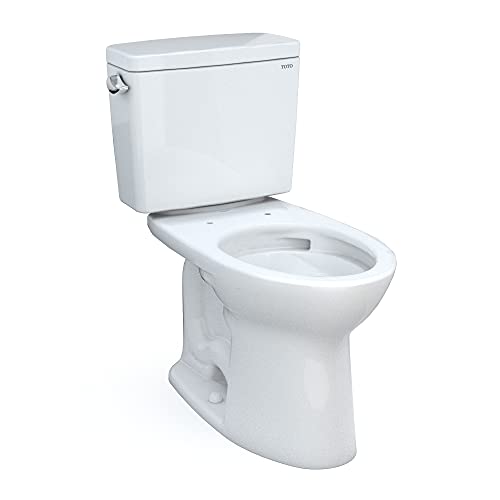
Siphon jet size is one of the key factors in MaP flush-test performance. The TOTO Drake (CST744E) and Drake II (CST454CEFG) consistently score 1,000 grams on MaP testing -- the maximum rating -- partly because of their large, open trapway and well-positioned siphon jet port. Toilets with smaller jets or angled ports typically score 600 to 800 grams, which is still above the 350-gram threshold EPA WaterSense requires for certification.
The trapway is the S-shaped or P-shaped passage molded into the base of the toilet bowl. It performs two functions simultaneously: it provides the siphonic action that clears waste by creating a water seal that breaks when air enters, and it maintains a standing water level in the bowl bottom that prevents sewer gases from entering the bathroom.
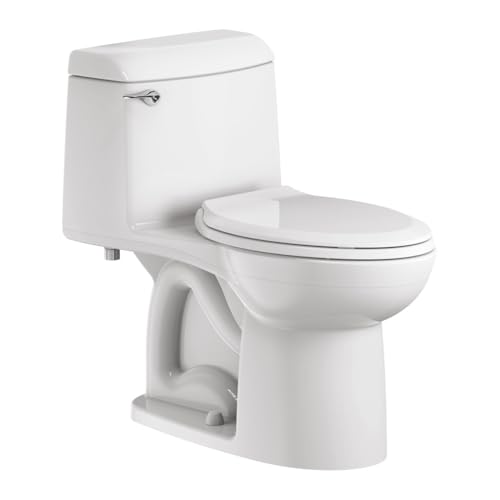
Trapway dimensions matter for clog resistance. A fully glazed trapway 2-1/8 inches in diameter passes a larger solid mass than a 1-3/2-3/8-inch trapway, and the glaze reduces friction so waste passes more cleanly. American Standard's Champion 4 features a 2-3/8-inch fully glazed trapway -- the largest commonly available in a consumer toilet -- which is the primary engineering reason it earns near-universal praise for clog resistance in aggregated owner reviews. TOTO's Unifit adapter system allows the same bowl to work on different rough-in dimensions (10-inch, 12-inch, or 14-inch) by adjusting a collar, rather than requiring a different trapway exit angle per floor configuration.
The trapway diameter printed in a toilet spec sheet and the effective trapway diameter through which waste actually travels can differ. A nominal 2-1/8-inch trapway with a glaze application still on both walls may have an effective internal clearance of 1-7/8 inches. When comparing clog resistance across brands, look for "fully glazed" in the spec, not just the nominal diameter, and cross-reference with MaP solid mass scores rather than relying on manufacturer marketing language.
The water seal is the standing volume of water held at the lowest point of the trapway S-curve. It physically blocks sewer gas (primarily methane and hydrogen sulfide) from migrating up through the bowl. A properly functioning toilet maintains this seal at all times -- the seal is only temporarily broken during the flush cycle and immediately restored as tank water refills the bowl.
Evaporation can deplete the water seal in toilets left unused for several weeks, particularly in dry climates or heated homes in winter. Pouring a cup of water into an unused toilet bowl every few weeks maintains the seal without running the tank.
| Model | Trapway Diameter | Glazed Trapway | GPF | MaP Score | WaterSense | Check Price |
|---|---|---|---|---|---|---|
| TOTO Drake II (CST454CEFG) | 2-1/8 in | Yes | 1.28 | 1,000 g | Yes | Check price |
| American Standard Champion 4 | 2-3/8 in | Yes | 1.6 | 1,000 g | No (1.6 GPF) | Check price |
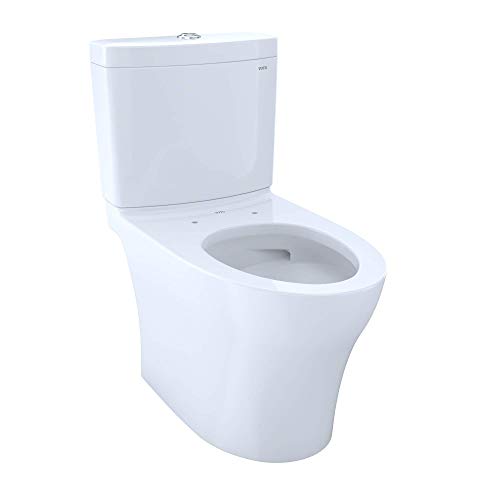
| TOTO Aquia IV | 2-1/8 in | Yes | 1.0 / 0.8 | 800 g (full) | Yes | Check price |
| Kohler Cimarron | 2-1/8 in | Yes | 1.28 | 1,000 g | Yes | Check price |
| American Standard Cadet 3 | 2-1/8 in | Yes | 1.28 | 1,000 g | Yes | Check price |
| Woodbridge T-0001 | 2-1/8 in | Yes | 1.28 / 0.8 | 800 g (full) | Yes | Check price |
| Gerber Viper | 2-1/8 in | Yes | 1.28 | 1,000 g | Yes | Check price |
| Swiss Madison Sublime II | 2 in | Yes | 1.28 / 0.8 | 600 g (full) | Yes | Check price |
MaP scores sourced from published map-testing.com results. WaterSense requires max 1.28 GPF and min 350 g MaP score. Winner row = highest combined flush performance and efficiency.
The rough-in is the distance from the finished wall behind the toilet to the center of the floor drain opening (the flange bolt holes). Standard U.S. rough-in is 12 inches, but older homes commonly have 10-inch or 14-inch rough-ins. If you install a toilet with the wrong rough-in dimension, the bowl will either not reach the wall or will press against it, and the supply line and wax ring may not align properly. Always measure rough-in before purchasing a replacement toilet.
The floor flange is a flat ring mounted to the subfloor with an inner collar that drops into -- or sits on top of -- the drain pipe. Standard flanges accept a 3-inch or 4-inch drain pipe. Two bolt slots on opposite sides of the flange ring accept the closet bolts (also called johnny bolts or flange bolts) that extend upward through the toilet base and are secured with washers and nuts to hold the toilet in place.
Flange material matters. Cast-iron flanges are found in homes built before the 1980s and are extremely durable but can crack or separate from the hub. PVC flanges are standard in modern construction and are easy to repair with repair rings when the plastic lip cracks. Stainless steel repair flanges are available to reinforce damaged flanges without full replacement when the pipe below is intact.
Flange height relative to the finished floor determines which wax ring thickness to use. The top of the flange should be flush with or no more than 1/4 inch above the finished floor. A flange set too low (common when new tile is installed over the original floor without raising the flange) requires a wax ring with an extension horn or a stacked double wax ring to bridge the gap.
The wax ring is the seal between the toilet horn (the exit port on the underside of the toilet base) and the floor flange. It compresses when the toilet is set and bolted down, forming a watertight and gas-tight connection. Standard wax rings are petroleum-based beeswax or petroleum wax. They are a one-time use seal -- once compressed, they cannot be reformed, so any time a toilet is lifted and reset, a new wax ring is required.
Wax-free seals (such as the Fernco Wax-Free Toilet Seal and similar products from Sani Seal) use a foam or rubber gasket instead of wax. They are reusable and are not affected by temperature the way wax can be in unheated spaces where wax rings can become brittle. Plumbers are divided on wax versus wax-free: traditional wax rings have a longer installation track record, while wax-free seals are easier to reuse if you need to pull the toilet repeatedly for flooring or repair work.
Closet bolts slide into the T-slots in the floor flange and extend upward through holes in the toilet base. Brass bolts are standard because they resist corrosion in the wet environment under the toilet. After setting the toilet on the wax ring and pressing it level, you thread a nut and washer onto each bolt, tighten alternately to even pressure, and then cut the excess bolt length with a hacksaw so the porcelain cap covers the bolt head.
A rocking toilet -- one that shifts side to side when you sit -- often means loose or corroded closet bolts, a broken flange, or an uneven floor. A rocking toilet will eventually destroy the wax seal and allow sewer gas and waste to leak beneath the toilet base. Addressing rocking immediately is important.
Below the floor flange, the 3-inch or 4-inch drain pipe connects to the building's drain stack -- the large vertical pipe that carries all fixture waste to the building sewer or septic system. The toilet drain is typically connected closer to the stack than other fixtures because it carries the heaviest solid waste load.
Equally important is the vent pipe. Every toilet drain must connect to a vent that runs up through the roof or connects to an air admittance valve (in jurisdictions where those are permitted). The vent pipe serves two functions: it allows air to enter the drain system so siphonic action in the drain does not pull water out of nearby trap seals, and it allows sewer gas to escape upward through the roof rather than backing up into the building. A blocked vent (often from leaves, bird nests, or ice in cold climates) causes slow draining, gurgling sounds from the toilet, and potential loss of water seal in nearby fixtures.
A toilet that gurgles after flushing, or where nearby sink drains bubble when the toilet flushes, almost always points to a partial vent blockage rather than a drain clog. Drain cleaning will not solve a vent problem. A plumber with a drain camera or roof-access inspection can locate vent blockages quickly. In older homes, cast-iron vent pipes can rust and partially collapse internally, which looks like a drain blockage on first inspection.
The vent pipe connects the toilet drain to outside air, typically through the roof, preventing negative pressure from building up in the drain line after a flush. Without adequate venting, each flush creates a partial vacuum that pulls water out of nearby trap seals, allowing sewer gas to enter the building. A blocked vent causes slow draining, gurgling noises, and the smell of sewer gas -- symptoms often misdiagnosed as a clogged drain until the vent is inspected.
Understanding how all the labeled components interact in sequence makes it much easier to isolate a failure when something goes wrong. Here is the complete flush cycle from handle press to refill completion:
The complete cycle takes approximately 60 to 90 seconds for a standard 1.28 GPF toilet. Older 3.5 GPF and 5 GPF toilets (pre-1980s and pre-1994 respectively) had faster fill cycles due to larger tank volume but used dramatically more water. EPA WaterSense certification requires a maximum of 1.28 GPF and a minimum MaP score of 350 grams -- ensuring that modern low-flow toilets still flush adequately.
For a deeper look at how these specifications translate into real-world clog resistance and flush power, see our guide on MaP flush testing explained and our breakdown of 1.28 GPF vs 1.6 GPF performance.
A toilet that continues running after flushing is almost always caused by one of three issues: the flapper is not sealing against the flush valve seat (allowing tank water to drain into the bowl continuously), the fill valve float is set too high so water spills into the overflow tube before the valve closes, or the fill valve itself is worn and not shutting off fully. The easiest diagnostic is the food-coloring test: add a few drops of food coloring to the tank and wait 10 minutes without flushing -- if color appears in the bowl, the flapper is leaking.
Now that every component is labeled, you can use the plumbing diagram as a diagnostic map. Leaks from different locations point to different components:
Water appearing on the floor around the base after flushing -- not after sitting idle -- almost always indicates a failed wax ring. The seal compresses correctly initially but can fail if the toilet rocks, if the floor settled unevenly, or if the wax dried out over decades. Replacing a wax ring is a half-day DIY project requiring only a wrench and putty knife, but the toilet must be completely removed and set again. If water appears at the base when the toilet is not in use, check for a cracked base or a sweating tank condensing moisture that runs down to the floor.
Water at the rear of the bowl shelf or at the tank bolts during or after a flush points to the tank-to-bowl spud gasket or loose tank bolts. Try snugging the bolts first (hand-tight plus one-quarter turn). If the leak persists, drain and remove the tank to inspect and replace the spud gasket and rubber bolt washers. These parts cost under $15 as a kit and are available for nearly every toilet model.
Drips at either end of the supply line (angle stop end or fill valve end) usually mean the compression nut needs to be snugged, or the compression ring or ferrule has deformed and the line needs replacement. Never reuse a compression fitting that has been fully tightened -- the ferrule deforms to the pipe and cannot seal a second time.
If water drips from under the tank while the toilet is not running, inspect the fill valve shank gasket (the rubber ring that seals the fill valve where it passes through the tank bottom). A cracked tank is also possible -- vitreous china can crack from freezing, over-tightened tank bolts, or impact. A cracked tank must be replaced; it cannot be repaired.
For detailed steps on addressing the most common toilet problems, our guide on wax ring replacement and our fill valve replacement walkthrough cover each repair in sequence.
Dual-flush toilets -- including the TOTO Aquia IV, Kohler Cimarron dual-flush, and Woodbridge T-0001 -- replace the standard flapper with a canister or tower flush valve and add a top-mounted two-button actuator instead of a side handle. Pressing the small button opens the valve partially for a 0.8 GPF liquid waste flush; pressing the large button opens it fully for a 1.28 GPF solid waste flush. The supply line, fill valve, trap, wax ring, and drain connections are identical to a standard gravity toilet.
Pressure-assist toilets contain a sealed pressure vessel inside the tank rather than open water. As the tank fills, incoming supply pressure compresses air in the vessel. When flushed, the compressed air forces water into the bowl far more rapidly than gravity alone, achieving MaP scores above 1,000 grams -- often 1,500 grams or more -- at only 1.0 GPF. The trade-off is noise (a loud, distinct whoosh) and higher repair cost when the pressure vessel eventually fails. Brands such as Gerber and American Standard offer pressure-assist models for commercial and residential use. The supply line and drain connections are standard; only the internal tank assembly differs.
Wall-hung toilets move the tank entirely into the wall cavity, mounting it in a steel carrier frame that is anchored to wall studs. The bowl is cantilevered off wall-mount bolts that attach to the carrier frame. The supply connection enters through the wall. The drain exits horizontally through the wall into a drain pipe at a specific height above the floor rather than dropping vertically through the floor. A flush actuator plate on the wall connects by rods to a dual-flush valve inside the in-wall tank. Access panels in the wall covering allow servicing the tank internals. Swiss Madison and Duravit both offer wall-hung systems with in-wall carrier frames designed for North American drain configurations.
The standard toilet drain pipe is 3 inches in diameter in most U.S. residential installations, connecting to a 3-inch or 4-inch drain stack. Some older homes and commercial buildings use 4-inch drain lines directly from the toilet flange. The floor flange is sized to match the pipe it connects to.
The standard rough-in in U.S. homes is 12 inches from the finished wall to the center of the floor flange. Older homes commonly have 10-inch or 14-inch rough-ins. Always measure before purchasing a replacement, because a 12-inch toilet will not fit a 10-inch rough-in space without modification.
The clearest sign of a failing wax ring is water appearing on the floor at the base of the toilet during or immediately after flushing. You may also notice a sewer odor near the toilet or discoloration of flooring around the base over time. A rocking toilet accelerates wax ring failure and should be addressed promptly.
The overflow tube is a safety device in the tank that routes excess water directly into the bowl if the fill valve fails to shut off. It prevents the tank from overflowing onto the floor. If you can hear constant water running into the bowl and the flapper is not leaking, the water level in the tank is likely set too high and water is trickling into the overflow tube continuously.
EPA WaterSense certification requires that a toilet use no more than 1.28 gallons per flush and achieve a minimum MaP flush score of 350 grams. The tank size, fill valve setting, and flush valve design all influence whether a toilet meets these standards. WaterSense-certified toilets save an average of 13,000 gallons per year compared to pre-1994 toilets that used 3.5 GPF or more.
The difference is entirely in the tank: a 1.28 GPF tank holds approximately 30 percent less water than a 1.6 GPF tank. The fill valve, supply line, flapper, flange, drain, and vent are identical between the two configurations. The flush performance difference depends on how efficiently the bowl and trapway use that smaller volume of water -- which is why MaP testing is a better comparison metric than GPF alone.
Gurgling from the toilet when another fixture runs almost always indicates a blocked or undersized vent pipe. The washing machine drains quickly, creating rapid flow in the drain stack that generates negative pressure. Without adequate venting, that negative pressure pulls air backward through the toilet trapway, causing the gurgling sound and temporarily reducing the toilet's trap water seal.
Yes. The fill valve is a standalone assembly that threads through the tank bottom with one large nut. Replacement requires only shutting off the angle stop, flushing and sponging out remaining tank water, unscrewing the supply line and the locknut, and threading in the new valve. Universal fill valves from Fluidmaster and Korky fit most toilets and are widely available for under $20.
A fully glazed trapway means the interior surface of the S-curved passage through the toilet base is coated with the same smooth glaze as the exterior of the toilet. The glaze reduces friction so solid waste slides through more easily and is less likely to catch on rough ceramic surface irregularities. Most premium toilets from TOTO, Kohler, and American Standard include fully glazed trapways.
The closet flange (also called a floor flange) is the ring mounted to the subfloor that accepts the wax ring from above and connects to the drain pipe below. In modern construction, PVC flanges are standard and suitable for all residential applications. In older homes, cast-iron flanges are common. Stainless steel repair rings are available to reinforce damaged flanges without requiring full replacement of the flange and underlying pipe.
Braided stainless steel supply lines are typically rated for 10 years by manufacturers. Corrugated chrome and braided polymer lines have shorter service lives, often 5 to 8 years. The IAPMO recommends inspection at every five years and replacement at every toilet installation. Supply line failures can release 3 to 5 gallons per minute, so proactive replacement is a sound precaution.
A hissing sound between flushes is almost always the fill valve leaking by its seal and letting a small amount of water into the tank continuously. This is different from a running toilet (which is usually louder and involves water entering the bowl). Adjusting the float height or replacing the fill valve eliminates the hiss and the associated water waste, which can total 30 to 100 gallons per day depending on severity.
The siphon jet is the oval or rectangular opening at the bottom front of the toilet bowl, directly in front of the trapway entrance. It receives a dedicated stream of tank water during a flush to initiate siphonic action in the trapway. It is distinct from the rim jets (the small holes under the rim that clean the bowl walls). Mineral deposits can partially block the siphon jet over time, reducing flush power -- cleaning with a descaling product restores performance.
MaP (Maximum Performance) testing is an independent protocol developed by water utilities that measures how many grams of solid media a toilet can flush in a single flush. Toilets are scored from 250 to 1,000+ grams. EPA WaterSense requires a minimum of 350 grams. A score of 800 to 1,000 grams indicates excellent real-world performance. TOTO Drake, Drake II, Kohler Cimarron, and American Standard Cadet 3 all achieve 1,000 grams at 1.28 GPF in published MaP testing.
Yes. Wall-hung toilets use a horizontal drain that exits through the wall at a fixed height rather than dropping through the floor. The drain connects to a horizontal branch pipe inside the wall that ties into the building drain stack. Installation requires a steel carrier frame anchored to wall studs to support the toilet's weight. The supply connection and vent requirements are otherwise similar to floor-mounted toilets.
No. If the flange sits more than 1/4 inch below the finished floor surface, a standard wax ring will not compress enough to create a reliable seal. You need a wax ring with a horn extension, a double-stacked wax ring, or a wax-free foam seal with sufficient thickness to bridge the height difference. Failing to address a low flange results in a sewer gas leak and eventual wax ring failure.
The trip lever is an arm inside the tank that attaches to the handle on the outside of the tank via a connecting rod or direct thread. When you push the handle down, the trip lever pivots upward on the opposite end, lifting the chain or lift wire attached to the flapper. When you release the handle, gravity returns the lever to rest. Trip levers are replaceable separately from the tank and are available in multiple finishes to match handle hardware.
Slow bowl emptying after a flush points to three common causes: a partially blocked trapway (the most common), a blocked siphon jet port from mineral buildup reducing the initiating flow, or a blocked or partially vented drain line reducing the speed at which the siphon pulls water away. A drain snake or toilet auger addresses trapway blockages; muriatic acid or descaling tablets address jet port mineral scaling.
A toilet's plumbing diagram covers four systems: the supply side (angle stop, supply line, fill valve), the tank internals (overflow tube, flush valve, flapper), the bowl and trapway (rim jets, siphon jet, S-trap), and the floor-to-drain connection (wax ring, flange, drain stack, vent). Knowing where each connection sits and what it does turns an intimidating plumbing failure into a manageable diagnostic process. Most toilet repairs come down to a $10 to $25 part and a clear understanding of which component in the diagram is not functioning. Start at the symptom location, trace back to the responsible component, and replace with a name-brand replacement part from Fluidmaster, Korky, or the original toilet manufacturer for reliable, long-lasting results.
Which is the best toilet flush valve? Compare 2-inch, 3-inch, adjustable, and canister flush valves by fit and flush power, plus how…
Read the guideYes, flushing a toilet can make your shower go cold, hot, or lose pressure. Learn why it happens, how to diagnose it,…
Read the guideWhen you flush one toilet and another gurgles or bubbles, it usually means a venting or drain problem. Here are the causes,…
Read the guide