
TOTO Drake Two-Piece Toilet vs Kohler Highline Two-Piece Toilet: Which Should You Buy?
Comparisons4.6
We compared the TOTO Drake and Kohler Highline two-piece toilets: both hit MaP 1000 at 1.28 GPF. See flush systems, verified specs…
Read the guideA detailed, spec-driven breakdown of how Japanese and American toilets differ in flushing technology, water use, hygiene features, installation, and long-term cost -- so you can decide which design philosophy fits your bathroom.
Japanese toilets prioritize hygiene technology -- heated seats, integrated washlets, multi-function bidet nozzles -- and often achieve MaP scores above 800g. American toilets focus on high-capacity gravity or pressure-assisted flushing, lower upfront cost, and simpler maintenance with fewer electronics that can fail.
Walk into a bathroom in Tokyo and you may encounter a toilet control panel that rivals the dashboard of a mid-range sedan. Walk into a bathroom in Dallas and you are more likely to find a stripped-down, single-flush porcelain fixture that has not changed much in 40 years. Both flush waste. Both meet plumbing codes. But they represent entirely different engineering philosophies -- and knowing those differences matters before you spend $300 to $2,000 on a new toilet.
This guide compares Japanese versus American toilet design across flushing technology, water efficiency, hygiene features, rough-in dimensions, installation complexity, ownership cost, and repairability. Where available, MaP flush scores and EPA WaterSense certification data anchor every claim.
| Feature | Japanese Design (e.g., TOTO Neorest, Washlet) | American Design (e.g., Kohler Highline, American Standard Champion 4) |
|---|---|---|
| Flush Technology | Tornado Flush / Cyclone Flush / rimless | Gravity-fed siphon, pressure-assist, or dual-flush |
| Typical GPF | 0.8 -- 1.28 GPF (dual-flush common) | 1.0 -- 1.6 GPF (1.28 GPF most common post-2013) |
| Typical MaP Score | 800g -- 1,000g+ (TOTO Drake II: 1,000g) | 600g -- 1,000g (Champion 4: 1,000g; Highline Arc: 800g) |
| Integrated Bidet / Washlet | Standard on mid- to high-range models | Not standard; add-on seat required |
| Heated Seat | Common on mid-range and above | Not standard; aftermarket seats available |
| Trapway Size | 2 -- 2.5 inch fully glazed | 2 -- 2.375 inch (Champion 4: 2.375 inch fully glazed) |
| Rough-In Standard | 12 inch (adaptable) | 12 inch (10 and 14 inch also available) |
| Typical Upfront Cost Range | Higher (washlet combos start higher) | Lower (standard models widely accessible) |
| Electrical Requirement | Requires GFCI outlet near toilet | Not required for non-electronic models |
| Maintenance Complexity | Moderate to high (nozzles, sensors, heater elements) | Low to moderate (flapper, fill valve, flush valve) |
| EPA WaterSense Eligible | Yes (models at 1.28 GPF or below) | Yes (most post-2013 models) |
| Self-Cleaning Bowl | Yes on many models (eWater+ and UV sterilization on TOTO Neorest) | No -- relies on manual cleaning |
| Noise Level | Quiet flush standard; some include white noise function | Variable; pressure-assist models are louder |
Japanese toilets -- led by TOTO's Tornado Flush system -- use two or three rim jets that create a powerful centrifugal cyclone across the entire bowl surface, eliminating the rim holes that trap bacteria in traditional American designs. This rimless, centrifugal approach moves more water across the bowl wall with less total volume, which is why TOTO's Drake II achieves a 1,000g MaP score at just 1.28 GPF. Most American standard-gravity toilets use a single siphon jet that pulls waste down through the trapway, a proven but less surface-covering method.
The practical difference shows up in how often you need a brush. The centrifugal water flow in a Japanese-style flush coats the bowl walls more evenly, reducing the adhesion of waste to porcelain. American-gravity designs focus hydraulic force at the trapway rather than distributing it across the bowl, which is effective for clearing the trapway -- models like the American Standard Champion 4 achieve a 1,000g MaP score -- but it leaves more bowl surface uncovered by fast-moving water.
Pressure-assist toilets, common in American commercial settings but available for residential use, use compressed air to amplify the siphon. The Gerber Ultra Flush uses this mechanism to achieve strong MaP scores. The tradeoff is noise: pressure-assist flush mechanisms are noticeably louder than either gravity-fed American toilets or Japanese Tornado Flush designs.
MaP testing measures bulk waste removal in grams using a standardized media at the tested GPF rate. A score of 500g meets minimum code; 800g is considered strong residential performance; 1,000g is the maximum MaP rating and indicates the toilet can clear the heaviest real-world waste loads. Comparing MaP scores across Japanese and American models at the same GPF is the most objective way to assess flushing power without subjective in-home experience.
Both Japanese and American toilet designs now offer EPA WaterSense-certified models at 1.28 GPF or lower, meaning neither design philosophy has an inherent efficiency advantage at the certification level. Where Japanese design has pushed harder is in dual-flush adoption: TOTO's Aquia IV offers 0.8/1.28 GPF dual flush as standard, while many American-designed toilets still default to single-flush 1.28 GPF. Over a 10-year period, a 0.8 GPF liquid flush versus a 1.28 GPF single flush can save tens of thousands of gallons per household, depending on occupancy.
The EPA WaterSense program, established in 2006, sets a maximum of 1.28 GPF for certified toilets. Pre-2013 American standard toilets often ran at 1.6 GPF; federal law now caps all new residential toilets at 1.6 GPF but most American brands have voluntarily moved to 1.28 GPF to earn WaterSense certification. TOTO's entry-level Drake also runs at 1.28 GPF with WaterSense certification, matching American-market competitors.
Where efficiency diverges is at the high-innovation end. TOTO's Neorest series introduced 0.8 GPF single-flush capability using the Tornado Flush combined with a pre-wet bowl coating, which reduces the adhesion of waste to the porcelain before the flush cycle even begins. No mainstream American-designed toilet currently matches this ultra-low flush volume at comparable MaP scores.
For a deeper look at comparing 1.0 GPF and 1.28 GPF options across brands, see our guide to 1.0 vs 1.28 GPF toilets.
Japanese toilets -- particularly those from TOTO and Kohler's Veil Intelligent series -- integrate heated seats, temperature-controlled rear and front cleansing nozzles, warm air drying, deodorizers, and in top-tier models, UV sterilization wands and electrolyzed water (eWater+) that clean the bowl and nozzle after each use. Standard American toilets include none of these features; they are non-electronic fixtures where hygiene depends entirely on manual cleaning and toilet paper use.
The Japanese washlet (a term trademarked by TOTO but now used generically) originated in the 1980s as a bidet seat attachment. By 2026, washlets are found in over 80 percent of Japanese homes, a penetration rate driven by both cultural preference and the measurable reduction in toilet paper use -- a meaningful cost and environmental savings over years of ownership.
Key hygiene features found in Japanese-designed smart toilets:
American-designed toilets from Kohler, American Standard, and Woodbridge can receive bidet seat upgrades -- the Kohler C3 series and the Brondell Swash are popular aftermarket additions -- but the integration is never as seamless as a purpose-built Japanese washlet unit. The control interfaces, seat profiles, and nozzle geometries are optimized as a complete system in Japanese designs.
The hygiene case for Japanese-style washlets is supported by clinical literature on perineal hygiene, particularly for elderly users and those recovering from colorectal surgery. Several gastroenterology guidelines recommend water cleansing as gentler and more effective than dry paper for patients with hemorrhoids or inflammatory bowel conditions. This is not marketing language -- it is the documented reason washlets have become standard hospital equipment in Japan.
A standard Japanese gravity toilet -- such as the TOTO Drake or Drake II -- installs identically to any American toilet, requiring only a standard 12-inch rough-in and water supply connection. The added complexity begins when you add washlet functionality: any toilet with an integrated bidet seat, heated seat, or electronic controls requires a grounded GFCI outlet within reach of the toilet, which many older American bathrooms lack and which may require a licensed electrician to add.
Rough-in measurement -- the distance from the finished wall to the center of the floor drain -- is 12 inches as the North American standard. Both TOTO and Kohler design their toilet bases for 12-inch rough-ins, with some models available in 10-inch and 14-inch variants for older homes. This dimension is identical between Japanese-designed and American-designed toilets sold in the U.S. market.
Where installation diverges:
For the average homeowner comfortable with standard toilet replacement, a TOTO Drake or TOTO Aquia IV installs in under two hours with no special tools beyond what any American toilet replacement requires. The washlet seat -- if bought as a separate component -- bolts onto the toilet after installation using standard mounting hardware.
American-designed gravity toilets are simpler to repair because they have fewer components: a flapper, fill valve, flush valve, and handle. Parts are universally available at hardware stores for under $20, and most homeowners can complete a repair in 30 minutes without specialized tools. Japanese smart toilets and washlet seats add electronic components -- circuit boards, solenoid valves, heating elements, and nozzle motors -- that require brand-specific parts and often factory-authorized service, increasing both repair cost and downtime.
Long-term maintenance is where the gap between designs is most consequential for budget-conscious buyers. A standard American Standard Cadet 3 or Kohler Highline uses a flapper-based flush mechanism. When it fails, a $5 flapper from any hardware store fixes it. These parts are not brand-specific; a Fluidmaster flapper fits most American gravity toilets regardless of brand.
TOTO's flush mechanisms on their non-electronic toilets (Drake, Drake II, UltraMax II) are also relatively simple, though TOTO uses a double-cyclone flushing valve design that requires TOTO-specific replacement parts. The parts are available through TOTO's dealer network and online, but they are not interchangeable with generic hardware-store components.
The complexity escalates with washlet seats:
Swiss Madison and Woodbridge offer smart toilet options at lower entry points, but their parts availability and service network are less established than TOTO or Kohler, which should factor into long-term maintenance planning.
Toilet lifespan data from the American Housing Survey suggests that a well-maintained gravity toilet lasts 25 to 50 years. The porcelain body of a Japanese or American toilet is equally durable -- porcelain does not degrade. What limits the functional life of a smart Japanese toilet is the electronic seat assembly, which operates on a shorter service cycle than the porcelain body. Buyers who want Japanese-style hygiene features with lower electronic dependency can purchase a TOTO Drake (non-electronic) with a separately purchased TOTO Washlet C2 or C5 seat, which allows independent replacement of each component.
Understanding where specific models fall in the Japanese vs American design spectrum clarifies the buying decision. These are real models with published MaP scores and specifications.
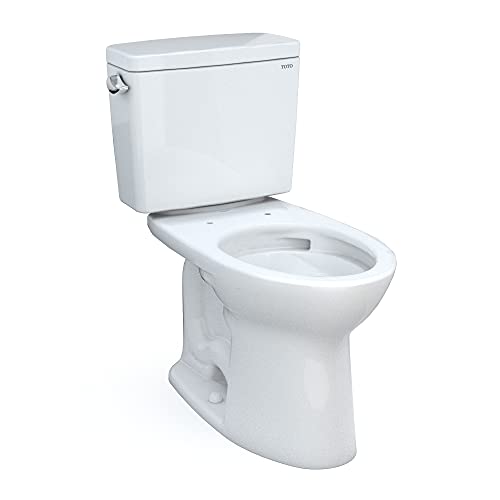
The TOTO Drake II is a two-piece gravity toilet at 1.28 GPF with a Double Cyclone flushing system and a MaP score of 1,000g -- the maximum rating. It uses a fully glazed 2.125-inch trapway and SoftClose seat. No electronics, no washlet. This is pure Japanese flushing engineering in a traditional toilet format. It is EPA WaterSense certified and is one of the top-reviewed toilets on the best flushing toilets list for its combination of power and efficiency. Search TOTO Drake II on Amazon.
The Aquia IV brings dual-flush capability (0.8/1.28 GPF) with a CEFIONTECT ceramic glaze that creates a hydrophilic surface, causing water to sheet off the bowl rather than waste clinging to it. MaP score at 1.28 GPF is 800g. It is available as a WASHLET+ model, meaning the tank is pre-configured for a TOTO washlet seat with hidden water and electrical supply connections. Search TOTO Aquia IV on Amazon.
One-piece Japanese design with a 1.28 GPF Double Cyclone flush and 1,000g MaP score. The skirted trapway design (no exposed trapway curves on the outside of the bowl) makes cleaning easier and gives it a contemporary profile. Elongated bowl at comfort height. Search TOTO UltraMax II on Amazon.
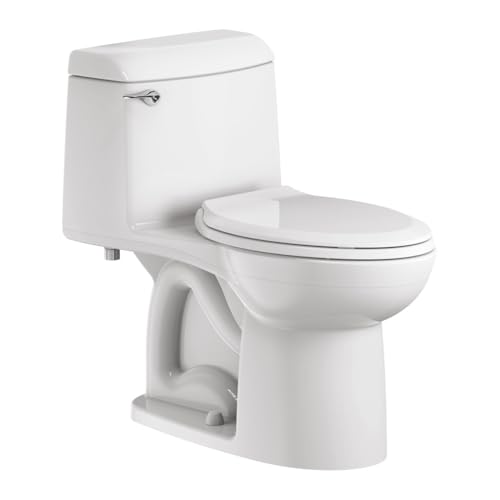
The Champion 4 is the most-cited American-designed gravity toilet for raw flushing power. Its 2.375-inch fully glazed trapway and 4-inch accelerator flush valve produce a 1,000g MaP score at 1.6 GPF. Note: the 1.6 GPF version holds its maximum MaP score; the 1.28 GPF Champion 4 MAX has a slightly lower MaP score in published testing. No electronics, no washlet. Repair parts are widely available. Search American Standard Champion 4 on Amazon.
The Cimarron uses Kohler's AquaPiston flush canister, which replaces the traditional flapper with a 360-degree flush that reduces seal wear. MaP score reaches 1,000g on tested configurations. Available in comfort height and elongated bowl. WaterSense certified at 1.28 GPF. Repair parts are widely stocked at Kohler dealers and major home improvement stores. Search Kohler Cimarron on Amazon.
The Woodbridge T-0001 is a one-piece toilet with an integrated bidet seat -- a Japanese-design approach at a lower entry point than TOTO Neorest. It includes rear and front wash, heated seat, warm air dry, and auto open/close lid. Flush performance is adequate but MaP scores are not independently published for all configurations. A strong choice for buyers who want integrated bidet functionality without the TOTO premium. Search Woodbridge T-0001 on Amazon.
Gerber is a less-marketed but well-regarded American toilet manufacturer. The Avalanche series achieves 1,000g MaP at 1.0 GPF, making it one of the most water-efficient high-MaP toilets in the U.S. market. WaterSense certified. No smart features, but exceptional efficiency-to-power ratio. See our guide to Gerber toilets for a full model breakdown. Search Gerber Avalanche on Amazon.
The total cost of owning a toilet extends well beyond the purchase tag. Water savings, repair costs, toilet paper reduction, and the cost of any required electrical work all affect the 10-year number.
| Cost Category | American Standard Gravity Toilet (1.28 GPF) | TOTO Aquia IV + Washlet C5 |
|---|---|---|
| Water cost (4 users, 5 flushes/day, $0.004/gal) | ~$373 over 10 years | ~$233 over 10 years (0.8 GPF liquid flush) |
| Toilet paper reduction | None | Estimated 50-75% reduction in paper use |
| Repair/maintenance parts (10-yr estimate) | $30 to $80 (flapper, fill valve) | $80 to $250 (nozzle filter, seat parts) |
| Electrical installation (if needed) | None | $0 to $300 (GFCI outlet if not present) |
The water savings from a 0.8/1.28 dual-flush toilet versus a 1.28 GPF single-flush toilet are real but modest in dollar terms for most households. The larger financial variable is toilet paper: a household that reduces paper use by 60 percent using a washlet can offset the cost premium of the washlet unit within 3 to 5 years, depending on prior consumption. This calculation assumes average U.S. toilet paper spending of approximately $100 to $180 per person per year.
For more on how dual-flush economics play out across brands, see our dual-flush toilets worth it guide.
The Japanese washlet market in the U.S. has grown substantially since 2015, driven partly by health-conscious buyers and partly by the toilet paper supply disruptions in 2020 that pushed many American households to try bidet seats for the first time. TOTO and Brondell both reported significant sales increases during that period, and a notable portion of first-time buyers became permanent washlet users -- a behavioral shift that supports the long-term cost argument for Japanese-style hygiene features.
The answer depends on which combination of priorities you are optimizing for.
Choose Japanese-style design if:
Choose American-designed toilet if:
A hybrid approach -- a TOTO Drake or Kohler Cimarron with an add-on bidet seat (TOTO Washlet C2, Brondell Swash, or Kohler C3) -- captures most of the hygiene benefits of Japanese design while keeping the porcelain body simple and universally repairable. This is the approach recommended in our ADA-compliant toilet guide for accessible bathroom design, where the combination of comfort-height bowl and bidet seat reduces physical strain without requiring full replacement of an existing fixture.
For a full ranking of top-performing models across both design traditions, see the best flushing toilets guide.
No. Most Japanese-designed toilets sold in the U.S. -- including TOTO's Drake, Drake II, Aquia IV, and UltraMax II -- are EPA WaterSense certified at 1.28 GPF or lower, matching the efficiency of American-designed models. The TOTO Aquia IV's dual-flush 0.8/1.28 GPF option uses less water than most single-flush American toilets.
MaP (Maximum Performance) testing measures how many grams of a standardized waste simulant a toilet can clear in a single flush at its rated GPF. Scores range from 0 to 1,000g; 800g and above is considered excellent for residential use. Both TOTO Drake II and American Standard Champion 4 achieve 1,000g -- use MaP scores from map-testing.com to compare any specific models objectively.
TOTO Ltd. is a Japanese company founded in Kitakyushu, Japan in 1917. It is the world's largest toilet manufacturer by revenue. TOTO toilets sold in the U.S. are designed in Japan and manufactured to meet North American plumbing codes (12-inch rough-in, ASME A112.19.2 vitreous china standards), but they embody Japanese engineering philosophy, particularly the Tornado Flush and CEFIONTECT glaze technologies.
Yes, in most cases. TOTO Washlet seats, Brondell Swash, Kohler C3, and other bidet seats are designed to fit standard elongated or round toilet bowls regardless of the toilet's brand or country of design origin. You need a GFCI outlet near the toilet and compatible bowl dimensions. TOTO sells bidet seats separately that fit non-TOTO toilets, though fit and aesthetics are more seamless on TOTO WASHLET+ compatible bowls.
A traditional bidet is a separate bathroom fixture -- a porcelain basin next to the toilet where you move after using the toilet to cleanse using a water stream or faucet. A washlet is an integrated toilet seat with built-in water jets that cleanse you while seated on the toilet, eliminating the need for a separate fixture. TOTO trademarked "Washlet" but the term is now commonly used for all bidet toilet seats.
Any Japanese-style toilet with electronic features -- heated seat, bidet wash, deodorizer, auto flush -- requires a grounded GFCI outlet within reach of the toilet. The National Electrical Code requires all bathroom receptacles to have GFCI protection. A standard TOTO Drake without a washlet seat requires no electrical connection at all.
CEFIONTECT is TOTO's proprietary glaze applied to the ceramic surface of the bowl at a microscopic level. It creates an exceptionally smooth surface that reduces the adhesion of waste, mold, and bacteria to the porcelain. The practical result is that less cleaning effort is needed to maintain a clean bowl appearance and that the flushing water sheets off more completely. Independent cleaning tests support TOTO's claims of reduced staining versus standard ceramic glazes.
American Standard's Champion 4 has a 2.375-inch fully glazed trapway, while TOTO's Drake II has a 2.125-inch fully glazed trapway. The Champion 4 trapway is slightly larger by published dimension, which contributes to its strong clog resistance at 1.6 GPF. At 1.28 GPF, both the TOTO Drake II and the Champion 4 Max achieve comparable MaP scores, suggesting that TOTO's flush technology compensates for the slightly narrower trapway with superior water velocity and coverage.
ADA compliance for toilets requires a seat height between 17 and 19 inches (comfort height / right height). TOTO offers many models -- Drake II, UltraMax II -- in ADA-compliant comfort height versions. Washlet bidet seats add approximately 1 to 1.5 inches to seat height, which should be accounted for when selecting a base toilet to ensure the combined height remains within the 17 to 19-inch range required for ADA compliance.
Japanese toilets sold for the North American market use the standard 12-inch rough-in, identical to American toilets. TOTO also offers 10-inch and 14-inch rough-in options on select models. If your home has a non-standard rough-in, verify the specific model's rough-in specification before ordering, as this applies equally to TOTO, Kohler, American Standard, and all other brands.
TOTO's Tornado Flush system is notably quiet -- comparable in decibel level to a standard gravity American toilet and significantly quieter than pressure-assist American toilets such as those using the Flushmate system. Pressure-assist designs generate a sharp, pressurized release sound during flushing that is noticeably louder than either gravity or Tornado Flush mechanisms.
TOTO and other Japanese-design brands offer compact elongated bowls -- a bowl shape that provides the seat comfort of an elongated design while fitting in spaces approximately 2 inches shorter in bowl projection than a standard elongated bowl. The Aquia IV is available in compact elongated format, making Japanese-design toilets accessible for bathrooms where a full-length elongated bowl would not fit.
The TOTO Drake and Drake II are non-electronic two-piece gravity toilets at 1.28 GPF -- simple, high-performance, repairable. The Neorest is TOTO's flagship integrated smart toilet: one-piece design with a permanently integrated washlet seat, 0.8/1.0 GPF dual-flush, Tornado Flush, UV sterilization wand, eWater+ electrolyzed water cleaning, auto open/close lid, and automatic flush. The Neorest represents the fullest expression of Japanese toilet design philosophy; the Drake brings Japanese flushing engineering at a much lower entry point and complexity level.
Yes, but requires periodic maintenance. Mineral scale from hard water (above 7 grains per gallon) can clog the fine orifices of washlet nozzles over time. TOTO recommends periodic descaling with a citric acid solution and, in very hard water areas, installing an inline water softener or filter ahead of the washlet supply line. The inline filter included with most TOTO washlets helps but does not eliminate scale in extremely hard water.
The American Standard Vormax and Champion 4 both achieve 1,000g MaP scores. The Kohler Cimarron with AquaPiston also achieves 1,000g in tested configurations. These models match TOTO's top MaP scores at comparable GPF rates. The remaining difference is bowl surface coverage: TOTO's rimless centrifugal Tornado Flush covers the bowl wall more completely with each flush than the directional siphon jet used in most American designs.
Kohler offers the Veil Intelligent toilet and the Numi 2.0 -- both integrated smart toilets with bidet wash, heated seat, and voice control -- which compete directly with TOTO's Neorest and Washlet product lines. American Standard's Spalet combines an integrated bidet seat with a standard toilet body. Swiss Madison and Woodbridge offer budget-tier smart toilets. None has TOTO's service network or the depth of TOTO's washlet product history, but Kohler Numi is the closest American brand competitor to TOTO Neorest in terms of feature set.
Woodbridge is a Chinese-American brand that produces integrated bidet toilets using the Japanese smart toilet design format -- one-piece body with integrated electronic bidet seat. It does not use TOTO's proprietary Tornado Flush or CEFIONTECT technologies, and MaP scores are not independently published for all Woodbridge models. It is a budget entry into the integrated bidet toilet category at a lower price point than TOTO or Kohler, with a correspondingly less established parts and service network.
Rimless bowls on Japanese-design toilets eliminate the hidden under-rim channel that traps bacteria and scale in traditional rimmed toilets. Cleaning is done by applying toilet bowl cleaner to the visible interior bowl surface and wiping with a toilet brush. The CEFIONTECT glaze on TOTO models means less cleaner is needed and the surface responds to light brushing. There are no hidden cavities to clean -- a significant hygiene advantage over traditional rimmed bowl designs.
Japanese toilet design -- led by TOTO -- offers superior flushing surface coverage, integrated hygiene technology, and some of the highest MaP scores in the industry. American-designed toilets from Kohler, American Standard, and Gerber match Japanese flushing power in raw MaP score terms, cost less, and are significantly easier to repair with universally available parts. The strongest real-world recommendation for most buyers: a TOTO Drake II or TOTO Aquia IV (Japanese flushing engineering) paired with a TOTO Washlet C2 or C5 bidet seat gives you the best of both approaches -- top-tier flushing performance, integrated hygiene features, and the ability to replace the electronic seat independently of the porcelain base if it ever fails.
We compared the TOTO Drake and Kohler Highline two-piece toilets: both hit MaP 1000 at 1.28 GPF. See flush systems, verified specs…
Read the guideHome / Comparisons / TOTO Drake vs TOTO Drake II TOTO Drake Two-Piece Toilet vs TOTO Drake II Two-Piece Toilet: Which Should…
Read the guideA data-driven look at resale impact, long-term availability, and which color choice makes more sense for your bathroom and your budget.
Read the guide