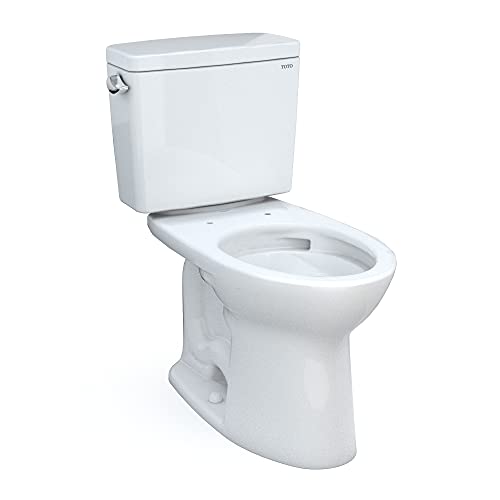


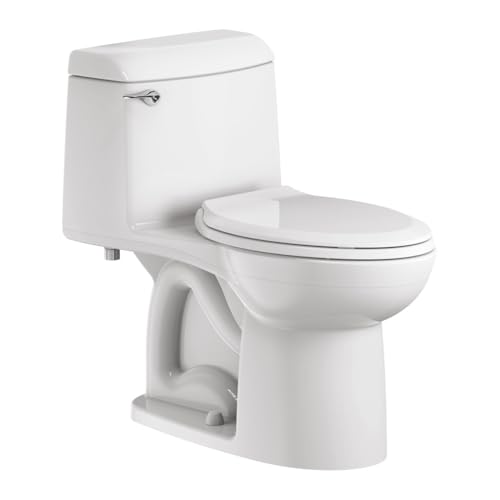
TOTO Drake Two-Piece Toilet vs Kohler Highline Two-Piece Toilet: Which Should You Buy?
Comparisons4.6
We compared the TOTO Drake and Kohler Highline two-piece toilets: both hit MaP 1000 at 1.28 GPF. See flush systems, verified specs…
Read the guideEverything you need to know about bowl shape, dimensions, comfort, water use, and which choice fits your bathroom -- backed by manufacturer specs and MaP flush-test data.
Elongated bowls are roughly 2 inches longer (18.5 in vs 16.5 in front-to-back) and are generally more comfortable for adults. Round bowls cost less, fit smaller bathrooms, and are often easier for children to use. Neither shape affects flush power or water efficiency -- those depend on the tank and trapway design.
The elongated vs round toilet decision trips up almost every bathroom remodeler. Walk into any plumbing showroom and you will see both shapes side by side -- they look similar at a glance, yet the differences matter for comfort, rough-in clearance, accessibility, and budget. This guide breaks down every meaningful distinction using published manufacturer specifications, EPA WaterSense certification data, and aggregated MaP flush-test scores so you can choose with confidence.
One thing to settle immediately: bowl shape has no effect on flushing performance. A round Kohler Highline and an elongated Kohler Highline share the same tank, flush valve, and trapway. The difference is purely dimensional and ergonomic. What drives flush power is the toilet's MaP score, GPF rating, and trapway diameter -- factors covered in our best flushing toilets guide.
| Spec | Elongated Bowl | Round Bowl |
|---|---|---|
| Seat-to-front length | ~18.5 in (47 cm) | ~16.5 in (42 cm) |
| Width | ~14 in (36 cm) | ~14 in (36 cm) |
| Rough-in space needed (front clearance) | Typically 26-28 in from wall to front of bowl | Typically 24-26 in from wall to front of bowl |
| ADA compliance potential | Yes (with proper height) | Yes (with proper height) |
| Typical seat upcharge over round | $5-$20 for seat | Baseline |
| Comfort for adults (aggregated reviews) | Higher rated | Adequate for most |
| Comfort for young children | Larger opening can feel insecure | Often preferred |
| Flush performance (MaP) | Identical to round equivalent | Identical to elongated equivalent |
| Water use (GPF) | 1.28 GPF or 1.6 GPF (same options) | 1.28 GPF or 1.6 GPF (same options) |
| Seat availability | Very wide (universal elongated size) | Wide (universal round size) |
| Typical toilet price difference | Often $20-$60 more than round | Lower baseline cost |
An elongated bowl measures approximately 18.5 inches from the seat bolt holes to the front rim, while a round bowl measures approximately 16.5 inches -- a difference of roughly 2 inches. Both bowl shapes share the same width (around 14 inches) and require the same rough-in distance (usually 12 inches from the wall to the center of the drain). The extra 2 inches of front projection means an elongated toilet occupies more floor space in front of the bowl.
This 2-inch difference sounds small but is significant in tight bathrooms. A standard bathroom door swings inward and must clear the toilet; losing 2 inches of clearance can make the difference between a comfortable bathroom and one where you have to sidestep the door. Measure from the finished back wall to where any obstruction begins (vanity, door swing, shower curb) before choosing a shape.
Rough-in distance -- the measurement from the finished wall to the center of the floor drain -- is a separate concern and applies equally to both shapes. The standard U.S. rough-in is 12 inches. Some older homes have 10-inch or 14-inch rough-ins; always verify before purchasing. Brands like TOTO, Kohler, American Standard, and Gerber publish models in all three rough-in sizes in both elongated and round versions.
Plumbers consistently advise measuring front clearance before selecting bowl shape. The extra 2 inches of an elongated bowl creates real problems in bathrooms under 60 inches deep or where a door or drawer swings close to the toilet. If you are within a few inches of a tight fit, the round bowl is the safer choice structurally and ergonomically once the door issue is resolved.
For most adults, elongated bowls score higher on comfort because the larger seating surface distributes weight more evenly and accommodates a wider range of body types. Aggregated owner reviews on major retail platforms show elongated toilets consistently rated higher for comfort by adult users. Round bowls remain comfortable for average-sized adults and are generally preferred for children because the smaller opening feels more secure.
Comfort is where elongated bowls build their strongest case. The additional front-to-back length supports the thighs better during extended use and is often recommended by physical therapists for users with hip or lower-back concerns. The Americans with Disabilities Act (ADA) does not specify bowl shape, but does require seat height of 17 to 19 inches, which can be achieved with either shape.
For households with young children, a round bowl is frequently the practical choice. Children aged 2 to 6 often feel less secure on an elongated seat because their legs cannot reach the floor, and the larger opening increases the chance of a child sitting too far back. Many families compromise by installing an elongated bowl in the master bath and a round bowl in any shared or children's bathroom.
Occupational therapists who specialize in bathroom accessibility note that elongated bowls reduce strain during the sit-to-stand transition, which is a key concern for users with mobility limitations. If any household member has joint issues or is over 65, the elongated option -- ideally paired with a comfort-height (17-19 in) seat -- meaningfully reduces fall risk during toilet use.
Bowl shape has no effect on flushing power or water efficiency. Flush performance is determined by the toilet's tank design, flush valve diameter, and trapway dimensions -- not by whether the bowl is elongated or round. Two toilets that share the same tank and trapway but differ only in bowl shape will produce identical MaP flush scores and use identical gallons per flush.
MaP (Maximum Performance) testing is the gold standard for evaluating toilet flushing ability. Tests measure how many grams of solid waste a toilet can evacuate in a single flush. Scores range from 250g to 1,000g (MaP Premium). The TOTO Drake II, for example, achieves 1,000g MaP in both its elongated (model MS454CUFG) and round configurations -- the tank, 3-inch flush valve, and siphon-jet trapway are identical. The same is true across American Standard's Champion 4 series, which also carries a 1,000g MaP score in both bowl shapes.
Water efficiency works the same way. EPA WaterSense certifies toilets that use 1.28 GPF or less. A WaterSense-certified elongated TOTO Aquia IV uses the same 0.8/1.0 GPF dual-flush system as its round counterpart. When comparing models for water savings, focus on GPF and WaterSense certification, not bowl shape.
For a deeper look at how MaP scores and GPF ratings interact to deliver real-world performance, see our guide on 2-inch vs 3-inch trapway toilets and our 1.28 GPF vs 1.6 GPF comparison.
ADA compliance is determined by seat height (17 to 19 inches above finished floor) and side transfer clearances, not by bowl shape. Both elongated and round bowls can meet ADA seat-height requirements. However, elongated bowls are more commonly specified for accessible bathrooms because the larger seating area is easier for lateral transfers and reduces repositioning effort for users who rely on grab bars.
The ADA Standards for Accessible Design (Section 604) specify a seat height of 17 to 19 inches, a flush control on the wide side, and a 60-inch minimum clear floor space for the toilet compartment. Neither shape is mandated. In practice, elongated bowls dominate ADA-compliant installations for three reasons: occupational therapists recommend the larger seat surface, elongated models are more commonly available in comfort-height (17-19 in) configurations, and the extra seat length makes lateral transfers from a wheelchair easier because there is more seat to land on.
Brands that offer strong ADA-compliant lineups in elongated include TOTO (Drake II CST454CUFG), Kohler (Cimarron Comfort Height), American Standard (Right Height Elongated), and Gerber (Avalanche). All achieve 17-inch or higher seat height and carry EPA WaterSense certification. See our ADA-compliant toilet guide for full model comparisons.
Measure the distance from the finished back wall to any obstruction in front of the toilet (door swing, vanity edge, shower curb). You need at least 24 inches of clear space in front of the bowl per most building codes; 30 inches is recommended for comfort. Add the bowl's front projection (approximately 18.5 inches for elongated, 16.5 inches for round) to the rough-in distance to estimate the toilet's total depth footprint.
Here is the practical measurement sequence:
If you are within 1 to 2 inches of the minimum, choose the round bowl. Many renovation disasters come from installing an elongated toilet in a space designed for a round bowl -- the door no longer opens fully, or the vanity drawer cannot open. Always check the bowl projection listed on the specification sheet, not just the overall depth, because some compact elongated toilets (such as the Woodbridge T-0001 compact elongated) use a shortened bowl that fits within a round-bowl footprint.
Compact elongated bowls (also called "compact" or "short" elongated) are a genuine middle-ground solution for bathrooms that are too small for a standard elongated bowl but where owners want the adult comfort benefit. Models like the American Standard Cadet 3 Compact Elongated and select Swiss Madison offerings achieve a front projection of approximately 16.5 inches while retaining the wider, more comfortable elongated seat shape. Measure the front projection from the spec sheet, not just overall length, to confirm fit.
Most top-rated toilet lines are sold in both configurations, giving you full flexibility once you have confirmed your space. Below are the models most frequently cited in aggregated owner reviews and plumber recommendations, along with their key specs.
The TOTO Drake II is one of the highest-selling toilets in North America. It uses TOTO's Double Cyclone flushing technology and scores 1,000g on MaP testing in both elongated (CST454CUFG) and round configurations. It carries EPA WaterSense certification at 1.28 GPF and is available with CEFIONTECT ceramic glaze on the bowl for easier cleaning. The comfort-height elongated version (16.5-inch rough-in standard) is one of the most-recommended accessible bathroom toilets by plumbers. View TOTO Drake II on Amazon
A one-piece elongated model with TOTO's Tornado Flush system, the UltraMax II also achieves 1,000g MaP. Its skirted design eliminates the exposed trapway for easier cleaning. The round equivalent uses an identical flushing mechanism. At 1.28 GPF, it is WaterSense certified. View TOTO UltraMax II on Amazon
The Kohler Highline is a two-piece toilet available in elongated (K-3977) and round (K-3978). It uses a Class Five flushing system and is WaterSense certified at 1.28 GPF. MaP scores vary by specific configuration; check the model number against the MaP database at map-testing.com before purchasing. The Highline Classic remains a top seller due to its straightforward installation and broad seat compatibility. View Kohler Highline on Amazon
The Kohler Cimarron Comfort Height elongated (K-3887) is one of the most-reviewed ADA-compatible toilets, with a seat height of approximately 17.375 inches. It uses the same Class Five canister flush as the Highline and is available in both elongated and round. The elongated version consistently receives higher owner satisfaction scores in aggregated retail reviews. View Kohler Cimarron on Amazon
American Standard's Champion 4 is one of the most aggressively marketed flush-performance toilets in the U.S. market, with a 4-inch piston action accelerator flush valve and a fully glazed 2.375-inch trapway. It achieves 1,000g on MaP and is available in elongated (2034.014) and round (2073.014). It is not WaterSense certified in standard versions (1.6 GPF), though a Champion 4 Max version at 1.28 GPF carries WaterSense certification. View American Standard Champion 4 on Amazon
The Cadet 3 is American Standard's mid-range two-piece line. The elongated version (2403.128) includes a Compact Elongated option that fits in round-bowl footprints. WaterSense certified at 1.28 GPF; MaP score for the Compact Elongated version is 800g, which is above the 500g threshold considered "good" performance for residential use. View American Standard Cadet 3 on Amazon
The Woodbridge T-0001 is a one-piece dual-flush toilet with a compact elongated bowl that fits in a 27-inch depth -- making it viable for smaller bathrooms. It uses 1.0/1.6 GPF dual flush. MaP data is not publicly available for this model through the standard database; performance is based on aggregated owner reviews, which report reliable flush performance without clogging for normal household waste. View Woodbridge T-0001 on Amazon
The TOTO Aquia IV is a dual-flush two-piece model using 0.8 GPF (liquid waste) / 1.0 GPF (solid waste) -- the most water-efficient dual-flush toilet in TOTO's residential lineup. It achieves EPA WaterSense certification and uses TOTO's TORNADO FLUSH in an elongated configuration. The Aquia IV is a leading choice for water-conservation-focused installations. View TOTO Aquia IV on Amazon
For more model recommendations, see our roundup of the best flushing toilets and our best TOTO toilets guide.
For the same model line, elongated toilets typically cost $20 to $60 more than their round counterparts at the toilet level. The price gap is primarily driven by material cost (more ceramic) and market demand -- elongated bowls dominate new construction so manufacturers can price them at a slight premium.
Replacement seats are a separate consideration. Elongated seats cost $5 to $20 more on average than round seats for equivalent quality. This matters if you plan to upgrade to a soft-close seat, a bidet seat, or a heated seat -- all of which are available in both shapes, but elongated versions carry a higher price. When budgeting a full toilet replacement, add the seat cost separately if you are upgrading beyond the included seat.
Installation labor is identical for both shapes. A licensed plumber typically charges the same rate regardless of bowl shape. Total installed cost differences come entirely from the fixture itself.
Use these decision criteria to land on the right choice for your household and bathroom:
An elongated bowl is approximately 18.5 inches from the seat bolt holes to the front rim. A round bowl is approximately 16.5 inches. Both are approximately 14 inches wide. These are industry-standard dimensions used consistently across TOTO, Kohler, American Standard, Gerber, and most other major brands.
Yes. The flange position (rough-in distance from the wall) is determined by the drain, not the bowl shape. As long as your rough-in matches the toilet's spec (typically 12 inches) and you have sufficient front clearance, you can swap a round bowl for an elongated model using the existing flange without plumbing changes.
No. Elongated seats and round seats are not interchangeable. Elongated seats are approximately 2 inches longer and will overhang the front of a round bowl, while a round seat will not cover the full front of an elongated bowl. Always match the seat shape to the bowl shape. Most seats are labeled clearly as elongated or round.
No. Bowl shape does not affect flushing performance. The flush is powered by the tank volume, flush valve diameter, and trapway design. TOTO Drake II elongated and round both score 1,000g on MaP testing because they share the same internal flushing mechanism. Always check the MaP score and GPF for the specific model, not the bowl shape.
No. The installation process for elongated and round toilets is identical. Both require the same tools, the same wax ring (though verify ring size on the spec sheet), and the same rough-in preparation. The only difference is the larger front projection, which may require more care when maneuvering the toilet during installation in a tight space.
A compact elongated toilet uses an elongated bowl shape (wider, more oval) but shortens the front projection to approximately 16.5 inches, matching a round bowl's depth footprint. This allows the comfort benefits of an elongated bowl in a space-constrained bathroom. Examples include the American Standard Cadet 3 Compact Elongated and certain Swiss Madison models.
Children typically find round bowls easier to use because the smaller opening feels more secure and the shorter bowl is easier to sit on with short legs. For families with children under 8, a round bowl in children's bathrooms is the more common choice. A toilet training seat or step stool can help with either shape.
Generally yes. An elongated bowl's larger seating surface makes lateral transfers easier and the wider seat supports more of the thigh, reducing pressure points. When combined with a comfort-height seat (17 to 19 inches) and grab bars, an elongated toilet significantly improves bathroom accessibility. Both the TOTO Drake II and Kohler Cimarron Comfort Height elongated are frequently specified for accessibility renovations.
No. Water use (GPF) is determined by the tank and flush mechanism, not the bowl shape. Both elongated and round versions of a WaterSense-certified model will use the same number of gallons per flush. The TOTO Aquia IV, for example, uses 0.8/1.0 GPF dual flush in both configurations.
The standard rough-in in the United States is 12 inches, measured from the finished wall behind the toilet to the center of the floor drain. This applies equally to elongated and round toilets. Some older homes have 10-inch or 14-inch rough-ins. Always measure before purchasing, as a toilet with the wrong rough-in will not align with the drain.
Typically yes, by $20 to $60 for the same model in most major brands. The price premium reflects slightly higher material cost and the elongated shape's dominance in new construction, which allows manufacturers to price it at a modest premium. Seats for elongated bowls also cost $5 to $20 more than equivalent round seats.
Elongated bowls now dominate new residential construction in the United States. Most home builders and their plumbing contractors default to elongated comfort-height toilets in new builds, citing adult comfort and resale value. Round bowls are more common in older homes and in bathroom remodels where the existing footprint limits clearance.
Yes. Bidet seats are manufactured for both elongated and round bowls. However, the selection for round bowls is narrower, and some premium features (heated seat, warm-water wash) may be available in fewer round-bowl configurations. If a bidet seat is important to you, confirm that your preferred model is available in round before choosing the bowl shape.
The MaP testing program recommends a minimum score of 500 grams for residential use. A score of 800g is considered strong performance; 1,000g (MaP Premium) is the maximum achievable score and indicates the toilet can handle the heaviest household waste loads. Bowl shape has no bearing on MaP score. Verify the score for the specific model at map-testing.com.
EPA WaterSense certifies toilets that use 1.28 GPF or less and have been independently tested to confirm flush performance meets the EPA's minimum threshold (350 grams of waste per flush). WaterSense applies to the toilet unit -- tank plus bowl together -- not the shape. Both elongated and round versions of the same certified model carry the WaterSense label.
Yes. The Kohler Highline Classic is available in both elongated (K-3977) and round (K-3978) configurations. Both use Kohler's Class Five flushing system and are WaterSense certified at 1.28 GPF. The Highline Tall and Highline Arc lines are also available in both shapes.
Yes. Both one-piece and two-piece toilet designs are available in elongated and round bowl shapes across all major brands. One-piece toilets tend to be more expensive and slightly easier to clean (no crevice between tank and bowl). The bowl shape decision is independent of the one-piece vs two-piece decision.
Measure three things: (1) rough-in distance from finished back wall to drain center; (2) distance from back wall to any obstruction in front of the toilet (door swing, vanity, shower); (3) the toilet's listed front projection from its spec sheet. If (back wall to obstruction) minus (rough-in distance) minus (front projection) gives you at least 24 inches, either shape fits. If that margin is less than 24 inches with an elongated bowl but meets it with a round bowl, choose round.
Yes. Gerber offers both elongated and round bowl options across its Viper, Avalanche, and Maxwell lines. The Gerber Avalanche elongated is frequently recommended in professional plumbing circles for its consistent flush performance and broad availability through trade channels. MaP scores vary by model -- verify at map-testing.com.
For small bathrooms, a compact elongated toilet is the best solution. The American Standard Cadet 3 Compact Elongated and Swiss Madison Well Made Forever compact elongated models both offer a front projection of approximately 16.5 inches while retaining the wider, more comfortable elongated seat shape. Always confirm the front projection on the specification sheet before purchasing for a space-constrained bathroom.
Bowl shape comes down to bathroom size and who uses it most. Elongated bowls are more comfortable for adults and are the right default for new construction or any bathroom with at least 30 inches of front clearance. Round bowls are the practical choice for smaller bathrooms, children's bathrooms, or tight renovations where clearance is limited. If you are stuck between the two, a compact elongated toilet bridges the gap without compromising adult comfort. In all cases, focus your performance research on MaP scores and GPF -- not bowl shape -- because those are the numbers that determine how well your toilet actually flushes.
We compared the TOTO Drake and Kohler Highline two-piece toilets: both hit MaP 1000 at 1.28 GPF. See flush systems, verified specs…
Read the guideHome / Comparisons / TOTO Drake vs TOTO Drake II TOTO Drake Two-Piece Toilet vs TOTO Drake II Two-Piece Toilet: Which Should…
Read the guideA data-driven look at resale impact, long-term availability, and which color choice makes more sense for your bathroom and your budget.
Read the guide