

Where Does Toilet Water Go After You Flush
Buying Guides4.6
When you flush, where does it go? Follow toilet water from the bowl through the trap, drain, and stack to a septic…
Read the guideSewage, rotten egg, musty, chemical, urine -- each toilet odor has a distinct cause and a targeted fix. This guide decodes every smell, from a dry P-trap to a cracked wax ring, and tells you exactly what to do next.
Most toilet odors trace to one of four root causes: a dry or blocked P-trap, a failing wax ring seal, bacteria buildup inside the bowl or tank, or sewer gas leaking through cracked porcelain or loose connections. Identifying the smell precisely is the fastest path to a permanent fix.
A bathroom that smells fresh after every flush is not luck -- it is the result of good fixture design, proper sealing, and routine maintenance. When something breaks down in that chain, your nose is usually the first alarm system to fire. The tricky part is that several different problems can produce overlapping odors, and the wrong fix wastes time and money.
This guide works through every major toilet odor type in clinical detail: what it smells like, what is physically causing it, whether it is a DIY fix or a plumber call, and which toilet models are engineered to resist certain odor problems by design. We also include a quick-reference comparison table so you can map smell to cause in seconds.
For context on which toilets are the best performers overall, see our full guide to the best flushing toilets available today, including MaP-tested scores and GPF data.
| Smell | Likely Cause | DIY or Plumber | Urgency | Est. Fix Time |
|---|---|---|---|---|
| Sewage / rotten egg (strong) | Failed wax ring or cracked flange | Plumber | High -- health risk | 1-3 hours |
| Sewage (mild, intermittent) | Dry P-trap or blocked vent pipe | DIY | Medium | 15-30 min |
| Rotten egg (sulfur) | Sulfur bacteria in tank water | DIY | Low-medium | 30-60 min |
| Urine (persistent) | Base gap, grout gap, or biofilm | DIY / semi-pro | Medium | 1-2 hours |
| Musty / mildew | Tank condensation + mold growth | DIY | Low | 45-90 min |
| Chemical / plastic | New toilet off-gassing or cleaning tablet dissolving | DIY (wait or remove) | Low | Days to weeks |
| Sweet or fruity | Biofilm with specific bacterial species | DIY | Low-medium | 30-60 min |
| Ammonia | Urine scale deposits inside trapway | DIY | Medium | 1 hour |
Urgency ratings reflect potential health impact. Sewage gas (H2S and methane) at high concentrations is a serious health hazard. Ventilate the space and call a licensed plumber if you detect a persistent strong sewage smell you cannot attribute to a dry trap.
A persistent sewage odor after cleaning almost always points to sewer gas escaping through a compromised seal rather than surface bacteria. The two most common sources are a failed wax ring at the toilet base -- which allows hydrogen sulfide and methane to seep into the bathroom -- and a dried-out or partially blocked P-trap that no longer holds the water barrier between your drain and the main sewer line. A blocked roof vent pipe can also cause negative pressure that sucks water from the trap.
The wax ring sits between the toilet horn (the outlet at the base of the toilet) and the closet flange bolted to the floor. Its job is to create an airtight, watertight compression seal. Over time -- typically 20 to 30 years, but sooner on an unstable subfloor -- the wax compresses, shifts, or cracks, allowing sewage gas to bypass the seal and enter the room.
Signs the wax ring has failed include: sewage smell strongest at floor level, water seeping around the toilet base after flushing, rocking or slight movement when you sit, and staining or soft spots on the flooring immediately around the toilet.
Replacing a wax ring requires removing the toilet entirely. This is within reach of an experienced DIYer but most homeowners prefer a licensed plumber. Cost typically runs $150 to $400 including parts and labor. An increasingly popular alternative is the wax-free seal, which uses a rubber gasket and resists compression issues on uneven subfloors.
Every toilet has a built-in P-trap -- the curved section of the trapway visible from the side -- that holds standing water at all times to block sewer gas. If a toilet is not flushed for several weeks (a guest bathroom or vacation property), evaporation can deplete that water barrier. The fix is straightforward: flush the toilet two or three times, then pour a cup of water mixed with a few drops of mineral oil into the bowl to slow future evaporation.
A partially blocked vent pipe compounds the problem by creating siphon pressure that pulls water from the trap even in active bathrooms. If flushing the toilet consistently produces a gurgling sound in a nearby drain -- a sink or tub -- blocked vent pipe is the most likely explanation. This typically requires a plumber to inspect and clear from the roof.
Plumbers consistently report that homeowners underestimate how often the wax ring is the actual culprit behind a sewage smell. A toilet can rock almost imperceptibly -- just a millimeter or two of movement from an uneven floor or loose closet bolts -- and that micro-movement is enough to break the wax seal over months or years. If you detect a sewage smell and the toilet has ever had any wobble, the wax ring should be the first suspect, not the last.
A rotten egg or sulfur smell originating specifically from the tank -- not the bowl or floor -- is almost always caused by sulfur-reducing bacteria (Desulfovibrio species) colonizing the standing water inside the tank. These bacteria metabolize sulfur compounds naturally present in municipal or well water and produce hydrogen sulfide gas as a byproduct. Homes on well water with elevated sulfur content are especially susceptible.
To confirm the tank is the source: lift the tank lid and smell directly. If the odor is concentrated inside the tank, you have confirmed a bacterial source. If the smell is stronger at floor level or comes from the bowl regardless of the tank lid being open, the issue is more likely a wax ring failure or main drain problem.
Blue or black staining inside the tank walls is a secondary indicator of bacterial or mineral buildup. Slime on the flapper, fill valve, or flush valve seat also points to active biofilm growth.
Standard cleaning protocol:
Do not use chlorine bleach tablets in the tank long-term. While they control bacteria temporarily, EPA and plumbing industry guidance consistently notes that in-tank bleach tablets degrade rubber flappers and fill valve seals within six to twelve months, ultimately causing leaks and wasted water. Studies of toilet maintenance costs indicate that flapper replacement is the most common repair tied directly to chlorine tablet use.
For homes on well water with elevated sulfur, a whole-house water treatment system targeting hydrogen sulfide is the durable solution. Short of that, quarterly tank cleaning is a reasonable maintenance cadence.
Sulfur bacteria in toilet tanks are more common in areas with private wells or older municipal systems where iron and sulfate concentrations are elevated. If the smell returns within a few weeks of a thorough cleaning, the root cause is the incoming water supply, not the toilet itself. Testing well water for H2S, iron, and total dissolved solids annually is a sound practice -- it also affects the longevity of washers, fixtures, and water heaters throughout the home.
A urine odor that persists after cleaning the toilet typically originates not from the toilet itself but from urine that has soaked into porous grout between floor tiles, crept under the toilet base where caulk has failed, or accumulated in the gap between the floor and the toilet flange cover. The porcelain surface of a toilet is impermeable, but the surrounding installation points are not.
Four locations account for the vast majority of persistent urine smells in otherwise clean bathrooms:
1. The toilet base gap. In many installations, a small gap exists between the toilet base and the finished floor. Urine -- particularly from male users with imprecise aim -- seeps under the base and is trapped. If the flooring has any porosity (natural stone, unsealed grout, older linoleum), the urine absorbs in and is very difficult to fully remove. The fix: clean the area thoroughly with an enzymatic cleaner (these break the uric acid molecules rather than masking them), then recaulk the toilet base with a DAP or GE silicone product, leaving a small gap at the rear for drainage detection in case of future leaks.
2. Grout lines on the floor. Cement-based grout is inherently porous. Even factory-sealed grout loses its protection over two to three years of foot traffic and cleaning chemicals. Urine wicks into unsettled grout and is not fully removed by mopping. Deep-clean with an enzymatic cleaner applied with a stiff grout brush, rinse thoroughly, and reseal with a penetrating silicone grout sealer.
3. The toilet seat and seat hinge area. The bolts and hinges attaching a toilet seat collect urine under the plastic shrouds. Many seat designs make these areas difficult to clean. Seats with a quick-release mechanism -- a feature present on Kohler's Cachet and Brevia seats, TOTO's SoftClose seats, and American Standard's EverClean seat with top-mount hinges -- make thorough cleaning far easier. Remove the seat quarterly, clean both the seat mounting area and the porcelain beneath it.
4. Biofilm inside the trapway. Over time, uric acid scale (struvite and calcium oxalate deposits) accumulates on the inner surfaces of the trapway. Standard bowl cleaner does not reach most of this area. A diluted muriatic acid solution (follow label safety directions) or a specialized toilet trapway descaler dissolves these deposits. This issue is less common in rimless toilet designs, which flush more water across the bowl interior with each cycle.
Some design features directly reduce urine odor accumulation. The TOTO Drake II and UltraMax II feature TOTO's CeFiONtect glaze -- a proprietary ion-barrier glaze applied to the ceramic that creates a surface so smooth that bacteria and waste particles have minimal adhesion. American Standard's EverClean glaze uses a silver-ion antimicrobial agent baked into the surface, which the brand publishes as reducing surface bacteria by up to 99.9 percent. Both technologies have been independently documented to reduce biofilm growth between cleanings.
Toilets with a fully glazed trapway -- confirmed by checking the manufacturer's spec sheet rather than taking a marketing claim at face value -- also resist uric acid scale buildup better than toilets with a partially glazed or unglazed trapway interior. TOTO's major models and Kohler's Highline and Cimarron both specify fully glazed trapways. Gerber's Avalanche series also confirms full glazing in its technical documentation.
A musty or mildew odor from a toilet is almost always caused by mold or mildew growth on the exterior of the tank, under the toilet lid, or on the underside of the toilet seat -- areas that stay damp but receive limited air circulation. Condensation on the outside of a cold tank, a chronic problem in humid climates, creates ideal conditions for mold growth on any nearby porous surface, including drywall, baseboards, and bathroom cabinets.
Toilet tank sweating -- technically called condensation -- occurs when cold water inside the tank chills the tank wall below the dew point of the surrounding air. In summer months or in humid climates, the exterior of the tank can drip enough water over time to damage flooring and feed persistent mold colonies.
Solutions in order of cost:
Pink or gray mold on the underside of the toilet lid or seat is very common in bathrooms with poor airflow. The organism most frequently responsible -- Serratia marcescens -- is a bacterium (not true mold) that thrives in damp, low-light environments and produces a pink-to-red pigment. It is harmless to healthy adults but unsightly and a reliable indicator of excess moisture.
Clean with a 10:1 water-to-bleach solution on hard surfaces, or with an enzymatic cleaner on surfaces that should not contact bleach (some seat materials can discolor). Improve ventilation and reduce standing water on flat surfaces to prevent recurrence.
Musty toilet smells in older homes should prompt a look at the wall and ceiling around the toilet as well. Water damage from a failing wax ring or a slow supply line drip can saturate wall cavities and grow mold inside the wall long before visible staining appears on the surface. If a musty smell persists after cleaning all visible surfaces, a moisture meter reading on the wall behind the toilet and the floor around the base is a worthwhile diagnostic step before investing in deeper remediation.
Yes -- toilet design directly affects odor accumulation in multiple ways. A toilet with a larger water surface area in the bowl leaves less exposed porcelain for waste to cling to and odor to develop. A fully glazed trapway resists uric acid and biofilm deposits. A powerful flush with a high MaP score (800 grams or above) clears waste more completely per cycle, leaving fewer organic residues behind. Antimicrobial glazes, available on TOTO and American Standard models, add a further layer of protection between cleanings.
MaP (Maximum Performance) testing, conducted by an independent consortium of water utilities, measures how many grams of solid waste a toilet clears in a single flush. A toilet that scores 500g barely passes the threshold. A toilet scoring 1000g -- the maximum tested -- clears twice that amount with no residue. The direct connection to odor: incomplete flushes leave organic material on bowl surfaces and in the trapway, which bacteria break down into the compounds responsible for toilet smells.
Models consistently posting MaP scores of 800g or higher include:
For a full breakdown of MaP testing methodology and scores across dozens of models, see our article on how MaP flush testing works.
Elongated bowls generally provide a larger water surface area than round bowls, which means a higher percentage of the bowl interior is covered by water at rest. Elongated toilet water spots typically measure 9 to 11 inches by 7 to 8 inches; round bowls are closer to 7 by 7. A larger water surface means less exposed ceramic where waste can adhere and dry between flushes -- a direct contributor to reduced odor between cleanings.
Siphon-jet flushing -- the dominant design in TOTO, Kohler, and American Standard models -- produces a powerful rotating water action that scrubs the bowl walls on every flush. This mechanical action further reduces residue. Gravity-flush-only designs without a strong siphon jet leave more surface area unrinsed.
The Woodbridge T-0001 is a notable example of a design that combines a siphon-jet flush with a dual-flush mechanism and a smooth, fully glazed interior surface, addressing multiple odor risk factors in a single package. The TOTO Aquia IV dual-flush similarly pairs the CeFiONtect glaze with a 1.0/0.8 GPF dual-flush siphon-jet mechanism rated at MaP 600g on the full flush -- a reasonable score for an ultra-low-water design.
Most toilet odors are preventable with a consistent, simple maintenance routine. The following schedule reflects published guidance from plumbing manufacturers, the Plumbing-Heating-Cooling Contractors Association (PHCC), and product care documentation.
The single most overlooked maintenance item for toilet odor control is the grout and caulk condition around and under the toilet base. Plumbing contractors frequently note that by the time a homeowner calls about a persistent urine smell that "does not respond to cleaning," the grout within 12 inches of the toilet has been saturated with urine for months or years. At that stage, re-grouting or tile replacement is often the only complete solution. Catching and sealing gaps at the annual inspection stage avoids that outcome entirely.
While most toilet odors have DIY solutions, certain symptoms indicate a problem that should not be deferred or handled without professional tools and expertise.
Call a licensed plumber if you notice:
On the toilet selection side, if your home has a recurring wax ring problem, it may indicate a damaged or improperly set closet flange. A plumber can assess whether the flange needs replacement or shimming before a new wax ring install. See also our guide on toilet installation and flange repair for technical detail on this process.
No toilet is entirely odor-proof -- maintenance and installation quality are the primary variables. But several models include design features that meaningfully reduce the likelihood and severity of odor problems. Here is a brief breakdown of relevant options by brand, with links to check current pricing.
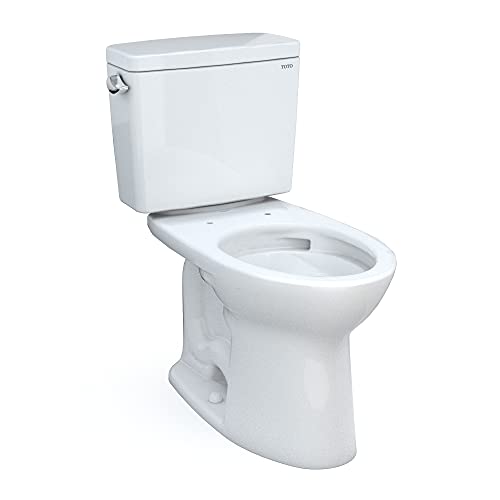
TOTO Drake II (1.28 GPF, elongated, MaP 1000g)
CeFiONtect glaze, fully glazed 2 1/8-inch trapway, SoftClose seat available. One of the most consistently top-rated toilets for flush power and odor resistance in aggregated owner reviews. EPA WaterSense certified.
Check price on Amazon
TOTO UltraMax II (1.0 GPF, one-piece, elongated)
Siphon-jet one-piece design eliminates the gap between tank and bowl where dust and moisture accumulate. CeFiONtect glaze throughout. Single flush at 1.0 GPF is among the lowest GPF ratings at MaP 800g+ in independent testing. EPA WaterSense certified.
Check price on Amazon
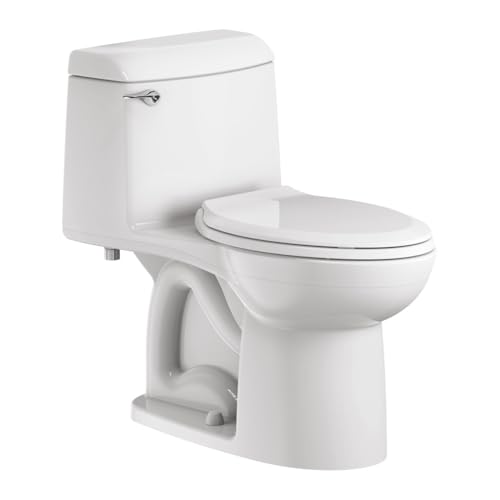
American Standard Champion 4 (1.6 GPF, elongated, MaP 1000g)
The Champion 4 trapway at 2 3/8 inches is the widest fully glazed trapway in this price range by published specification. EverClean antimicrobial surface. The 4-inch flush valve produces a high-volume, fast flush that clears the bowl in under 1.5 seconds per American Standard's technical documentation.
Check price on Amazon
Kohler Highline Arc (1.28 GPF, two-piece, elongated)
AquaPiston canister valve delivers a 360-degree flush that rinses more bowl surface area than traditional flappers. Fully glazed trapway at 2 1/8 inches. EPA WaterSense certified. Widely available and service parts are stocked at most hardware chains.
Check price on Amazon
Swiss Madison Voltaire (one-piece, elongated, 1.1/1.6 GPF dual flush)
One-piece construction with no tank-to-bowl seam reduces a common moisture trap. Fully glazed vitreous china. A newer brand with growing owner review data; the Voltaire consistently receives positive notes on ease of cleaning and odor control in aggregated reviews.
Check price on Amazon
Yes, at sufficient concentrations. Sewer gas is primarily hydrogen sulfide (H2S) and methane. H2S is toxic above 2 ppm for prolonged exposure and acutely dangerous above 100 ppm. Methane is explosive. If you smell a strong sewage odor throughout a room or floor of your home, ventilate immediately and call a plumber. A mild, intermittent odor near a single fixture is lower risk but should still be diagnosed and fixed.
Pour a cup of water directly into the toilet bowl and note whether the smell diminishes (confirming the bowl or trap was the source) or stays the same (suggesting the main drain or vent). Also check nearby floor drains and sink drains -- if those also smell, the issue is the main drain system, not the toilet alone.
A smell that appears specifically when flushing usually means the mechanical action of flushing is disturbing a biofilm or scale deposit inside the trapway or drain, releasing odor compounds into the air. Descaling the trapway with a diluted acid cleaner and ensuring a strong complete flush on every use typically resolves this.
Hard water contributes to scale buildup inside the trapway and on flush surfaces. Calcium and magnesium deposits create a rough, porous surface where bacteria adhere more easily than on smooth glazed surfaces. Regular descaling with white vinegar or a commercial descaler, and considering a water softener for very hard water supplies, addresses this root cause.
Yes. Chlorine-based in-tank tablets are widely documented to degrade rubber flappers and fill valve seals over six to twelve months of continuous use. The EPA and most toilet manufacturers advise against their use. Bleach tablets can also cause stress cracks in older vitreous china tanks. Use bowl cleaner applied directly to the bowl instead.
For biological odors (urine, sewage residue, biofilm), enzymatic cleaners are the most effective because they break the molecules responsible for the smell rather than just masking them. For mineral scale and hard water deposits, white vinegar (acetic acid) or a dedicated limescale remover works best. For routine cleaning, a non-bleach bowl cleaner and a quality bowl brush are sufficient.
Higher ambient temperatures accelerate bacterial growth and increase the evaporation rate of volatile odor compounds from surfaces. High humidity in summer also contributes to mold and mildew growth in moist areas around the toilet. Sewage gas from a marginally compromised wax ring also migrates more readily in warm conditions. All existing odor problems become more pronounced with heat.
A wax ring under normal conditions lasts 20 to 30 years. Factors that shorten its life include a subfloor that flexes when weight is applied (common in older homes with softwood subfloors), loose closet bolts that allow micro-movement, and an improperly leveled toilet at installation. Toilets that rock even slightly should be inspected immediately -- even minor movement can compromise the seal within months.
Yes. Vitreous china and plastic components in new toilets can off-gas a mild chemical or plastic smell for the first several days to a few weeks. This is not a safety concern and diminishes with time and ventilation. If a strong chemical smell persists beyond four weeks, check that no packaging materials were left inside the tank or that no strong cleaners were used that reacted with tank components.
One-piece toilets eliminate the seam between tank and bowl, which in two-piece toilets can accumulate moisture, mold, and debris over time. This does give one-piece designs a minor maintenance advantage for odor control. However, a two-piece toilet with good maintenance habits and proper cleaning around the tank-to-bowl joint performs comparably. One-piece models like the TOTO UltraMax II and Swiss Madison Voltaire are specifically cited in owner reviews for ease of cleaning.
A chemical smell usually means either a new toilet off-gassing, a cleaning product residue in the tank or bowl, or a chlorine tablet dissolving in the tank. If chlorine tablets are in use, removing them and flushing several times will clear this smell within a day. A persistent chemical odor that is not tied to a new fixture or cleaning products should be investigated by a plumber, as some pipe repair compounds and solvents used near the drain system can release into the bathroom air through a failed seal.
Apply an enzymatic cleaner to the gap between the toilet base and the floor. Let it soak for 20-30 minutes, then scrub and wipe clean. Repeat twice if the odor is severe. Once the odor is eliminated, caulk the toilet base with a white silicone caulk, leaving a small gap at the rear. This prevents future urine infiltration without sealing in potential leak water that would need to drain as a warning signal.
Guest bathrooms go extended periods without flushing, which allows the P-trap to partially or fully dry out. The water barrier evaporates, and sewer gas passes directly into the room. Flushing guest toilets at least once per week prevents this. Adding a cup of water with a few drops of mineral oil to the bowl after flushing slows future evaporation significantly.
White and off-white porcelain makes staining and biofilm more visible, which prompts more frequent cleaning -- an indirect benefit to odor control. Dark-colored toilets (black, navy, or gray) hide staining and can lead to longer intervals between cleanings. Functionally, the glaze quality matters far more than color for bacterial adhesion resistance. CeFiONtect (TOTO) and EverClean (American Standard) glazes are both available in white finishes.
Yes. The vent pipe is a critical but invisible part of your drain system. It allows air into the drain network so water can flow freely without creating a vacuum that would siphon P-traps. A blocked vent -- usually from leaves, birds, or ice in cold climates -- creates negative pressure that slowly pulls water out of trap seals throughout the home. Symptoms include gurgling drains, slow drainage across multiple fixtures, and a persistent sewer gas smell that does not respond to trap refilling. Clearing the vent pipe (typically a plumber's job, done from the roof) resolves all of these symptoms simultaneously.
A one-time diluted bleach treatment of the tank (1/2 cup in a full tank, drained and rinsed after 30 minutes) is acceptable for a deep clean. Continuous use via in-tank tablets is not recommended, as bleach degrades rubber seals and can stress older china. The EPA WaterSense program and most major toilet manufacturers including TOTO, Kohler, and American Standard specifically advise against continuous in-tank bleach tablet use in their product care documentation.
Open a window and run the exhaust fan immediately. Then flush each toilet twice to refill traps, and pour water into every floor drain in the space. If the smell persists after five to ten minutes with the room ventilated, it is almost certainly a compromised seal rather than a dry trap -- at that point, stop using the toilet and call a plumber. Do not attempt to mask a strong sewage smell with air freshener; identifying and fixing the source is essential for health safety.
Pressure-assist toilets (where a pressurized vessel inside the tank forces water into the bowl under higher velocity than gravity-feed) produce a more complete flush and more thorough bowl rinse per cycle. This reduces organic residue and the bacterial colonization that produces odors. The tradeoff is greater flushing noise. For households with persistent odor issues tied to incomplete flushing, a pressure-assist model is worth evaluating alongside a gravity-flush toilet with a high MaP score.
Based on published glaze technology, MaP flush scores, and aggregated owner reviews: TOTO leads for antimicrobial glaze and flush efficiency (Drake, Drake II, UltraMax II series). American Standard scores well for raw flush power and EverClean glaze (Champion 4, Cadet 3). Kohler's AquaPiston valve provides a thorough bowl rinse (Highline, Cimarron). Gerber is reliable and underrated in this category (Avalanche, Viper). All four brands publish technical documentation allowing independent verification of their claims.
Almost every toilet odor has a specific, fixable cause -- and pinpointing the smell type is the fastest path to the right solution. Sewage gas is an urgent health concern that requires professional attention when it persists. Rotten egg, urine, and musty smells are almost always DIY-addressable with the right cleaner and a focused look at maintenance gaps. Investing in a toilet with a high MaP flush score, antimicrobial glaze, and a fully glazed trapway -- TOTO's Drake II and UltraMax II, American Standard's Champion 4, Kohler's Cimarron, and Gerber's Avalanche all qualify -- reduces how often these problems arise in the first place. Pair any toilet with a consistent weekly and quarterly maintenance routine, and chronic bathroom odors become a solved problem.
When you flush, where does it go? Follow toilet water from the bowl through the trap, drain, and stack to a septic…
Read the guideDo toilets need electricity to flush? Most do not. Learn which toilets use power, how a standard flush works, and how to…
Read the guideFind out how many gallons per flush an old toilet really uses, how to check your own tank, and how much water…
Read the guide