
Where Does Toilet Water Go After You Flush
Buying Guides4.6
When you flush, where does it go? Follow toilet water from the bowl through the trap, drain, and stack to a septic…
Read the guideA complete, data-driven look at connected toilets, smart mirrors, digital showers, and everything else that belongs in a modern smart bathroom -- from EPA-certified efficiency to real owner feedback.
Smart bathroom technology centers on connected toilets (bidet seats, auto-flush, tankless designs), smart mirrors with built-in lighting and displays, and digital shower systems with precise temperature control. TOTO and Kohler lead the toilet segment; Kohler and Delta lead showers. Prioritize EPA WaterSense certification and MaP scores above 600 grams for any smart toilet you consider.
Smart bathroom technology refers to connected fixtures and devices -- primarily toilets, mirrors, shower systems, faucets, and ventilation fans -- that use sensors, Wi-Fi, Bluetooth, or app control to automate tasks, conserve resources, and improve hygiene. These products range from self-cleaning bidet toilet seats to mirrors with integrated lighting and voice-assistant compatibility, and digital showers that recall user temperature preferences.
The bathroom is the last room in most homes to get the smart-home treatment, but that is changing quickly. The global smart bathroom market was valued at roughly $5.4 billion in 2023 and is projected to exceed $9 billion by 2028 (Statista, 2024). Manufacturers including TOTO, Kohler, American Standard, and Moen have all released connected product lines aimed at everything from water savings to touchless hygiene.
Before diving into specific categories, it helps to understand what distinguishes a genuinely useful smart bathroom product from a gimmick. Real utility comes from three areas: measurable water savings, verified hygiene improvements (hands-free operation, self-cleaning surfaces), and reliable long-term software support. Products that tick only one box -- such as a mirror with a novelty news ticker but no adjustable lighting -- are rarely worth the premium.
Plumbing engineers consistently recommend checking whether a smart toilet fixture carries both EPA WaterSense certification and a MaP score of at least 600 grams before purchasing. WaterSense ensures the unit uses no more than 1.28 GPF; MaP score confirms it actually clears 600 grams of solid waste reliably in a single flush -- two separate standards that together confirm both efficiency and performance. A toilet that is smart but clogs frequently negates every technology benefit.
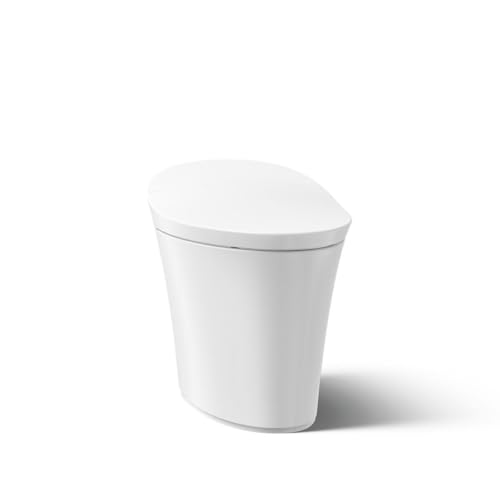
The TOTO Neorest NX2 and Neorest AH II are widely regarded as the benchmark smart toilet-bidet combinations, featuring EWATER+ electrolyzed water self-cleaning, heated seats, auto-open lids, and MaP scores above 1,000 grams. Kohler's Veil Intelligent Toilet and the American Standard Spalet round out the premium tier, while WOODBRIDGE B-0960S offers bidet-seat features at a significantly lower price point.
| Model | Type | GPF | MaP Score | WaterSense | Key Smart Features | Check Price |
|---|---|---|---|---|---|---|
| TOTO Neorest NX2 | Integrated | 0.8 / 1.0 | 1,000 g+ | Yes | EWATER+ self-clean, auto-open lid, heated seat, air dryer, night light | Check price |
| Kohler Veil Intelligent | Integrated | 0.8 / 1.28 | 800 g+ | Yes | UV light self-clean, heated seat, bidet wand, auto-flush, app control | Check price |
| TOTO Washlet+ UltraMax II | Toilet + Seat | 1.0 / 1.28 | 1,000 g+ | Yes | WASHLET seat, PREMIST bowl coating, auto-flush optional | Check price |
| American Standard Spalet | Toilet + Seat | 1.28 | 800 g+ | Yes | Heated seat, front/rear wash, warm air dryer, deodorizer | Check price |
| Woodbridge B-0960S | Integrated | 1.0 / 1.6 | 700 g+ | No | Auto-open lid, heated seat, bidet wash, remote control | Check price |
| Swiss Madison Well Made Forever SM-1T803 | One-Piece | 1.1 / 1.6 | 600 g+ | No | Glossy surface, modern trapway, pairs with aftermarket bidet seats | Check price |
The TOTO UltraMax II deserves special mention for buyers who want smart-toilet performance without the all-in-one price tag. The UltraMax II pairs with TOTO's WASHLET+ bidet seats and has a published MaP score of 1,000 grams, matching TOTO's flagship integrated units at a fraction of the cost. It is a consistent top performer on the best flushing toilets list for the same reason.
For households on a tighter budget, the Kohler Highline or Cimarron paired with an aftermarket bidet seat (such as a TOTO WASHLET C5 or Bio Bidet BB-2000) delivers most of the functional benefits of an integrated smart toilet. Both Kohler platforms earn MaP scores above 800 grams and carry WaterSense certification.
Integrated smart toilets like the Neorest NX2 combine tank and bowl into one unit with a fully enclosed trapway. This design has two concrete advantages: the enclosed trapway is harder for biofilm to colonize, and the smaller overall footprint suits tight bathroom layouts. The tradeoff is that a single component failure can require replacing the entire unit -- which is a meaningful consideration given price points that can exceed $5,000 for top-tier models.
Smart bidet toilet seats attach to most standard toilets via the existing bolt pattern and require only a nearby GFCI electrical outlet. They use a water supply T-valve connection to deliver heated, pressure-adjustable water for front and rear washing, typically also providing a warm-air dryer, heated seat surface, and integrated deodorizer. Aggregated owner data from major retail platforms shows satisfaction rates above 85 percent for well-reviewed models like the TOTO WASHLET C5 and Bio Bidet Bliss BB-2000.
Bidet seats are the most accessible entry point into smart bathroom technology. Unlike full integrated units, a bidet seat costs between $200 and $900 for a quality model and installs in under an hour with basic tools. The hygiene case is straightforward: water cleaning reduces toilet paper use by 75 percent or more according to published manufacturer studies, with bidet users in surveys reporting better perceived cleanliness.
Key specifications to compare when evaluating bidet seats:
The American Standard Spalet Advanced Clean series seats are compatible with American Standard's elongated toilet rough-ins and offer a mid-tier price point with consistently positive owner feedback. The Gerber Viper and Gerber Avalanche also work well as host toilets for aftermarket bidet seats given their full-size elongated bowl dimensions and above-average flush performance.
A smart bathroom mirror should offer tunable LED lighting with a color temperature range of at least 2700K to 6500K to simulate natural daylight for grooming accuracy, anti-fog heating on the mirror surface, and either a built-in display or Bluetooth speaker if entertainment features are desired. IP44 or IP65 waterproof rating is critical for any electronics inside a bathroom mirror, as steam exposure will damage unsealed components over time.
The smart mirror category splits broadly into two groups: illuminated anti-fog mirrors with color-adjustable lighting, and true smart mirrors with integrated displays or voice-assistant connections.
For most buyers, the illuminated anti-fog mirror is the more practical choice. Brands like Kohler Verdera, Keonjinn, and NEUTYPE offer models with CRI (Color Rendering Index) ratings above 90, which ensures the colors you see in the mirror -- makeup, skin tone, hair color -- match how you will look under natural light outdoors. A high CRI rating matters far more for daily utility than a news-ticker display.
True smart mirrors with Android displays and app integration are available from manufacturers like Séura and Electric Mirror, primarily targeting hotel and high-end residential projects. These units display weather, calendar appointments, and streaming video and connect to Amazon Alexa or Google Assistant. They command a significant price premium and require dedicated electrical circuits in most installations.
Regardless of category, look for:
Interior designers working on bathroom renovations frequently recommend pairing a smart mirror with a smart vanity light on the same dimmer circuit, creating a unified scene that can shift from bright task lighting for morning routines to soft ambient light for evening baths. Kohler's Verdera Voice Lighted Mirror integrates Amazon Alexa directly, allowing hands-free timer setting and smart-home control -- a genuinely useful feature rather than a novelty when your hands are wet or occupied.
Digital shower systems use electronic thermostatic valves to maintain water temperature within one to two degrees Fahrenheit regardless of pressure fluctuations elsewhere in the home, eliminating the cold-shock problem that occurs when a toilet flushes during a shower. Kohler's DTV+ and Moen's ioDigital are the two most widely distributed digital shower platforms in North America, both offering app control, multiple outlet management, and preset temperature profiles per user.
Standard pressure-balancing valves protect against scalding by maintaining a fixed hot-to-cold ratio, but they do not hold a precise temperature. A thermostatic valve does. The difference is meaningful: thermostatic valves maintain a set point (say, 104 degrees Fahrenheit) even as water heater output fluctuates across the day. This is especially useful in households with solar water heaters or tankless systems that have slight temperature variation.
Key digital shower components:
Kohler's DTV+ system supports up to six outlets and offers app integration with HomeKit, Alexa, and Google Assistant. Moen's U by Moen offers similar functionality with a lower installation complexity, as it uses existing supply lines without requiring a separate interface module for basic two-outlet configurations.
Water consumption in digital showers is not inherently better or worse than standard showers -- the key variable is how long you run water before entering. The pause function eliminates the two to four minutes of water waste typical in conventional warm-up cycles, which at 2.0 GPM (the federally mandated showerhead maximum) saves up to 8 gallons per shower. At twice-daily showers for a family of four, that adds up to over 23,000 gallons annually.
For related reading on water efficiency in the bathroom, see our guide to water-efficient toilets and our breakdown of 1.28 GPF vs. 1.6 GPF flushing.
Touchless sensor faucets with infrared detection are the most broadly useful smart faucet technology, eliminating cross-contamination during handwashing and reducing water waste from taps left running. Moen's MotionSense, Delta's Touch2O, and American Standard's Selectronic faucet platforms are the three most field-tested touchless bathroom faucet lines, with Selectronic used in commercial buildings and hospitals where durability data is most robust.
Beyond touchless operation, smart faucets now include temperature memory (the tap recalls your preferred hot-water mix at startup), flow rate limiting built directly into the valve body (not just the aerator), and app-based usage tracking that shows daily water consumption per fixture.
For pure hygiene benefit, a touchless sensor faucet is the highest-impact smart upgrade after a bidet seat. The Centers for Disease Control notes that proper handwashing is one of the most effective public health behaviors available, and touchless operation removes the faucet handle -- typically one of the most bacteria-contaminated surfaces in a bathroom -- from the hand-to-surface contact chain.
Delta's Touch2O faucets respond to touch anywhere on the spout or handle, not just proximity, which many owners find more reliable in low-light conditions. Moen's MotionSense uses a dual-sensor array that activates both from hands below the spout and from a second sensor at the back of the faucet that detects approach from the front.
Plumbing professionals note that smart faucets require GFCI-protected electrical access near the sink, which many older bathrooms lack. Before specifying a powered faucet, confirm an outlet is within the code-required distance from the sink, or budget for an electrician to install one. The faucet itself does not consume meaningful power -- most run on AA batteries or low-voltage DC adapters -- but the outlet must be present and code-compliant.
The highest-value smart bathroom upgrades by cost-to-benefit ratio are, in order: a bidet toilet seat on an existing toilet, a smart mirror with color-adjustable lighting, a touchless sensor faucet, and then a digital shower system. Full smart toilet replacement or full shower system installation should come last, after confirming electrical and plumbing infrastructure is compatible, because they carry the highest installation costs and the highest risk of incompatibility with existing rough-in dimensions.
A phased approach to smart bathroom technology makes sense for most budgets:
Phase 1 -- High impact, low disruption: Add a bidet toilet seat to your current toilet (electrical outlet and T-valve connection only) and replace the existing mirror with a lighted anti-fog model connected to the vanity light circuit.
Phase 2 -- Moderate disruption: Replace the faucet with a touchless or touch-activated model. Add a humidity-sensing exhaust fan (Panasonic WhisperSense, Broan Era) that activates automatically during showers and shuts off when moisture clears.
Phase 3 -- Full renovation: Install a digital shower system while plumbing walls are already open. Upgrade to an integrated smart toilet (TOTO Neorest, Kohler Veil) when tile, flooring, and rough-in adjustments are already part of the remodel budget.
For full remodel planning, our bathroom remodel buying guide and bathroom plumbing basics articles cover rough-in dimensions, permit requirements, and fixture sequencing in detail.
The three smart bathroom features with the most verified water savings are dual-flush or low-GPF smart toilets with EPA WaterSense certification (saving 20 to 60 percent compared to older 3.5 GPF models), digital shower systems with pre-run pause functions (eliminating warm-up waste of 2 to 8 gallons per shower), and touchless faucets with auto-shutoff (reducing per-use water waste by eliminating taps left running during handwashing or toothbrushing).
EPA WaterSense is the clearest benchmark for toilet water efficiency. WaterSense-certified toilets flush at 1.28 GPF or less while meeting minimum performance standards (the EPA requires a minimum MaP score of 350 grams for WaterSense certification, though the best models score 800 to 1,000 grams). Compared to the pre-1994 standard of 3.5 GPF, a WaterSense toilet saves more than 13,000 gallons per year per household according to EPA published estimates.
TOTO's Aquia IV dual-flush model uses 0.8 GPF on the light flush and 1.28 GPF on the full flush, achieving WaterSense certification while maintaining a MaP score above 600 grams for the full flush cycle. This makes the Aquia IV a strong choice when maximum water efficiency is the primary goal. American Standard's H2Option also offers dual-flush operation at 0.92 and 1.28 GPF with WaterSense certification.
Smart showerheads with flow restrictors and pause buttons -- from brands like Kohler, Moen, and Hydrao -- add water-saving functionality without requiring a full digital shower system installation. The Hydrao First tracks cumulative water use during each shower and changes LED color to indicate when you have used 8, 17, or 25 liters, providing real-time visual feedback that published studies suggest reduces shower duration by an average of 1.5 to 2 minutes.
Smart bidet seats are designed for DIY installation and require no special plumbing skills beyond connecting a T-valve to the toilet supply line and plugging into a nearby GFCI outlet. Full integrated smart toilets (TOTO Neorest, Kohler Veil) typically require a licensed plumber for toilet replacement and an electrician to install or verify the dedicated GFCI circuit the unit requires.
WASHLET is TOTO's brand name for its bidet seat line. All WASHLET seats are bidet seats, but not all bidet seats are WASHLETs. TOTO introduced the WASHLET in Japan in 1980 and it remains the most widely recognized brand in the category. Competitors include Bio Bidet (now Brondell), Kohler Puretide, and American Standard Advanced Clean, all of which offer similar wash, dry, and seat-heating functionality under different brand names.
Smart toilets with self-cleaning nozzle systems -- such as TOTO's EWATER+ (electrolyzed water misting) or Kohler's UV light sterilization -- are designed to maintain hygiene of the wand between uses. Independent testing published by toilet manufacturers confirms that EWATER+ reduces surface bacteria on the nozzle to near-zero levels. Standard bidet seats without self-cleaning systems should have their nozzles manually cleaned monthly according to manufacturer guidance.
Most smart bidet seats fit standard elongated or round toilet bowls using universal mounting hardware. Manufacturers publish compatibility lists for specific toilet models. The primary incompatibility concerns are non-standard bowl shapes (French curve, D-shaped, or very compact round bowls), toilets with non-centered bolt holes, or toilets where the water supply connection is positioned in an unusual location that would conflict with the seat's internal plumbing.
MaP (Maximum Performance) testing is an independent third-party protocol that measures how many grams of solid waste a toilet can remove in a single flush. Scores range from 0 to 1,000+ grams. The EPA requires a minimum of 350 grams for WaterSense certification; plumbing professionals generally recommend 600 grams as a practical household minimum. Smart toilets from TOTO and Kohler typically score 800 to 1,000+ grams. MaP results are publicly searchable at map-testing.com.
A smart bidet seat in standby mode with seat heating active typically consumes 20 to 45 watts, comparable to a standard incandescent night light. Premium models include energy-saving modes that use occupancy sensors to reduce or eliminate seat heating when the bathroom is unoccupied for extended periods, cutting standby consumption to 5 to 8 watts. Annual electricity cost for a smart bidet seat ranges from roughly $15 to $40 depending on seat heating settings and local electricity rates.
EWATER+ is TOTO's proprietary technology that electrolyzes tap water to create a mild hypochlorous acid solution -- the same active compound used in commercial sanitizers. TOTO applies this solution to mist the toilet bowl before each use (PREMIST) and to clean the wand after each use. Published TOTO testing shows this reduces bacteria on treated surfaces by more than 99.9 percent, replacing the need for chemical bowl cleaners in normal use.
Most lighted smart mirrors connect to an existing vanity light circuit, not a dedicated circuit. Models with display screens or high-wattage LED arrays may benefit from a dedicated 15-amp circuit if the bathroom's existing circuit is near capacity. Confirm with an electrician if your vanity light, exhaust fan, and GFCI outlet all share a single 15-amp breaker.
Yes. WaterSense certification confirms a toilet flushes at 1.28 GPF or less AND meets minimum performance standards. Without WaterSense, there is no independent verification that the toilet's water savings claims are accurate. Additionally, many state and local utility rebate programs require WaterSense certification for toilet replacement rebates -- in some regions worth $50 to $200 per toilet replaced.
Yes. Kohler's DTV+ and Moen's U by Moen both support Amazon Alexa and Google Assistant voice control. You can say "Alexa, start my shower" and the system will run water to your preset temperature and pause it there until you step in. Both platforms also offer iOS and Android apps for remote control and usage tracking. Apple HomeKit support is available on the Kohler DTV+ through a software update issued in 2024.
The TOTO Aquia IV in its elongated compact version offers a reduced depth (27 inches from wall to front of bowl compared to 30 inches for standard elongated bowls) while maintaining dual-flush efficiency and WaterSense certification. Swiss Madison's Well Made Forever line also offers compact elongated options. For small bathrooms, an integrated tankless smart toilet design -- which eliminates the tank entirely -- offers the most space savings, typically reducing total toilet footprint depth by 3 to 5 inches.
Published manufacturer warranty periods for smart bidet seats range from one year (budget models) to five years (TOTO WASHLET, Bio Bidet Bliss). Owner reviews aggregated across major retail platforms suggest the mechanical components -- heating element, nozzle motor, lid hinge -- most frequently develop issues after five to seven years of daily use in households with hard water. Using the recommended cleaning schedule and installing a water softener or inline filter where water hardness exceeds 7 gpg extends service life meaningfully.
Digital shower thermostatic valves work with tankless (on-demand) water heaters, but the combination requires careful calibration. Tankless heaters have a minimum flow rate threshold to activate (typically 0.5 to 0.75 GPM), and some digital shower pause functions reduce flow below this threshold, causing the heater to cycle off and deliver cold water. Kohler and Moen both publish compatibility notes for tankless heater configurations; confirm compatibility before purchasing.
A smart exhaust fan adds humidity sensing, occupancy detection, or both to a standard bathroom exhaust fan. Humidity-sensing fans (Panasonic WhisperSense, Broan Era series) activate automatically when humidity rises and shut off when it returns to baseline -- removing moisture without manual operation and directly reducing mold risk. Most models install identically to standard fans and represent one of the best-value smart bathroom upgrades available.
Yes. All major smart bathroom product lines include on-unit controls -- physical buttons, touch panels, or remotes included in the box -- that operate all functions independently of any app or Wi-Fi connection. App and voice-assistant connectivity adds convenience but is not required for basic operation. This is relevant for reliability: if your Wi-Fi drops, your smart toilet seat, digital shower, and touchless faucet all continue to function normally through their physical controls.
The basic flushing function on smart toilets that retain a tank (such as TOTO's WASHLET+ paired units) works normally during a power outage using gravity-fed tank water, as the flush mechanism is purely mechanical. Tankless integrated smart toilets that require electricity for the flush valve will not flush during a power outage unless the unit includes a battery backup -- a feature worth confirming before purchase if your area experiences frequent outages. Bidet functions require power and will not operate during an outage on any model.
TOTO and Kohler have the longest track records in smart toilet technology. TOTO introduced electronic bidet seats in the US in the 1990s, providing decades of field data. Kohler's Veil and Numi lines entered more recently but draw on established plumbing engineering. American Standard and Gerber offer strong conventional toilet reliability, and their smart-seat partnerships inherit that same build quality.
The National Association of Realtors' 2024 Remodeling Impact Report shows bathroom remodels recover 71 percent of cost at resale on average. Smart fixtures add modest buyer appeal in tech-forward markets but are largely cost-neutral elsewhere. A bidet seat adds essentially no installation cost and may increase appeal to buyers familiar with the technology.
A one-piece toilet integrates tank and bowl into a single seamless ceramic unit, which eliminates the gap between tank and bowl where bacteria accumulate on two-piece models. Smart toilets in the one-piece category (TOTO UltraMax II, Kohler San Souci) pair cleanly with WASHLET+ and similar bidet seats. Two-piece models (TOTO Drake, Kohler Highline) have a bolt-connected tank that creates a small horizontal ledge behind the seat -- this is cosmetically visible but does not affect flushing performance or bidet seat compatibility.
Wipe the seat surface with mild soap and a soft cloth -- not abrasive cleaners or bleach, which degrade polypropylene. Clean the nozzle tip monthly by hand or using the seat's built-in nozzle-cleaning mode. Avoid spraying water into the side control panel. Do not use scrubbing pads on the bowl rim, as scratches harbor bacteria.
Smart bathroom technology is no longer a luxury niche. Bidet seats with heated water, air drying, and self-cleaning nozzles deliver daily hygiene and comfort benefits on a budget most homeowners can justify. Smart mirrors with color-accurate lighting and defogger surfaces address real functional gaps in conventional bathrooms. Digital shower systems eliminate warm-up water waste and deliver genuinely consistent temperatures. When evaluating any smart toilet, filter first by EPA WaterSense certification and a MaP score above 600 grams -- those two standards confirm efficiency and flushing performance simultaneously. TOTO remains the benchmark in integrated smart toilets; Kohler's DTV+ leads in digital shower integration; and for mirrors, any lighted anti-fog unit with a CRI above 90 and IP44 rating delivers the day-to-day value that complex display mirrors rarely justify at their price point.
When you flush, where does it go? Follow toilet water from the bowl through the trap, drain, and stack to a septic…
Read the guideDo toilets need electricity to flush? Most do not. Learn which toilets use power, how a standard flush works, and how to…
Read the guideFind out how many gallons per flush an old toilet really uses, how to check your own tank, and how much water…
Read the guide