The toilet is often the cheaper part of the bill. Labor, the condition of your flange, and whether the drain needs to move decide whether you spend a short plumber's visit or a full day of work. This guide breaks down every cost factor, from a clean like-for-like swap on a standard 12-inch rough-in all the way to a relocated drain and a rotted subfloor, so you can budget for the job you actually have, not the one you hope for.
Quick Answer
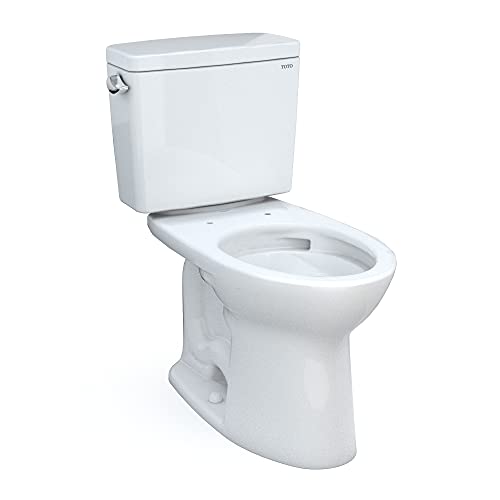
Toilet installation cost is driven by labor and flange condition, not fixture price. A clean swap with a sound 12-inch rough-in flange is a short, low-cost job, while a damaged flange, relocated drain, or rotted subfloor multiplies it significantly. The lowest-labor toilet to install is a standard 12-inch rough-in two-piece like the TOTO Drake, which drops onto an existing flange with a wax ring and supply line in well under an hour, keeping install labor at its minimum.
Most homeowners focus on the toilet's sticker price and then get surprised when the installation quote arrives, because the labor to set a toilet and what the plumber finds when the old one comes off can easily exceed the fixture itself. A clean drop-in swap where the existing flange is sound, the rough-in is the standard 12 inches, and the floor under the toilet is solid is one of the simplest plumbing jobs in any home. The cost climbs the moment those conditions fail: a cracked or sunken flange needs a repair ring or full replacement, a soft or rotted subfloor needs carpentry before anything is set, a non-standard 10- or 14-inch rough-in needs a matching toilet or offset, and a toilet moved to a new location requires the drain line and flange to be relocated, which means opening the floor.
We compare published manufacturer specs, MaP (Maximum Performance) flush-test scores, EPA WaterSense certification data, and aggregated owner review patterns rather than staging installs ourselves. For installation cost specifically, four things determine the bill: the rough-in match, the flange and floor condition, the toilet type and weight, and whether the job is a swap or a new drain installation. For the strongest models that also install cheaply, see our full rankings of the best flushing toilets, which highlights models that drop cleanly into a standard rough-in.
The single biggest cost driver in toilet installation is the condition of the flange and subfloor, not the price of the toilet you buy. A sound flange at a standard 12-inch rough-in lets a new toilet drop in with a wax ring and supply line in under an hour. A cracked or sunken flange adds a repair, a rotted subfloor adds carpentry, and a relocated toilet opens the floor entirely. Confirm your rough-in and have the flange checked before assuming a quick swap.
What Does Toilet Installation Cost in 2026?
Toilet installation cost in 2026 ranges from a short labor charge for a straightforward like-for-like swap on a sound standard flange, up to several times that for jobs involving flange repair, subfloor replacement, or a relocated drain line. The fixture price is typically the smaller portion of a basic swap; labor and what is found under the old toilet set the real total. Choosing a standard 12-inch rough-in toilet that drops onto an existing flange is the most effective way to keep installation cost low.
The ranges below reflect published plumber rates, home-improvement cost aggregators, and the consistent patterns that appear across homeowner forums and contractor estimates in 2026. They are ranges because local labor markets vary significantly, so a metropolitan plumber's hourly rate may be two or three times that of a rural one. Use these as a framework to evaluate quotes rather than as fixed prices.
Pull old toilet, new wax ring, set and level new toilet, connect supply line
Lowest
Labor only, short job
Yes
Swap with new shut-off valve
Replace a failed or weeping angle stop during the swap
Low
Small part plus added time
Yes
Swap with flange repair ring
Add a repair ring over a cracked or broken flange
Moderate
Repair ring material plus extra labor
Moderate
Swap with full flange replacement
Remove and replace a cracked or corroded closet flange
Moderate-high
Flange plus significant labor
Pro recommended
Swap with subfloor repair
Rebuild a soft or rotted floor under the toilet before setting
High
Carpentry plus plumbing labor
Pro job
Relocated toilet, new drain line
Open floor, reroute drain pipe and flange, then set toilet
Highest
Drain relocation and floor work
Pro job
Wall-hung toilet installation
Set in-wall carrier and concealed tank, mount bowl, finish wall
High
Carrier, tank, and wall construction
Pro job
New install, no existing drain
Run new drain line, set flange in concrete or subfloor, then install toilet
Highest
Full drain rough-in
Pro job
What Drives Toilet Installation Cost the Most?
Labor and the condition of the flange and subfloor drive toilet installation cost more than any other factor, because a sound flange on a standard rough-in means a short job while a damaged flange, rotted floor, or relocated drain adds skilled labor hours and material. The toilet's price is usually the smaller portion of a basic swap. Choosing a standard 12-inch rough-in model that drops onto the existing flange keeps the labor portion at its minimum.
Work through each factor below before you book the work, because most cost surprises surface only after the old toilet is lifted and what was hidden underneath becomes visible. Knowing which factors apply to your bathroom turns an unexpected quote into a planned budget.
Flange condition: the most common hidden cost
The closet flange is the ring that anchors the toilet to the drain and seals it to the floor. Its condition is the single most common source of installation cost beyond the basic swap. A cracked, sunken, or corroded flange will not hold a new wax ring seal, so it needs a repair ring bolted over it or a full replacement before the new toilet can be set. More expensive still, a flange that has been weeping for years often sits over a subfloor that has gone soft and spongy with moisture damage, meaning the floor must be cut out and rebuilt before the flange can be reset solidly. That combination, a flange replacement plus subfloor carpentry, brings two trades into what started as a plumbing job. If your old toilet rocked, if you saw water staining at the base, or if the toilet has been in place for two or three decades without a seal check, plan for the plumber to find work at the flange.
Rough-in and drain location
The rough-in is the distance from the finished wall to the center of the flange bolts, standard at 12 inches in most homes but sometimes 10 or 14 inches in older construction. A toilet must match your rough-in to sit correctly. Ordering the wrong size forces either a different model, an offset flange, or in the worst case a relocation of the drain pipe. Moving the toilet to a different spot in the room is the single most expensive scenario, because the floor must be opened, the drain line rerouted, and the flange reset before the toilet is even set. Confirming the rough-in before buying and keeping the toilet in its existing location avoids the costliest add-on entirely. Our complete toilet buying guide includes a step-by-step rough-in measurement so you never order the wrong size.
Toilet type and weight
The toilet's design affects labor too. A two-piece toilet ships as separate tank and bowl, is lighter to carry, and is the fastest to set, making it the least labor-intensive design. A one-piece toilet is a single heavy casting that is more awkward to maneuver and lower onto the flange bolts, often requiring two people, which can add a small amount of time. A wall-hung toilet is the most labor-intensive of all, because it requires an in-wall carrier frame and concealed tank to be set inside the wall before the bowl can be mounted, a job that is more in-wall construction than a simple toilet swap. Our guide to one piece vs two piece toilets covers all the trade-offs that affect both cleaning and install complexity.
Shut-off valve, supply line, and disposal
Smaller line items add up. A new quarter-turn shut-off valve is wise if the existing angle stop is stuck, corroded, or weeping, since replacing it during the install is far cheaper than a second visit. A fresh braided stainless supply line and new brass flange bolts are cheap insurance against a post-install leak. Hauling away the old toilet is a small disposal charge that some plumbers include and others bill separately. New caulk around the base and occasionally a toilet seat if the model does not include one round out the minor extras. None is large alone, but together they are a real part of a complete, reliable installation.
How Much Does Toilet Labor Cost?
Toilet installation labor scales with how long the job takes rather than the price of the toilet. A straightforward like-for-like swap on a sound standard flange is among the quickest plumbing jobs. A flange repair, subfloor repair, or drain relocation can add multiple hours of skilled labor on top. Local plumber rates vary significantly by market, so the labor figure is determined by time multiplied by the local hourly rate.
The steps of a clean swap are few: pull the old toilet, scrape the old wax, set new flange bolts, lower a new wax ring, set and level the bowl, tighten bolts alternately to avoid cracking the base, mount the tank on a two-piece, and connect the supply line. Where labor climbs is in what is found under the old toilet. A seized flange bolt that must be cut, a subfloor that flexes underfoot, or a shut-off valve that will not close fully are each small additions individually but together can double the job time. Confirming a sound flange and a standard rough-in before work begins is the most reliable way to keep labor at its minimum.
Can DIY Installation Save Money on a Toilet Swap?
A like-for-like toilet swap is one of the most DIY-friendly plumbing jobs when the flange is sound and the rough-in is standard, saving the full labor charge. The job needs only basic hand tools, and every connection is mechanical and visible. The DIY case ends when a flange repair, subfloor replacement, or drain relocation is required, since those involve skills and materials most homeowners lack. Match the toilet to your existing rough-in first, then inspect the flange before deciding.
If your existing flange is healthy and level, a confident DIYer can complete a toilet swap with an adjustable wrench, a putty knife, a fresh wax ring, new brass flange bolts, and a braided supply line, saving the entire labor portion of the bill. The risk is what the old toilet was hiding. A cracked flange discovered mid-job, a soft spot in the subfloor once the weight is off, or a wax seal that leaks after setting are moments to pause and call a plumber rather than improvise, because a failed seal under the floor causes damage that far exceeds the labor it replaced. A two-piece toilet is also meaningfully easier to handle solo than a heavy one-piece, which often needs a second person to lower safely onto the bolts.
Measure your rough-in and inspect the flange before you buy or book anything. Measure from the finished wall (not the baseboard) to the center of the bolt caps on the existing toilet. Standard is 12 inches, but 10- and 14-inch rough-ins exist. While the old toilet is off, check that the flange sits flush with or slightly above the finished floor and is solidly anchored. Those two checks determine whether your install is a quick drop-in or a repair job. Our guide to how to choose a toilet covers this measurement in detail.
Which Factors Make Toilet Installation More Expensive?
Toilet installation becomes more expensive when the job requires more than a clean swap: a cracked or sunken flange, a soft or rotted subfloor, a non-standard rough-in, a relocated drain line, a failed shut-off valve, or a wall-hung toilet needing an in-wall carrier each add skilled labor and material costs on top of the basic set. A relocated drain or a combined flange-and-floor repair are the costliest scenarios.
Below is each major cost multiplier ranked roughly by how much it adds, with a note on whether it is discoverable before the old toilet comes off or a genuine hidden surprise.
Relocated drain: the costliest scenario
Moving the toilet to a new position, even a few inches off its existing location, requires opening the floor to relocate the drain pipe and reset the flange. In a slab foundation this means cutting concrete, in a wood-frame floor it means cutting and reframing the subfloor. Either way, the job transitions from plumbing to renovation. This is entirely avoidable by keeping the toilet in its existing footprint and choosing a model that matches the existing rough-in dimension.
Flange below floor level after new tile
One of the most common hidden installations costs comes after bathroom tile work: a new layer of tile raises the finished floor height, leaving the existing flange sitting below the surface. A single wax ring cannot bridge a gap that large reliably, so a flange spacer or extender ring must be added before any toilet is set. This is a plannable cost if you know new tile went down, and a genuine surprise if you do not.
Non-standard rough-in
A toilet built for a 12-inch rough-in will not seat on a 10-inch or 14-inch flange correctly. Discovering this on install day means either returning the toilet, ordering an offset flange, or in worst case relocating the drain. Measuring the rough-in before purchase costs nothing and eliminates this entirely.
Permit requirements in some jurisdictions
A like-for-like toilet swap in the same location rarely requires a permit. Moving the toilet, adding a new drain, or doing any work in a bathroom as part of a larger renovation may trigger a permit requirement in your jurisdiction, which adds cost and time. Check with your local building authority before any work involving drain relocation.
Make it easy
Top recommendations for a low-cost install
Three proven toilets that install with the least labor: each fits a standard 12-inch rough-in, drops cleanly onto an existing flange, and delivers a strong 800-gram-plus MaP flush at 1.28 GPF. Widely stocked so any plumber knows them.
Cheapest to Install
TOTO Drake
Standard rough-in, two-piece
4.8
A standard 12-inch rough-in two-piece with a 1.28 GPF G-Max flush and a 800-gram-plus MaP score. The two-piece design keeps the bowl light enough for a solo set onto the existing flange, which is exactly why plumbers quote this one fastest.
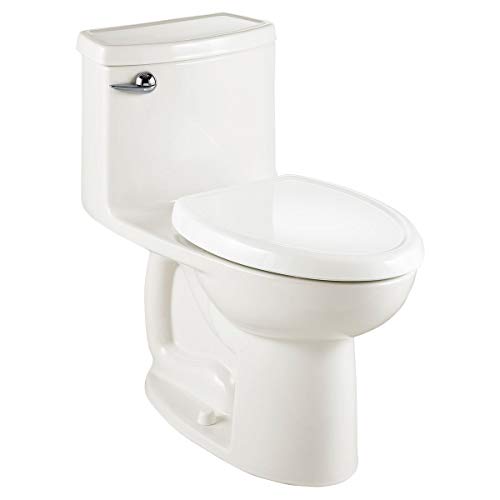
A 1000-gram MaP rating, EPA WaterSense-certified 1.28 GPF flush, and a standard 12-inch rough-in that drops in cleanly. The pick when you want both a low fixture price and a short install bill on the same job.
A comfort-height design with Kohler's AquaPiston flush on a standard 12-inch rough-in. The taller bowl height does not change the install at all, making it the best way to get an accessible, finished look on the same quick drop-in labor.
The toilet you buy matters far less to the install bill than whether it matches your rough-in. Measure first, pick a standard 12-inch model like the TOTO Drake or American Standard Cadet 3 that drops straight onto the existing flange, and choose a two-piece for the lightest, fastest set. The real cost protection is having the flange and the floor under the old toilet inspected before the work starts, because that is where a sub-hour job quietly becomes a multi-hour one. Spend on a toilet with a strong MaP flush score and you only install once.
How to Save Money on Toilet Installation
The most reliable ways to save on toilet installation are to keep the toilet in its existing location so the drain never moves, match it to your standard 12-inch rough-in so no offset or relocation is needed, and confirm the flange and subfloor are sound before booking the work. Handle the basic swap yourself if the flange is healthy. Spend on a durable, high-MaP toilet so you only pay to install it once.
Each of these savings is independent and stackable. Not relocating the toilet removes the single costliest add-on. Matching the rough-in eliminates ordering errors and offset costs. Inspecting the flange turns a mid-job surprise into a planned repair priced before work starts. Doing the basic swap yourself if the flange is healthy and the rough-in is standard saves the full labor charge. And choosing a toilet with a high MaP flush score, a full trapway, and an EPA WaterSense efficiency certification means it performs so well you never pay to swap it out again in a few years.
Where not to cut corners: the wax ring and flange seal. A failed wax seal leaks water into the subfloor silently, and by the time it is visible the damage often costs more to fix than every labor-saving shortcut combined. A new wax ring on every install, a spacer if the flange sits low, and bolts tightened alternately in small turns are non-negotiable steps regardless of budget. For detailed installation steps, see our full toilet installation guide.
Does Toilet Type Affect Installation Cost?
Yes. A two-piece toilet is the lightest and fastest to set, keeping install labor at its lowest. A one-piece toilet is heavier and more awkward to maneuver onto the flange bolts, potentially adding a small amount of labor. A wall-hung toilet requires an in-wall carrier frame and concealed tank set before the bowl is mounted, making it the most labor-intensive and costly type to install by a significant margin.
For a like-for-like swap, the two-piece design is the clear install-cost winner. A one-piece like the TOTO UltraMax II or Kohler Santa Rosa skips the tank-mounting step but is a heavy single casting that most people need two persons to set safely. The visual reward is a seamless, easy-to-clean body with no bowl-to-tank joint. A wall-hung model like some Swiss Madison St. Tropez configurations needs the wall opened to set the carrier before the bowl can be mounted, which turns a plumbing job into a finish-construction job. Choose the type for how you want the bathroom to look and clean, then budget the install accordingly. Our comparison of round vs elongated toilets covers other design choices that affect comfort but not install cost.
Editorial Take
The most expensive toilet install is the one you end up doing twice, whether because the original wax seal failed, the toilet kept clogging and needed replacing, or the fixture developed a running tank. The smartest cost saving is a toilet with a genuinely strong MaP flush, a full 2-3 inch glazed trapway, and EPA WaterSense certification at 1.28 GPF. TOTO Drake, TOTO Drake II, American Standard Champion 4, Kohler Cimarron, Gerber Viper, and Woodbridge T-0001 all clear 800 grams on MaP testing and have the warranty and review track record to justify the confidence. Buy a toilet that lasts and you only pay for the labor once.
What Is the Cheapest Toilet to Install?
The cheapest toilet to install is a standard 12-inch rough-in two-piece model that drops onto an existing flange with a wax ring and supply line. The TOTO Drake is widely cited for this because it is light, widely stocked, and compatible with the rough-in standard used in most North American homes. The American Standard Cadet 3 is the value pick that combines an equally low install labor with a lower fixture price. Neither requires an offset, relocation, or special carrier.
Two-piece toilets win on install cost every time because the tank and bowl ship separately, keeping each piece light enough for a solo installer to manage. The Gerber Viper and Gerber Avalanche are similarly easy installs at standard dimensions. The Woodbridge T-0001, a one-piece, installs more slowly but comes with a complete hardware kit and clear instructions that reduce guesswork. For a comfort-height model that installs just as easily as a standard bowl, the Kohler Cimarron or the Kohler Highline deliver the taller seat without any change to the rough-in or flange requirements.
Manufacturer published specifications (TOTO, Kohler, American Standard)
HomeAdvisor and Angi contractor cost data (2025-2026)
Plumbing code references, International Plumbing Code (IPC) 2021
FAQ
Frequently asked questions
? What is the average cost to have a plumber install a toilet?
The total cost depends on labor rates in your area and the complexity of the job. A straightforward like-for-like swap on a sound standard flange is among the quickest plumbing jobs a plumber does, while a flange repair, subfloor repair, or drain relocation can multiply the labor significantly. Most homeowners find that labor represents the largest portion of a basic install, with the fixture often a smaller part of the total.
? Is labor more expensive than the toilet itself?
On a basic swap the fixture and labor may be comparable, but once any complication arises, labor typically becomes the larger cost. A flange repair, rotted subfloor, or relocated drain can add several hours of skilled plumber time at market rates, making the labor portion exceed a mid-range toilet's price with ease. Choosing a simple drop-in model and keeping it in place limits how far labor can run.
? Can I install a toilet myself to save on labor?
Yes, a like-for-like swap is genuinely DIY-friendly if the flange is sound, the rough-in is standard, and you are comfortable with basic hand tools. Pull the old toilet, set a fresh wax ring, lower the new bowl onto the flange bolts, tighten alternately until snug, mount the tank on a two-piece, and connect the supply line. Call a plumber if the flange is cracked, the floor is soft, or the toilet leaks at the base after setting.
? What is a toilet rough-in and how does it affect installation cost?
The rough-in is the distance from the finished wall to the center of the floor bolt holes, typically 12 inches but sometimes 10 or 14 in older homes. A toilet must match your rough-in to sit squarely. Ordering the wrong size forces either an offset flange or a drain relocation, both of which add cost. Measuring before you buy costs nothing and eliminates this entirely.
? How do I measure my toilet rough-in?
Measure from the finished wall surface, not the baseboard trim, to the center of the bolt caps at the base of the existing toilet. On a two-bolt toilet (most standard models) this is a single measurement. On a four-bolt toilet measure to the rear set of bolts. The standard measurement is 12 inches. Confirm this before purchasing any replacement toilet to guarantee a straight drop-in without offsets or relocation.
? What is a toilet flange and why does its condition affect the cost?
The closet flange is the ring-shaped fitting that anchors the toilet bowl to the drain pipe and floor. It must sit flush with or slightly above the finished floor to allow a wax ring to seal correctly. A cracked, sunken, or corroded flange needs a repair ring or full replacement before any toilet can seal, and a flange that has been slowly weeping water often sits over a damaged subfloor that must be rebuilt before the flange can be reset. This combination is one of the largest installation add-ons.
? Does moving a toilet to a new location cost much more?
Relocating a toilet is the single most expensive installation scenario. It requires opening the floor to reroute the drain pipe and reset the flange in the new position, which brings demolition, carpentry, and plumbing into a job that would otherwise have been a simple swap. Keeping the toilet in its existing location and choosing a model that matches the standard rough-in avoids this entirely.
? Do one-piece toilets cost more to install than two-piece toilets?
Usually a small amount more, because a one-piece toilet is a single heavy casting that is more difficult to maneuver onto the flange bolts and often needs two people. A two-piece toilet ships separately and is lighter, making it the fastest, lowest-labor design to set. The one-piece gains a seamless, easier-to-clean body; the trade-off is a slightly more involved install.
? Why does a wall-hung toilet cost the most to install?
A wall-hung toilet requires an in-wall steel carrier frame and a concealed tank to be set inside the wall cavity before the bowl can be mounted on the carrier's studs. This is essentially in-wall construction, not a toilet swap, and it must be completed before the wall is finished. The carrier hardware, the concealed tank, the wall framing, and the subsequent wall finish all add cost layers that a floor-mount swap does not have.
? Should I replace the shut-off valve when installing a toilet?
Yes, if the existing angle stop is old, weeping, or will not fully close. Replacing it during the install adds minimal time while it is already accessible, whereas a failed valve after installation means a second visit. A fresh quarter-turn valve, new brass flange bolts, and a braided stainless supply line are the small extras that make a complete, reliable install rather than just a fixture swap.
? Is hauling away the old toilet included in the installation cost?
It depends on the contractor. Some plumbers include disposal of the old toilet in the installation charge; others add a small fee for it. Ask before the work starts so it is not a surprise. If you are doing the swap yourself, check whether your local waste hauler accepts ceramic toilets or requires a bulk pickup appointment, since they are not typical household trash.
? How long does a basic toilet installation take?
A straightforward like-for-like swap on a sound standard flange usually takes well under an hour for an experienced plumber. Add time for a shut-off valve replacement, a flange repair ring, or seized bolts that must be cut. A subfloor repair, full flange replacement, or drain relocation can extend a job to half a day or more. The toilet set itself is fast; what is found under the old one determines the total time.
? What hidden costs should I expect with toilet installation?
The most common hidden costs are a cracked or sunken flange requiring a repair ring or replacement, a soft or rotted subfloor discovered once the old toilet is lifted, a shut-off valve that will not fully close, and disposal of the old fixture. Less commonly, a non-standard rough-in forces an offset flange or a toilet return. Almost all of these are discovered only once the old toilet is removed, which is why having the flange checked before the work starts turns surprises into a planned budget.
? Does choosing a stronger-flushing toilet affect installation cost?
Not directly. Installation labor depends on the toilet's rough-in, type, and weight, not its flush technology. A TOTO Drake with G-Max technology installs the same way as a basic two-piece. Indirectly, though, a toilet with a high MaP flush score and good clog resistance reduces the likelihood of early replacement, so you pay the install cost once rather than twice. That makes flush performance a real long-term cost factor even if it does not change the day-of bill.
? What toilet brands install the most easily?
TOTO, Kohler, and American Standard models built for a standard 12-inch rough-in install identically from a plumbing standpoint. TOTO's Drake and Drake II, Kohler's Cimarron and Highline, American Standard's Cadet 3 and Champion 4, and Gerber's Viper and Avalanche are all widely stocked, use standard hardware, and are familiar to nearly any plumber. Wide availability of parts and seats also means any future service call is simpler and cheaper.
? Do I need a permit to install a toilet?
A like-for-like toilet replacement in the same location typically does not require a permit in most jurisdictions. Moving the toilet to a new position, adding a new drain line, or including the work in a larger renovation project may trigger a permit requirement depending on local code. Check with your local building authority before any work involving drain relocation, since unpermitted plumbing can create complications when you sell the property.
? What is EPA WaterSense certification and does it affect installation?
EPA WaterSense is a certification program that labels toilets flushing at 1.28 gallons per flush (GPF) or less that also pass a minimum flush-performance test. It does not affect installation in any way; a WaterSense toilet installs the same as any other. What it means for ownership is a roughly 20% water reduction versus the older 1.6 GPF standard, which lowers utility bills over the toilet's life. TOTO, Kohler, American Standard, and Woodbridge all offer extensive WaterSense-certified lineups.
? What is a MaP score and why does it matter when choosing a toilet?
MaP (Maximum Performance) testing is an independent protocol that measures the maximum weight of solid waste a toilet can clear in a single flush at its rated GPF. Scores range from 250 grams to 1000 grams, with 1000 grams representing a perfect score. A toilet scoring 800 grams or higher rarely needs a second flush or clogs under normal household use. TOTO Drake II, American Standard Cadet 3, and Kohler Cimarron all achieve 1000-gram scores at 1.28 GPF.
? Should I install a comfort-height or standard-height toilet?
Comfort height, also called ADA height or chair height, places the seat rim 17 to 19 inches above the floor versus the standard 14 to 15 inches. It does not change the rough-in dimension, flange requirements, or installation complexity at all, so there is no installation cost difference. Comfort height is easier for most adults to sit and stand from and is essentially universal for aging-in-place considerations. Models like the Kohler Cimarron and TOTO Drake both offer comfort-height variants at standard rough-in dimensions.
Our Verdict
Toilet installation cost is determined by labor and what is found at the flange, not the price of the toilet, so the way to control it is to keep the toilet in its existing location, match it to your standard 12-inch rough-in, and have the flange and subfloor checked before work starts. The TOTO Drake is the easiest two-piece to set and the default pick for the lowest install labor, with the American Standard Cadet 3 as the value pick that pairs a low fixture price with a 1000-gram MaP flush on the same quick drop-in. The Kohler Cimarron delivers a more finished comfort-height look on the same standard drop-in install. A like-for-like swap with a sound flange is genuinely DIY-friendly and eliminates the labor charge entirely. A damaged flange, rotted subfloor, or relocated drain is the scenario to plan for rather than be surprised by. Buy a toilet with a strong MaP score and EPA WaterSense efficiency and you install it once, because the only way the install cost truly stings is if you pay it twice.
Marcus compiles bathroom-fixture data, MaP flush scores, GPF ratings, trapway and flush-valve specs, and weighs them against thousands of verified owner reviews to build our rankings. He does not run physical lab tests; every verdict is sourced from published specifications, certifications (MaP, EPA WaterSense) and real owner feedback.
Updated August 2026 · Buying Guides
Keep reading
Related guides
Where Does Toilet Water Go After You Flush
Buying Guides
4.6
When you flush, where does it go? Follow toilet water from the bowl through the trap, drain, and stack to a septic…