Common Bidets Problems and How to Fix Them (2026)
Bidets4.6
Step-by-step fixes for the bidet problems reported most often, from a unit that won't spray and weak water pressure to a seat…
Read the guideThe IRS does allow bidet deductions under specific medical-expense rules. Here is exactly when they qualify, how to document them, and what the 7.5% AGI threshold means for your return.
A bidet seat, bidet toilet combo, or handheld bidet can be deducted as a medical expense on Schedule A if a licensed physician prescribes it for a diagnosed condition. The total medical expense must exceed 7.5% of your adjusted gross income (AGI) before any deduction applies, and you must itemize rather than take the standard deduction.
The IRS does not list bidets by name in Publication 502, but it allows deductions for medical equipment or devices purchased primarily to treat, mitigate, or prevent a specific diagnosed disease or condition. A bidet qualifies under this rule when a physician documents the medical necessity in writing. Without that documentation the IRS treats a bidet as a personal-hygiene purchase, which is explicitly non-deductible.
IRS Publication 502 defines deductible medical expenses as "the costs of diagnosis, cure, mitigation, treatment, or prevention of disease, and the costs for treatments affecting any part or function of the body." The governing principle is medical necessity, not product category. A bidet seat attached to a TOTO Drake or a standalone washlet unit can therefore pass the test if the taxpayer can demonstrate that the device exists to treat a real medical problem rather than to improve general comfort.
The IRS has historically allowed similar items through the same route. Whirlpool baths prescribed for arthritis, stair lifts prescribed for mobility impairment, and air purifiers prescribed for severe allergies have all been approved in audit contexts when physician documentation was strong. Bidets fit the same logic for conditions that make conventional toilet paper use painful, difficult, or medically contraindicated.
Tax attorneys who handle medical deduction audits consistently point to the same threshold: the device must be purchased "primarily" for medical reasons, not incidentally. If a taxpayer bought a $1,400 TOTO S550e Washlet seat because they liked the features and a doctor later mentioned it was beneficial, the IRS will likely deny the deduction. The letter of medical necessity must precede the purchase or at least clearly establish the pre-existing need. The purchase date matters less than the documentation date.
Conditions that most commonly support a bidet medical deduction include Crohn's disease, ulcerative colitis, hemorrhoids, anal fissures, irritable bowel syndrome (IBS), post-surgical perineal wounds, certain spinal cord injuries, multiple sclerosis, and severe mobility limitations from arthritis or Parkinson's disease. The IRS requires a physician to certify the condition and explain why a bidet specifically addresses it.
The following diagnostic categories have been cited in IRS guidance, tax court cases, and published CPA guidance as having the strongest factual basis for bidet deductions:
| Medical Condition | How a Bidet Helps | Deduction Strength |
|---|---|---|
| Crohn's Disease / Ulcerative Colitis | Reduces friction and irritation during frequent bowel movements; promotes wound healing | Strong (frequent IRS acceptance) |
| Hemorrhoids (Grade III-IV) | Water cleansing avoids aggravating engorged tissue; reduces infection risk | Strong with proctologist letter |
| Anal Fissures | Avoids traumatic wiping; warm water promotes sphincter relaxation | Strong with colorectal letter |
| Spinal Cord Injury / Paraplegia | Enables independent hygiene where physical wiping is impossible | Very strong; ADA compliance argument supplements |
| Multiple Sclerosis | Addresses hand tremor and fatigue that make wiping hazardous | Strong with neurologist letter |
| Post-Surgical Recovery (perineal, prostate, colorectal) | Surgeon-prescribed hygiene protocol; avoids suture disruption | Very strong; surgeon letter expected |
| Irritable Bowel Syndrome (IBS) | Reduces skin breakdown from frequent use; limits contact with irritants in paper | Moderate (requires detailed physician letter) |
| Severe Arthritis / Parkinson's Disease | Maintains hygiene independence when grip and dexterity are impaired | Strong with rheumatologist or neurologist letter |
| Postpartum Perineal Injury | Standard obstetric recommendation; warm water cleansing on episiotomy | Strong; OB-GYN letter typical |
| General Hygiene Preference (no diagnosis) | No medical basis | Not deductible |
The pattern across these conditions is consistent: the bidet must address a specific functional limitation or clinical risk. A colorectal surgeon prescribing a bidet after an ileostomy reversal is airtight documentation. A general practitioner writing that a bidet is "helpful for hygiene" for a patient with no active diagnosis is unlikely to survive IRS scrutiny.
You can only deduct the portion of your total medical expenses that exceeds 7.5% of your adjusted gross income (AGI). If your AGI is $80,000, the first $6,000 of medical expenses produces no deduction; expenses above that threshold are deductible. A bidet costing $500 contributes to your medical expense pool but may produce zero tax benefit unless your total medical spending clears the threshold.
This threshold is the single most important practical filter. Many taxpayers who are technically eligible for a bidet deduction receive no benefit because the bidet cost is too small relative to their income and their other medical expenses do not push the total above 7.5% of AGI.
Here is how the math works with concrete examples:
| AGI | 7.5% Floor | Total Medical Expenses | Bidet Cost | Deductible Amount |
|---|---|---|---|---|
| $50,000 | $3,750 | $2,000 | $400 | $0 (under floor) |
| $50,000 | $3,750 | $5,500 | $400 | $1,750 (excess above floor) |
| $80,000 | $6,000 | $14,000 | $1,200 washlet | $8,000 (entire pool above floor) |
| $120,000 | $9,000 | $9,800 | $600 | $800 (small excess) |
| $200,000 | $15,000 | $10,000 | $800 | $0 (under floor) |
The bidet does not need to push your medical expenses above the floor by itself. If you already have qualifying expenses from prescriptions, dental work, vision care, and specialist visits, the bidet cost adds to the pool. The deduction covers the entire pool that exceeds the threshold, not just the bidet line item.
CPAs who specialize in chronic illness tax planning often advise buyers with Crohn's disease or colitis to aggregate every qualifying medical cost across the tax year before deciding whether to itemize. Prescription copays, specialist visits, medical travel, and durable medical equipment all flow into the same Schedule A pool. A $900 bidet toilet seat may look marginal in isolation but adds meaningfully to a pool that already contains $8,000 in infusion therapy copays and $3,000 in specialist fees -- tipping a borderline case well over the 7.5% floor.
You need three core documents: a Letter of Medical Necessity (LMN) from a licensed physician naming the specific condition and explaining why a bidet is clinically indicated, a receipt showing the purchase date and amount, and records showing the device was purchased primarily for medical use. Keep all records for at least seven years after filing, as the IRS can audit medical deductions going back three years under standard rules and longer if fraud is suspected.
The Letter of Medical Necessity is the pivotal document. It should contain:
Beyond the LMN, build a documentation package that includes:
If your bidet requires permanent modifications to the bathroom structure (cutting into tile, installing dedicated electrical circuits), the IRS treats the home improvement component differently. The deductible amount may be limited to the cost of installation minus any increase in home fair market value. For a standard bidet toilet seat that attaches to an existing toilet like those offered by TOTO or Kohler, this limitation rarely applies because no structural change occurs.
Tax professionals who handle IRS correspondence audits recommend requesting a physician letter that uses the phrase "medically necessary" explicitly rather than "beneficial" or "recommended." The IRS and its examiners look for the precise statutory language. A letter that says "we recommend a bidet for patient comfort" will almost certainly be rejected. A letter that says "a bidet seat is medically necessary to treat the patient's Grade III hemorrhoids and reduce the risk of further perianal tissue breakdown" is far more defensible.
The IRS limits the deduction to the amount that is "reasonable and necessary" to treat the medical condition. You can deduct a feature-rich washlet like a TOTO Washlet S550e if you can demonstrate that its specific features (for example, adjustable water temperature, oscillating nozzle, dryer) are medically relevant. The IRS may question why you need a $1,400 seat when a $200 seat would address the same condition.
This is the most nuanced area of bidet tax deductions. The IRS applies a "least expensive adequate device" standard in practice, even though that exact phrase does not appear in the tax code. The principle is that medical deductions cover what is necessary, not what is preferred.
However, physicians can justify higher-end features on medical grounds. For a patient with severe Crohn's disease, a warm-air dryer function eliminates the need for any paper contact at all, which a cheaper seat without a dryer cannot do. For a patient with hand tremor from Parkinson's disease, remote-control operation of a TOTO Washlet or a Kohler Novita BN330 may be the only way the device is usable. In those cases, the premium features are medically relevant and the higher cost is defensible.
Practical guidance: if you are claiming a unit above $500, have your physician's letter specifically address why the features of that particular model are necessary for your condition. If you are claiming a $79 handheld bidet sprayer, you are unlikely to face any scrutiny on cost reasonableness.
For a survey of bidet-compatible toilets and integrated washlet options, see our guide to the best flushing toilets that pair well with washlet seats. Our best bidet toilet seats guide covers the major models from entry-level to premium and is useful for matching a model to a budget a physician can justify.
Yes. A bidet toilet combo (a toilet with built-in bidet functions, such as the TOTO Neorest or the American Standard Spalet) qualifies under the same medical expense rules as a separate bidet seat. The entire purchase price of the combo unit may be deductible if medically necessary, although the IRS may ask you to allocate value between the toilet component (a home fixture) and the bidet component (the medical device). This allocation question arises more frequently with higher-cost integrated units.
The allocation issue is a genuine audit risk for taxpayers claiming integrated combo units. The IRS argument runs as follows: you would have needed a toilet regardless, so only the incremental cost of adding bidet functionality is attributable to the medical condition. The counter-argument is that the bidet function was the primary reason for the purchase and the toilet was incidental to it.
Several strategies exist to address this:
The TOTO Neorest 550H, for example, carries a significant price premium over the TOTO UltraMax II (a strong non-bidet toilet). If a taxpayer can show that the difference is attributable to the integrated washlet system, that differential may be deductible even if the full unit cost is not. Our comparison of the TOTO Neorest against the standard TOTO Drake lineup gives useful context for this kind of price allocation analysis.
Yes. Health Savings Account (HSA) and Flexible Spending Account (FSA) funds can pay for a bidet if a physician provides a Letter of Medical Necessity. The IRS governs HSA and FSA eligible expenses under the same Publication 502 standard as Schedule A deductions, so the qualification criteria are identical. Using pre-tax HSA/FSA dollars is often more tax-efficient than taking the Schedule A deduction, especially for taxpayers who take the standard deduction.
This is actually the more practical path for most bidet buyers with a valid medical reason. Here is why:
The practical steps for HSA/FSA reimbursement are:
Note that bidet reimbursement from an HSA/FSA and a Schedule A deduction cannot both be claimed for the same expense. If you pay with HSA funds, you cannot also deduct that amount on Schedule A. They are separate mechanisms that accomplish the same pre-tax benefit through different routes.
If you are choosing between bidet models for medical use, consider whether the unit has features your HSA administrator will accept as a durable medical device versus a personal care appliance. Our bidet seat buying guide covers which categories of features are most commonly associated with medical claims.
Yes. A Letter of Medical Necessity from a licensed physician is required to support the deduction. The IRS will deny a bidet deduction without documentation that the device was purchased primarily to treat a specific diagnosed condition. Generic statements about hygiene benefit are insufficient.
No. Medical expense deductions require itemizing on Schedule A. If your standard deduction exceeds your total itemized deductions including medical expenses, you should take the standard deduction and the bidet cost produces no Schedule A benefit. However, you can still use HSA or FSA funds to pay for the bidet with pre-tax dollars without itemizing.
You can only deduct medical expenses that exceed 7.5% of your adjusted gross income. If your AGI is $60,000, you must have more than $4,500 in total qualifying medical expenses before any deduction is possible. The bidet adds to your total medical expense pool but may produce no deduction if your other medical expenses are low.
Any type of bidet device can qualify, including handheld bidet sprayers, bidet seats, bidet toilet combos, and travel bidets. The form factor does not determine eligibility. Medical necessity and physician documentation determine eligibility regardless of whether the device is a $30 handheld or a $1,500 integrated washlet.
Yes, if a professional installation was required for medical use. Plumber fees for installing a bidet toilet seat that requires water line connection, or electrician fees for adding a GFCI outlet for a washlet seat, are part of the cost of placing the medical equipment in service. They belong in the same Schedule A medical expense total as the device itself.
No. The IRS does not require FDA clearance for medical expense deductions. The test is medical necessity certified by a physician, not regulatory classification of the product. However, if your doctor's letter specifically references a model by name, that can add specificity that helps during an audit.
Yes. Medical expenses paid for a qualifying dependent (child under age 19, or a dependent parent or spouse) are deductible on the taxpayer's Schedule A. If a parent purchases a bidet seat for a child with a medical condition, or an adult child buys one for an elderly parent they claim as a dependent, the same deduction rules apply.
A correspondence audit on a medical deduction typically asks you to mail in supporting documentation. You would submit your physician's Letter of Medical Necessity, the purchase receipt, and a brief explanation of how the device addresses the stated condition. With strong documentation the deduction is usually sustained. Without the LMN it is nearly always denied, and you would owe the additional tax plus interest.
A bidet installed in a rental property is treated as a capital improvement to the property and depreciated over 27.5 years as residential rental property, not deducted immediately as a medical expense. It is not a medical deduction in the rental property context. The medical deduction rules apply only to personal residences and to the taxpayer's own medical needs.
All bidet seats qualify under the same standard regardless of brand. A TOTO Washlet S300e, a Kohler Puretide, a Bio Bidet Bliss BB-2000, or a basic $50 non-electric seat are all evaluated on medical necessity and documentation. However, higher-cost units may require the physician's letter to specifically justify why premium features are medically required rather than merely convenient.
Yes, HSA funds can pay for a bidet at any retailer with an LMN. You pay out of pocket, keep your receipt, attach your physician letter, and submit for reimbursement. Some HSA debit cards may decline at point of sale for items not automatically categorized as medical; in that case, pay with a regular card and file for reimbursement afterward.
Keep all documentation for at least seven years from the date you filed the return that includes the deduction. The standard IRS statute of limitations for auditing is three years, extended to six years if significant income is under-reported, and there is no limit in cases of fraud. Seven years provides a comfortable safety margin for routine medical deductions.
Yes, if medically necessary and physician-documented. Portable bidets are sometimes prescribed for patients who require consistent hygiene management while traveling, such as those with Crohn's disease or post-surgical needs. The same LMN and receipt documentation rules apply regardless of whether the device is portable or permanently installed.
Many states conform to federal medical expense deduction rules and allow a Schedule A equivalent on state returns. Some states use a different AGI threshold (for example, California uses 7.5% of federal AGI for state purposes). A few states do not allow itemized deductions at all. Check your specific state's income tax instructions or consult a state tax professional, as rules vary significantly.
Medicare and Medicaid generally do not cover bidet seats or toilet attachments because they are not classified as Durable Medical Equipment (DME) under federal coverage definitions. DME coverage requires a specific HCPCS code and FDA classification that bidets currently lack at the federal level. Some private insurance plans and state Medicaid waivers for home and community-based services have broader coverage; check your specific plan documents.
A medical deduction goes on Schedule A and is limited by the 7.5% AGI floor. A home improvement adds to your home's cost basis and reduces capital gains when you sell. Bidets rarely qualify as a home improvement deduction because they typically do not increase the market value of the home and are personal-use property. The medical route is the correct path for most taxpayers seeking a bidet deduction.
Yes, if the replacement still qualifies under the medical necessity test for your ongoing condition. You would need the same documentation: a current physician letter confirming the medical need still exists, and a receipt for the new purchase. The original deduction and the replacement deduction are separate tax-year events.
The IRS does not set a dollar cap on individual medical equipment deductions. The practical limit is the "reasonable and necessary" cost for a device that adequately meets the medical need. An IRS examiner reviewing a claim for a $5,000 bidet installation might question whether that level of expenditure was necessary, especially if less expensive alternatives would have achieved the same therapeutic outcome.
No. A bidet is a personal-use item even for self-employed taxpayers. Self-employed individuals can deduct health insurance premiums above the line (Schedule 1) and qualify for HSA contributions, but the bidet itself remains a Schedule A medical deduction subject to the same AGI floor as for any other taxpayer. There is no business-use category that would apply to a residential bidet.
A bidet deduction by itself is unlikely to trigger an audit. The IRS audit selection process uses statistical models that flag returns with patterns significantly different from similar taxpayers. A single line item for durable medical equipment in the hundreds of dollars is not a red flag. However, any Schedule A medical deduction is subject to documentation requirements if the return is audited for any reason, so maintaining your records is essential regardless of audit risk.
A bidet is deductible as a medical expense when a licensed physician documents the specific medical necessity in writing and your total qualifying medical expenses exceed 7.5% of your adjusted gross income. The HSA and FSA route is often more accessible than the Schedule A deduction because it bypasses the AGI threshold entirely and does not require itemizing. Whether you are buying a basic attachment for a Woodbridge T-0001 or a full TOTO Washlet seat for a TOTO Drake II, the deduction mechanics are identical: medical necessity documentation, clean receipts, and patient recordkeeping are what determine whether the IRS accepts your claim. If your physician has already recommended a bidet for a chronic condition, the cost belongs in your medical expense calculation for this tax year.
Step-by-step fixes for the bidet problems reported most often, from a unit that won't spray and weak water pressure to a seat…
Read the guideA step-by-step framework for picking the right bidet type, features, and fit based on your toilet, your bathroom's electrical access, and how…
Read the guide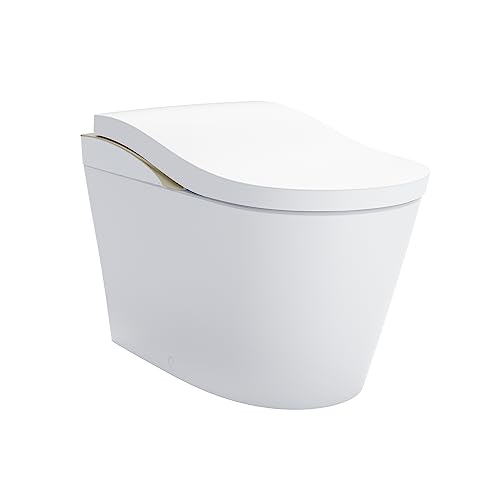
A luxury bidet is judged on a different set of criteria than a standard seat: automatic lid function, a full remote-controlled preset…
Read the guide