Common Bidets Problems and How to Fix Them (2026)
Bidets4.6
Step-by-step fixes for the bidet problems reported most often, from a unit that won't spray and weak water pressure to a seat…
Read the guideEverything a homeowner needs to know about water supply connections, shutoff valves, electrical outlets, and code compliance before installing any bidet type.
Most bidet seats and attachments need only a cold-water T-valve tap off the toilet supply line and no electrical work beyond a nearby GFCI outlet. Standalone bidet fixtures and smart toilet combos require a dedicated 1/2-inch hot-and-cold supply, a floor drain, and often a 15-amp or 20-amp dedicated circuit.
There are four main bidet categories, each with different plumbing complexity. Bidet seat attachments and non-electric bidet seats splice into the existing toilet supply line and need no electrical connection. Electric bidet seats add a GFCI outlet requirement. Standalone bidet basins and integrated smart toilets (such as the TOTO Washlet+ and Kohler Karing systems) require independent hot-and-cold supply lines, a floor drain, and a dedicated electrical circuit.
Before purchasing any bidet product, map out which category you are buying, because the plumbing scope jumps significantly between them. A simple non-electric bidet attachment can be installed by most homeowners in under 30 minutes with no tools beyond an adjustable wrench. A wall-hung smart toilet with integrated bidet requires rough-in work that is typically handled by a licensed plumber.
| Type | Water Connection | Hot Water | Electrical | Floor Drain | Difficulty |
|---|---|---|---|---|---|
| Non-electric attachment | T-valve on toilet supply | No | None | No | DIY |
| Electric bidet seat | T-valve on toilet supply | On-demand tank/tankless | GFCI outlet (15A) | No | DIY-friendly |
| Handheld bidet sprayer | T-valve on toilet supply | Optional hot-cold mixer | None | No | DIY |
| Standalone bidet basin | Dedicated 1/2-inch hot + cold | Yes | Optional | Yes | Plumber required |
| Smart toilet/bidet combo | Standard toilet supply + extras | On-demand internal heater | GFCI or dedicated circuit | No | Professional recommended |
Bidets function correctly when household water pressure is between 29 psi and 87 psi (the standard residential range). Most bidet seats and attachments include a built-in pressure regulator that limits spray pressure to 35-45 psi for comfort. If your home has well water or older municipal supply with pressure below 25 psi, wand spray may feel weak or inconsistent.
The International Plumbing Code (IPC) sets minimum water supply pressure for fixtures at 15 psi at the point of use, but bidet manufacturers typically spec 29 psi as the practical lower limit. If you are unsure of your home's pressure, screw a dial-style pressure gauge onto an outdoor hose bib and read it with no water running. This is a 5-minute test that costs under $15.
High-pressure homes above 80 psi should already have a pressure-reducing valve (PRV) on the main line. A bidet with an internal wand does not itself need a separate PRV, but water hammer in the supply line can damage solenoid valves inside electric bidet seats over time. If you hear banging pipes when you open or close supply valves quickly, install a water hammer arrestor on the toilet supply stub-out before adding the bidet T-valve.
Certified Master Plumber guidance consistently points to one overlooked issue: the existing toilet supply line. Many homes have 3/8-inch braided stainless supply lines rated for 125 psi, which is more than adequate. However, supply lines over 10 years old should be replaced when adding a bidet T-valve, because the T-valve connector adds a mechanical stress point. Replacing the supply line at the same time adds $10-20 in material cost and eliminates a common leak point.
The standard method for connecting a bidet seat or attachment is a bidet T-valve (also called a T-adapter), a brass or stainless fitting that threads between the toilet tank and the existing supply line. The T-valve creates a second port that feeds the bidet hose. No soldering, pipe cutting, or wall access is required for this connection.
The following sequence applies to virtually every non-electric and electric bidet seat installation:
Most T-valves ship with thread seal tape (PTFE/Teflon). Use 2-3 wraps on all male threads. Avoid pipe dope compounds on plastic threads, as some formulas degrade ABS and polypropylene over time.
The most common installation mistake is cross-threading the T-valve onto the fill valve tailpiece. Brass-to-brass connections should thread smoothly by hand for the first 3-4 turns. If you feel resistance before the threads engage fully, back the fitting off completely and re-start. Forcing a cross-threaded brass fitting onto a plastic fill valve housing can crack the housing, which requires replacing the entire fill valve assembly.
Non-electric bidets use only cold water. Electric bidet seats heat water internally, either with a reservoir tank (which holds 0.1-0.2 liters of pre-warmed water) or an on-demand instant-heat system (which heats water continuously as it flows through a ceramic heating element). Standalone bidet basins are the only category that requires a direct hot-water supply line connection from the home's water heater.
Tank-type water heaters in electric seats are most common in budget and mid-range models, including many bidet seats under $150. They deliver warm water for the first 20-45 seconds, then water cools as the tank empties. On-demand hybrid systems, found in premium products like the TOTO Washlet S500e and Brondell Swash LE99, eliminate the cold burst by heating water as it flows. These systems draw more electrical amperage at peak (see electrical section below).
If you want warm water on a non-electric bidet attachment, you can install a hot-cold bidet mixer valve. This requires tapping into the hot-water supply line under the sink (if within 3-4 feet of the toilet) and running an additional hose to the mixer. This adds plumbing complexity and is typically done only in master baths where the sink and toilet share a wall.
A freestanding or wall-hung bidet basin must have its own supply connection, separate from the toilet. The IPC requires 1/2-inch nominal supply piping for bidet fixtures. The hot-water supply must connect to the same system that feeds other fixtures (not an electric point-of-use heater strapped to the wall unless that heater is code-approved for the fixture load). Typical rough-in dimensions for a standalone bidet:
| Measurement | Standard Dimension |
|---|---|
| Hot supply rough-in height from floor | 6-8 inches |
| Cold supply rough-in height from floor | 6-8 inches |
| Center-to-center supply spacing | 3.5-4 inches (matches lavatory faucet) |
| Drain rough-in height | Floor-level P-trap |
| Clearance from bidet to wall (side) | 15 inches minimum (IPC) |
| Clearance from bidet to toilet (or obstruction) | 18 inches recommended |
Electric bidet seats require a grounded GFCI-protected outlet within approximately 4 feet of the toilet, because their power cord is typically 3.5-4 feet long. The outlet must be on a circuit that is not overloaded, as heating elements draw 8-12 amps at peak. The National Electrical Code (NEC) Article 210.8 requires GFCI protection for all bathroom receptacles, so a bathroom outlet installed after 1975 is likely already GFCI-protected.
| Bidet Product / Type | Voltage | Peak Amperage | Wattage | Circuit Needed |
|---|---|---|---|---|
| Non-electric bidet seat / attachment | N/A | 0 A | 0 W | None |
| Budget electric bidet seat (tank heater) | 120V | 6-8 A | 700-900 W | Shared 15A GFCI OK |
| Mid-range electric seat (TOTO C200, Brondell Swash) | 120V | 8-10 A | 900-1200 W | Shared 15A GFCI OK |
| High-end instant-heat seat (TOTO S500e, S550e) | 120V | 10-12 A | 1200-1400 W | Dedicated 15A or 20A GFCI |
| Smart toilet / bidet combo (TOTO Neorest, Kohler Karing) | 120V | 12-15 A | 1400-1800 W | Dedicated 20A GFCI |
A dedicated circuit means the bidet is the only device on that breaker. This matters because a GFCI outlet shared with hair dryers, electric shavers, or space heaters can trip at the worst moment. For smart toilets that cost over $1,000, running a dedicated 20-amp circuit is a one-time cost that prevents nuisance trips and protects the unit's electronics from voltage fluctuations caused by other loads.
If there is no outlet within reach of the bidet cord, a licensed electrician can add one. Typical cost is $150-$350 depending on wall material and circuit distance. In some jurisdictions, homeowners are permitted to add a GFCI outlet themselves if they pull a permit. Always verify local code with your municipality before doing electrical work in a wet area.
The power cord on bidet seats must never be extended with a standard extension cord. NEC 110.3(B) and most manufacturers prohibit extension cords for permanently installed appliances. If the outlet is too far away, the outlet must be moved, not the cord.
Plumbing and electrical inspectors confirm that the most frequently cited code violation during bidet installations is a non-GFCI outlet being used for a bidet seat. If the existing bathroom outlet does not have TEST and RESET buttons and is not downstream from another GFCI device, replace it with a GFCI outlet before energizing the bidet. A GFCI receptacle costs $15-$25 and is a straightforward DIY swap for anyone comfortable with electrical work.
Every bidet installation should have a dedicated shutoff valve so the bidet water supply can be isolated without turning off the toilet. The toilet shutoff valve already serves the toilet tank fill; when a T-valve splits that supply, you need a way to isolate each branch. Most bidet T-valves include a built-in shutoff for the bidet port, which is sufficient for bidet seats and attachments. Standalone bidet basins require a separate angle stop valve on each supply line.
| Valve Type | Best For | Material | Shutoff Method |
|---|---|---|---|
| Bidet T-valve with built-in shutoff | Bidet seats, attachments | Brass, stainless | Lever or knob on side port |
| Angle stop valve (3/8-inch compression) | Standalone bidet supply lines | Brass | Screw stem (quarter-turn ball recommended) |
| Quarter-turn ball valve | Any bidet type, inline supply | Brass or stainless | 90-degree handle turn |
| Dual-port shutoff valve | Toilet + bidet on one supply stub | Brass | Two independent knobs |
Quarter-turn ball valves are preferred by licensed plumbers over older compression-stem valves because they seal completely with a 90-degree handle rotation and are less prone to seizing after years of inactivity. If your toilet's angle stop is a compression type with a round handle that requires multiple turns, consider replacing it with a quarter-turn ball valve at the time of bidet installation. This is a minor addition that pays off when you need to quickly isolate the water supply during a leak.
Bidet seats and attachments from brands like TOTO, Kohler, Brondell, Bio Bidet, and Luxe Bidet all use the same T-valve connection principle. The toilet you pair with the bidet matters for seat compatibility. The best flushing toilets on the market, including the TOTO Drake II and American Standard Champion 4, use standard toilet seat mounting holes spaced 5.5 inches apart, which fits nearly all aftermarket bidet seats. Verify that the bidet seat model you select is rated for your toilet's bowl shape (round or elongated) and that the seat hinge bracket clears the toilet's bolt caps.
Bidet seats and attachments that clip onto an existing toilet do not require any floor drain; their wastewater routes through the toilet bowl and existing trap. Standalone bidet basins require a P-trap drain connecting to a 1.5-inch drain line, matching lavatory drain sizing under IPC Section 709. The floor beneath a standalone bidet must be waterproof within the splash zone, which usually means tile with sealed grout.
For standalone bidets, the IPC classifies them as lavatory-equivalent fixtures with a drain unit load of 1 DFU (drainage fixture unit). This means the bidet drain can connect to the same 1.5-inch branch that serves a sink, provided the total DFU load on the branch does not exceed code limits. A licensed plumber determines this during rough-in planning.
Bidet drains, like all fixture drains, need a properly sized vent to prevent siphoning of the P-trap. In most cases, a standalone bidet can wet-vent off the sink drain vent if the bidet is within 4-6 feet (depending on local code) and the vent stack is adequately sized. Dry venting requires a separate vent pipe run to the stack or roof penetration. If you are converting a half-bath that has no existing bidet plumbing, installing a standalone bidet almost always requires a permit and inspection because it adds new drainage and venting.
Bidet seats and attachments installed on existing toilets do not change the venting configuration at all, since they introduce no new drain connection.
The International Plumbing Code (IPC) and Uniform Plumbing Code (UPC) both classify bidets as plumbing fixtures and require them to have individual supply valves, backflow protection, and trap venting. Most jurisdictions adopt one of these two model codes, though local amendments vary. In practice, bidet seats installed as accessories on an existing toilet often fall below the permit threshold in many municipalities, while standalone bidet fixture installations typically require a permit.
This is the one code requirement that surprises many homeowners. Because a bidet wand can come in contact with body waste and water in the bowl, local codes and the IPC require a backflow prevention device on the bidet supply connection to protect the potable water supply. Premium bidet seats include an integrated backflow preventer in the T-valve assembly. Less expensive units may not include one. Always verify that the T-valve or internal solenoid on your bidet seat includes a listed backflow preventer (air gap or check valve). If not, add an inline check valve to the bidet supply hose.
TOTO Washlet seats and Kohler Karing seats include built-in backflow protection meeting ASSE 1061 (atmospheric vacuum breaker) or ASSE 1052 standards. Budget bidet seats from lesser-known brands may omit this, which is a genuine code violation in many states.
The 2021 IPC Section 425.1 explicitly lists bidets as fixtures requiring hot and cold water supply and individual shutoff valves. However, the key enforcement question is whether a bidet seat (which attaches to an existing toilet) constitutes a "bidet fixture" requiring permits, or an accessory. Most building departments treat standalone bidet basins as permit-required plumbing work and bidet seats as accessories. When in doubt, call your local building department before starting work; a 5-minute phone call can prevent a stop-work order later.
A bidet seat or attachment adds no floor footprint beyond the toilet itself and typically adds 1-4 inches to the rear depth of the seat. Standalone bidet basins are 20-30 inches long and 14-16 inches wide, and the IPC requires a minimum 15-inch clearance from the centerline to a sidewall and 24 inches of clear space in front of the basin. Most practical installations need at least 30 inches of floor width and 36 inches of clear floor space in front.
Space is the most frequent reason homeowners choose a bidet seat over a standalone bidet. In a standard 5-by-8-foot bathroom, there is rarely room to add a second fixture next to the toilet. Bidet seats from manufacturers like Brondell, TOTO, Bio Bidet, and Luxe Bidet work within the existing toilet footprint and only add a small control panel or remote-control receiver.
For bathroom remodels where a standalone bidet is planned, the toilet and bidet should share a common wet wall to minimize plumbing runs. See our guide on bathroom plumbing diagrams for rough-in layout examples.
Electric bidet seats add a seat hinge housing at the rear, which typically protrudes 2-4 inches above the tank. On some compact toilet designs with tanks that slope forward, this housing can interfere with the tank lid. Measure from the back of the toilet seat mounting holes to the front of the tank before purchasing. TOTO Washlet+ models are engineered specifically for TOTO Drake, Drake II, and Aquia IV toilets to avoid this clearance issue.
The power cord runs from the bidet seat hinge along the rear of the toilet and down the wall to the outlet. Use a cord cover (available for $8-$15 at hardware stores) to keep the cord against the baseboard and prevent a trip hazard. Never run the cord under a rug or through a wall cavity, as the NEC prohibits concealing appliance cords in walls without proper wiring methods.
| Bidet Seat | Compatible Toilet Brands | Bowl Shape | Reservoir or Instant Heat |
|---|---|---|---|
| TOTO Washlet C200 | TOTO (all elongated) | Elongated | Instant hybrid |
| Brondell Swash LE99 | Most major brands (universal) | Elongated or round | Instant |
| Bio Bidet BB-600 | Universal (most 12-inch rough-in) | Elongated | Reservoir |
| Luxe Bidet Neo 320 | Universal | Elongated or round | N/A (non-electric) |
| Kohler Karing | Kohler (specific models) | Elongated | Instant |
For those planning a full toilet and bidet seat purchase together, our guide to best bidet toilet seats covers compatibility, features, and aggregated owner satisfaction scores for over 20 models. If you are primarily focused on the toilet, check the best smart bidet toilets guide for integrated systems that eliminate seat compatibility concerns entirely.
Cost is determined almost entirely by the type of bidet and whether the bathroom already has the required infrastructure.
| Work Required | DIY Cost | Hired Plumber / Electrician |
|---|---|---|
| T-valve + supply hose (bidet attachment) | $10-$25 in materials | $75-$150 (1 hour) |
| T-valve + GFCI outlet replacement | $25-$50 in materials | $150-$300 |
| New GFCI outlet added to existing circuit | Permit required; typically licensed work | $150-$350 |
| Dedicated 20A circuit run to bathroom | Licensed electrician required | $300-$700 |
| Standalone bidet rough-in (supply + drain + vent) | Licensed plumber required | $800-$2,500+ |
| Hot-cold mixer with under-sink hot tap | $30-$80 in materials | $150-$300 |
The large cost jump for standalone bidet rough-in reflects the need to open walls, run supply lines, add a drain branch, and typically tile the floor around the new fixture. Homeowners who budget $150-$300 for a bidet seat and add $150 for a GFCI outlet are realistically estimating the all-in cost for the most common scenario. Those installing a separate bidet basin in a bathroom remodel should budget the plumbing work as part of a larger renovation scope.
For guidance on overall renovation scope and budgeting, see our bathroom remodel cost guide.
Most bidet seats and non-electric attachments are designed for DIY installation. The T-valve supply connection requires no special tools beyond an adjustable wrench. If your bathroom already has a GFCI outlet near the toilet, you can install an electric bidet seat in 30-60 minutes. You need a plumber only for standalone bidet basins or if you need new plumbing or electrical rough-in work.
Bidet seat supply hoses connect to the 7/8-inch ballcock thread on the toilet fill valve tailpiece and typically use a 3/8-inch compression fitting at the bidet end. Most bidet seats include all required hoses and fittings. The supply hose is usually 18-24 inches long, which is sufficient for the short run from the toilet supply stub to the bidet port.
A separate dedicated shutoff for the bidet supply is best practice and is built into most bidet T-valves as a side-port shutoff. This lets you turn off the bidet supply without disrupting the toilet's fill function. Standalone bidet basins require full individual angle stop valves on both hot and cold supply lines, per IPC requirements.
In most jurisdictions, installing a bidet seat (an accessory on an existing toilet) does not require a permit. Installing a standalone bidet basin as a new fixture typically does require a plumbing permit because it involves new drain, supply, and vent connections. Always check with your local building department; permit requirements vary by municipality.
Any standard 120-volt GFCI-protected outlet within cord reach (typically 4 feet) is suitable for most bidet seats drawing under 1,200 watts. Smart toilet systems and high-end instant-heat seats drawing 1,400-1,800 watts perform best on a dedicated 20-amp GFCI circuit to prevent nuisance tripping if other bathroom appliances are used simultaneously.
Yes, but it requires a separate hot-water supply connection. You would tap the hot water line under the bathroom sink and run a braided supply hose to a hot-cold bidet mixer valve, then feed the mixed output to the bidet hose. This is feasible only if the sink and toilet share a wall and the hot-water line is accessible. Most homeowners opt for an electric bidet seat with an internal heater instead, which avoids additional plumbing work.
Bidet manufacturers generally require a minimum of 29 psi at the point of connection for consistent spray function. Homes with water pressure between 15-28 psi may experience weak or intermittent spray. A booster pump can raise pressure at the toilet's supply stub-out if the main supply pressure cannot be increased. Homes with pressure above 80 psi should already have a PRV installed on the main line.
A T-valve on the toilet supply line reduces the water volume available to fill the tank by a small amount, but the bidet wand is only active during use, not during flushing. Because the bidet does not draw from the toilet tank itself, flushing performance (MaP score, gallons per flush, trapway clearing) is unaffected. The toilet fills normally after every flush.
A backflow preventer is a check valve or vacuum breaker that stops contaminated water from flowing backward into the potable supply. Because a bidet wand can contact waste and toilet bowl water, most plumbing codes classify bidets as a backflow hazard and require protection. Quality bidet seats from TOTO, Brondell, and Kohler include ASSE-listed backflow protection in their design; budget brands may not.
Standalone bidet basins typically have hot and cold supply rough-ins 6-8 inches above the floor, spaced 3.5-4 inches center-to-center. The drain rough-in is at floor level with a P-trap connection to a 1.5-inch drain line. These dimensions align with lavatory fixture rough-in standards, so the same supply valves used for bathroom sinks can be used for bidet basins.
Bidets work with well water, but hard water or water with high iron content can cause mineral buildup on the wand nozzle and internal solenoid valve. Models with self-cleaning nozzles (a feature on TOTO Washlets and Brondell Swash seats) handle well water better because nozzle rinsing reduces mineral deposits. A whole-house water softener or point-of-use filter on the bidet supply line is advisable in areas with very hard water (over 7 grains per gallon hardness).
Look for an outlet with two small buttons labeled TEST and RESET on its face. If your outlet does not have these buttons, check whether another outlet in the bathroom or the circuit breaker panel has a GFCI breaker. Bathroom circuits installed after the 1975 NEC edition update are required to have GFCI protection. If you are unsure, a licensed electrician can verify protection status with a circuit tester in about 10 minutes.
Bidet seats are available for both elongated bowls (approximately 18.5 inches long from bolt holes to front rim) and round bowls (approximately 16.5 inches). Most premium bidet seats, including the TOTO Washlet S500e and Brondell Swash LE99, are only available for elongated bowls. Budget models like the Luxe Bidet Neo 320 are available in both shapes. Verify your bowl shape before ordering, since a seat sized for elongated bowls will overhang a round bowl dangerously.
Most bidet seats drawing under 1,000 watts can share a 15-amp bathroom circuit without issues in typical use. The problem arises when a hair dryer (1,500-1,875 watts) or space heater runs on the same circuit simultaneously; the combined draw can trip the breaker. For electric bidet seats, a shared circuit is adequate in most households. For smart toilets with peak draws over 1,400 watts, a dedicated circuit eliminates nuisance trips.
Tankless (instant-heat) bidet seats draw more power at peak use because they heat water on demand through ceramic heating elements, typically 1,200-1,400 watts during wash cycles. Reservoir (tank) heaters draw only 50-200 watts to maintain a small stored water volume. However, reservoir heaters cycle on and off continuously throughout the day to maintain temperature, while tankless heaters draw power only when the wash function is active. Over time, energy consumption is roughly comparable between the two types.
Braided stainless steel supply hoses are the recommended standard for bidet connections. They resist corrosion, UV exposure, and kinking better than bare rubber or PVC hoses. Most quality bidet T-valve kits include braided stainless hoses. Avoid rubber or PVC supply hoses that are more than 5-7 years old, as they can harden and crack under constant pressure.
A bidet seat or attachment can be installed in any half-bath with a toilet and a nearby GFCI outlet. A standalone bidet basin in a half-bath is unusual and space-prohibitive in most cases, since the IPC minimum clearance requirements would require a room at least 5 feet wide. Check your half-bath dimensions against the 30-inch width and 36-inch clear space minimums before planning a standalone bidet installation.
Attaching a bidet seat does not void the toilet's warranty in most cases, because the seat connects to the toilet's seat mounting holes (not to any tank or bowl component) and the T-valve connects to the supply line below the tank. TOTO explicitly offers the Washlet+ system designed to integrate with Drake II, Aquia IV, and Nexus toilets without affecting toilet warranty. Always review the toilet manufacturer's warranty terms if this is a concern.
Apply 2-3 wraps of PTFE (Teflon) thread tape to all male NPT threads before assembly. Hand-tighten fittings fully, then add no more than one quarter turn with a wrench to avoid cracking plastic housings. After turning the water supply back on, dry each connection completely with a paper towel and wait 5 minutes before checking for moisture. A slow seep at a threaded joint usually responds to a slight additional tightening of the fitting.
TOTO Washlet seats consistently receive the highest marks in aggregated owner reviews for long-term reliability, internal solenoid quality, and backflow protection. Brondell Swash series seats have strong records for build quality and supply connection reliability. Kohler Karing and C3 seats are well-engineered but are designed for specific Kohler toilet models. Bio Bidet and Luxe Bidet offer reliable entry-level options with good T-valve hardware included in the box.
For most homeowners, bidet plumbing requirements are simpler than expected: a T-valve on the existing toilet supply and a GFCI outlet within cord reach handle 90 percent of installations. Only standalone bidet basins trigger the full scope of supply, drain, vent, and permit requirements that define a true plumbing project. Match the bidet type to the infrastructure you already have, verify your outlet is GFCI-protected, confirm your water pressure is above 29 psi, and choose a seat with integrated backflow protection from a reputable manufacturer like TOTO, Kohler, or Brondell. That combination covers every plumbing and code requirement without surprising you mid-installation.
Step-by-step fixes for the bidet problems reported most often, from a unit that won't spray and weak water pressure to a seat…
Read the guideA step-by-step framework for picking the right bidet type, features, and fit based on your toilet, your bathroom's electrical access, and how…
Read the guide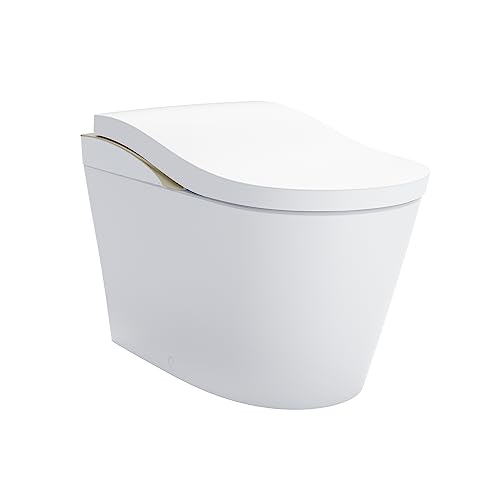
A luxury bidet is judged on a different set of criteria than a standard seat: automatic lid function, a full remote-controlled preset…
Read the guide