Common Bidets Problems and How to Fix Them (2026)
Bidets4.6
Step-by-step fixes for the bidet problems reported most often, from a unit that won't spray and weak water pressure to a seat…
Read the guideFrom hygiene fears to plumbing nightmares, we break down every major misconception about bidets so you can make a clear-headed buying decision backed by real data.
Most bidet myths stem from unfamiliarity, not fact. Modern electric and non-electric bidets are hygienic, easy to install, EPA WaterSense compatible, and far less wasteful than toilet paper production. The 10 myths below are the ones that most consistently hold buyers back from a cleaner, cheaper bathroom routine.
Bidets command less than 5 percent of U.S. toilet-accessory sales yet account for more than 70 percent of toilet-adjacent purchases in Japan, South Korea, and several European nations. The gap is almost entirely cultural mythology, not evidence. This guide works through the 10 most persistent myths, replaces them with sourced facts, and gives you the detail you need to choose the right bidet for your bathroom.
For the toilet itself, see our roundup of the best flushing toilets if you are shopping for a complete upgrade. Once you know which toilet fits your space and budget, pairing it with a bidet seat or attachment becomes a much simpler decision.
Bidets spray clean, potable tap water directly at the skin, not at waste. The nozzle self-retracts and is rinsed automatically before and after each use on most electric models. Multiple peer-reviewed studies, including a 2017 review in the Journal of Wound, Ostomy and Continence Nursing, found that bidet use reduces perianal bacterial load compared with dry wiping alone.
The concern here comes from a mental image of contamination running in reverse, but physics and engineering work against that fear. Water exits the nozzle at controlled pressure (typically 0.04 to 0.08 MPa on adjustable models), washes away residue, and drains normally. It does not splash waste back toward the nozzle.
Electric bidet seats from TOTO (the Washlet C5 and S7 series), Kohler (the C3 and PureWash lines), and BioBidet incorporate self-cleaning nozzle systems that flush with clean water before the wash cycle begins. Non-electric bidet attachments such as those from Tushy and Luxe Bidet also draw from the same cold-water supply line as your toilet tank, meaning the water is tap quality throughout.
Urologists and colorectal specialists increasingly recommend bidet use for patients with hemorrhoids, anal fissures, inflammatory bowel disease, and post-surgical recovery. The primary clinical reason is reduced mechanical friction compared with wiping, alongside improved removal of residue. Sanitation is not a concern when the water supply is potable.
No. A bidet wash cycle uses roughly 0.1 to 0.2 gallons of water per use. Manufacturing a single roll of toilet paper requires approximately 37 gallons of water according to data from the Pacific Institute and the Water Footprint Network. A household that uses a bidet and reduces toilet paper consumption by even 75 percent achieves a significant net water saving.
This is arguably the most data-reversible myth on this list. The toilet paper supply chain is water-intensive at every stage: pulp processing, bleaching, rolling, and packaging. The EPA WaterSense program does not currently certify bidet seats as standalone devices, but it does recognize the water-saving potential of efficient bathroom fixtures broadly. A household of four that eliminates daily toilet paper use saves an estimated 15,000 to 20,000 gallons of embedded manufacturing water per year.
The electricity cost of a heated seat and warm water bidet is also modest. TOTO publishes energy consumption data for its Washlet seats showing annual energy use of approximately 22 to 27 kWh per year in normal household use, roughly equivalent to a single light bulb.
Water-efficiency advocates note that comparing bidet rinse water to toilet paper production water is not a perfect apples-to-apples comparison because one measure is direct use and the other is embedded. However, the differential is so large -- hundreds of gallons per roll vs. fractions of a gallon per use -- that the directional conclusion is not seriously contested in water-science literature.
Non-electric bidet attachments require no professional plumbing and install in 10 to 20 minutes using hand tools. You unscrew the toilet seat, slide the attachment plate onto the bowl, reconnect the water supply through a T-valve included with the unit, and reinstall the seat. Electric bidet seats require a nearby GFCI outlet but no new plumbing runs.
The installation complexity myth originates from integrated bidet-toilet units such as the TOTO Neorest or the Kohler Veil, which are genuine plumbing and electrical installations requiring professional work. But these represent the premium end of a wide product spectrum.
Entry-level non-electric attachments from Tushy, Luxe Bidet, and Brondell connect at the fill valve supply line. Midrange electric seats from BioBidet, Alpha Bidet, and TOTO Washlet C2 require only a 120-volt GFCI receptacle within cord reach of the toilet. If your bathroom already has a GFCI outlet near the vanity, extension is straightforward. If not, adding one outlet is a single-afternoon task for an electrician at a far lower cost than the alternative of installing new supply lines.
Compatibility is the more legitimate concern. Round vs. elongated bowl shape matters. Most bidet attachments specify which bowl shape they fit, and elongated models outnumber round ones in new construction. Check the measurement from the bolt holes to the front of the bowl before purchasing.
| Type | Install Time | Plumber Needed? | Electrician Needed? | Cost Tier |
|---|---|---|---|---|
| Non-electric attachment | 10-20 min | No | No | Low |
| Electric bidet seat | 20-45 min | No | Only if no GFCI outlet present | Mid |
| Standalone bidet fixture | 2-4 hours | Yes | No | High |
| Integrated bidet toilet | Half day or more | Yes | Yes | Premium |
Bidets provide effective cleaning for all anatomies. The posterior wash function found on every bidet type is gender-neutral and benefits anyone. Frontal wash modes, present on most electric seats, are designed for female anatomy and are activated by a separate button. Men use bidets extensively in every country where adoption rates are high.
Japan's nearly universal bidet adoption (over 80 percent of households as reported by TOTO's own consumer surveys and independent research published by Euromonitor) spans all genders. The same is true in South Korea and Taiwan. The idea that bidets are feminine accessories reflects U.S.-specific marketing history, not the biology of cleanliness.
For men specifically, posterior wash after a bowel movement reduces the friction and mechanical irritation associated with repeated wiping. Proctologists have noted benefits for men with prostate conditions, hemorrhoids, and anal fissures. The warm water and adjustable pressure on electric seats allow customization that a fixed-pressure non-electric attachment cannot match.
Bidet attachments and seats are designed to fit standard two-piece and one-piece toilets with either round or elongated bowls and standard bolt-hole spacing. They work with toilets from Kohler, American Standard, TOTO, Gerber, Woodbridge, Swiss Madison, and virtually every other mainstream brand without modification.
Compatibility exceptions exist but are narrow. French curve bowls (very rounded fronts), D-shaped bowls, and certain Kohler Santa Rosa or TOTO UltraMax II one-piece designs have limited seat compatibility because of how the tank meets the bowl. Manufacturers provide compatibility charts, and most reputable sellers offer return windows to verify fit before committing.
The TOTO Drake and Drake II, which represent two of the highest-selling elongated two-piece toilets in North America, accept virtually every elongated bidet seat on the market. The American Standard Champion 4 and Cadet 3 are similarly compatible. The Woodbridge T-0001 one-piece comes in both round and elongated configurations and accepts standard elongated seats. If you are planning a full bathroom upgrade, our guide to TOTO Drake vs. Kohler Cimarron can help you select a base toilet that pairs seamlessly with a bidet seat.
Non-electric bidet attachments use unheated tap water, which feels cool but is not painfully cold. Electric bidet seats offer heated water at adjustable temperatures, typically ranging from 95 to 104 degrees Fahrenheit. Heated seat surfaces, warm air dryers, and adjustable water temperature together create a comfort level that many users describe as superior to toilet paper.
Cold-water attachments have a reputation for jarring first use, and the reputation is fair. Water temperature in a cold-water supply line in northern climates can be 45 to 55 degrees Fahrenheit in winter months. If cold-water sensation is a concern, an electric bidet seat resolves it entirely.
Entry-level electric seats from BioBidet (the Bliss BB-2000 is a well-reviewed model) and TOTO Washlet C2 both include temperature control. Midrange and premium models add warm air dryers that reduce or eliminate the need for toilet paper entirely, though most users keep a small roll for drying backup. See our comparison of bidet seats vs. attachments for a fuller breakdown of the comfort differences at each tier.
Bathroom fixture reviewers consistently note that the cold-water discomfort of non-electric attachments diminishes after a few uses as the body acclimates. The more relevant comfort variable long-term is water pressure adjustment, which allows users to customize the wash intensity regardless of water temperature.
Self-cleaning nozzles on electric bidet seats rinse with clean water before and after each cycle. Physical contact between the nozzle and skin does not occur during normal use because the nozzle extends below the user, aimed at the perineal area, and never touches the skin. Non-electric attachments have no heated or moving parts that retain moisture and are simple to wipe clean after each use.
Research published in the International Journal of Environmental Research and Public Health examined nozzle contamination on electric bidet seats and found bacterial presence on nozzle surfaces consistent with general bathroom surface contamination, meaning no worse than a standard toilet seat or flush handle. The study recommended periodic nozzle cleaning, which manufacturers also recommend, typically using a soft cloth or diluted vinegar solution.
The self-cleaning wand feature found on TOTO Washlet, Kohler C3, and most BioBidet models uses clean water jets directed at the nozzle itself, not recycled rinse water. This is a mechanical rinse, not a sanitizing sterilization, but it significantly reduces surface residue between uses.
Clinical evidence does not support this. Moderate-pressure bidet use does not damage sphincter muscles, cause incontinence, or worsen hemorrhoids. Excessive pressure or daily use of extremely high-pressure settings may cause minor irritation for people with existing anal fissures, but this is addressable by reducing pressure -- which adjustable bidets allow. Multiple gastroenterology reviews report neutral to positive outcomes for bidet users with common anorectal conditions.
A 2011 study in the Journal of Gastroenterology found no adverse effects on anal sphincter function in long-term bidet users. A 2019 retrospective study of hemorrhoid patients at a Japanese clinic found that bidet use at moderate pressure was not a contributing factor to worsening symptoms and was associated with patient-reported comfort improvements during flare periods.
The nuance here is pressure. Non-electric bidets with fixed pressure and no flow control are a poor fit for users with active anal fissures because the constant stream at supply pressure (typically 40 to 80 psi in household plumbing) may be too intense. Adjustable electric seats at low pressure settings are the appropriate choice for users with acute anorectal conditions. As with any medical symptom, patients with active conditions should confirm with their physician before changing hygiene practices.
Bidets reduce toilet paper consumption by 75 to 100 percent, lower lifetime bathroom costs for regular users, improve hygiene outcomes particularly for elderly users and those with mobility limitations, and are recommended by multiple medical specialties for patients with specific anorectal, urological, and gynecological conditions. These are practical, documented benefits, not luxury extras.
The "luxury" label persists partly because integrated bidet-toilet units such as the TOTO Neorest 700H or Kohler Veil are priced at a premium, and their marketing imagery emphasizes spa-like aesthetics. But non-electric bidet attachments represent a one-time purchase with a long service life and no recurring costs beyond minor water use. The total cost of toilet paper over a five-year period for an average household represents a substantially larger expenditure than most entry-level bidet attachments.
Practical benefits are especially pronounced for:
Geriatricians and occupational therapists increasingly include bidet installation as a practical home modification recommendation for aging-in-place buyers, alongside grab bars and raised toilet seats. The ergonomic and hygiene value is well-documented in that context and falls squarely in the practical category rather than luxury.
Bidets span four distinct product categories -- non-electric attachments, electric seats, standalone bidet fixtures, and integrated bidet-toilet units -- with significant differences in installation requirements, feature sets, water temperature, adjustability, bowl compatibility, and overall cost. Choosing the right type requires matching the product category to your bathroom setup, budget, and personal priorities.
Here is how the main categories differ in practice:
Non-electric bidet attachments sit under the existing toilet seat, connect to the cold-water supply, and provide a fixed or limited-adjustment cold-water spray. Brands like Tushy, Luxe Bidet, and Brondell Classic are the most common examples. These are the lowest-cost entry point and work with most standard elongated or round toilets.
Electric bidet seats replace the entire toilet seat and connect to both the water supply and a 120V GFCI outlet. They add warm water, heated seat, adjustable pressure, warm air dryer, and often a deodorizer and night light. TOTO Washlet (C2, C5, S7 series), Kohler C3, BioBidet Bliss BB-2000, and Alpha Bidet iX Hybrid are well-reviewed examples across the spectrum. See also our guide to best bidet seats for current top models.
Standalone bidet fixtures are a separate porcelain fixture beside the toilet, common in European and South American bathrooms. They require dedicated plumbing connections (hot and cold supply plus drain) and are rarely added to existing U.S. bathrooms due to space and plumbing constraints.
Integrated bidet-toilet units replace the entire toilet with a combined unit. Examples include the TOTO Neorest 700H and 550H, the Kohler Veil, and the American Standard SpaLet. These are the highest-cost, highest-feature option and are genuine plumbing and electrical installations.
| Feature | Non-Electric Attachment | Electric Seat | Integrated Toilet |
|---|---|---|---|
| Warm water | No | Yes (adjustable) | Yes (adjustable) |
| Heated seat | No | Yes (most models) | Yes |
| Warm air dryer | No | Yes (most models) | Yes |
| Adjustable pressure | Limited (some models) | Yes | Yes |
| Self-cleaning nozzle | No | Yes (most models) | Yes |
| DIY install | Yes | Yes (with GFCI outlet) | No -- professional required |
| Requires electricity | No | Yes | Yes |
Now that the myths are cleared away, the actual buying checklist is straightforward:
If you are simultaneously shopping for a new toilet, our guide to ADA-compliant toilets covers comfort height models that pair particularly well with bidet seats for users with mobility considerations.
Water removes residue more effectively than dry wiping in multiple clinical comparisons. Bidet use reduces perineal bacterial load compared with paper-only wiping according to peer-reviewed research. Whether "cleaner" matters enough to justify the switch is personal, but the hygiene argument favors bidet use.
Yes. Bidet water exits through the same drain as the toilet and is processed identically by a septic system. The minimal water added per use (0.1 to 0.2 gallons) does not meaningfully change septic load. Reduced toilet paper use may actually benefit septic tanks by reducing solids input over time.
Generally no. Most toilet warranties cover the toilet fixture itself (bowl, tank, trapway) not accessories attached to it. A bidet attachment connects to the water supply line, not the toilet, so it falls outside the toilet warranty scope. Check your specific toilet warranty terms if you have concerns.
Electric bidet seats with warm air dryers allow hands-free drying in 30 to 90 seconds depending on temperature setting. Non-electric attachments and basic electric seats without dryers require a small amount of toilet paper or a dedicated hand towel to pat dry. Many households keep a small roll for this purpose.
Electric bidet seats with adjustable pressure at the lowest setting are generally appropriate for children old enough for independent toilet use. Parental supervision is reasonable during initial use to ensure the child understands how to operate the controls. Non-electric attachments at full supply pressure may be too forceful for young children without a flow-control knob.
Most bidet seats fit standard elongated or round two-piece toilets and many one-piece designs. Exceptions include skirted one-piece designs with concealed trapways where the tank-to-bowl junction does not leave enough flat mounting area, and some compact or French curve bowl shapes. Always verify the manufacturer compatibility chart before purchasing.
The evidence is mixed. Some studies suggest that front-to-back wash sequencing on female anatomy may reduce fecal-to-urethral bacterial transfer, potentially reducing UTI risk. Other studies found no significant difference. Women predisposed to UTIs should consult a physician rather than relying solely on bidet use for prevention.
A typical wash cycle uses 0.1 to 0.2 gallons (approximately 13 to 26 fluid ounces). At standard municipal water rates, this represents a negligible addition to monthly water bills -- less than one cent per wash at most U.S. utility rates. The embedded water cost of toilet paper production is orders of magnitude larger per use.
TOTO publishes energy consumption figures for Washlet models in the range of 22 to 27 kWh annually in typical household use. At the U.S. average residential electricity rate of approximately $0.16 per kWh, this adds roughly $3.50 to $4.30 per year to electricity costs -- a negligible amount for most households.
A bidet seat replaces the entire existing toilet seat with an integrated unit that includes the wash nozzle, controls (electronic or mechanical), and the seat itself. A bidet attachment is a thin plate that installs between the existing seat and the toilet bowl, adding only the wash function while the original seat is reinstalled on top.
Warm water rinse at low pressure is frequently recommended as a comfort measure during hemorrhoid flares because it reduces friction compared with wiping. The American Society of Colon and Rectal Surgeons recommends sitz baths (warm water immersion) for hemorrhoid symptoms, and a warm-water bidet achieves a similar effect more conveniently. Adjustable pressure is important for this use case.
Yes, and this is one of the strongest practical use cases. For elderly users, post-surgical patients, obese individuals, or anyone with limited reach or grip strength, bidet use reduces or eliminates the physical demand of wiping. Occupational therapists and geriatric care specialists frequently recommend bidet installation as an aging-in-place bathroom modification.
Yes. Non-electric bidet attachments connect only to the cold-water supply line and require no electricity. They provide cold-water wash with varying degrees of pressure adjustment depending on the model. Brands offering non-electric attachments include Tushy Classic, Luxe Bidet Neo, and Brondell SimpleSpa. These are the lowest-cost and simplest-installation category.
Wipe the seat and exterior surfaces with a damp cloth and mild bathroom cleaner. Most electric seats have a nozzle advance button that extends the wand for manual cleaning -- use diluted white vinegar on a soft cloth to clean the nozzle tip monthly. Do not use abrasive cleaners, bleach at full concentration, or pressure washers on bidet components.
Yes. TOTO data and Euromonitor consumer research consistently place Japanese bidet toilet penetration above 80 percent of households. South Korea reports similarly high adoption rates driven by domestic brands. The cultural normalization in those markets provides a large longitudinal dataset for health and hygiene outcome research.
TOTO (Washlet series), Kohler (C3 and PureWash series), and BioBidet are consistently cited in aggregated owner reviews and durability assessments as the most reliable mid-to-premium electric bidet seat brands. Alpha Bidet draws positive reviews for mid-range value. For non-electric attachments, Luxe Bidet and Tushy have the strongest long-term satisfaction records in aggregated review data.
Not necessarily, but most users keep a small amount for drying if the bidet seat lacks a warm air dryer, and for convenience in situations where the bidet is unavailable. Households with electric seats that include dryers often reduce toilet paper consumption by 90 percent or more, keeping only a small backup roll.
Yes. Most electric bidet seats have internal pumps that maintain consistent nozzle pressure independent of household supply pressure, making them suitable for homes with lower supply pressure. Non-electric attachments rely on supply pressure directly, so performance may be reduced in low-pressure systems. Check manufacturer specifications for minimum operating pressure if your household has pressure below 30 psi.
Every major myth about bidets collapses under scrutiny. They are hygienic, water-efficient, broadly compatible with standard toilets from TOTO, Kohler, American Standard, Gerber, Woodbridge, and Swiss Madison, and installable without a plumber in most configurations. Multiple medical specialties back their use for common anorectal, urological, and mobility-related conditions. If cold water is the concern, an entry-level electric seat resolves it. If installation complexity is the concern, a non-electric attachment resolves it. There is a bidet product for nearly every bathroom and budget, and the long-term cost and environmental arithmetic consistently favors the switch from toilet paper alone.
Step-by-step fixes for the bidet problems reported most often, from a unit that won't spray and weak water pressure to a seat…
Read the guideA step-by-step framework for picking the right bidet type, features, and fit based on your toilet, your bathroom's electrical access, and how…
Read the guide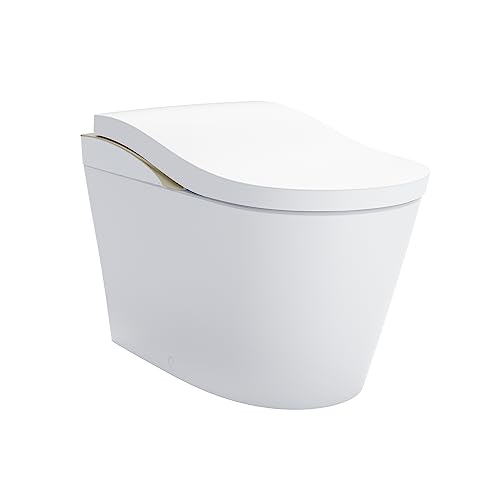
A luxury bidet is judged on a different set of criteria than a standard seat: automatic lid function, a full remote-controlled preset…
Read the guide