Common Bidets Problems and How to Fix Them (2026)
Bidets4.6
Step-by-step fixes for the bidet problems reported most often, from a unit that won't spray and weak water pressure to a seat…
Read the guideThe U.S. bidet market has shifted from novelty to mainstream in under a decade. Here is what is driving that change, who is buying, and what the numbers actually say.
The U.S. bidet market has grown from roughly $106 million in 2018 to an estimated $250 million-plus by 2026, driven by post-pandemic hygiene awareness, falling hardware prices, and EPA WaterSense campaigns that frame bidets as a measurable water and paper conservation tool.
Independent market research places the U.S. bidet market between $220 million and $270 million in retail value as of 2025-2026, with a compound annual growth rate (CAGR) estimated between 8 and 12 percent through 2030. That figure includes standalone bidet fixtures, bidet toilet seats, bidet attachments, and integrated smart-toilet bidet combos. Attachment-style bidets (the sub-$100 mechanical units that clamp onto existing toilets) represent the largest unit-volume segment, while electric bidet seats and smart toilet combos drive the highest revenue per unit.
For context, the U.S. market was largely dormant for decades. As recently as 2015, bidets were perceived by most American consumers as a European or Japanese fixture with no practical place in the domestic bathroom. That perception has since reversed at a speed that surprises even manufacturers. Brands like TOTO, Kohler, Brondell, Bio Bidet, and Tushy have each reported year-over-year sales growth well above typical home-improvement categories.
Globally, Japan remains the benchmark: roughly 80 percent of Japanese households own a bidet or washlet, a statistic TOTO has cited in its investor communications for years. The U.S. figure in 2026 sits around 12 to 15 percent household penetration, which sounds modest until you consider that in 2015 it was below 5 percent. The trajectory is steep, and it is accelerating.
Plumbing industry analysts note that the bidet category is growing faster than any other bathroom fixture segment in North America. The combination of declining unit costs and rising consumer health awareness has created conditions that typically precede rapid mainstream adoption. The comparison drawn most often is to the dishwasher in the 1950s: once considered a luxury item, it became a default household appliance within 20 years of mass price reduction.
The single biggest inflection point was the toilet-paper shortage of March and April 2020, when supply-chain disruptions left retail shelves empty and millions of Americans searched for alternatives. Google Trends data shows searches for "bidet" increased more than 600 percent in late March 2020 compared to the same period in 2019. That search surge translated directly into sell-outs at Tushy, Bio Bidet, and TOTO's washlet line, with lead times stretching from days to months. Beyond the 2020 event, sustained growth has been driven by hygiene awareness, environmental messaging around toilet-paper deforestation, and falling product prices.
Several converging forces deserve individual attention:
Early pandemic panic buying depleted toilet paper inventory across major retailers. Consumers who had never considered a bidet suddenly had a practical reason to investigate the category. Many who purchased a mechanical attachment during that period became long-term converts, then upgraded to electric seats. The crisis served as a forced trial period for the category at a national scale.
The average American uses approximately 100 rolls of toilet paper per year, contributing to a U.S. toilet paper market that consumes significant tree pulp and water in manufacturing. Environmental campaigns have positioned bidets as a sustainability measure: manufacturing one roll of toilet paper requires an estimated 37 gallons of water and 1.3 kWh of energy according to industry lifecycle analyses. A bidet uses roughly 0.13 gallons of water per use, meaning the net water and resource impact favors bidet use over toilet paper use at modest usage frequencies. The EPA WaterSense program, while not directly certifying bidets, has created a broader consumer vocabulary around bathroom water efficiency that makes bidet environmental arguments easier for consumers to evaluate.
In 2018, a quality electric bidet seat from a brand like Kohler, TOTO, or Bio Bidet typically retailed between $400 and $700. By 2026, mid-tier electric seats with heated seat, warm water, and adjustable pressure are available from brands like Brondell and Woodbridge at $150 to $300. Non-electric mechanical attachments from Tushy and similar brands have been available at $30 to $80 for several years. Price compression follows increased competition and scale: as more units are manufactured, per-unit costs fall, and as more consumers enter the market, more brands compete on price. The result is that a functional bidet is now accessible to virtually any consumer considering a bathroom upgrade.
A bathroom product gaining traction through social media is unusual, but bidets are an exception. Tushy in particular ran an early campaign that treated the bidet as a humor-forward, millennial-targeted product, removing the cultural awkwardness around discussing the device. Reddit communities, YouTube review channels, and health-focused accounts have contributed a consistent stream of organic advocacy that traditional advertising could not have generated. The result is a category that now carries social proof in demographics that previously would not have considered it.
Medical professionals, particularly those specializing in colorectal health, geriatric care, and post-surgical recovery, have increasingly recommended bidets as a hygiene aid. For users with hemorrhoids, irritable bowel syndrome, or limited mobility, a bidet is not a luxury but a functional necessity. This medical use case has driven adoption in households with elderly residents and among individuals managing chronic digestive conditions. A growing ecosystem of guides around bidets for hemorrhoids, bidets for elderly users, and bidets for IBS reflects this demand.
Non-electric bidet attachments hold the largest share of unit volume in the U.S. due to their low price and installation simplicity, but electric bidet seats and smart-toilet combos are growing at a faster revenue rate. The smart toilet segment (integrated bidet with a fully ceramic bowl, no separate seat required) is the fastest-growing premium segment, led by brands including TOTO's Neorest line, Kohler's Veil Intelligent Toilet, and Woodbridge's smart toilet series. Portable and handheld bidets represent a smaller but stable niche driven by travel, apartment living, and healthcare use.
| Segment | Typical Price Range | Key Brands | Market Driver | Growth Trend |
|---|---|---|---|---|
| Non-electric attachment | $30 - $80 | Tushy, Luxe, Brondell | Entry-level price, easy install | High unit volume, moderate revenue |
| Electric bidet seat | $150 - $700 | TOTO, Bio Bidet, Kohler, Brondell | Warm water, heated seat, dryer | Strong revenue growth |
| Smart toilet (integrated) | $800 - $5,000+ | TOTO Neorest, Kohler Veil, Woodbridge | Premium renovation, luxury spec | Fastest revenue CAGR |
| Handheld / portable bidet | $15 - $60 | Various | Travel, apartment, post-surgery | Stable niche |
| Non-electric bidet seat | $60 - $150 | Luxe, Brondell | Warm water (plumbed from sink) | Modest but consistent |
The smart-toilet segment commands a disproportionate share of consumer attention relative to its current volume. Contractors and interior designers report that smart toilets are increasingly specified in mid-range and high-end bathroom renovations, a category that was once nearly exclusive to commercial hospitality projects. TOTO's Neorest 750H and Kohler's Veil are now regularly appearing in kitchen-and-bath showrooms outside of major metro areas, which is a reliable indicator of category maturation.
Japan leads global bidet adoption with approximately 80 percent household penetration, driven by TOTO's decades-long market development of the washlet category starting in 1980. Western Europe (particularly Italy, France, and Portugal) has had standalone bidet fixtures as a bathroom standard for generations, with penetration rates above 50 percent in several countries. The United States is earlier in the adoption curve than both regions, but the rate of change is faster than either Japan or Europe experienced during their respective adoption periods, largely because of the internet-driven information environment and the ability to purchase and install low-cost attachments without a plumber.
The Japan-U.S. comparison is instructive. TOTO introduced the washlet seat in 1980. Household adoption in Japan reached 15 percent by 1992 (12 years), 50 percent by 2000, and 80 percent by 2010. The U.S. hit approximately 15 percent penetration around 2024-2025, and if it follows a similar curve with even half the momentum, the trajectory points toward 40 to 50 percent penetration by the mid-2030s. That would represent tens of millions of additional units sold.
European markets present a different model. The standalone ceramic bidet fixture that sits next to a toilet is largely absent from the American market for bathroom-size and cultural reasons. European consumers who have grown accustomed to standalone bidets are now also upgrading to bidet seat technology, creating a parallel adoption curve in that market as well. The common global thread is that once consumers experience bidet hygiene, the return rate is extremely low.
Bidets reduce toilet paper consumption, which has measurable environmental benefits given the resource intensity of paper manufacturing. However, bidets do consume water directly, so the net environmental position depends on local water availability, energy source for electric heating, and frequency of use. In water-scarce regions, the tradeoff must be evaluated carefully. In areas with abundant water supply and renewable energy, the net environmental impact of switching from toilet paper to bidet use is clearly positive, a calculation that has been supported by multiple lifecycle assessments cited in environmental engineering literature.
The EPA WaterSense program focuses primarily on toilet flush efficiency (1.28 GPF and below) and has not established a specific bidet certification. However, WaterSense-certified toilets and bidet seats are frequently combined in renovation projects, and the program's broader messaging around bathroom water efficiency provides a supportive regulatory environment for the bidet category. Consumers already accustomed to checking for EPA WaterSense labels on their best flushing toilets are naturally receptive to water-efficiency arguments around bidet adoption.
Toilet paper manufacturing is water-intensive: the production of a single roll is estimated to require between 37 and 140 gallons of water depending on the lifecycle methodology used. The bidet's direct water use (0.1 to 0.2 gallons per wash cycle) is substantially lower than the embedded water cost of the paper it replaces. This argument has gained traction in drought-prone states including California, Texas, and Arizona, where water conservation is a policy priority and consumers are already conditioned to evaluate household water use.
Water utilities and environmental health researchers who have commented on the bidet-versus-toilet-paper debate generally support bidet adoption as a net positive for water systems, noting that wastewater treatment infrastructure handles bidet effluent routinely and that the reduction in paper flushing (and flushable-wipes incidents) can reduce downstream mechanical strain on municipal systems. The bidet case from an environmental standpoint is strongest in paper-production-intensive regions and weakest in severely water-stressed communities where every gallon counts.
TOTO is the category originator and retains strong brand equity in the premium electric bidet seat and smart toilet segment through its Washlet and Neorest lines. Kohler has leveraged its existing U.S. plumbing distribution to grow its Karing, C3, and Veil bidet offerings. In the mid-tier electric seat segment, Bio Bidet and Brondell are the leading independent specialists. Tushy dominates the entry-level non-electric attachment segment through direct-to-consumer marketing. Woodbridge and Swiss Madison have carved out positions in the value smart-toilet segment. American Standard recently expanded into electric bidet seats with its SpaLet line.
Each of these brands brings a different value proposition to the market:
For shoppers researching specific product categories, related guides such as best bidet toilet seats, best smart bidet toilets, and best bidets overall provide ranked roundups with current model data and MaP flush score context where applicable.
TOTO holds an estimated 35 to 40 percent share of the premium electric bidet seat and smart toilet segment. Kohler and Bio Bidet each hold roughly 15 to 20 percent of the electric seat category. The attachment segment is more fragmented, with Tushy, Luxe Bidet, and Brondell splitting a market that also includes numerous unbranded imports. Brand loyalty in the bidet category tends to be high once consumers purchase: the most commonly reported progression is entry-level attachment to mid-tier electric seat, with a portion upgrading to integrated smart toilets during full bathroom renovations.
Market projections for the U.S. bidet segment through 2030 generally estimate a CAGR between 8 and 15 percent, with the upper range driven by integrated smart toilet growth and continued price compression in electric seat categories. The key uncertainty is whether adoption maintains its post-pandemic pace or moderates as the initial conversion wave matures. Housing market conditions matter: new construction and bathroom renovation projects are primary bidet purchase triggers, and housing activity directly affects the category's annual volume.
Several structural tailwinds support continued growth through the decade:
Not every factor points upward. A sustained housing market contraction reduces bathroom renovation frequency, the primary bidet purchase occasion. Supply chain disruptions (semiconductor availability affects electric bidet seats more than mechanical attachments) can create availability gaps. And consumer education remains a genuine barrier: surveys consistently show that a substantial portion of U.S. adults have never used a bidet and express uncertainty about how to use one. Brands that invest in installation guides, how-to content, and first-use education will be better positioned than those relying on pure product marketing.
The U.S. bidet market is estimated at $220 million to $270 million in retail value as of 2025-2026. This includes all bidet types: non-electric attachments, electric seats, integrated smart toilets, and handheld models. The market has grown from approximately $106 million in 2018.
Household penetration is estimated at 12 to 15 percent in 2026, up from under 5 percent in 2015. The rate has been accelerating since 2020. Comparable penetration rates are approximately 80 percent in Japan and 50-plus percent in several European countries.
The COVID-19 pandemic caused a toilet paper shortage in March and April 2020. Consumers unable to find toilet paper searched for alternatives, discovering bidets. Google Trends data showed searches for "bidet" increasing over 600 percent compared to the prior year. Many first-time buyers converted to regular bidet users during this period.
The EPA WaterSense program does not have a specific bidet certification as of 2026, but the program's focus on bathroom water efficiency aligns with bidet adoption. Bidets use approximately 0.13 gallons per wash cycle, and lifecycle analyses comparing bidet water use to toilet paper manufacturing water use generally favor bidet use in terms of total water consumption.
TOTO leads the premium electric seat and smart toilet segment. Kohler is the major domestic brand with a full bidet seat line. Bio Bidet and Brondell lead the independent specialist segment. Tushy dominates the entry-level non-electric attachment category. Woodbridge and Swiss Madison are growing in value smart toilets.
Non-electric bidet attachments range from $30 to $80. Basic electric bidet seats with warm water and heated seat start around $150 to $200. Mid-tier electric seats with full wash functions, dryer, and remote control run $200 to $400. Premium electric seats and smart toilets range from $500 to over $5,000 for flagship integrated units like the TOTO Neorest.
Market research estimates project a CAGR of 8 to 15 percent for the U.S. bidet market through 2030. The range reflects uncertainty around housing market conditions, consumer education pace, and how quickly the premium smart toilet segment can scale.
Most electric bidet seats are designed for homeowner installation in approximately 30 minutes. Requirements include a GFCI-protected outlet within reach of the toilet (typically within 3 to 4 feet), an existing elongated or round bowl that matches the seat's fit specifications, and a standard cold-water supply line connection. Some older bathrooms lack a nearby GFCI outlet, which may require an electrician.
Research published in gastroenterology and colorectal surgery literature consistently supports water cleansing as more effective at removing fecal material than dry paper wiping. Bidets reduce mechanical irritation, which is relevant for users with hemorrhoids or sensitive skin. Healthcare providers specializing in colorectal and perineal health generally recommend bidet use over toilet paper alone.
Users who adopt electric bidet seats with a warm-air dryer function typically reduce toilet paper use by 75 to 90 percent. Users of non-electric attachments who still use toilet paper for drying report reductions of 50 to 75 percent. At 100 rolls per year per person average, even a 50 percent reduction represents meaningful household savings.
A bidet attachment is a thin device that installs between the toilet bowl and the existing toilet seat. It provides cold water (and in some models, warm water from a hot-water supply line) but does not replace the toilet seat itself. A bidet seat replaces the entire toilet seat and typically includes electronics for heated seat, warm water from an internal heater, adjustable pressure, and a warm-air dryer.
Smart toilets with integrated bidets (like the TOTO Neorest or Kohler Veil) are designed for full bathroom renovation contexts where a unified aesthetic and maximum feature integration are priorities. They are significantly more expensive than adding a bidet seat to an existing toilet, but they offer superior build quality, seamless design, and features not achievable with retrofit seats. They are worth the premium for buyers who are already replacing a toilet during a renovation.
Limited hand mobility, post-operative recovery needs, hemorrhoid management, and the general hygiene benefit of water cleansing are the primary drivers among adults 65 and older. Many physicians who treat elderly patients now routinely recommend bidet seats as an independence-preserving hygiene aid. The aging U.S. population is one of the structural tailwinds behind the broader market's growth projections.
Colorectal specialists commonly recommend bidets for hemorrhoid management because water cleansing causes less mechanical irritation than wiping. Several peer-reviewed studies have examined bidet use in hemorrhoid patients and found reductions in discomfort and irritation. Bidets do not treat or cure hemorrhoids, but they can reduce the aggravation caused by routine hygiene. For product recommendations, see the guide on best bidets for hemorrhoids.
Reaching Japan's 80 percent penetration level in the U.S. within 20 years would require a fundamental shift in bathroom design (GFCI outlets near all toilets as standard) and continued price compression. Analysts who project aggressive growth scenarios suggest the U.S. could reach 40 to 50 percent penetration by the mid-2030s if housing construction activity remains strong and new builds increasingly include bidet-ready infrastructure. Japan's trajectory is a credible long-run analog.
The U.S. toilet market (replacement and new construction) is valued at approximately $3 to $4 billion annually. The bidet segment represents roughly 6 to 8 percent of that total but is growing at 3 to 5 times the rate of the core toilet replacement category. Manufacturers who compete primarily on toilet hardware (TOTO, Kohler, American Standard, Gerber) have each launched or expanded bidet seat lines as a growth adjacency to their core business.
Most electric and non-electric bidet seats are designed for elongated or round bowl toilets with standard 10-inch, 12-inch, or 14-inch rough-in dimensions. The seat must match the bowl shape (elongated or round) and the toilet manufacturer's specific contour. TOTO, Kohler, and Bio Bidet all publish compatibility charts. The most common incompatibility issues arise with French curve (skirted) toilets and one-piece toilets with unusual seat-mounting geometries.
Bidet use introduces additional water into the drain system but at quantities (0.1 to 0.2 gallons per wash) that are not significant relative to toilet flush volumes. Septic system specialists generally do not consider bidet water addition a meaningful additional load. Reduced toilet paper use from bidet adoption may actually benefit septic systems by reducing the volume of paper solids requiring breakdown.
Surveys of self-reported bidet users indicate average toilet paper reduction of 60 to 80 percent for electric seat users with dryer functions. Non-electric attachment users who still pat dry with paper report approximately 50 to 60 percent reduction. Dollar savings depend on household size and local toilet paper costs, but households using above-average volumes report the most noticeable financial impact from the switch.
The complete bidet buying guide on this site covers seat types, water temperature options, pressure settings, fit compatibility, and installation requirements in detail. Brand-specific roundups cover top-rated models from TOTO, Kohler, Bio Bidet, Brondell, and others with aggregated owner review data.
The U.S. bidet market has moved well past the novelty stage. A combination of pandemic-driven trial, consistent price compression, and demographic tailwinds has created conditions for sustained double-digit growth through the decade. Consumers entering the market now benefit from a competitive landscape that offers functional bidet technology at every price point, from $30 mechanical attachments to fully integrated smart-toilet systems from TOTO, Kohler, and Woodbridge. The trajectory toward 40 to 50 percent household penetration by the mid-2030s is plausible. For buyers considering their first bidet or an upgrade, current conditions represent the best combination of price, product quality, and support infrastructure the category has ever offered.
Step-by-step fixes for the bidet problems reported most often, from a unit that won't spray and weak water pressure to a seat…
Read the guideA step-by-step framework for picking the right bidet type, features, and fit based on your toilet, your bathroom's electrical access, and how…
Read the guide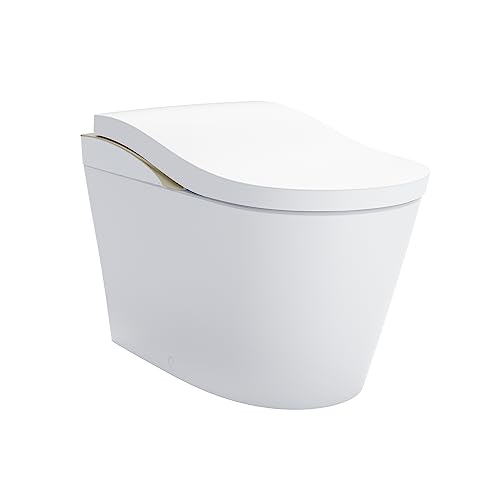
A luxury bidet is judged on a different set of criteria than a standard seat: automatic lid function, a full remote-controlled preset…
Read the guide