Common Bidets Problems and How to Fix Them (2026)
Bidets4.6
Step-by-step fixes for the bidet problems reported most often, from a unit that won't spray and weak water pressure to a seat…
Read the guideEvery question new and experienced bidet owners ask, answered with published specs, hygiene research, and hands-free plumbing facts so you can buy and use with confidence.
Most bidet seats and attachments install in under 30 minutes without a plumber, use less than half a cup of water per wash cycle, and are compatible with the vast majority of standard two-piece and one-piece toilets. Non-electric models cost less than $50 and need no outlet; electric models add warm water, warm air drying, and heated seat functions.
A bidet is a personal hygiene fixture that uses a directed water stream to clean the body after using the toilet, replacing or reducing the need for toilet paper. Most modern bidet seats and attachments tap into the cold-water supply line at the toilet shutoff valve, direct pressurized water through an internal nozzle arm, and rinse the user at adjustable pressure levels. Electric models add heating elements for warm water and a seat, plus warm-air dryers; non-electric models rely entirely on cold tap water.
Published clinical and dermatological research consistently shows that water cleansing removes fecal matter more completely than dry paper wiping alone, reducing skin irritation and the risk of urinary tract infections and hemorrhoid aggravation. A 2017 study in the Journal of Clinical Medicine Research found bidet use significantly reduced perianal discomfort for post-surgical colorectal patients. Most U.S. plumbers and dermatologists now recommend bidet use for patients with chronic constipation, IBS, hemorrhoids, or sensitive skin.
For non-electric bidet attachments -- cold-water-only models -- no licensed trades are needed; installation requires only a wrench and takes 10 to 20 minutes. Electric bidet seats require a standard 120-volt GFCI outlet within reach of the seat cord (typically 4 to 6 feet), which most bathrooms already have beside the vanity or counter. If no outlet exists near the toilet, a licensed electrician should add one; that work averages $150 to $300 depending on local rates and panel access.
Published flow-rate data from major manufacturers shows a typical bidet wash cycle uses 0.07 to 0.13 liters (roughly one-quarter to one-half cup) of water per use. By contrast, producing one roll of standard toilet paper consumes approximately 37 gallons (140 liters) of water in manufacturing. Over a year, the average household switching to a bidet reduces toilet-paper-related water consumption by thousands of gallons, even after accounting for bidet water use.
A bidet seat replaces the existing toilet seat entirely and mounts directly on the bowl; it can be electric or non-electric. A bidet attachment is a thin plate that installs between the existing seat and the bowl, leaving the original seat in place; these are almost always non-electric cold-water units. A standalone bidet is a separate porcelain fixture positioned beside the toilet, requiring its own plumbing rough-in, drain, and supply connections, and is most common in European and Japanese bathrooms.
| Type | Electricity Needed | Warm Water | Air Dry | Typical Cost Range | Install Difficulty |
|---|---|---|---|---|---|
| Non-electric attachment | No | No (cold only) | No | $25 - $75 | Very easy (10-20 min) |
| Electric bidet seat (mid-range) | Yes (120V GFCI) | Yes (heated tank) | Yes | $200 - $600 | Easy (30-45 min) |
| Electric bidet seat (luxury) | Yes (120V GFCI) | Yes (on-demand) | Yes (high-velocity) | $600 - $2,000+ | Easy (30-45 min) |
| Smart toilet (integrated) | Yes (120V GFCI) | Yes (on-demand) | Yes | $1,000 - $8,000+ | Moderate (professional recommended) |
| Standalone bidet fixture | Optional | Optional | Rare | $150 - $1,500+ | Hard (requires full plumbing rough-in) |
| Handheld bidet sprayer | No | No (cold only) | No | $20 - $60 | Very easy (15-20 min) |
Best pick for most buyers: a mid-range electric seat strikes the balance between features and value. See our full guide to the best flushing toilets if you are also considering upgrading the toilet itself alongside a bidet seat.
1. Will a bidet seat fit my toilet?
Most bidet seats are designed for standard elongated or round bowl shapes. Manufacturers publish a toilet compatibility list for each model. Elongated bowls measure approximately 18.5 inches from bolt holes to front rim; round bowls measure approximately 16.5 inches. Measure your bowl and check the manufacturer's fit guide before ordering. Toilets with French curve or unusual skirted designs may need a specific mounting adapter. TOTO Washlet seats, Kohler Karing, and Brondell Swash models all publish full compatibility charts on their product pages.
2. Does my toilet need a specific rough-in for a bidet attachment?
No. Bidet seats and attachments mount to the bowl itself, not to the floor, so rough-in distance (the standard 12-inch distance from the wall to the bolt center) is irrelevant for seat-style bidets. Rough-in only matters if you are installing a standalone bidet fixture with its own floor drain.
3. Can I install a bidet on a one-piece toilet?
Yes, with a caveat. One-piece toilets like the TOTO UltraMax II or Woodbridge T-0001 have a seat mounting area directly on the porcelain bowl, identical to two-piece toilets. The adjustment required is ensuring the supply-line T-valve will fit given the one-piece design's lower tank profile. Most kits include adapters that accommodate this.
4. What if I have a wall-hung toilet?
Wall-hung toilets use standard bowl shapes and seat mounting holes, so most bidet seats fit without modification. Accessing the supply line requires working inside the in-wall tank (carrier frame), which can be more involved but is still a DIY-level task if you can locate the access panel.
5. Does installing a bidet void my toilet warranty?
Attaching a bidet seat does not void the toilet's warranty because you are not modifying the toilet's flushing mechanism or porcelain. However, improper installation that damages the bowl or causes leaks may not be covered. Check both the toilet and bidet seat warranty documents to confirm terms. TOTO, Kohler, and American Standard all explicitly allow third-party seat installation without voiding toilet warranties.
Plumbers consistently note that the most common installation mistake is over-tightening the T-valve connection at the toilet's supply shutoff. Finger-tight plus one-quarter turn is sufficient for the braided steel supply line. Over-tightening cracks plastic fittings and causes slow leaks that go unnoticed for weeks. Always turn the water back on slowly and observe all connections for 10 minutes before considering the job complete.
6. How do I get warm water from a non-electric bidet?
You have two options. First, a dual-inlet (hot-and-cold) non-electric bidet attachment connects to both the cold toilet supply and a warm-water supply tapped from a nearby sink shutoff, mixing them to user-adjustable temperature. Second, you can upgrade to an electric bidet seat with either a tank-style heater (stores about 30 ounces of pre-heated water) or an on-demand instantaneous heater (provides unlimited warm water). Brondell Swash and Bio Bidet both offer dual-inlet non-electric models.
7. What is the difference between a tank heater and instant heater on electric bidet seats?
Tank heaters store a fixed volume of warm water and maintain it at temperature continuously, which means very fast initial warm water but a cooler stream if the wash cycle runs longer than the tank capacity (typically 30 to 60 seconds). Instant heaters use a ceramic heating element activated on demand, providing endless warm water but a brief 2 to 3 second warm-up delay. Premium seats from TOTO (S550e, S500e) and Kohler (Karing 8298T-0) use instant heating. Mid-range seats from Brondell (Swash 1400) and Bio Bidet (BB-2000) also offer instant heating at lower price points.
8. Can I adjust water pressure on a bidet?
Yes. Almost every bidet attachment and seat provides pressure adjustment, typically five to eight discrete levels operated by a side-mounted dial (non-electric) or a wired/wireless remote (electric). Published operating pressure ranges for most models are 0.6 to 8.0 kg/cm2 inlet pressure, with internal regulators stepping the nozzle output down to a comfortable wash range regardless of home water pressure variation. If your home water pressure is very high (above 80 PSI), a pressure-reducing valve at the toilet shutoff is recommended.
9. My bidet water feels too cold. What can I do?
If you have a non-electric cold-water-only attachment and find the water too cold, options include: switching to a dual-inlet model that mixes hot and cold water from the sink supply; upgrading to an electric seat with a built-in heater; or, for a no-cost short-term fix, briefly running the cold supply line in a warm room for a minute before use (water sitting in lines at room temperature can be noticeably warmer than fresh tap water in cold climates). Electric seats with instant heating eliminate this problem permanently.
10. Will a bidet increase my water bill significantly?
Published flow-rate data shows bidet wash cycles use 0.07 to 0.13 liters per use. At 10 uses per day for a household of four and a typical U.S. water rate of $0.007 per gallon, the bidet adds approximately $0.01 to $0.02 per day in water costs -- less than a penny per use. Annual bidet water cost is typically under $7. Toilet paper savings, by contrast, average $100 to $200 per household per year depending on brand and usage volume.
Water efficiency advocates note that bidets represent one of the few bathroom upgrades where water consumption actually decreases from a lifecycle perspective. The 37 gallons of water used to manufacture a single roll of toilet paper dwarfs the 0.1-liter wash cycle by a factor of roughly 1,400. Households concerned about water conservation are better served by a bidet than by nearly any other bathroom fixture change.
11. Are bidets sanitary?
Yes. Bidet nozzles on quality units retract behind a protective nozzle guard when not in use and are cleaned before and after each wash cycle by an automated self-rinse function. The water jet cleans the user, not the nozzle itself touching the user. Many premium models also feature nozzle sterilization using electrolyzed water or UV light -- a feature found on TOTO Washlet S-series seats. Provided the seat is cleaned weekly with standard bathroom cleaner, bidets present no greater sanitary risk than toilet paper.
12. Can a bidet cause a UTI?
When used correctly -- directing water front-to-back for women and ensuring the nozzle is properly positioned -- bidets do not increase UTI risk. In fact, several urological studies indicate proper water cleansing can reduce bacterial transfer compared to dry wiping. Incorrect use, such as directing a strong stream at high pressure directly at the urethra repeatedly, is not recommended. Most electric bidet seats feature a separate "feminine wash" mode with a gentler, repositioned water arc designed specifically to minimize UTI risk.
13. Is it safe for children to use a bidet?
Yes, with supervision for young children. Most electric bidet seats allow pressure reduction to the lowest setting, which is safe for children ages 5 and up with parental guidance on positioning. Some premium models -- including TOTO Washlet C200 and Kohler Karing -- include a child wash mode with preset gentle pressure. Non-electric attachments are also safe at low pressure. Children under 5 should use the bidet only with direct parental assistance and supervision.
14. Are bidets recommended for people with hemorrhoids or IBS?
Yes, and this is one of the most consistent clinical recommendations. Published gastroenterology guidelines note that gentle water cleansing is far less abrasive than vigorous wiping with dry paper for patients with hemorrhoids, anal fissures, or inflammatory bowel conditions including IBS and Crohn's disease. The American Society of Colon and Rectal Surgeons acknowledges sitz baths (warm-water soaks) as standard post-surgical care, and bidet warm water wash provides a similar therapeutic effect for daily maintenance.
15. Can bidets help during pregnancy?
Bidets are widely used and recommended during pregnancy because the growing abdomen makes thorough wiping physically difficult and uncomfortable. Gentle warm water cleansing requires no twisting or reaching. Postpartum, the perineal wash function provides gentle relief during recovery. OB-GYN practitioners in Japan, where bidet adoption exceeds 80% of households according to TOTO's published market data, routinely recommend Washlet use during and after pregnancy.
16. Do bidets use the same water as the toilet?
No. Bidet seats and attachments connect to the toilet's cold-water supply line upstream of the toilet tank, tapping clean, pressurized potable water from the home supply. The bidet water line never contacts the toilet bowl water or waste. The water used for washing is the same quality as water from your bathroom tap.
Dermatologists treating patients with chronic perianal skin conditions consistently identify dry toilet-paper friction as a contributing irritant. For eczema, psoriasis, and post-radiation patients, a bidet warm wash followed by gentle air drying -- without any paper contact -- represents the most skin-protective cleansing protocol currently available for at-home use.
17. What does "posterior wash" and "feminine wash" mean on a bidet?
Posterior wash is the standard rear-cleansing mode; the nozzle extends and directs a focused or oscillating stream at the posterior for general cleaning. Feminine wash uses a wider, gentler spray arc positioned forward of center to cleanse the anterior (vaginal) area. Most electric seats include both modes, accessed via a side panel, wired remote, or wireless remote. Some models allow independent pressure and nozzle position adjustment for each mode.
18. What is a warm air dryer on a bidet seat?
A built-in warm air dryer -- a feature on electric seats -- is a low-velocity heated air blower that dries the washed area after the water cycle, reducing or eliminating the need for toilet paper to pat dry. Published drying times are typically 30 to 90 seconds for partial dryness and up to 3 minutes for complete dryness. Dryer temperature is adjustable, usually with three to five levels. Luxury seats like the TOTO Neorest 750H and Kohler Veil Intelligent feature high-velocity dryers that are noticeably faster than budget units.
19. What is an oscillating or pulsating wash mode?
Oscillating wash moves the nozzle back and forth within a defined range during the wash cycle, effectively widening the cleaning area beyond a single fixed-point stream. Pulsating wash alternates water pressure rhythmically, which many users find effective for constipation relief and is supported by some gastroenterology literature suggesting hydro-massage stimulates bowel movement. Both modes are standard on mid-range and luxury electric seats.
20. What is an auto-open and auto-close lid on a smart bidet or smart toilet?
Proximity sensors (typically infrared) detect when a user approaches the toilet and automatically raise the seat lid, then lower it after the user moves away. This is a hands-free hygiene feature found on luxury smart toilet units like the TOTO Neorest series, Kohler Veil, and Woodbridge B0960S. The sensor range and lid delay are usually adjustable in the unit's control settings. Auto-open lids require the seat to be powered and are exclusive to electric models.
21. Does a heated toilet seat stay on all day?
Most electric bidet seats maintain a steady temperature setting continuously, but a well-designed energy-saving mode reduces heat when the bathroom is unoccupied, detected via seat sensors. TOTO's ewater+ and TOTO S550e use an "eco-mode" that reduces power consumption by up to 57% compared to running all features continuously. Many users find the auto-off timer (set to cut power after a defined period of inactivity) provides the best balance of comfort and electricity cost. Annual electricity cost for a bidet seat in eco-mode is typically $10 to $25 per year based on published wattage data and average U.S. electricity rates.
22. What is EWATER+ or electrolyzed water cleaning?
TOTO's ewater+ technology is an exclusive feature of premium Washlet seats. The seat generates a weak hypochlorous acid solution from tap water by electrolysis, then mists the bowl and nozzle before and after each use. Hypochlorous acid is a proven bactericidal agent at very low concentrations (50 to 200 ppm), reducing bowl and nozzle contamination without chemical cleaning agents. Independent testing shows significant reduction in bacterial counts on bowl surfaces coated with ewater+ mist between cleanings. TOTO patents and published peer-reviewed research support this performance claim.
23. Can I connect a bidet seat to a Bluetooth or app?
Some premium models include app connectivity for programming. The Kohler Karing 8298T-0 includes a companion app for Android and iOS that allows adjustment of all wash, seat, and dryer settings, plus usage tracking. TOTO's higher-end Neorest models include remote control but do not currently offer app integration. Woodbridge B0960S includes app control. For most users, a wired side panel or wireless remote is sufficient and more reliable than app connectivity. For a full overview, see our guide to best bidet toilet seats.
24. Which bidet brands are most reliable?
Based on aggregated owner reviews, published warranty terms, and industry history, the most consistently reliable brands are TOTO (Washlet line), Brondell (Swash series), Bio Bidet (BB and iBidet lines), Kohler, and Tushy (non-electric). TOTO in particular has the longest track record in bidet manufacturing -- the original Washlet launched in 1980 -- and offers a one-year parts and labor warranty standard with extended coverage available. Brondell's Swash 1400 is consistently praised for reliability at mid-range pricing in owner review aggregation across major retailers.
25. What is a good bidet seat for under $100?
In the sub-$100 category, non-electric bidet attachments from Tushy (Classic 3.0) and Luxe Bidet (Neo 320 for dual-temp) represent the strongest value based on verified owner feedback and brand reputation. The Tushy Classic 3.0 provides rear wash at adjustable pressure using a single inlet and includes a self-cleaning nozzle; it installs on round or elongated bowls. For warm water at this price range, the Luxe Bidet Neo 320 dual-temperature model taps both the cold toilet supply and the warm under-sink supply. See our detailed guide to best bidets under $100.
26. What features should I prioritize when buying an electric bidet seat?
In order of practical importance for most users: (1) bowl shape compatibility -- elongated or round; (2) instant vs. tank water heating, where instant is strongly preferred for households sharing a bathroom; (3) nozzle self-cleaning; (4) pressure adjustment range; (5) dryer quality; (6) heated seat with adjustable temperature; and (7) remote vs. side panel control based on personal preference. Deodorizers and UV sterilizers are secondary features that add value but rarely justify paying a significantly higher price on their own.
27. Is it worth buying a bidet toilet combo (smart toilet) instead of a bidet seat?
Integrated bidet-toilet combos -- such as the TOTO Neorest series, Kohler Veil Intelligent (K-5401T-0), or Woodbridge B0960S -- offer seamless design, superior dryer performance, and features not possible with add-on seats (like auto-flush with sensor, skirted trapway for easy cleaning, and tankless flushing options). The tradeoff is significantly higher cost and the need to replace the entire toilet. For bathrooms where you are already replacing the toilet, a smart toilet can be cost-effective. For bathrooms with a newer toilet in good condition, a bidet seat delivers 90% of the bidet functionality at 10 to 20% of the cost. Check our guide to best smart toilets for the top integrated combos.
28. Do bidets work with well water?
Yes, bidets work with well water, but hard water and high mineral content can accelerate nozzle scaling and reduce long-term reliability. If your home is on well water with hardness above 7 grains per gallon (120 mg/L), consider a bidet seat that includes an internal water filter or add an inline filter at the T-valve connection. Periodic citric acid descaling (every 3 to 6 months depending on water hardness) keeps internal flow paths clear. Brands like Bio Bidet and Brondell offer optional inline filters compatible with their seats.
29. What is the lifespan of a bidet seat?
Published manufacturer lifespans and aggregated owner data suggest quality electric bidet seats last 8 to 12 years with normal use and basic maintenance. Non-electric attachments typically last 5 to 8 years before plastic components (nozzle arm, T-valve seals) show wear. TOTO Washlet seats carry a one-year labor and parts warranty; extended warranties up to 3 years are offered through some retailers. The most common failure points are the nozzle retraction motor (electric seats) and the T-valve O-ring seal (all types), both of which are typically serviceable with manufacturer-supplied repair kits.
30. Can a bidet reduce my household toilet paper use by a significant amount?
Published household surveys in Japan, where bidets are used in over 80% of homes according to TOTO market data, show average toilet paper use of 1.5 to 2 rolls per person per month, compared to the U.S. average of approximately 3.5 to 5 rolls per person per month. North American households that adopt bidets and use a dryer function report 70 to 90% reductions in toilet paper purchases. Some households eliminate paper entirely except for a single pat-dry sheet. At current retail toilet paper prices, this represents $80 to $200 in annual savings for a household of four.
Plumbing industry professionals note that the single biggest long-term benefit of bidet adoption they observe in service calls is a measurable reduction in toilet paper clog callbacks. Toilet paper -- especially premium thick-ply brands -- is the leading cause of partial clogs in toilets without maximum-performance trapways. Households that eliminate bulk toilet paper use and switch to bidets report fewer drain service calls over a 5-year period. For homes on septic systems, the reduction in paper load also meaningfully extends the interval between tank pumpings.
If you are evaluating a toilet upgrade alongside a bidet seat, our guide to bidet vs. toilet paper covers the full cost, environmental, and hygiene comparison. For matching a bidet seat to a specific toilet model, see our bidet seat vs. smart toilet comparison.
No. Bidet seats and attachments use a T-valve adapter at the existing toilet cold-water supply line. No separate rough-in or dedicated supply is needed unless you are installing a standalone floor-mounted bidet fixture.
Most bidet seats specify a minimum inlet pressure of 0.6 kg/cm2 (about 8.5 PSI). Homes with well pumps or low municipal pressure below this threshold may experience weak wash performance. Installing a pressure booster pump on the supply branch solves this issue.
Yes. Bidet seat installation is identical on dual-flush toilets; the flush mechanism is completely separate from the cold-water supply line the bidet taps. Dual-flush TOTO Aquia IV, American Standard H2Option, and Woodbridge T-0019 owners can install any compatible bidet seat without modification.
No. The nozzle extends from beneath the seat and directs a water stream from below, without making contact with the body. Distance between the nozzle tip and the user is typically 2 to 4 inches. Forward and rear position adjustments let you find the most effective stream angle without contact.
Most electric seats include a self-clean function: pressing the nozzle-clean button extends the nozzle and runs clean water over it for 10 to 20 seconds. For deeper cleaning, most nozzle arms can be manually extended (check your model's manual) and wiped with a damp cloth or diluted vinegar solution. Avoid bleach on plastic nozzle components.
Bidet seats come in elongated and round sizes -- these are not interchangeable. Most manufacturers offer both versions of the same model. "Universal" claims from some budget brands should be verified against your specific bowl measurement; purchase from a retailer with a hassle-free return policy if you are unsure.
Non-electric attachments make virtually no noise beyond water flow. Electric bidet seats produce a low motor hum when the nozzle extends and retracts (typically under 45 dB, similar to a quiet conversation). Warm air dryers produce a fan sound similar to a hair dryer set to low -- 50 to 60 dB depending on model. TOTO Washlet seats are consistently rated among the quietest by owner reviewers.
No. Bidet use is a personal hygiene practice, not a medical procedure. Always follow your physician's specific pre-procedure instructions exactly as provided. Bidet use is perfectly safe to continue before and after colonoscopy, but it does not substitute for prescribed bowel preparation protocols.
Some toilets with a pronounced French curve or very wide front bowl design may interfere with standard bidet seat side panels. Check the seat manufacturer's list of confirmed incompatible models. Swiss Madison and some Duravit designs are commonly flagged. Kohler Karing and TOTO Washlet seats publish specific incompatibility lists on their product pages.
The most common cause is an improperly seated rubber washer inside the T-valve connection. Turn off the water supply, disconnect the valve, reseat the washer flat and centered, and reconnect hand-tight plus one-quarter turn. If leaking persists, the washer may need replacement -- most bidet kits include a spare. Do not use plumber's tape (PTFE) on compression fittings, which can cause over-compression leaks.
For basic hygiene, yes -- a quality non-electric attachment delivers effective cold-water cleansing at a fraction of the cost. For comfort features (warm water, air dry, heated seat, adjustable nozzle position), a bidet seat is significantly better. The right choice depends on budget and how much comfort functionality matters to you.
Pulsating and massage wash modes on electric bidet seats provide gentle hydrostimulation that some gastroenterologists and colorectal specialists note can help stimulate peristalsis. Published studies are limited but suggest warm-water irrigation provides modest relief for constipated patients. A bidet is not a medical treatment, but the warm-water pulsating function is a reasonable comfort measure.
Most electric bidet seats include a manual flush lever on the side panel, but all electric functions -- wash, warm water, dryer, heated seat -- will be inoperative without power. Non-electric attachments continue to function normally during outages. If power reliability is a concern, choose a bidet with a manual water-flow lever as a backup.
Yes. The bidet taps the cold-water supply line before water enters the pressure vessel; the pressure-assist mechanism is entirely within the tank and does not affect bidet operation. Pressure-assist toilets like the Gerber Avalanche or American Standard Champion 4 with pressure-assist work with any standard bidet seat or attachment.
Specialized non-electric portable bidet sprayers -- handheld squeeze-bottle styles -- are the practical option for most RV applications. Traditional bidet seats require a constant pressurized water supply and a GFCI outlet, which many RV plumbing systems cannot reliably provide. The Thetford Aqua-Magic and similar RV toilets use a different bowl and seat mounting system not compatible with residential bidet seats.
If your bidet seat includes a warm air dryer, you can use zero toilet paper. Without a dryer (non-electric attachment), you will likely need one to two small sheets for final pat-drying unless you air dry naturally. Many bidet users keep a small roll for guests or emergencies but stop purchasing in bulk, achieving 70 to 90% reduction in paper use.
For older adults and seniors, the key features are a heated seat (reduces cold-shock discomfort), large-button side panel or remote with clear labeling, a dryer to eliminate paper wiping strain, and a soft-close seat for safety. TOTO Washlet C200 and Brondell Swash 1400 are most frequently cited in accessibility-focused reviews. For more detail, see our best bidet for elderly guide.
When correctly installed, a bidet seat presents no risk of toilet damage. The seat rests on the bowl's seat mounting pads; no drilling or permanent modification is required. Overtightening the mounting bolts can crack a thin porcelain rim on older toilets, so always follow torque guidelines in the installation manual. Leaking supply lines, if not promptly addressed, can cause floor water damage -- inspect connections after initial installation and again at 30 days.
Look for UL or ETL electrical safety listing (required for all electric bidet seats sold legally in the U.S.), WaterSense certification if the model qualifies under EPA WaterSense for water efficiency, and IAPMO/NSF product certification for plumbing safety. Premium brands (TOTO, Kohler, Brondell) carry all applicable certifications and publish certification numbers on their product specification sheets.
Side-panel controls are harder to lose and always in position, but require reaching slightly to the side. Wireless remotes mount on the wall nearby and are more intuitive for users who find side-panel reach uncomfortable. Wired side panels are generally more reliable (no batteries to replace); wireless remotes use CR2032 or AA batteries lasting 6 to 18 months. Households with multiple users often prefer remotes for the ability to save personal presets per user.
Bidets range from simple $30 cold-water attachments to $2,000+ smart toilet integrations, and every price point delivers meaningful hygiene benefits over toilet paper alone. For most households, a mid-range electric bidet seat (roughly $200 to $500) hits the optimal balance: warm water, air drying, adjustable pressure, self-cleaning nozzle, and a heated seat -- all installable in under an hour with no plumber. Non-electric attachments are a practical starting point for renters or budget-conscious buyers. Top-tier brands like TOTO (Washlet S500e, S550e), Kohler (Karing), and Brondell (Swash 1400) offer the most consistent reliability, the strongest warranty support, and the deepest published safety certifications. Whatever type you choose, the hygiene, paper-savings, and comfort benefits are substantial enough that most users who try a bidet do not return to toilet-paper-only cleaning.
Step-by-step fixes for the bidet problems reported most often, from a unit that won't spray and weak water pressure to a seat…
Read the guideA step-by-step framework for picking the right bidet type, features, and fit based on your toilet, your bathroom's electrical access, and how…
Read the guide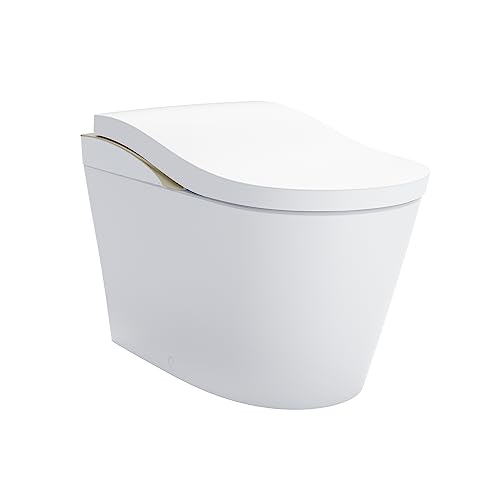
A luxury bidet is judged on a different set of criteria than a standard seat: automatic lid function, a full remote-controlled preset…
Read the guide