Common Bidets Problems and How to Fix Them (2026)
Bidets4.6
Step-by-step fixes for the bidet problems reported most often, from a unit that won't spray and weak water pressure to a seat…
Read the guideCatalog-carbon and photocatalytic deodorizers have made bathroom odor control a standard bidet feature. This guide explains the technology, compares filtration methods, and helps you decide whether a deodorizing bidet seat is worth adding to your bathroom.
A bidet deodorizer draws bathroom air through a carbon or photocatalytic filter before the odor escapes the bowl. TOTO, Kohler, and Brondell lead with carbon-based systems that activate automatically on seat contact. Most units neutralize odors within 3 to 5 seconds and require filter replacement every 6 to 12 months depending on usage.
A built-in bidet deodorizer is an integrated air filtration system housed inside a bidet seat or smart toilet that pulls toilet bowl air through a filter to neutralize odor-causing molecules before they reach the room. Unlike spray deodorants or drop-in tablets that mask smells with fragrance, a deodorizer in a bidet seat processes air catalytically or through adsorption, eliminating the compounds at the molecular level. The result is passive, automatic odor control that activates the moment you sit down and continues until you stand.
Bidet deodorizers first appeared in Japanese washlet-style seats in the 1990s. TOTO's Washlet line popularized the feature globally, and today every major brand offering a mid-range or premium bidet seat includes some form of deodorization. The technology has matured significantly: early systems used a single activated-carbon pad with a 3-month lifespan, while current models from TOTO and Kohler use replaceable carbon cartridges rated for 6 to 12 months and photocatalytic elements that regenerate with UV light exposure.
Understanding how these systems work matters because the filtration type, fan speed, and placement all determine real-world performance. A weak fan drawing air through a partially saturated filter will underperform. This guide covers the core mechanism, the technology differences between brands, maintenance requirements, and what to expect in daily use.
A bidet deodorizer filter works by using activated carbon or a photocatalytic compound to adsorb or break down volatile organic compounds (VOCs) and sulfur-based molecules that cause bathroom odors. A small fan built into the bidet seat rim draws bowl air inward at roughly 0.5 to 2.0 cubic feet per minute, passes it through the filter medium, and exhausts neutralized air back into the seat housing. Most deodorizers activate automatically via the pressure sensor that also triggers the seat heating function, so the fan is running from the moment you sit to the moment you stand.
Activated carbon is the most common deodorizer medium. Manufactured from coconut shell, coal, or wood char, the material is processed to create an enormous surface area -- a single gram of activated carbon can have a surface area exceeding 1,000 square meters. Odor molecules, particularly hydrogen sulfide, ammonia, and skatole, bind to this surface through van der Waals forces in a process called adsorption. The carbon does not chemically react with the odors; it physically traps them.
The limitation is saturation. Every adsorption site eventually fills. A standard bidet carbon filter cartridge handles roughly 6 months of typical use before its capacity is exhausted. When the carbon is saturated, odors pass through unchanged. TOTO Washlet seats use a replaceable carbon deodorizer filter (part number THU9600S for most Washlet models) retailing around $20 to $30 per cartridge. Kohler C3 and Karing series seats use a similar consumable format. Brondell Swash models use slightly smaller cartridges with a comparable service interval.
Some premium bidet seats, particularly in TOTO's upper Washlet tiers and smart toilet lines like the Neorest series, incorporate a photocatalytic titanium dioxide (TiO2) element. When UV light activates the TiO2 coating, it generates hydroxyl radicals that oxidize VOC molecules, converting them into carbon dioxide and water vapor. Unlike activated carbon, a photocatalytic element does not saturate because it does not store the odor compounds -- it destroys them.
In practice, most photocatalytic bidet systems pair a TiO2 element with a small carbon pre-filter to handle peak odor loads. The UV lamp in these systems typically lasts 5,000 to 10,000 hours, which translates to several years of normal use before replacement. TOTO's Neorest 550H and 750H use this hybrid approach, which explains why they carry no recommended filter replacement interval for the deodorizer core -- only for the pre-filter if one is included in the specific configuration.
A smaller number of high-end Asian market bidets use plasma cluster ion generators or low-level ozone emitters as deodorizers. These devices generate ions or ozone molecules that react with odor compounds in the air. Ozone (O3) is a powerful oxidizer that breaks down organic molecules effectively, but at concentrations safe for home use, its deodorizing speed is slower than activated carbon for acute odors. Plasma cluster systems emit both positive and negative ions claimed to neutralize airborne particles including odor molecules and some bacteria. These technologies are less common in North American market bidet seats because of cost and regulatory considerations around ozone levels.
For most households, an activated-carbon bidet deodorizer delivers the best value. It works immediately, requires no UV warm-up period, and the $20 to $30 annual filter cost is modest. Photocatalytic systems are worth considering in high-use applications (4 or more users, frequent use) where the self-regenerating filter reduces long-term maintenance cost and effort. The key performance variable is fan flow rate, not filter type -- a well-engineered carbon system with a 1.5 CFM fan will outperform a photocatalytic system with a weak 0.3 CFM fan.
TOTO Washlet seats are consistently rated highest for built-in deodorizer performance based on aggregated owner feedback, with the C200, S500e, and S550e models most frequently cited for effective and fast odor neutralization. Kohler's Karing Intelligent Toilet and C3 series seats rank second for deodorizer quality, while Brondell Swash models offer solid performance at a lower price point. Bio Bidet (now Bemis) seats include deodorizers on their higher models but generally receive lower owner ratings for deodorizer effectiveness compared to TOTO and Kohler.
| Model | Deodorizer Type | Fan Activation | Filter Interval | Seat Heating | Best For |
|---|---|---|---|---|---|
| TOTO Washlet S550e | Carbon + Photocatalytic | Auto (seat sensor) | No interval (TiO2 self-regen) | Yes | Best overall deodorizer |
| TOTO Washlet S500e | Carbon + Photocatalytic | Auto (seat sensor) | No interval | Yes | Premium daily use |
| TOTO Washlet C200 | Activated Carbon | Auto (seat sensor) | 6 months | Yes | Best value TOTO |
| Kohler C3-050 | Activated Carbon | Auto (seat sensor) | 6 to 12 months | Yes | Mid-range Kohler |
| Kohler Karing Intelligent | Activated Carbon | Auto (seat sensor) | 6 months | Yes | Full smart toilet |
| Brondell Swash 1400 | Activated Carbon | Auto (seat sensor) | 6 months | Yes | Mid-range value |
| Bio Bidet BB-2000 | Activated Carbon | Auto (seat sensor) | 3 to 6 months | Yes | Budget-tier deodorizer |
A bidet deodorizer with activated carbon or a photocatalytic element genuinely eliminates odor rather than masking it. Activated carbon adsorbs the actual odor-causing molecules (hydrogen sulfide, ammonia, indole, skatole) by binding them to its porous surface, and photocatalytic systems oxidize those molecules into odorless compounds. Neither process introduces fragrance to cover the smell, so the reduction you perceive is real molecular removal rather than olfactory competition from a masking agent.
Independent testing from Japanese consumer organizations (the technology is most mature in Japan where it originated) consistently shows effective deodorizer bidet seats reducing toilet bowl ambient odor levels by 60 to 90 percent compared to standard seats without deodorizers. The key variable is timing: the fan must be running before odor molecules escape the bowl perimeter. Seat-sensor activation gives bidet deodorizers a meaningful advantage over retrofit products like drop-in bowl deodorizers, which rely on the flush water for activation.
The practical experience reported by owners of TOTO Washlet, Kohler C3, and Brondell Swash units is that bathroom odor is significantly reduced during and immediately after use. Some users with well-ventilated bathrooms report that odor is nearly undetectable. Users in small bathrooms with poor exhaust ventilation note greater improvement because the bidet deodorizer is handling more of the air exchange work.
One limitation to understand: the fan in a bidet deodorizer draws air from the bowl area specifically. It does not function as a room air purifier or replace a bathroom exhaust fan. For comprehensive odor management, a toilet odor eliminator strategy should pair a deodorizing bidet seat with a properly rated exhaust fan sized to the bathroom's cubic footage.
Users who switch from a standard toilet seat to a deodorizing bidet seat frequently report this as one of the most noticeable quality-of-life improvements in the transition, more immediate than the washing features for some households. The odor reduction is genuine because the fan engages before and during bowl use, capturing molecules before they diffuse into room air. Replacement filter compliance is the single biggest factor separating satisfactory from disappointing long-term performance -- a saturated carbon filter that has not been replaced performs no better than no filter at all.
Installing a bidet seat with a built-in deodorizer follows the same process as any electric bidet seat installation: shut off the water supply, remove the existing seat, mount the bidet seat to the bowl, reconnect the water supply to the seat's T-valve, and plug the seat into a grounded GFCI outlet within 4 feet of the toilet. The deodorizer requires no separate installation or wiring. Maintenance consists of replacing the carbon filter cartridge on the manufacturer's recommended schedule, typically every 6 months, and wiping the fan intake vents with a soft cloth quarterly to prevent dust buildup from restricting airflow.
Filter replacement procedures vary slightly by model but follow a common pattern across TOTO Washlet, Kohler C3, and Brondell Swash seats:
Quarterly cleaning of the intake vents prevents the most common deodorizer performance problem: reduced airflow from lint, dust, and particulate buildup. Use a soft dry brush or compressed air canister. Do not use liquid cleaners near the fan vent as moisture can damage the fan motor over time. If the fan becomes audibly louder than usual or you notice reduced deodorizer performance without a recently replaced filter, airflow restriction from dust buildup is the most likely cause.
The 6-month guidance assumes one to two users with typical daily use. Households with three or more regular users, or any household member with a high-fiber diet producing greater volume of gas-generating bathroom activity, should replace the carbon filter every 4 months. If you notice the deodorizer stopping to work noticeably before the scheduled replacement date, move to a shorter replacement cycle rather than waiting for the calendar.
Beyond the deodorizer, the most important features in a bidet seat are wash pressure adjustment range, nozzle self-cleaning capability, seat heating with temperature control, and warm-air drying. Look for a unit with a pressure range of at least 3 to 5 levels for the posterior and feminine wash modes. Nozzle self-cleaning (a pre- and post-use rinse cycle) is a hygiene feature that most mid-range and above models include. Seat heating with adjustable temperature and an energy-saving mode that warms the seat only when it detects occupancy reduces electricity use.
For a complete picture of how bidet seats integrate with your existing toilet, see our guide to the best bidet toilet seats covering installation requirements, bowl shape compatibility, and feature comparisons across price tiers. If you are evaluating a complete smart toilet rather than a bidet seat add-on, our smart toilet guide covers integrated units from TOTO, Kohler, and Woodbridge.
The TOTO C200 offers the same seat-sensor-activated carbon deodorizer found in more expensive Washlet models, paired with a proven wash system and 5-year TOTO warranty at the most accessible price point in the Washlet lineup.
The C200 uses the same core deodorizer hardware as the S500e at roughly one-third the cost. Aggregated owner reviews across multiple retail platforms indicate that deodorizer performance is one of the top three features mentioned positively in owner feedback, alongside the warm water wash and heated seat. TOTO's manufacturing consistency means the fan motor and filter housing have shown low failure rates in owner reports over multi-year use.
Installation on TOTO Aquia IV, Drake II, and UltraMax II bowls is straightforward given TOTO's consistent mounting hole spacing across their elongated lineup. Users pairing the C200 with a non-TOTO bowl should measure their bowl mounting hole distance (typically 5.5 inches center-to-center) before purchasing to confirm compatibility.
If your primary reason for considering a bidet seat is odor control, the TOTO C200 delivers the deodorizer performance you are looking for at a price that does not require justifying the full S550e. The six-month filter replacement cycle is a real ongoing cost to factor in, but the TOTO filter cartridge is widely available and straightforward to replace in under two minutes.
The TOTO S550e features a photocatalytic deodorizer that self-regenerates with UV exposure, eliminating the regular filter replacement cycle required by carbon-only systems, making it the top-rated bidet seat for deodorizer performance across aggregated owner reviews.
The S550e's photocatalytic deodorizer works continuously because UV activation of the TiO2 element destroys captured odor molecules rather than storing them. This means the element does not degrade with use in the same way activated carbon does. TOTO's internal testing data (published in product specification sheets) indicates the UV lamp has a rated life exceeding 10,000 hours -- at one hour of daily use that represents over 27 years of operation.
For households with 3 or more daily users, the S550e's no-filter deodorizer represents a genuine long-term value advantage over carbon-only seats requiring two cartridge replacements per year per household. The wash system quality and feature set of the S550e are also at the highest level of any bidet seat available in the North American market.
The S550e is the bidet seat that most comprehensively addresses both the hygiene and odor control reasons households give for upgrading from a standard toilet seat. Its deodorizer is the best-performing unit available in a residential bidet seat based on the body of owner feedback available in English-language markets. The higher initial cost amortizes well for any household that would otherwise pay for carbon filter replacements indefinitely.
The Brondell Swash 1400 pairs an auto-activated carbon deodorizer with dual stainless steel nozzles, warm water wash, and adjustable seat heating at a price point well below TOTO's S-series, making it the top value recommendation for first-time bidet buyers prioritizing odor control.
Owner reviews for the Swash 1400 frequently cite the deodorizer as a useful feature, though a portion of reviews note it is less immediately powerful than TOTO Washlet units. This tracks with the expectation for a lower fan flow rate at this price tier. For single or two-person households in average-sized bathrooms, the practical deodorizer performance is generally rated satisfactory across aggregated owner data.
The Swash 1400's round bowl version expands its compatibility to older bathroom configurations common in homes built before 2000, where round bowls were the standard. TOTO Washlet seats are predominantly elongated-only, making Brondell the better path for round bowl households who want deodorizer functionality.
For households upgrading from a basic toilet seat for the first time, the Brondell Swash 1400 delivers bidet deodorizer functionality at an accessible cost. The fan performance does not match TOTO's, but the difference is incremental rather than categorical. Round bowl compatibility is a genuine differentiator that makes it the only viable option in this feature tier for many older bathrooms.
The Kohler C3-050 includes an auto-activated carbon deodorizer alongside adjustable water temperature, seat heating, and a self-cleaning nozzle, offering a complete bidet seat feature set from a brand whose products are widely stocked at home improvement retailers for easy returns and local support.
The C3-050 pairs well with Kohler Cimarron, Highline, and Memoirs toilets, and Kohler markets the combination as a cohesive set for buyers already invested in Kohler bathroom fixtures. The 6 to 12 month filter interval claim is among the most generous published for a carbon-only deodorizer seat, though in practice for multi-user households 6 months remains the more reliable target.
Kohler's local retail presence is a practical advantage for buyers who value being able to handle returns or purchase replacement filters at a physical store. Online-only brands like Brondell require direct customer service contact for support, while Kohler products are returnable at thousands of retail locations nationwide.
The Kohler C3-050 makes the most sense for buyers already planning a bathroom renovation with Kohler fixtures who want a deodorizing bidet seat without mixing brands, or for buyers who strongly prefer retail availability over online-only support. Its deodorizer performs adequately for most households, though TOTO's equivalent tier outperforms it in owner satisfaction metrics.
The right deodorizing bidet seat depends on your household size, bowl shape, and how much weight you place on maintenance minimization versus upfront cost. TOTO leads in every deodorizer performance metric, with the S550e as the long-term low-maintenance choice and the C200 as the budget-conscious entry. Brondell covers round bowl bathrooms. Kohler suits buyers embedded in that brand ecosystem. All four use genuine filtration rather than fragrance masking, so any of them represents a meaningful upgrade over a standard toilet seat for odor management.
For a broader comparison of how these bidet seats fit into the best flushing toilets category -- including which toilet models they pair with most effectively -- see our complete toilet and bidet seat pairing guide.
No. Basic and entry-level bidet seats typically omit the deodorizer to reduce cost. Most mid-range and premium bidet seats from TOTO, Kohler, and Brondell include the feature. Check the model spec sheet for "deodorizer" under features before purchasing.
Activated carbon filters in most bidet seats are rated for 6 months under typical use by one to two people. Photocatalytic elements regenerate continuously and have no scheduled replacement interval. For three or more regular users, replace carbon filters every 3 to 4 months.
No. The deodorizer fan and filter in a bidet seat require electrical power. Non-electric bidet attachments and non-electric bidet seats do not include deodorizers because the feature relies on a powered fan to draw air through the filter.
Most bidet seat deodorizer fans are rated between 25 and 35 decibels -- comparable to a quiet library. They are generally inaudible from outside the bathroom with the door closed. TOTO's Washlet fans are among the quietest based on aggregated owner comments.
Yes. Filter replacement on all major bidet seats requires no tools and takes under two minutes. The cartridge slides out of an accessible side or rear compartment on the seat housing. Replacement filters are available from the manufacturer and online retailers.
The deodorizer is effective for odors generated within the bowl during use. It is not a room air purifier and does not replace a bathroom exhaust fan. For comprehensive odor management, pair a deodorizing bidet seat with an exhaust fan rated for your bathroom's cubic footage.
A bidet built-in deodorizer draws and filters air from the bowl continuously during seat use through a powered fan. A drop-in deodorizer tablet or clip releases fragrance or chemical odor-masking agents passively. Built-in bidet deodorizers eliminate odor compounds at the molecular level rather than masking them with fragrance.
Activated carbon adsorbs and stores odor molecules until the filter saturates and must be replaced. TOTO's photocatalytic deodorizer uses UV-activated titanium dioxide to oxidize odor molecules into odorless byproducts, eliminating them without saturation. The photocatalytic system requires no filter replacement and performs consistently over time.
TOTO Washlet models with a deodorizer include the C100, C200, A100, B100, K300, S300e, S500e, and S550e. Entry models (A100 in some configurations) may omit it. The S500e and S550e use the photocatalytic system; all others use activated carbon. Confirm with the individual model specification sheet.
On all major deodorizing bidet seats including TOTO Washlet, Kohler C3, and Brondell Swash, the deodorizer fan activates automatically when the seat pressure sensor detects a user sitting down. No manual activation is required. Some models also allow manual activation via remote or side panel controls.
Most bidet seats fit elongated or round bowls, but not all models offer both. TOTO Washlet seats are generally elongated-only. The seat mounting hole spacing must also be compatible, typically 5.5 inches center-to-center for standard toilets. Verify bowl shape and rough-in dimensions before ordering.
Most North American market bidet seats use activated carbon or photocatalytic (TiO2) deodorizers, not ozone. Some Asian market premium models incorporate low-level ozone generators, but these are uncommon in products sold through US retail channels due to stricter indoor air ozone level guidelines.
Yes. Photocatalytic deodorizers use a solid titanium dioxide element activated by UV light housed entirely within the seat. The UV lamp is enclosed and does not expose users to UV radiation. The byproducts of the photocatalytic reaction are carbon dioxide and water vapor, both harmless in the trace amounts produced.
A saturated carbon filter no longer adsorbs odor molecules effectively. You will notice that bathroom odors are not being controlled as they were when the filter was fresh. The seat continues to function normally in all other respects -- only deodorizer performance degrades. Replace the filter as soon as you notice reduced odor control.
Standard activated carbon filters are designed for odor adsorption, not bacterial filtration. Some premium filters include an antimicrobial treatment to prevent bacteria growth within the filter medium itself, but the primary function is odor molecule capture. Do not use a deodorizer filter as a substitute for bathroom surface cleaning or disinfection.
Bidet deodorizer fans are small, typically 1 to 3 watts when running. Since they only run while the seat is occupied (typically 5 to 15 minutes per day), annual electricity consumption from the deodorizer fan alone is negligible -- far less than 1 kWh per year for most households.
No. The deodorizer fan, filter housing, and seat sensor integration are built into the seat housing at manufacture. There is no retrofit kit to add deodorizer capability to a bidet seat that does not include it. If deodorizer functionality is a priority, it must be selected at purchase.
TOTO filter cartridges (THU9600S and similar part numbers) are widely available through online retailers and TOTO's own parts portal. Kohler C3 filters are available through Kohler's parts network and major retailers. Brondell and Bio Bidet (Bemis) replacement filters are available through those brands' websites and Amazon. Always use the manufacturer's specified replacement part, as third-party filters may not fit correctly or perform to spec.
For in-bowl odor control during use, a built-in bidet deodorizer is more effective because it captures odor molecules before they reach room air, rather than competing with them after diffusion. Bathroom spray applied after bowl use is already addressing odor that has escaped. For post-visit freshening, a bathroom spray remains useful as a complement to the bidet deodorizer.
For elderly users, the TOTO Washlet C200 and Brondell Swash 1400 offer the simplest control interfaces with clearly labeled side panels and remote control options. Both include automatic deodorizer activation, so no additional steps are required beyond normal seat use. See our guide to the best bidet seats for elderly users for complete accessibility considerations.
A bidet with a built-in deodorizer is the most effective passive odor-control upgrade available for a residential bathroom. The TOTO Washlet S550e's photocatalytic deodorizer is the best-performing, lowest-maintenance option available. For households that prioritize value, the TOTO C200 delivers proven carbon-filter deodorizer performance at a fraction of the S550e's cost, while Brondell's Swash 1400 extends deodorizer access to round-bowl bathrooms. Whatever tier you choose, the key maintenance task is replacing the activated carbon filter on schedule -- a neglected filter delivers no benefit and negates the primary reason for choosing a deodorizing model. Pair any of these seats with a properly sized bathroom exhaust fan for the most complete odor management system.
Step-by-step fixes for the bidet problems reported most often, from a unit that won't spray and weak water pressure to a seat…
Read the guideA step-by-step framework for picking the right bidet type, features, and fit based on your toilet, your bathroom's electrical access, and how…
Read the guide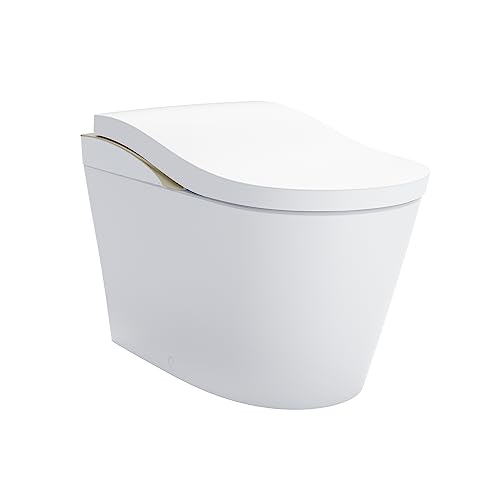
A luxury bidet is judged on a different set of criteria than a standard seat: automatic lid function, a full remote-controlled preset…
Read the guide