

Common Bidets Problems and How to Fix Them (2026)
Bidets4.6
Step-by-step fixes for the bidet problems reported most often, from a unit that won't spray and weak water pressure to a seat…
Read the guideEverything parents need to know about configuring bidet wash pressure, temperature, and nozzle position so young children can use a bidet safely, independently, and without discomfort.
Set wash pressure to the lowest available level (typically level 1 of 5), water temperature to warm but not hot (35 to 37 degrees Celsius), nozzle position toward the rear setting, and activate child mode or soft-wash mode if your bidet seat offers it. Always supervise children under five and let older children press the button themselves to keep sessions safe and brief.
Adult bidet default settings use water pressure and jet position calibrated for a fully grown perineal anatomy. A child's tissue is smaller, more sensitive, and closer to the nozzle, so even the mid-range pressure settings that feel gentle to an adult can cause discomfort, skin irritation, or startling for a toddler or young child. Reducing pressure to the minimum level and selecting the warmest safe temperature is the essential first step before any child uses a bidet.
Bidet seats have seen strong adoption in North American households over the past several years. Brands like TOTO, Kohler, Bio Bidet, and Brondell now sell seats across a wide price spectrum, and many families find the hygiene benefits compelling enough to put them in children's bathrooms as well as the main bath. The challenge is that most bidet seats ship with settings optimized for adults, and those defaults are often unsuitable for young users.
This guide walks parents through every relevant control on a typical bidet seat, explains what each one does to a child's experience, and gives concrete recommended values. It also covers which bidet models have dedicated child or soft-wash presets, how to use parental-lock or child-lock features where they exist, and what to tell children so they can eventually use the bidet independently and safely.
For households where the toilet itself is part of the equation, our guide to the best flushing toilets covers how seat compatibility works with elongated versus round bowls, which matters when you select a bidet seat for a child's bathroom.
The safe water pressure for a child on a bidet is level 1 out of whatever scale the seat uses, typically a 1 to 5 dial. Most bidet seats at level 1 deliver roughly 0.04 to 0.07 MPa of water pressure at the nozzle, which is gentle enough to clean without causing tissue irritation in children aged three and older. Never use level 2 or above until the child is comfortable with level 1 and can communicate clearly about their experience.
Water pressure is the single most important setting to address before letting a child use a bidet. On a TOTO Washlet C5 or Kohler Novita, the pressure dial runs from 1 to 5. Published engineering data for the TOTO Washlet line shows that level 1 delivers approximately 0.04 MPa and level 5 delivers roughly 0.13 MPa at the nozzle exit. For context, a gentle handheld shower head runs around 0.03 to 0.05 MPa. Level 1 bidet pressure is roughly comparable to a slow-running faucet stream and is appropriate for children aged three and up with direct supervision.
For toddlers between 18 months and three years who are in the early stages of potty training, many pediatric hygiene advisors suggest skipping the bidet entirely until the child can communicate clearly about physical sensations. The primary concern is not injury but startling: an unexpected jet of water can make a child resist the toilet, disrupting potty training progress.
Pediatric continence nurses frequently note that the biggest barrier to bidet adoption for children is the startle reflex, not tissue sensitivity. Introducing the bidet by letting a curious child hold their hand in the stream before sitting down removes the unpredictability and nearly eliminates resistance. Start at pressure level 1, keep the first wash to three to five seconds, and increase duration only after the child asks to stay on longer.
| Child Age | Recommended Pressure Level | Wash Duration | Adult Present? | Notes |
|---|---|---|---|---|
| Under 18 months | Not recommended | -- | Always | Use wipes or wet cloth instead |
| 18 months to 3 years | Not recommended unless pediatrician agrees | 2 to 3 seconds max | Always | Trial only; watch for startle response |
| 3 to 6 years | Level 1 of 5 | 5 to 10 seconds | Always | Child presses button; adult monitors |
| 6 to 9 years | Level 1 to 2 of 5 | 10 to 20 seconds | Supervised or nearby | Child sets controls after training |
| 9 to 12 years | Level 1 to 3 of 5 | Child preference | Not required | Child manages independently |
For children, bidet water temperature should be set to warm, between 35 and 37 degrees Celsius (95 to 99 degrees Fahrenheit). This range feels comfortable without any risk of scalding. Most bidet seats label this as level 2 or 3 on a 1 to 5 temperature dial. Avoid the highest temperature settings, which can reach up to 40 degrees Celsius and are better suited for adults who prefer warmer water.
Temperature control on bidet seats typically offers three to five incremental levels. Published specifications for the TOTO Washlet S7 show water temperatures of 30, 33, 36, and 38 degrees Celsius across its four levels. The Bio Bidet BB-2000 Bliss offers settings from 33 to 40 degrees Celsius in roughly 2-degree increments. For children, selecting the second or third option on most seats lands in the safe 35 to 37 degree range.
Cold water is not dangerous but can cause a sharp gasp or startle in a young child, which leads to negative associations with the bidet. Conversely, the highest temperature settings on some premium seats can reach 40 to 42 degrees Celsius during an extended wash cycle, which is above recommended safe bath temperature for children (the American Academy of Pediatrics recommends bath water no warmer than 48 degrees Celsius for infants, but for sensitive perineal tissue during a directed spray, erring lower is prudent).
One practical approach: before the child sits down, run the bidet for two seconds and check the water temperature on your wrist, the same way parents check baby bath water. If the seat has an instant-heat system rather than a tank, the temperature stabilizes within one to three seconds.
Instant-heat bidet seats (found on models like the TOTO Washlet C2 and Kohler Novita BN330) heat water on demand and can occasionally deliver a brief cold burst at the very start of a wash cycle before the heater engages. Tank-style seats maintain a warm reservoir, so the temperature is consistent from the first second. For young children who are easily startled, a tank-style seat or one with a well-reviewed instant-heat system rated for consistent temperatures can reduce the brief cold-blast issue.
Some bidet seats offer a dedicated child mode or soft-wash preset that automatically reduces pressure and adjusts nozzle position to a gentler setting. TOTO Washlet models with user-preset memory allow saving a custom child profile so the seat recalls low pressure and moderate temperature settings. Not every bidet has a labeled child mode, but virtually all allow manual adjustment of pressure, temperature, and nozzle position to achieve the same result.
The term "child mode" is not standardized across bidet manufacturers. Some brands use it explicitly; others call it a soft-wash preset, gentle mode, or user preset slot. Here is how the major brands handle it:
For households with multiple children of different ages, seats with at least two memory presets are the most convenient because each child can have their own saved settings without anyone needing to adjust controls before sitting.
When evaluating bidet seats for a household with children, look for two specific features: user preset memory (so child settings are always available with one button press) and a child or safety lock that prevents settings from being accidentally changed. Neither feature is standard at the entry price point, which is why the TOTO Washlet C5 is often recommended as the practical floor for families, despite its higher price compared to import-brand seats.
For children, the bidet nozzle should be set to the rearmost position, which most seats label as rear wash or posterior wash. Because children sit further back on the seat and have a smaller body mass, the default nozzle extension often overshoots the correct position. Moving the nozzle to its shortest extension and selecting the rear-wash function (rather than front-wash or bidet function) prevents misdirected spray and ensures cleansing happens in the correct area.
Bidet nozzle position is adjustable on most mid-range and premium seats. The nozzle typically extends two to four centimeters from its parked position, with five adjustment increments on seats like the TOTO Washlet C5 and seven on the Bio Bidet BB-2000. For children, the minimum extension setting targets the posterior anatomy correctly given the shorter perineal distance in young bodies.
Front-wash (bidet or feminine wash) mode is not generally appropriate for young children, both because the target area is different and because the spray angle is designed for adult female anatomy. Rear wash at minimum extension and minimum pressure is the correct starting configuration for children of both sexes.
Some parents find that their child sits further forward on the seat than adults do, which positions the child closer to the front of the bowl and potentially further from the nozzle. If the wash does not appear effective even at maximum nozzle extension, the child may need a step stool to position their feet properly, which naturally shifts their seated position rearward and brings their anatomy into the correct wash zone.
A children's step stool at the base of the toilet serves two functions: it lets short legs rest instead of dangling (which can cause discomfort during longer sessions) and it encourages a slightly forward lean that positions the child's body closer to the correct nozzle spray zone. Standard toilet seats are sized for adults; using a step stool is one of the simplest and most effective ergonomic adjustments for child bidet use.
Teach a child to use a bidet independently by breaking the process into three steps: finish using the toilet, press the preset child-mode button on the remote or seat panel, and then press stop after five to ten seconds. Practice the sequence with the child watching before letting them try alone. Most children aged five and older can follow this sequence reliably within a few sessions once they are no longer startled by the water.
Independence with a bidet seat is a realistic goal for most children aged five and older. The key is reducing the process to the fewest possible decisions. Rather than asking a child to navigate a multi-function remote with ten buttons, save a child profile to a preset and teach them to press one button to start and one button to stop.
This process typically takes two to four weeks for a child aged five to six, and as little as one week for children aged seven and older who are already comfortable with toileting independence. Rushing the process is counterproductive; children who are startled or uncomfortable during early exposures can develop resistance to the toilet itself, which is a larger problem than slow bidet adoption.
Related guides that may help with the broader bathroom independence picture: our ADA-compliant toilet guide covers ergonomic toilet sizing considerations that apply to children as well as adults with mobility needs, and our article on toilet seat types explains how seat shape affects positioning, which matters when sizing a bidet seat for a child's bathroom.
Beyond settings, several hygiene and safety factors are worth understanding before adding a bidet to a child's bathroom routine.
Most bidet seats include a self-cleaning nozzle cycle that rinses the nozzle before and after each use. This feature runs automatically on the TOTO Washlet series and most Bio Bidet seats. Confirm the self-cleaning function is enabled in settings. A contaminated nozzle is a potential hygiene concern for any user, but parents are appropriately more attentive about this for young children.
Heated seats are standard on most electronic bidet seats. For children, set the seat temperature to medium (around 34 to 36 degrees Celsius) and not the maximum level. Children who sit on a very warm seat for extended periods may not recognize discomfort the way adults do. Most bidet seats with seat heating auto-shut-off after a set duration; confirm this feature is active.
Air dryers on bidet seats typically run at higher temperatures than wash water. The TOTO Washlet C5 dryer reaches up to 40 degrees Celsius. For children, use the lowest dryer setting or skip the dryer entirely and use toilet paper for drying. Many parents find that a hybrid approach, bidet wash followed by a brief pat with toilet paper, is more comfortable for young children than the dryer.
Some premium seats include a catalytic deodorizer that draws air through a filter while the seat is in use. This function is passive and safe for children. It does not require any action from the child and can simply remain enabled.
Several bidet seat models include a child safety lock that disables the remote or seat controls to prevent accidental activation or settings changes. The TOTO Washlet G400 and Neorest series include this in their control panel settings. Enabling the lock and then creating a child-safe shortcut (such as a dedicated remote preset button) is the most robust approach for households with young children.
Bidet hygiene for children is not meaningfully different from hygiene for adults, provided the seat has an active nozzle self-cleaning function and the child washes their hands after using the toilet. The hygiene benefit of proper cleansing with water over dry toilet paper alone is well-established in medical literature, and this benefit applies to children as well as adults. The limiting factor is always correct settings and supervision during the transition period.
This is a question parents frequently ask, and the answer is nuanced. Potty training is already a multi-variable process involving new sensations, a new routine, and significant developmental effort from the child. Adding a bidet during the active potty-training phase introduces an additional variable that some children handle well and others find disruptive.
The general consensus from parenting and pediatric occupational therapy communities is to establish toilet use first, then introduce the bidet as a second phase once the child is reliably using the toilet without resistance. A child who has been using the toilet consistently for four to eight weeks and who is emotionally comfortable with the process is a much better candidate for bidet introduction than one still in the active learning phase.
One exception: if the bidet seat is already installed in the household and the child has been observing adults or older siblings use it, curiosity may make introduction easier during training, because the bidet is already a familiar object. In this case, showing the child the gentle stream (without them sitting) and letting them decide if they want to try it after using the toilet can be a low-pressure way to incorporate it.
For households where the bidet is being added specifically for potty training hygiene benefits, consider that a handheld bidet sprayer (attached to the toilet water supply via a T-valve) gives the parent complete control over water direction and pressure without any complex electronics, and may be more appropriate for this phase. These are less expensive than electronic bidet seats and allow a gradual introduction before committing to a full electronic seat.
See also our article on bidets versus toilet paper for a full breakdown of hygiene outcomes, which is relevant context for parents considering the long-term case for bidet use in a household with young children.
Not every bidet seat is equally practical in a household with children. The features that matter most are preset memory (so child settings are always one button away), a child or safety lock, gentle minimum pressure levels, a reliable self-cleaning nozzle, and consistent water temperature. Here are the models that score well on those criteria based on published specifications and aggregated owner feedback.
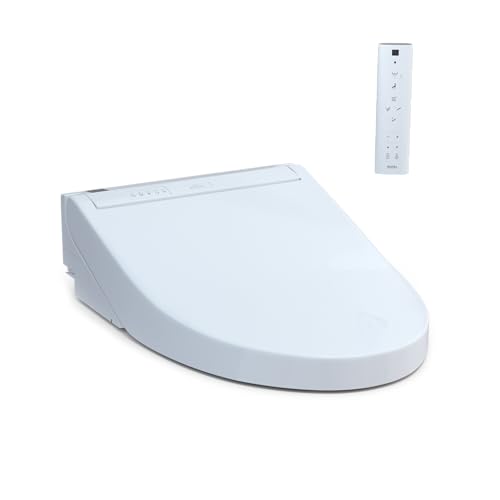
The TOTO Washlet C5 is one of the most frequently recommended electronic bidet seats in households with children. It offers two user preset slots, five pressure levels starting from a genuinely gentle level 1, four temperature levels with level 2 landing at approximately 34 degrees Celsius, and TOTO's EWATER+ electrolyzed water pre-mist that hygienically coats the bowl before each use. Aggregated owner reviews across major retailers consistently rate the TOTO C5 highly for ease of use and reliability. It fits elongated bowls and is available in cotton white and colonial white.
The Bio Bidet BB-2000 offers a wide pressure range, with a soft-wash setting that is particularly gentle. It includes a self-adjusting nozzle, user preset memory, a warm-air dryer with multiple heat levels, and a deodorizer. The remote is more complex than some competitors, but the preset button makes child use straightforward once the profile is saved. It supports both elongated and round bowl configurations with appropriate seat models.
The Kohler Novita BN330 is a mid-range seat that brings Kohler's quality manufacturing to the bidet category. It offers an instant-heat water system, five pressure levels, three temperature levels, and a user-friendly remote. It does not have preset memory, which is a limitation for multi-child households, but its intuitive controls are easy to reset quickly before each use. Aggregated reviews note it as one of the more reliable instant-heat seats on the market.
The Brondell Swash 1400 is noted in owner reviews for having one of the gentlest minimum pressure settings available, making it a strong candidate for child use. It offers a wireless remote, a stainless steel nozzle, dual nozzle (rear and front), and instant-heat water. Its pressure level 1 is frequently described as a very light rinse rather than a directed stream, which suits young or sensitive users. Available for elongated bowls.
Most children can begin using a bidet seat with adult supervision between ages three and four, once they are reliably using the toilet and can communicate about physical sensations. For children under three, a handheld bidet sprayer controlled by the parent is a safer and more practical approach.
Yes, bidet use is safe for girls when configured correctly. Use rear-wash mode only (not front-wash or feminine wash) for young girls, as the front-wash nozzle position and spray direction are designed for adult female anatomy and are not appropriate for children. Rear wash at minimum pressure is safe for girls of toilet-training age and older.
When used correctly with rear-wash mode and appropriate pressure, bidet use does not increase UTI risk and may reduce it by improving posterior cleansing. The risk occurs if front-wash mode is used with high pressure, which could potentially introduce bacteria toward the urethra. For children, always use rear-wash mode only and keep pressure at level 1.
Bidet child mode refers either to a dedicated preset on seats that have one (such as certain TOTO Washlet configurations), or more broadly to the recommended group of settings for child use: minimum pressure, warm but not hot water temperature, rear-wash nozzle at shortest extension, and shortest wash duration. Not all bidet seats label this as a named mode, but any seat can be manually configured to these parameters.
For children aged three to six, five to ten seconds of wash time is sufficient. The bidet does not need to run as long as it might for an adult using a higher pressure setting. A brief, gentle rinse followed by light drying with toilet paper is both effective and comfortable for young children.
The seat, lid, and bowl require the same cleaning frequency as any toilet surface. The nozzle self-cleaning function, if present and active, handles nozzle hygiene automatically. Standard bathroom cleaning practices apply. There is no specific additional cleaning protocol required for child bidet use beyond what you would already do.
It is generally better to establish reliable toilet use first, then introduce the bidet as a second phase. Introducing both simultaneously adds complexity during an already challenging developmental transition. Most parenting and pediatric occupational therapy resources suggest waiting until the child is consistently using the toilet before adding a bidet.
Between 35 and 37 degrees Celsius (95 to 99 degrees Fahrenheit) is the recommended range. This corresponds to level 2 or 3 on most bidet seat temperature dials. Avoid the highest temperature settings, which can reach 40 to 42 degrees Celsius and are better suited for adults.
No. Child safety lock (which disables the remote or control panel to prevent accidental changes) is primarily available on premium bidet seats such as the TOTO Washlet G400, Neorest series, and some Bio Bidet models. Entry-level and mid-range seats typically do not include this feature, which means parents must reset settings manually if a child accidentally changes them.
Round bowls are more common in smaller bathrooms and children's bathrooms due to their shorter front-to-back dimension. Most bidet seat manufacturers offer seats in both round and elongated configurations. Confirm the seat model and bowl shape match before purchasing. A mismatched seat creates gaps at the front of the bowl that can cause discomfort for small users.
Rear wash targets the posterior area and is the correct mode for all children. Front wash (also called bidet or feminine wash on some seats) targets the anterior area and uses a different nozzle angle designed for adult female anatomy. For children of any sex, only rear wash should be used.
The air dryer is optional for children. Many parents prefer to use toilet paper for drying after the wash cycle, especially for younger children who may find the dryer noisy or warm. If using the dryer, set it to the lowest heat level and keep it brief. Confirming the dryer auto-shutoff is enabled is good practice.
Preset memory allows you to save a specific combination of pressure, temperature, nozzle position, and wash mode to a numbered preset slot (typically Preset 1 and Preset 2 on seats with this feature). Once saved, pressing the preset button calls up those exact settings without requiring the user to adjust anything. For households with children, saving child-appropriate settings to Preset 2 and adult settings to Preset 1 is a practical solution.
For very young children or during the potty-training phase, a handheld bidet sprayer can be more practical because the parent controls the direction, pressure, and duration entirely. The tradeoff is that handheld sprayers do not build the child's independence the way an electronic bidet seat eventually does. Many families use a handheld sprayer during potty training and transition to an electronic seat once the child is independently toileting.
Most bidet seats have a reset function accessible through the remote or a settings menu. For TOTO Washlet seats, holding the stop button for several seconds on many models returns to default settings. Consult the owner's manual for the specific reset procedure for your seat model. After resetting, reconfigure the child preset before the next use.
As of 2026, no major bidet manufacturer sells a bidet seat sized for young children the way child toilet seats (inner reducer rings) are sold. Standard bidet seats are sized for adult toilets. The workaround is a step stool for proper positioning, a child-size inner toilet seat ring for stability, and the parent-configured child preset settings described in this guide.
Nozzle self-cleaning cycles rinse the nozzle tip with clean water before and after each wash cycle. On TOTO seats with EWATER+, the nozzle is also coated with electrolyzed water (slightly acidic water with antimicrobial properties). This function is effective at maintaining nozzle hygiene between uses. Periodic manual cleaning of the nozzle with a soft cloth and mild cleaner, as described in the seat's maintenance guide, is still recommended monthly.
Most bidet seats include a non-slip seat surface. However, children sit on a smaller portion of the seat than adults, which can affect stability. Using a step stool keeps the child's feet grounded and reduces the risk of shifting or slipping. A child toilet seat insert (reducer ring) placed inside the bidet seat is generally not compatible with electronic bidet seats because the sensor system detects the seat as occupied, which can cause false activations. Check your specific seat's compatibility with seat inserts if this is a concern.
Keep the explanation simple: "The bidet rinses you clean with a gentle stream of warm water, the same way a shower cleans your skin." Emphasize that they control it by pressing one button to start and one to stop. Tell them they can press stop at any time if it feels uncomfortable. Removing the element of surprise and giving the child agency over the stop button are the two most effective ways to ensure comfortable first experiences.
A bidet wash significantly reduces the amount of toilet paper needed for cleansing, but for most children a brief pat dry with one or two sheets of toilet paper is still used after the wash cycle. Over time, as children become comfortable with the dryer function, some families do reduce toilet paper use substantially. The bidet does not eliminate the need for handwashing after toileting, which remains essential regardless of cleaning method.
Bidet seats are safe and genuinely useful for children aged three and older when configured correctly. The essential adjustments are pressure to level 1 of 5, water temperature to 35 to 37 degrees Celsius, rear-wash nozzle at shortest extension, and a saved child preset so settings are recalled automatically. Seats with preset memory such as the TOTO Washlet C5 are the most practical choice for multi-user households. Introduce the bidet gradually, let the child control the start and stop buttons from the first supervised session, and expect independence within two to four weeks for most children aged five and older.
Step-by-step fixes for the bidet problems reported most often, from a unit that won't spray and weak water pressure to a seat…
Read the guideA step-by-step framework for picking the right bidet type, features, and fit based on your toilet, your bathroom's electrical access, and how…
Read the guide
A luxury bidet is judged on a different set of criteria than a standard seat: automatic lid function, a full remote-controlled preset…
Read the guide