


Common Bidets Problems and How to Fix Them (2026)
Bidets4.6
Step-by-step fixes for the bidet problems reported most often, from a unit that won't spray and weak water pressure to a seat…
Read the guidePregnancy puts extra demands on your body and your bathroom routine. A bidet provides gentle, hands-free cleansing that eases discomfort during all three trimesters and through postpartum recovery. This guide covers the seven best bidet options chosen for adjustable water pressure, easy installation, and features that matter most when your reach and sensitivity change.
For most pregnant users the TOTO Washlet C200 is the strongest overall choice: its adjustable warm water, oscillating wand, and heated seat address the three most common pregnancy-related discomforts. Non-electric handheld bidets like the Brondell GoSpa are the best budget pick for third-trimester reach issues.
Pregnancy increases skin sensitivity in the perineal area, makes bending and reaching difficult especially in the third trimester, and raises the risk of hemorrhoids and urinary tract infections. A bidet delivers a controlled stream of water that cleans thoroughly without friction, reducing irritation and lowering the manual effort required after each bathroom visit.
The American College of Obstetricians and Gynecologists notes that perineal hygiene is important throughout pregnancy and postpartum recovery. Toilet paper alone can leave residue, and repeated wiping over sensitive or swollen tissue causes additional irritation. A bidet eliminates most of that wiping, which matters even more after a vaginal delivery when the perineum may be sutured.
Beyond comfort, reduced wiping friction lowers the mechanical stress on hemorrhoid tissue, a condition that affects up to 35 percent of pregnant women by the third trimester according to clinical estimates. Bidets also reduce the hand-to-perineum contact that can transfer bacteria toward the urethra, a factor in UTI prevention.
Midwives and OB nurses frequently recommend sitz baths and perineal rinses during and after pregnancy for exactly the reasons bidets address. A warm-water bidet seat functions as an on-demand perineal rinse without requiring a separate basin, and the adjustable pressure means you can dial down intensity when tissue is most sensitive in the first and third trimesters.
The most important features are adjustable water pressure (so intensity can be reduced for sensitive tissue), warm water delivery (either via an internal heater or warm water supply connection), and a posterior wash function positioned to clean without requiring reaching or straining. A heated seat is a strong secondary feature that reduces the shock of cold porcelain on sensitive skin.
Here is a breakdown of the key features to evaluate:
Non-electric bidet attachments cost significantly less and install in under 15 minutes, but they only deliver unheated water unless you connect to the under-sink hot water line with an additional hose (sold separately by most brands). For cold climates or postpartum use, the electric seat is worth the additional investment because consistent warm water is the feature pregnant and postpartum users value most.
The TOTO Washlet C200 combines instant warm water heating, five pressure levels, oscillating wand action, and TOTO's ewater+ electrolyzed water pre-mist into the most complete package for pregnant users who want minimal toilet paper friction through every stage of pregnancy.
The C200 uses TOTO's instantaneous heating rather than a tank reservoir, so you never run out of warm water partway through a rinse. That distinction matters during pregnancy and postpartum when longer or repeated rinse sessions are common. Aggregated owner reviews on major retail platforms consistently note the soft-close lid and quiet motor as appreciated features when frequent nighttime bathroom trips become routine in the third trimester.
TOTO pairs this seat most naturally with the best flushing toilets in their lineup, including the Drake II and UltraMax II, though it fits any standard elongated bowl. The C200 carries a two-year warranty on parts and electronics, longer than most competitors at this tier.
The C200 is as close to a midwife-approved perineal rinse on demand as a consumer bidet seat gets. The five-level pressure control lets you use it comfortably even on the most sensitive postpartum days, and the instantaneous heater means you will never encounter a cold shock mid-rinse. This is the seat worth budgeting for if you plan to use it through postpartum recovery, not just nine months of pregnancy.
The Bio Bidet BB-2000 Bliss delivers a comprehensive feature set including a hybrid-tank heating system, vortex wash, and a user-programmable remote, making it a capable pregnancy bidet at a more accessible cost than the TOTO C200.
The hybrid heating system provides immediate warm water from a small reservoir, then transitions to continuous instant heating, so the first burst of water is warm rather than cold. For most pregnancy rinse sessions this is indistinguishable from a fully instantaneous system. Where it may fall short is if multiple people use the bidet back to back quickly, as can happen in a shared household.
The programmable remote is a meaningful advantage during the third trimester when reaching toward a side-mounted control panel requires awkward twisting. Saving your preferred settings to a preset reduces every session to a single button press.
The BB-2000 is a solid mid-range choice for pregnant users who want genuine warm water and multiple wash modes without the full cost of the TOTO Washlet lineup. Its availability in a round bowl version also makes it the better pick if your toilet is not elongated.
The Brondell GoSpa is a handheld squeeze-bottle bidet that fills with tap water, allowing you to pre-fill with warm water from the sink. It is the most portable option for hospital birth stays and works in any bathroom without installation.
The 45-degree nozzle angle is designed specifically to reduce the reach distance required, which is the primary obstacle when a third-trimester belly prevents forward bending. Many labor and delivery nurses recommend a peri bottle (functionally identical to this type of bidet) for postpartum use, making this the choice most aligned with standard medical advice for the immediate postpartum period.
The GoSpa fills in seconds at any sink and can be pre-warmed by filling with warm water. For home use it is a practical supplement to a toilet-mounted bidet for situations where the attachment may not be comfortable, such as when hemorrhoid swelling makes sitting on an electric seat uncomfortable.
Every pregnant person should have a handheld bidet bottle packed in their hospital bag regardless of what bidet they use at home. Hospitals do not have bidet seats installed, and the standard-issue peri bottle hospitals provide has a straight nozzle that is genuinely harder to aim post-delivery than an angled model like the GoSpa.
The Tushy Classic 3.0 attaches under the existing toilet seat in about 10 minutes with no tools, costs a fraction of an electric seat, and provides adjustable pressure cold-water rinsing that dramatically reduces toilet paper use throughout pregnancy.
The Tushy Classic is the most practical option for renters or those who want to test bidet use during the first trimester before committing to an electric seat purchase. The rotary pressure control allows fine adjustment, and starting at the lowest setting is advisable for users new to bidet use during pregnancy. The Tushy Spa version adds a warm water connection to the bathroom sink supply line and is the preferred upgrade if warmth matters.
One important note: the cold water from the supply line in winter can be significantly below comfortable temperature. In climates where this is a concern, either the Tushy Spa model with hot water hookup or an electric seat is a better choice than the standard cold-only Classic 3.0.
The Tushy Classic is the lowest-barrier entry to bidet hygiene during pregnancy and a legitimate upgrade over toilet paper alone. For warm-climate users or first and early second trimester use when cold water sensitivity is lower, it is a practical and cost-effective choice. For third trimester and postpartum use, the warm water options are worth the additional investment.
TOTO's S550e is the flagship Washlet seat with auto-open/close lid, air deodorizer, warm air dryer, and ewater+ pre-mist technology, making it the most hands-free bidet seat available and the easiest to use when postpartum pain makes any extra movement difficult.
The S550e is particularly valuable in the immediate postpartum period when even reaching for toilet paper, wiping gently, and discarding tissue can be painful after a perineal laceration repair or episiotomy. With the auto-open lid, warm water rinse, and warm air dryer, a bathroom visit can be completely hands-free from seating to standing. This is not a luxury feature in the first two weeks postpartum. It is a genuine functional benefit.
The S550e is also compatible with all TOTO toilets including the Drake, Drake II, and UltraMax II, which are among the highest-scoring models on MaP flush testing. If you are also considering best flushing one-piece toilets for a bathroom upgrade, the UltraMax II plus S550e is a highly regarded pairing.
If budget allows, the S550e is the smartest investment for someone planning a vaginal delivery with potential perineal repair. The combination of completely hands-free operation and warm air drying is the only bidet configuration that genuinely requires zero toilet paper use, which is the gold standard for perineal wound care in the first postpartum week.
The Kohler Novita BN330 is Kohler's competent mid-range electric seat with warm water washing, adjustable pressure, and a slim profile designed to match Kohler elongated toilets including the Highline, Cimarron, and Memoirs series.
If your bathroom already has a Kohler Highline or Cimarron, the Novita BN330 pairs with it cleanly and uses the same elongated seat footprint. Kohler's brand reliability and accessible customer service are genuine advantages for users who prefer dealing with a single domestic brand. For a Kohler-centric bathroom, see also our guide to the best Kohler toilets for 2026 for compatible toilet pairings.
The 1,100 ml tank provides warm water for typical 30 to 45 second rinse sessions without temperature drop. Extended postpartum rinses may encounter lukewarm water near the end, which is the seat's primary limitation compared to tankless heater options.
The BN330 is the right choice if you already own a Kohler toilet and want a seamless aesthetic match with solid functional performance. It does what it promises for typical pregnancy rinse sessions. The tank heater limitation only becomes apparent in back-to-back use or postpartum extended rinse sessions where extra time under the water is needed.
The Woodbridge T-0008 is a complete one-piece smart toilet with an integrated bidet seat, auto flush, auto-open lid, and remote control, offering the cleanest single-unit solution for a pregnancy and postpartum bathroom setup without the need for a separate seat purchase.
For a full bathroom remodel timed around a new baby, the Woodbridge T-0008 eliminates the compatibility questions that arise when pairing aftermarket bidet seats with existing toilets. The integrated nozzle system is factory-calibrated to the bowl geometry, and the dual flush system uses only 0.8 GPF on the reduced flush cycle, meaningful if you are tracking water use. See the Woodbridge T-0001 in our best flushing toilets guide for comparison on flush performance.
Woodbridge has expanded its US distribution and parts availability significantly since 2023, though it remains less widely serviced than TOTO or Kohler. If service access matters, factor that into the decision.
The T-0008 is the cleanest solution if you are willing to do a toilet replacement at the same time as adding a bidet. The integrated design is more elegant than an add-on seat, and the hands-free operation through the remote makes it genuinely excellent for late pregnancy and postpartum use. The trade-off is installation complexity and higher upfront cost.
| Model | Type | Warm Water | Seat Heat | Feminine Wash | Best For | Check Price |
|---|---|---|---|---|---|---|
| TOTO Washlet C200 | Electric seat | Instantaneous | Yes (5 levels) | Yes | Best overall pregnancy use | Check price |
| Bio Bidet BB-2000 | Electric seat | Hybrid tank | Yes (3 levels) | Yes | Mid-range electric | Check price |
| Brondell GoSpa GS-70 | Handheld bottle | User-filled | N/A | Manual aim | Travel and hospital | Check price |
| Tushy Classic 3.0 | Non-electric attachment | Cold only | No | No | Budget home upgrade | Check price |
| TOTO Washlet S550e | Electric seat (flagship) | Instantaneous | Yes (5 levels) | Yes + air dryer | Postpartum recovery | Check price |
| Kohler Novita BN330 | Electric seat | Tank (1,100 ml) | Yes (3 levels) | Yes | Kohler toilet owners | Check price |
| Woodbridge T-0008 | Integrated smart toilet | Instantaneous | Yes | Yes | Full bathroom upgrade | Check price |
Yes, bidet use is generally safe throughout pregnancy when the water pressure is set to a gentle level. The main precaution is to avoid high-pressure streams directed at the vaginal opening, especially in the third trimester, as there is theoretical concern about introducing air or pathogens through the birth canal. Standard posterior wash mode at low to medium pressure, as used by most bidet owners, does not raise this concern.
No published clinical evidence documents harm from standard bidet use during pregnancy. Gynecologists generally encourage external perineal rinsing throughout pregnancy and universally recommend it postpartum. The relevant safety guidance for pregnancy-specific bidet use:
Discuss any specific concerns with your OB or midwife, particularly if you have been placed on pelvic rest or have a low-lying placenta. For the overwhelming majority of healthy pregnancies, a bidet set to gentle posterior wash is a hygiene upgrade with no meaningful risk and significant comfort benefit.
For electric bidet seats with a side or remote panel, reach the control before sitting or use a remote control to activate the wash without requiring mid-session reaching. In the third trimester, set your preferred pressure and temperature before sitting, or save a preset on remotes that support user memory. A handheld bidet bottle with an angled nozzle solves the reach problem entirely, as the angled neck compensates for reduced forward bending range.
Third-trimester belly size makes reaching behind the torso difficult and bending forward at the waist uncomfortable. Practical strategies:
No, bidet use has not been shown to increase UTI risk during pregnancy. Bidet cleansing reduces bacteria near the perineum compared to wiping with toilet paper, which can transfer fecal bacteria toward the urethra. Always direct the water stream away from the urethra (posterior wash) rather than into it, and use gentle pressure.
Warm water between 95 F and 104 F is the typical range of electric bidet seats and is safe for external perineal use during pregnancy. Avoid the maximum heat setting as a precaution. Cold water is safe but uncomfortable, especially in the third trimester and postpartum period.
Yes. Gentle warm water rinsing reduces the friction and pressure of wiping on swollen hemorrhoid tissue. Many midwives and colorectal specialists recommend sitz baths for hemorrhoid relief, and a bidet set to pulsating warm water mode provides a similar benefit continuously without requiring a separate basin or bath setup.
Yes. A C-section does not affect the perineum or the anus, so bidet use for cleansing after bowel movements is unrestricted post-C-section. The incision site is on the lower abdomen and is not reached by bidet water at any standard pressure setting. Standard postoperative hygiene precautions from your surgical team still apply to the incision itself.
Yes, and it is widely recommended. Gentle warm water rinsing of the perineum after vaginal delivery is standard postpartum care. Most hospitals provide a peri bottle for exactly this purpose. An angled handheld bidet or a low-pressure electric seat provides the same benefit more conveniently. Start with the lowest pressure setting and increase only if comfortable.
Electric bidet seats offer warm water, heated seats, and feminine wash modes that are significantly more comfortable during pregnancy. Non-electric attachments provide cold water only (in standard configurations), which is less comfortable in the third trimester and postpartum period. If budget allows, an electric seat is the stronger choice for pregnancy and postpartum use.
A bidet seat replaces your entire toilet seat and includes a motorized nozzle, warm water heating, and electronic controls. A bidet attachment fits under your existing seat and connects only to the cold water supply line, delivering unheated water through a manually controlled nozzle. For pregnancy comfort, the bidet seat is preferable due to warm water and additional wash modes.
Most bidet seats are designed for standard elongated or round bowls. Measure your toilet bowl from the front edge to the bolt holes (typically 16.5 to 18.5 inches for elongated, 14 to 15.5 inches for round). Verify the seat model is available in your bowl shape. Also confirm a GFCI electrical outlet is within 4 feet of the toilet for electric seats.
Feminine wash mode is designed to rinse the external vulvar area and does not direct water into the vaginal canal at standard pressures. This external cleansing is generally considered safe. Use the lowest pressure setting as a precaution and consult your OB or midwife if you are on pelvic rest or have a pregnancy complication that includes vaginal restrictions.
Handheld bidet bottles suitable for pregnancy travel and hospital use cost under $20. Non-electric toilet attachments range from $30 to $80. Entry-level electric bidet seats with warm water start around $150 to $250. Mid-range electric seats like the TOTO C200 or Bio Bidet BB-2000 sit in the $300 to $500 range. Flagship seats like the TOTO S550e are higher. All prices exclude installation.
Pack a handheld angled bidet bottle such as the Brondell GoSpa or a comparable angled peri bottle. These fit in a toiletry bag, require no electricity or installation, and can be filled with warm water at the hospital sink. They provide the same postpartum rinse function as the straight peri bottles hospitals supply, with better ergonomics due to the angled nozzle.
A pulsating warm water stream directed at the posterior is sometimes reported to provide mild stimulation that eases passage for constipated users. This is a comfort measure rather than a medical treatment. Constipation during pregnancy is primarily managed through dietary fiber, hydration, and OB-recommended stool softeners. Bidet pulsate mode may provide minor symptomatic relief but should not replace medical management.
Most bidet seats install in 15 to 30 minutes without tools beyond a wrench. The process involves removing the existing toilet seat, attaching the bidet seat mounting bracket to the same bolt holes, connecting a T-valve to the toilet supply line, and plugging the unit into a GFCI outlet. No plumbing modifications are required. Non-electric attachments install even faster.
The TOTO Washlet C200 is rated best overall for pregnancy use based on its instantaneous warm water (no cold surprises), five pressure levels for sensitive tissue, oscillating wash mode that improves coverage without repositioning, and a proven reliability record. It covers all three trimesters and postpartum recovery effectively. The TOTO S550e adds a dryer for a fully hands-free experience if budget allows.
ewater+ is TOTO's electrolyzed water pre-mist technology that coats the bowl before use to reduce waste adhesion and inhibit bacteria. It reduces the cleaning chemicals needed to maintain bowl hygiene, which means less exposure to harsh cleaning sprays for a pregnant user who is spending more time in the bathroom. It is a secondary benefit rather than a pregnancy-critical feature, but it contributes to a cleaner toilet environment overall.
Electric bidet seats with always-on seat heating and instant heating units draw 400 to 1,400 watts during active use but typically consume 15 to 30 kWh per month in regular household use, comparable to a small kitchen appliance. Many models offer an eco mode that reduces seat warming to activate only when a proximity sensor detects approach. The energy cost is modest relative to the comfort benefit during pregnancy.
Gentle external rinsing with a bidet is generally considered acceptable during a yeast infection, as it reduces local moisture buildup and rinses away discharge that can cause irritation. Do not use the feminine wash mode at high pressure during an active infection, as mechanical irritation of already-inflamed tissue is counterproductive. Follow your OB's treatment protocol for the infection itself.
A bidet rinses away the material that toilet paper is used to remove, leaving only patting dry required. Most bidet users reduce toilet paper use by 75 to 90 percent during normal use. For pregnant users with perineal sensitivity, this reduction in friction is a direct comfort benefit. Electric seats with warm air dryers can eliminate toilet paper use entirely.
Bidet seats and attachments add no footprint to your existing toilet, so bathroom size is not typically a constraint. The only physical addition is the side control panel on seats without remote controls, which projects 2 to 4 inches to the side. For very narrow spaces, a remote-control-operated seat or a non-electric attachment eliminates any side protrusion.
Installing before pregnancy, ideally in the second trimester before mobility becomes restricted, is the most practical approach. Early installation allows you to become familiar with the settings and optimal nozzle positioning before third-trimester discomfort or postpartum sensitivity makes calibration more difficult. If installing in the third trimester, have a partner or professional handle the physical installation.
The TOTO Washlet C200 is the strongest single purchase for pregnant users who want warm-water, low-pressure, hands-free cleansing from early pregnancy through postpartum recovery. Its instantaneous heating prevents cold surprises, the five-level pressure dial allows adjustment for the most sensitive postpartum tissue, and oscillating wash provides thorough coverage without repositioning. Pair it with a Brondell GoSpa angled bottle for the hospital stay. If budget allows for a full upgrade, the TOTO Washlet S550e adds a warm air dryer that eliminates toilet paper entirely, the closest thing to a midwife-approved perineal care station in a home bathroom. For renters or first-trimester users wanting to start quickly at low cost, the Tushy Classic 3.0 or the Brondell GoSpa at home provide meaningful hygiene improvement over toilet paper alone.
Step-by-step fixes for the bidet problems reported most often, from a unit that won't spray and weak water pressure to a seat…
Read the guideA step-by-step framework for picking the right bidet type, features, and fit based on your toilet, your bathroom's electrical access, and how…
Read the guide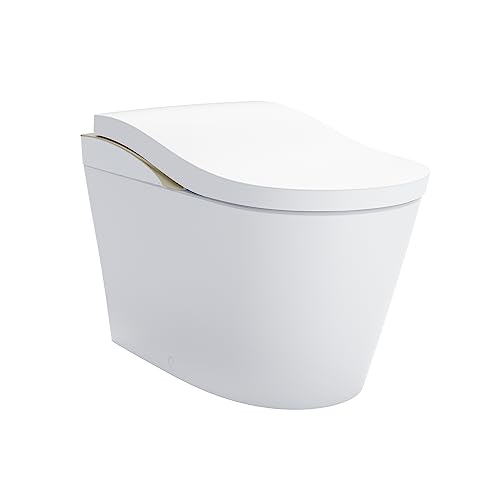
A luxury bidet is judged on a different set of criteria than a standard seat: automatic lid function, a full remote-controlled preset…
Read the guide