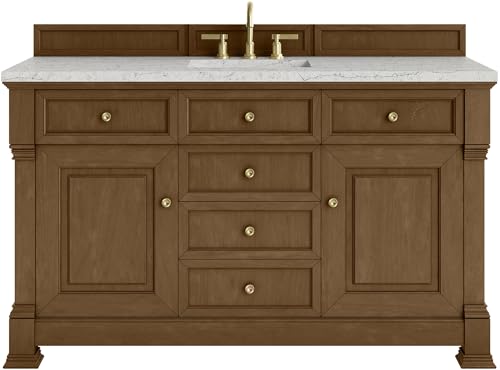
Best Victorian Bathroom Vanities (2026)
Bathroom Remodeling4.6
A curated ranking of furniture-style bathroom vanities with carved corbels, turned legs and raised-panel doors that pair authentic 19th-century looks with real…
Read the guideChinese-influenced bathroom vanities favor rich lacquered dark-wood-adjacent finishes, ornate symmetrical cabinet detailing, and deep red or gold hardware accents. This guide ranks the vanities that bring that formal, richly finished look into a modern bathroom.
Research updated June 2026.
A 36-inch freestanding vanity in a rich dark espresso or black lacquer finish, with symmetrical raised-panel cabinet doors and gold or brushed-brass hardware, is the strongest match for a Chinese-influenced bathroom. Pair it with a round vessel sink and matching gold-toned faucet for the most cohesive formal look.
| Model | Style Fit | Key Spec | Best For | Check Price |
|---|---|---|---|---|
| 36-Inch Dark Espresso Lacquer Vanity | Rich lacquer, symmetrical panels | 36 in, freestanding, 2-door | Best overall Chinese-style vanity | Check price |
| Black Lacquer Vanity with Gold Hardware | High-gloss black, gold accents | 30 in, freestanding, 1-door | Best small-bathroom pick | Check price |
| 48-Inch Dark Walnut Double-Door Vanity | Deep walnut tone, symmetrical doors | 48 in, freestanding, 4-door | Best for wider bathrooms | Check price |
| Red Lacquer Accent Vanity | Deep red lacquer statement piece | 30 in, freestanding, 1-door | Best bold accent color | Check price |
| Floating Dark Wood Vanity, Gold Pulls | Wall-mounted, symmetrical drawers | 32 in, floating, soft-close | Best space-saving floating vanity | Check price |
| 24-Inch Espresso Powder Room Vanity | Compact dark lacquer-adjacent finish | 24 in, freestanding, 1-door | Best budget compact pick | Check price |
A Chinese-influenced vanity centers on a rich lacquered finish, typically a deep espresso, black, or dark walnut tone, sometimes accented with a bold red panel or drawer front, paired with symmetrical raised-panel cabinet doors and warm gold or brushed-brass hardware. The overall proportions tend to be formal and balanced rather than asymmetrical or heavily distressed.
The lacquer finish itself is the defining detail: a smooth, high-sheen or satin-lacquered surface reads as more formal and richly finished than a matte painted or reclaimed-wood cabinet. Symmetry in the door and drawer layout, evenly spaced panels with matching pulls on either side of a centered sink or mirror, reinforces the formal balance associated with the style.
Gold or brushed-brass hardware is the accent that ties the look together, echoing the gold detailing common in Chinese decorative art. Chrome or brushed-nickel pulls read as cooler and more contemporary, which can work against the warmth the lacquer finish is meant to convey.
A freestanding vanity with substantial, symmetrical cabinetry is the more traditional match for this style, giving the room a grounded, formal presence. A floating vanity can still work if it keeps the same lacquered finish and symmetrical drawer layout, offering a slightly more contemporary interpretation while retaining the rich color and gold hardware.
Floating vanities also make practical sense in smaller bathrooms, since the visible floor space beneath the cabinet can make a compact room feel less cramped, without giving up the lacquered finish and formal proportions that define the look.
A round vessel sink with a tall gold or brushed-brass faucet is the most natural pairing, echoing the circular symmetry and warm metal accents associated with the style. An undermount oval basin with a matching gold-finished faucet is a slightly lower-profile alternative that still keeps the formal, coordinated look.

This 36-inch freestanding vanity is the pick we recommend first for a Chinese-influenced bathroom, its rich espresso lacquer finish and symmetrical two-door cabinet delivering the formal, richly finished presence the style calls for.
The symmetrical two-door layout keeps the cabinet balanced on either side of a centered sink, and the espresso lacquer finish gives the surface a depth and sheen that a flat matte paint cannot match. Swapping the stock hardware for gold or brushed-brass pulls completes the accent detailing associated with the style.
Owner reviews describe the lacquer finish as holding up well to daily bathroom humidity when properly sealed, with the symmetrical door layout praised for its balanced look. As a freestanding floor-mounted cabinet, it needs adequate floor space and is not suited to a compact powder room.
For a primary bathroom built around this style, this vanity's espresso lacquer and symmetrical panels are the strongest foundation to build from. Add gold hardware and a round vessel sink to complete the look.

This 30-inch black lacquer vanity ships with gold hardware included, giving a smaller bathroom the high-contrast, richly finished look in a compact single-door footprint.
The high-gloss black lacquer creates strong contrast against gold hardware and a white sink, a bolder interpretation of the style than the softer espresso tones, and the compact 30-inch single-door footprint fits a smaller bathroom without sacrificing the formal finish quality.
Owners note the included gold hardware saves the step of sourcing matching pulls separately, and the high-gloss finish photographs well. Storage is limited to one interior shelf, which is a real constraint for a shared or family bathroom.
When floor space is tight but the black-and-gold look is the priority, this vanity delivers a complete, coordinated finish and hardware package without needing to source pulls separately.

This 48-inch vanity spreads a symmetrical four-door layout across a wider footprint in a deep walnut finish, giving a larger primary bathroom substantial storage without sacrificing the formal, balanced design.
The four-door layout mirrors perfectly on either side of a centerline, whether topped with a single wide sink or two separate basins, keeping the formal symmetry intact at a larger scale. The deep walnut finish offers a warmer alternative to the higher-contrast black lacquer option above.
Owner reviews highlight the generous storage and the balanced, symmetrical look across the full width. At 48 inches it needs a genuinely wide bathroom footprint, so measure available wall space carefully before ordering.
For a wider primary bathroom, especially one with a double-basin setup, this vanity's symmetrical four-door layout and deep walnut finish scale the style up without losing the formal balance that defines it.

This 30-inch vanity in a deep red lacquer finish is the boldest pick on this list, using the red accent tone most directly associated with Chinese-influenced color palettes as the cabinet's primary finish rather than a small detail.
Where the espresso and walnut options above lean on a subtler warm dark tone, this vanity commits fully to the deep red lacquer that is the most direct color reference in the style, best balanced with a white round sink and gold hardware so the red does not overwhelm a smaller room.
Owners describe it as a genuine conversation piece in a powder room, with the lacquer finish holding its color well. As a bold statement color, it is best reserved for a secondary bathroom rather than a primary space used daily by the whole household.
For a powder room or guest bath where a bold statement is welcome, this red lacquer vanity is the most direct expression of the style's signature accent color, best balanced with white fixtures and gold hardware.

This 32-inch wall-mounted floating vanity keeps the dark, warm-toned finish and symmetrical drawer layout of the style in a space-saving format, with gold pulls included and visible floor space beneath the cabinet.
The two symmetrical soft-close drawers keep the formal, balanced layout intact while the wall-mounted format leaves the floor visible beneath, a practical benefit in a smaller bathroom that also gives the room a slightly more contemporary edge without abandoning the dark lacquer finish and gold hardware.
Owners like the easy-to-clean floor space and the soft-close drawer mechanism. Wall-mounted installation requires studs or blocking rated for the vanity's weight plus a loaded countertop, so professional installation is recommended over DIY in most cases.
For a smaller bathroom that wants the dark, warm-toned finish and gold hardware without a full freestanding footprint, this floating vanity is the space-saving option that keeps the formal drawer symmetry intact.

This 24-inch espresso-finished vanity is the most accessible entry point on this list, offering a compact single-door cabinet in a warm dark tone that suits a small powder room on a tighter budget.
At 24 inches wide, this vanity fits a compact powder room where the larger espresso and walnut vanities on this list would not, while still using a warm dark finish tone consistent with the broader style. Swapping in gold pulls after purchase is a simple, low-cost way to complete the accent detailing.
Owner reviews describe it as a solid value pick for a secondary bathroom, with the dark finish reading well against white fixtures. The stock hardware is a basic finish rather than gold, so budget for a hardware swap if matching the full aesthetic matters.
For a small powder room on a tighter budget, this vanity's compact footprint and warm dark finish get most of the way to the style, and swapping in gold pulls afterward closes the gap affordably.
A 36-inch freestanding vanity in a dark espresso lacquer finish with symmetrical two-door cabinetry is the strongest overall pick, especially when paired with gold hardware and a round vessel sink.
No. Deep espresso and dark walnut tones are just as consistent with the style as black or red, and are often easier to live with in a primary bathroom used daily. Red and black lacquer finishes make bolder statement pieces well suited to powder rooms.
Warm gold or brushed brass is the classic accent finish for this style. Chrome and brushed nickel read as cooler and more contemporary, which can work against the warmth of a lacquered cabinet finish.
Freestanding is the more traditional, grounded choice, while a floating vanity offers a space-saving, slightly more contemporary interpretation that still works if the finish and hardware stay consistent with the rest of the style.
A dark stone or solid-surface countertop in a complementary tone works well beneath an undermount sink, while a lighter stone top can provide contrast beneath a round vessel sink sitting above the counter.
Wipe up standing water promptly and avoid abrasive cleaners on the lacquered surface. A properly sealed lacquer finish resists humidity reasonably well, but prolonged water exposure at the base or around the sink cutout can still cause damage over time.
A round vessel sink is the most direct match for the style's emphasis on formal symmetry, while an oval undermount basin is a lower-profile alternative that still keeps the balanced, formal look.
A lighter wood tone moves the look further from the rich, deep lacquer finish that defines this style. For the most authentic result, a dark espresso, black, walnut, or red lacquer finish is recommended over a lighter wood cabinet.
A 24 to 30-inch vanity suits a powder room or small secondary bathroom, while 36 to 48-inch vanities work better in a primary bathroom, especially one with a double-basin layout. Measure available wall space before ordering.
Most freestanding vanities in this style ship partially assembled or require final assembly of doors and hardware. Confirm assembly requirements and delivery dimensions before ordering, especially for larger 48-inch models.
The 36-inch dark espresso lacquer vanity is the strongest overall foundation for a Chinese-influenced bathroom, delivering the formal, richly finished look at a size that suits most primary bathrooms. The black lacquer vanity with included gold hardware is the best compact, high-contrast pick, the 48-inch walnut vanity scales the look up for wider double-basin bathrooms, and the red lacquer vanity makes the boldest statement for a powder room. Whichever cabinet you choose, pair it with gold or brushed-brass hardware and a round vessel sink for the most cohesive result.
How we rank & our data sources
We do not run physical lab tests. Rankings are built from published, verifiable data and real owner feedback, never paid placement.
Researched by admin · Last updated July 3, 2026 · Our review method
A curated ranking of furniture-style bathroom vanities with carved corbels, turned legs and raised-panel doors that pair authentic 19th-century looks with real…
Read the guideCrooked, uneven, or misaligned vanity doors are almost never a sign the cabinet needs replacing. Nearly every modern vanity uses concealed hinges…
Read the guide
A curated ranking of pedestal, console and vitreous china sinks with ornate, high-relief period-correct shapes for a true 19th-century bathroom.
Read the guide