
Best 30-Inch Bathroom Vanities (2026)
Bathroom Remodeling4.6
Thirty inches is the sweet spot between a cramped 24-inch vanity and a full 36-inch cabinet, giving a single-sink bathroom real drawer…
Read the guideClawfoot and freestanding cast iron and acrylic tubs with the deep, curved profile of a genuine 1900s through mid-century bathroom centerpiece.
The best retro bathtub is the Kingston Brass Aqua Eden Cast Iron Clawfoot Tub, a genuine cast iron double-slipper clawfoot tub with a deep soaking profile and ball-and-claw feet, the most period-accurate combination of material and silhouette available.
| Model | Style Fit | Key Spec | Best For | Check Price |
|---|---|---|---|---|
| Kingston Brass Aqua Eden Cast Iron Clawfoot Tub | Ball-and-claw feet, deep soak | Cast iron, double-slipper | Best overall retro tub | Check price |
| Kingston Brass Aqua Eden Acrylic Clawfoot Tub | Classic clawfoot silhouette | Acrylic, lightweight | Best lightweight clawfoot | Check price |
| Kingston Brass Aqua Eden Slipper Clawfoot Tub | Single-slipper raised back | Cast iron | Best for reclined soaking | Check price |
| Kingston Brass Aqua Eden Freestanding Oval Tub | Rounded oval, pedestal base | Acrylic | Best non-clawfoot retro shape | Check price |
| Kingston Brass Aqua Eden Small Clawfoot Tub | Compact clawfoot proportions | Cast iron, 54-inch | Best small-bathroom clawfoot | Check price |
A retro bathtub is defined almost entirely by two things: the clawfoot silhouette, a deep oval basin raised on decorative feet, and the material underneath, historically cast iron coated in enamel. Every pick here keeps that basic profile while offering a choice between genuine cast iron, which delivers the same substantial weight and heat retention as the originals, and acrylic, a modern material that reproduces the same curved shape at a fraction of the weight and cost. Neither material is more or less "retro" on its own; the choice comes down to how much weight your floor and installers can handle.
A retro or vintage-styled bathtub uses a deep, curved oval basin raised off the floor on decorative feet, most commonly ball-and-claw feet, a silhouette that dates to the late 1800s and remained the standard tub shape through the mid-century era. The raised, freestanding profile, rather than a built-in rectangular alcove tub, is the clearest visual signal of a retro bathroom.
Cast iron is the historically accurate material and offers superior heat retention, keeping bath water warm longer, but it is heavy and may require floor reinforcement. Acrylic reproduces the identical clawfoot shape at a fraction of the weight and cost, making it easier to install in upper-floor bathrooms, though it retains heat less well than cast iron.
A standard clawfoot tub has a level rim all the way around. A slipper tub raises one end of the rim into a sloped backrest for reclined soaking, and a double-slipper tub raises both ends symmetrically. All three use the same clawfoot base and material options, and the choice comes down to how you prefer to sit while bathing.
Yes, most clawfoot tubs need either a deck-mounted faucet that sits on the tub's own rim or a freestanding floor-mount faucet, rather than a standard wall-mount faucet used on built-in tubs. See our guide to the best retro bathtub faucets and showerheads of 2026 for compatible options.

The Aqua Eden cast iron double-slipper is the tub we recommend first for the most historically accurate retro bathroom, built from genuine cast iron with a porcelain enamel interior and classic ball-and-claw feet, delivering the deep soak and heat retention of a true period tub.
The Aqua Eden cast iron clawfoot uses the same basic manufacturing approach as historical tubs, an iron shell coated inside with fired porcelain enamel, which is why it holds heat noticeably longer than acrylic and delivers the same dense, solid feel of a genuine antique tub. The double-slipper design raises both ends of the rim into a sloped backrest, letting two people or one person shifting position soak comfortably, and the ball-and-claw feet are the single most recognizable retro tub detail.
Owners consistently praise how long the water stays warm compared to any acrylic tub they have owned, and the enamel finish is durable against scratching with normal use. The tradeoff is weight: at 350 to 450 pounds empty, it typically needs at least two installers and, in older or upper-floor construction, a structural check before installation. For a ground-floor bathroom built around a genuine period centerpiece, it is the standout.
If floor support is not a concern, this is the tub we recommend without hesitation for a truly authentic retro bathroom. The heat retention alone is noticeably better than acrylic, and cast iron simply has a permanence that acrylic cannot replicate. Just plan the installation crew and confirm your subfloor can handle the weight before you order.

The acrylic version of the Aqua Eden clawfoot reproduces the identical curved silhouette and claw-foot base in a fiberglass-reinforced acrylic shell that weighs a fraction of cast iron, making it practical for upper-floor bathrooms and easier one- or two-person installs.
The acrylic shell is molded to match the same deep, curved clawfoot profile as the cast iron version, down to the same ball-and-claw foot styling, but the fiberglass-reinforced construction weighs dramatically less. That makes it a realistic option for second-floor bathrooms where a cast iron tub would require costly structural work, and it is easier to maneuver through doorways and up stairs during installation.
Owners value that it delivers essentially the same visual impact as cast iron at a much lower installation burden, and that acrylic retains a smoother, warmer-to-the-touch surface than enamel-coated iron. Acrylic does lose heat somewhat faster than cast iron, so baths may need a top-off of hot water on longer soaks. For most homes without a structural engineer on speed dial, it is the more practical choice.
For the vast majority of retro bathroom remodels, especially anywhere above the ground floor, we actually recommend starting here rather than with cast iron. You get the identical silhouette and foot styling, and the weight savings solve the single biggest practical obstacle to a clawfoot tub.
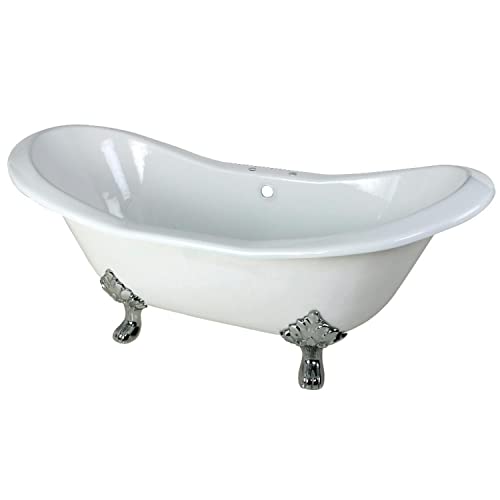
The slipper clawfoot raises just one end of the rim into a sloped backrest, giving a more pronounced recline than a standard or double-slipper tub, in genuine cast iron with the classic claw-foot base.
The single-slipper design slopes only one end of the tub into a raised backrest, creating a more dramatic recline angle than the double-slipper's symmetrical curve. It is built on the same cast iron and porcelain enamel construction as the standard clawfoot, keeping the heat retention and substantial weight of genuine iron, with the classic ball-and-claw feet underneath.
Owners who bathe alone particularly favor the deeper recline of the single-slipper shape, finding it more comfortable for a long soak than a level-rim tub. Because only one end is raised, it is less suited to two people bathing together, in which case the double-slipper is the better layout. It carries the same weight considerations as any cast iron clawfoot tub.
For a primary bathroom used mostly by one person who actually wants to soak rather than just bathe, the single-slipper's steeper recline is genuinely more comfortable than a level-rim tub. It is a small design difference that makes a real difference in daily use.
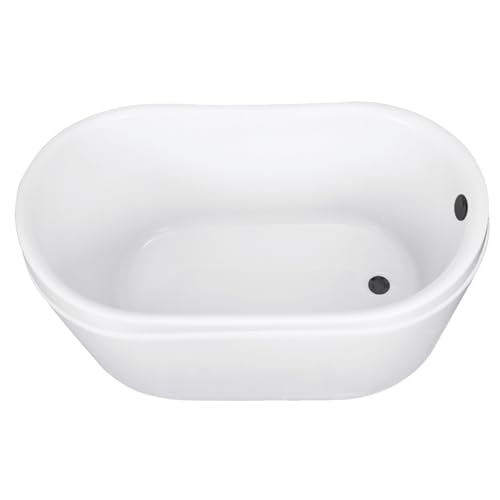
The freestanding oval tub keeps the deep, rounded retro basin shape but sits on a solid pedestal base rather than decorative feet, a look that reads as vintage-adjacent without the fully ornate clawfoot statement.
This freestanding oval tub keeps the deep, rounded basin shape that reads as classic and vintage-adjacent, but replaces the exposed decorative feet with a solid pedestal base, giving a cleaner transitional look that still stands apart from a built-in alcove tub. It is molded from acrylic, keeping installation light and manageable.
Owners who want a freestanding statement tub but find fully ornate clawfoot feet too literal for their bathroom's overall style like this middle-ground option. Buyers specifically chasing the ball-and-claw foot detail should choose the standard or slipper clawfoot tubs instead, since this design intentionally omits it.
Not every retro-leaning bathroom wants the full ornate clawfoot statement. This pedestal oval tub is what we suggest when a buyer wants a rounded, freestanding centerpiece that reads warm and classic without committing to decorative feet.

This 54-inch clawfoot tub compresses the same cast iron construction and ball-and-claw feet into a shorter length, built for bathrooms that cannot accommodate a full 67-inch tub.
At 54 inches, this tub is noticeably shorter than the standard 67-inch clawfoot length, purpose-built for smaller bathrooms or secondary baths where a full-size tub simply will not fit through the door or clear the room. It keeps the same cast iron shell, porcelain enamel interior and ball-and-claw feet as the larger models, so the retro look is not compromised, just the length.
Owners with small or older-home bathrooms specifically value getting genuine cast iron and the full clawfoot look without needing to expand the room. Taller bathers who want to stretch out fully should measure carefully, since the reduced length limits how far you can extend your legs compared to a full-size tub.
When a genuinely small bathroom rules out a standard-length clawfoot tub, this compact version is the way to keep the authentic cast iron look rather than switching materials or abandoning the clawfoot concept entirely.
A retro bathtub uses a deep, curved oval basin raised on decorative feet, most commonly ball-and-claw feet, a freestanding silhouette dating to the late 1800s that remained standard through the mid-century era. This raised, freestanding profile is the clearest visual signal, distinct from a built-in rectangular alcove tub.
Cast iron is the historically accurate material and was used in genuine period tubs, offering superior heat retention and a substantial, solid feel. Acrylic reproduces the identical shape and foot styling at a fraction of the weight and cost, making it the more practical choice for many modern installations.
A cast iron clawfoot tub typically weighs in the range of 350 to 450 pounds empty, and significantly more once filled with water and a bather. This weight is the main reason many buyers choose acrylic instead, especially for upper-floor bathrooms or older homes with lighter framing.
It depends on your existing floor framing and the tub's location. Ground-floor bathrooms with a slab or well-supported joist system often handle a cast iron tub without modification, while upper-floor installations in older homes should be evaluated by a structural professional before ordering.
A standard clawfoot tub has a level rim all the way around. A slipper tub raises one end into a sloped backrest for a deeper recline, and a double-slipper tub raises both ends symmetrically, suiting two bathers or someone who shifts position during a soak.
Clawfoot tubs typically use either a deck-mounted faucet that attaches to the tub's own rim or a freestanding floor-mount faucet positioned beside the tub, rather than a standard wall-mount faucet. See our guide to the best retro bathtub faucets and showerheads of 2026 for compatible options.
Yes, with an add-on shower ring and curtain rod kit designed for freestanding tubs, along with a deck-mount or wall-mount faucet that includes a diverter and riser. This is a common retrofit for clawfoot tubs that were not originally designed for showering.
Cast iron retains heat noticeably longer than acrylic thanks to its density and thermal mass, so bath water stays warm for a longer soak. Acrylic loses heat somewhat faster, so a long bath may need a top-off of hot water partway through.
Ball-and-claw feet are typically available in finishes matching common faucet finishes, including polished chrome, brushed nickel, oil-rubbed bronze and matte black, letting you coordinate the feet with your faucet and other bathroom hardware.
A cast iron clawfoot tub generally needs at least two people to maneuver safely due to its weight, and professional installers are recommended given the plumbing connections involved. An acrylic clawfoot tub is light enough that installation is more manageable, though professional plumbing hookup is still advised.
Standard-length clawfoot tubs around 67 inches accommodate most adult bathers comfortably, though a slipper design's sloped backrest can reduce usable length slightly. Buyers over about 6 feet tall should check the tub's interior length specification, not just its overall exterior length, before choosing between a standard and compact model.
Drain and overflow assemblies are sometimes sold separately from the tub itself, so check the listing carefully. Confirm whether a matching drain kit, often available in the same finish as the feet, is included or needs to be purchased alongside the tub.
For the most historically accurate retro bathtub, the Kingston Brass Aqua Eden Cast Iron Clawfoot Tub wins on genuine cast iron construction, ball-and-claw feet and a deep double-slipper soak. Choose the acrylic clawfoot version if weight or an upper-floor install is a concern, the single-slipper for a deeper solo recline, the freestanding oval for rounded curves without ornate feet, and the 54-inch compact clawfoot for a small bathroom. Confirm your subfloor can support a cast iron tub before ordering, or choose acrylic to sidestep the question entirely.
Thirty inches is the sweet spot between a cramped 24-inch vanity and a full 36-inch cabinet, giving a single-sink bathroom real drawer…
Read the guide
Cast iron is the material homeowners choose when heat retention and permanence matter more than installation weight, and Kohler remains the brand…
Read the guideStep-by-step fixes for the bathroom vanity problems that show up most often, from misaligned drawers and doors to water damage at the…
Read the guide