
Best 30-Inch Bathroom Vanities (2026)
Bathroom Remodeling4.6
Thirty inches is the sweet spot between a cramped 24-inch vanity and a full 36-inch cabinet, giving a single-sink bathroom real drawer…
Read the guideRounded pedestal and wall-mount basins with mid-century curves and warm vitreous china, built on modern plumbing so the look never comes at the cost of durability.
The best retro bathroom sink is the Kohler Caxton Pedestal Sink, a rounded vitreous china basin on a slim pedestal base that captures the classic mid-century silhouette while fitting standard 4-inch centerset or single-hole faucets.
| Model | Style Fit | Key Spec | Best For | Check Price |
|---|---|---|---|---|
| Kohler Caxton Pedestal Sink | Rounded mid-century pedestal | Vitreous china | Best overall retro sink | Check price |
| American Standard Ovalyn Drop-In Sink | Rounded oval basin | Vitreous china, drop-in | Best for a retro vanity top | Check price |
| Kohler Wellworth Pedestal Sink | Simple rounded pedestal | Vitreous china | Best budget pedestal | Check price |
| American Standard Colony Pedestal Sink | Classic rounded pedestal | Vitreous china | Best compact retro pedestal | Check price |
| Kingston Brass Fauceture Wall-Mount Sink | Rounded wall-mount basin | Vitreous china | Best wall-mount retro look | Check price |
| Kohler Verticyl Round Vessel Sink | Rounded above-counter bowl | Vitreous china, vessel | Best vessel-style retro sink | Check price |
| American Standard Cadet Undermount Sink | Rounded oval undermount | Vitreous china | Best undermount retro basin | Check price |
A retro bathroom sink is defined less by ornamentation than by silhouette: rounded, soft-cornered basins on a slim pedestal or set into a rounded oval, the shape that dominated bathrooms from the 1940s through the 1960s before rectangular vessel and trough sinks took over. Every pick here uses vitreous china, the same dense, glass-hard fired ceramic that period sinks were made from, so the material reads authentically and holds up to decades of daily use without staining or dulling.
A retro bathroom sink uses a rounded, soft-cornered basin, most often on a pedestal base, made from glossy vitreous china in white or a period pastel tone. The rounded oval or circular bowl shape, rather than the sharp rectangular lines of contemporary vessel sinks, is the clearest visual signal of 1940s through 1960s styling.
A pedestal sink is the more period-accurate choice and was the standard fixture through the mid-century era, exposing the plumbing and opening up visual space in a small bathroom. A rounded drop-in or undermount basin set into a vanity gives up some period accuracy in exchange for storage, and works well when paired with a retro-styled vanity front.
Vitreous china, a dense ceramic fired at high temperature until it becomes glass-hard and non-porous, was the standard material for mid-century bathroom sinks and remains the standard today. Every sink in this guide uses vitreous china, so the material is identical to the original era, not a modern substitute.
Yes. The pedestal sinks in this guide are drilled for standard single-hole, 4-inch centerset or 8-inch widespread faucets, the same configurations used on any modern sink, so they pair with both genuinely retro-styled faucets and standard modern faucets without any special adapters.

The Caxton is the pedestal sink we recommend first for a genuine retro look, with a rounded oval basin and a slim tapered pedestal that mirrors the proportions of classic mid-century fixtures, cast in dense vitreous china.
The Caxton's basin uses a rounded, gently oval bowl that avoids the sharp rectangular geometry of contemporary sinks, set atop a slim tapered pedestal that narrows toward the floor in the same proportion classic mid-century pedestals used. The vitreous china is glazed to a high gloss that resists staining and scratching over decades, and the sink is drilled for either a single-hole or 4-inch centerset faucet, so it pairs easily with both retro-styled and modern faucets.
Owners consistently praise how closely the silhouette matches genuine vintage pedestal sinks, and the glaze quality holds up well to hard water and daily cleaning. The tradeoff is inherent to any pedestal sink: there is no cabinet or countertop storage, and the pedestal needs secure wall-stud anchoring behind the drywall for stability. For a bathroom prioritizing the authentic retro look over storage, it is the standout.
The Caxton is what we recommend when a buyer wants a pedestal sink that actually reads as period-correct rather than a generic modern pedestal with a vaguely rounded bowl. The taper and basin proportions are close to genuine mid-century fixtures. Just confirm your wall has solid backing for the pedestal mount before installing.

The Ovalyn is a rounded oval drop-in basin that sets into a vanity countertop, giving buyers the soft mid-century curve of a retro sink while keeping the storage space a pedestal gives up.
The Ovalyn's rounded oval shape delivers the same soft-cornered visual language as a retro pedestal sink, but it drops into a standard vanity countertop cutout, so it keeps the under-sink cabinet storage that a pedestal sacrifices. It is one of the most widely stocked basin shapes in the American Standard lineup, which also means matching parts and vanity cutout templates are easy to find.
Owners like that it delivers a warm, rounded look without giving up storage, and the self-rimming lip makes for a straightforward drop-in install over an existing or new vanity cabinet. Buyers most focused on period accuracy may still prefer a true pedestal, since a drop-in basin sits within a vanity top rather than standing alone.
When storage is non-negotiable but the household still wants that rounded retro basin shape, the Ovalyn is the easy answer. Pair it with a wood-toned or curved-front vanity for the fullest mid-century effect.

The Wellworth delivers a simple, rounded pedestal silhouette at a lower price than the Caxton, making it the practical entry point for a retro pedestal look without the premium of Kohler's higher-tier lines.
The Wellworth strips the pedestal formula down to a simpler, more rounded profile than the Caxton's tapered sculpting, at a meaningfully lower price. It still delivers vitreous china construction and the exposed-pedestal silhouette that reads as retro, just without the extra design detailing of Kohler's premium lines.
Owners value getting a genuine Kohler pedestal sink with reliable glaze quality at an accessible price, which makes it popular for rental properties and budget remodels. Buyers who want the most sculpted, period-specific pedestal shape should compare it against the Caxton before deciding.
For flips and rentals where budget matters more than sculptural detail, the Wellworth gets the rounded pedestal look at a fair price without sacrificing the vitreous china durability that makes any pedestal sink worth buying.
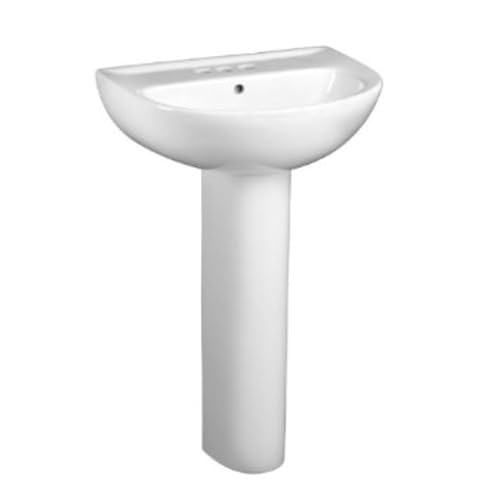
The Colony is a smaller-footprint pedestal sink with the same rounded classic proportions as larger retro pedestals, sized to fit powder rooms and tight half baths where a full-size basin will not clear.
The Colony keeps the same rounded classic pedestal shape as larger retro sinks but in a reduced footprint, purpose-built for powder rooms and half baths where clearance is limited. The proportions are scaled down evenly rather than simply cropped, so it still reads as a genuine period silhouette rather than a shrunken afterthought.
Owners with small guest bathrooms specifically choose it for fitting comfortably in tight spaces while keeping the retro pedestal look consistent with the rest of the home. For a primary bathroom with more square footage, the Caxton or Wellworth give a fuller-scale basin.
When a powder room is genuinely tight on space, the Colony is the pedestal we recommend, since it keeps the rounded retro look without the overhang problems a full-size pedestal creates in a cramped half bath.

The Fauceture wall-mount sink skips the pedestal entirely, bolting a rounded basin directly to the wall, an even earlier-era look than a pedestal sink that suits industrial-adjacent or true vintage bathroom remodels.
A wall-mount sink bolts to a concealed wall bracket with no pedestal or cabinet beneath it, leaving the plumbing visible below the basin, the same treatment used in genuine early-to-mid-century bathrooms before pedestals became standard. It opens up the most floor space of any option here, which suits very small or accessibility-focused bathrooms.
Owners choose it specifically for the openness it creates in a small footprint and for the distinctly vintage, slightly utilitarian look of exposed plumbing beneath a rounded basin. Buyers who prefer plumbing concealed should choose a pedestal sink instead, since a wall-mount leaves the trap and supply lines visible unless dressed with a cover.
Wall-mount sinks are a slightly bolder retro move than a pedestal, since the plumbing stays visible. We recommend it for very small bathrooms or accessibility-focused remodels where floor clearance matters as much as the look.

The Verticyl is a rounded above-counter vessel basin that pairs a genuinely circular, mid-century-adjacent bowl shape with the above-counter format popular in more contemporary bathrooms.
Unlike a true recessed or pedestal retro sink, the Verticyl sits entirely on top of the counter as a rounded bowl, a format that was rare in genuine mid-century bathrooms but shares the same circular geometry that reads as retro-adjacent today. It works best in a bathroom blending vintage curves with a more modern above-counter presentation.
Owners like that the round shape becomes a visual focal point on the vanity and pairs naturally with a tall vessel faucet like the Pfister Kenzo. Buyers chasing strict period accuracy should choose a pedestal or wall-mount basin instead, since true vessel sinks were not common in the mid-century era.
The Verticyl is the pick when a buyer wants circular, retro-adjacent curves but is building a more contemporary bathroom overall. It borrows the round geometry without committing to a full period pedestal look.

The Cadet undermount sink mounts beneath a stone or solid-surface vanity top, keeping the rounded oval basin shape visible while giving the counter a clean, rimless edge that still reads soft and classic.
The Cadet mounts beneath the vanity's countertop cutout, so the counter material forms the visible rim instead of the basin's own edge, giving a cleaner look that still keeps the rounded oval basin shape at the center of the design. It requires a stone, quartz or solid-surface countertop capable of supporting undermount clips, unlike a drop-in basin that can sit on any material.
Owners with stone-topped retro vanities like that there is no rim to trap water and grime, making cleanup faster than a drop-in sink. It is not compatible with laminate countertops, which lack the structural support undermount hardware needs, so confirm counter material before choosing this over the Ovalyn.
For a higher-end retro remodel with a stone vanity top, the Cadet undermount gives the cleanest possible presentation of that rounded basin shape. Skip it if your counter is laminate, since it will not have the support undermount clips need.
A retro bathroom sink uses a rounded, soft-cornered oval or circular basin, most often on a pedestal, made from glossy white vitreous china. The rounded bowl shape, rather than sharp rectangular geometry, is the clearest visual cue of 1940s through 1960s styling.
Yes, a pedestal sink is the more period-accurate choice, since it was the standard bathroom fixture through the mid-century era before vanities with storage became common. A rounded drop-in basin set into a vanity gives up some period accuracy but keeps cabinet storage.
Vitreous china, a dense fired ceramic that becomes glass-hard and non-porous, was the standard material for mid-century bathroom sinks and remains standard today. Every sink in this guide uses vitreous china, matching the original material exactly rather than a modern substitute.
No, a pedestal sink has no storage space, since the pedestal exists purely to support the basin and conceal the plumbing trap. Buyers who want the rounded retro basin shape with storage should choose a drop-in or undermount sink set into a vanity instead.
Most retro pedestal sinks are drilled for a standard single-hole or 4-inch centerset faucet, the same configurations used on modern sinks, so they pair with both retro-styled and contemporary faucets without special adapters.
A pedestal sink must be anchored into wall studs or blocking behind the drywall, not just resting on the pedestal base, since the wall bracket bears most of the basin's weight and the water load when in use. Always confirm stud placement before installing and use the manufacturer's specified mounting hardware.
Yes, a wall-mount sink is often the best choice for a very small bathroom, since it has no pedestal or cabinet base and opens up the most floor clearance of any sink type. The tradeoff is that the plumbing trap and supply lines remain visible beneath the basin.
Most current production retro-styled sinks are offered primarily in white vitreous china, which was also the dominant color in the genuine mid-century era, though some specialty and vintage-reproduction lines offer pastel tones like seafoam or pink to match period-specific tile.
A drop-in sink has a visible rim that sits on top of the countertop cutout and can mount on any counter material. An undermount sink attaches beneath the counter with the countertop material forming the edge, giving a cleaner look but requiring a stone, quartz or solid-surface counter to support the mounting hardware.
Somewhat. A pedestal sink requires precise wall-stud anchoring for the basin bracket in addition to the standard drain and supply line connections, while a drop-in vanity sink simply sets into a countertop cutout. Both are manageable do-it-yourself projects, but pedestal installs benefit more from a level and stud finder.
Vitreous china is highly resistant to staining and scratching thanks to its glass-hard glazed surface, but like any ceramic fixture it can chip from a sharp impact. Avoid dropping heavy or sharp objects directly into the basin, and clean with non-abrasive cleaners to preserve the glaze long-term.
A cross-handle or rounded lever faucet in polished chrome, brushed nickel or oil-rubbed bronze pairs most naturally with a retro pedestal sink's curves. See our guide to the best bathroom faucets of 2026 for finish and mount options that complement a rounded basin.
For the most authentic retro pedestal sink, the Kohler Caxton wins on its rounded oval basin and tapered pedestal proportions. Choose the American Standard Ovalyn if you need vanity storage without giving up the rounded curve, the Kohler Wellworth for a budget pedestal, the American Standard Colony for a compact powder room, the Kingston Brass wall-mount for maximum floor clearance, the Kohler Verticyl for a contemporary vessel take, and the American Standard Cadet undermount for a stone vanity top. All use genuine vitreous china, the same material period sinks were built from.
Thirty inches is the sweet spot between a cramped 24-inch vanity and a full 36-inch cabinet, giving a single-sink bathroom real drawer…
Read the guide
Cast iron is the material homeowners choose when heat retention and permanence matter more than installation weight, and Kohler remains the brand…
Read the guideStep-by-step fixes for the bathroom vanity problems that show up most often, from misaligned drawers and doors to water damage at the…
Read the guide