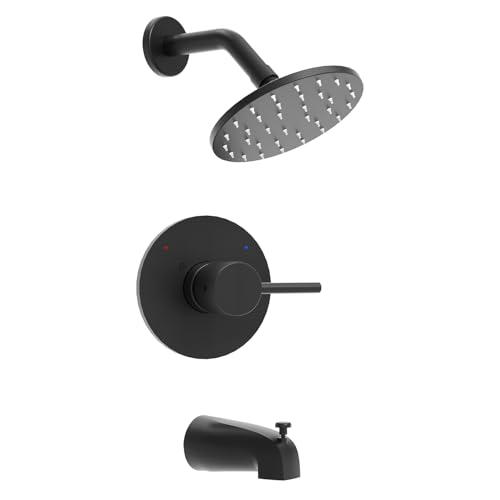
Best Water-Saving Bathtub Faucets & Showerheads (2026)
Faucets & Sinks4.6
A genuinely water-saving tub and shower setup means an EPA WaterSense-certified showerhead at 2.0 GPM or lower and a tub spout at…
Read the guideMount type, finish, flow rate, spout height and reach, and compatibility with your existing sink -- the full framework for picking a bathroom faucet you will not need to second-guess after installation.
Research updated June 2026.
Choosing a bathroom faucet comes down to five checks in order: count your sink's holes to determine mount type, measure spout reach and height against your basin and drain, pick a finish that matches your maintenance tolerance, confirm the flow rate meets WaterSense at 1.2 GPM, and verify the valve is ceramic disc rather than compression. Get the mount type right first, since it is the one variable you cannot change after buying.
A bathroom faucet looks like a simple purchase until you are standing in front of a wall of single-hole, centerset, widespread, and wall-mount options, each available in a dozen finishes and price points. The single most common mistake is buying based on looks alone and discovering at install time that the faucet does not fit the sink's hole configuration or that the spout sits too low over a vessel basin. This guide walks through the decisions in the order they actually matter, so you measure and confirm compatibility before finish and style enter the conversation.
Because this site focuses on the full bathroom ecosystem around best flushing toilets, we apply the same data-first approach to faucets: published manufacturer specifications, aggregated owner reviews, and the practical measurements that determine whether a faucet works in your specific bathroom, not just in the product photo.
The first thing to check before buying a bathroom faucet is your sink's hole count and spacing, since this determines which mount type will physically fit without drilling new holes. A single hole calls for a single-hole or centerset faucet, three holes spaced 4 inches apart call for a centerset, and three holes spaced 8 to 16 inches apart call for a widespread faucet.
Drilling new holes into an existing porcelain, fireclay, or stone sink is risky, sometimes impossible without cracking the material, and rarely worth attempting just to accommodate a faucet you liked in a photo. Measuring first and shopping second avoids this problem entirely.
A single-hole faucet mounts through one hole, typically 1-3/8 inches in diameter, with the spout and handle (or handles on a shared escutcheon) as one compact unit. This is the most common configuration in current sink manufacturing and the easiest to install, since there is only one supply connection and no deck plate to fit. Single-hole faucets are also required for vessel sinks, which almost always have one pre-drilled hole or none at all.
Centerset faucets look like a compact widespread, with two handles flanking a spout, but all three pieces mount on one integrated base that drops into a 4-inch hole spread. They fit sinks with three holes spaced exactly 4 inches center-to-center and are common in smaller bathrooms because they deliver a two-handle look at a lower cost and simpler installation than a true widespread.
Widespread faucets are three completely separate pieces, a hot handle, a cold handle, and a spout, each with its own escutcheon, connected underneath the deck by flexible hoses. Hole spacing ranges from 8 to 16 inches center-to-center, with 8 inches being the most common. Because the pieces are separate, a widespread faucet accommodates a range of spacing rather than one fixed measurement, and gives a larger vanity a more proportional, architectural look than a compact single-hole model.
If you are replacing a faucet on an existing sink and are not sure of the hole spacing, remove the old faucet first and measure directly rather than guessing from the sink's overall style. Many three-hole sinks use a deck plate to run a single-hole faucet, which is invisible once installed but changes what you actually need to measure.
| Feature | Single-Hole | Centerset (4") | Widespread (8-16") |
|---|---|---|---|
| Holes required | 1 | 3 (4" spread) | 3 (8-16" spread) |
| Handle style | Single lever or paired escutcheon | Two handles, one base | Two handles, separate bases |
| Installation difficulty | Easy | Easy to moderate | Moderate |
| Best for vessel sinks | Yes | No | No |
| Works with large vanities | OK | Limited | Best |
| Leak points | Fewest | Moderate | Most (separate supply hoses per handle) |
Measure spout reach from the center of the faucet hole to the center of the drain, since this is the minimum reach needed for water to land in the basin rather than on the rim. For a standard drop-in or undermount sink, 4 to 5 inches of reach covers most configurations. For a vessel sink, measure the rim height above the counter and add 1 to 2 inches to determine the minimum spout height you need.
On a standard undermount or drop-in bathroom sink, the basin sits close to the counter surface, so spout height is rarely an issue. Reach is the measurement that matters: too short, and water splashes against the front of the basin instead of the drain; correctly sized, and the stream lands centered over the drain opening throughout the faucet's range of motion.
A vessel sink sits on top of the counter rather than dropping into it, which means a standard-height faucet will often sit too low, forcing an awkward angle or insufficient clearance for hand-washing. Vessel-specific faucets are built taller, typically with 6 to 12 inches of spout height, specifically to clear the raised rim. Measure your vessel's height above the counter and choose a faucet whose spout outlet clears that rim by at least 1 to 2 inches.
Before ordering, also check your sink deck's thickness by inserting a ruler through the mounting hole. Most standard counters run 3/4 inch to 1-3/4 inches thick. A faucet's shank needs to pass fully through the deck with enough length remaining to thread on the mounting nut from below. Unusually thick stone or double-layer countertops sometimes require an extension shank, sold separately by most major manufacturers.
A waterfall-style faucet, which produces a flat sheet of water rather than a round stream, needs a wider basin underneath to contain the flow without splashing over the sides. If you are pairing a waterfall faucet with a vessel sink, confirm the vessel's basin width against the faucet's published spout width, not just its height.
Brushed nickel and matte black are the most forgiving finishes for daily maintenance because their textured or non-reflective surfaces hide water spots and fingerprints between cleanings. Polished chrome is the most affordable and easiest to match across brands, but shows water spots immediately. PVD (physical vapor deposition) coatings, sold under various brand names, are the most durable option across any color and typically carry a lifetime finish warranty.
Every finish decision is really a tradeoff between visual maintenance and appearance. Polished chrome and polished brass look the most formal and reflective but require the most frequent wiping in a high-use bathroom. Brushed nickel and matte black hide daily wear the best, which is why they dominate current sales. Oil-rubbed bronze and unlacquered brass develop an intentional living patina over time, appealing to buyers who want the finish to evolve rather than stay static.
PVD is a vacuum-chamber process that bonds a microscopic metal alloy layer directly to the base material, producing a finish significantly harder than traditional electroplating. PVD finishes resist corrosion, tarnishing, scratching, and UV fading far better than standard plating, and are usually backed by a lifetime finish warranty rather than the 1 to 5 year warranty typical of standard plated finishes. Most premium lines from Kohler, Delta, and Moen use PVD or an equivalent hard-coat process.
If you are matching a new faucet to existing towel bars, cabinet pulls, or a toilet's trip lever finish, stay within the same manufacturer's finish family where possible. Different brands' interpretations of "brushed nickel" or "matte black" can look noticeably different side by side in natural light, even when both are accurately named.
For most residential bathrooms, there is no functional reason to pay a large premium for a finish once you have confirmed it uses PVD or an equivalent hard coating. The performance difference between a mid-range and a luxury-branded finish is almost entirely cosmetic, not a matter of how long the finish lasts.
Look for a bathroom faucet rated at 1.2 GPM (gallons per minute) and certified under EPA WaterSense, which is the practical efficiency standard for residential use and required by law in California and several other states. The federal maximum is 2.2 GPM, but a WaterSense-certified faucet performs identically for handwashing while using nearly 45 percent less water.
WaterSense certification requires faucets to pass laboratory rinse and handwashing performance tests in addition to meeting the flow-rate ceiling, so the water savings do not come at the cost of usability. The label is backed by third-party testing rather than a manufacturer's self-reported claim, which makes it a reliable shorthand when comparing faucets across brands.
Most flow rate is set by the aerator, the small removable screen at the spout tip. If you already own a higher-flow faucet, swapping in a WaterSense-rated aerator is a low-cost way to reduce water use without replacing the entire fixture. Standard aerator thread sizes are M18 x 1 male or M22 female, so confirm compatibility before purchasing a replacement.
In hard-water regions, clean or replace the aerator every 6 to 12 months. Mineral buildup inside the screen reduces flow to a trickle or causes the stream to spray unevenly long before the faucet itself has any real problem. Soaking the aerator in white vinegar for an hour clears most buildup without tools.
Ceramic disc valves are the most durable and leak-resistant option for a bathroom faucet, using two hard ceramic discs that rotate against each other with virtually no wear over a normal service life. Cartridge valves are a reliable middle ground with easy DIY replacement, while compression valves with rubber washers are found only in the lowest-cost faucets and will eventually drip as the rubber degrades.
Ceramic disc cartridges use alumina ceramic, one of the hardest non-metallic materials available, and manufacturer testing rates them for 500,000 or more open-close cycles, far beyond what any residential faucet experiences over its service life. The main maintenance point is hard water: mineral deposits can build up between the discs and cause stiffness, which a periodic vinegar flush through the valve prevents.
Cartridge valves use a sliding internal seal to control flow and rotate to control temperature. They are widely used across Moen, Delta, and American Standard lines, and full replacement cartridges are inexpensive and available directly from manufacturers, often a 15-minute DIY repair when a faucet eventually starts to drip after 10 to 15 years of use.
Ball valves use a rotating ball with ports that align to control water flow and are more common in kitchen faucets, though they appear in some bathroom models. They have more individual wear components, springs, seats, and O-rings, than a ceramic disc valve. Some manufacturers address this by pairing a ceramic disc seat inside the ball assembly, which extends service life closer to a pure ceramic disc design.
Avoid compression valves entirely if you have a choice. These use rubber washers that compress against a valve seat and are found only in the oldest or lowest-cost faucets on the market. The rubber degrades from regular use and exposure to cleaning chemicals, and a drip is a matter of when, not if.
Confirm supply line compatibility before buying: most bathroom faucets use 3/8-inch compression connections at the shutoff valve, and some faucets include supply lines while others do not, so check the package contents. Also confirm whether your faucet's mounting hardware works with your deck thickness and whether a widespread faucet's connecting hoses are long enough to reach across your specific vanity depth.
Higher-end faucets often include braided supply lines; budget models frequently do not. If yours does not, buy braided stainless steel lines with a polymer core in the correct length, most under-sink runs need 12 to 20 inches, with 3/8-inch compression fittings that match your shutoff valves. Older or non-standard shutoff valves may need replacement at the same time, which is worth budgeting for before starting the swap.
Widespread faucets route flexible hoses from each separate handle to the spout base underneath the deck. Most kits include hoses long enough for typical vanity depths, but a deeper or custom vanity may require longer hoses than what ships with the faucet. Confirm this measurement before your plumber arrives to avoid a delay mid-installation.
Every faucet specifies a maximum deck thickness it accommodates via its shank length. A thick natural stone or layered countertop can exceed a standard faucet's reach, in which case an extension shank, sold separately by most brands, solves the problem without needing a different faucet model.
For the full plumbing rough-in reference, see our bathroom plumbing rough-in guide, and for coordinating the faucet with the rest of the room's fixtures, our bathroom fixture buying guide.
In order, these are the checks that determine whether a faucet is right for your bathroom:
Price and brand should be the last filter applied, once a faucet has passed all five checks above. A faucet that fails the mount-type or reach checks is not a bargain at any price, since it will need to be returned or will perform poorly once installed.
The order matters because the first two checks are physical constraints with no workaround, while finish, flow rate, and valve type are all available across nearly every mount type and price point. Buyers who start with finish and style first are the ones who end up discovering a compatibility problem after the faucet has already shipped.
Look underneath the sink and count the mounting holes. One hole means single-hole or centerset with a deck plate. Three holes spaced about 4 inches apart means centerset. Three holes spaced 8 inches or more apart means widespread.
Yes, using a deck plate (also called a base plate or escutcheon) that covers the two unused outer holes while the faucet mounts through the center. Confirm the deck plate matches your sink's exact hole spacing before buying.
The industry standard is 1-3/8 inches (35mm) in diameter. Some premium or specialty faucets require a slightly larger 1-1/2 inch hole, and older sinks may have 1-1/4 inch holes. Always check the faucet's spec sheet before purchasing.
Most standard bathroom sinks need 4 to 5 inches of spout reach, measured from the faucet hole to the center of the drain. This works for the majority of undermount and drop-in sink configurations.
Add 1 to 2 inches of clearance to your vessel sink's rim height above the counter to find the minimum spout height needed. A vessel sitting 5 inches above the counter needs a faucet with at least 7 to 8 inches of total spout height.
Single-handle faucets are easier to install and operate with one motion, useful for quick adjustments. Double-handle faucets give more precise, repeatable temperature control, which some users prefer. Both work equally well with a ceramic disc valve, so the choice is largely personal preference and hole configuration.
Brushed nickel and matte black are the easiest to maintain because their textured or non-reflective surfaces hide water spots and fingerprints between cleanings. Polished chrome and polished brass show spots almost immediately and need more frequent wiping.
For a faucet expected to see daily use for 15 or more years, PVD finish is worth the modest premium, since it resists corrosion, scratching, and fading far better than standard plating and typically carries a lifetime finish warranty rather than a 1 to 5 year one.
Ceramic disc valves are the most durable and leak-resistant, rated for 500,000 or more cycles by manufacturer testing. Cartridge valves are a reliable, easily serviceable alternative. Avoid compression valves with rubber washers, which will eventually drip.
Sometimes, but not always. Higher-end faucets often include them; budget models frequently do not. Check the product listing's package contents before purchase, and buy braided stainless steel supply lines separately if needed.
No. Kitchen faucets are designed with longer spout reach and higher clearance for cookware, dimensions that do not suit a shallower bathroom sink basin and will cause splashing or awkward positioning.
Insert a ruler or similar straight edge through the mounting hole to measure how thick the counter material is at that point. Most standard counters run 3/4 inch to 1-3/4 inches. Compare this to the faucet's maximum deck thickness specification before ordering.
A waterfall faucet produces a flat sheet of water instead of a round stream and is popular with vessel sinks. It needs a wider basin to contain the flow without splashing over the sides, so confirm the vessel's basin width against the faucet's spout width before pairing them.
A faucet with a ceramic disc valve should last 15 to 25 years with normal use and basic maintenance. The limiting factors are typically finish wear in high-traffic bathrooms and mineral buildup affecting valve seating in hard-water areas.
Choosing a bathroom faucet is a measurement problem before it is a style problem. Count your sink's holes, confirm spout reach or height against your basin, then layer in finish, flow rate, and valve quality once compatibility is settled. Prioritize a ceramic disc valve, EPA WaterSense certification at 1.2 GPM, and a lifetime warranty from an established brand like Kohler, Moen, Delta, or American Standard, and the faucet you choose should perform reliably for well over a decade.
How we rank & our data sources
We do not run physical lab tests. Rankings are built from published, verifiable data and real owner feedback, never paid placement.
Researched by admin · Last updated July 3, 2026 · Our review method
A genuinely water-saving tub and shower setup means an EPA WaterSense-certified showerhead at 2.0 GPM or lower and a tub spout at…
Read the guide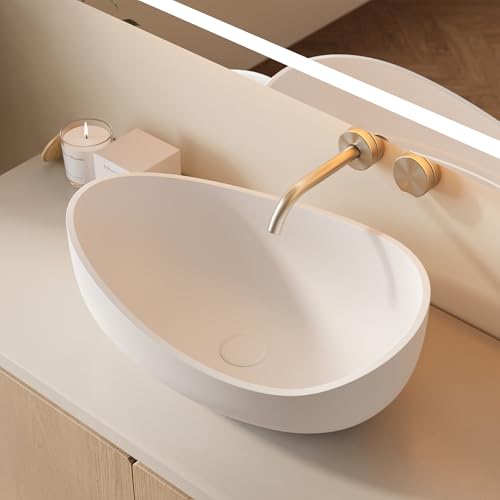
Stone resin combines crushed natural stone with a resin binder into a dense, nonporous composite that holds a matte finish and resists…
Read the guide
An accessible bathroom sink has to work for a wheelchair user rolling underneath it, an older adult who needs a stable place…
Read the guide