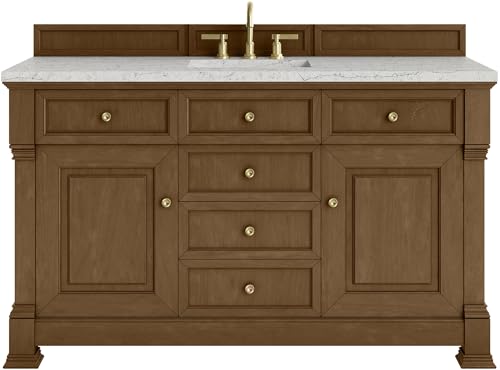
Best Victorian Bathroom Vanities (2026)
Bathroom Remodeling4.6
A curated ranking of furniture-style bathroom vanities with carved corbels, turned legs and raised-panel doors that pair authentic 19th-century looks with real…
Read the guideA curated ranking of pedestal, console and vitreous china sinks with ornate, high-relief period-correct shapes for a true 19th-century bathroom.
Research updated June 2026.
The best Victorian bathroom sink is the Kohler Memoirs Pedestal Sink, a vitreous china pedestal with a scalloped, high-relief basin edge that reads as authentically 19th-century. For a wall-mount console look, the American Standard Ravenna Console Sink leads, and the Kohler Devonshire is the best classic-curve alternative.
A Victorian bathroom sink has to solve a problem most modern sinks ignore entirely: shape. Pedestal and console sinks were the standard bathroom basin throughout the 19th and early 20th centuries, long before the built-in vanity cabinet became common, and their sculpted bowls, visible pedestal legs and ornate, integral backsplashes are what make a bathroom read as genuinely period-correct rather than simply old. Getting this right means choosing genuine vitreous china construction, a silhouette with real high-relief or scalloped detailing that matches the era you are recreating, and dimensions that fit your actual floor space, since pedestal sinks offer zero storage and a fixed footprint.
We do not run our own durability trials. Instead we compare published manufacturer specifications, the material and glaze technology used, the silhouette and dimensions against genuine period shapes, the mount type and rough-in requirements, and the patterns across thousands of aggregated owner reviews on install fit, chip resistance and long-term glaze wear. For Victorian sinks specifically we weighted four things above all else: authentic pedestal, console or wall-mount silhouette with genuine high-relief or scalloped detailing, because the visible ornate support structure is what separates a Victorian sink from a modern vessel or undermount basin; genuine vitreous china construction, the fired ceramic material used in nearly all original 19th-century sinks, since it resists staining and scratching far better than acrylic alternatives; realistic dimensions, since pedestal sinks have almost no counter space and buyers underestimate this; and finish and glaze quality, since a smooth, bright white glaze is what keeps an ornate-shaped sink looking crisp rather than dated. If you want the broadest performance-first ranking of bathroom fixtures, see our pillar guide to the best flushing toilets.
Every pick here had to combine an authentic pedestal, console or wall-mount silhouette with genuine high-relief detailing, real vitreous china construction, and dimensions realistic for the space they are marketed toward. We favored sculpted or scalloped bowls with an integral, ornately edged backsplash, matching pedestal columns with fluting or carved detail rather than exposed plumbing as the default look, and glaze technology that resists staining over cheaper china with a duller finish. We weighted aggregated owner reports about chip resistance, install fit and faucet-hole compatibility over marketing photography, and we do not accept payment for placement.
| Model | Style Fit | Key Spec | Best For | Check Price |
|---|---|---|---|---|
| Kohler Memoirs Pedestal | Scalloped, high-relief pedestal | Vitreous china | Best overall | Check price |
| American Standard Ravenna Console | Wall-mount console | Vitreous china | Best console sink | Check price |
| Kohler Devonshire Pedestal | Classic curved pedestal | Vitreous china | Best classic curve | Check price |
| American Standard Cadet Pedestal | Simple period pedestal | Vitreous china | Best value | Check price |
| Kingston Brass Wall Mount Sink | Exposed-pipe wall-mount | Vitreous china | Best budget | Check price |
| Kohler Bancroft Pedestal | Compact scalloped pedestal | Vitreous china | Best for small bathrooms | Check price |
| American Standard Colony Pedestal | Transitional period | Vitreous china | Best transitional | Check price |

The Kohler Memoirs Pedestal is the sink we recommend first because its scalloped, high-relief basin edge and stately fluted pedestal column deliver the most authentically Victorian silhouette in this guide, in genuine vitreous china that suits both true 19th-century restorations and period-inspired new builds.
The Memoirs collection is Kohler's dedicated period line, with a stately fluted pedestal design and a scalloped basin edge detailed well beyond the plain curved rim of a standard pedestal sink, giving it a level of high-relief character that closely mirrors the ornate fixtures common in higher-end 19th-century bathrooms. It is offered across multiple faucet-hole configurations, so it can pair with a single-hole Victorian faucet, a 4-inch centerset, or a full ornate widespread bridge faucet depending on the bathroom's other fixtures. The vitreous china and glaze quality match Kohler's broader premium lineup.
Owners consistently praise the level of carved, scalloped detail on both the basin and pedestal, noting it looks closer to a furniture piece than a plumbing fixture, and the flexibility of faucet-hole options within one collection. The main limitation is inherent to the pedestal category itself: there is no storage, so plan for a separate cabinet or shelf nearby. For a buyer who wants the most authentically Victorian silhouette without an obscure faucet-hole pattern, it is the standout, and it pairs naturally with the faucets in our guide to the best Victorian bathroom faucets of 2026.
The Memoirs is the pedestal sink I point most buyers to when the pedestal itself needs to look like a designed period piece rather than plain support. The scalloped, fluted detailing elevates it noticeably above a standard oval pedestal, and the range of faucet-hole options makes it easy to match to whatever faucet you have already chosen. Plan separately for storage, since that is the one thing every pedestal sink gives up.

The American Standard Ravenna Console is the pick for a wall-mount sink supported on decorative metal legs rather than a solid pedestal column, a look common in higher-end 19th-century bathrooms that leaves the plumbing and floor beneath more visible.
A console sink hangs the same way a pedestal sink does, bolted to the wall for the actual weight-bearing support, but rests visually on two slender decorative metal legs rather than a solid ceramic column, leaving the exposed supply lines and drain as part of the intentional look. This was a common upgrade over a plain pedestal in higher-end 19th-century bathrooms, and the Ravenna's wider rounded-rectangle basin gives more usable counter space than a typical oval pedestal bowl. It is drilled for a widespread faucet at 8-inch centers.
Owners value the furniture-like, slightly more substantial presence of the console legs compared to a plain pedestal, and the wider basin that holds more items temporarily despite still lacking real storage. The tradeoff is that the exposed plumbing beneath needs to be tidy or dressed with decorative covers, and the legs take up a bit more visual and physical footprint than a slim pedestal. For a larger bathroom wanting genuine console character, it is the standout, and it pairs with the widespread faucets in our guide to the best Victorian bathroom faucets of 2026.
The Ravenna is what I recommend when a plain pedestal feels too plain for the bathroom's ambitions. The console legs add a furniture-like presence that reads as an upgrade over a standard pedestal, and the wider basin is genuinely more usable day to day. Just be ready to keep the exposed plumbing tidy, since it is part of the visible design here.

The Kohler Devonshire Pedestal pairs a gently curved oval basin and an integral backsplash with a substantial matching pedestal column, delivering a softer, more understated Victorian-adjacent silhouette for buyers who want period character without the deepest scalloped detailing.
The Devonshire's basin curves gently from a wide integral backsplash down to a rounded oval bowl, a shape that suits both true period restorations and a broader traditional-leaning bathroom without committing to the fullest scalloped ornamentation of the Memoirs line. It comes in single-hole and 4-inch centerset faucet drilling to match either a compact Victorian-styled faucet or a traditional two-handle set, and the high-gloss vitreous china glaze resists staining and scratching far better than acrylic sinks.
Owners consistently report that the curved shape and integral backsplash genuinely look period-appropriate rather than like a modern sink with a pedestal bolted underneath, and that the glaze stays bright white with normal cleaning. The main limitation is inherent to the pedestal category itself: there is no storage, so plan for a separate cabinet or shelf nearby. For a buyer who wants classic pedestal styling without the most elaborate detailing, it is the standout, and it pairs naturally with the faucets in our guide to the best Victorian bathroom faucets of 2026.
The Devonshire is the pedestal sink I recommend when the goal is period character without the fullest ornate statement. The curve of the bowl and backsplash reads as genuinely classic, and Kohler offers it in the common faucet drillings, so you are not stuck hunting for a matching faucet. For a broader range of period-leaning bathrooms, it is the safe, proven choice.

The American Standard Cadet Pedestal delivers a clean, simple pedestal silhouette in genuine vitreous china at a mid-range price, making it the value pick for buyers who want a proper period shape without paying for elaborate high-relief detailing.
The Cadet strips period pedestal styling to its essentials: a simple curved oval bowl, an integral backsplash and a plain matching pedestal, without the fluted or scalloped detailing of pricier lines. It is a genuinely smaller footprint than most picks here, which suits compact bathrooms well, and the vitreous china construction and glaze quality are consistent with American Standard's broader lineup. It is available in the two most common faucet drillings.
Owners value getting a proper period pedestal shape and real vitreous china at a price well below premium detailed lines, which makes it a favorite for rentals, flips and quick refreshes. The tradeoff is a plainer look than the Memoirs or Devonshire, without ornate detailing. For a buyer who wants a reliable classic pedestal shape for as little as possible, it is the smart entry point, and it pairs well with the guide to best flushing toilets.
The Cadet is what I recommend when budget is the deciding factor and the bathroom is on the smaller side. You give up ornate detailing, but you keep genuine vitreous china and a proper curved pedestal silhouette, which is what actually reads as period from across the room. For rentals, flips or a fast refresh, it is the cheapest sensible buy.

The Kingston Brass Wall Mount Sink skips the pedestal or console legs entirely, hanging directly from the wall with fully exposed supply lines and a P-trap, the leanest and lowest-cost version of the Victorian exposed-plumbing look.
Without a pedestal or console legs to buy or install, the Wall Mount Sink is the most affordable way to get genuine vitreous china in a period-correct shape. The exposed supply lines and P-trap beneath are meant to be seen, which pairs well with a decorative bronze or nickel trap cover for a finished Victorian look, and the compact dimensions make it a strong fit for powder rooms and tight floor plans where even a slim pedestal feels large.
Owners value the lowest price point in this guide for genuine vitreous china, and the compact footprint that fits spaces a pedestal cannot. The tradeoff is that the wall behind and beneath needs to be finished cleanly, since nothing hides it, and some buyers prefer the pedestal column purely for how it looks rather than to hide plumbing. For a powder room or the tightest budget, it is the standout, and it pairs with the faucets in our guide to the best Victorian bathroom faucets of 2026.
This wall-mount sink is what I recommend for a powder room or the tightest budget where every inch of floor space matters. Pair it with a decorative bronze P-trap cover and it looks intentional rather than unfinished. It is not for every bathroom, but for a small space on a budget, it delivers real vitreous china character.
The Kohler Bancroft uses a scalloped, slightly smaller basin and a slim pedestal column, giving it a genuinely Victorian curved shape in a footprint that fits powder rooms and compact full bathrooms where the Memoirs or Devonshire may feel too large.
The Bancroft's basin uses a gentle scalloped edge rather than a plain oval, giving it a softly ornate period look while staying compact enough for tight bathrooms. The pedestal itself is slimmer than the Memoirs or Devonshire, taking up less visual and physical floor space, which matters in a small full bathroom or powder room where every inch counts. It is available in the two most common single-hole and centerset faucet drillings, matching most compact Victorian-styled faucets.
Owners in small bathrooms value that this delivers genuine period detailing without overwhelming the room, and the scalloped edge gives it more visual interest than a plain oval pedestal despite the smaller size. The tradeoff is less counter space than larger console or pedestal options, and it is not drilled for widespread faucets. For a small bathroom or powder room, it is the standout, and it pairs with the toilet sizing guidance in our guide to best flushing toilets.
The Bancroft is what I recommend when the bathroom itself is small and a standard pedestal sink would dominate the room. The scalloped basin still reads as genuinely Victorian, just in a more compact package. If you have a powder room or a tight full bath, this fits where larger pedestal sinks will not.
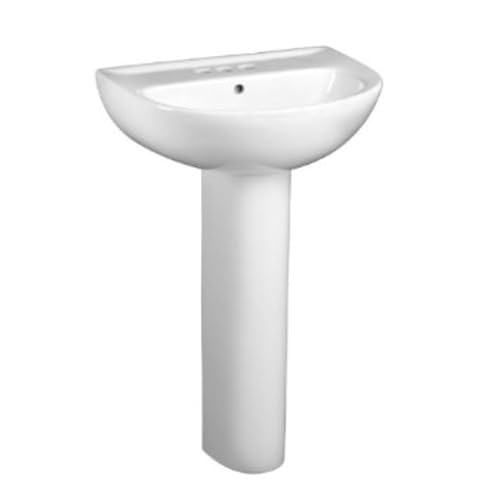
The American Standard Colony leans transitional rather than strictly ornate, with cleaner lines and a slightly squared basin edge that suits a bathroom mixing period character with a more updated overall look.
The Colony pedestal trades the deeply scalloped, high-relief bowl of a strictly Victorian sink for cleaner, slightly squared lines and a lower-profile backsplash, positioning it closer to transitional styling than a 19th-century restoration piece. This makes it a versatile choice for bathrooms that want to nod to a period pedestal silhouette without committing to fully ornate detailing, and it remains genuine vitreous china with the same durability as American Standard's other lines.
Owners value the versatile styling that works in both period and transitional remodels, and the practical, widely stocked availability that makes replacement or matching pieces easy to find. The tradeoffs are that it will look too clean for a strict 19th-century restoration and lacks the scalloped or fluted detailing of the Bancroft or Memoirs. For a buyer who wants a pedestal that flatters a broader range of styles, it is a strong pick, and it complements the vanities in our guide to the best Victorian bathroom vanities of 2026.
The Colony is what I recommend when the bathroom mixes styles and a heavily scalloped Victorian pedestal would feel out of place. It has enough of the classic pedestal silhouette to read as period-adjacent while staying clean enough for a transitional room. If you want a strict 19th-century look, go Memoirs, but for broad style flexibility, the Colony fits more bathrooms.
If I had to cover most Victorian bathrooms with two sinks, I would keep the Kohler Memoirs for anyone doing a genuine 19th-century-styled full bathroom, and the Kohler Bancroft for anyone with a small bathroom or powder room where a full-size pedestal would dominate the room. That pairing covers both the standard case and the tight-space case, and it keeps genuine vitreous china and an authentic scalloped silhouette in both rather than letting a period-adjacent shape hide cheap acrylic construction.
The Kohler Memoirs Pedestal Sink is the best Victorian bathroom sink overall. It pairs a scalloped, high-relief basin edge and an integral backsplash with a fluted matching pedestal column in genuine vitreous china, and it is available in the most common single-hole, centerset and widespread faucet drillings. For a wall-mount console look, the American Standard Ravenna Console Sink leads.
A Victorian bathroom sink succeeds on the authenticity of its ornate silhouette and the quality of its vitreous china construction. The Memoirs optimizes both, pairing a scalloped period shape with a durable glaze finish, which is why it tops the list. If you want a more furniture-like presence with visible decorative legs, the American Standard Ravenna Console is the standout console pick.
A pedestal sink, like the Kohler Memoirs, uses a solid ceramic column that hides the supply lines and drain, the most common and versatile Victorian silhouette. A console sink, like the American Standard Ravenna, hangs on the wall but visually rests on decorative metal legs, leaving plumbing exposed as part of the design, a higher-end look suited to larger bathrooms. A wall-mount sink, like the Kingston Brass Wall Mount, skips legs entirely and is the most compact and affordable option, best for powder rooms.
Choose pedestal for the most classic and widely available option, console for a furniture-like upgrade in a larger space, and wall-mount for the tightest floor plan or budget. For matching faucets across any of these styles, see our guide to the best Victorian bathroom faucets of 2026.
Yes, for both authenticity and durability. Vitreous china is a fired ceramic material that was used in essentially all original Victorian-era sinks, and it resists staining, scratching and yellowing far better than acrylic or cultured marble alternatives sold with a similar shape. Every pick in this guide uses genuine vitreous china, since an ornate Victorian-shaped sink in acrylic looks noticeably less authentic up close and does not hold its finish as long.
Check the listed material specifically before buying, since some Victorian-styled sinks are made from lower-cost materials that only approximate the look. Vitreous china is heavier and more chip-resistant once installed, though it can chip on impact during shipping or installation if handled roughly.
Buying a Victorian bathroom sink comes down to four checks that general sink buying guides gloss over: deciding between pedestal, console and wall-mount styles, confirming genuine vitreous china construction, matching the faucet-hole drilling to your chosen faucet, and planning for the total lack of storage these sink types share. Work through the sections below before you buy and you will land on a sink that looks authentically 19th-century while fitting your space and faucet.
This is the first decision because it determines your floor space needs and installation approach. A pedestal sink is the most classic and widely available option, with a solid column hiding the plumbing. A console sink adds a furniture-like presence with visible legs, suited to larger bathrooms that can support the wider footprint. A wall-mount sink skips legs entirely for the smallest footprint, ideal for powder rooms. Measure your available floor space and decide how much you want the plumbing hidden before comparing specific models.
Victorian sinks come drilled single-hole, 4-inch centerset or 8-inch widespread, exactly like modern sinks, and this must match the faucet you plan to install. An ornate cross-handle bridge faucet needs a widespread-drilled sink like the Ravenna Console; a compact single-lever Victorian-styled faucet needs a single-hole or centerset sink like the Devonshire or Cadet. Decide on your faucet first, or at least its hole pattern, before finalizing the sink.
Vitreous china is the material used in essentially all original Victorian-era sinks and remains the standard for quality reproductions today, offering a smooth, bright glaze that resists staining, scratching and yellowing. Cheaper alternatives sold with a similar ornate shape may use acrylic or cultured marble, which do not hold their finish as long and can look subtly less crisp up close, especially in the recessed detail of a scalloped edge. Confirm the listed material specifically, and favor a high-gloss glaze description over a matte or satin finish for the most authentic period look.
The mistake I see most often with Victorian sinks is falling in love with a scalloped shape and only discovering after delivery that there is nowhere to put anything, or that the faucet holes do not match the faucet already bought. For most homes the order of priority is pedestal versus console versus wall-mount based on your floor space, then faucet-hole drilling matched to your chosen faucet, then genuine vitreous china construction, then a storage plan for what the sink itself cannot hold. Get those right and the rest is picking a level of ornamentation you like.
The Kohler Memoirs Pedestal Sink is the best Victorian bathroom sink overall. It pairs a scalloped, high-relief basin edge and an integral backsplash with a fluted matching pedestal column in genuine vitreous china, and it is available in multiple faucet drillings, making it easy to pair with a matching Victorian-styled faucet.
A pedestal sink uses a solid ceramic column that hides the supply lines and drain beneath the basin, the most classic and widely available Victorian silhouette. A console sink hangs on the wall for its actual support but visually rests on two slender decorative metal legs, leaving the plumbing exposed as an intentional part of the design, typically seen as a higher-end upgrade suited to larger bathrooms.
No. Pedestal, console and wall-mount sinks all lack a cabinet or drawers, since original 19th-century bathrooms relied on a separate medicine cabinet or linen closet for storage. If under-sink storage is a priority, consider a Victorian-styled vanity with a full cabinet instead, covered in our guide to the best Victorian bathroom vanities.
Yes. Vitreous china is the fired ceramic material used in essentially all original Victorian-era sinks, and it resists staining, scratching and yellowing far better than acrylic or cultured marble alternatives sold with a similar shape. Confirm the listed material before buying, since some Victorian-styled sinks use lower-cost materials that only approximate the authentic look and durability.
Decide on your faucet, or at least its hole pattern, before finalizing the sink. A single-hole or 4-inch centerset drilling suits a compact Victorian-styled single-lever or centerset faucet, while an 8-inch widespread drilling is required for an ornate cross-handle bridge faucet. Victorian sinks are offered in the same standard drillings as modern sinks, so match them the same way.
Most Victorian-styled pedestal sinks range from about 20 to 24.5 inches wide and 17 to 20 inches deep, with compact options like the Kohler Bancroft running smaller for powder rooms and wider console sinks like the American Standard Ravenna extending to about 30 inches. Measure your available wall space, including clearance for the faucet and any adjacent fixtures, before choosing a size.
No. Despite its appearance, a pedestal sink's actual weight-bearing support comes from brackets anchored into the wall studs, not the ceramic pedestal column beneath, which is primarily decorative and hides the plumbing. Leaning heavily on the basin or pedestal can crack the vitreous china or loosen the wall mounting, so avoid using it as a support point.
Victorian-styled sinks come pre-drilled at the factory in standard single-hole, 4-inch centerset or 8-inch widespread patterns, the same as modern sinks. Confirm the listed drilling matches your chosen faucet before ordering, since vitreous china cannot be safely drilled after firing without risking cracks.
An integral backsplash is a raised ceramic lip built into the back of the basin that protects the wall behind the sink from water splashes, a detail present on nearly all original Victorian pedestal and console sinks, often finished with the same scalloped or high-relief edge as the basin itself. It also affects the faucet reach needed, since the backsplash adds height behind the bowl.
Installing a pedestal sink is more involved than a vanity-top sink because the wall-mounted basin bracket must be anchored securely into wall studs or blocking to support the full weight safely, which is best handled by a plumber or experienced do-it-yourselfer. The pedestal itself is largely decorative and attaches after the basin is secured.
Start by confirming the faucet-hole drilling matches your chosen faucet, then coordinate the finish of that faucet, oil-rubbed bronze, polished nickel or chrome, across the sink's hardware, the shower and any bathtub fixtures for a cohesive palette. Our guides to Victorian bathroom faucets and Victorian showers cover matching pieces.
For the best Victorian bathroom sink overall, the Kohler Memoirs Pedestal wins, pairing a scalloped, high-relief basin edge and fluted pedestal with genuine vitreous china construction. Choose the American Standard Ravenna Console for a furniture-like look with visible decorative legs, the Kohler Devonshire for a softer classic curve, the American Standard Cadet for the best all-around value, the Kingston Brass Wall Mount for the smallest footprint and lowest cost, the Kohler Bancroft for small bathrooms and powder rooms, and the American Standard Colony for a cleaner transitional look. Decide between pedestal, console and wall-mount first based on your floor space, then match the faucet-hole drilling to your chosen faucet, and plan separately for the storage every one of these sink types gives up.
How we rank & our data sources
We do not run physical lab tests. Rankings are built from published, verifiable data and real owner feedback, never paid placement.
Researched by admin · Last updated July 3, 2026 · Our review method
A curated ranking of furniture-style bathroom vanities with carved corbels, turned legs and raised-panel doors that pair authentic 19th-century looks with real…
Read the guide
Chinese-influenced bathroom vanities favor rich lacquered dark-wood-adjacent finishes, ornate symmetrical cabinet detailing, and deep red or gold hardware accents. This guide ranks…
Read the guideCrooked, uneven, or misaligned vanity doors are almost never a sign the cabinet needs replacing. Nearly every modern vanity uses concealed hinges…
Read the guide