
Best Scandinavian Toilets (2026)
Toilets4.6
Clean, low-profile silhouettes with real MaP-verified flush performance and efficient dual-flush water use, sized for a minimalist Nordic bathroom without sacrificing function.
Read the guideA data-driven breakdown of how household water pressure, tank design, trapway size, and flush technology interact to determine how much water flows through your toilet and how effectively it clears the bowl every single flush.
Research updated June 2026.
Household water pressure (typically 40-80 psi) controls fill speed and pressure-assist performance, but it does not directly control flow rate during gravity flushing. Flow rate is set by tank volume (GPF rating), flush valve opening speed, trapway diameter, and bowl rim jet design. Improving one without the other rarely produces a meaningful gain.
Toilet flow rate refers to the volume of water discharged from the tank into the bowl during a single flush, expressed in gallons per flush (GPF). Federal law under the Energy Policy Act of 1992 caps toilets at 1.6 GPF; EPA WaterSense-certified models must perform at or below 1.28 GPF while still clearing at least 350 grams in MaP testing. Flow rate is distinct from flow velocity -- a 1.0 GPF toilet can generate greater bowl velocity than a 1.6 GPF model if its flush valve and rim jets are better engineered.
Before 1992, household toilets commonly used 3.5 GPF or more. Some older models consumed as much as 7 GPF per flush. The shift to 1.6 GPF toilets saved an estimated 2 trillion gallons of water annually across the United States, according to EPA data. The more recent push toward 1.28 GPF and sub-1.0 GPF designs has continued that trend without sacrificing waste removal when trapway and valve engineering is sound.
Flow rate is tested under standardized conditions. MaP (Maximum Performance) testing presses miso paste -- selected because its density and cohesion closely match human waste -- through the trap at rated GPF. A score of 500 grams is considered adequate; scores of 800 grams or above indicate strong performance; 1,000 grams (the MaP Premium ceiling) represents the highest tier. Many TOTO Drake II and American Standard Champion 4 models score at the 1,000-gram maximum, proving that low GPF does not mean weak flushing when engineering is right.
MaP testing isolates flush performance from installation variables, giving buyers an objective comparison point across brands. A toilet that scores 1,000 grams at 1.28 GPF is mathematically more efficient per unit of waste removed than a 1.6 GPF model that scores 600 grams. When evaluating any toilet, look for MaP score alongside GPF -- one number without the other is incomplete.
For gravity-feed toilets, incoming water pressure primarily affects how fast the tank refills between flushes -- not the flush power itself. The flush energy in a gravity toilet comes entirely from the height of the water column above the trapway, not from supply-line pressure. Pressure-assist toilets are the exception: they store compressed air from supply-line pressure (typically 20-80 psi) inside a sealed vessel, then release that stored energy during the flush, creating noticeably stronger bowl clearing than a same-GPF gravity design.
Residential water pressure in the United States typically runs between 40 and 80 psi at the meter. The Uniform Plumbing Code recommends a minimum of 15 psi at any fixture, though toilets generally function with supply pressure as low as 8 psi because the fill valve simply takes longer to refill at lower pressure. Problems begin when pressure drops below roughly 20 psi -- the tank may not fill fully before the next flush, reducing effective GPF below the rated value and lowering MaP performance.
High pressure (above 80 psi) rarely improves gravity flushing but can stress fill valves and supply lines over time. If your home pressure exceeds 80 psi, a pressure-reducing valve (PRV) protects both the fill valve and the shut-off valve from accelerated wear. For pressure-assist toilets such as those using Flushmate technology, the manufacturer specifies an operating range of 20-80 psi -- outside that range, the vessel cannot charge properly and flush performance degrades significantly.
| Pressure Range (psi) | Effect on Gravity Toilet | Effect on Pressure-Assist Toilet | Refill Time Impact |
|---|---|---|---|
| Below 15 psi | Tank may not fully fill | Vessel fails to charge -- weak flush | Very slow (2+ min) |
| 15-20 psi | Marginal; refill is slow | Below minimum spec; unreliable | Slow (90+ sec) |
| 20-40 psi | Normal operation | Lower operating range; functional | Normal (45-90 sec) |
| 40-80 psi | Optimal -- no impact on flush | Optimal -- full vessel charge | Fast (20-45 sec) |
| Above 80 psi | No flush benefit; valve stress risk | Above spec; potential component wear | Very fast; PRV advised |
The practical takeaway: if you have a gravity-feed toilet and poor flushing, increasing water pressure will not fix the problem. The fix lies in the tank, the flush valve, the trapway, or the rim jets -- not the supply line.
GPF (gallons per flush) determines the total volume of water available for bowl clearing during a flush cycle. However, volume alone does not equal performance. How quickly that volume is released (flush valve opening speed), where it enters the bowl (rim jets versus siphon jet), and how efficiently the trapway converts flow into siphon action together determine whether a given GPF rating produces an excellent or a mediocre flush. A well-engineered 1.0 GPF toilet routinely outperforms a poorly engineered 1.6 GPF model.
Current market GPF tiers and what they mean in practice:
EPA WaterSense certification guarantees both water savings and a minimum performance standard, which is why it matters beyond the GPF number alone. A toilet rated 1.28 GPF without WaterSense certification has no third-party performance guarantee. Always verify both the GPF rating and whether the model carries the WaterSense label when comparing water-efficient options.
The trapway is the S-shaped or P-shaped passage that connects the bowl to the drain line, and its diameter directly limits how quickly waste and water can exit. A fully glazed 2-3/8 inch trapway allows significantly more flow than a 2-inch unglazed passage, reducing the chance of partial blockages and improving siphon initiation. Wide, fully glazed trapways are the primary reason models like the American Standard Champion 4 (2-3/8 inch trapway) are marketed as clog-resistant despite using only 1.28 GPF.
Trapway sizing is expressed as the minimum diameter at the narrowest point of the passage. Federal plumbing codes require a minimum 1.5-inch trapway, but premium toilets typically offer 2 inches or more. The difference in practical performance between a 1.75-inch and a 2-3/8-inch trapway is substantial:
Skirted or concealed trapway toilets (Woodbridge T-0001, Swiss Madison Clarence, Kohler Veil) hide the trap behind a smooth exterior skirt. The underlying trapway engineering varies by model -- the skirt is aesthetic rather than functional. Always check the published trapway dimension, not just whether the design looks clean.
| Toilet Model | GPF | Trapway Diameter | MaP Score | WaterSense |
|---|---|---|---|---|
| American Standard Champion 4 | 1.28 | 2-3/8 in (fully glazed) | 1,000 g | Yes |
| TOTO Drake II | 1.28 | 2-1/8 in (fully glazed) | 1,000 g | Yes |
| Kohler Cimarron | 1.28 | 2-1/8 in (fully glazed) | 1,000 g | Yes |
| TOTO Aquia IV (dual flush) | 1.0 / 0.8 | 2-1/8 in (fully glazed) | 600 g+ | Yes |
| Woodbridge T-0001 | 1.28 / 0.8 | 2 in | 800 g | Yes |
| American Standard Cadet 3 | 1.28 | 2 in (fully glazed) | 1,000 g | Yes |
| Kohler Highline | 1.28 | 2 in (fully glazed) | 800 g | Yes |
| Swiss Madison Clarence | 1.28 / 0.8 | 2 in | 600 g | Yes |
| Gerber Avalanche | 1.28 | 2-1/8 in (fully glazed) | 1,000 g | Yes |
Gravity-flush toilets release tank water under the force of gravity alone -- the water falls from a fixed height, creating siphon action in the trapway. Pressure-assist systems use compressed air stored at supply-line pressure (20-80 psi) to forcibly eject water into the bowl, producing higher velocity at the same GPF. Tornado flush (TOTO's double cyclone/tornado technology) eliminates rim holes entirely, directing water through two or three large nozzles that spin it in a centrifugal pattern, generating strong rim coverage and siphon pull with very low GPF. Each system has a different relationship between incoming water pressure, flow velocity, and cleaning efficiency.
Understanding each system in more technical depth:
Gravity flush powers roughly 90% of residential toilets. The flush energy equals the weight of the water column in the tank multiplied by gravity. Tank height is fixed, so the only variables under the homeowner's control are water volume (GPF) and flush valve design. A 3-inch flush valve (standard on TOTO Drake, Kohler Cimarron) releases water faster than a 2-inch valve, improving siphon initiation despite the same GPF rating.
Pressure-assist toilets (Flushmate-equipped American Standard Titan, Gerber Ultra Flush) use the supply line's pressure to compress air in a sealed plastic vessel inside the tank. When the flush handle is pressed, the pressurized air expels water at higher velocity than gravity alone allows. At 60 psi supply pressure, Flushmate vessels discharge water at roughly 1.4-2.0 seconds versus 3-5 seconds for gravity -- the faster discharge means more kinetic energy enters the bowl. Downsides include noise (audible rush), higher component cost, and dependence on minimum supply pressure.
TOTO's Tornado Flush (found on the Drake II, UltraMax II, Nexus, and Aquia IV) uses two powerful rim jets set at opposite angles to create a 360-degree centrifugal water flow pattern. This eliminates the underside rim holes that accumulate mineral deposits and mold in conventional designs, directs more water to the bowl walls for cleaning, and sustains siphon action efficiently. The UltraMax II achieves a 1,000-gram MaP score at 1.28 GPF using Tornado Flush -- a direct result of high-velocity, directional water delivery rather than high volume.
For best flushing toilets overall, the flush system type matters as much as GPF. A 1.0 GPF Tornado Flush toilet consistently outperforms many 1.6 GPF gravity designs with conventional rim holes.
Plumbers in high-mineral-deposit regions often prefer Tornado Flush or similar rimless designs specifically because rim holes are eliminated. Conventional rim holes clog with calcium and iron deposits over 5-10 years, progressively reducing flow into the bowl and dropping effective flushing performance below original specifications. Rimless designs maintain their rated performance far longer under the same water conditions.
The most common causes of declining flow rate in toilets are mineral deposits blocking rim jets or the siphon jet hole, a worn or warped flapper that closes prematurely (reducing the water volume discharged per flush), and a partially closed shut-off valve. Sediment accumulation inside the tank can also lodge under the flapper seat, preventing a complete seal and causing phantom flushing while leaving insufficient water available for the next flush cycle. Most of these issues are DIY-correctable without replacing the toilet.
A systematic approach to diagnosing and restoring flow rate:
Step 1 -- Measure current GPF. Place a bucket under the toilet flapper's chain, flush, and collect the water that drains from the tank. If the bucket collects significantly less than the rated GPF (1.28 or 1.6 gallons), the issue is upstream (fill valve, float setting, or shut-off valve), not the trapway.
Step 2 -- Inspect the flush valve and flapper. A flapper that closes within 2-3 seconds of the flush is cutting off water too early. Flappers warp with age and chlorine exposure -- replacement costs under $10 and takes 10 minutes. Tower-style flush valves (used in Kohler Class Five and some TOTO models) do not use flappers and rarely fail, but the seal ring can harden and leak.
Step 3 -- Clear the rim jets. Pour white vinegar into the overflow tube and let it sit for 30-60 minutes to dissolve calcium deposits in the rim channels. A bent wire or dental pick can clear individual jet holes. In severe cases, muriatic acid (diluted 1:10 with water) introduced through the overflow tube dissolves heavy mineral scale -- follow safety precautions and ventilate well.
Step 4 -- Check the siphon jet. The siphon jet is the large hole at the bottom front of the bowl, directed straight into the trapway entrance. Calcium blocking this hole reduces the hydraulic push that initiates the siphon. A pumice stone or muriatic acid solution clears most buildups without damaging the vitreous china glaze.
Step 5 -- Confirm fill valve setting. The water level in the tank should sit approximately 1 inch below the top of the overflow tube. Lower water means less GPF; raising the float to this line often restores rated performance immediately. See our guide on how to adjust toilet water level for step-by-step instructions.
If all of the above checks out and flush performance is still inadequate, the issue is likely the toilet's fundamental design. Older 1.6 GPF toilets with 2-inch flush valves and conventional rim holes often cannot be upgraded to perform like current designs -- replacement with a high-efficiency toilet may be the more cost-effective path.
Flapper replacement is the most overlooked maintenance step in toilet ownership. Flappers made from chlorine-resistant silicone last significantly longer than standard rubber in areas with heavily chlorinated municipal water. Switching to a silicone flapper when performing routine maintenance is a simple upgrade that prevents premature valve degradation and maintains rated GPF longer between service intervals.
Flow distribution across the bowl surface depends on where water enters and at what angle. Traditional rim-channel designs use a series of small holes (typically 8-12) drilled at angles under the rim overhang. Water enters through the rim, spirals downward across the bowl, and combines with the siphon jet at the bottom to pull waste through the trapway. The limitation is that small rim holes are prone to mineral occlusion, and the spiral pattern is less efficient at dislodging material from the front of the bowl.
Elongated bowls (roughly 18.5 inches front to back) provide more bowl surface area and a longer flush path than round bowls (16.5 inches). For flush performance, elongated bowls tend to develop stronger siphon action because the longer water column over the trapway creates more hydraulic head. However, the improvement is marginal in properly engineered round designs. TOTO's round Eco Drake achieves similar MaP scores to its elongated equivalent.
Rimless and partially rimless designs -- common in Kohler's Continuous Clean technology and European imports -- direct water through exposed channels that are easier to clean and less prone to occlusion. Some Swiss Madison and Woodbridge models incorporate a rimless-adjacent design for this reason. Check whether "rimless" is genuinely hole-free or merely has a narrower rim channel before purchasing.
For water efficiency guidance specific to EPA certification requirements, see our detailed EPA WaterSense explained guide.
Not necessarily. For gravity toilets, the tank acts as a pressure buffer. As long as supply pressure is sufficient to refill the tank to the correct level before the next flush (which requires only 15-20 psi and enough time), the actual flush performance is not affected by how low the incoming pressure was during fill. A home at 25 psi supply pressure with a properly functioning gravity toilet will flush identically to the same toilet in a home at 70 psi -- because both tanks hold the same volume at the same height before the flush begins.
Low water pressure becomes a real flushing problem only in these specific situations:
If you are troubleshooting perceived weak flushing and your home has normal supply pressure (40-80 psi), focus on fill valve function, flapper integrity, and rim jet condition rather than pressure. Our guide on low water pressure toilet fix covers diagnostic steps when pressure is genuinely low.
New toilets sold in the United States must not exceed 1.6 GPF under federal law. Most new models are sold at 1.28 GPF, which meets EPA WaterSense requirements. Dual-flush models typically offer 0.8 GPF for liquid waste and 1.28 or 1.6 GPF for solid waste.
Yes. Higher supply pressure fills the tank faster. At 60 psi, most tanks refill in 20-35 seconds. At 20 psi, the same tank may take 60-90 seconds. Fill speed does not change flush performance as long as the tank is fully refilled before the next flush.
Flushmate-equipped pressure-assist toilets require a minimum of 20 psi at the supply valve. Below that, the internal vessel cannot charge fully and flush performance degrades. The maximum operating pressure is 80 psi; exceeding that risks vessel failure.
For a gravity-feed toilet, increasing supply pressure will not improve the flush -- it will only refill the tank faster. Flush power in gravity toilets depends on tank volume, flush valve size, and bowl/trapway design. Only pressure-assist toilets benefit directly from higher supply pressure.
MaP (Maximum Performance) score measures how many grams of waste a toilet can clear in a single flush at its rated GPF. A score of 1,000 grams is the maximum tested. Higher MaP scores indicate the toilet uses its water volume more efficiently -- essential for confirming that a low-GPF model truly performs at rated conditions.
The most common causes are mineral deposits partially blocking rim jets or the siphon jet hole, a warped or calcium-coated flapper that closes early, or a partially closed shut-off valve. Descaling the jets and replacing the flapper restores most older toilets to near-original performance.
A fully glazed trapway has the same smooth vitreous china surface inside the S-bend that the bowl has on visible surfaces. Unglazed trapways have a rougher, slightly porous interior that accumulates mineral deposits and waste residue faster. Fully glazed trapways maintain their effective diameter longer and reduce clogging tendency significantly.
It depends entirely on the specific model. TOTO Drake II (1.28 GPF) scores 1,000 grams on MaP testing -- the same maximum as most 1.6 GPF models. Older or poorly engineered 1.28 GPF designs can underperform, which is why checking the MaP score is essential regardless of GPF rating.
EPA WaterSense is a certification program that requires toilets to flush at 1.28 GPF or less AND clear at least 350 grams in standardized performance testing. A GPF rating is a manufacturer's stated water volume per flush with no performance guarantee. WaterSense adds a minimum performance floor, making it a more meaningful purchasing standard.
A 3-inch flush valve has 125% more opening area than a 2-inch valve, releasing tank water into the bowl faster. The faster discharge creates higher kinetic energy at the bowl, initiating siphon action more reliably and producing a stronger flush per gallon. Most TOTO and many Kohler Class Five models use 3-inch or larger valves.
Studies from WaterSense program data show dual-flush toilets average 20-35% less water than 1.6 GPF single-flush toilets when households use the half-flush for liquid waste as intended. The savings drop if users consistently use the full flush for all waste, which a significant percentage of households do.
TOTO Tornado Flush eliminates conventional rim holes and instead uses two large directional nozzles that spin water in a centrifugal pattern around the bowl. This creates stronger rim coverage, more consistent siphon initiation, and eliminates the mineral-deposit buildup that progressively reduces flow in conventional rim-hole designs.
Yes, gravity-feed toilets function adequately at pressure as low as 15-20 psi and are well-suited to well water supplies. Avoid pressure-assist toilets unless pressure consistently exceeds 20 psi. A pressure tank and pump sized for household demand will ensure adequate fill speed. Avoid installing a pressure-assist model without first confirming sustained pressure above the minimum.
Trapways of 2 inches or more in inside diameter are generally considered clog-resistant for standard residential use. The American Standard Champion 4 at 2-3/8 inches sets the current benchmark. Anything below 1.75 inches is considered narrow by modern standards and more prone to partial blockages with thick toilet paper.
This usually indicates the flapper is closing prematurely -- the water volume discharged is insufficient to complete the siphon cycle. Check that the flapper is fully opening and staying open for 3-5 seconds per flush. A worn, warped, or incorrectly weighted flapper often causes this symptom and replacement resolves it.
Yes. The water sitting in the bowl before the flush (pre-flush water level) contributes to the total hydraulic volume that moves through the trapway during the flush cycle. A bowl with too little standing water initiates siphon more slowly. Fill valve malfunctions that reduce bowl water below the manufacturer's set point noticeably degrade flush effectiveness.
Kohler Class Five uses a 3.25-inch canister flush valve that opens fully in one motion, releasing maximum water volume immediately for strong siphon initiation. TOTO Tornado Flush uses directional nozzles for centrifugal bowl cleaning. Both achieve 1,000-gram MaP scores at 1.28 GPF on respective flagship models. Class Five prioritizes raw siphon power; Tornado Flush prioritizes bowl cleaning coverage.
Tankless (flushometer) toilets require significantly higher and sustained flow rates -- typically 1.6-2.5 gallons per minute at 25-60 psi -- since they flush directly from the supply line without a storage tank. They are not suitable for homes with below-normal supply pressure and are generally designed for commercial settings with robust plumbing infrastructure.
Beyond EPA WaterSense (1.28 GPF minimum), look for WaterSense+ labeling on ultra-efficient models (1.0 GPF or below). Some California-sold toilets must also meet CalGreen Tier 2 requirements (1.06 GPF). MaP Premium certification (1,000-gram test score at rated GPF) is the strongest performance certification in addition to water-use labeling.
At average US water rates, replacing a 1.6 GPF toilet flushed 5 times per day with a 1.28 GPF model saves roughly 584 gallons per year per person. In a four-person household, that is approximately 2,336 gallons annually -- meaningful savings, though payback on the toilet cost takes 5-10 years depending on local water rates. Rebates from local utilities can shorten that payback period significantly.
Water pressure and toilet flow rate are related but largely independent variables. For gravity toilets, supply pressure controls refill speed only -- flush power lives in the tank volume (GPF), flush valve size, bowl rim jet design, and trapway diameter. Choosing a toilet with a 1,000-gram MaP score, a WaterSense 1.28 GPF certification, and a fully glazed 2-inch or larger trapway gives you the best intersection of water efficiency and flushing power. The TOTO Drake II, American Standard Champion 4, and Kohler Cimarron represent the proven sweet spot: 1.28 GPF, maximum MaP performance, and over a decade of verified reliability data from hundreds of thousands of installations.
How we rank & our data sources
We do not run physical lab tests. Rankings are built from published, verifiable data and real owner feedback, never paid placement.
Researched by Derek Whitman · Last updated June 2, 2026 · Our review method
Clean, low-profile silhouettes with real MaP-verified flush performance and efficient dual-flush water use, sized for a minimalist Nordic bathroom without sacrificing function.
Read the guide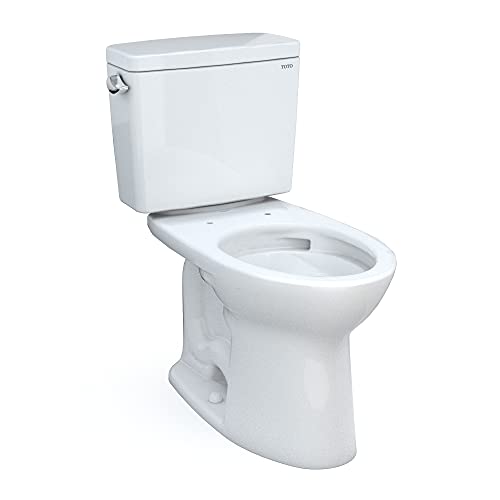
Classic two-piece toilets with tall tanks and elegant, understated proportions, the quiet country-house look that suits a traditional English bathroom without tipping…
Read the guide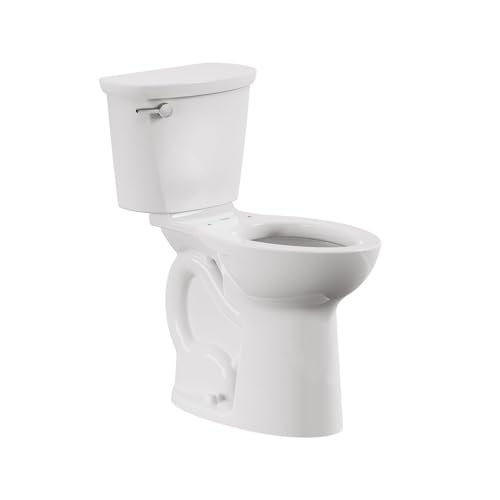
Clean-lined skirted and one-piece toilets with simple geometry and low profiles that suit a broad East Asian-influenced bathroom, backed by real verified…
Read the guide