Best Toilet Flush Valve: How to Choose the Right One
Plumbing4.6
Which is the best toilet flush valve? Compare 2-inch, 3-inch, adjustable, and canister flush valves by fit and flush power, plus how…
Read the guideLow water pressure at a toilet shows up as a tank that fills too slowly, a weak swirling rinse, or a flush that cannot fully clear the bowl. Every symptom traces back to a restriction somewhere in the path from the main line to the bowl, and most cases are solved by opening a shutoff valve, cleaning a clogged fill valve screen, or replacing a degraded supply line. This guide works through every cause in the order a plumber checks them, using published flush specs, MaP test data, EPA WaterSense standards and aggregated owner reviews, so you can pinpoint the problem and fix it before deciding whether the toilet itself needs replacing.
Most low-water-pressure toilet problems are solved by fully opening the shutoff valve, cleaning sediment out of the fill valve inlet screen, and replacing a kinked or corroded supply line. If the house pressure reads below 40 psi, a pressure booster or regulator adjustment is needed. When whole-house pressure is fine but the toilet still flushes weakly, the TOTO Drake II with its 1,000-gram MaP score at 1.28 GPF outperforms nearly every gravity-flush toilet at the same water use.
Water pressure and flush power are related but not the same thing, and mixing them up leads to wrong fixes. Water pressure describes how forcefully water flows from the supply line into the tank, and how fast the tank refills between flushes. Flush power describes how hard the stored tank water hits the bowl and builds a siphon to clear waste. A toilet can have strong supply pressure yet flush weakly because of a degraded flapper or clogged jets. It can also have a great flush design but fill at a crawl because of a restricted shutoff valve. Both feel like a pressure problem, but the fixes are completely different. This guide covers both, in the right order.
Low water pressure in a toilet matters for two reasons. A slow fill means long waits between flushes, which becomes a real problem in high-traffic bathrooms. And if the supply is so restricted that the tank never fully reaches its engineered fill line, the toilet will always flush below its rated capacity, no matter how good its MaP score is on paper. That is why a toilet that suddenly seems weaker than it used to be is often a supply problem, not a bowl problem. For context on what strong-flushing toilets look like when they are fed properly, our roundup of the best flushing toilets shows the full field.
The water path to a toilet has several potential choke points, each of which produces the same "low pressure" symptom. Working through them from the toilet outward is the most efficient approach, because the closest points are the cheapest and most common culprits. Only after confirming the local supply is unrestricted does it make sense to measure whole-house pressure, which requires more work and sometimes professional involvement.
| Cause | Where It Sits | Symptom | Fix | Cost |
|---|---|---|---|---|
| Partly closed shutoff valve | Behind toilet, at wall | Slow fill, all other taps fine | Open fully counterclockwise | Free |
| Clogged fill valve screen | Inside tank at fill valve inlet | Thin trickle, recently serviced | Rinse screen, replace valve | $10-$20 |
| Kinked or corroded supply line | Between wall valve and tank | Slow fill, tight under-tank space | Replace with braided steel line | $8-$15 |
| Mineral-clogged rim jets | Under toilet bowl rim | Weak swirl, streaks on bowl | Clean with white vinegar overnight | Free |
| Low whole-house pressure | Main line or regulator | Slow fill at every fixture | Adjust PRV or install booster pump | $50-$500+ |
| Failing pressure regulator | Where main line enters home | Fluctuating, dropping pressure | Replace PRV, target 45-60 psi | $200-$400 |
| Old, corroded galvanized pipes | Throughout older home | Brown water, narrowing over years | Repipe with copper or PEX | Professional |
Most gravity-flush toilets, including popular models from TOTO, Kohler, and American Standard, store water in a tank and release it all at once when flushed. Because the flush uses stored water rather than live supply pressure, modest variations in incoming pressure do not affect flush power much, as long as the tank has time to refill to the fill line between flushes. Where low pressure genuinely hurts is in two situations: when flushes happen back-to-back before the tank is fully refilled, and when pressure is so low that the fill valve barely trickles and the tank takes many minutes to recover.
Pressure-assist toilets, which use a sealed vessel inside the tank to pressurize each flush with incoming supply pressure, are more directly sensitive to supply pressure. Models like those using the Flushmate system need at least 20 psi to operate, and they perform best between 25 and 80 psi. If house pressure drops below 20 psi, a pressure-assist toilet can lose its pressure charge entirely and revert to a passive flush with significantly reduced power. This is a less common situation but worth knowing if you are in an older building or a rural well-pump system.
This is the single most common cause of a suddenly slow-filling toilet, and it costs nothing to fix. The shutoff valve, also called the stop valve or angle stop, connects the supply line to the cold water supply at the wall or floor behind the toilet. After any repair, cleaning or installation, this valve is frequently left only partly open, which throttles the flow into the tank without anyone noticing.
Turn it fully counterclockwise until it stops. On an older multi-turn valve, that may mean several full rotations before it seats open. On a quarter-turn ball valve or lever style, the handle should sit parallel to the supply line when fully open. Then run a flush and time the refill. You should hear and see a noticeably stronger stream entering the tank. If the valve feels stiff, corroded, or will not open fully without resistance, it has worn seals and is worth replacing. A degraded shutoff valve that is stuck half-open can silently starve a toilet's flush for years.
Inside the fill valve at the bottom of the tank, where the supply line attaches, most valves have a small sediment screen. In homes with hard water, particulate-heavy well water, or after any pipe work that disturbs scale, this screen can clog with grit and mineral flakes and reduce flow to a trickle. This is a very common cause of slow tank fill in older homes and in homes that have recently had plumbing work, and it is also overlooked because you have to remove the fill valve cap to see it.
To clean it, shut off the water at the shutoff valve, flush to empty the tank, then twist the fill valve cap counterclockwise a quarter turn and lift it off. The cap often has a small screen inside or attached to the valve body inlet. Rinse the screen under running water and use an old toothbrush to clear any grit. Reassemble, open the valve, and recheck the fill speed. If the fill valve is old, mineral-crusted, or clearly worn, replacing it entirely is a better option than cleaning alone. A quality adjustable fill valve from Korky or Fluidmaster costs under twenty dollars and installs in about fifteen minutes with the water off.
The supply line runs from the shutoff valve to the tank. It is one of the most overlooked pressure restrictions in a toilet installation. Older plastic or rubber supply lines can kink, compress, or develop scale on the interior walls. A braided stainless steel supply line in a tight under-tank space may be bent at too sharp an angle. Even a slight kink cuts flow substantially, and a line that looks fine from outside may have collapsed inside its braiding.
Disconnect the supply line (with the shutoff valve closed) and blow through it. A clear line should pass air freely. Look for any visible kinking or flattening. Check that the line is the right length for the space, since an oversized line is more likely to coil and kink. Replace any suspect line with a proper-length braided stainless steel supply line, which is the most durable and kink-resistant option. Avoid the cheap corrugated chrome-plated copper supply tubes, which corrode from the inside and can fail suddenly, because a slow interior restriction often builds before any visible external damage appears.
Low supply pressure and clogged bowl jets produce the same symptom from different directions. Even when supply pressure is fine, mineral scale from hard water can narrow the rim holes and siphon jet under the bowl until the water barely reaches parts of the bowl and the flush loses its swirling momentum. This happens gradually and is often the reason a toilet that used to flush strongly seems to have weakened over one or two years without any obvious plumbing change.
Look under the bowl rim and count the small angled holes. They should be clearly open. Streak marks on the bowl wall below certain holes mean those jets are clogged or partially blocked. To clear them, soak paper towels in white vinegar and press them up against the rim for two to three hours, or pour a cup of warm vinegar down the overflow tube in the tank so it flows through the internal rim channel and dissolves scale from the inside out. For heavy buildup, leave the vinegar in the rim channel overnight, then scrub each jet hole with a thin bottle brush or carefully work a piece of stiff wire into each hole. After cleaning, a full flush should show a noticeably stronger, more uniform swirl. For a complete walkthrough of restoring flush strength, see our guide on how to improve toilet flush power.
Gravity-flush toilets, which account for the vast majority of residential installations, are fundamentally independent of supply pressure during the flush stroke. You could technically fill the tank with a bucket of water and get a normal flush. What low supply pressure ruins is refill speed and, in extreme cases, the ability to reach the fill line before the next flush is needed. In a home with a well pump that loses prime or a building with very old pipes, it is possible for pressure to drop low enough that the tank refills so slowly that back-to-back flushes are genuinely weak.
Pressure-assist systems are the exception. Brands like Sloan and Flushmate use incoming supply pressure to pre-pressurize a sealed vessel inside the tank. If supply pressure drops below 20 psi, the vessel cannot build its charge and the system behaves like a standard low-flow tank, with none of the hydraulic advantage that pressure assist provides. If you have a pressure-assist toilet and it suddenly starts flushing like a much weaker model, check house pressure before anything else. For perspective on which toilet types handle borderline pressure best, see our overview of weak toilet flush causes and fixes.
These numbers explain why most homes never notice a pressure-related flush problem. Standard residential water pressure runs between 40 and 80 psi, well above the minimum for any toilet type. Problems arise in specific situations: upper-floor units in multi-story buildings where pressure drops with height, rural well systems with aging pressure tanks, older homes where decades of mineral scale have narrowed interior pipe diameter, and the period after municipal pressure interruptions that shake debris loose into the supply lines.
A $10 water pressure gauge that screws onto any hose bib lets you test house pressure in about two minutes. Take a reading during a high-demand time, such as a morning shower hour, for a realistic picture. Anything below 40 psi warrants investigation. Anything below 20 psi is genuinely low and will eventually affect toilet fill performance and other fixtures. If the reading is in range, the problem is local to the toilet and the fixes in this guide should resolve it. If pressure is low across the house, see the whole-house section below.
When the slow toilet is accompanied by weak flow at other fixtures, showers, and faucets throughout the home, the cause is upstream of the toilet entirely. Three factors account for most whole-house pressure problems: a misadjusted or failing pressure regulator, scale buildup inside older galvanized steel pipes, or an issue with the municipal supply or well pump.
Most homes built after the 1950s have a pressure regulating valve (PRV) where the main water supply line enters the building. The PRV is a bell-shaped fitting, usually near the water meter or main shutoff, and it is factory-set to a delivery pressure between 50 and 70 psi. Over time, the internal diaphragm and spring wear out, and the valve may start delivering lower pressure, higher pressure, or inconsistent pressure. An average PRV lasts 10 to 15 years.
If you have a pressure gauge reading and the pressure is low but consistent, try adjusting the PRV first. There is an adjustment screw under a locknut on top of the valve body. Loosen the locknut and turn the screw clockwise in small increments, checking the pressure gauge after each adjustment, until you reach 50 to 55 psi. Do not exceed 80 psi, which is the maximum safe pressure for most residential fixture fittings. If the valve does not respond to adjustment, fluctuates erratically, or has obvious corrosion, replacing it is the right call. A licensed plumber should handle PRV replacement, as it requires shutting off the main supply.
Homes built before 1970 often have galvanized steel supply pipes. Galvanized pipes corrode from the inside out over decades, and the rust and mineral scale that builds up on their interior walls can reduce the internal diameter to a fraction of its original size. The result is permanently reduced pressure that worsens gradually over years. A 3/4-inch pipe that has corroded to a half-inch effective bore delivers less than a quarter of the original flow volume. The only lasting fix is repiping with copper or cross-linked polyethylene (PEX), which is a significant project but permanently resolves pressure issues across the entire home.
In homes on a private well, the pressure tank and pump control the supply pressure. A waterlogged pressure tank (one that has lost its air charge) causes pressure to swing rapidly between the pump cut-in and cut-out pressures rather than staying stable, and the toilet fill may sound like it is running at varying speeds. Recharging or replacing the pressure tank bladder is usually the fix. If the pump is undersized or wearing out, delivery pressure during peak demand may drop below the functional minimum for a toilet.
In homes with chronic low pressure that cannot be fixed at the supply side, a pressure-assist toilet is a counterintuitive but effective workaround, provided your incoming pressure stays above 20 psi. The Flushmate system amplifies even modest supply pressure into a powerful hydraulic flush that outperforms standard gravity toilets at the same GPF. However, the better long-term investment is usually addressing the supply issue first, because low pressure shortens the life of fill valves and can create problems with other appliances on the same line.
The three toilets most consistently cited for performing well in lower-pressure scenarios are models with large tanks, wide-open trapways, and efficient siphon-jet bowl designs. These characteristics mean the toilet extracts maximum flush energy from whatever water volume the tank stores, rather than relying on the supply side to compensate for mechanical inefficiency.
| Toilet | Best For | MaP Score | GPF | Flush Type | Rating | Check Price |
|---|---|---|---|---|---|---|
| TOTO Drake II | Best overall low-pressure | 1,000g | 1.28 | Double Cyclone | 4.7 | Check price |
| American Standard Champion 4 | Heaviest waste clearance | 1000g | 1.6 | EverClean | 4.6 | Check price |
| Kohler Cimarron | AquaPiston valve efficiency | 800g | 1.28 | AquaPiston | 4.5 | Check price |
| TOTO Drake | Proven long-term reliability | 1,000g | 1.6 | G-Max | 4.6 | Check price |
| Gerber Viper | Budget-friendly strong flush | 1000g | 1.28 | Siphon Jet | 4.4 | Check price |
| Woodbridge T-0001 | Modern design, solid flush | 700g | 1.28 | Tornado | 4.3 | Check price |
When supply issues are resolved but the toilet itself is still the weak link, the following models are the strongest performers based on published MaP test scores, manufacturer flush specifications and aggregated owner feedback. Each one has been specifically selected because its flush design extracts maximum power from stored tank water rather than needing an unusually strong supply.
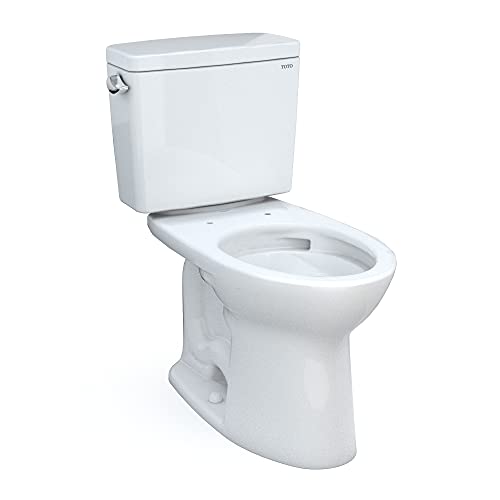
The TOTO Drake II is the clearest upgrade path for any toilet that has stopped performing well due to supply or mechanical limitations, because its Double Cyclone flush technology consistently clears 1,000 grams at just 1.28 GPF in certified MaP testing.
The Double Cyclone system uses two nozzles that send water around the rim in a powerful tornado pattern rather than individual rim holes, which makes the flush far less dependent on perfectly clean jets. Even with moderate hard-water scale, the system continues to perform because the nozzle geometry concentrates flow more effectively than traditional rim holes.
Owner reviews consistently note that the Drake II flushes noticeably stronger than their previous standard toilets on the same supply line, which aligns with its MaP result. The 3-inch flush valve, wider than the standard 2-inch valve found on many budget toilets, allows a faster tank dump that drives a more powerful siphon regardless of how slowly the tank refills afterward.
If you are dealing with a toilet that has never flushed well since installation and supply pressure checks out, the Drake II is the most spec-justified upgrade. Its MaP score is tied for the highest on the market, and the combination of a 3-inch flush valve, Double Cyclone nozzles, and TOTO's CeFiONtect ceramic glaze (which reduces buildup in the trapway) makes it the most consistently reliable performer across a wide range of real-world conditions.
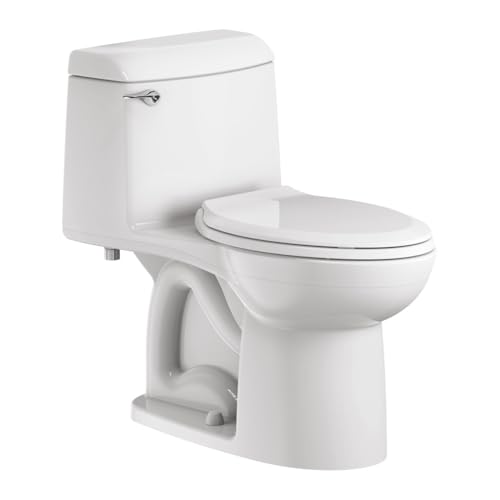
The American Standard Champion 4 holds the distinction of earning a 1000-gram MaP score, the maximum tested result, meaning it clears the heaviest waste loads of any standard gravity-flush toilet in independent testing at 1.6 GPF.
The Champion 4 achieves its 1000-gram MaP score through a 4-inch accelerator flush valve, which is substantially larger than the 3-inch valves found in most premium toilets and the standard 2-inch valve in budget models. That wider valve opening means the full tank volume hits the bowl faster, creating a stronger siphon with more momentum to clear the trapway. The EverClean surface treatment on the bowl resists bacterial growth and staining, which contributes to long-term performance.
Aggregated owner reviews consistently describe the Champion 4 as noticeably more powerful than previous toilets on the same supply, including older models from the same bathroom. The larger trapway (2-3/8 inches wide by American Standard's published spec) is one of the widest available in a standard two-piece toilet and is a significant factor in its clog resistance and flush clearance performance. If you are seeing recurring clogs alongside weak flushes, the Champion 4 addresses both root causes. For more on this topic, our guide to toilet not flushing properly covers the diagnostic steps in detail.
The Champion 4's 1000-gram MaP score is the most straightforward argument in its favor, but the 1.6 GPF water use is the tradeoff. In states with water-use mandates or for homeowners chasing water savings, it is not the right choice. For everyone else who wants the highest possible waste clearance from a gravity toilet and is willing to use slightly more water to get it, the Champion 4 consistently earns its reputation as the go-to clog fighter.

The Kohler Cimarron uses the AquaPiston flush valve, which releases water into the bowl from 360 degrees around the valve seat rather than a single opening, producing a more uniform and efficient flush at 1.28 GPF with an 800-gram certified MaP score.
The AquaPiston valve is the key differentiator over standard Kohler gravity models. By releasing water from all 360 degrees around the valve rather than just one side, it distributes the flush energy more evenly and minimizes the pressure dead spots that cause incomplete bowl clearing. In homes where supply pressure is adequate but on the lower end of the normal range, this valve design means the flush is less sensitive to tank fill variations than a conventional single-direction flush valve.
Kohler's published specs show a Class Five flush rating, which is Kohler's internal standard for 1000-gram clearance capability, though MaP testing confirms the Cimarron at the 800-gram level in standard configurations. Owner feedback consistently describes reliable flushing and easy part sourcing, which matters because Kohler has one of the widest replacement part networks among U.S. toilet manufacturers.
The Cimarron is the strongest argument for the Kohler ecosystem because the AquaPiston valve is a genuine flush-mechanics improvement over the older Kohler pressure-actuated canister designs, not just a marketing differentiation. For homes where the goal is balancing water savings and flush reliability over many years with easy part access, it is the most practical choice in the Kohler lineup.

The Gerber Viper delivers a certified 800-gram MaP score at 1.28 GPF with a straightforward siphon-jet bowl design that is easy to maintain and built on Gerber's reputation for durable commercial-grade vitreous china.
Gerber is less well-known than TOTO or Kohler in the residential market, but its vitreous china quality is widely noted in professional plumbing circles, and the Viper's siphon-jet bowl design produces consistently strong flushes that hold up over time. The 800-gram MaP result places it on par with far more expensive models.
The Viper uses a standard 3-inch flapper-valve tank design, which means any issues with the tank components are solved with widely available, inexpensive parts from any hardware store rather than proprietary components. For landlords or property managers who want reliable strong-flush performance at a lower initial cost and with no dependency on specialty parts, the Viper is a practical choice.
Gerber does not get the brand attention of TOTO or Kohler, but the Viper's 800-gram MaP score at 1.28 GPF is the same result as models that cost significantly more. If you are replacing a low-performing toilet to solve a chronic weak-flush problem and budget is a genuine constraint, the Viper deserves a look before defaulting to the better-marketed options.
Before buying any new toilet to fix a pressure or flush problem, complete every diagnostic step in this guide. In our analysis of aggregated owner reports across the major brands, a disproportionate number of "weak flush" and "low pressure" complaints are resolved by opening a shutoff valve or cleaning a fill valve screen, two fixes that take under ten minutes and cost nothing. Upgrading to a high-MaP toilet is the right call when the supply is confirmed normal, the tank mechanics are in good condition, and the toilet still cannot clear the bowl reliably. At that point, the bowl design is the limit and a new toilet is the only fix.
The bucket test is the single most useful diagnostic in a toilet that is not flushing well. It takes thirty seconds and definitively separates two completely different categories of problem. A bowl that clears on a direct bucket dump but not on a tank flush has a tank-side issue: low water level, early-closing flapper, clogged fill valve, or restricted supply. A bowl that does not clear even with a direct bucket dump has a bowl or drain issue: a partial clog, a weak siphon-jet design, or significant rim jet clogging. The fix paths from these two results are completely different, which is why skipping directly to a remedy without running the test leads to wasted effort.
For a comprehensive walkthrough of every toilet flush failure mode and its fix, our guide on toilet not flushing properly and the companion piece on why your toilet keeps clogging cover the full diagnostic sequence.
GPF (gallons per flush) is the water volume used. MaP score is how much waste the toilet actually clears with that water. These are independent variables, and the gap between them is where toilet quality lives. The EPA WaterSense program certifies toilets at 1.28 GPF or less, but that certification only confirms water use, not flush power. A toilet can earn WaterSense certification and still have a mediocre MaP score. Always look for both: WaterSense certified AND a MaP score of 600 grams or higher, with 800 grams or above considered strong and 1000 grams the best available in gravity-flush designs.
The flush valve is the opening at the bottom of the tank through which water enters the bowl. Standard budget toilets use a 2-inch valve, which limits the speed of the tank dump. Mid-range and premium toilets typically use a 3-inch valve, which allows a significantly faster tank dump that creates more hydraulic momentum in the bowl. The American Standard Champion 4 uses a 4-inch valve, which is the largest available in a standard residential toilet. In homes where supply pressure is borderline and the tank may not always reach the full fill line before the next flush, a wider valve means the available water hits the bowl faster, producing a relatively stronger siphon even with a partial tank.
The trapway is the S-shaped channel inside the bowl that waste passes through on the way to the drain. A wider, smoother trapway clears more easily and is less prone to partial clogs that would otherwise appear as low-pressure symptoms. Look for a fully glazed trapway, which has a smooth ceramic surface the length of the channel, rather than a rough unglazed surface that can catch material. A 2-1/8-inch trapway is the typical minimum for a high-performance toilet, with 2-3/8 inches considered wide. TOTO's CeFiONtect glaze and American Standard's EverClean surface are two manufacturer-specific treatments that improve the smoothness and stain resistance of the trapway interior.
If your house supply pressure is consistently above 25 psi, a pressure-assist toilet is worth considering. These models use the incoming supply pressure to pressurize a sealed vessel inside the tank, which stores both water and compressed air and then releases them together in a forceful, fast flush. The Sloan Flushmate system is the most common residential implementation. These toilets are noticeably louder than gravity models, the pressurized vessel must be replaced when it wears out (unlike a simple flapper), and they require consistent supply pressure to maintain their charge. But for households with recurring flush problems that multiple toilet replacements have not solved, a properly installed pressure-assist model can be transformative.
A gravity-flush toilet will still flush at very low pressures because it uses stored tank water rather than live supply pressure. However, if pressure is so low that the fill valve barely trickles and the tank never reaches the fill line, the flush will be weaker than designed. A pressure-assist toilet can stop flushing effectively if supply pressure drops below 20 psi, because the pressure vessel cannot build its charge.
The simplest check is a fill-rate test: time how long the tank takes to refill after a full flush with the shutoff valve fully open. A healthy toilet on adequate pressure refills in 45 to 90 seconds. For a precise reading, attach a pressure gauge to the supply line at the toilet (available at hardware stores for under $15) and read the static pressure with no fixture running. Normal household pressure should read 40 to 60 psi.
Standard gravity-flush toilets need a minimum of about 8 to 10 psi at the fill valve to operate, with a functional working range of 20 to 80 psi. Most manufacturers recommend 40 to 60 psi as optimal. Pressure-assist toilets require a minimum of 20 psi to charge their pressure vessel, with 25 to 80 psi recommended for full performance.
Slow tank fill after a flush is almost always caused by a partly closed shutoff valve, a clogged sediment screen inside the fill valve inlet, or a kinked supply line. Open the shutoff valve fully and clean the fill valve screen first. If those two fixes do not restore normal fill speed (45 to 90 seconds), the fill valve itself may need replacement.
Weak flushes that only occur at certain times of day often indicate whole-house pressure fluctuation tied to neighborhood demand. Municipal water supply pressure drops during morning peak hours when many households draw simultaneously. If the toilet is borderline on tank fill time, pressure drops at peak times can leave the tank slightly underfilled. A pressure gauge test at different times of day will confirm whether the pressure reading changes noticeably.
A clogged plumbing vent pipe does not reduce water pressure, but it can cause toilet symptoms that resemble it. When the vent is blocked, negative pressure builds in the drain pipe and makes the bowl empty sluggishly, gurgle, or have water siphon out after flushing. These symptoms can look like a weak flush, but the cause is drain-side airflow, not water pressure. Signs of a vent issue include gurgling sounds during the flush and slow bowl drainage with no clog present.
No, in a standard gravity-flush toilet the water used per flush is determined by the tank volume, not the incoming supply pressure. The GPF rating is fixed by the fill line and tank size. Higher supply pressure does not increase GPF; it only refills the fixed tank volume faster. Pressure-assist toilets also use a fixed amount of water per flush, regardless of supply pressure above the minimum operating threshold.
Upper-floor toilets naturally receive lower static pressure than ground-floor fixtures because water pressure decreases by about 0.43 psi for every foot of elevation. In a multi-story home, the upstairs toilet may be operating 5 to 10 psi lower than the main pressure reading. The fix is to ensure the whole-house pressure at the main is at least 50 to 60 psi, which gives the upstairs toilet adequate pressure after the height loss. A pressure booster pump on the upstairs supply branch is an option in homes where the main cannot be raised.
The fill valve (also called a ballcock in older designs) is the device inside the toilet tank that controls how water enters after a flush. It opens when the tank empties and closes when the float rises to the fill line. A fill valve that is worn, clogged with sediment, or has a damaged seal can restrict flow and cause slow, dribbling fill times even when supply pressure is normal. Replacing a worn fill valve with a modern adjustable model is a simple repair that often restores normal refill speed.
When other fixtures run simultaneously, they draw from the same supply and reduce the flow available to the toilet fill valve. In a home with adequate pressure (50 to 60 psi), this demand variation is small enough that the toilet fill is barely affected. In a home where pressure is already marginal (below 40 psi), simultaneous fixture use can slow the toilet fill noticeably or, in extreme cases, cause the fill valve to partially close. The solution is raising whole-house pressure to an adequate level.
MaP (Maximum Performance) testing is an independent flush-performance protocol conducted by Veritec Consulting and IAPMO Research and Testing. Toilets are flushed with standardized soybean-paste media in gram increments until the toilet fails to clear the waste. The highest weight cleared is the MaP score. It matters because it is the only standardized, independent measure of real flush performance, unlike manufacturer marketing claims. A score of 800 grams or above is considered high-performing for residential use.
Supply line diameter affects fill speed but not flush performance, because the flush uses stored tank water. Standard toilet supply lines are 3/8 inch at the valve connection and 7/8 inch at the tank connection. A kinked or corroded supply line can restrict flow and slow the tank refill, but a properly sized, undamaged supply line does not limit flush strength. Braided stainless steel supply lines are preferred over corrugated chrome-plated copper because they resist kinking and internal corrosion.
Raising the tank water level above the molded fill line does not improve flush power and wastes water. Water above the fill line overflows into the overflow tube continuously, running to the drain unseen and keeping the fill valve cycling. The fill line is the manufacturer's engineered maximum fill level, and the toilet's rated flush performance assumes that exact volume. Setting the level precisely at the fill line extracts the toilet's designed flush power without waste.
EPA WaterSense certification confirms that a toilet uses 1.28 GPF or less and meets minimum flush performance standards set by the EPA. However, the performance threshold for WaterSense certification is 350 grams, which is well below the 800-gram level that defines a strong residential flush. A WaterSense toilet is water-efficient, but that certification alone does not guarantee strong flush performance. Always check the MaP score alongside the WaterSense label.
A pressure-assist toilet requires a minimum of 20 psi to charge its pressure vessel and is not recommended for homes with supply pressure below that threshold. In homes with supply pressure between 25 and 50 psi, a pressure-assist toilet can actually deliver a more powerful flush than a gravity model at the same GPF, because it uses the stored pressure to accelerate the water rather than relying solely on tank volume and gravity. Above 50 psi, the advantage over a well-designed high-MaP gravity toilet narrows considerably.
Inconsistent flush performance usually traces to the tank not always reaching the fill line before the next flush. This can be caused by slow fill from a restricted supply (leaving the tank partially empty), a fill valve that does not shut off reliably at the fill line, or a flapper that leaks and drains the tank slowly between flushes. Identify which of these is happening by watching the tank at rest and during a fill cycle.
A properly functioning toilet on adequate household pressure should refill in 45 to 90 seconds. Refill times over two minutes indicate a supply restriction at the shutoff valve, supply line, or fill valve screen. Refill times over three to four minutes indicate a more significant restriction and warrant investigation. Very slow fill in an older home should prompt checking whether the shutoff valve is corroded and partly stuck.
TOTO, Kohler, and American Standard consistently produce the highest-MaP gravity-flush toilets in published independent testing. TOTO's Drake and Drake II lines, Kohler's Cimarron and Highline, and American Standard's Champion 4 and Cadet 3 are the most frequently cited models in the 800-gram-and-above MaP tier. Gerber and Woodbridge also produce competitive models at the 700 to 800-gram level. Swiss Madison produces modern designs at the 600 to 700-gram tier.
Most single-toilet low-pressure causes are DIY-accessible: opening the shutoff valve, cleaning the fill valve screen, replacing a supply line, and cleaning rim jets all require no special skills and minimal tools. Replacing a fill valve is a 15-minute repair with the water off. Issues that warrant a plumber include whole-house pressure problems requiring PRV adjustment or replacement, repiping corroded galvanized lines, well pump or pressure tank service, and any time supply lines are not holding pressure reliably.
Low water pressure affecting a toilet is almost always fixable without replacing the toilet, and the fixes cost little or nothing. Open the shutoff valve fully, clean the fill valve screen, replace any kinked supply line, and clear scale from the rim jets. If house pressure tests below 40 psi, address the PRV or call a plumber. Only after confirming the supply side is healthy does it make sense to upgrade the toilet itself. When an upgrade is the right call, the TOTO Drake II with its 1,000-gram MaP score and Double Cyclone flush is the most spec-justified choice at 1.28 GPF. The American Standard Champion 4 is the right answer when maximum waste clearance is the priority and water efficiency is a secondary consideration. Either way, the diagnostic steps in this guide should come first, because the most powerful toilet in the world will still underperform if it is being starved of water upstream.
Which is the best toilet flush valve? Compare 2-inch, 3-inch, adjustable, and canister flush valves by fit and flush power, plus how…
Read the guideYes, flushing a toilet can make your shower go cold, hot, or lose pressure. Learn why it happens, how to diagnose it,…
Read the guideWhen you flush one toilet and another gurgles or bubbles, it usually means a venting or drain problem. Here are the causes,…
Read the guide