

Why Toilet Trapways Are Curved Like an S
Toilets4.6
Learn why toilet trapways curve like an S, how each bend blocks sewer gas, and what the shape means for clogs and…
Read the guideA single running toilet can waste 26 gallons of water per hour. This guide explains exactly where water goes, what it costs you annually, and how to stop it -- with real numbers from EPA WaterSense data and plumber-confirmed repair strategies.
A running toilet typically wastes 200 gallons per day due to a failed flapper or fill valve, costing the average household $70 to $200 per year on water bills alone. Replacing a $10 flapper or adjusting the float arm is almost always the fix -- and pays back within weeks.
Modern EPA WaterSense-certified toilets use 1.28 gallons per flush (GPF) or less. Older pre-1994 toilets consume 3.5 to 7 GPF per flush. High-efficiency toilets rated at 1.0 GPF or 0.8 GPF are now available and carry both WaterSense certification and confirmed MaP flush scores above 500 grams.
Toilet flushing accounts for roughly 27 percent of indoor household water use in the United States, according to the EPA. In a family of four, that translates to more than 20,000 gallons per year just for normal flushing -- before accounting for any leaks or running.
The shift from old 3.5 GPF toilets to WaterSense-certified 1.28 GPF models saves approximately 16,500 gallons per year for a household of four. That volume is enough to fill a small above-ground swimming pool.
| Toilet Era / Standard | Gallons Per Flush | Flushes/Day (4 people) | Annual Use (gallons) | Est. Annual Cost* |
|---|---|---|---|---|
| Pre-1980 (old standard) | 7.0 GPF | 20 | 51,100 | $170+ |
| 1980-1994 | 3.5 GPF | 20 | 25,550 | $85 |
| 1994 federal standard | 1.6 GPF | 20 | 11,680 | $39 |
| EPA WaterSense (current) | 1.28 GPF | 20 | 9,344 | $31 |
| Ultra-high-efficiency | 0.8 GPF | 20 | 5,840 | $19 |
*Estimated at national average $0.003 per gallon for water and sewer combined, 2025 AWWA data.
Switching a pre-1994 toilet to a WaterSense-certified 1.28 GPF model saves roughly 16,000 gallons per year for a family of four. Many utilities offer rebates of $50 to $100 per toilet replaced, meaning payback periods of under three years are common even before factoring in leak prevention.
Running toilets are almost always caused by a worn flapper, a misadjusted float, a faulty fill valve, or a corroded flush valve seat. A slow toilet leak from a degraded flapper wastes between 30 and 500 gallons per day; a wide-open run with the flush valve stuck wastes up to 26 gallons per hour, or 624 gallons per day.
The toilet tank is a closed hydraulic system. After each flush, the flapper falls to seal the flush valve seat, and the fill valve refills the tank to a float-controlled water line. When any component fails, water bypasses the seal and drains continuously into the bowl, triggering the fill valve to run constantly.
The flapper is a rubber disk that seals the bottom of the tank. Over three to five years, chlorine and minerals degrade the rubber, causing warping or cracking. Even a pinhole leak allows a thin but continuous stream into the bowl. Owner reports across major brands consistently identify flapper failure as the single most common cause of water waste in residential toilets. A replacement flapper from Kohler, Toto, or Fluidmaster costs $5 to $15 and installs in under five minutes.
The fill valve controls water flow from the supply line into the tank. If the diaphragm inside the valve deteriorates or debris blocks the seat, the valve either fails to shut off at the set water level or opens randomly (ghost flushing). Fluidmaster's 400A fill valve is the most widely installed aftermarket option and restores proper shut-off function in most two-piece toilets. TOTO Drake II, Kohler Cimarron, and American Standard Cadet 3 all use standard 7/8-inch shank connections compatible with universal fill valves.
If the water level inside the tank rises above the overflow tube, water continuously drains down the tube into the bowl without ever triggering the fill valve to stop. This is a silent but fast waste -- water flows at full supply pressure. Adjusting the float arm downward (or pressing the adjustment clip on a tower-style float) lowers the water line below the overflow tube and stops the drain immediately.
Hard water deposits and years of mineral buildup can roughen the flush valve seat -- the ring against which the flapper seals. Even a new flapper leaks if the seat is pitted. Running a finger around the seat confirms the problem: rough texture means the seat needs replacement or the entire flush valve assembly requires an upgrade. American Standard's Champion 4 uses a 4-inch piston-style flush valve with a smoother seat surface that resists buildup better than standard 2-inch or 3-inch seats.
The dye test is the fastest diagnostic: drop a dye tablet or a few drops of food coloring into the tank without flushing, then wait 15 minutes. If color appears in the bowl without flushing, the flapper is leaking. This single test identifies flapper failure before any disassembly and catches slow leaks invisible to the eye or ear.
Silent toilet leaks produce no audible sound but show up as unexplained water bill spikes. The dye test (drop food coloring in the tank, wait 15 minutes without flushing) is the standard detection method. Water meter monitoring -- reading the meter before and after a two-hour no-use period -- also confirms hidden leaks anywhere in the home.
EPA WaterSense estimates that 10 percent of American homes have leaks wasting 90 gallons or more per day. Silent toilet leaks account for a large share of that figure. Because the water moves slowly from tank to bowl and exits through normal drainage, there is no visible flooding or surface water to signal the problem.
Dye Test: Place a dye tablet (available free from many utilities) or 10 drops of food coloring in the tank. Do not flush for 15 minutes. If the bowl water turns colored, the flapper is allowing water to pass through. Repeat on every toilet in the home.
Water Meter Test: Note the meter reading on a digital or mechanical water meter. Avoid using any water for two hours. Re-read the meter. Any movement confirms a leak somewhere in the supply system. Shut water to each toilet's supply valve individually to isolate which fixture is responsible.
Tank Water Line Check: Mark the water level inside the tank with a pencil after the fill cycle ends. Wait 30 minutes without flushing. If the water line has dropped, the flapper is leaking down into the bowl. If the water level is at or above the overflow tube, the float is set too high.
Many municipalities offer free dye tablets through their water conservation programs. Calling your local utility before purchasing any diagnostic supplies often gets you the tablets at no cost along with rebate information for WaterSense toilet replacements.
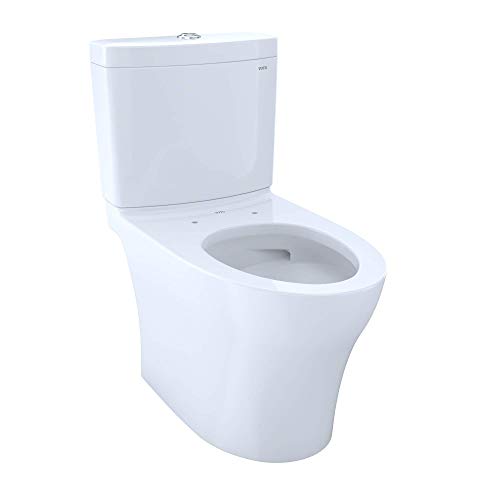
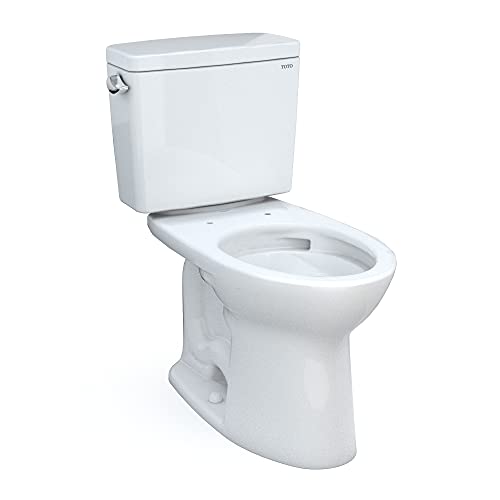
TOTO Drake II (1.28 GPF), TOTO Aquia IV (dual-flush 1.0/0.8 GPF), Kohler Cimarron (1.28 GPF), and American Standard Champion 4 (1.6 GPF with certified 1000-gram MaP score) are among the most efficient and clog-resistant toilets confirmed by third-party MaP testing. All carry EPA WaterSense certification.
Water efficiency and flush performance are not mutually exclusive. MaP (Maximum Performance) testing independently verifies that a toilet can clear 250 to 1000 grams of solid waste per flush. A toilet rated at 1000 grams on the MaP scale at 1.28 GPF wastes far less water per effective flush than a 1.6 GPF model that requires two flushes for the same job.
The best flushing toilets on the market consistently earn both high MaP scores and WaterSense certification, proving that water savings and reliable performance can coexist.
| Model | GPF | MaP Score | WaterSense | Bowl Type | Check Price |
|---|---|---|---|---|---|
| TOTO Aquia IV | 1.0 / 0.8 (dual) | 1000g | Yes | Elongated | Check price |
| TOTO Drake II | 1.28 | 1000g | Yes | Elongated | Check price |
| TOTO UltraMax II | 1.28 | 1000g | Yes | Elongated | Check price |
| Kohler Cimarron | 1.28 | 1000g | Yes | Elongated | Check price |
| American Standard Champion 4 | 1.6 | 1000g | No (1.6 GPF) | Elongated | Check price |
| American Standard Cadet 3 | 1.28 | 800g | Yes | Elongated | Check price |
| Woodbridge T-0001 | 1.28 / 0.8 (dual) | 800g | Yes | Elongated | Check price |
| Gerber Viper | 1.28 | 1000g | Yes | Round / Elongated | Check price |
| Swiss Madison Ivy | 1.28 / 0.8 (dual) | 600g | Yes | Elongated | Check price |
| Kohler Highline | 1.28 | 1000g | Yes | Round / Elongated | Check price |
MaP scores sourced from map-testing.com published results. GPF from manufacturer published specifications.
The TOTO Aquia IV offers 1.0 GPF for liquid waste and 0.8 GPF for the partial flush, with a full 1.0 GPF mode delivering a confirmed MaP score of 1000 grams. In a household that selectively uses the low-flush mode for liquids, annual water use can drop to 5,000 to 6,000 gallons per toilet. TOTO's Tornado Flush technology uses two nozzles rather than a rim with holes, reducing clogged jets and maintaining flush efficiency over time. Check price on Amazon.
The TOTO Drake II uses 1.28 GPF and achieves a MaP score of 1000 grams, meaning it handles the maximum waste load the test allows with 20 percent less water than the 1994 federal standard. Owner reviews across thousands of units cite rare clogging and quiet operation. The Drake II uses a standard 3-inch flapper with a glazed trapway measuring 2-1/8 inches, which resists buildup and maintains efficient flow over time. Check price on Amazon.
The Kohler Cimarron's AquaPiston flush valve uses a canister-style mechanism with a 360-degree water entry that is less prone to seal failure than traditional flappers. At 1.28 GPF with a 1000-gram MaP score, it delivers strong performance with minimal water. Kohler backs it with a limited lifetime warranty on the toilet and a one-year warranty on tank-to-bowl fittings. Check price on Amazon.
A slow toilet leak wastes 30 to 200 gallons per day, costing $33 to $219 per year at national average water rates. A severe run where the flush valve is stuck open wastes up to 624 gallons per day, costing over $680 per year. Most households with a running toilet lose $70 to $200 annually without noticing a visible sign.
Water rates vary significantly by region. The American Water Works Association (AWWA) reports a national average combined water and sewer rate of approximately $0.003 per gallon in 2025. In high-cost markets like San Diego, Seattle, or Atlanta, rates reach $0.006 to $0.009 per gallon, doubling or tripling the waste cost.
| Leak Type | Gallons/Day Wasted | Annual Gallons Lost | Cost (national avg) | Cost (high-cost city) |
|---|---|---|---|---|
| Slow flapper drip | 30 | 10,950 | $33 | $99 |
| Moderate flapper leak | 100 | 36,500 | $110 | $329 |
| Overfilled tank / high float | 200 | 73,000 | $219 | $657 |
| Fill valve stuck open | 400 | 146,000 | $438 | $1,314 |
| Flush valve fully open | 624 | 227,760 | $683 | $2,050 |
National avg rate: $0.003/gallon (AWWA 2025). High-cost city rate: $0.009/gallon.
The cost math makes the repair decision simple. A replacement Kohler or Toto-compatible flapper costs $8 to $15. A universal Fluidmaster fill valve costs $10 to $20. Even at the national average rate, the parts pay for themselves within one to three months for a moderately leaking toilet, and within weeks in a high-rate municipality.
Landlords and property managers managing multi-unit buildings face compounding costs: five running toilets in a building losing 100 gallons per day each waste 182,500 gallons annually at a combined cost of $548 to $1,643 depending on local rates. Scheduling annual dye tests across all units is the single highest-return maintenance action available for reducing utility spend.
Replacing old flappers and fill valves, upgrading to WaterSense-certified 1.28 GPF toilets, and adjusting floats to the minimum effective water level are the three highest-impact strategies. Dual-flush toilets add a behavioral component that can cut flush volume by 30 to 40 percent when users consistently use the low-flush mode for liquid waste.
Replace the flapper: A Korky or Fluidmaster universal flapper fits most 2-inch and 3-inch flush valves. Match the flapper diameter to the flush valve seat. Flappers for TOTO toilets (Toto part number THU175E or compatible) and Kohler toilets use different hook systems. Confirm compatibility before purchase. Installation requires no tools: unhook the old flapper, snap the new one onto the pegs, reconnect the chain, and adjust chain length so the flapper closes fully without binding.
Adjust the float: Ball-float arms bend downward to lower the water line. Tower-style floats (used on Kohler AquaPiston, Toto fill valves, and Fluidmaster 400A) have a turn-dial or squeeze-clip adjustment on the shaft. Set the water line 1 inch below the top of the overflow tube. This eliminates overflow waste without reducing flush water below the effective volume.
Replace the fill valve: Fluidmaster 400A and 400H are the two most widely cited aftermarket fill valves in plumbing forums. Both fit standard 7/8-inch supply connections and have adjustable water level settings. Installation involves shutting the supply valve, removing the old valve with slip-joint pliers, and hand-tightening the new one before reconnecting the supply line.
Dual-flush conversion kits: Geberit and Fluidmaster both make dual-flush retrofit kits that replace the flush valve and handle mechanism of many existing toilets. They add a half-flush button for liquids and a full-flush for solids. At roughly $20 to $50 per kit, they are an intermediate option for toilets in good condition that only need a flush volume reduction.
Low-flow toilet replacement: See our guide on best low-flow toilets for full comparisons. If a toilet pre-dates 2000 and has had multiple component failures, replacement with a WaterSense-certified model typically delivers a stronger ROI than continued repair.
0.8 GPF ultra-high-efficiency toilets: Models like the TOTO Aquia IV at 0.8/1.0 GPF dual-flush or best dual-flush toilets with sub-1.0 GPF modes represent the current efficiency ceiling. In jurisdictions with aggressive water conservation mandates -- including parts of California, Nevada, and Colorado -- building codes now require or incentivize these models.
Pressure-assist systems: Pressure-assist toilets use a sealed air vessel inside the tank to amplify flush power, allowing effective waste clearance at 1.0 GPF or less. The American Standard Titan and Gerber Ultra Flush are among the most reviewed residential pressure-assist options. They are louder than gravity-fed models but eliminate the flapper and fill valve as potential failure points, reducing long-term leak risk.
For a full breakdown of flush technology types, see our flush type guide. For specific low-water-pressure solutions, see how to save water with toilets.
A running toilet wastes between 30 and 624 gallons per day depending on the cause. A slow flapper drip wastes 30 to 50 gallons. A stuck-open flush valve wastes up to 26 gallons per hour, or 624 gallons per day. Most running toilets fall in the 100 to 200 gallons-per-day range.
A worn or degraded flapper is the most common cause in toilets over three years old. The rubber deteriorates from chlorine and mineral exposure, allowing a slow but continuous leak from tank to bowl. Replacing the flapper resolves the majority of running toilet issues.
The dye test is the standard method: add food coloring or a dye tablet to the tank without flushing and wait 15 minutes. If color appears in the bowl, the flapper is leaking. You can also check your water meter before and after a two-hour period of no water use to detect any unaccounted flow.
GPF stands for gallons per flush. It is the published water consumption rate for a single flush cycle. The 1994 federal standard set a maximum of 1.6 GPF. EPA WaterSense certification requires 1.28 GPF or less. Ultra-high-efficiency toilets reach 0.8 GPF or 1.0 GPF.
Yes, significantly. A toilet running at 100 gallons per day adds about 3,000 gallons to your monthly consumption. At the national average combined water and sewer rate, that translates to roughly $9 extra per month or $110 per year per affected toilet.
Most plumbing guides and manufacturer documentation recommend replacing toilet flappers every three to five years as routine maintenance. In areas with heavily chlorinated water or high mineral content, flappers may degrade faster -- sometimes within two years. Performing a dye test annually catches deterioration before visible leaks develop.
EPA WaterSense is a voluntary labeling program that certifies toilets using 1.28 GPF or less while meeting minimum flush performance standards. Certified toilets must clear at least 350 grams of solid waste per the testing protocol. Many certified models exceed this threshold significantly -- TOTO Drake II and Kohler Cimarron both clear 1000 grams at 1.28 GPF.
MaP (Maximum Performance) testing measures how many grams of solid waste a toilet can reliably flush in a single cycle. Scores range from 250 grams to 1000 grams. A high MaP score at low GPF proves the toilet can clear waste without double-flushing, making it genuinely efficient rather than just technically low-flow.
Yes, if users consistently apply the low-flush mode for liquid waste. Dual-flush toilets like the TOTO Aquia IV (1.0/0.8 GPF) or Woodbridge T-0001 (1.28/0.8 GPF) can reduce actual per-flush averages to 0.95 to 1.1 GPF depending on usage patterns. Studies in residential settings show 20 to 30 percent reduction in toilet water use compared to single-flush 1.28 GPF models.
Not inherently, but it uses about 25 percent more water per flush than a WaterSense-certified 1.28 GPF model. The American Standard Champion 4 at 1.6 GPF has a MaP score of 1000 grams, meaning it virtually never requires double-flushing. Whether it is wasteful depends on actual flush performance versus alternatives in a specific household.
With a WaterSense-certified 1.28 GPF toilet and an estimated five flushes per person per day, a family of four uses approximately 9,344 gallons per year per toilet. With two toilets in the home, total annual toilet water use reaches roughly 18,700 gallons, not counting any leak waste.
Yes. Replacing a pre-1994 3.5 GPF toilet with a 1.28 GPF WaterSense model saves roughly 16,000 gallons per year in a two-person household. At the national average rate, that is about $48 in annual water savings. Many utilities offer rebates of $50 to $150 per replaced toilet, often making payback periods under two years.
The overflow tube is the vertical standpipe inside the tank that acts as an emergency drain. If the float is set too high and the fill valve cannot shut off in time, water flows down the tube continuously into the bowl. This silent waste can reach 200 gallons per day or more and is stopped entirely by lowering the float to set the water line 1 inch below the tube's top edge.
Hard water accelerates mineral buildup on flush valve seats and rim jets, roughening surfaces that must seal cleanly. A degraded flush valve seat lets water past even a new flapper, forcing early replacement cycles. Hard water also clogs siphon jets that drive efficient bowl clearance, often leading to double-flushing and increased effective GPF. See our guide on best toilets for hard water.
Ghost flushing refers to a toilet that refills on its own without being flushed by a user. It happens when the flapper leaks slowly enough that the water level in the tank drops to the point where the fill valve activates. This cycle can repeat every 10 to 30 minutes throughout the day, wasting hundreds of gallons. Replacing the flapper stops ghost flushing in most cases.
Pressure-assist toilets achieve reliable waste clearance at 1.0 GPF or slightly below, which can be marginally more efficient than gravity-flush models at 1.28 GPF. However, they are louder and more expensive to repair when the pressure vessel fails. For most residential users, a high-MaP gravity-flush toilet at 1.28 GPF represents the better balance of efficiency, noise, and maintenance cost.
Shut off the supply valve at the wall, remove the tank lid, and visually inspect the flapper and water line. If the water is at or above the overflow tube, lower the float. If the flapper is stiff, warped, or shows mineral deposits, replace it. Both fixes take under 10 minutes with a $5 to $15 part and stop the majority of toilet water waste immediately.
Many utilities across the United States offer rebates for replacing pre-1994 toilets or high-flow models with EPA WaterSense-certified alternatives. Rebates typically range from $50 to $150 per toilet and may cover dual-flush conversions as well. The EPA WaterSense website maintains a rebate finder tool at epa.gov/watersense that lists participating programs by zip code.
The porcelain bowl and tank are the most durable components and typically outlast all hardware by decades. Fill valves generally last 5 to 7 years before degrading. Flappers degrade fastest at 3 to 5 years. The flush valve seat (the ring against which the flapper seals) rarely needs replacement in under 15 to 20 years if water chemistry is moderate and the seat is glazed.
The TOTO Aquia IV is the most water-efficient TOTO toilet in standard residential use, offering 1.0 GPF for the full flush and 0.8 GPF for partial flush, with a MaP score of 1000 grams at 1.0 GPF. The TOTO UltraMax II delivers the same 1.28 GPF and 1000-gram MaP performance as the Drake II in a one-piece format that is easier to clean and slightly more durable in long-term use.
Toilet water waste is almost always preventable with a $10 flapper, a float adjustment, or a fill valve swap. For toilets manufactured before 1994, replacement with a WaterSense-certified 1.28 GPF model like the TOTO Drake II, Kohler Cimarron, or American Standard Cadet 3 delivers the biggest long-term savings -- with utility rebates frequently cutting payback to under two years. Run a dye test on every toilet in your home today; the fix is almost always simpler and cheaper than the water bill damage suggests.
Learn why toilet trapways curve like an S, how each bend blocks sewer gas, and what the shape means for clogs and…
Read the guideAlmost every US toilet has a left-side handle. Learn the plumbing and mechanical reasons behind the layout and when it actually changes.
Read the guideHome toilets rely on tanks because household water lines lack the pressure that public flushometer systems use to flush straight from the…
Read the guide