

Why Toilet Trapways Are Curved Like an S
Toilets4.6
Learn why toilet trapways curve like an S, how each bend blocks sewer gas, and what the shape means for clogs and…
Read the guideWhen every drain in your bathroom drains slowly at the same time, the problem is almost never in the fixture. This guide explains the real causes, how to diagnose them accurately, and when you can fix it yourself versus when a plumber is the only safe call.
When all drains in your bathroom slow down together, the clog or restriction is downstream of every fixture, most likely in the shared branch drain or the main sewer line. A single slow toilet usually points to a toilet trap or local blockage; multiple slow fixtures always point further down the pipe, toward the stack or the sewer itself.
When all bathroom drains drain slowly simultaneously, it almost always means the shared drain line serving those fixtures has a partial blockage, not individual fixtures. In a typical home, the toilet, sink, shower, and tub all connect to a single 3-inch or 4-inch branch line before joining the main stack. A restriction at or below the branch-line junction backs up every fixture above it at once.
This pattern is a reliable diagnostic signal. If only the toilet were slow, you would investigate the toilet trap or supply. If only the tub were slow, hair buildup in the tub drain would be the first suspect. But when the pattern is all-drain, all-slow, look downstream toward the main drain, the stack, or the municipal sewer connection.
Multiple-drain slowdowns are one of the most commonly misdiagnosed plumbing problems in residential homes. Homeowners often spend time plunging the toilet or clearing the sink trap, find nothing, and then call a plumber who immediately identifies a root intrusion or grease buildup 20 feet down the main drain. Understanding the anatomy of your drain system upfront saves time, money, and potential water damage.
When every fixture on one floor backs up at the same time, the differential diagnosis is short: partial main line blockage, a venting problem, or a failing septic system (if applicable). The individual fixtures are almost always fine. The mistake homeowners make is treating each drain separately when the system is telling them the problem is shared.
A residential drain system works in a hierarchy. Each fixture has a P-trap that holds water to block sewer gas. That P-trap connects to a branch drain, typically 1.5 inches for sinks and 2 inches for showers, which feeds into a larger 3-inch or 4-inch horizontal branch. That horizontal branch connects to the main vertical stack, which runs through the house wall and exits to the sewer line underground.
Every branch drain and the stack also connects to a vent pipe that runs up through the roof. Vents prevent a vacuum from forming when water drains, which would cause slow drainage and gurgling sounds across multiple fixtures simultaneously. A blocked vent mimics a partial drain blockage in its symptoms.
Understanding this hierarchy explains why the symptom pattern matters so much. A restriction in a 4-inch main line affects every fixture above it equally. A bird's nest or leaf debris blocking the roof vent cap can restrict airflow so severely that drains throughout the entire house slow to a crawl, even though every pipe below is completely clear.
| Symptom Pattern | Most Likely Location | Likely Cause | DIY Possible? |
|---|---|---|---|
| Only toilet slow | Toilet trap / local branch | Partial clog in toilet trap or nearby line | Yes - plunger or auger |
| Only sink slow | Sink P-trap or drain | Hair, soap scum, toothpaste buildup | Yes - clear P-trap |
| Only tub/shower slow | Tub drain or strainer | Hair clog at strainer or P-trap | Yes - hair removal tool |
| All bathroom drains slow | Shared branch drain or main line | Main line partial clog, root intrusion, venting issue | Partially - vent check first, then pro |
| All drains in house slow | Main sewer line | Severe blockage, root intrusion, collapsed pipe | No - call plumber immediately |
| Toilet gurgles when tub drains | Shared vent or branch line | Blocked vent stack or partial main line clog | Check roof vent first |
The most common causes of simultaneous slow drains across an entire bathroom are, in order of frequency: a partial blockage in the shared horizontal branch drain (often from accumulated soap scum, hair, and debris over years), a blocked or partially obstructed vent stack that creates negative pressure across all drains, and early-stage root intrusion into the main sewer line. Less commonly, a collapsed pipe section or foreign object lodged at a branch-to-stack junction can produce the same effect.
In homes with hard water, mineral scale can build up inside drain pipes over years, gradually reducing the effective diameter of the pipe and causing progressive slowdowns across every connected fixture. This is distinct from a sudden blockage and typically develops over months to years.
The horizontal branch drain is the pipe that connects your toilet, sink, and tub/shower to the main vertical stack. In most bathrooms, this pipe runs inside the wall or beneath the floor at a slope of 1/4 inch per foot. Over time, a combination of soap residue, hair, toothpaste, and the paper products that should not go down drains accumulates at low points or at horizontal bends.
Because this blockage sits downstream of every fixture in the bathroom, it slows all of them equally. The toilet, which produces the largest volume of water in a short time (1.28 to 1.6 gallons per flush for modern EPA WaterSense certified models), tends to show the most dramatic slowdown first, since it overwhelms the restricted pipe more visibly than the trickle from a sink.
Vent pipes run from the drain system up through the roof. They serve two purposes: they allow sewer gas to escape safely, and they admit air so water can flow freely without creating a vacuum. When a vent is blocked, the draining water sucks air through the P-traps of nearby fixtures. You will hear gurgling at the toilet when the tub drains, or notice the toilet water level dropping slightly after a nearby shower.
Common vent blockages include animal nests (birds, squirrels), dead leaves, ice caps in very cold climates, and occasionally debris that falls into an improperly screened vent pipe. A blocked vent can cause slow drains across an entire bathroom or even an entire floor of the house without any physical blockage in the drain pipes at all.
Vent blockages are underdiagnosed because they do not fit the mental model most homeowners have of a drain clog. You cannot plunge or snake a vent problem away. The fix is clearing the vent from the roof, which requires safe roof access. If you hear gurgling sounds when drains are in use and all drains are slow, always check the vent before renting drain equipment.
Tree roots naturally seek out the moisture and nutrients inside sewer lines. Even small cracks in older clay or cast iron pipe, or imperfect joints in PVC pipe, can allow roots to enter and gradually expand, reducing flow capacity over years. Root intrusion almost always starts as a slow drain across all fixtures before progressing to complete blockages and sewage backups.
According to the American Society of Home Inspectors, root intrusion is one of the top five causes of main sewer line failure in homes older than 30 years. Homes with large trees (oak, willow, elm) within 20 feet of the sewer line are at higher risk.
Over years of use, the interior walls of drain pipes accumulate a layer of grease, soap scum, and mineral deposits. This is especially common in main lines serving kitchens and bathrooms. The accumulation narrows the pipe's effective diameter, reducing flow for all fixtures simultaneously. Unlike a hard clog, this type of restriction tends to worsen gradually and may first be noticed as a bathroom-wide slowdown rather than a single blocked drain.
In older homes, drain pipes can sag (called a belly), creating a low point where debris settles and water pools. This reduces flow velocity and causes slow drainage throughout the affected section. Clay sewer pipes from pre-1980 construction are particularly susceptible. A pipe camera inspection is the only reliable way to diagnose a belly or partial collapse.
Start with the least invasive checks first. Listen for gurgling sounds at the toilet or sink when another fixture drains. If you hear gurgling, a vent problem is likely. Go to the roof and visually inspect the vent caps for obstructions. If the vents are clear, run water into all fixtures simultaneously and observe which one backs up first. The fixture that backs up fastest is typically closest to the blockage.
If you can access a cleanout port on your drain system (a Y-shaped fitting with a screw cap, usually near the base of the toilet or outside the house), opening it while drains are slow can confirm whether the blockage is inside the house or between your cleanout and the municipal sewer. Water backing up from the cleanout when you open it confirms the blockage is downstream.
| Step | What to Do | What the Result Tells You |
|---|---|---|
| 1 | Listen for gurgling at toilet when tub drains | Gurgling = vent problem or shared line restriction |
| 2 | Check roof vent caps for debris, nests, ice | Clear vent = drain problem, not vent problem |
| 3 | Run all bathroom fixtures simultaneously | Which backs up first pinpoints proximity to clog |
| 4 | Open cleanout port (if accessible) | Water backing out = blockage is downstream of cleanout |
| 5 | Snake from cleanout toward main line | If snake hits resistance in 5-15 ft, blockage located |
| 6 | Schedule camera inspection if steps 1-5 are inconclusive | Camera confirms root intrusion, belly, or collapse |
Some causes are genuinely DIY-friendly. Clearing a blocked roof vent requires safe roof access and a garden hose or drain snake inserted from the roof, but no special tools. A partial blockage in a horizontal branch drain within 15 to 20 feet of a cleanout port can often be cleared with a 25-foot to 50-foot hand-operated or electric drain snake rented from a hardware store.
Root intrusion, pipe bellies, collapsed sections, and any blockage that cannot be cleared after two attempts with a drain snake require professional equipment, typically a hydro-jet and a pipe camera. Attempting to force a drain snake past a root mass or a collapsed pipe section can cause further damage. When in doubt, a camera inspection is the most cost-effective first step because it eliminates guesswork.
If you have confirmed the vent is blocked and can access the roof safely, the fix is straightforward. Use a flashlight to look into the vent pipe opening from the roof. Remove any visible debris by hand or with a bent wire. Insert a garden hose and flush with water at full pressure. For compacted debris, a drain auger inserted from the roof can break through the obstruction. Always have a second person present when working on roofs.
If you have an accessible cleanout (a 3-inch or 4-inch threaded plug in the drain line), you can rent a drum auger or electric drain snake. Wear rubber gloves and eye protection, as opening a cleanout can release wastewater under slight pressure. Feed the snake toward the main sewer line while rotating. If you feel resistance and then the snake breaks through and all drains immediately improve, you have cleared a soft blockage. If the snake hits hard resistance that does not give, stop and call a plumber.
Call a plumber when: the cleanout backs up with sewage when opened; a drain snake does not clear the problem after 10 to 15 feet; you hear gurgling from floor drains or basement fixtures; there is any sewage smell inside the house from floor drains; the problem has progressively worsened over weeks or months; or the home is more than 40 years old with original cast iron or clay sewer pipe. In these situations, a professional hydro-jet and camera inspection is not optional, it is the correct diagnostic tool.
Hydro-jetting is the most effective way to clear a main line that has grease and scale accumulation. A hydro-jet delivers water at 3,500 to 4,000 PSI, which scours the pipe walls clean rather than just punching a hole through soft debris. After jetting, a camera confirms the result. This two-step professional approach costs more upfront but prevents repeat calls within six months, which is common after a simple snake alone.
A toilet's flush power does not cause slow drains in a shared line, but it does reveal them more dramatically. Toilets that deliver 1.6 gallons per flush introduce a large surge of water quickly, which overwhelms a partially restricted shared drain more visibly than a trickle from a sink. High-MaP-score toilets like the TOTO Drake II (rated at 1,000 grams per the MaP flush-testing protocol) produce a strong, focused siphon-action flush that is better at pushing waste through a partially restricted line than low-power models.
Conversely, if you have an older toilet with a degraded flapper or a partially clogged siphon jet, that toilet's slow flush might be contributing independently to a slow drain appearance, on top of the shared line restriction. Ruling out toilet-specific issues first, before diagnosing the main line, ensures accurate diagnosis.
If you are dealing with recurring drain problems and are also due to replace a toilet, upgrading to a high-MaP-rated model is worth considering. For a full comparison of options that combine strong flush power with EPA WaterSense water efficiency at 1.28 GPF, see our guide to the best flushing toilets currently available. Strong flush systems can more reliably clear waste through partially restricted lines compared to lower-performing models.
Here is a quick look at how popular toilet models compare on flush performance and GPF, which matters when a shared drain line has reduced capacity:
| Model | GPF | MaP Score | Flush Type | EPA WaterSense | Trapway Size | Check Price |
|---|---|---|---|---|---|---|
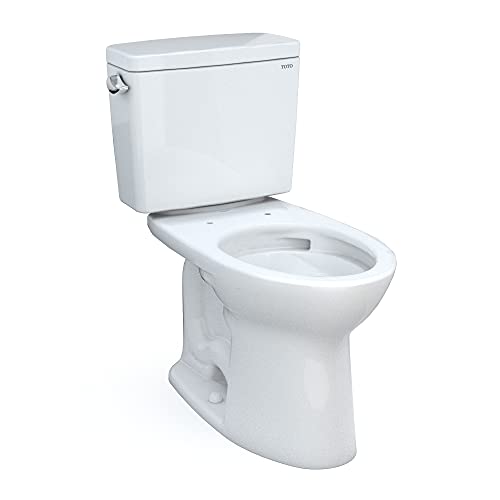
| TOTO Drake II | 1.28 | 1,000g | Tornado Flush (siphon-jet) | Yes | 2 1/8 in | Check price |
| TOTO UltraMax II | 1.28 | 1,000g | Tornado Flush | Yes | 2 1/8 in | Check price |
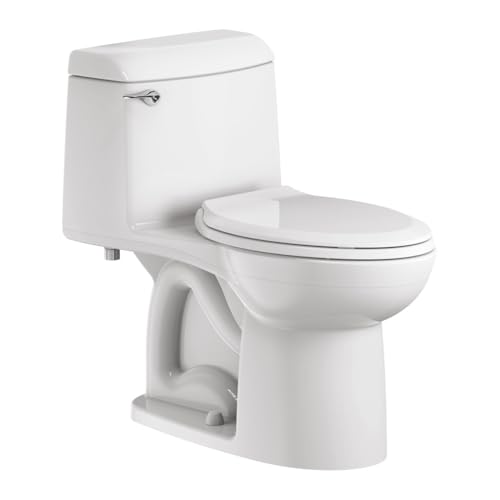
| American Standard Champion 4 | 1.6 | 1,000g | Siphon-action | No (1.6 GPF) | 2 3/8 in (widest available) | Check price |
| Kohler Cimarron | 1.28 | 800g+ | AquaPiston canister | Yes | 2 1/8 in | Check price |
| TOTO Aquia IV | 1.0 / 0.8 | 600g (1.0 GPF mode) | Tornado Flush (dual) | Yes | 2 1/8 in | Check price |
| American Standard Cadet 3 | 1.28 | 800g+ | Siphon-jet | Yes | 2 1/8 in | Check price |
| Kohler Highline | 1.28 | 800g+ | Canister flush | Yes | 2 1/8 in | Check price |
| Woodbridge T-0001 | 1.28 | 800g | Siphon-jet | Yes | 2 1/8 in | Check price |
MaP scores come from the independent Maximum Performance (MaP) flush-testing protocol at map-testing.com. A score of 1,000 grams means the toilet can reliably flush 1,000 grams of simulated waste in a single flush. This is the highest rating available. EPA WaterSense certification at the EPA's epa.gov/watersense portal requires a minimum MaP score and a maximum of 1.28 GPF.
The American Standard Champion 4 is worth a specific mention because its 2 3/8-inch fully glazed trapway is the widest available in the residential market. A larger trapway means waste clears the toilet bowl into the drain line with less resistance. In a home where the main drain has reduced capacity due to partial blockage or scale buildup, a wider trapway may reduce the incidence of visible backups at the toilet specifically. However, this does not address the underlying drain line issue, it only means the toilet itself is less likely to overflow while the shared line is partially restricted.
Ultra-low-flow toilets at 0.8 GPF, like those using the dual-flush mode on the TOTO Aquia IV, introduce significantly less water per flush. In a household with a partially restricted shared drain, this can actually reduce immediate backup risk per flush, since less water volume is competing for restricted pipe capacity at once. However, lower water volume also reduces the hydraulic force available to move waste through the partially restricted line, which can lead to incomplete waste transport and settling of solids closer to the toilet. This is a net negative in drain health over time.
For related reading on how to improve toilet flush power directly, see our guide on how to improve toilet flush power, and for understanding what slow draining specifically from the toilet bowl means, see toilet drains slowly but is not clogged.
The warning signs that a partial drain restriction is escalating toward a full sewage backup are: gurgling sounds from multiple drains at once or from the toilet when no one has flushed it; sewage odors coming from floor drains, basement fixtures, or cleanout ports; water backing up into the shower or tub when the toilet is flushed; and the lowest fixtures in the house (basement sink, floor drain) backing up with gray or dark water during normal household water use.
These symptoms indicate the drain line is near capacity and any additional water use could cause a full backup. At this point, avoid using water in the house as much as possible and call a licensed plumber immediately. A sewer backup inside the home creates a Category 3 water damage situation (black water) that requires professional remediation and can cause significant structural and health hazards.
The single most reliable warning sign that a sewer backup is imminent is water coming up from a floor drain or cleanout while fixtures elsewhere in the house are being used normally. This means the main line is completely blocked and the system has nowhere for water to go except backward. At this stage, shut off the water supply to the house at the main valve if possible, and do not use any fixtures until a plumber has cleared the line and confirmed it is safe.
Drain problems often cluster seasonally. In autumn, leaves and debris can enter improperly capped roof vents and cause vent blockages that produce bathroom-wide slow drains. In winter, in climates where ground temperatures drop below freezing, the section of drain pipe that runs through an unheated crawl space or exterior wall can partially freeze and restrict flow. In spring, as tree roots become most active, root intrusion problems that have been slowly developing often become severe enough to cause noticeable symptoms for the first time.
In summer, increased household water use from guests and heavier outdoor activity increases the flow load on marginally adequate drain systems, revealing restrictions that were not apparent during lighter use periods. If your slow drain problem started suddenly and coincides with a season change or a period of heavy rain, these contextual clues are valuable diagnostic information for your plumber.
If your home uses a septic system rather than municipal sewer, slow drains across multiple fixtures can indicate a full or failing septic tank or a saturated drain field, not a blockage in the pipes at all. Septic systems need to be pumped every 3 to 5 years on average, depending on household size. If the septic tank is full, wastewater has nowhere to go and backs up through every fixture in the house simultaneously. Slow drains in a septic-served home should always include a septic tank inspection as part of the diagnostic process.
For more context on drain blockage solutions that are safe to use, see our article on baking soda and vinegar for unclogging. For problems specifically limited to the toilet not draining, see toilet not draining guide.
The most effective preventive measures for keeping a shared branch drain flowing freely are: use a hair catcher in the tub and shower drain at all times (hair is the number one mechanical cause of P-trap and branch drain buildup); flush only toilet paper and human waste (wipes labeled flushable do not break down adequately in real-world drain conditions and are a major contributor to main line blockages, according to water utility data); run hot water through the sink drain for 30 to 60 seconds after using the sink to help rinse soap scum through the trap; and schedule a professional main line cleaning with hydro-jetting every 5 to 10 years depending on tree proximity and pipe age.
Annual inspection of visible vent cap openings on the roof takes less than five minutes and can prevent vent blockages before they affect drain performance. In regions with high tree coverage, every 2 to 3 years is a more appropriate main line inspection interval.
A sudden slowdown across every bathroom drain at once almost always points to a rapid partial blockage in the shared branch drain or a sudden vent obstruction. Common sudden causes include a foreign object (such as a child's toy or a large clump of hair) lodged at the junction where the bathroom branch meets the main stack, or a bird nest that dropped into a roof vent during a storm. Unlike gradual scale buildup, sudden all-drain slowdowns are often caused by a discrete event.
Yes. A blocked roof vent is a frequently overlooked cause of bathroom-wide slow drainage. Without adequate air supply through the vent, draining water creates a partial vacuum in the pipe, which acts as resistance against the flow. The result is slow drainage at every fixture connected to the affected vent stack. You will often hear a gurgling sound from the toilet when the tub drains, which is a classic sign of a venting problem rather than a drain blockage.
Light use (hand washing, brief showers) is generally acceptable when drains are slow but still draining. However, avoid using the toilet more than necessary and avoid running the washing machine or dishwasher, as high-volume appliances can push a partially blocked system into a full backup. If any fixture is backing up with water when another is used, stop all water use immediately and call a plumber. A full sewer backup is a health hazard.
A main line cleanout is a capped pipe fitting, usually 3 inches or 4 inches in diameter, that provides direct access to the main drain line. It is typically found near the base of the toilet on an interior wall, in the basement, in the crawl space, or outside the house near the foundation. It has a square or hexagonal nut on top (older cleanouts) or a rubber plug. Removing this cap provides access for drain snaking or hydro-jetting and also serves as a diagnostic port.
Chemical drain cleaners (such as those containing sodium hydroxide or sulfuric acid) are designed to dissolve organic matter like hair and soap scum in P-traps and local branch drains. They are largely ineffective on root intrusions, foreign objects, pipe bellies, or blockages more than 5 to 10 feet downstream. For a main line issue affecting all bathroom drains, chemical cleaners will typically not solve the problem and may cause corrosion to older pipes or create a hazardous mixture in trapped water. Mechanical clearing (snaking or hydro-jetting) is more appropriate.
A professional drain snake service for a main line blockage typically costs $150 to $350 depending on location and depth of blockage. Hydro-jetting, which delivers high-pressure water to scour the pipe walls, runs $300 to $600. A pipe camera inspection, which is often recommended before and after clearing to confirm the cause and result, adds $100 to $300 to the total. Root intrusion that has caused significant pipe damage may require pipe repair or replacement, which varies widely by method (spot repair versus full line replacement).
Gurgling at the toilet while the tub drains is a classic symptom of a shared venting or drain problem. When the tub creates a high-flow drain demand, it briefly creates a negative pressure zone in the shared pipe. If the vent is restricted or the shared line is partially blocked, that negative pressure finds the path of least resistance through the toilet P-trap water, creating the gurgling bubble sound. This symptom reliably indicates either a blocked roof vent or a restriction in the shared branch drain downstream of both fixtures.
Root intrusion typically presents as progressively worsening slow drains over months to years, affecting all fixtures simultaneously. It is more common in homes with large trees within 20 feet of the sewer line and in homes with clay or cast iron pipes older than 30 years. Roots also commonly cause gurgling, sewage odors, and in advanced cases, complete blockages. A pipe camera inspection is the only definitive diagnostic method. Chemical root killers (containing copper sulfate or dichlobenil) can slow root growth but do not remove existing roots, and hydro-jetting with cutting attachments is required for clearance.
Yes, though this is a long-term cumulative effect rather than a sudden one. Hard water contains calcium and magnesium ions that precipitate as mineral scale on the interior walls of pipes over years. This scale gradually reduces the internal diameter of drain pipes, lowering flow capacity. The slowdown affects all drains equally because the scale accumulates throughout the shared drain line. Homes on municipal water with high mineral content (measured in grains per gallon or GPG) or on well water without a water softener are most susceptible. Descaling agents or hydro-jetting can address established scale buildup.
Plunging is appropriate when the blockage is in or very near the individual fixture, typically within the P-trap. For a problem affecting all bathroom drains simultaneously, plunging the toilet is unlikely to help because the restriction is downstream of the toilet entirely. Plunging can temporarily push debris further along the pipe, but it will not clear a main line blockage. It is also important to seal other drain openings in the bathroom before plunging, as pressure from plunging can push wastewater up through a sink or tub drain if the shared line is blocked downstream.
If all drains are slow but still draining and there are no sewage odors or backups, you have a window of days to diagnose and address the issue without an emergency premium. However, if any drain is completely stopped, any fixture is backing up with water, there are sewage odors inside the house, or the toilet is showing sewage water rising toward the rim, these are emergency conditions that require same-day professional attention. Delays in these situations risk sewage backup inside the home.
Yes. A partially restricted drain that progresses to a full blockage causes sewage to back up through the lowest fixtures in the home. Sewage is classified as Category 3 (black water) contaminated water, which contains harmful bacteria, viruses, and other pathogens. A sewage backup can damage flooring, subfloor, drywall, and HVAC components and requires professional biohazard remediation. Beyond the backup risk, chronic slow drains indicate a systemic problem in the main line that, if caused by root intrusion or a failing pipe, will worsen over time and become more expensive to address.
A pipe belly (also called a sag or negative grade) occurs when a section of horizontal drain pipe sinks below the proper slope of 1/4 inch per foot. This creates a low point where water pools and solids settle rather than flowing toward the main line. The pooled water and settled solids reduce effective pipe diameter and cause progressively slower drainage. Pipe bellies are common in older homes where soil has shifted under the pipes. They cannot be cleared by snaking or hydro-jetting alone and typically require excavation and pipe realignment or replacement.
Yes, this is strongly supported by data from water utilities and plumbing industry research. Products labeled flushable wipes do not break down in residential drain systems within the timeframe needed to pass through a typical drain system. Unlike toilet paper, which begins disintegrating within seconds of contact with water, wipes retain their fibrous structure. They can pass through the toilet but accumulate in the main drain line, especially at bends and junctions. Multiple water utilities have documented that flushable wipes are a leading cause of residential main drain blockages. Stopping their use is one of the most effective preventive measures available.
Yes. Toilets with lower MaP flush scores deliver less hydraulic force per flush, which can mask a partially restricted main line longer because each flush introduces less water volume and less flow demand. High-performance toilets with MaP 1,000g ratings and strong siphon-action flush systems, such as the TOTO Drake, TOTO UltraMax II, and American Standard Champion 4, reveal main line restrictions more quickly because their flush creates a larger and faster surge of water through the drain. This is not a flaw in the toilet; it is a diagnostic signal that the main line needs attention.
Yes, in two specific scenarios. First, if the municipal sewer system is overwhelmed by storm water (common in combined sewer systems where stormwater and sewage share the same pipe), backpressure in the main line can cause all household drains to slow temporarily during heavy rain. Second, heavy rain can wash debris into roof vents, causing partial vent blockages that slow all drains. If your slow drain problem correlates clearly with heavy rain events, mention this to your plumber as it points toward one of these two causes rather than an internal drain blockage.
Drain snaking uses a rotating cable with a cutting or hooked end to punch through or break apart a blockage. It is effective on soft blockages (grease, paper, hair accumulations) within the reach of the snake (typically 25 to 100 feet depending on equipment). Hydro-jetting uses a specialized nozzle to deliver water at 3,500 to 4,000 PSI, which scours the pipe walls and clears scale, grease film, and debris more completely. Snaking leaves residue on pipe walls; hydro-jetting removes it. For a main line with scale buildup or grease accumulation, hydro-jetting produces longer-lasting results. For a simple soft blockage, snaking is faster and less expensive.
When all bathroom drains slow at once, the fixture is never the problem; the shared drain line is. Start by ruling out a blocked roof vent with a visual inspection, then assess the main branch drain with a cleanout test or drain snake. For anything that a snake cannot clear, or for homes older than 30 years near large trees, a camera inspection and professional hydro-jetting is the right answer. High-MaP-rated toilets from TOTO, Kohler, American Standard, Woodbridge, Swiss Madison, and Gerber will not fix a main line problem, but they will reveal one sooner and handle marginal drain conditions better than low-performance models. Address the drain first, then evaluate the toilet.
Learn why toilet trapways curve like an S, how each bend blocks sewer gas, and what the shape means for clogs and…
Read the guideAlmost every US toilet has a left-side handle. Learn the plumbing and mechanical reasons behind the layout and when it actually changes.
Read the guideHome toilets rely on tanks because household water lines lack the pressure that public flushometer systems use to flush straight from the…
Read the guide