

Why Toilet Trapways Are Curved Like an S
Toilets4.6
Learn why toilet trapways curve like an S, how each bend blocks sewer gas, and what the shape means for clogs and…
Read the guideA toilet that overflows on every flush is not just a nuisance -- it signals a blocked drain, a faulty fill valve, or a water-level problem that will worsen without intervention. This guide walks through every likely cause and the correct fix for each one.
A toilet that overflows on every single flush almost always has a partial or complete drain blockage past the trap, a tank water level set too high, or a fill valve that floods the bowl before the drain can clear. Fix the obstruction first, then calibrate the tank water level to 1 inch below the overflow tube.
The most common reason a toilet overflows on every flush is a partial blockage in the drain line, trap, or sewer stack that slows water from escaping the bowl fast enough to match the incoming flush volume. Secondary causes include a tank water level set above the overflow tube, a faulty fill valve that dumps too much water per flush cycle, or a venting problem that creates negative pressure and prevents the drain from clearing.
If the overflow happens consistently on every flush rather than occasionally, a recurring mechanical failure -- not a one-time clog -- is almost always responsible.
Licensed plumbers consistently report that toilets overflowing on every flush are misdiagnosed as "powerful flushes" by homeowners. In the majority of repeat-overflow service calls, the root cause is a partial sewer line obstruction that reduces drain capacity below what any modern 1.28 GPF flush delivers. A plunger alone cannot fix that -- you need a drain auger or hydro-jetting for a permanent resolution.
You can distinguish a clog from a water-level problem by watching what happens during the flush. If the bowl fills rapidly and the water rises to the rim before slowly draining, the issue is a slow or blocked drain. If the bowl water level is visibly higher than normal even before you flush, the problem is likely a fill valve or float set too high, which is a tank water level issue rather than a blocked drain.
Checking the tank water level is simple: remove the tank lid and confirm the water sits 1 inch below the top of the overflow tube. If it sits at or above the tube, recalibrate the float or fill valve before diagnosing the drain.
The permanent fix depends on the root cause, but the correct sequence is: first lower the tank water level if it is too high; second, plunge the bowl thoroughly to dislodge any soft blockage; third, use a closet auger (toilet snake) to clear material 3 to 6 feet down the drain; fourth, if the toilet still overflows, call a plumber to inspect and hydro-jet the main sewer line.
Skipping straight to chemical drain cleaners is ineffective for solid-waste blockages and can damage older wax rings and rubber seals over repeated use.
Before diagnosing the cause, prevent water damage. Lift the tank lid and push the flapper closed by hand -- this stops more water from entering the bowl. Then turn the toilet's shut-off valve (located on the wall behind or beside the toilet) clockwise until it stops. Place towels or a bucket to absorb any spilled water, and disinfect the floor afterward.
Do not flush again until you have identified and resolved the root cause. Repeated flushing of an overflowing toilet pushes contaminated water further across the floor and can saturate subfloor material, leading to mold growth and expensive structural repairs.
With the lid off the tank, look at the overflow tube -- a vertical plastic or brass pipe, typically located near the center or back of the tank. The water level should sit 1 inch below the top of that tube. If the water is at or above the rim of the overflow tube, the tank is overfilling and dumping excess water continuously into the bowl.
On ball-float systems (older toilets), bend the float arm slightly downward to reduce the shutoff point. On modern cup-float fill valves (the type found on the TOTO Drake, Kohler Highline, and most current two-piece toilets), pinch the clip on the side of the float and slide it downward on the fill valve shaft, then flush and recheck the level. Aim for a water line marked "Water Line" on the inside of most tank walls, or 1 inch below the overflow tube top.
| Tank Water Level vs. Overflow Tube | Effect on Bowl | Action Required |
|---|---|---|
| 1 inch below tube top (correct) | Normal flush volume, no overflow | None -- move to drain inspection |
| At tube top or just below | Marginal -- bowl fills fast | Lower float 0.5 to 1 inch |
| Above tube top (water runs into tube) | Constant draining, overflow risk | Lower float immediately; check fill valve |
| More than 2 inches below tube top | Weak flush, incomplete bowl clear | Raise float; check flapper for early close |
Use a flange plunger (also called a toilet plunger) -- not a flat-cup sink plunger. The flange is the rubber extension that folds out and seals inside the bowl drain opening. A proper seal is essential. Press the plunger firmly into the drain opening, push and pull with steady force 15 to 20 times without breaking the seal, then pull up sharply on the final stroke to create suction.
After plunging, pour a bucket of water directly into the bowl from waist height -- this simulates a flush without adding tank water and lets you see whether the drain now clears quickly. If water drains within 10 to 15 seconds, the plunging worked. If it drains slowly or backs up, the blockage is deeper in the line.
Flange plungers outperform accordion (force-cup) plungers for most toilet blockages because the flexible rubber flange can conform to different drain sizes. The goal is a sealed vacuum, not raw force. Short, sharp strokes create more pressure than long, slow pushes. If the blockage does not clear after 20 plunges, stop -- you need a closet auger, not more plunging effort.
A closet auger is a hand-cranked cable tool designed specifically to navigate the curved trap inside a toilet bowl without scratching the porcelain. Standard drain snakes used for sinks can scratch the bowl's glaze. Insert the auger cable into the bowl drain opening, push gently while rotating the crank clockwise, and feed the cable until you feel resistance. Rotate through the resistance to break up or hook the obstruction, then slowly retract the cable.
Most toilet clogs sit 3 to 6 inches into the trap or immediately past it. A standard 3-foot closet auger handles the vast majority of these. If the auger feeds all the way without finding an obstruction and the toilet still overflows on every flush, the blockage is in the main drain line, not inside the toilet itself.
A blocked or partially obstructed plumbing vent stack can create negative pressure in the drain line. When you flush, the siphon action draws air from the vent pipe. If that vent is clogged by leaves, a bird nest, or debris, the vacuum can slow drain clearing and cause gurgling, slow drains, and repeat overflows -- even when the toilet trap itself is clear.
You can inspect a vent stack from the roof with a flashlight. Some homeowners use a garden hose to flush debris out of the top of the vent pipe. If you hear gurgling from nearby drains (tub, sink) when you flush the toilet, a vent blockage or shared drain obstruction is the likely culprit. This situation requires a licensed plumber or drain specialist with a sewer camera.
If the toilet still overflows on every flush after adjusting the water level, plunging, and snaking, the problem is almost certainly in the main sewer line. Tree root intrusion, grease accumulation, or a collapsed section of pipe reduces the pipe's internal diameter and limits drain capacity. A professional plumber can run a sewer camera to identify the exact location and severity of the obstruction.
Hydro-jetting -- using high-pressure water (typically 4,000 PSI) to scour the inside of the sewer line -- is the most effective cleaning method for roots and grease. Mechanical root cutting is a second option. Neither is a DIY task. Expect a camera inspection to cost between $100 and $300, and hydro-jetting between $300 and $600 depending on pipe length and severity.
A toilet can overflow consistently even when the visible portion of the drain is clear because the obstruction may be located 10 to 30 feet down the line in the main sewer, or because a plumbing vent blockage is preventing proper air displacement during draining. Additionally, a fill valve that malfunctions and continuously dumps water into the bowl -- rather than only during a flush cycle -- will cause the bowl to fill and overflow even without any drain restriction.
Check whether the toilet is running constantly (a hissing or trickling sound from the tank) as a quick test for a fill valve or flapper problem distinct from a drain blockage.
When homeowners call a plumber for an "overflow" and the plumber finds no drain blockage, the usual culprit is a fill valve that never fully shuts off, which raises the bowl water level continuously until it spills over the rim. The fix is a $10 to $25 fill valve replacement, not a drain cleaning. Replacing a fill valve takes under 20 minutes with no special tools and is the single highest-value DIY toilet repair available to homeowners.
Older toilets with 3.5 GPF or 5 GPF flush volumes generated enough water volume and velocity to push waste through partial obstructions that a modern 1.28 GPF or 0.8 GPF toilet cannot. If you recently upgraded to a high-efficiency toilet and began experiencing overflows for the first time, a marginal obstruction that previously self-cleared now requires the reduced flush volume to work harder against it.
The solution is not to return to a high-volume toilet but to clear the obstruction permanently. EPA WaterSense-certified toilets at 1.28 GPF with high MaP flush test scores (800 grams or above) can clear waste effectively in clean, unobstructed drains.
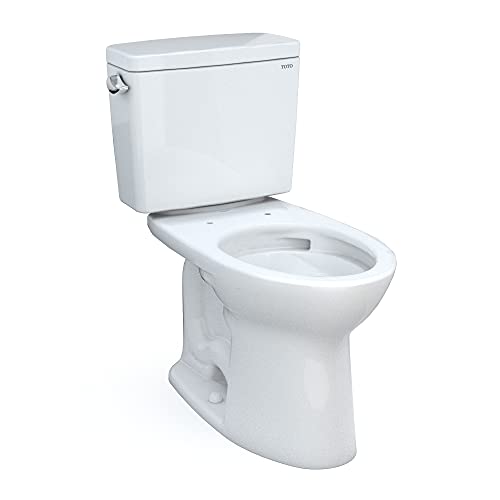
Modern gravity-fed siphon toilets from brands like TOTO, Kohler, American Standard, and Woodbridge use carefully engineered trapways and bowl shapes to maximize the hydraulic force of each gallon. The TOTO Drake II, for example, achieves a MaP score of 1,000 grams at just 1.28 GPF using TOTO's G-Max flushing system. The Kohler Cimarron and American Standard Champion 4 similarly achieve MaP scores of 1,000 grams.
These high MaP scores mean the toilet can evacuate solid waste in a single flush under normal drain conditions. But no MaP score -- not even 1,000 grams -- guarantees performance against a partially obstructed drain line. The MaP test is conducted on a clean test bench, not a sewer line with 20 years of grease accumulation. Clearing the drain is the only lasting fix.
| Toilet Model | Flush Volume | MaP Score | EPA WaterSense | Trapway Diameter | Check Price |
|---|---|---|---|---|---|
| TOTO Drake II (CST454CEFG) | 1.28 GPF | 1,000 g | Yes | 2.125 in | Check price |
| TOTO UltraMax II (MS604114CEFG) | 1.28 GPF | 1,000 g | Yes | 2.125 in | Check price |
| American Standard Champion 4 (2034.014) | 1.6 GPF | 1,000 g | No (1.6 GPF) | 4 in (fully glazed) | Check price |
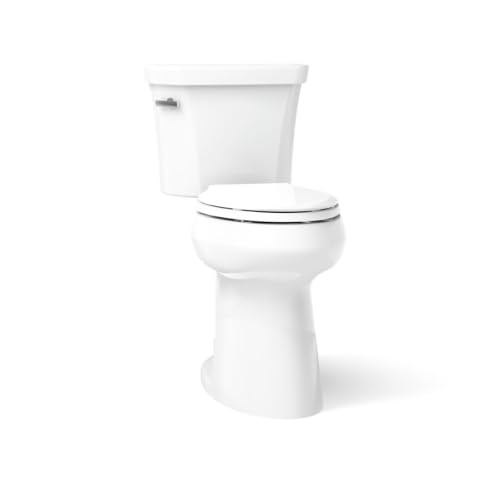
| Kohler Highline (K-3999) | 1.28 / 1.6 GPF | 1,000 g | Yes (1.28 mode) | 2 in | Check price |
| Gerber Viper (21-302) | 1.28 GPF | 1,000 g | Yes | 2 in | Check price |
| Woodbridge T-0001 | 1.28 / 1.6 GPF | 800 g | Yes (1.28 mode) | 2.125 in | Check price |
| TOTO Aquia IV (CT446CUFGT40) | 0.8 / 1.0 GPF | 600 g (0.8 GPF) | Yes | 2.125 in | Check price |
MaP scores from published map-testing.com data. Champion 4's 2-3/8-inch fully glazed trapway is the widest available in a production floor-mount toilet and carries the lowest clog susceptibility rating in MaP extended testing.
If you are working with a toilet manufactured before 1994 (when federally mandated 1.6 GPF limits took effect), or a toilet that has cracked porcelain, a heavily scaled trapway, or a worn-out fill valve and flapper, replacement often makes more financial sense than repeated repair. A toilet older than 25 years is also likely to be a 3.5 GPF or 5 GPF model that costs $100 or more per year in excess water use compared to a current EPA WaterSense-certified 1.28 GPF model.
Consider replacement if repair costs (auger, valve, plumber call) approach or exceed $200, or if you are experiencing multiple recurring problems (running, overflowing, slow fill) simultaneously. For guidance on selecting a replacement, see our guide to the best flushing toilets available today, organized by MaP score, flush technology, and water efficiency rating.
If the overflow is caused by a fill valve that never shuts off or that floods the bowl with too much water, replacing it is straightforward. Turn off the water at the shut-off valve, flush to empty the tank, disconnect the supply line from the bottom of the tank, remove the old fill valve by unscrewing the lock nut underneath the tank, and install a new universal fill valve (Fluidmaster 400A or equivalent). Adjust the float to set the water line 1 inch below the overflow tube before reconnecting the supply line.
A replacement fill valve costs $8 to $25 at most hardware stores and is compatible with virtually all two-piece toilets from TOTO, Kohler, American Standard, Gerber, and Swiss Madison. One-piece toilets from Woodbridge and TOTO may require a specific OEM fill valve -- check the model number before purchasing a replacement.
A flapper that warps, shrinks, or gets coated with mineral scale may not seat properly after a flush. When the flapper stays partially open, it allows water to trickle from the tank into the bowl continuously, raising the bowl water level. Over hours, this can fill the bowl to the point of overflowing -- even without any drain obstruction. This is more common in areas with hard water (above 7 grains per gallon hardness), where mineral deposits build up on the flapper seat.
Test for a leaking flapper by adding a few drops of food coloring to the tank water without flushing. Wait 10 to 15 minutes. If color appears in the bowl, the flapper is not sealing properly. Replace it with a matching OEM flapper or a universal silicone flapper. Silicone flappers resist mineral buildup better than rubber in hard water areas and typically last 5 to 8 years versus 2 to 4 years for rubber. For guidance on selecting the correct part, see our article on toilet flapper selection and replacement.
Mineral-encrusted flappers are the most commonly overlooked source of toilet overflows in homes with hard water. The fill valve does its job -- it shuts off when the tank is full -- but if the flapper then leaks water back into the bowl, the tank refills repeatedly, and the bowl accumulates more water than the drain can handle when you finally flush. A dye test takes three minutes and immediately reveals whether the flapper is the problem.
Every toilet tank contains an overflow tube -- the standpipe that allows excess water to drain harmlessly into the bowl rather than spilling over the edge of the tank onto the floor. The tube itself rarely fails, but if the water level is set so high that it reaches the top of the tube, water continuously runs into the bowl. This constant inflow can overwhelm the drain during a flush.
If you hear the toilet running constantly and can see water dripping into the bowl when you lift the tank lid, the water level is above the overflow tube. Adjust the float downward by the appropriate method for your fill valve type (see Step 2 above). For more detail on the overflow tube's role in toilet function, see our article on the toilet overflow tube explained.
If multiple fixtures overflow or back up simultaneously -- for example, flushing the toilet causes water to bubble up in the shower, or the bathroom sink backs up when the toilet is flushed -- the blockage is in the shared main drain line rather than inside the toilet itself. In this scenario, no amount of plunging, snaking, or toilet adjustment will fix the problem permanently.
Main sewer line blockages from tree root intrusion are the most common cause of whole-house drain backup in homes older than 20 years, particularly those with clay or cast-iron pipe that has not been relined. A plumber with a sewer camera can inspect the full run of pipe and identify whether cutting, hydro-jetting, or pipe replacement is required. This is not a situation where waiting improves the outcome -- partial sewer blockages become complete blockages over time.
Once the root cause is resolved, preventive maintenance reduces the likelihood of recurrence. Avoid flushing anything other than toilet paper and human waste -- wipes labeled "flushable" do not dissolve like toilet paper and are a leading cause of drain buildup, even in toilets with large 2-3/8-inch trapways like the American Standard Champion 4. Paper towels, cotton swabs, dental floss, and feminine hygiene products should always go in the waste bin.
Inspect and clean the toilet's jet holes (the rim holes that direct water into the bowl during a flush) twice a year using white vinegar and a wire brush. Scaled jet holes reduce flush velocity and increase clog risk. Also inspect the wax ring seal at the toilet base annually for signs of leakage -- a failed wax ring allows sewer gas to enter the bathroom and can contribute to slow draining. For guidance on checking this seal, see our article on toilet wax ring leaks and how to fix them.
Toilets with fully glazed trapways -- a feature offered by American Standard on the Champion 4 and Cadet 3, and by TOTO across most of its Drake and UltraMax lines -- resist waste adhesion better than unglazed trapways and are less prone to partial blockages over time. If you live in a large household or have children who use excessive toilet paper, a fully glazed trapway is a specification worth prioritizing in any new toilet purchase. Our comparison of toilet designs by clog frequency covers this in detail.
If plunging did not stop the overflow, the blockage is likely deeper than the trap -- in the drain line 3 to 10 feet down or further in the main sewer. You need a closet auger (toilet snake) or professional hydro-jetting to clear an obstruction that a plunger cannot reach.
Yes. If the tank water level sits at or above the top of the overflow tube, excess water continuously enters the bowl. When you flush, the bowl receives more water than the drain can handle quickly, and overflow results. Lower the float so the water line is 1 inch below the top of the overflow tube.
If only the toilet overflows and all other drains work normally, the blockage is likely in the toilet trap or nearby drain. If flushing the toilet causes water to back up in the shower, sink, or other fixtures, the blockage is in the shared main sewer line and requires professional inspection.
Chemical drain cleaners are generally not effective for solid-waste toilet clogs, which are the most common cause of overflow. Most liquid products work on grease and hair, not waste. Repeated use of caustic chemicals can also degrade rubber seals and the wax ring over time. A plunger or auger is always the safer and more effective first choice.
DIY fixes cost nearly nothing: a flange plunger runs $10 to $20, and a closet auger costs $20 to $50. A new fill valve is $10 to $25. Professional drain snaking typically costs $100 to $200, while hydro-jetting a main sewer line ranges from $300 to $600. A sewer camera inspection adds $100 to $300 if needed.
A closet auger is a drain-clearing tool specifically designed for toilet bowls. It has a protective rubber sleeve or housing that prevents the cable from scratching the porcelain glaze while allowing the cable to navigate the curved toilet trap. A standard sink snake does not have this protection and can damage the bowl's finish.
Yes. A flapper that does not seal properly after flushing allows water to trickle from the tank into the bowl continuously. Over time, this raises the bowl water level until it reaches the drain opening or overflows. Use a food-coloring dye test -- if color migrates from the tank to the bowl without flushing, replace the flapper.
Yes, frequently. Products labeled "flushable" may pass through the toilet trap initially but do not dissolve in water the way toilet paper does. They accumulate in drain lines and are a leading cause of partial and complete sewer blockages. Multiple plumbing authorities and municipalities advise against flushing any wipe product, regardless of the label.
MaP (Maximum Performance) is an independent laboratory test that measures how many grams of simulated waste a toilet can flush in a single attempt. Toilets scoring 800 to 1,000 grams are considered high-performance. A high MaP score reduces clog risk under normal drain conditions but does not prevent overflow if the drain line has a significant obstruction.
The correct water level is 1 inch below the top of the overflow tube, which is usually marked with a "Water Line" indicator on the inside of most tanks. Water above this point continuously drains into the bowl and wastes water; water more than 2 inches below it produces a weaker flush.
Yes. Tree root intrusion is one of the most common causes of recurring toilet overflow in homes with clay or cast-iron sewer pipe. Roots grow into small pipe cracks and expand, gradually reducing drain capacity until even a normal flush cannot clear. A plumber's sewer camera can confirm root intrusion and estimate the extent of blockage.
Gurgling indicates air is being displaced through the wrong path -- usually back through the bowl -- because the plumbing vent stack is obstructed or because a partial drain blockage is forcing air upstream. If you hear gurgling consistently before the bowl fills, inspect the roof vent pipe for debris and check whether other nearby drains gurgle simultaneously.
Turn the shut-off valve clockwise until water is off, then do not use that toilet. Use a different bathroom if available. If you must use the toilet once, turn the water on briefly to flush and immediately turn it off again before the bowl can overfill. Lay down towels or place a bucket nearby in case water does escape.
A wider, fully glazed trapway reduces the likelihood of objects getting stuck and reduces waste adhesion, both of which lower long-term clog frequency. The American Standard Champion 4's 2-3/8-inch fully glazed trapway is the widest available in a standard floor-mount toilet and has the lowest reported clog rate in MaP extended clog testing. However, a large trapway does not compensate for a blocked main sewer line.
Shut off the water at the shut-off valve, remove standing water with towels or a wet-dry vacuum, and disinfect all surfaces that contacted toilet water with a bleach solution (1 tablespoon bleach per gallon of water). Open windows for ventilation. If water reached under baseboards or into subfloor material, run a fan and dehumidifier to prevent mold growth within 24 to 48 hours.
Both the TOTO Drake and Kohler Highline use a cup-float fill valve. To lower the water level, locate the float cup (the plastic cup around the fill valve body) and find the adjustment clip or pinch-and-slide mechanism on the side. Pinch or twist to unlock, slide the cup downward by 0.5 to 1 inch, and release. Flush and check that the water level settles 1 inch below the overflow tube top.
Indirectly, yes. If a fill valve is faulty and adds water to the bowl continuously rather than only during a fill cycle, even a slow drip can raise bowl water to overflow level over hours. A toilet that fills very slowly can also create backpressure in some plumbing configurations. If the toilet makes a hissing or trickling sound between flushes, the fill valve or flapper needs attention.
No -- when the drain line is clean and unobstructed. EPA WaterSense-certified toilets must pass both water efficiency (1.28 GPF or less) and flushing performance standards. Many WaterSense-certified models, including the TOTO Drake II, Kohler Cimarron, and American Standard Cadet 3, achieve MaP scores of 1,000 grams, which is equal to the highest-scoring older 3.5 GPF models.
Plumbing professionals generally recommend a sewer camera inspection every 1 to 2 years for homes older than 25 years with mature trees in the yard, or every 3 to 5 years for newer homes on PVC pipe with no known tree root issues. A preventive inspection costs $100 to $300 and can identify root intrusion or buildup before it reaches the point of causing overflows.
Only if the overflow was caused by the toilet itself -- a faulty fill valve, warped flapper, or broken internal component. If the root cause is a drain line blockage, a new toilet will overflow on the same drain within one or two flushes. Confirm the drain is clear before installing any replacement toilet, and document that the drain flows freely as part of any new installation.
A toilet that overflows on every flush is fixable without a plumber in most cases: lower the tank water level to 1 inch below the overflow tube, plunge with a flange plunger, and follow with a closet auger if the plunger does not clear the drain. If those steps fail, the problem is almost certainly in the main sewer line and requires professional hydro-jetting or camera inspection. Preventive habits -- no flushable wipes, twice-yearly jet-hole cleaning, and regular flapper inspection -- significantly reduce recurrence risk on any toilet, whether it's a TOTO Drake II, Kohler Highline, American Standard Champion 4, or any other model.
Learn why toilet trapways curve like an S, how each bend blocks sewer gas, and what the shape means for clogs and…
Read the guideAlmost every US toilet has a left-side handle. Learn the plumbing and mechanical reasons behind the layout and when it actually changes.
Read the guideHome toilets rely on tanks because household water lines lack the pressure that public flushometer systems use to flush straight from the…
Read the guide