
Best French Toilets (2026)
Toilets4.6
Refined, softly curved one-piece and skirted silhouettes with a polished, Parisian-elegant profile, paired with verified MaP flush scores rather than a stylist's…
Read the guideA toilet flange sitting below the finished floor surface is one of the most common reasons toilets leak at the base, rock back and forth, or fail wax ring seals prematurely. This guide explains why it happens, how to diagnose the exact gap, which repair method fits your situation, and how to verify the fix is watertight before you reinstall the toilet.
Research updated June 2026.
A toilet flange is too low when it sits more than 1/4 inch below the finished floor. The most reliable fix for gaps up to 1/2 inch is a flange extender ring; gaps between 1/2 inch and 1 inch require a stacked wax ring or a wax-free foam gasket rated for that depth. Gaps exceeding 1 inch almost always require resetting the flange itself.
A toilet flange (formally called a closet flange) is the circular fitting that connects the toilet drain horn to the drain pipe in your floor. According to the International Plumbing Code (IPC) and Uniform Plumbing Code (UPC), the top surface of the flange must sit flush with or up to 1/4 inch above the finished floor surface. When it sits lower than that, the wax ring cannot compress evenly against both the toilet horn and the flange, which creates a pathway for sewer gases and wastewater to escape around the seal.
The flange serves two structural roles simultaneously. First, it creates a gas-tight and watertight connection between the toilet outlet and the drain pipe. Second, its collar and mounting holes anchor the toilet bolts (closet bolts) that hold the toilet firmly to the floor. When the flange is too low, the bolts do not grip the floor correctly either, which contributes to the rocking and wobbling that many homeowners blame on a bad wax ring alone.
The correct flange height relative to the finished floor is one of the installation details most often overlooked during bathroom remodels and tile work. If a contractor installs new tile or pours a new concrete underlayment without adjusting the flange, the finished floor rises while the flange stays at the old height. A 3/4-inch ceramic tile installation, for example, can drop the effective flange height by 3/4 inch overnight, which is enough to cause a failed seal within months of reinstalling the toilet.
Plumbing codes are explicit that the flange top must be at or above the finished floor level. In practice, most experienced plumbers target 1/4 inch above finished floor when setting flanges during new construction so there is room to accommodate tile or flooring added later. Flanges set exactly flush leave zero margin and almost always end up too low after flooring goes in.
Remove the toilet and measure the vertical distance from the top of the flange collar to the finished floor surface using a straightedge and a ruler. If the flange top is level with or lower than the surrounding floor, it is too low. Any gap between 1/4 inch and 1/2 inch is a borderline case; anything greater than 1/2 inch below the floor requires a dedicated repair method rather than just a thicker wax ring.
You do not always need to remove the toilet to suspect a low flange. The following symptoms point strongly to a flange that sits below the finished floor:
After shutting off the water supply and removing the toilet, lay a metal straightedge across the finished floor over the flange opening. Use a small ruler or combination square to measure vertically from the underside of the straightedge down to the top of the flange collar. Record this measurement in fractions of an inch. That number tells you which repair option is appropriate.
| Flange Below Floor Level | Severity | Recommended Fix | Typical DIY Difficulty |
|---|---|---|---|
| 0 to 1/4 inch | Borderline | Thick wax ring or standard flange extender | Easy |
| 1/4 to 1/2 inch | Moderate | Flange extender ring (most common scenario) | Easy to moderate |
| 1/2 to 1 inch | Significant | Stacked wax rings or wax-free foam gasket | Moderate |
| Greater than 1 inch | Severe | Reset flange or use deep-set flange extender | Difficult |
The most common cause is new flooring installed over an existing flange without raising it to match the new finished floor height. Other causes include original installation errors where the flange was set too deep in the drain pipe, corroded or broken flanges that have sunk, and concrete or mortar substrates poured around a flange that was not adequately supported.
Understanding the root cause matters because some causes require a different repair than others. If the flange is merely low because of new tile, an extender ring solves it cleanly. If the flange has corroded and cracked, you need to repair or replace the flange body itself before adding any extension. Installing an extender on a damaged flange transfers the problem rather than fixing it.
Ceramic tile at 3/8 inch thickness plus a 3/16-inch mortar bed raises the finished floor by roughly 9/16 inch. Luxury vinyl plank at 1/4 inch is less severe but still enough to push the flange below the recommended threshold. Hardwood or engineered wood adds 3/4 inch. In each case, the installer should have removed the toilet, raised the flange, then reinstalled. When this step is skipped, the next plumbing problem is predictable.
Some flanges are installed too deep in the drain pipe from the start. This typically happens in new construction when the plumber sets the flange before the finished floor level is established, then the concrete or tile work comes in higher than anticipated. PVC flanges are easier to raise than cast iron, but both are possible to fix without cutting the main drain line in most cases.
Cast iron flanges in older homes can rust, thin, and eventually sink into the pipe opening. A rusted cast iron flange that has dropped even 1/4 inch creates an uneven sealing surface in addition to being too low. In this situation, repair the corrosion damage first (with a repair flange or full replacement) before addressing height.
When evaluating a low flange, always inspect the flange collar for cracks, missing sections, and corrosion before choosing a repair path. A flange extender ring placed on a cracked or corroded flange will not hold the toilet bolts securely and the seal will fail again. Spend five minutes examining the existing flange under a flashlight before purchasing parts.
The standard repair is a plastic or stainless steel flange extender ring that glues or screws onto the top of the existing flange to raise the sealing surface to the correct height. These rings are sold in various thicknesses (typically 1/4 inch to 1/2 inch) and can be stacked for greater height. For gaps above 1/2 inch, wax-free gaskets with built-in extension or a reset of the flange itself is more appropriate.
A flange extender ring is a thin collar that fits inside or over the existing flange to raise the effective sealing surface. Most are made from ABS or PVC plastic and secure with either PVC solvent cement or stainless steel screws. They come with slotted bolt holes that allow the standard 5/16-inch closet bolts to pass through and maintain proper spacing.
Steps to install a flange extender ring:
Wax-free foam gaskets made from polyurethane or similar foam compress on installation and create a flexible seal that accommodates more height variation than traditional wax. Brands like Fernco and Oatey produce rated foam gaskets that can bridge 1/2 to 7/8 inch gaps in a single layer. Some are stackable for additional height. Unlike wax, foam gaskets do not sag in warm climates and can be repositioned if the toilet needs to be re-seated during installation.
The installation process for a foam gasket mirrors the extender ring method, but skip the extender ring step. Press the foam gasket onto the toilet horn or onto the flange (following the manufacturer's directions for that specific product). Lower the toilet carefully, ensuring alignment, and compress the gasket fully before tightening the bolts. Foam gaskets should not be reused once compressed.
Stacking two standard wax rings or using one extra-thick (double) wax ring is a common plumber field fix for moderate gaps. One ring goes on the toilet horn and a second on the flange, allowing the two wax layers to compress together as the toilet is seated. While this method works and is used by professionals, it is less precise than a foam gasket or extender ring because the wax can shift during installation if the toilet is not lowered perfectly straight.
When the flange sits more than 1 inch below the finished floor, the most reliable long-term repair is to reset the flange at the correct height. For PVC flanges, this means cutting the existing flange off the drain pipe, installing a new length of pipe at the correct height, and gluing a new flange at or just above floor level. For cast iron systems, a repair flange that expands inside the old flange opening and can be set at the correct height is usually the most accessible approach without opening the floor.
Deep-set flange extenders also exist for gaps up to 1.5 inches. These are solid PVC collar extensions that glue or press-fit onto the existing flange and raise the height substantially. They work well when the existing flange is structurally sound but simply too deep.
For a first-time DIY repair, the screw-down flange extender ring paired with a fresh standard wax ring is the most forgiving option. It does not require cure time and is reversible if something goes wrong during the toilet reinstallation. Save the solvent-weld extender for situations where the subfloor cannot accept screws or you need a permanent chemical bond.
Yes. A flange that sits below the finished floor leaves the toilet base resting on the floor tiles or flooring rather than on the flange collar, which means the floor bolts are not pulling down against a solid stop. This causes rocking under body weight. The same gap that allows rocking also prevents the wax ring from compressing fully against the flange, which is why low flanges cause base leaks even with brand-new wax rings installed.
Homeowners frequently replace the wax ring when a toilet leaks at the base, only to find the leak returns within weeks or months. Each flush exposes the compromised seal to pressure. Wastewater and sewer gas escape through the gap. Because the porcelain base and the floor absorb and evaporate small amounts of water quickly, the damage is not always obvious until the subfloor softens or discolors, at which point the repair becomes significantly more expensive.
Related problems from a low flange include:
If you are experiencing a rocking toilet and have already replaced the wax ring once, measuring the flange height is the logical next step before spending money on another wax ring. See our guide on fixing a rocking or loose toilet for the full diagnostic process.
For most low-flange repairs, you need a flange extender ring or foam gasket matched to the gap measurement, a new wax ring or wax-free gasket, new closet bolts, a pair of plastic washers and brass nuts, and a tube of PVC primer and cement if using a solvent-weld extender. A putty knife, adjustable wrench, and measuring tape complete the tool list.
Here is a complete parts and tools checklist for the standard flange extender repair:
Total parts cost for a standard flange extender repair typically runs between $20 and $60 depending on the extender ring type and wax ring brand. This is far less than the cost of a plumber visit, which ranges from $150 to $350 for flange repair depending on local rates and the complexity of the job.
Flange extenders come in several fitting styles. Before purchasing, determine whether your existing flange is 3-inch or 4-inch (inner diameter). Most residential toilets use a 4-inch drain and a matching 4-inch flange. Extender rings are labeled by the inner diameter of the flange they fit. If in doubt, measure the opening diameter of your existing flange with a tape measure; the inside of the collar where the pipe connects should measure approximately 3.5 to 4 inches for a standard 4-inch drain.
Also check whether your flange is PVC, ABS, or cast iron. PVC and ABS extenders are generally interchangeable if you use the appropriate solvent cement for your pipe material. Cast iron flanges may need a rubber or neoprene repair flange that expands to grip the inside of the old cast iron collar.
If your current toilet is from a brand like TOTO, Kohler, American Standard, Woodbridge, Swiss Madison, or Gerber, the toilet itself does not affect the choice of flange extender. The extender interfaces with the drain, not the toilet. What matters is the drain pipe material and diameter, not the toilet brand.
When purchasing a flange extender kit, choose one that includes new closet bolts. Old closet bolts are worth replacing regardless because they corrode and the slot that holds them in the flange can wear out. Fresh bolts cost under $5 and eliminate one variable from the repair.
One side benefit of correcting the flange height is that it opens the door to installing a higher-performance toilet if you are replacing an old unit at the same time. Models like the TOTO Drake II (MaP flush score of 1000 grams at 1.28 GPF) and the American Standard Champion 4 (also 1000 grams, 1.6 GPF) are engineered to seat on a properly leveled flange for optimal wax ring compression. The best flushing toilets all assume a code-compliant flange height. See our toilet installation guide for full reinstallation steps once your flange is corrected.
If you are replacing the toilet as part of this project, check the rough-in measurement before purchasing. The standard rough-in is 12 inches from the finished wall to the center of the drain, but some older homes have 10-inch or 14-inch rough-ins. See our toilet rough-in measurement guide to confirm your dimension before buying. Also check the wax ring replacement guide for more detail on wax ring selection.
Any flange more than 1/4 inch below the finished floor surface is technically out of code compliance and creates a risk of seal failure. In practice, many toilets survive with a flange 1/4 to 3/8 inch low using a thick wax ring, but this is not a reliable long-term solution. If the gap exceeds 1/2 inch, a dedicated repair is necessary.
A double-thick wax ring or extra-thick wax ring can compensate for gaps up to about 1/2 inch and is a common plumber field fix. However, thick wax rings are more prone to shifting during installation and provide less resistance to rocking than a proper extender ring. For gaps beyond 1/2 inch, wax alone is not reliable.
A flange extender ring installation is a realistic DIY task for a homeowner comfortable with basic plumbing. The job requires removing the toilet, installing the extender, and reinstalling the toilet with a new wax ring. No soldering, cutting of supply lines, or access to the main drain is typically needed. If the flange itself is cracked, corroded, or needs to be reset in the pipe, that is a step up in complexity and may warrant a plumber.
A low flange will eventually cause the wax ring seal to fail, leading to water leaking at the toilet base with each flush. Over time, this water infiltrates the subfloor and causes wood rot, mold, and structural damage. Sewer gases can also escape into the bathroom. The longer a low flange goes unaddressed, the more expensive the eventual repair becomes.
Remove the toilet and measure the flange height. If the flange sits more than 1/4 inch below the finished floor, the low flange is the cause. Also look at the old wax ring: if the wax shows a clean, uniform compression ring around the full circumference, the seal was working. If the compression is uneven or concentrated on one side, the flange was low or tilted.
Yes. When the flange is below floor level, the toilet base rests on the tile or flooring rather than being supported by the flange collar. The closet bolts pull the toilet down but without a stop, the toilet shifts slightly with each use. Shimming the base with plastic toilet shims can reduce the rocking temporarily, but raising the flange is the permanent fix.
A flange extender ring is a plastic collar that fits over or inside the existing flange to raise the effective sealing surface. It has new slotted bolt holes for the closet bolts and provides a flat, level surface for the wax ring to seat against. Most extender rings attach with either screws into the subfloor or PVC solvent cement bonded to the existing flange.
Most manufacturers rate their rings for stacking up to two layers, which typically provides up to 1 inch of total height. Beyond that, the leverage on the outer edge of the stack can cause the assembly to flex. For gaps greater than 1 inch, a deep-set single extender, a foam gasket rated for that depth, or a full flange reset is more appropriate than stacking multiple thin rings.
Yes. If you are using a flange extender ring to correct the height, use a standard (single-thickness) wax ring because the extender has already brought the surface to the correct level. If you are compensating for a low flange without an extender, choose an extra-thick or double wax ring. Never use a thin wax ring on a low flange; it will not compress enough to seal.
Wax-free foam gaskets are designed for exactly this situation. Many foam gaskets can accommodate gaps of 1/2 to 7/8 inch without needing a separate extender ring. They are also reusable during installation (you can reposition the toilet before final seating) and do not require cure time. Follow the manufacturer's specifications for maximum gap rating before relying on foam alone.
Concrete floors cannot be shimmed with screws the way wood subfloors can. For concrete, use a solvent-weld PVC extender ring bonded to the existing flange with PVC cement, or a mechanical expansion repair flange that locks inside the existing flange collar. Anchor the ring with concrete anchors if the extender has a flange that extends to the floor surface. Allow full cure time before reinstalling the toilet.
A repair flange replaces the bolt slot functionality of a damaged or corroded flange by fitting inside or around the old one; it corrects structural damage but does not necessarily add height. A flange extender ring adds height to a structurally intact flange that is simply too low. Some products do both; read the product description carefully to understand what problem each part is designed to solve.
It is unlikely that a flange physically dropped, but several things can change the effective seal height over time. A wax ring that is very old can lose elasticity and compress unevenly. A floor that has settled can shift the flange slightly. More commonly, someone installed new flooring without adjusting the flange. Check whether any floor work was done in the past few years before diagnosing.
Opinions among plumbers vary. Caulking the perimeter hides the gap between the porcelain base and the floor and prevents surface water from getting under the toilet. However, it also hides a base leak if the wax seal fails later. A compromise is to caulk three sides and leave the back side (toward the wall) open, so any future leak will show at the front rather than accumulating hidden under the base.
For a homeowner with no prior plumbing experience, plan for two to three hours including toilet removal, measurement, parts installation, and toilet reinstallation. An experienced DIYer can complete the job in about one hour. If you use a solvent-weld extender ring, add one hour of cure time before reinstalling the toilet, which means the bathroom will be out of service for at least two hours minimum.
A low flange itself is a pre-existing installation defect and is generally not covered. However, if water damage to the subfloor resulted from a sudden leak (and not gradual seepage over time), some policies may cover the water damage remediation. Gradual seepage damage is typically excluded. Contact your insurer with documentation of the damage extent and timeline.
Most residential toilets drain through a 3-inch or 4-inch pipe. The flange extender must match the outer diameter of your existing flange collar, not the pipe diameter. Measure the outer diameter of the flange ring: 4-inch flanges are most common. The extender thickness should match your measured gap; if the flange is 3/8 inch low, choose a 3/8-inch or 1/2-inch extender ring.
No. The toilet must be removed to access the flange and install any repair. There is no method to raise a flange or seal a low wax ring without lifting the toilet. Any claim to the contrary is not consistent with how residential toilet drains are assembled.
No. The toilet horn (the outlet at the bottom of the toilet) has a standard diameter across all toilet brands including TOTO, Kohler, American Standard, Woodbridge, Swiss Madison, and Gerber. The flange and extender interface with the drain pipe, and the wax ring bridges the toilet horn to the flange top. Toilet brand does not change the repair approach.
Replace the entire flange when: the collar is cracked or has missing sections; the bolt slots are damaged and will not hold closet bolts securely; the flange has corroded through on a cast iron system; or the flange is so low (more than 1.5 inches below floor) that an extender would create an unstable stack. A repair that costs $60 in parts but fails in six months because the base flange was compromised is not a good investment.
A toilet flange that sits more than 1/4 inch below the finished floor is the root cause of most recurring toilet base leaks and chronic rocking problems. The repair is nearly always within DIY reach: measure the gap, choose the right flange extender ring or foam gasket, and reinstall the toilet with a fresh wax ring. Skipping this diagnosis and simply replacing the wax ring is why many homeowners deal with the same leak two or three times. Fix the flange height once and the seal will hold for years.
How we rank & our data sources
We do not run physical lab tests. Rankings are built from published, verifiable data and real owner feedback, never paid placement.
Researched by Derek Whitman · Last updated May 19, 2026 · Our review method
Refined, softly curved one-piece and skirted silhouettes with a polished, Parisian-elegant profile, paired with verified MaP flush scores rather than a stylist's…
Read the guide
Clean, low-profile silhouettes with real MaP-verified flush performance and efficient dual-flush water use, sized for a minimalist Nordic bathroom without sacrificing function.
Read the guide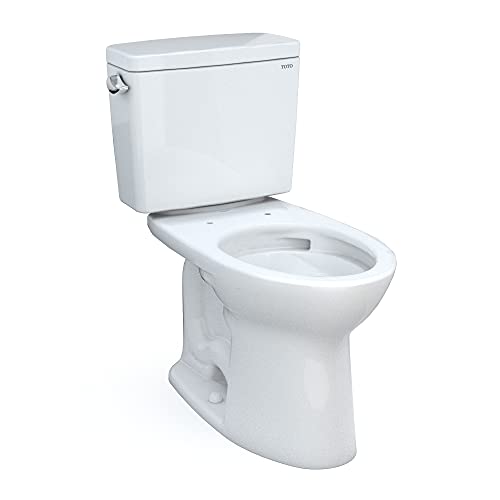
Classic two-piece toilets with tall tanks and elegant, understated proportions, the quiet country-house look that suits a traditional English bathroom without tipping…
Read the guide