


Best French Toilets (2026)
Toilets4.6
Refined, softly curved one-piece and skirted silhouettes with a polished, Parisian-elegant profile, paired with verified MaP flush scores rather than a stylist's…
Read the guideHow gallons per flush translate into annual costs, and exactly how much upgrading to a WaterSense model can save a typical household each year.
Research updated June 2026.
Toilets account for roughly 24 to 30 percent of a home's indoor water use. Upgrading from an old 3.5 GPF model to a 1.28 GPF WaterSense toilet cuts toilet water consumption by 63 percent, saving an average household around 13,000 gallons and $130 to $180 per year on combined water and sewer bills.
A household with four people flushing an average of five times per day uses between 9,344 and 25,550 gallons per year depending on the toilet's GPF rating. The EPA estimates that the average American flushes 5 to 8 times daily, meaning toilet water use easily tops 20,000 gallons annually in older homes equipped with pre-1994 fixtures rated at 3.5 GPF or higher. Modern 1.28 GPF WaterSense toilets cut that consumption to roughly 9,344 gallons for the same household and flush frequency.
Water bills are made up of dozens of variables, but the toilet is almost always the single largest indoor water consumer in a residential home. The EPA's WaterSense program, which sets standards for water-efficient plumbing, reports that toilets account for nearly 24 percent of indoor household water use in the United States. Other industry analyses push that figure to 30 percent in households with older 3.5 or 5.0 GPF toilets still in service.
Understanding GPF, or gallons per flush, is the most direct path to controlling that portion of your water bill. This guide works through the math at every common GPF tier, explains what federal and state standards apply, and identifies which models from TOTO, Kohler, American Standard, Woodbridge, Gerber, and Swiss Madison deliver both strong flushing performance and genuine water savings.
Most utility rebate programs require EPA WaterSense certification, which demands a maximum of 1.28 GPF and a minimum MaP score of 350 grams. Many qualifying models now score 800 to 1,000 grams on the MaP protocol, proving that low water use does not require sacrificing flush power. Always verify your local utility's rebate page before purchasing; rebates of $50 to $150 per fixture are common and can offset the cost of an upgrade entirely within the first year.
GPF stands for gallons per flush and is stamped on the toilet's tank lid or printed on a label inside the tank, typically near the water line mark. Pre-1994 toilets commonly used 3.5 or 5.0 GPF; the 1992 Energy Policy Act capped new toilets at 1.6 GPF; and EPA WaterSense models must use no more than 1.28 GPF. The difference between a 3.5 GPF and a 1.28 GPF toilet is 2.22 gallons per flush, which compounds into thousands of gallons and meaningful dollar differences annually for any household.
The GPF rating stamped on your toilet is the single most important number for estimating its annual water cost. To find it without dismantling anything, lift the tank lid. There is almost always a molded number on the underside or a sticker on the interior wall of the tank. Common values you will find:
A dual-flush toilet's "effective GPF" depends on how often household members use each flush mode. The EPA uses an approximation of 67 percent liquid flushes and 33 percent solid flushes to calculate average consumption. Under that formula, a 0.8/1.6 GPF dual-flush toilet has an effective GPF of about 1.07, making it among the most water-efficient options available.
| GPF Rating | Flushes/Year | Gallons/Year | vs. 1.28 GPF Savings | Est. Annual Cost* | Era / Standard |
|---|---|---|---|---|---|
| 5.0 GPF | 7,300 | 36,500 | 27,156 gal saved | $365, $548 | Pre-1980 |
| 3.5 GPF | 7,300 | 25,550 | 16,206 gal saved | $256, $383 | 1980, 1993 |
| 1.6 GPF | 7,300 | 11,680 | 2,336 gal saved | $117, $175 | 1994, present |
| 1.28 GPF (WaterSense) | 7,300 | 9,344 | Baseline | $93, $140 | 2006, present |
| 1.0 GPF | 7,300 | 7,300 | 2,044 gal extra saved | $73, $110 | Pressure-assist / Niagara |
| 0.8/1.6 GPF Dual-Flush (avg 1.07) | 7,300 | 7,811 | 1,533 gal extra saved | $78, $117 | 2010, present |
*Cost estimate uses a blended water + sewer rate of $0.01 to $0.015 per gallon, representative of U.S. urban median rates. Actual rates vary widely by municipality.
Replacing a single 3.5 GPF toilet with a 1.28 GPF WaterSense model saves roughly 16,200 gallons per year for a four-person household, translating to $130 to $240 in annual water and sewer bill savings depending on local utility rates. Homes with two or three old 3.5 GPF toilets can see combined savings of $300 to $600 per year, with payback periods often under two years when utility rebates are included. The EPA WaterSense program estimates that a household replacing all its pre-1994 toilets can save more than $110 annually on water bills alone.
Savings calculations require two numbers: the GPF difference between your old and new toilet, and your local blended water and sewer rate per gallon. Sewer charges typically mirror water charges because utilities base them on water metered into the home, so the real per-gallon cost is roughly double the published water rate.
According to the American Water Works Association (AWWA), the average U.S. residential water rate in 2024 was approximately $0.005 to $0.008 per gallon. Sewer surcharges add an equal or greater amount, pushing blended cost to $0.01 to $0.015 per gallon in most mid-sized cities. High-cost markets like San Francisco, Atlanta, and Denver can reach $0.02 per gallon or more when tiered rate structures apply to above-baseline consumption.
The savings are largest for households that still have original pre-1994 fixtures. A single 3.5 GPF toilet in a home with four residents and five daily flushes per person wastes the equivalent of a full swimming pool in extra water every three years compared to a WaterSense model. Even replacing one toilet delivers meaningful bill reductions, and most utilities offer rebates that make the net cost of upgrading surprisingly low.
The 1.28 GPF WaterSense tier offers the best balance of water savings and flush performance for most households: dozens of models from TOTO, Kohler, American Standard, and Gerber score 800 to 1,000 grams on the independent MaP flush protocol, confirming they clear waste reliably. Ultra-low 1.0 GPF toilets require either pressure-assist technology or precise hydraulic engineering to match that performance, while standard gravity-fed 1.0 GPF models sometimes need two flushes, erasing their savings advantage. Dual-flush toilets with a 0.8/1.6 GPF split achieve effective averages around 1.07 GPF without compromising on solid-waste handling when the 1.6 GPF mode is used.
MaP Testing, an independent protocol administered by Veritec Consulting and IAPMO, measures how many grams of simulated solid waste a toilet can clear in a single flush. Scores range from 0 to 1,000 grams. The EPA WaterSense program requires a minimum MaP score of 350 grams for certification, though most certified models comfortably exceed 500 grams.
The concern many homeowners have about switching to 1.28 GPF is losing flush power. MaP data consistently shows this concern is largely unfounded for name-brand models:
If you want maximum water savings at 1.0 GPF, the Niagara Stealth uses a patented air-transfer technology that produces a 1,000-gram MaP score at just 0.8 GPF on the liquid side. Pressure-assist models from Gerber Ultra Flush also achieve reliable performance at 1.0 GPF but produce more noise than gravity models.
For guidance on choosing high-performance models regardless of GPF, see our full best flushing toilets guide, which ranks models by MaP score and flush technology across every GPF tier.
Lower GPF toilets reduce the total water volume entering a septic tank each day, which can improve retention time and help bacterial digestion work more efficiently in properly sized systems. For municipal sewer connections, a lower GPF means less wastewater entering the public system, reducing utility sewer fees that are typically billed in proportion to water consumption. Neither septic systems nor municipal sewers require a minimum flush volume to function correctly with properly engineered low-flow toilets, provided the drain lines maintain adequate slope (1/4 inch per foot of horizontal run).
Homeowners on septic systems often ask whether reducing flush volume risks solids not reaching the tank or building up in drain lines. This is a legitimate concern if your waste line runs horizontally more than 10 feet with inadequate slope. However, TOTO's Tornado Flush, American Standard's EverClean system, and Kohler's AquaPiston technology all engineer high exit velocity to move waste efficiently through standard 3-inch drain lines even at 1.28 GPF. If your home has older 4-inch cast iron drain lines with adequate slope, 1.28 GPF gravity toilets perform without issue in the vast majority of documented installations.
For septic households, water conservation also extends the intervals between septic tank pump-outs, which typically cost $300 to $600. Reducing household toilet water use by 15,000 gallons per year measurably slows the filling of an average 1,000-gallon septic tank.
Homeowners on septic systems are sometimes advised to stick with 1.6 GPF toilets to ensure adequate drain-line hydraulics. Modern 1.28 GPF toilets with engineered flush dynamics, including TOTO's Tornado Flush and American Standard's PowerWash rim, are designed to compensate for reduced volume with increased velocity, and septic professionals increasingly recognize they work well provided drain lines meet standard pitch specifications. If your drain lines are old, have questionable slope, or have a history of buildup, a plumber's evaluation before switching to ultra-low-flow is worthwhile.
The EPA WaterSense label certifies toilets using a maximum of 1.28 GPF that also pass independent MaP flush performance testing at 350 grams minimum. Most U.S. water utilities offer rebates of $25 to $150 per WaterSense toilet replaced, and several states including California, Texas, and Arizona run statewide programs. California's tiered rate structure in many districts makes WaterSense toilets financially mandatory for households in higher usage tiers, and the LADWP offers rebates up to $125 per toilet replaced.
The EPA WaterSense program was established in 2006 and has certified thousands of toilet models from virtually every major manufacturer. Key facts about the program:
State and local rebate programs vary widely. The WaterSense website maintains a searchable rebate finder at epa.gov/watersense/rebate-finder. Notable programs as of mid-2026 include:
When stacked against the purchase price of a solid WaterSense toilet in the $200 to $350 range, a $100 rebate cuts payback time to under two years even before accounting for annual water bill savings. Some utilities also offer free toilet replacement programs for low-income households.
For a deeper breakdown of certified models and how to navigate the rebate landscape, see our toilet rebate guide for 2026 and the dedicated WaterSense toilets explained article.
You do not need a water bill calculator tool to estimate your toilet's annual water cost. The formula is straightforward:
Annual Gallons = GPF x Flushes Per Person Per Day x Household Members x 365
Then multiply annual gallons by your local blended water + sewer rate per gallon. Your water bill states usage in CCF (hundred cubic feet) or in thousands of gallons. To find your cost per gallon, divide your total bill by total gallons used (convert CCF to gallons: 1 CCF = 748 gallons).
Example calculation for a family of four with a 3.5 GPF toilet and 6 flushes per day per person, at $0.012 per gallon blended rate:
Same household with a 1.28 GPF WaterSense toilet:
The savings grow proportionally with household size. A home with four bathrooms and two old 3.5 GPF toilets used by six family members at average frequency can save $400 to $600 per year by upgrading both toilets.
| Household Size | Old GPF 3.5 | Old GPF 1.6 | Daily Flushes Assumed | Rate Used |
|---|---|---|---|---|
| 1 person | $54 saved/yr | $13 saved/yr | 5/day | $0.012/gal |
| 2 people | $108 saved/yr | $26 saved/yr | 5/day | $0.012/gal |
| 4 people | $216 saved/yr | $51 saved/yr | 5/day | $0.012/gal |
| 6 people | $325 saved/yr | $77 saved/yr | 5/day | $0.012/gal |
| 4 people (high-cost market) | $432 saved/yr | $102 saved/yr | 5/day | $0.024/gal |
Savings are per toilet replaced. Homes with multiple old toilets multiply savings by the number of fixtures upgraded.
The TOTO Drake II and TOTO UltraMax II both achieve a 1,000-gram MaP score at 1.28 GPF, making them the benchmark for efficiency-meets-performance. The American Standard Cadet 3 also scores 1,000 grams at 1.28 GPF and is widely available at lower price points. For dual-flush efficiency, the TOTO Aquia IV at 0.8/1.28 GPF offers an effective GPF near 0.96 with a 1,000-gram MaP rating on its full flush, and the American Standard H2Option delivers a similar combination. Woodbridge T-0001 and Swiss Madison toilets are budget-friendly 1.28 GPF options with MaP scores around 800 grams and WaterSense certification.
Below is a breakdown of recommended models across GPF tiers, each chosen for the combination of water efficiency and proven flush performance documented through MaP testing and aggregated owner reviews.
The Drake II is a two-piece gravity toilet using TOTO's Double Cyclone flushing technology. It achieves a 1,000-gram MaP score while consuming just 1.28 GPF, the WaterSense maximum. The SanaGloss ceramic glaze reduces surface buildup, and the comfort-height bowl suits most adult users. Owner reviews consistently highlight reliable single-flush performance even for heavy household use. For a full analysis, see our TOTO Drake II review.
Check price on AmazonAmerican Standard's Cadet 3 delivers a 1,000-gram MaP score at 1.28 GPF using a large 3-inch flapper and EverClean antimicrobial surface. It is EPA WaterSense certified and available in two-piece configurations that suit a wide range of rough-in sizes. The PowerWash rim scrubs the bowl with each flush. For households upgrading from older 3.5 GPF fixtures, the Cadet 3 offers the same flush reliability at 63 percent less water. Full details are in our American Standard Cadet 3 review.
Check price on AmazonThe Aquia IV is TOTO's flagship dual-flush model, using 0.8 GPF for liquid waste and 1.28 GPF for solid waste. Its effective average GPF under EPA's use model is approximately 0.96. MaP score on the full flush is 1,000 grams. CEFIONTECT ionic barrier glaze is standard. For households with mixed use patterns, the Aquia IV can reduce annual toilet water consumption below 7,000 gallons for a four-person household.
Check price on AmazonKohler's Cimarron uses the AquaPiston canister flush valve, which allows water to enter the bowl from 360 degrees rather than from one side. This produces a more complete bowl rinse and earns a MaP score of 800 grams at 1.28 GPF. It is EPA WaterSense certified, comfort height, and available in elongated and round bowl configurations. Kohler's limited lifetime warranty applies to this model.
Check price on AmazonThe Woodbridge T-0001 is a skirted one-piece toilet offering a MaP score around 800 grams at 1.28 GPF with WaterSense certification. Its concealed trapway and one-piece design simplify cleaning, and it represents strong value for homeowners who want efficient flushing in a modern aesthetic without paying premium pricing. Aggregated owner reviews cite reliable flushing performance and minimal clogs.
Check price on AmazonGerber's Viper is a heavy-duty gravity toilet achieving a 1,000-gram MaP score at 1.28 GPF. It uses a 3-inch flush valve, a large 2 3/8-inch trapway, and fully-glazed surfaces. The Viper is EPA WaterSense certified and particularly well-regarded in high-traffic installations. Gerber offers a 5-year warranty on the flush valve and fill valve.
Check price on AmazonThe EPA estimates toilets account for approximately 24 to 30 percent of indoor residential water use. In homes with older high-flow toilets, the share can reach 40 percent. The exact percentage depends on your toilet's GPF, household size, daily flush frequency, and what other water uses you have (showers, laundry, dishwashers).
Most research estimates 5 to 8 flushes per person per day in residential settings. The EPA uses 5 flushes per person per day as its standard calculation for water savings estimates. Actual frequency varies by diet, hydration, and personal habits.
Yes, for virtually all residential households. Multiple models from TOTO, American Standard, and Gerber achieve perfect 1,000-gram MaP scores at 1.28 GPF. The key is choosing a model with an engineered flush system rather than a basic single-flapper mechanism. See the MaP testing database at map-testing.com to verify any specific model's score before purchasing.
For a four-person household flushing five times per day, the difference is approximately 2,336 gallons per year. At a blended rate of $0.012 per gallon, that equals about $28 per year per toilet. Over a toilet's 20-year lifespan, the savings from choosing 1.28 GPF over 1.6 GPF reach $560 per fixture.
Yes, dramatically. A toilet that runs continuously wastes 200 gallons or more per hour, which can add $300 to $700 or more to a monthly water bill if undetected for several weeks. A toilet with a minor leak at the flapper wastes 30 to 200 gallons per day silently. Adding food coloring dye to the tank and watching for color appearing in the bowl without flushing is a simple leak test.
Replacing a single 3.5 GPF toilet with a $200 to $300 WaterSense model typically yields payback in 1 to 3 years for a four-person household. Utility rebates of $50 to $150 accelerate that timeline significantly. Replacing a 1.6 GPF toilet with a 1.28 GPF model has a longer payback period of 4 to 8 years without rebates, given the smaller per-flush savings.
Maximum Performance (MaP) testing is an independent protocol that measures how many grams of waste a toilet clears in one flush. It matters for water savings because a toilet that scores low on MaP may require two flushes to clear solid waste, doubling effective water use and negating any GPF savings. Always check the MaP score of a water-efficient model before purchasing to confirm single-flush performance.
Yes, when household members consistently use the small flush for liquid waste. Under the EPA's use model (67% liquid, 33% solid), a 0.8/1.6 GPF dual-flush toilet has an effective GPF of about 1.07, lower than most single-flush WaterSense models. However, in households where all users default to the large flush button, dual-flush saves little over single-flush 1.28 GPF toilets.
Pressure-assist toilets are available at 1.0 GPF, which is lower than the 1.28 GPF WaterSense maximum, so they can save more water per flush. However, they are louder, require water supply pressure of at least 20 to 25 PSI to function correctly, and are more expensive to repair. For most homes, a 1.28 GPF gravity model with a high MaP score delivers comparable long-term value with less noise and simpler maintenance.
Check the manufacturer's model number, typically stamped inside the tank or printed on a label near the hinges on the seat. Enter the model number in the manufacturer's spec sheet or search the EPA WaterSense product database. If the toilet predates 1994 and was installed in the original construction, it almost certainly uses 3.5 GPF or more.
Bowl shape does not directly affect GPF rating or gallons used per flush. The tank volume determines GPF, not the bowl geometry. Elongated bowls are slightly larger and require a taller tank in some designs, but manufacturers engineer both shapes to the same GPF rating using adjusted flush valve and tank geometry.
Modern 1.28 GPF toilets with engineered flush dynamics compensate for reduced volume with higher exit velocity. Drain line issues are rare in homes with properly pitched lines (1/4 inch drop per horizontal foot). Older homes with cast iron lines that have partial buildup or inadequate slope are more vulnerable, and a plumbing inspection before switching is advisable in those cases.
No. A toilet's GPF is determined by the volume of water released from the tank, which is set by the flush valve and tank size, not by incoming supply pressure. Supply pressure affects fill speed and pressure-assist toilet performance, but a gravity toilet rated at 1.28 GPF uses 1.28 GPF regardless of whether supply pressure is 40 or 80 PSI.
California, Colorado, Texas, and several other western states mandate that all new toilets sold or installed meet 1.28 GPF maximum, aligning with the WaterSense standard. California's Title 20 regulations also require commercial toilets to use no more than 1.28 GPF. The federal 1.6 GPF maximum has not been updated since 1994, but EPA WaterSense effectively sets a voluntary 1.28 GPF ceiling that utilities across the country incentivize through rebate programs.
Toilets (24 to 30%) are the largest single indoor water user, followed by showers (17 to 20%), faucets (15 to 19%), and clothes washers (15 to 22%). Leaks account for 12 to 14 percent of home water use on average. A household targeting water bill reduction will see the greatest return by addressing toilets first, followed by showerheads, and then faucet aerators.
The per-flush savings are smaller (0.32 gallons), but they still compound into meaningful totals over years and across multiple household members. A four-person household saves roughly 2,336 gallons per year and about $28 per year per toilet at average utility rates. With a $100 utility rebate, payback time drops to under two years and all subsequent savings are net positive. If the existing 1.6 GPF toilet is aging and shows maintenance issues, replacing it with a 1.28 GPF model makes clear financial sense.
No. Vitreous china construction and color choices (white, bone, biscuit, cotton white) have no effect on water consumption. Ceramic glaze treatments like TOTO's CEFIONTECT or American Standard's EverClean reduce buildup and may reduce the frequency of cleaning flushes, but their impact on total water use is negligible compared to the base GPF rating.
Sometimes. Dual-flush models use less water on the liquid flush cycle. Some advanced gravity designs like the Niagara Stealth are certified at 0.8 GPF, below the WaterSense threshold. However, a toilet cannot use less water than its rated GPF on its rated flush cycle, as the tank volume is physically fixed. Partial flushes from interrupted flush cycles waste water and risk incomplete clearing.
The Niagara Stealth N7714 is certified at 0.8 GPF and achieves a MaP score of 1,000 grams using a patented air-assisted gravity mechanism. Composting toilets and urine-diverting dry toilets use zero water per cycle but require different installation and maintenance regimes. For standard residential plumbing connections, 0.8 GPF is the practical floor.
Divide your total monthly water use in gallons by the number of days in the billing period to get daily use. Multiply your toilet's GPF by daily flushes for all household members to get daily toilet use in gallons. Divide toilet gallons by total daily gallons to find the percentage. Multiply that percentage by your monthly bill to isolate the toilet's cost contribution.
Your toilet is the single largest indoor water consumer in your home, and GPF is the number that controls its annual water cost. Upgrading from any pre-1994 fixture to a 1.28 GPF WaterSense model with a strong MaP score delivers meaningful, measurable savings year after year. The TOTO Drake II and American Standard Cadet 3 offer the strongest combination of water efficiency and proven flush performance at the 1.28 GPF tier, while the TOTO Aquia IV pushes effective consumption below 1.0 GPF for households willing to use dual-flush discipline. Run your household's numbers, check your utility's rebate page, and the math on upgrading becomes clear within minutes.
How we rank & our data sources
We do not run physical lab tests. Rankings are built from published, verifiable data and real owner feedback, never paid placement.
Researched by Marcus Bell · Last updated June 28, 2026 · Our review method
Refined, softly curved one-piece and skirted silhouettes with a polished, Parisian-elegant profile, paired with verified MaP flush scores rather than a stylist's…
Read the guide
Clean, low-profile silhouettes with real MaP-verified flush performance and efficient dual-flush water use, sized for a minimalist Nordic bathroom without sacrificing function.
Read the guide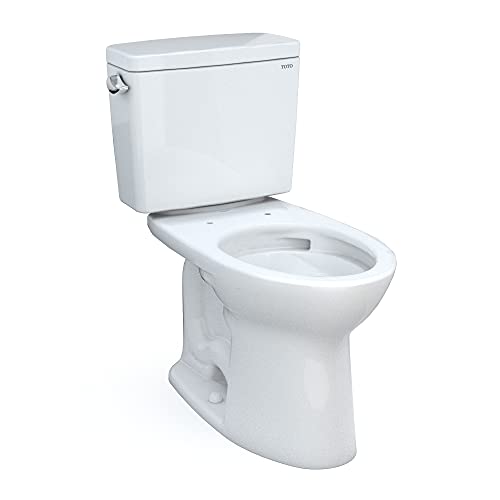
Classic two-piece toilets with tall tanks and elegant, understated proportions, the quiet country-house look that suits a traditional English bathroom without tipping…
Read the guide