Common Bidets Problems and How to Fix Them (2026)
Bidets4.6
Step-by-step fixes for the bidet problems reported most often, from a unit that won't spray and weak water pressure to a seat…
Read the guideEverything you need to know about electrical hookups for electric bidet seats, smart toilets, and washlet systems — from outlet placement and GFCI rules to circuit amps and non-electric alternatives.
Most electric bidet seats require a dedicated 15-amp, 120-volt GFCI-protected outlet within 4 feet of the toilet. Tank-heating models typically draw 600–1,400 watts; instantaneous-heat units can spike to 1,400–1,800 watts. Non-electric bidets need no outlet at all.
Upgrading to an electric bidet seat or smart toilet is one of the most impactful bathroom improvements you can make, but it introduces an electrical requirement that catches many homeowners off-guard. Standard toilet installations involve only plumbing — no outlet, no wiring, no circuit. Add an electric bidet and you suddenly need a properly rated electrical circuit within cord-reach of the toilet, almost always protected by a ground-fault circuit interrupter (GFCI).
This guide breaks down every electrical requirement you will encounter, from GFCI codes and outlet placement to amperage draws and the differences between warm-water heating systems. It also explains which bidet products require zero electricity, so you can choose the right path for your bathroom setup.
No. Non-electric bidet attachments and handheld bidet sprayers connect only to your toilet's water supply and require no outlet whatsoever. Electric power is only needed for heated seats, warm water via an internal heater, air dryers, deodorizers, automatic lids, and remote controls.
If your bathroom has no accessible GFCI outlet near the toilet and adding one is prohibitively expensive, a mechanical bidet attachment is a fully functional alternative that delivers cold water cleaning without any electrical work.
The bidet market divides cleanly into two categories: electric and non-electric. Understanding which features require electricity helps you decide whether an outlet installation is worth the investment.
Electricians often note that the biggest surprise for homeowners is not the cost of the outlet itself but the distance from the nearest circuit. In older homes the bathroom circuit may run to a light fixture on the opposite wall, meaning a new outlet near the toilet can require running cable through finished walls. Getting a quote before purchasing an electric bidet seat is wise, since installation labor can range from $150 to $400 depending on accessibility.
Electric bidet seats require a standard 120-volt, 3-prong grounded outlet. The outlet must be GFCI-protected per NEC code because bathrooms are wet locations. Most bidet power cords are 4 to 5 feet long, so the outlet must be within reach without an extension cord.
Never use an extension cord with an electric bidet seat. Manufacturers including TOTO, Kohler, and Brondell explicitly void warranties for extension cord use, and fire codes in most jurisdictions prohibit them in bathroom wet locations.
The National Electrical Code (NEC) Section 210.8(A)(1) requires GFCI protection for all receptacles in bathrooms without exception. This applies whether you are adding a brand-new outlet or an existing outlet that was installed before GFCI rules existed. If an inspector visits for any bathroom remodel, an unprotected outlet will fail regardless of what it is powering.
A GFCI outlet monitors the difference in current flowing in and out of the circuit. If there is any leakage — caused by water contact, a faulty appliance, or a pinched cord — the GFCI trips within milliseconds, cutting power before electrocution can occur. In a bathroom where a bidet is literally spraying water near live electrical equipment, this protection is critical.
GFCI protection can be delivered in two ways. The first is a GFCI outlet (the type with Test and Reset buttons on its face) installed at the location itself. The second is a GFCI circuit breaker in the panel that protects the entire bathroom circuit. Both meet code. Many homeowners prefer the GFCI outlet because it allows resetting at the device without going to the panel.
Most bidet seats and smart toilet manufacturers specify the outlet should be on the wall behind the toilet (the rough-in wall), typically 12 to 24 inches above the finished floor. This keeps the cord hidden behind the toilet base and away from water spray zones. TOTO Washlet installation guides, for instance, specify a grounded outlet at 8 to 24 inches above the floor on the wall directly behind the toilet bowl.
A few brands ship units with longer cords of 5 to 6 feet, giving slightly more flexibility. Check the cord length in the product spec sheet before scheduling electrical work. Measure from the outlet location to the bidet's cord exit point on the seat, which is typically at the right rear of the unit.
Technically, yes — if the outlet is GFCI-protected and the circuit is not overloaded. However, many electricians and bidet manufacturers recommend a dedicated circuit for electric bidet seats that include instantaneous water heaters, because the momentary high wattage draw can trip a breaker shared with lights and a hair dryer used simultaneously. For seats with tank-style heaters, sharing a circuit is generally fine since the peak draw is lower and less abrupt.
Code aside, outlet location matters for aesthetics. Many installers run conduit or Wiremold along the baseboard to avoid cutting into finished tile walls. Recessed outlet boxes designed for bidet applications are also available and create a flush-mounted look that hides the plug behind the toilet. Planning outlet placement before tile work is significantly less expensive than retrofitting afterward.
Most electric bidet seats are rated at 6 to 15 amps on a 120-volt circuit. Tank-style heaters draw 5–12 amps continuously while the tank maintains temperature, then drop to standby draw (under 1 amp) once the tank is warm. Instantaneous (tankless) heaters spike to 10–15 amps for the 20–60 seconds of wash use, then return to near-zero.
A standard 15-amp circuit is sufficient for most bidet seats when used alone. If the circuit serves other high-draw bathroom appliances concurrently, a dedicated 20-amp circuit is a safer choice.
Understanding heating technology is the key to understanding power requirements. All electric bidet seats that provide warm water use one of two systems, and their electrical behavior differs significantly.
| Feature | Tank-Style Heater | Instantaneous (Tankless) Heater |
|---|---|---|
| How it works | Pre-heats reservoir (0.2–1L) of water | Heats water on demand as it flows through |
| Peak wattage | 600–1,000 W (during reheating) | 1,200–1,800 W (during wash only) |
| Peak amperage (120V) | 5–8.3 A | 10–15 A |
| Standby wattage | 20–80 W (maintaining temp) | Under 5 W |
| Warm water duration | 30–60 seconds before cooling | Unlimited (as long as you run it) |
| Energy efficiency | Lower (heats water 24/7) | Higher (heats only when needed) |
| Circuit concern | Steady draw, less likely to trip breaker | Spike can trip shared 15A circuit |
Most manufacturers publish total wattage in product specifications. Below are typical ranges by product category, drawn from published data for common models from TOTO, Kohler, Brondell, Bio Bidet, and Clean Sense:
| Bidet Category | Typical Wattage Range | Circuit Requirement | Notes |
|---|---|---|---|
| Non-electric attachment | 0 W | None | Water pressure only |
| Basic electric seat (no dryer) | 400–700 W | 15A GFCI | Heated seat + small tank heater |
| Mid-range electric seat (tank) | 800–1,100 W | 15A GFCI (dedicated preferred) | Seat heat + tank water + dryer |
| Instantaneous-heat seat | 1,200–1,800 W | 15A GFCI dedicated | Spike during wash; TOTO C5, Brondell S1400 |
| Smart toilet / integrated unit | 1,200–2,000 W | 20A GFCI dedicated recommended | Includes tank-fill, auto-flush motor |
Instantaneous heaters are the more energy-efficient choice over a day's use, but their spike amperage is higher at the moment of wash. Homeowners with older 15-amp circuits shared between the bathroom light, exhaust fan, and hair dryer outlet sometimes experience nuisance tripping when an instantaneous-heat bidet fires up simultaneously with a blow dryer. The fix is either a dedicated circuit or switching to a tank-style model, which spreads its wattage draw over a longer, less intense period.
A dedicated circuit is not mandated by the NEC for bidet seats specifically, but it is strongly recommended by most manufacturers of instantaneous-heat seats and smart toilets. The NEC does require dedicated circuits for certain high-draw appliances, and a smart toilet drawing over 1,500 watts sits near that threshold.
For basic heated-seat bidets with tank heaters under 1,000 watts, sharing a 15-amp bathroom circuit is generally safe. For instantaneous units above 1,200 watts, or any integrated smart toilet, a dedicated 15-amp or 20-amp circuit eliminates nuisance tripping and future-proofs the installation.
The National Electrical Code does not have a specific article requiring dedicated circuits for bidet seats. However, NEC 210.11(C)(3) requires at least one dedicated 20-amp circuit for each bathroom, though this circuit is primarily intended for small appliances like hair dryers. If you add a bidet seat to a bathroom that already has its required appliance circuit, the bidet can share that circuit — provided the total load does not exceed 80% of the circuit's rated capacity (12 amps on a 15-amp circuit, 16 amps on a 20-amp circuit).
Local jurisdictions often have amendments to NEC that are more restrictive. Always consult a licensed electrician in your area before doing any electrical work.
To confirm a shared circuit is adequate, add up the wattage of devices that could run simultaneously. A typical bathroom scenario:
8.5 amps is well within the 12-amp safe load on a 15-amp circuit. Now add a hair dryer (1,200–1,875 W) running simultaneously with an instantaneous-heat bidet firing up (1,400–1,800 W): you are now looking at a potential 25+ amp combined draw, which will absolutely trip a 15-amp breaker.
The safest approach is to have an electrician run a dedicated 20-amp circuit to the bidet, separate from the bathroom appliance circuit used by the hair dryer and curling iron.
Non-electric attachments from brands like Tushy, Luxe Bidet, and Bio Bidet have zero electrical requirements. Among electric brands, tank-style models from Brondell (Swash 300/700) and TOTO (Washlet C2) have lower peak draws (500–900 W) than instantaneous models, making them easier to integrate into existing bathroom circuits.
Smart toilets with integrated electronics — including the TOTO Neorest and Kohler Veil Intelligent Toilet — have the highest electrical requirements, often exceeding 1,500 watts and warranting a dedicated 20-amp circuit per manufacturer guidance.
TOTO manufactures some of the most widely installed bidet seats in North America. Their Washlet lineup spans a wide wattage range depending on model generation and heating type.
TOTO's instantaneous heating technology, found in the C5 and higher models, is more energy efficient over a 24-hour period compared to the tank models that keep water warm continuously. However, the spike draw during wash use is real. TOTO's published installation guides for the C5 and S-series note that the outlet should ideally be on a circuit not shared with high-wattage appliances, even if a dedicated circuit is not explicitly listed as required in the spec sheet.
If no outlet exists near the toilet, you have two options: hire an electrician to install a new GFCI outlet, or choose a non-electric bidet seat or attachment that requires no power. Adding a new outlet typically costs $150–400 in labor depending on wall access, and requires pulling a permit in most jurisdictions.
You cannot legally or safely use a standard extension cord to power an electric bidet seat. Doing so violates most manufacturers' warranty terms and NEC guidelines for wet locations.
Hiring an electrician to add a GFCI outlet behind the toilet involves several steps that affect both cost and time:
If your bathroom has an existing outlet on the vanity wall, sometimes the electrician can tap from that circuit without a full panel run, reducing labor cost. Discuss this option when getting quotes.
Non-electric bidets are not a consolation prize — they provide effective cleaning, are less expensive to purchase, and require zero electrical work. The tradeoffs are cold water only and no air dryer, meaning toilet paper is still needed for drying.
Popular non-electric options include the Tushy Classic, Luxe Bidet Neo 320, and handheld sprayer kits from KOHLER and American Standard. These connect to the toilet's water supply stop valve using the included T-adapter and require no tools beyond a wrench.
If warm water is desired without electricity, some non-electric attachments — such as those from Luxe Bidet's dual-inlet models — connect to both the cold water supply and the hot water line under the sink, delivering temperature-blended water without any electrical components.
For renters who cannot modify electrical systems and homeowners in older homes without accessible bathroom circuits, non-electric bidet attachments are the practical solution. A warm-water non-electric attachment connected to the sink hot water line provides a satisfying upgrade for well under $100 and installs in under 30 minutes with no permits, no electricians, and no risk of outlet placement error.
For guidance on choosing between electric and non-electric models, see our best bidets without electricity guide and the best bidet seats roundup. If you are deciding between a bidet seat and a fully integrated unit, the bidet seat vs. smart toilet comparison walks through costs and installation differences in detail.
The National Electrical Code requires GFCI protection for all bathroom receptacles under Section 210.8(A)(1). No NEC article specifically targets bidets, but bidets must comply with the same wet-location outlet rules as any other bathroom appliance. Local code amendments may impose additional requirements.
In Canada, CSA C22.1 (Canadian Electrical Code) similarly mandates GFCI protection for bathroom receptacles. TOTO and Brondell both publish Canadian-specific installation guides noting this requirement for their bidet products sold in Canada.
Installing a new electrical outlet in a bathroom almost universally requires a permit in US jurisdictions. The permit process ensures an inspector verifies that the work was done correctly before the walls are closed. Skipping a permit is not recommended: it creates liability issues if you sell the home, and insurance companies can deny claims related to unpermitted electrical work.
Simply replacing an existing unprotected outlet with a GFCI outlet at the same location is often classified as a like-for-like replacement that does not require a permit, but requirements vary by jurisdiction. When in doubt, call your local building department before starting work.
One commonly overlooked step is checking the outlet's age and condition. Bathroom outlets in homes built before the 1980s were often installed without GFCI protection, and the outlets themselves may be 40+ years old. Older outlets can develop loose connections that cause overheating under load. When adding an electric bidet to a bathroom with original wiring, having an electrician inspect and replace the outlet is worthwhile even if the circuit technically has capacity.
Understanding the ongoing electrical cost of an electric bidet helps contextualize whether the investment makes sense. Annual energy cost depends heavily on whether the unit uses a tank-style or instantaneous heater, and whether eco-mode or power-saving settings are enabled.
A tank-style bidet that runs its heating element at 800W for approximately 4 hours per day (to maintain water temperature through the day's use cycles) consumes roughly 1,168 kWh per year. At the US average residential electricity rate of approximately $0.16/kWh (EIA 2025 data), this comes to about $187 per year. Many tank-style units have power-saving modes that lower this significantly by heating the tank only during morning and evening use windows.
Instantaneous heaters only draw high wattage during actual wash use. For a household of two adults using the bidet 4 times daily for 90 seconds each, an 1,400W heater runs for 6 minutes of active use per day. This equals 51 kWh per year, or roughly $8 per year at $0.16/kWh. Even accounting for standby draw (which TOTO's C5 keeps under 3W), total annual energy cost for an instantaneous-heat unit is approximately $10–$20 per year — dramatically lower than tank-style units.
Most electric bidet seats include eco or power-saving modes that reduce standby power consumption. Features include scheduled power reduction (the seat heater drops temperature at night), occupancy-based activation (heater only turns on when motion is detected), and auto shut-off timers. TOTO's Washlet units include an auto-power mode that monitors usage patterns and pre-heats the seat and water tank only during typical use hours. Brondell's Swash series includes a similar intelligent eco-mode.
If reducing your electricity consumption is a priority, see our guide to best non-electric bidets for zero-energy alternatives, or read about the best bidet toilet seats with the most efficient heating systems.
Integrated smart toilets — units where the bidet function is built into the toilet itself rather than added as a seat — combine all the electrical draw of a bidet seat with additional systems for auto-flush motors, auto-open lids, ambient lighting, and in some cases integrated speakers or app connectivity.
The TOTO Neorest 550H and 700H, among the most specified smart toilets in the North American market, draw 1,400W and run on 120V at 11.7A. TOTO's installation guides for these units specify a dedicated GFCI-protected circuit. The Kohler Veil Intelligent Toilet draws 1,600W on a 120V circuit and similarly specifies a dedicated 20-amp GFCI circuit in Kohler's installation documentation.
The Woodbridge B-0950S intelligent smart toilet lists 1,200W on its spec sheet, and Woodbridge's installation guide requires a dedicated 120V, 15A GFCI outlet. The Swiss Madison Ivy wall-hung smart toilet (St. Tropez series) draws 900W and is rated for a standard 15A GFCI outlet without a dedicated circuit requirement.
For a full breakdown of smart toilet options, the best flushing smart toilets guide covers flush performance alongside electrical and installation requirements.
Smart toilets often include motorized flush valves and auto-open mechanisms that create additional small electrical draws on top of the bidet heating system. While individually small, these systems mean the unit is never truly at zero watts even when idle. Confirming the spec sheet's "standby wattage" figure before purchase matters for long-term energy budgeting, particularly in vacation homes or rental units where the toilet may run for months without anyone actively monitoring it.
Electric bidet seats must be plugged into a GFCI-protected 120-volt outlet. Non-electric bidet seats and attachments do not need to be plugged in at all — they run entirely on water pressure from the supply line.
A standard 120-volt, 3-prong grounded outlet with GFCI protection. The outlet must be within cord reach of the bidet seat, typically within 4–5 feet. No special industrial or high-voltage outlet is required for residential bidet seats.
If a properly rated GFCI outlet already exists near the toilet, bidet seat installation is a DIY project involving only plumbing connections (water supply T-adapter) and mounting the seat. If no outlet exists, an electrician must add one, as this requires a permit and code-compliant wiring.
Yes, for most bidet seats. Tank-style seats draw 5–8 amps and work comfortably on a 15-amp circuit shared with bathroom lights and exhaust fans. Instantaneous-heat seats that spike to 12–15 amps work on a 15-amp circuit only if no other high-draw appliances run simultaneously. A dedicated 15-amp or 20-amp circuit is the safest configuration.
TOTO's entry-level Washlet models (C2, A100) do not explicitly require a dedicated circuit. Their mid-range and higher models (C5, S500e, S550e) specify in the installation guide that the outlet should be on a circuit not shared with other high-draw appliances, which functionally means a dedicated circuit is strongly preferred.
Yes. A GFCI that trips repeatedly when a bidet is in use typically indicates one of three things: a faulty bidet unit with internal current leakage, a weak or aging GFCI outlet that is over-sensitive, or a bidet on an overloaded circuit. Test the bidet on a different GFCI outlet. If it still trips, contact the manufacturer for warranty service.
Operating an electric bidet on a non-GFCI outlet is a safety risk and a code violation. In the event of an electrical fault — water entering the unit, a damaged cord, or an internal component failure — a GFCI would shut off power within milliseconds. Without GFCI protection, current could flow through you if you touch the toilet while a fault is present.
The outlet should be close enough that the bidet's power cord reaches comfortably without tension. Most bidet seats have cords of 4 to 5 feet. The industry standard is to place the outlet on the wall directly behind the toilet, 12 to 24 inches above the floor, which typically provides enough cord length with slack to spare.
You can use an in-use weatherproof cover on the GFCI outlet if the outlet location is in a particularly exposed position, but standard interior GFCI outlets are code-compliant for bathroom use. The GFCI protection is the critical safety element, not whether the cover is weatherproof.
Regular toilets use no electricity. Electric bidet seats add between $10 and $200 in annual electricity costs depending on whether you use a tank-style or instantaneous heater, how often eco-mode is active, and how many people use the bathroom daily. Instantaneous models tend to be far less expensive to operate than tank models.
Yes. Some bidet attachments have a dual-inlet design that connects to both the cold water supply at the toilet and the hot water supply under the vanity sink. You control water temperature by adjusting the mix ratio with a knob. Brands including Luxe Bidet and Tushy offer warm-water non-electric attachments using this approach. Water temperature is limited to whatever the sink's hot water supply provides and cools down when the sink hot line runs cold.
A GFCI outlet has the ground-fault protection built into the outlet device itself, identifiable by the Test and Reset buttons on its face. A GFCI breaker installs in the electrical panel and protects the entire circuit, including every outlet on that circuit. Both provide equivalent protection. A GFCI breaker is more expensive but protects every outlet on the circuit, which is useful in bathrooms with multiple outlets.
Press the Test button on the outlet. If the outlet goes dead and pressing Reset restores power, it is a GFCI outlet. If there is no Test/Reset button, check the electrical panel for a GFCI breaker labeled for the bathroom. You can also plug in a GFCI outlet tester (under $15 at any hardware store) to confirm protection status without opening any panel.
No, not an electric bidet seat. You would need to hire an electrician to install a GFCI outlet before using an electric bidet. If adding an outlet is not feasible — due to cost, rental restrictions, or old wiring — a non-electric bidet attachment is a practical alternative that connects only to the water supply.
Yes, electric bidet seats draw standby power continuously. Tank-style heaters draw 20–80 watts to maintain water temperature. Instantaneous units draw 1–5 watts on standby for control electronics and sensors. Using eco-mode or scheduling features reduces standby draw significantly on most modern units.
Installing the bidet seat itself typically does not require a permit — it is a plumbing fixture swap like installing a new toilet seat. However, if an electrician must add a new outlet or circuit to power the bidet, that electrical work does require a permit in most US jurisdictions.
Bidet seats sold for the US residential market operate on standard 120-volt household current. They are not compatible with 240-volt circuits without a step-down transformer. If you are purchasing a bidet seat originally designed for the Japanese market (where 100V is standard), verify it includes a US-specification power supply.
A small number of bidet products use battery power for control panels and remote receivers, but the water heater, seat heater, and dryer components draw too much power for batteries to supply. True battery-only bidets do not exist in any practical consumer form. Some seats use batteries only for the remote control while the seat itself still requires an outlet.
If a GFCI outlet already exists near the toilet, any bidet seat can be installed as a DIY project. Top-rated options that reviewers consistently rate as straightforward to install include the TOTO Washlet C2, Brondell Swash 300, and Bio Bidet BB-600. All three include detailed installation guides and require only basic plumbing connections with no electrical modification needed.
No. Water supply and electrical connections are entirely independent systems in a bidet seat. The water supply T-adapter connects to the toilet's cold water stop valve. The electrical plug connects to the wall outlet. Changes to the water supply setup (such as adding a warm water line) do not affect electrical requirements, and vice versa.
Most electric bidet seats need only a 15-amp, 120-volt GFCI outlet within 4–5 feet of the toilet — a straightforward requirement if a proper outlet already exists. If no outlet is present, the electrical work is a modest investment that unlocks the full range of heated-seat, warm-water, and air-dryer features. Instantaneous-heat models from TOTO, Brondell, and Bio Bidet are the most energy-efficient choice and perform well on a dedicated 15-amp circuit. For bathrooms where electrical work is not feasible, high-quality non-electric bidet attachments deliver effective cleaning with zero outlet requirements, no permits, and installation measured in minutes. Understanding your bathroom's electrical setup before purchasing is the key step that ensures a smooth, code-compliant installation.
Step-by-step fixes for the bidet problems reported most often, from a unit that won't spray and weak water pressure to a seat…
Read the guideA step-by-step framework for picking the right bidet type, features, and fit based on your toilet, your bathroom's electrical access, and how…
Read the guide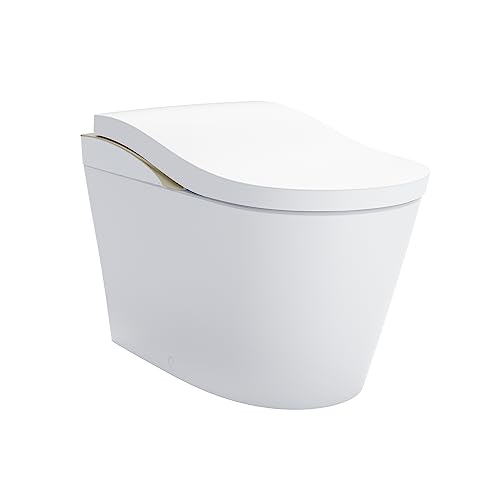
A luxury bidet is judged on a different set of criteria than a standard seat: automatic lid function, a full remote-controlled preset…
Read the guide