How to Choose a Bidet: Complete Buying Guide 2026
Bidets4.6
A step-by-step framework for picking the right bidet type, features, and fit based on your toilet, your bathroom's electrical access, and how…
Read the guideStep-by-step fixes for the bidet problems reported most often, from a unit that won't spray and weak water pressure to a seat that won't heat, a remote that won't pair, and leaks at the supply line, so you can resolve most issues without a service call.
Most bidet problems fall into five categories: the unit won't spray at all, water pressure is too weak, the seat won't heat, the remote or control panel won't pair or respond, and water leaks at the supply line connection. A closed or partially closed supply valve, a clogged inlet filter, mineral buildup in the nozzle, and dead remote batteries account for the large majority of reported issues, and all of them are fixable without a plumber or electrician in most cases. Anything involving the electrical outlet wiring itself should go to a licensed electrician.
Bidets, whether a non-electric attachment, an electric bidet seat, or a fully integrated smart toilet, add a water and sometimes electrical connection to a fixture that previously had neither. That extra complexity means more potential failure points than a standard toilet, but it also means most problems trace back to a short, predictable list of causes. This guide walks through the issues bidet owners report most often and gives a clear repair path for each.
The most common bidet problems are the unit failing to spray at all, weak or inconsistent water pressure, a heated seat that no longer warms up, a remote or control panel that will not pair or respond, and a leak at the water supply line connection. Most of these trace back to a closed supply valve, a clogged inlet filter or nozzle, dead batteries, or a worn connection washer, all of which are straightforward to check and fix without professional help.
Before troubleshooting any specific symptom, confirm the basics: the water supply valve feeding the bidet is fully open, and for electric models, the unit is plugged into a working, grounded outlet. These two checks resolve a surprising share of reported "broken" bidets, since a valve bumped closed during cleaning or a tripped GFCI outlet look identical to an actual component failure from the user's perspective.
Hard water is the single biggest long-term threat to bidet performance regardless of brand. Mineral deposits build up inside the nozzle, the inlet filter screen, and the internal water path faster in hard water regions, and most bidet problems that develop gradually over 12 to 24 months trace back to this. Running a self-clean cycle regularly and descaling the nozzle every few months prevents most of the spray and pressure problems covered in this guide before they start.
A bidet that will not spray at all is most often caused by the water supply valve being partially or fully closed, a clogged inlet filter screen preventing water from reaching the unit, or, for electric models, a power interruption from an unplugged unit or a tripped GFCI outlet. Checking these three things in order resolves the majority of no-spray complaints.
Step-by-step fix for a bidet that won't spray:
For a broader troubleshooting checklist specific to attachment-style and seat-style units, see our guides to bidet not working and bidet toilet combo not working.
| Symptom | Likely Cause | DIY Fix | Difficulty |
|---|---|---|---|
| No spray, no response at all | Water valve closed or unit unplugged | Open valve; check power connection | Easy |
| Unit powers on but no water | Clogged inlet filter screen | Remove and rinse filter screen | Easy |
| Spray extremely weak or absent | Mineral buildup in nozzle | Descale nozzle with vinegar soak | Easy |
| Powers on, indicator lights normal, still no spray | Internal solenoid valve failure | Replace part or contact service | Professional |
Weak bidet water pressure is usually caused by low incoming household water pressure below the unit's minimum operating threshold, a partially closed supply valve, or mineral deposits narrowing the nozzle opening or the internal water channel. Most bidets specify a minimum pressure around 7 to 14 psi to function at all, with stronger, more adjustable spray typically available above 20 psi.
Diagnosing and fixing weak pressure:
See our full guide to bidet pressure adjustment for model-specific dial and menu locations.
A heated bidet seat that stops warming is most commonly caused by a tripped GFCI outlet cutting power to the heating element, the seat's occupancy sensor failing to detect a user due to a dirty sensor lens, or a temperature setting that has been turned down to the lowest level. A failed internal thermistor is a less common but possible cause if the first three checks do not resolve it.
Step-by-step fix for a seat that won't heat:
Never attempt to open the electrical housing of a bidet seat or work on its internal wiring while it is plugged in, and never bypass a GFCI outlet with a standard outlet to "fix" repeated tripping. If a GFCI trips repeatedly and reset does not hold, that is a sign of a genuine ground fault in the unit or wiring, and continuing to use the outlet without addressing the root cause is a real safety risk. Have a licensed electrician diagnose repeated GFCI tripping rather than working around it.
A bidet remote that stops responding is most often caused by dead or low batteries, a remote that has lost its pairing connection to the receiver unit on the seat, or an obstruction between the remote and the receiver window. Wall-mounted remotes on some models pair once during installation and rarely need re-pairing under normal use.
Remote troubleshooting steps:
See our detailed guide to bidet remote control troubleshooting and, for app-based models, our bidet app control guide.
| Remote Symptom | Likely Cause | Fix |
|---|---|---|
| No response at all | Dead batteries | Replace batteries |
| Intermittent or delayed response | Low battery or weak pairing signal | Replace batteries; re-pair remote |
| Worked before, stopped suddenly | Lost pairing connection | Re-pair per manufacturer steps |
| App will not connect | Wi-Fi band mismatch or app permissions | Confirm 2.4GHz network; check app permissions |
A leak at a bidet's water supply line connection is most commonly caused by a loose compression fitting, a worn or missing rubber washer at the connection point, or over-tightened plastic fittings that have cracked. This is one of the more straightforward bidet problems to diagnose, since the leak location is visible and accessible.
Fixing a supply line leak:
See our full bidet leaking guide for leak points specific to different bidet types, and our bidet installation guide if the supply line setup needs to be redone from scratch.
The T-valve that splits water between the toilet tank and the bidet is the single most common leak point on a newly installed bidet, and it is almost always a tightening issue rather than a defective part. Give every connection a firm hand-tighten, then a careful quarter turn with a wrench, and run the water for a full five minutes while watching closely before considering the installation finished. Most leaks that will happen show up within that first test run.
Call a licensed electrician for any repeated GFCI tripping that reset does not resolve, or for any issue involving the electrical outlet or wiring itself rather than the bidet unit. Call a plumber for a leak whose source cannot be identified after checking all visible connections, or for household water pressure too low for the bidet to function even after confirming the valve and filter are clear. Supply line tightening, filter cleaning, nozzle descaling, and remote pairing are all safe, straightforward DIY tasks.
Bidets combine water and, for electric models, electrical systems in a way a standard toilet does not, which is the main reason to be more cautious about DIY limits here than with a purely mechanical fixture. Water-side repairs like supply line tightening and filter cleaning are safe for most homeowners to handle. Anything involving the internal electronics, wiring, or a GFCI outlet that will not hold a reset is where the line should be drawn, since working around an electrical fault rather than fixing it is a genuine safety risk, not just an inconvenience.
A spray that cuts off mid-use, rather than never starting, often points to a built-in time limit feature designed to prevent the unit from running continuously if left on accidentally. Check your model's manual for an auto-shutoff duration, which is a normal safety feature rather than a malfunction.
In hard water areas, descaling the nozzle every one to two months helps prevent mineral buildup from affecting spray quality. In soft water areas, every three to four months is usually sufficient. Running the self-clean cycle regularly between deeper cleanings also helps.
Non-electric bidet attachments rely entirely on household water pressure, since they have no internal pump, so their spray strength is directly tied to your home's water pressure. Electric models can sometimes offer more consistent pressure control through internal regulation, but both types still require adequate incoming water pressure to function well.
Low water pressure does not typically damage a bidet, but it can prevent the unit from functioning at all if pressure falls below the manufacturer's minimum threshold, and it can prevent the pressure switch on some models from allowing the nozzle to extend.
If heating is enabled in settings but the seat still feels cold, check the GFCI outlet first, since a tripped GFCI cuts all power silently without any indicator change on some models. If the outlet tests fine, the occupancy sensor may not be detecting you as seated, often due to a dirty sensor lens.
If resetting the GFCI does not hold and it trips again shortly after, do not continue resetting it repeatedly. This indicates a ground fault that needs to be diagnosed by a licensed electrician rather than worked around.
Non-electric bidet attachments and most electric bidet seats are designed for straightforward DIY installation using standard supply line connections, without any special plumbing modifications. Electric models additionally require a grounded outlet within reach, which needs to be professionally installed if one does not already exist near the toilet.
An off-center or uneven spray pattern is usually caused by partial mineral buildup blocking part of the nozzle opening. Soaking the nozzle tip in vinegar and running the self-clean cycle typically restores an even spray pattern.
Dry all connections with a paper towel, then run water and watch closely to see exactly where moisture first appears. A leak at a fitting or connection point is a supply line issue; water seeping from the body of the unit itself, rather than a joint, suggests an internal seal has failed and may need professional service.
Most handheld bidet remotes use standard AAA or AA batteries. Some wall-mounted remotes use capacitive or kinetic charging methods that do not require batteries at all, in which case a non-responsive remote points to a receiver or pairing issue rather than a battery problem.
Most bidets require a minimum of roughly 7 to 14 psi for basic function, with optimal performance typically in the 20 to 80 psi range, which covers most residential water systems. Check your specific model's manual, since minimums vary by manufacturer.
Yes. In areas with significant water hardness, mineral deposits can degrade nozzle performance within 18 to 24 months without regular descaling. An inline water filter at the supply connection is a worthwhile upgrade for bidet owners in hard water regions.
The vast majority of bidet problems trace back to a small set of causes: a closed or partially closed supply valve, a clogged inlet filter or mineral-fouled nozzle, dead remote batteries, and tripped GFCI outlets. Nearly all of these are safe, quick DIY fixes once you know where to look. The one firm line is electrical: repeated GFCI tripping that will not hold a reset, or any repair that involves opening electrical housing or wiring, belongs to a licensed electrician rather than a DIY attempt.
A step-by-step framework for picking the right bidet type, features, and fit based on your toilet, your bathroom's electrical access, and how…
Read the guide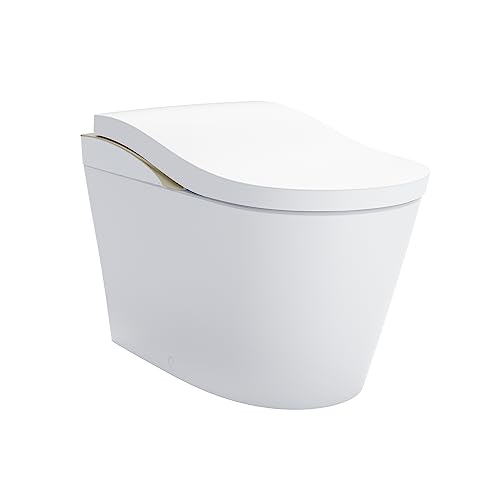
A luxury bidet is judged on a different set of criteria than a standard seat: automatic lid function, a full remote-controlled preset…
Read the guide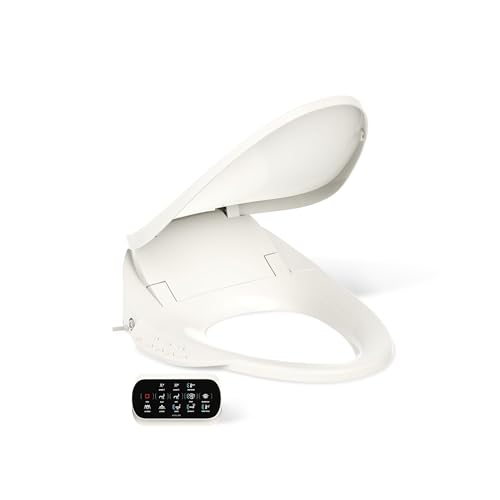
A mid-range bidet seat is where most households find the real sweet spot: genuine heated-seat comfort and adjustable wash settings from a…
Read the guide