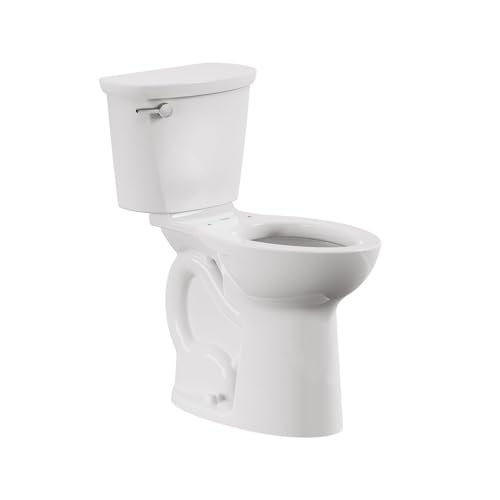
Best Chinese Toilets (2026)
Toilets4.6
Rich lacquered finishes, symmetrical proportions and traditional-inspired detailing paired with real MaP-verified flush performance, not just a decorative shape.
Read the guidePressure assisted toilets use compressed air stored inside a sealed vessel to fire water through the bowl in a single hard surge, delivering more raw flush force than any gravity toilet at the same water volume. These nine picks are ranked on MaP flush-test scores, gallons per flush, clog-resistance data, EPA WaterSense certification and aggregated owner feedback across major retailers.
Research updated June 2026.
The American Standard Cadet PRO FloWise pressure assisted toilet is the top pick of 2026: it pairs a Flushmate 503 vessel with a perfect 1,000-gram MaP score at just 1.0 GPF, delivering unmatched flush force with WaterSense-level efficiency. The Gerber Viper Pressure is the best value alternative for shoppers who want the same MaP ceiling at a lower cost.
Most toilets sold in North America use gravity to flush. Water sits in the tank, drops into the bowl when you press the handle, and the resulting swirl and siphon carry waste through the trapway. That system works well for lightly loaded toilets in a home with consistent water pressure, but it has a ceiling: as water conservation laws pushed flush volumes from 3.5 gallons down to 1.6 and then 1.28, gravity toilets had to work harder with less water, and some households discovered they were plunging weekly.
Pressure assisted toilets solve this differently. A sealed plastic vessel sits inside the porcelain tank. As the water supply fills that vessel, it also compresses a pocket of trapped air. When the handle is pressed, the compressed air releases instantly and drives the water through the bowl in a single hard surge, far faster and more forcefully than the same volume of water falling under gravity alone. The result is a flush that clears the bowl in roughly one second and pulls waste fully through the trapway before it has a chance to stall. The technology was introduced commercially by Flushmate in the 1980s and is now the standard sealed-vessel system used by American Standard, Kohler, Gerber and several others.
For the broader context of what separates strong flushers from weak ones across all flush technologies, start with our pillar guide to the best flushing toilets. If you are buying for a household that runs a single bathroom hard every day, also see our guide to the best toilets for large families, where pressure assist features prominently.
The strongest residential flush comes from a pressure assisted toilet built on the Flushmate sealed-vessel system, which uses compressed air rather than gravity to drive water through the bowl. American Standard's Cadet PRO and Champion PRO pressure models, along with the Gerber Viper Pressure and Kohler Highline Pressure Lite, all achieve the MaP test's maximum 1,000-gram score, the highest level the independent benchmark awards, meaning they clear the full 1,000-gram test load in a single flush every time.
The MaP (Maximum Performance) flush test, published by the Canadian-based toilet testing program at map-testing.com, is the most credible third-party measure of flush strength available to consumers. It measures how many grams of a simulated solid waste load a toilet clears in a single flush. A score of 600 grams is considered strong for a gravity toilet; scores of 800 to 1,000 grams are excellent. Nearly every properly functioning pressure assisted toilet on this list reaches 1,000 grams, the test's ceiling, because the compressed-air surge simply moves more material than gravity flush designs can match at equal water volumes.
Any pressure assisted toilet with a MaP score of 1,000 grams is performing at the top of the test's scale, and most well-made models in this category reach that ceiling. A score below 800 grams in a pressure assist toilet suggests a poorly matched bowl-and-vessel combination or a trapway design that limits the flush's effectiveness, and those models are worth avoiding. For comparison, a gravity toilet scoring 800 grams is considered very strong, so the pressure assist category generally starts where the best gravity toilets end.
The 1,000-gram MaP ceiling is worth understanding as a practical limit rather than an absolute one. The test is standardized, so a toilet that earns 1,000 grams under lab conditions will clear virtually any waste load a household produces. Where pressure assisted toilets differ from each other at the same MaP score is in flush speed, bowl coverage (how thoroughly the air-driven water rinses the bowl surface), trapway width, and noise level. Once every toilet on your shortlist scores 1,000 grams, those secondary factors should guide your final decision.
Pressure assisted toilets as a category are the most clog-resistant option available for residential installation, because the compressed-air surge drives waste completely through the trapway on the first flush rather than relying on the slower momentum of a gravity swirl. Among specific models, the American Standard Champion PRO pressure assisted version is widely considered the most aggressive clog-resistant toilet, combining a Flushmate vessel with a wide fully glazed trapway and a 1.6-gallon flush volume for maximum raw force.
Clogs form when a waste load stalls partway through the trapway because the flush ran out of energy. A gravity toilet uses the kinetic energy of falling water, which dissipates as it travels through the bowl and trap. A pressure flush releases its stored energy in a concentrated burst that stays fast longer, so waste is carried through the entire trapway rather than deposited at its narrowest point. Pairing that flush force with a fully glazed trapway, which eliminates the rough ceramic surfaces where waste tends to catch, compounds the clog resistance significantly. Our guide to no-clog toilets covers the best gravity options for buyers who find the pressure assist noise unacceptable.
Pressure assisted toilets are noticeably louder than gravity toilets, typically producing a sharp whooshing sound lasting about one second when flushed, followed by a quieter tank refill cycle. Sound levels vary by model and installation, but the flush burst itself is frequently described as sounding like a commercial restroom toilet. This is the category's most consistent complaint in owner reviews and the main reason pressure assist is generally not recommended for ensuites or bathrooms adjacent to bedrooms.
The noise comes from the compressed air releasing through the vessel's flush valve all at once. Because the energy is concentrated into a single fast event rather than the extended swirl of a gravity flush, the sound is shorter but more abrupt. Some buyers find it less disruptive than the sustained sound of a gravity flush; others find the sharp whoosh startling. Acoustic dampening from bathroom tile, solid doors and distance from sleeping areas reduces the impact considerably. For households where bathroom noise is a genuine concern, our roundup of best quiet flush toilets covers low-noise gravity alternatives.
The Gerber Viper Pressure model offers the best value among pressure assisted toilets, reaching a perfect 1,000-gram MaP score on a proven sealed-vessel cartridge at a lower purchase price than comparable American Standard or Kohler models. The American Standard Cadet PRO pressure round bowl is the best value in a compact format, combining a 1.1-gallon flush with strong clog clearance in a smaller footprint suited to bathrooms with limited space.
Value in a pressure assist toilet has to account for the vessel as a serviceable part. The Flushmate vessel and its seals are widely stocked and replaceable, which means a toilet built on that system can be maintained rather than replaced if the flush mechanism eventually needs attention. That serviceability tilts the long-term value calculation toward established brands with reliable parts supply, even if their initial prices are higher than generic alternatives. A pressure assist toilet from a brand without good parts availability is a liability the moment the vessel needs a seal replacement, usually five to fifteen years into ownership.
Nine models ranked on raw flush force, MaP score, water use, clog resistance and long-term owner satisfaction. Higher MaP scores mean more waste cleared per flush.
| Toilet | Best For | MaP Score | GPF | Rating | Check Price |
|---|---|---|---|---|---|
| American Standard Cadet PRO FloWise | Best overall | 1,000 g | 1.0 | 4.5 | Check price |
| Gerber Viper Pressure | Best value | 1,000 g | 1.28 | 4.4 | Check price |
| American Standard Champion PRO Pressure | Strongest raw flush | 1,000 g | 1.6 | 4.5 | Check price |
| Kohler Highline Pressure Lite | Best brand support | 1,000 g | 1.0 | 4.4 | Check price |
| American Standard Yorkville Pressure | Best ADA height | 1,000 g | 1.1 | 4.4 | Check price |
| Gerber Avalanche Pressure | Best two-piece value | 1,000 g | 1.28 | 4.3 | Check price |
| American Standard Cadet PRO Round | Best compact | 1,000 g | 1.1 | 4.4 | Check price |
| Zurn EcoVantage Pressure | Commercial grade | 1,000 g | 1.28 | 4.3 | Check price |
| American Standard Titan Pressure | Best for seniors | 1,000 g | 1.28 | 4.3 | Check price |
Pressure assisted toilets are the right call for one specific problem: a bathroom that clogs regularly and where the household is done troubleshooting. They are not a universal upgrade. The noise is real, the installation requires adequate line pressure (minimum 25 psi at the supply stop), and the flush mechanism is more complex than a gravity flapper. But for a main bathroom in a large household or a basement toilet that fights a long drain run, the pressure assist flush is the most reliable clog solution that does not require any daily maintenance.
Each pick is ranked on flush force first, then water efficiency, clog resistance, noise and long-term serviceability, cross-checked against aggregated owner feedback.

The Cadet PRO FloWise is the benchmark for residential pressure assisted toilets in 2026, combining a Flushmate 503 sealed vessel with American Standard's well-engineered elongated bowl to reach a perfect 1,000-gram MaP score while using only 1.0 gallon per flush, making it the strongest EPA WaterSense-level flush available in a home-grade fixture.
The Flushmate 503 vessel stores line pressure as compressed air while the tank fills, then releases it in a single concentrated burst when the handle is pressed. That burst drives water through the bowl and fully glazed trapway in roughly one second, clearing a 1,000-gram MaP load without hesitation. The EverClean antimicrobial surface treatment on the bowl slows biofilm buildup, which matters in a high-use bathroom that is the whole reason to buy this toilet in the first place.
Owner reviews consistently note that the clog problem simply disappears after installation, with the overwhelmingly common complaint being flush noise rather than flush performance. American Standard's 10-year limited warranty is the strongest on this list and the Flushmate vessel seals are widely stocked, so long-term service is straightforward. Confirm supply pressure at the stop valve before purchase: the vessel needs at least 25 psi and performs best at 45 to 80 psi.
This is the toilet to specify when clog resistance and water efficiency need to coexist. The 1.0-gallon flush is genuinely remarkable given the 1,000-gram MaP result; most gravity toilets at 1.28 gallons do not get close. Put it in a main bathroom rather than an ensuite, verify your line pressure, and it will be the last toilet you install in that room.
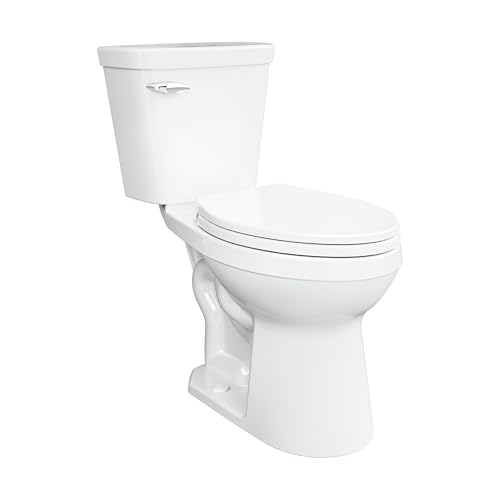
Gerber's Viper pressure model is the most recommended pressure assisted toilet among plumbing contractors for budget-focused installations, delivering an identical 1,000-gram MaP score on a proven sealed-vessel cartridge at a purchase price typically lower than the premium American Standard and Kohler alternatives.
Gerber builds primarily for the trade channel, which means the Viper's styling is purely functional but the construction standards are set for commercial-level cycling rather than occasional residential use. The sealed-vessel flush cartridge is the same class of technology as the Flushmate vessel in the American Standard picks, so the 1,000-gram MaP result is not an accident; it is the same air-driven surge in a plainer body.
The 5-year warranty is shorter than the American Standard picks, reflecting the lower price point, but owner reviews across plumbing supply platforms rate the Viper's long-term reliability as strong. Parts are easiest to find through plumbing supply houses rather than big-box retailers, which is a minor inconvenience for most homeowners but worth noting before purchase. This toilet also appears in our roundup of best toilets for home as a value recommendation for high-use main bathrooms.
If the goal is the same 1,000-gram flush at a lower upfront cost and you can handle the functional styling and supply-house sourcing for parts, the Viper is the honest value choice here. The flush performance genuinely equals the more expensive picks.

The Champion PRO pressure version is the most forceful toilet on this list, marrying the Flushmate vessel to American Standard's widest trapway design and running 1.6 gallons per flush under full air pressure, producing a flush so aggressive it has essentially no residential clog scenario it cannot clear on the first pull.
Under equal air pressure, 1.6 gallons of water carries more mass through the trapway than 1.0 or 1.28 gallons, so the Champion PRO pressure version is simply the most powerful flush available for home installation. The wide 2.375-inch fully glazed trapway passes large loads without restriction, and the EverClean surface on the bowl resists staining in a toilet used this intensively.
The trade-off is water consumption. At 1.6 GPF the Champion PRO pressure model is not EPA WaterSense certified, which matters for buyers in states with water-use incentives or for anyone on a metered supply trying to minimize the water bill. The flush noise is also the loudest on this list. For a bathroom with a serious clog history where those trade-offs are acceptable, it is the right tool. See also our best toilets for large families guide for context on high-volume household use.
Reserve this for the genuinely difficult installation: long horizontal drain runs, older cast-iron stacks, or a household that has replaced multiple toilets looking for a solution. For a straightforward main bathroom, the 1.0-gallon FloWise clears the same MaP score with less water and less noise.

Kohler's Highline is one of the most widely recognized toilet lines in North America, and the Pressure Lite version brings the sealed-vessel flush to a familiar, widely stocked body that benefits from Kohler's deep retail and service parts network, posting a perfect 1,000-gram MaP score at an efficient 1.0 gallon per flush.
Kohler's Highline body is a classic two-piece elongated design that fits in most standard bathroom spaces without requiring special rough-in adjustments. The Pressure Lite version uses a Flushmate-class vessel to achieve the same 1,000-gram MaP result as the American Standard picks at the same 1.0-gallon volume, with the added advantage of Kohler's extensive retail parts network for service needs.
The limited lifetime warranty on the vitreous china is one of the strongest backing statements on this list, and Kohler's customer support infrastructure means finding replacement parts or getting help with an installation issue is genuinely easy. For buyers who want pressure flush performance without leaving the Kohler ecosystem, this is the logical choice, and the 1.0-gallon flush qualifies for EPA WaterSense certification criteria.
The Highline Pressure Lite is the pick for buyers who want Kohler's service network and retail accessibility alongside pressure flush performance. The flush is identical in force to the American Standard picks at the same GPF; the choice comes down to brand preference and parts sourcing convenience.

The Yorkville pressure assisted model is the best option for households that need both the clog resistance of pressure flush and an ADA-compliant comfort height bowl, combining a sealed Flushmate vessel with American Standard's 17-inch bowl height at an efficient 1.1 gallons per flush and a perfect 1,000-gram MaP score.
At 17 inches to the top of the bowl rim, the Yorkville meets ADA Right Height specifications, which align the seat height with a standard chair and reduce the effort required to sit down or stand up. This combination of accessibility features and pressure flush power is rare in the category; most comfort-height pressure assist models top out at 16.5 inches.
The 1.1-gallon flush is slightly more than the 1.0-gallon FloWise but falls within the EPA WaterSense certification range, and the 1,000-gram MaP result confirms it clears heavy loads reliably at that volume. Our guide to best toilets for seniors covers this model alongside the gravity-flush comfort-height alternatives for buyers comparing access needs across technologies.
The Yorkville pressure model fills a specific gap: a toilet for a user with mobility limitations who also needs reliable clog resistance. The pressure flush eliminates the need for multiple attempts that strain the user, and the ADA height makes the fixture usable without difficulty. A well-considered combination for an aging-in-place bathroom.
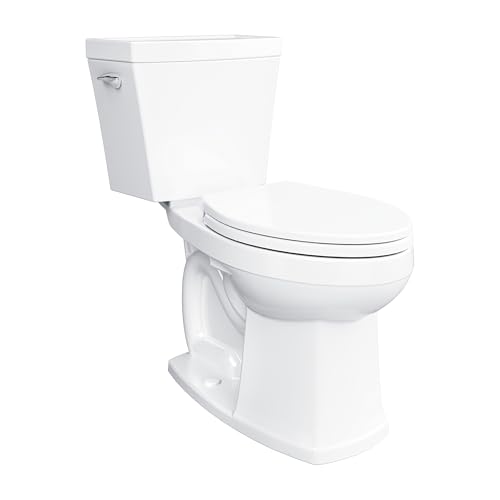
The Gerber Avalanche pressure model is the best two-piece pressure assisted toilet for buyers who want a standard installation format, serviceable tank-and-bowl construction and a perfect 1,000-gram MaP flush at 1.28 gallons from a proven sealed-vessel cartridge in a mid-range price bracket.
Gerber's Avalanche line uses the same sealed-vessel pressure technology as the Viper, applied to a slightly different bowl profile that some buyers find fits their existing rough-in and bathroom layout more easily. The 1.28-gallon flush at a perfect 1,000-gram MaP result mirrors what the Viper achieves, so the choice between them is largely a matter of bowl shape preference and availability through local supply channels.
Contractor reviews of the Avalanche pressure model describe it as trouble-free over multi-year residential installations, with the flush remaining consistent without requiring vessel maintenance. The 5-year warranty is the same as the Viper, and parts availability follows the same trade-channel pattern. For a standard bathroom replacement where pressure flush performance is needed and budget is a consideration, the Avalanche delivers.
The Avalanche pressure model is the practical alternative when the Viper is not available locally. The flush performance and build quality are comparable, and Gerber's trade-grade construction standard applies equally across both lines. Not a showroom toilet, but a consistently reliable one.

The round bowl version of the Cadet PRO pressure model is the answer for small bathrooms that need the clog resistance of pressure assist technology but cannot accommodate a standard elongated bowl's extra two inches of depth, delivering the same Flushmate vessel and 1,000-gram MaP flush in a more compact footprint at 1.1 gallons per flush.
The round bowl format extends roughly 2 inches shorter than an elongated equivalent, a dimension that genuinely matters in a bathroom where clearance between the toilet and the vanity or door swing is constrained. The Flushmate vessel inside the tank does not change because of the bowl shape, so the flush force and MaP score are identical to the elongated version.
Note that the round bowl format can amplify flush noise slightly in small enclosed spaces, since there is less distance between the user and the bowl. The 10-year limited warranty matches the elongated Cadet PRO, and the EverClean antimicrobial surface is included. For buyers comparing the round versus elongated format across all flush types, our guide to best flushing round toilets provides additional context.
Do not sacrifice flush performance to fit a small bathroom. The round Cadet PRO gives you the same 1,000-gram MaP result as the elongated version in a shorter footprint. If 2 inches of length is the constraint, this solves it without any flush-force penalty.

Zurn is a commercial plumbing specialist, and the EcoVantage brings that institutional-grade engineering to residential applications, featuring a sealed-vessel pressure flush designed for continuous high-cycle use, a perfect 1,000-gram MaP score, and construction standards that exceed what most residential-grade toilets demand.
Zurn's EcoVantage pressure model is specified for environments where the toilet cycles dozens of times daily, meaning the vessel, seals and body are rated well beyond typical residential demand. In a home bathroom, that overbuilding translates to a flush mechanism that shows no degradation for many years of normal residential use.
The 3-year warranty is the shortest on this list, which reflects Zurn's commercial sales model where warranty terms follow contract purchase agreements rather than consumer-facing benchmarks. In practice, the durability record in contractor and plumbing professional reviews far exceeds the warranty period. Parts sourcing follows the trade-channel pattern common to both Gerber and Zurn.
The EcoVantage is the right choice when the toilet is essentially a commercial fixture in a residential setting: a basement apartment, a home that operates as a licensed bed-and-breakfast, or a large shared household where one bathroom sees near-constant use. The shorter warranty is irrelevant if you know the construction exceeds its rating.
The American Standard Titan pressure assisted model is built for households where a user with mobility constraints needs both the ease of a taller bowl and the assurance that the toilet will clear a heavy load on a single flush, pairing a sealed Flushmate vessel with a reinforced elongated bowl rated to support 1,000 pounds and a 1,000-gram MaP result at 1.28 gallons.
The Titan's 1,000-pound bowl weight rating and comfort height combine to make it a practical choice for aging-in-place bathroom planning where the toilet needs to be both accessible and reliable over many years. The pressure flush adds the clog resistance that a household with a single shared bathroom particularly values, since a clog requires physical effort that can be genuinely difficult for users with limited mobility.
American Standard's EverClean antimicrobial surface is included, which reduces the frequency of deep cleaning needed in a bathroom that may be maintained by someone with limited mobility. The 10-year limited warranty is the best in class. Our guide to best toilets for seniors includes this model alongside gravity-flush comfort-height alternatives for buyers evaluating the full range of accessibility-focused options.
When aging-in-place planning drives the purchase decision, the Titan pressure model covers two needs at once: the structural reinforcement and height for access, and the pressure flush that eliminates plunging in a bathroom where that task is particularly burdensome. It is the thoughtful choice for a bathroom shared by a user with mobility limitations.
After reviewing all nine models, the pattern is clear: the pressure assist category is largely uniform on flush power (most reach the 1,000-gram MaP ceiling) and meaningfully different on water volume, noise, bowl height, serviceability and brand support. If the only question is flush strength, any Flushmate-equipped American Standard or Gerber model answers it. The smarter question is which secondary factors matter in your specific bathroom: water efficiency, ADA height, compact footprint, commercial durability or retail parts access. Those distinctions drive the differences in this roundup far more than raw flush power, which is effectively standardized across the category.
What to check before selecting a pressure assist model for your bathroom.
The most common reason a pressure assisted toilet fails to perform as expected is insufficient supply pressure. The Flushmate vessel requires a minimum of 25 psi at the supply stop to function, and it builds its best flush force between 45 and 80 psi. Most homes with city water service operate within that range, but older homes, homes with partially closed main shutoffs, or homes served by a private well with a pressure-regulating valve may fall short. A plumber can test your supply pressure in minutes, and it is worth doing before purchasing rather than after installation.
The rough-in is the distance from the finished wall behind the toilet to the center of the floor drain. Most North American toilets are built for a 12-inch rough-in, but 10-inch and 14-inch rough-ins exist in older homes. Pressure assisted toilets follow the same rough-in standards as gravity toilets, so measure carefully before ordering, particularly for a replacement install where the floor drain position is fixed. Our guide to best toilets of 2026 covers rough-in sizing in detail for buyers who are unsure of their measurement.
The sealed vessel inside a pressure assisted toilet is a serviceable part, not a lifetime component. Most Flushmate vessels last 10 to 15 years in residential service before seals begin to degrade, which typically manifests as a weaker flush or a toilet that runs continuously as the vessel fails to hold pressure. Replacement vessel kits are available through plumbing supply channels and major retailers, and most handy homeowners can perform the swap in under an hour. This is worth knowing before purchase: the flush mechanism has a serviceable lifespan, and a brand with good parts availability makes that maintenance significantly easier.
Pressure assisted toilets produce a sharp, loud whoosh when flushed. The sound lasts roughly one second, which is shorter than the sustained noise of many gravity flushes, but it is more abrupt and typically louder in peak volume. In a main bathroom or a bathroom with a solid door and some distance from sleeping areas, most households find the noise acceptable given the performance trade-off. In an ensuite, a small apartment with thin walls, or a bathroom shared with a bedroom wall, it is a genuine quality-of-life issue that is worth considering honestly. If noise is a constraint, compare our guide to the best quiet toilets for bedrooms for gravity-flush alternatives.
The EPA WaterSense program certifies toilets that use 1.28 gallons per flush or less and pass a third-party flush performance test. Most 1.0, 1.1, and 1.28-gallon pressure assisted toilets meet the water volume threshold for WaterSense certification, and the pressure flush technology helps them pass the flush performance test at those lower volumes. Some utilities offer rebates for WaterSense-certified toilet replacements, which can offset part of the purchase cost. If your local utility offers a rebate, verify the specific model's certification status before purchase, since the same bowl in different configurations may or may not carry the certification. More detail on this at the EPA WaterSense site: epa.gov/watersense.
Pressure assisted toilets are more commonly available in two-piece (separate tank and bowl) configurations than one-piece designs, because the sealed vessel inside the tank is easier to service in a two-piece format. Some buyers prefer the two-piece for that serviceability; others prefer the easier exterior cleaning of a one-piece design. Among the picks on this list, all are two-piece models. If a one-piece pressure assist format is needed, the selection is narrower, but some American Standard models offer it. Our best flushing one-piece toilets guide covers one-piece options across flush technologies.
The buying guide checklist for a pressure assist toilet is short but non-negotiable. Check line pressure before buying, measure rough-in before ordering, and be honest about where the toilet sits relative to sleeping areas. Do those three things and the purchase decision simplifies to which bowl height, water volume and brand support network fits your household.
A pressure assisted toilet stores household water line pressure inside a sealed plastic vessel inside the porcelain tank. As the vessel fills, it compresses trapped air. When the handle is pressed, that compressed air releases instantly, driving water through the bowl in a single fast surge rather than relying on gravity alone. The result is a flush that is faster, more forceful, and more thorough than a comparable gravity flush at the same water volume.
The Flushmate vessel requires a minimum of 25 pounds per square inch (psi) at the supply stop valve to build adequate pressure for a full flush. Most city water supplies deliver between 45 and 80 psi, well above that threshold. Homes with private wells, pressure-regulating valves, or partially closed main shutoffs may fall below the minimum. Test supply pressure at the stop valve before purchasing a pressure assist toilet.
Yes. Pressure assisted toilets produce a sharp, loud whooshing sound when flushed, typically lasting about one second. This is the most consistent complaint in owner reviews of every pressure assist toilet. The sound is shorter in duration than many gravity flushes but noticeably louder at its peak, similar to a commercial restroom toilet. This makes them a poor choice for ensuites or bathrooms adjacent to sleeping areas.
The MaP (Maximum Performance) flush test is an independent third-party benchmark that measures how many grams of simulated solid waste a toilet clears in a single flush. Scores range from 250 grams to 1,000 grams, with 1,000 grams being the maximum the test awards. A score of 600 grams is considered strong for a gravity toilet. Most pressure assisted toilets reach 1,000 grams because the compressed-air flush moves waste more aggressively than gravity designs at equal water volumes.
A Flushmate sealed vessel typically lasts 10 to 15 years in residential service before seals begin to degrade. Signs of vessel wear include a noticeably weaker flush or a toilet that runs continuously as the vessel fails to hold pressure. Replacement vessel kits are available from plumbing supply houses and major retailers, and most homeowners can perform the replacement without professional help. The vessel is a serviceable component, not a lifetime part.
Yes, in most cases. Flushmate publishes replacement instructions and the kits include all necessary hardware. The process involves shutting off the supply water, draining the tank, disconnecting the vessel from the supply line and flush valve, and fitting the replacement unit. Most mechanically confident homeowners complete the replacement in under an hour. Flushmate replacement vessel kits (the M-101526-F3 and similar model codes) are stocked at major plumbing supply outlets.
Not necessarily. Several pressure assisted toilets on this list use 1.0 or 1.1 gallons per flush, which is equal to or below the 1.28-gallon standard for EPA WaterSense certified gravity toilets. The pressure mechanism allows a smaller volume of water to clear more waste, so some pressure assist models are more water-efficient per gram of waste cleared than their gravity equivalents. The American Standard Cadet PRO FloWise clears a 1,000-gram MaP load at just 1.0 gallon per flush.
Many are. EPA WaterSense requires that a toilet use 1.28 gallons per flush or less and pass a third-party flush performance test. Pressure assisted toilets at 1.0, 1.1, and 1.28 GPF typically meet both criteria, since the compressed-air flush passes the performance test easily at low water volumes. Always verify certification status for the specific model number before purchase, especially if a utility rebate depends on it.
The major brands offering pressure assisted models in North America are American Standard, Kohler, Gerber, and Zurn. American Standard offers the widest range of Flushmate-equipped bowls and the longest warranty on this list. Kohler's Highline Pressure Lite is the mainstream option with the broadest retail parts network. Gerber and Zurn build primarily for the trade channel, delivering comparable flush performance at lower price points in plainer designs.
A gravity flush relies on the weight of water dropping from the tank into the bowl to generate the swirl and siphon that pulls waste through the trapway. A pressure assisted flush uses compressed air stored in a sealed vessel to drive water through the bowl in a hard, fast surge, independent of gravity. The pressure flush is faster, more forceful, and more consistent as water supply pressure varies, but it is louder and requires adequate line pressure to function correctly.
Yes, they are among the best options for large household bathrooms. The forceful flush clears heavy loads reliably on the first attempt, reducing the frequency of clogs that require plunging or multiple flushes. The consistent flush performance does not degrade across many flushes in a day the way some gravity models can when the tank is repeatedly cycled without fully refilling. For more on this use case, see our guide to the best toilets for large families.
A pressure assisted toilet can be installed wherever a standard toilet fits, provided the water supply delivers at least 25 psi at the stop valve and the rough-in matches the toilet's specification (typically 12 inches). Beyond those two requirements, installation is identical to a gravity toilet: connect the supply line, set the wax ring, bolt the toilet to the floor, and connect the water. No special tools or modifications to the drain or supply are required.
A pressure assisted toilet can be an excellent choice for seniors when paired with a comfort-height bowl, because the reliable single-flush clearance eliminates the need for repeated flushing or plunging, both of which require physical effort that can be difficult for users with limited mobility or strength. The American Standard Yorkville and Titan pressure models on this list combine comfort height access with pressure flush clog resistance specifically for this use case.
A fully glazed trapway coats the exit channel inside the toilet's trap with the same smooth vitreous china glaze as the bowl's surface. This eliminates the rough unglazed ceramic that is common in less expensive designs and provides a slicker path for waste to travel through. In a pressure assisted toilet, the glaze compounds the flush's effectiveness by reducing surface friction in the trapway, so the fast-moving water carries waste through without the resistance that an unglazed surface creates.
Pressure assisted toilets can clog, but it is rare when the toilet is functioning correctly with adequate supply pressure. The most common cause of a clog in a pressure assist toilet is reduced supply pressure that prevents the vessel from building full charge, producing a weaker-than-normal flush that fails to clear the trapway. A toilet that clogs regularly after years of reliable service usually indicates a vessel that needs seal replacement rather than a problem with the bowl or drain line.
The Zurn EcoVantage pressure model is the best choice for a basement bathroom where the drain run to the main stack may be long or where the toilet will see heavy use. The commercial-grade construction handles continuous cycling, and the pressure flush's aggressive surge is particularly valuable in a basement where a gravity toilet may struggle with horizontal drain runs that slow the flush's momentum before reaching the vertical stack.
The most common indicators of a failing Flushmate vessel are a noticeably weaker flush compared to when the toilet was new, a toilet that runs continuously as the vessel fails to hold pressure, or a hissing sound that does not stop after the tank fills. Flushmate's website (flushmate.com) provides diagnostic guides and model lookup by the sticker inside the tank lid, which identifies the exact vessel model and compatible replacement kit.
Pressure assisted toilets can work with well water systems, but the supply pressure from a well pump must be confirmed at the stop valve before purchasing. Most residential well systems target 40 to 60 psi delivery pressure, which falls comfortably within the Flushmate vessel's operating range of 25 to 80 psi. Well water with high mineral content can also accelerate sediment buildup in the supply line; installing a filter before the stop valve helps maintain consistent pressure delivery to the vessel.
Pressure assisted and tornado/double cyclone flush technologies approach bowl cleaning differently. Pressure assist uses compressed air to fire water through the bowl in a single hard surge via a standard bottom trap, prioritizing clog clearance over bowl surface coverage. Tornado and double cyclone designs (such as TOTO's Tornado Flush) inject water tangentially from multiple rim jets to create a swirling washdown that covers the full bowl surface with each flush. TOTO's tornado flush models, including the Drake II and UltraMax II, achieve 1,000-gram MaP scores using gravity-fed designs that are quieter than pressure assist, making them the preferred alternative for noise-sensitive households.
The roughest trade-off is noise combined with vessel complexity. A gravity toilet has one or two moving parts that cost a few dollars to replace. A pressure assist toilet's sealed vessel is more expensive to service, requires careful supply pressure management, and will eventually need full vessel replacement at a higher cost than a standard flapper swap. For most households that install a pressure assist toilet, the trade-off is clearly worth it, but it is an honest trade-off that buyers should acknowledge before purchase rather than after.
The American Standard Cadet PRO FloWise is the best pressure assisted toilet of 2026 because it combines the Flushmate 503 vessel's air-driven surge with a perfect 1,000-gram MaP score at just 1.0 gallon per flush, giving households the most powerful residential flush available at water volumes below the EPA WaterSense threshold. The Gerber Viper Pressure is the correct choice for budget-focused buyers who want the same flush ceiling without the premium brand premium. For households with ADA access needs, the Yorkville pressure model pairs comfort height with the same Flushmate vessel. Across all nine picks, the flush performance is largely standardized at the 1,000-gram MaP ceiling; the meaningful differences are water volume, noise tolerance, bowl height, vessel serviceability and parts availability, and those factors should drive the final selection more than raw flush strength alone.
How we rank & our data sources
We do not run physical lab tests. Rankings are built from published, verifiable data and real owner feedback, never paid placement.
Researched by Marcus Bell · Last updated July 4, 2026 · Our review method
Rich lacquered finishes, symmetrical proportions and traditional-inspired detailing paired with real MaP-verified flush performance, not just a decorative shape.
Read the guide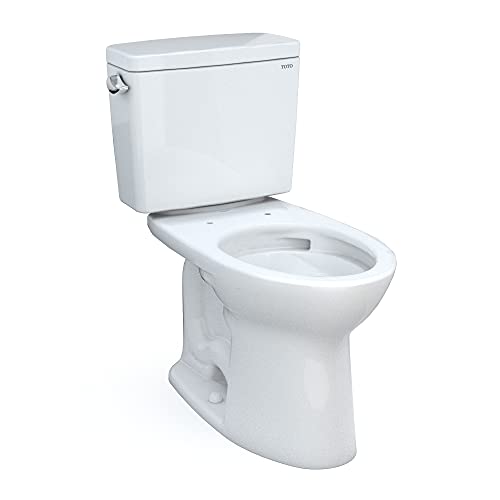
Mission-style toilets favor honest, simple lines and strong proportions over ornamentation, pairing naturally with Arts and Crafts bathrooms, and the strongest ones…
Read the guide
Elaborate high-tank pull-chain designs and ornately scalloped silhouettes that bring genuine period drama without sacrificing a modern, reliable flush.
Read the guide