
Where Does Toilet Water Go After You Flush
Buying Guides4.6
When you flush, where does it go? Follow toilet water from the bowl through the trap, drain, and stack to a septic…
Read the guideWhether you are remodeling a full bathroom or replacing a single fixture, the fixture decisions you make today determine how well your bathroom performs for the next 15 to 25 years. This guide covers every category -- toilet flush systems and MaP scores, faucet valve types, shower head flow rates, and sink configurations -- with published specs, EPA WaterSense standards, and brand comparisons so you can choose with confidence instead of guessing at the hardware store.
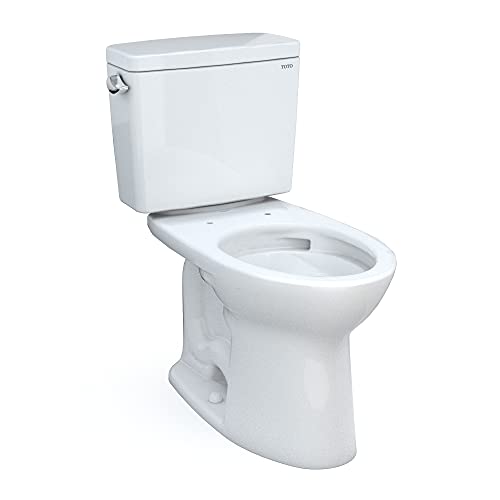
For a full bathroom refresh, start with the TOTO Drake II (MaP 1000 g, 1.28 GPF, EPA WaterSense certified) as your toilet anchor -- its Double Cyclone system handles heavy waste without clogs, leaving you budget and space to pair a Moen or Delta single-hole faucet, a 1.8 GPM WaterSense-rated shower head, and an undermount rectangular sink for the cleanest counter line.
A bathroom is a system. The toilet, faucet, shower head and sink do not operate in isolation -- they share a water supply, share visual weight, and together define the daily maintenance burden. Buying them in a coordinated way (matching rough-in dimensions, water efficiency ratings, and brand warranty terms) saves installation surprises and money over the fixture's lifetime. For a deeper dive on the toilet side alone, our best flushing toilets roundup ranks the top picks by MaP score and GPF.
This guide structures each category around the decisions that actually matter at purchase time -- not finish colors or brand loyalty, but flow rates, flush technology, installation clearances, and the certifications (EPA WaterSense, MaP 1000) that separate genuinely efficient fixtures from marketing claims. All specifications cited are published by the EPA, MaP Testing LLC, or the respective manufacturer.
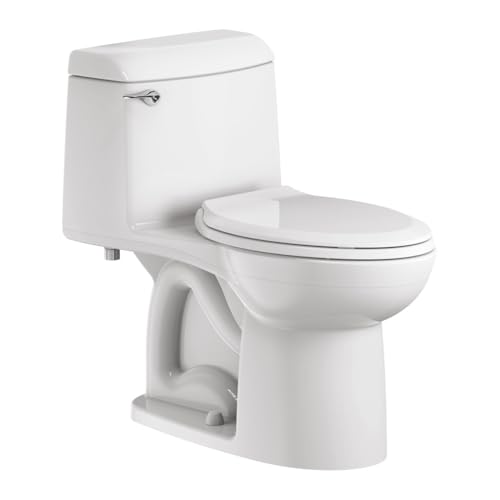
Gravity-fed siphon flush systems with a fully glazed 2.125-inch trapway clear waste most reliably across independent MaP testing. TOTO's Double Cyclone and G-Max siphon systems and American Standard's Champion 4 Power Wash rim both achieve 1000 g MaP scores -- the maximum -- at 1.28 GPF. Pressure-assisted systems (Flushmate) can exceed siphon force but are louder and require a pressurized vessel inside the tank, making them better suited for high-traffic commercial settings.
The toilet is the most used fixture in any bathroom and the one with the most measurable performance data. Two numbers govern almost every purchase decision: MaP score (how many grams of solid waste the toilet clears in a single flush) and GPF (gallons per flush, a direct water-use metric). EPA WaterSense certification requires 1.28 GPF or less; a MaP score of 600 g or above is considered acceptable, and 800 g or above is strong. Perfect-score models hit 1000 g.
Gravity-fed systems use the weight of water falling from the tank to create siphon action through the trapway. They are quiet, reliable, and inexpensive to repair. Pressure-assisted toilets (using a pressurized air vessel such as Flushmate) deliver more clearing force but produce a loud whoosh and require a pressurized tank component that adds cost. Dual-flush toilets offer a 0.8 GPF liquid-waste button and a 1.28 GPF full flush; the water savings are real only if the 0.8 GPF flush is used the majority of the time. Tornado flush (TOTO's centrifugal rim design) and PowerWash (American Standard) eliminate the rim holes that trap bacteria, making cleaning simpler while maintaining strong siphon action.
Elongated bowls (roughly 18.5 inches front-to-back) provide more surface area and are generally more comfortable for adults; round bowls (16.5 inches) save 2 inches of depth, which matters in small bathrooms under 60 inches deep. For height, standard bowls sit at 14 to 15 inches at the rim; comfort-height (ADA-compliant range, 16 to 18 inches at the rim) place the seated position at 17 to 19 inches from the floor -- closer to a chair height. Our detailed comparison of round vs elongated toilets walks through every dimension.
One-piece toilets integrate the tank and bowl into a single ceramic unit, eliminating the tank-to-bowl gasket (a common leak point) and simplifying cleaning. Two-piece toilets are less expensive to ship and easier to maneuver through tight doorways, and replacement parts (fill valves, flappers, tank-to-bowl hardware) are universally available. Our comparison of one-piece vs two-piece toilets covers cost, cleaning and longevity differences in full.
The rough-in is the distance from the finished wall to the center of the drain flange. Standard U.S. rough-ins are 12 inches; some older homes have 10-inch or 14-inch rough-ins. Ordering a toilet with the wrong rough-in is among the most common installation errors. Measure from the wall (not the baseboard) to the center of the closet bolts before purchasing. Most TOTO, Kohler, and American Standard models are available in multiple rough-in sizes, but availability varies by retailer.
The trapway is the curved passage inside the bowl that water and waste travel through during a flush. A fully glazed 2.125-inch trapway (the minimum for solid-waste passage without restriction) coated with a smooth glaze reduces friction and the chance of waste adhering to the surface. American Standard's Champion 4 uses a 4-inch flush valve paired with a large sump and 2.375-inch glazed trapway, which is why it consistently achieves MaP 1000 g. TOTO's Entrada and Drake models use their G-Max or Double Cyclone systems over a 2.125-inch glazed trapway. Smaller or unglazed trapways are a primary cause of repeat clogs. Our guide to how to choose a toilet covers trapway sizing alongside every other spec.
| Model | Type | MaP Score | GPF | WaterSense | Bowl Height | Best For | Check Price |
|---|---|---|---|---|---|---|---|
| TOTO Drake II | Two-piece | 1000 g | 1.28 | Yes | 16.125 in (Universal) | Best overall | Check price |
| American Standard Champion 4 | Two-piece | 1000 g | 1.6 | No | 16.5 in | Clog resistance | Check price |
| Kohler Highline | Two-piece | 1000 g | 1.28 | Yes | 15 in (standard) | Best value / parts | Check price |
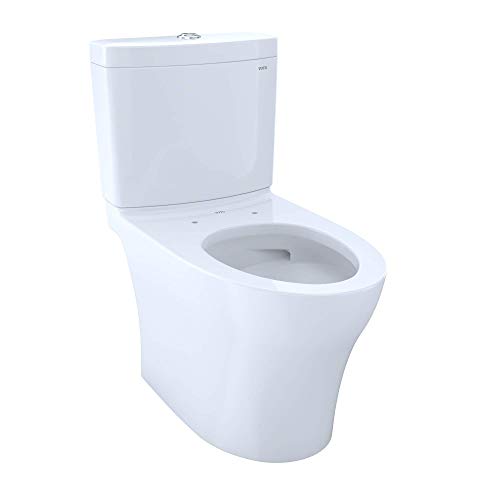
| TOTO Aquia IV | Two-piece dual flush | 800 g | 0.8 / 1.28 | Yes | 15 in | Water saving | Check price |
| TOTO UltraMax II | One-piece | 1000 g | 1.28 | Yes | 15.125 in | Easy cleaning | Check price |
| Gerber Viper | Two-piece | 1000 g | 1.28 | Yes | 15.75 in | Budget high-performer | Check price |
| Woodbridge T-0001 | One-piece | 800 g | 1.28 / 0.8 | Yes | 16.5 in | Modern design | Check price |
| Swiss Madison St. Tropez | One-piece wall-hung | 600 g | 0.8 / 1.6 | Varies | Adjustable | Contemporary style | Check price |
If this is a primary bathroom that will see daily heavy use, do not compromise on MaP score to save money. The TOTO Drake II and Kohler Highline both achieve 1000 g MaP at 1.28 GPF -- they flush equally clean while meeting EPA WaterSense water-use limits. The Gerber Viper is the most overlooked option at this performance tier: it matches the Drake II's MaP score and GPF, carries a lifetime warranty on vitreous china, and typically costs less. The Swiss Madison St. Tropez suits a guest or powder room where aesthetics and low daily use allow the trade-off of a lower MaP score.
MaP (Maximum Performance) testing measures the maximum grams of simulated solid waste a toilet clears in a single flush, using a standardized soybean-paste media. A MaP score of 600 g is the industry baseline for acceptable performance; 800 g is considered strong, and 1000 g is the maximum -- achieved by toilets like the TOTO Drake II, Kohler Highline, American Standard Champion 4, and Gerber Viper. For a primary household bathroom, a MaP score of 800 g or above is strongly recommended to avoid repeat flushing and service calls.
Double Cyclone flush achieves 1000 g MaP with no rim holes, EPA WaterSense certified, CeFiONtect glaze available. The benchmark two-piece toilet for daily use.
Check on AmazonMatches the Drake II's MaP 1000 g performance and 1.28 GPF, with a lifetime warranty on vitreous china. Underrated in most buying guides but dominant in MaP testing for its tier.
Check on AmazonSkirted one-piece with soft-close seat, dual-flush button-top (0.8/1.28 GPF), elongated comfort-height bowl at 16.5 in. Strong choice for a modern or spa-style primary bathroom.
Check on AmazonBathroom faucets are defined by three variables: mounting configuration (number of holes in the deck), valve type (cartridge vs ball vs ceramic disc), and flow rate (GPM). EPA WaterSense-certified bathroom faucets and aerators use 1.5 gallons per minute (GPM) or less at 60 psi -- compared to the old U.S. standard of 2.2 GPM. A WaterSense faucet saves approximately 700 gallons of water per year in a typical household.
Single-hole faucets (one mounting hole, lever or knob controls both temperature and flow) are the most common in contemporary bathrooms and fit most new vanity tops with a single pre-drilled hole. Widespread faucets use three separate holes -- a spout in the center and two handles 6 to 16 inches apart -- and suit traditional and formal bathroom designs. Centerset faucets have the spout and two handles on a single base plate that covers a 4-inch center-to-center hole spacing, a popular format for builder-grade vanities. Wall-mount faucets attach to the wall above the sink and require in-wall supply lines, adding installation complexity but opening counter space completely.
Ceramic disc valves (used by Kohler, American Standard, and premium Moen and Delta lines) use two ceramic disks that rotate against each other to control flow; they are the most durable and virtually drip-free. Cartridge valves are widely used by Moen and Delta and are straightforward to replace with OEM cartridges that cost under $20. Ball valves (common on Delta single-handle models) control temperature via a rotating ball with inlet ports; they can drip if the seats or springs wear, but replacement kits are inexpensive. For a long-service bathroom, ceramic disc or cartridge valves from Moen or Delta's core lines offer the best combination of reliability and part availability.
The standard pre-2023 U.S. maximum for bathroom faucets was 2.2 GPM. EPA WaterSense sets a tighter standard at 1.5 GPM, and some high-efficiency aerators deliver 0.5 GPM adequate for hand washing. For primary bathrooms, 1.0 to 1.5 GPM provides a satisfying fill experience without waste. Look for the WaterSense label on the faucet or aerator packaging -- it requires both the flow-rate limit and a performance test to confirm adequate rinse pressure.
Polished chrome is the most durable bathroom finish: it resists humidity, cleans with a damp cloth, and will not tarnish. Brushed nickel and matte black are popular choices but require regular drying to prevent water spots; matte black in particular shows hard-water deposits visibly. Brushed gold (champagne bronze) is a trending finish available from Delta, Moen, and Kohler, but availability of matching accessories (towel bars, toilet paper holders) varies by collection. Matching finish across all fixtures in a bathroom is not a requirement but simplifies the visual outcome significantly.
The Moen Adler and Delta Foundations are the practical default choices for a budget bathroom faucet refresh: both use proven cartridge valves, carry lifetime warranties, and are stocked nationally so local plumbers can source replacement parts without special orders. Upgrade to the Delta Trinsic or Moen Align if you want a cleaner contemporary profile -- both are WaterSense certified at 1.2 GPM and use the same reliable valve technology as the budget lines.
Ceramic disc valves are the most durable bathroom faucet valve technology: the two ceramic discs resist wear and corrosion far longer than rubber washers or ball seats, and virtually eliminate dripping under normal use. Kohler's MasterClean ceramic disc valves and Moen's Duralast cartridges are both rated for over 500,000 cycles -- far beyond typical residential use lifetimes. For easy DIY repair, Delta's single-cartridge design allows a homeowner to replace the entire valve mechanism in under 10 minutes without turning off the main supply.
Shower head performance is governed by flow rate (GPM), spray pattern, and water pressure compatibility. The federal maximum for shower heads is 2.5 GPM at 80 psi. EPA WaterSense-certified shower heads use 2.0 GPM or less while maintaining acceptable rinse performance (verified by a standardized test protocol). California, Colorado, and other states have adopted lower maximums (1.8 or 1.5 GPM). If you are renovating in a WaterSense state, confirm your local code before selecting a non-certified head.
Fixed rain shower heads (ceiling-mount or arm-mount) distribute water over a wide surface area (8 to 16 inches in diameter) at low velocity -- relaxing but less effective for rinsing hair quickly. Standard fixed heads with multiple spray modes (massage, wide, concentrated) suit most households and replace without any valve modification. Handheld shower heads attach to a slide bar or bracket and are functionally critical for bathing children, rinsing pets, and cleaning shower walls; they are available in WaterSense-certified versions at 1.8 GPM. Dual shower head systems combine a fixed overhead and a handheld diverter -- useful but require adequate household water pressure (45 psi minimum) to maintain acceptable flow at both heads simultaneously.
If your home has low municipal water pressure (under 40 psi), a standard 2.5 GPM head will underperform and may feel like a trickle. High-pressure shower heads designed for low-pressure systems use internal flow restrictors with smaller orifices to increase exit velocity. KOHLER, Delta, and Waterpik all publish minimum operating pressure specs; confirm your home's static pressure with a $10 gauge before purchasing. Homes on well systems frequently run at 40 to 50 psi and may benefit from an inline pressure booster if the shower is on a long run from the pump.
All U.S. shower heads use a standard 1/2-inch NPT threaded male inlet, so any shower head fits any standard shower arm. Finish compatibility is the relevant question: if your bathroom has brushed nickel faucets and towel bars, a polished chrome shower head will look mismatched. Most major manufacturers offer their popular shower heads in three to five finishes, but not all finishes are stocked at retail -- confirm finish availability before settling on a model.
The Delta In2ition (shower head plus integrated handheld) is the most practical dual-function pick for a family bathroom: it eliminates the separate diverter valve most dual systems require, stays EPA WaterSense certified at 1.75 GPM in combined mode, and costs substantially less than installing a separate slide-bar system. For pure overhead performance, the Kohler Forte fixed head (2.5 GPM or 1.75 GPM WaterSense version) is the most consistently reviewed for consistent pressure and an easy-to-clean face plate.
For homes with water pressure below 45 psi, a shower head with a flow rate of 1.75 to 2.0 GPM and a pressure-compensating internal design will perform better than a wide-face rain head with the same rated GPM. Models like the High Sierra All Metal Shower Head (1.5 or 1.8 GPM) and the Waterpik PowerPulse use narrower spray orifices that maintain exit velocity even at 30 to 40 psi. Avoid wide rain heads (10 inches or larger) at low pressure -- the large distribution area dilutes flow to an unsatisfying drizzle.
Bathroom sink selection involves three connected decisions: mounting type, material, and size. Each choice affects installation difficulty, countertop or vanity compatibility, and long-term cleaning ease. For most remodels, the sink and vanity are chosen together, since the vanity's pre-drilled faucet holes (1, 3, or 8-inch spread) must match the faucet configuration.
Undermount sinks attach below the countertop surface, leaving no rim at the counter edge -- the cleanest look and easiest to wipe crumbs and water off the countertop surface. They require a solid surface countertop (stone, quartz, or solid-surface material) that can be sealed at the cutout. Drop-in (self-rimming) sinks sit in a countertop cutout with the rim visible from above; they are compatible with laminate countertops and are the easiest to replace. Vessel sinks sit entirely on top of the counter, requiring a counter with a drain hole only (no faucet deck holes), and use a taller faucet or wall-mount. Pedestal sinks eliminate vanity storage entirely but suit small bathrooms where visual lightness matters.
Vitreous china is the standard bathroom sink material: fired at high temperature, it is non-porous, highly stain-resistant, and available from every major brand (Kohler, American Standard, TOTO, Kohler). Cast iron sinks with enamel coating are extremely durable and heavy (30 to 50 lbs for a single basin) -- suitable for undermount installations where counter support is not an issue. Composite granite (quartz-resin) sinks resist scratching and chipping, come in matte colors that coordinate with stone countertops, and are lighter than cast iron. Stainless steel in bathroom sinks is less common but used in contemporary and industrial designs; it shows water spots easily and requires regular drying in hard-water areas.
Standard bathroom sink bowls are 16 to 20 inches wide and 12 to 15 inches front-to-back. For a shared primary bathroom, a double-vanity sink setup with two basins at least 15 inches wide each -- or a single wide trough sink -- reduces peak-hour congestion. For small bathrooms, a 16-inch or 18-inch round bowl drops cleanly into a 21-inch-deep vanity. ADA accessibility requires the sink counter surface to be a maximum of 34 inches from the floor, with knee clearance beneath for wheelchair users -- a consideration for accessible master baths. For more on bathroom layout and clearance dimensions, our toilet buying guide covers the spatial planning principles that apply to the full room.
Vitreous china remains the most durable standard bathroom sink material for residential use: it is non-porous (resisting bacteria and staining), scratch-resistant under normal use, and rated to last 20 to 30 years or more with standard cleaning. Cast iron with porcelain enamel is arguably more chip-resistant under impact but adds significant weight and limits undermount configurations. Composite quartz-resin sinks are growing in popularity for their scratch and heat resistance in matte finishes, but the enamel coating on vitreous china -- particularly TOTO's Vitreous China glaze and Kohler's enameled cast iron -- outperforms composite in independent abrasion testing.
Buying any bathroom fixture without completing a short pre-purchase checklist is the most reliable way to generate expensive return-shipping or plumber-revisit fees. The following list covers the most common errors across all four fixture categories.
| Fixture | Measure First | Certify Before Buying | Common Error |
|---|---|---|---|
| Toilet | Rough-in (wall to drain center) | EPA WaterSense, MaP score | Wrong rough-in (12 vs 10 vs 14 in) |
| Faucet | Sink deck holes (1, 3, or 8 in spread) | WaterSense (1.5 GPM or less) | Faucet spread vs sink hole spacing mismatch |
| Shower Head | Static water pressure (psi) | WaterSense (2.0 GPM or less) | Wide rain head at low pressure |
| Sink | Vanity cutout size, faucet hole count | Material rating (vitreous china grade) | Drop-in sink on laminate counter without sealant |
TOTO, Kohler, and American Standard each offer coordinated lines where the toilet, faucet, and accessories (towel bars, toilet paper holders) share a finish family and design language. This is not mandatory -- a TOTO toilet and a Moen faucet work perfectly well together technically -- but when you need to match an existing fixture or choose a hardware finish to carry through the room, staying within one brand's collection makes the visual decision faster and the warranty experience simpler. Kohler's Memoirs collection and TOTO's Aquia IV line are examples of full-room programs where every piece is designed to coordinate.
Budget sequencing matters as much as fixture selection: toilet first, sink second, faucet third, shower head last. The toilet is the hardest to swap if you get the rough-in wrong, it sets the water-efficiency commitment for the room, and it has the longest lead time if you need a specific configuration. The shower head is the easiest and cheapest to upgrade at any point -- a $60 WaterSense head is a full-day project requiring no tools beyond a wrench and plumber's tape. Prioritize getting the toilet right, and keep the shower head decision flexible until the rough-in tile and trim are finished.
GPF (gallons per flush) measures water consumption per flush cycle. MaP score measures how many grams of solid waste the toilet clears in one flush during independent lab testing. A toilet can use 1.28 GPF (low water) and still achieve 1000 g MaP (maximum clearing power) -- as the TOTO Drake II and Kohler Highline demonstrate. The two metrics are independent of each other.
EPA WaterSense is a voluntary certification program that requires toilets to use 1.28 GPF or less and faucets and shower heads to meet specific flow-rate and performance thresholds. WaterSense-labeled products are independently tested and verified. Toilets certified by WaterSense use at least 20 percent less water than standard 1.6 GPF models without sacrificing MaP performance.
Measure from the finished wall (not the baseboard) to the center of the closet bolt caps on the floor. If the toilet is already installed, measure to the center of the bolts at the base. The most common U.S. rough-in is 12 inches; older homes may have 10-inch or 14-inch rough-ins. If your measurement falls between standard sizes, round down (buy a 10-inch rough-in for an 11-inch measurement) or confirm with a plumber.
One-piece toilets eliminate the tank-to-bowl joint (a potential leak point) and have a cleaner profile that is easier to clean around the base. Two-piece toilets cost less, are easier to ship and carry through tight spaces, and have universally available replacement parts. For primary bathrooms, the cleaning advantage of a one-piece is real; for rental or budget situations, a two-piece with standard parts is the lower-risk choice. Our one-piece vs two-piece toilets guide covers the full comparison.
Comfort height (also called ADA height or chair height) refers to a toilet bowl rim of 16 to 18 inches from the floor, which places the seated position at 17 to 19 inches once a standard seat is added -- approximately the same height as a dining chair. Standard height bowls sit at 14 to 15 inches at the rim. Comfort height is easier for adults and seniors to sit down and stand from; standard height is often preferred by children and shorter adults.
TOTO, Kohler, and American Standard are the three most consistently reliable toilet brands based on aggregated warranty claims, plumber surveys, and long-term owner review data. TOTO leads in flush technology innovation (Double Cyclone, Tornado, CeFiONtect glaze). Kohler leads in parts availability and design variety. American Standard's Champion 4 is the most frequently specified model for clog-resistance in commercial and high-use residential applications. Gerber is a strong underrated option at the same performance tier.
A quality vitreous china toilet bowl lasts 25 to 50 years or more under normal residential use -- the porcelain itself does not wear out. Internal components (fill valve, flapper, flush valve, wax ring) have shorter service lives: flappers 3 to 5 years, fill valves 5 to 7 years, wax rings at installation only but may need replacement if the toilet is moved. Buying a toilet from a brand with widely available replacement parts (Kohler, TOTO, American Standard) extends the functional life because internal repairs stay affordable.
A skirted toilet (also called a concealed trapway toilet) has a smooth ceramic panel on the outside of the bowl that covers the trapway curves visible on standard exposed-trapway toilets. This makes cleaning the outside of the bowl significantly easier -- no ridges, curves, or hard-to-reach crevices. The TOTO Vespin II, Kohler Santa Rosa, Swiss Madison St. Tropez, and Woodbridge T-0019 are popular skirted models. The trade-off is that skirted toilets often require special mounting bolts that differ from standard flange hardware.
For normal household water pressure (50 to 80 psi), a 1.8 to 2.0 GPM EPA WaterSense-certified shower head provides adequate rinse performance and saves water versus the 2.5 GPM federal maximum. For low-pressure homes (below 45 psi), choose a shower head specifically marketed for low-pressure performance -- these use smaller orifices to maintain velocity at the spray face. Avoid wide rain heads (10 inches or larger) at low pressure.
Moen and Delta are the two most consistently recommended brands for bathroom faucets in terms of reliability, warranty support (both offer lifetime limited warranties), and replacement part availability. Kohler produces premium fixtures with excellent ceramic disc valves but at a higher price point. American Standard offers solid cartridge-valve faucets at mid-range prices. For budget installations, the Moen Adler and Delta Foundations lines deliver reliable performance backed by the same lifetime warranties as the premium tiers.
Yes, when the toilet achieves a high MaP score. Independent MaP testing by Maximum Performance Testing LLC confirms that multiple WaterSense-certified 1.28 GPF toilets (including the TOTO Drake II, Kohler Highline, and Gerber Viper) achieve 1000 g -- the maximum score -- clearing more waste per flush than many older 1.6 GPF models that score only 400 to 600 g. Flush performance is determined more by flush valve size, siphon engineering, and trapway design than by the volume of water used.
A dual-flush toilet provides two flush options: a low-volume flush (typically 0.8 or 1.0 GPF) for liquid waste and a full-volume flush (1.28 or 1.6 GPF) for solid waste. The TOTO Aquia IV (0.8/1.28 GPF) and Woodbridge T-0001 (0.8/1.28 GPF) are popular certified options. Water savings from dual flush depend entirely on how often the low-volume button is used; homes where the full flush is used most of the time see minimal savings. EPA WaterSense uses a weighted average calculation across both flush volumes to certify dual-flush models.
Vitreous china sinks with a smooth glaze (including TOTO's proprietary glaze and Kohler enameled cast iron) are the easiest to maintain clean with standard non-abrasive bathroom cleaners. The non-porous surface prevents staining agents from penetrating. Matte composite granite sinks show fewer water spots than glossy white china in hard-water areas, but the matte texture can trap soap residue in microscopic pores over time. Polished stainless steel bathroom sinks show water spots most visibly of any material and require regular drying and occasional polishing.
A vessel sink sits entirely on top of the counter surface rather than recessing into it. It requires only a drain hole in the counter (no faucet holes) and pairs with a taller-than-standard faucet (typically 7 to 10 inches tall) or a wall-mount faucet. Vessel sinks offer a strong design statement and are easy to swap without cutting the counter. The trade-off is that the counter itself becomes part of the visible basin area and must be kept clean; and the tall faucet height can create splashing at lower water pressures.
Replacing a toilet, faucet, or shower head on existing supply and drain connections is a reasonable DIY project for a homeowner comfortable with basic plumbing. A toilet swap requires shutting off the supply, removing the old wax ring, setting a new ring, and bolting the new toilet -- typically 1 to 2 hours. A faucet replacement involves disconnecting supply lines and the drain linkage. A shower head is the simplest: remove the old head, apply plumber's tape to the arm threads, and thread on the new head. Any project that requires moving drain lines, supply rough-in, or adding new shutoff valves should be handled by a licensed plumber.
The TOTO Entrada is TOTO's most affordable model, with a G-Max flush system at 1.28 GPF that achieves 600 to 800 g on MaP -- solid but below the Drake tier. The TOTO Drake uses the G-Max single-cyclone system to achieve MaP 1000 g at 1.28 GPF. The TOTO Drake II upgrades to the Double Cyclone system, which uses two nozzles instead of rim holes for a more complete bowl rinse at the same 1000 g MaP and 1.28 GPF. For a primary bathroom, the Drake II is worth the modest upgrade over the original Drake. The Entrada suits secondary bathrooms where cost-saving is the priority.
Choose one primary finish (brushed nickel, polished chrome, matte black, or champagne bronze) and apply it consistently to faucet, shower head, towel bars, toilet paper holder, and cabinet hardware. All four major manufacturers (TOTO, Kohler, American Standard, Moen) offer their popular models in three to five finishes, but not every model is available in every finish -- confirm availability before committing. Mixing two finishes (for example, matte black faucet with brushed nickel towel bars) is a common designer choice if done deliberately, but accidental finish mismatches from purchasing across different collections look unintentional.
The Gerber Viper is Gerber's high-efficiency gravity-flush toilet, achieving MaP 1000 g at 1.28 GPF with a fully glazed 2.125-inch trapway and EPA WaterSense certification. The Gerber Avalanche uses a similar platform but is designed for the commercial and multi-family market, with a 1.28 GPF flush and heavy-duty flush valve components rated for higher daily flush cycles. For residential use, the Viper is the appropriate choice and offers the better combination of MaP performance, availability, and warranty coverage.
For a toilet, start with MaP score and rough-in measurement -- everything else is secondary. The TOTO Drake II (1000 g MaP, 1.28 GPF, EPA WaterSense) is the benchmark two-piece for primary bathrooms; the Gerber Viper matches that performance at lower cost. For faucets, Moen and Delta cartridge-valve lines deliver the best combination of reliability and DIY repairability with lifetime warranties. For showers, a 1.8 GPM WaterSense-certified head is the right balance in most U.S. homes. For sinks, vitreous china from any major brand outperforms composite alternatives over a 20-year cleaning-and-use cycle. Coordinate the purchase checklist (rough-in, deck holes, water pressure, cutout size) before you buy, not after.
When you flush, where does it go? Follow toilet water from the bowl through the trap, drain, and stack to a septic…
Read the guideDo toilets need electricity to flush? Most do not. Learn which toilets use power, how a standard flush works, and how to…
Read the guideFind out how many gallons per flush an old toilet really uses, how to check your own tank, and how much water…
Read the guide