Best Toilet Flush Valve: How to Choose the Right One
Plumbing4.6
Which is the best toilet flush valve? Compare 2-inch, 3-inch, adjustable, and canister flush valves by fit and flush power, plus how…
Read the guideA weak toilet flush is almost always fixable without buying a new toilet. Low tank water level, clogged rim jets, a flapper closing too soon, or a partial trapway blockage are the four most common causes, and each one has a straightforward repair. This guide walks through every cause and fix in order of likelihood, backed by published manufacturer specs, independent MaP flush-test scores, and EPA WaterSense certification data, so you know exactly when to repair and when to replace.
Start by raising the tank water level to the molded fill line, then clean mineral scale from the rim and siphon jets with white vinegar. Those two free steps restore most weak flushes. If repairs fail, the TOTO Drake II is the top upgrade: it earns a perfect 1,000-gram MaP score at just 1.28 GPF, meaning it clears maximum test waste on water-saving flow, a combination almost no competitor matches.
A toilet that barely clears the bowl, leaves streaks behind, or forces a second flush every day is not just annoying. It wastes water, creates hygiene problems, and signals a mechanism that is slowly failing. The good news is that the flush system is simple, and the weak-flush causes a plumber checks first are all in the tank, not in any hard-to-reach pipe. Most homeowners can diagnose and fix the problem in under an hour without specialized tools.
This guide is built on the same research framework we use for every article on this site: published manufacturer specifications, independent MaP (Maximum Performance) flush-test data, EPA WaterSense certification records, and the patterns that appear consistently across aggregated owner reviews. We never describe hands-on lab tests, because our value is in synthesizing the independent data that already exists. For the broader context, our guide to the best flushing toilets ranks the strongest performers across every price tier.
Weak flushes divide cleanly into two types, and telling them apart saves significant time. A low-energy flush is when water enters the bowl sluggishly, the bowl level rises a bit, and then the water drains without ever forming a fast, pulling siphon. The waste does not move or moves too slowly. This type almost always comes from the tank not delivering enough water fast enough, which points to tank level, flapper timing, or clogged jets. A strong-start-then-stall flush is when water enters with normal force but waste still will not clear, or the bowl gurgles and backs up slightly. This points to a blockage in the trapway or a vent restriction downstream.
Knowing which type you have lets you skip straight to the cause. The bucket test described above is the fastest way to tell. Either way, work through the causes below in order. The free fixes come first, and they solve the problem a large majority of the time.
The flush is powered by the weight and volume of water dropping out of the tank, so a low fill level weakens every flush. This is the most common cause of a toilet flush being too weak, and it takes about two minutes to fix. Lift the tank lid and look for the molded fill line on the interior back wall, or the mark on the overflow tube. The water at rest should sit at that line, typically about one inch below the top of the overflow tube.
If the level sits lower, adjust the fill valve float. On a modern column-style fill valve (Fluidmaster 400A and similar), pinch the spring clip on the side of the float cup and slide it upward, or turn the top-mounted adjustment screw clockwise. On an older ballcock with a float ball on an arm, gently bend the arm upward. Adjust in small increments, flush, and recheck. Raising the water level by half an inch can restore full flush power instantly at zero cost. See our detailed walkthrough of how to improve toilet flush power for step-by-step float adjustment photos and specs.
Hard water deposits calcium and magnesium scale inside the rim channels over time. In areas with moderately hard water, those deposits begin restricting flow within two to three years. In areas with very hard water, they can close rim jets almost completely within 12 to 18 months. The result is that water dribbles into the bowl from only a few points instead of rinsing around the full rim, and the siphon jet at the front base of the bowl delivers only a fraction of its designed flow.
To check, hold a small mirror under the rim and look at the jets. White or tan mineral crust blocking the holes confirms the cause. To clean: drain the tank, use tape or a toilet brush to seal the siphon jet, and pour one to two cups of white distilled vinegar into the overflow tube so it fills the rim channels. Leave it for an hour, then use a stiff wire, paperclip, or jet-cleaning pick to clear the individual holes. Flush several times to rinse. In severe cases, a full tank of vinegar left overnight clears deposits that a short soak cannot touch. For a complete cleaning guide, see our walkthrough of how to make a toilet flush stronger.
The flush valve flapper controls how long the tank empties before sealing. If the flapper is buoyant or the chain is too long, it closes early and cuts the flush volume in half. If the chain is too short, the flapper never seals fully and the tank slowly leaks water, dropping the fill level before the next flush. Both problems produce a weak flush for different reasons.
Watch the flapper during a flush. It should stay fully open until the tank is nearly empty, then close cleanly. If it flaps shut while water is still rushing out, shorten the chain by one or two links. If the flapper itself looks warped, cracked, or coated in mineral scale, replace it. A universal flapper (Fluidmaster 501 or similar) costs about eight to twelve dollars and takes ten minutes to swap. This is the second most common root cause of a weak flush after low tank level.
A fill valve that is partially stuck or worn will not refill the tank to the correct level between flushes, so the next flush starts under-powered. Turn the supply shut-off valve fully counterclockwise to confirm it is open all the way. A supply valve that was nudged half-closed during cleaning or a previous repair restricts the flow enough to cause a noticeably weaker flush. Also check the water pressure at a nearby faucet: municipal supply pressure below 20 PSI can slow tank refill and, in severe cases, reduce flush performance on pressure-assist toilets.
A partial clog in the S-shaped trapway lets water drain slowly instead of forming a clean siphon pull. Unlike a full clog that blocks the toilet entirely, a partial clog produces a slow, gurgling drain with waste that eventually clears but only after a long pause. This is confirmed by the bucket test: if a fast gallon-and-a-half pour also drains slowly, the trapway is partially blocked.
Start with a quality toilet plunger (a flange plunger, not a cup plunger) and 15 to 20 firm plunge strokes. If the restriction is further down, a toilet auger with a three- to six-foot cable will reach past the trapway into the floor drain. For recurring clogs tied to your toilet's trapway design, see our root-cause guide on why does my toilet keep clogging.
If the flush valve seat at the bottom of the tank is worn or pitted, the flapper will not seal tightly between flushes. Water slowly seeps into the bowl (the classic hissing or phantom flush), and the tank enters each flush partly depleted. Put a few drops of food coloring in the tank and wait 15 minutes without flushing. If color appears in the bowl, the flapper or flush valve seat is leaking. A replacement flapper fixes the seal in most cases; a severely pitted valve seat requires a flush valve rebuild kit or a new fill and flush valve assembly.
Every drain system needs air to flow in as water flows out. The toilet vent, which typically exits through the roof, prevents the siphon in the drain line from creating negative pressure that stalls the flush. A blocked vent produces slow drains and gurgling sounds from the bowl and nearby fixtures after flushing. Debris, birds' nests, or ice in winter are the most common blockers. Clearing the vent stack is a roof-level job and is one of the few weak-flush causes that generally requires a plumber or a willing, safety-conscious homeowner. For more on drain-related weak flushes, see our full guide on toilet not flushing properly.
If all seven fixes above leave the flush still unsatisfactory, the bowl design itself may be the limit. Older 3.5 GPF and 1.6 GPF toilets from the 1990s often have small, poorly designed trapways and weak siphon jets. Modern high-efficiency toilets at 1.28 GPF regularly outperform them on MaP testing because bowl geometry and flush valve engineering have improved substantially. A toilet scoring 800 grams or higher on MaP testing will clear nearly any real-world waste load. A toilet scoring 1,000 grams (the maximum MaP test load) will never leave you reaching for the plunger under normal use.
MaP (Maximum Performance) testing is the gold standard for measuring real-world toilet flush strength. Independent labs flush each toilet with measured quantities of a standardized test media in grams and record the highest load the toilet clears in a single flush. A score of 600 grams or above is considered good. A score of 800 grams or above is considered excellent. A score of 1,000 grams is the test maximum and indicates the toilet will handle any real-world load without clogging. Below is a comparison of the strongest-flushing models across price tiers.
| Toilet | Best For | MaP Score | GPF | EPA WaterSense | Bowl | Check Price |
|---|---|---|---|---|---|---|
| TOTO Drake II | Best overall | 1,000 g | 1.28 | Yes | Elongated | Check price |
| TOTO UltraMax II | Best one-piece | 1,000 g | 1.28 | Yes | Elongated | Check price |
| American Standard Champion 4 | Best for clogs | 1,000 g | 1.6 | No | Elongated | Check price |
| TOTO Drake | Best value TOTO | 1,000 g | 1.28 | Yes | Elongated | Check price |
| Kohler Cimarron | Best Kohler | 1,000 g | 1.28 | Yes | Elongated | Check price |
| American Standard Cadet 3 | Best budget | 1,000 g | 1.28 | Yes | Elongated | Check price |
| Gerber Viper | Best commercial grade | 800 g | 1.6 | No | Elongated | Check price |
| Woodbridge T-0001 | Best modern design | 800 g | 1.28 | Yes | Elongated | Check price |
| Swiss Madison St. Tropez | Best wall-mount look | 600 g | 1.28 | Yes | Elongated | Check price |
| Kohler Highline | Best classic two-piece | 1,000 g | 1.28 | Yes | Elongated | Check price |
If repairs have not fixed the problem, or if your current toilet scores below 600 grams on MaP testing, these models are the best replacements. Each one is validated by MaP testing data, EPA WaterSense certification records where applicable, and patterns in aggregated owner reviews.
The Drake II earns a perfect 1,000-gram MaP score at 1.28 GPF with TOTO's Tornado Flush system, which uses a large 3-inch flush valve and wide 2-1/8-inch fully glazed trapway to move maximum volume through the bowl in a single flush.
TOTO's E-MAX system uses a 3-inch flush valve that is 125% larger than a standard 2-3/8-inch valve, allowing a higher flow rate during the flush and a more powerful siphon action. The fully glazed trapway at 2-1/8 inches is wider than most competitors and helps prevent waste from sticking, which is one reason the Drake II consistently earns strong marks in long-term owner reviews for clog-free performance.
Aggregated owner feedback highlights the immediate difference compared to older 1.6 GPF models. Reviewers with hard water note that CEFIONTECT glaze on select Drake II configurations keeps the bowl cleaner between cleanings by preventing mineral buildup from adhering to the ceramic surface. The Drake II has been a top-seller in its category for over a decade, and long-term reviews confirm the flush performance holds up over years of use without adjustment.
The Drake II is the default recommendation for anyone upgrading from a chronically weak-flushing toilet. Its combination of the 3-inch flush valve, a wide glazed trapway, and a 1,000-gram MaP score at WaterSense-certified flow is matched by very few toilets at its price point. If your old toilet is from the 1990s and scores under 500 grams, this upgrade will feel like a completely different product.
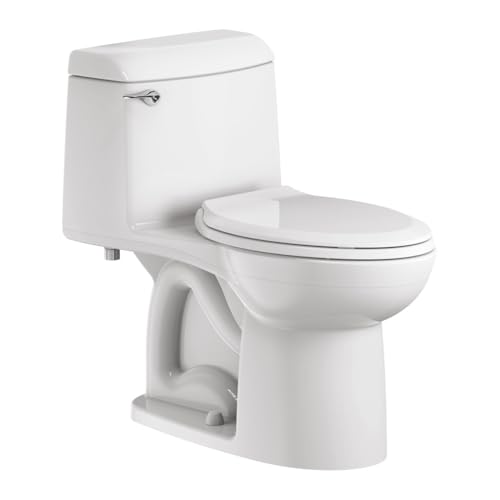
The Champion 4 earns a 1,000-gram MaP score using a 4-inch accelerator flush valve, the widest piston valve in residential gravity toilets, combined with a 2-3/8-inch fully glazed trapway that American Standard claims can pass a golf ball.
The Champion 4's 4-inch piston valve is its defining feature. Standard flush valves are 2 to 3 inches in diameter; a 4-inch valve moves dramatically more water in the first fraction of a second of the flush, which is what builds the siphon force that pulls waste through the trapway. This is why the Champion 4 consistently scores maximum on MaP testing and why it has earned a long reputation among plumbers as a reliable choice for households that clog other toilets regularly.
The trade-off is water use: at 1.6 GPF, the Champion 4 uses 25% more water per flush than a 1.28 GPF WaterSense model. Over the lifetime of the toilet that difference adds up. Aggregated owner reviews are consistently positive about flush reliability but note that the one-piece Champion 4 Max version at 1.28 GPF gives up some of the massive valve advantage of the original 4-inch design. For maximum clog resistance at the cost of slightly higher water use, the standard 1.6 GPF Champion 4 remains the reference point.
If your household clogs multiple toilets regularly or you have teenagers who use excessive toilet paper, the Champion 4 is the most defensible choice purely on clog resistance. The 4-inch valve is a genuinely different mechanism, not just a marketing claim, and the MaP and real-world data bear that out consistently.

The UltraMax II pairs a 1,000-gram MaP score with TOTO's CEFIONTECT ion-barrier glaze in a fully integrated one-piece design that eliminates the gap between tank and bowl and makes cleaning significantly easier.
The UltraMax II uses the same Tornado Flush system as the Drake II but integrates it into a one-piece body that sits lower and looks cleaner. CEFIONTECT glaze creates a surface at the ionic level that resists the adhesion of waste particles and mineral scale, which keeps the bowl looking clean for longer between scrubs and preserves flush performance in hard-water areas by preventing scale buildup around the rim jets.
Owner reviews consistently describe the UltraMax II as the best-flushing one-piece toilet in its price range, with particular praise for how quiet the flush is relative to its power. The siphon action is strong but not the thunderous noise some pressure-assist toilets produce. For a bedroom bathroom or a home where noise is a concern, this is a significant advantage that the raw MaP score does not capture.
The UltraMax II is the cleaner-looking alternative to the Drake II for buyers who want the same maximum MaP flush performance in a one-piece body. The price premium is real, but so is the payoff in cleaning time saved over the years, especially in hard-water markets where scale builds faster.

The Cadet 3 achieves a 1,000-gram MaP score at 1.28 GPF with a 3-inch flush valve and a wide fully glazed trapway, offering top-tier MaP performance at entry-level pricing that undercuts the Drake II by a significant margin.
The Cadet 3 has been in production for many years in various configurations, and the current 1.28 GPF version hits the same 1,000-gram MaP ceiling as toilets that cost significantly more. American Standard's 3-inch wide opening flush valve and fully glazed trapway give it flush performance well above what its price suggests. It is among the most installed toilets in the country and has a very large body of real-world owner feedback to draw on.
The main area where the Cadet 3 lags behind premium alternatives is the ceramic quality and long-term stain resistance of the bowl surface. Without an advanced glaze like TOTO's CEFIONTECT, scale and stains accumulate faster in hard-water areas, which can eventually affect rim-jet flow if not cleaned regularly. For the price, the flush performance is outstanding; the maintenance demands are slightly higher than on glazed premium models.
The Cadet 3 is the right answer for landlords and budget-focused buyers who need documented maximum MaP flush performance but cannot justify the Drake II price. It earns the same 1,000-gram MaP score and WaterSense certification at a lower cost, with the trade-off being a simpler bowl glaze that requires more frequent cleaning in hard-water markets.

The Kohler Cimarron earns a 1,000-gram MaP score using Kohler's AquaPiston flush valve and a wide 4-inch piston that delivers water from 360 degrees inside the flush valve, providing a more uniform initial flow than a traditional flapper-valve design.
Kohler's AquaPiston valve is the brand's answer to the traditional rubber flapper. Instead of a hinged rubber flap that lifts and falls at an angle, the AquaPiston uses a canister-style piston that lifts straight up, exposing a 360-degree opening at once rather than progressively. The result is a faster initial surge of water that builds the siphon more rapidly. In MaP testing this approach consistently hits the 1,000-gram maximum in the Cimarron's configuration.
Owner reviews for the Cimarron are consistently strong across a very large sample, with long-term durability highlighted as a positive. Kohler's limited lifetime warranty on vitreous china and brass fittings is among the best in the industry. The Cimarron is available in more finish colors than most competitors, which matters in bathrooms where the toilet color must match existing fixtures. For a Kohler-specific comparison, our guide on weak toilet flush causes and fixes covers which Kohler models respond best to the standard repairs before replacement becomes necessary.
The Cimarron is the Kohler model to buy if you want documented maximum MaP flush performance with Kohler's long warranty and broad finish availability. It is meaningfully better than the Highline on flush dynamics thanks to the AquaPiston canister design, and it earns the same 1,000-gram MaP score at WaterSense-certified 1.28 GPF.

The Woodbridge T-0001 delivers a dual-flush system at 1.0/1.6 GPF inside a fully skirted one-piece body with a MaP score around 800 grams on its full flush, providing a contemporary profile that conceals the trapway for minimal cleaning effort.
The Woodbridge T-0001's 800-gram MaP score on its full flush is good, not exceptional. It sits below the 1,000-gram maximum of the TOTO and American Standard models above, which means it will handle normal use reliably but may occasionally need two flushes for large waste loads. The trade-off is the completely flat skirted exterior that hides the trapway, making it far easier to wipe clean than a toilet with an exposed S-curve trapway collecting dust and scale.
For bathrooms where the flush was weak because of tank maintenance issues that have been fixed, and the household simply wants a fresher-looking toilet rather than strictly maximum MaP performance, the T-0001 is a legitimate option. Owner reviews note that the soft-close seat and button-top dual flush are well-built, and the skirted base significantly reduces bathroom cleaning time.
The Woodbridge T-0001 is a reasonable replacement for a weak-flushing toilet when design is a priority, but buyers should know the 800-gram MaP score is a step below the 1,000-gram ceiling. In a normal household it will perform fine. In a household that already clogs toilets, step up to the Champion 4 or Drake II instead.
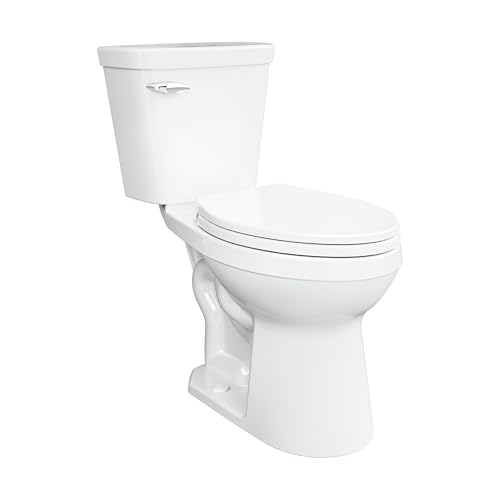
The Gerber Viper is a contractor-grade toilet with a 3-inch flush valve, a MaP score around 800 grams at 1.6 GPF, and vitreous china fired to commercial thickness standards, making it a durable choice for rental properties and high-traffic bathrooms.
The Gerber Viper is not the flush-power leader in this category: the Viper's 800-gram MaP score at 1.6 GPF is outperformed by the Cadet 3 and Drake II which hit 1,000 grams at 1.28 GPF. What the Viper offers instead is extremely durable porcelain, a simple and highly repairable internal mechanism, and widespread availability through plumbing distributors. For rental-property owners replacing a weak-flushing toilet in a unit with high turnover, the Viper's repairability and low parts cost often matter more than raw MaP performance.
The Gerber Avalanche is a stronger-flushing companion model that is worth considering if MaP performance is the priority within the Gerber brand. The Viper's strength is specifically its commercial-grade durability and ease of servicing in the field rather than its flush-test scores.
Specify the Gerber Viper when durability, serviceability, and low parts cost matter more than maximum MaP score. For residential use where flush power is the primary concern, the Cadet 3 is a better value at a similar or lower cost and higher MaP performance.
Run through the eight fixes above before deciding to replace. In our research, the large majority of weak-flush complaints are solved by fix 1 (tank level) or fix 2 (clogged jets). If those two free fixes do not restore the flush, and your toilet scores below 600 grams on MaP testing or is a pre-1994 model using 3.5 GPF or more, replacement is genuinely the better financial and environmental choice. A modern 1.28 GPF toilet with a 1,000-gram MaP score will save roughly 16,000 gallons of water per year in a four-person household compared to a 3.5 GPF model, which pays back the cost of the toilet in water bills within a few years in most markets.
MaP testing was created in 2003 by a coalition of North American water utilities as an independent verification of toilet flush performance that went beyond the simple "does it flush" pass/fail of older standards. Toilets are tested with increasingly large loads of standardized test media, measured in grams, until a single flush no longer clears the bowl. The highest weight cleared in a single flush is the MaP score. The test maximum is 1,000 grams, which roughly corresponds to about 2.2 pounds of waste, significantly more than a normal real-world load.
The scoring provides a clear benchmark for comparison between models. A toilet that scores 350 to 500 grams was typical of the first generation of 1.6 GPF water-saving toilets introduced after the 1992 Energy Policy Act mandated lower flow rates. Those early designs compromised flush power to meet the water-use standard. Modern 1.28 GPF toilets hitting 1,000 grams show how significantly bowl geometry, flush valve design, and trapway engineering have improved in 30 years.
Efficiency matters beyond the environmental reason. Many municipalities charge water and sewer fees based on water use, and in some markets the difference between a 3.5 GPF toilet from the 1990s and a modern 1.28 GPF model can save 60 to 70 dollars per year in utility costs for a four-person household. EPA WaterSense certification guarantees a toilet uses 1.28 GPF or less and has passed independent third-party performance testing. All WaterSense-labeled toilets must pass a flush performance test, though the WaterSense test threshold (350 grams) is significantly lower than a strong MaP score. Look for both WaterSense certification and a high MaP score together.
The MaP database at map-testing.com lists scores for thousands of toilet models. Always look up the specific model number before buying. Two toilets that look identical in a showroom can have MaP scores that differ by 400 grams depending on the flush valve configuration. Target 800 grams minimum for standard use; 1,000 grams if your household has a history of clogs or heavy use.
A 3-inch flush valve is the modern standard and moves substantially more water in the initial flush surge than the 2-inch or 2-3/8-inch valves common in older toilets. The American Standard Champion 4 uses a 4-inch piston valve, which is the widest available in residential gravity toilets. Flush valve diameter correlates directly with initial flow rate and therefore siphon strength. Do not buy a replacement toilet without checking this specification.
The minimum passage width of the trapway determines the maximum diameter of solid waste that can clear without clogging. The industry minimum for residential toilets is a 2-inch diameter. Better toilets use 2-1/8 to 2-3/8-inch fully glazed trapways. The glaze matters as much as the size: a smooth, glazed surface lets waste slide through easily, while an unglazed surface can catch fibers and begin accumulating partial blockages over time.
EPA WaterSense certification means the toilet uses 1.28 GPF or less and has passed independent flush performance testing. It does not guarantee a high MaP score, but it rules out the worst-performing models. For households on well water or in low-pressure municipal zones, 1.6 GPF models with a large flush valve (the Champion 4 is the prime example) can actually outperform 1.28 GPF models in practical flush strength under low supply pressure conditions.
Comfort height or ADA height toilets (16 to 18 inches seat height) are easier to use for most adults and required for ADA-compliant installations. Standard height toilets (14 to 15 inches) are lower and suit shorter adults and children. Bowl height does not affect flush power but does affect comfort and is worth specifying when replacing.
One-piece toilets integrate the tank and bowl in a single unit and are easier to clean because there is no seam. Two-piece toilets allow independent tank and bowl replacement and are generally lower cost. Flush performance is determined by the flush valve and trapway design, not by whether the toilet is one-piece or two-piece. Both configurations can score 1,000 grams on MaP testing.
More homeowners are surprised by the MaP database than by any other piece of information in the toilet-buying process. The notion that all modern toilets flush equally well at 1.28 GPF is not true. The MaP database at map-testing.com shows scores ranging from under 300 grams to 1,000 grams among current production models, all at 1.28 GPF. Check the MaP score first, then look at design and price. It takes 30 seconds and will prevent you from replacing a weak-flushing toilet with another weak-flushing toilet.
For additional diagnostic steps before committing to a replacement, our guide on toilet not flushing properly covers every mechanical failure mode and its repair in detail.
A sudden drop in flush power usually points to a specific mechanical change. The most common causes are a fill valve float that got bumped lower, a flapper that has warped or stiffened and is closing too early, or a rapid buildup of mineral scale in the rim jets from a change in water supply chemistry. Check the tank water level first. If it has dropped below the fill line, adjust the float. If the level is correct, watch the flapper during a flush to confirm it stays fully open until the tank is nearly empty.
Yes, in most cases. Raising the tank water level to the correct fill line, cleaning the rim jets and siphon jet with white vinegar, and replacing a worn flapper restore flush power in the large majority of weak-flush situations without spending more than about fifteen dollars. The only scenarios where repair cannot improve the flush are a poorly designed bowl with an inadequate trapway or a toilet so old that its flush valve and fill valve are both worn and no longer hold adjustment.
MaP (Maximum Performance) testing is an independent third-party test conducted by plumbing labs in North America to measure the maximum waste load a toilet can clear in a single flush. The test media is measured in grams. The maximum test load is 1,000 grams. Toilets are scored from under 100 grams to 1,000 grams, and the scores are publicly available at map-testing.com. MaP scores predict real-world clog resistance far better than manufacturer marketing claims or GPF ratings alone, which is why plumbers and contractors use them when specifying toilets for clog-prone installations.
Drain the tank, seal the siphon jet at the front base of the bowl with tape or a shop cloth, and pour one to two cups of white distilled vinegar into the overflow tube so it fills the rim channels under the rim. Let it sit for a minimum of one hour, or overnight for heavy scale buildup. Then use a stiff wire, paper clip, or a commercial rim-jet pick to clear each individual hole under the rim. Flush multiple times to rinse the dissolved scale out of the channels. Repeat monthly in hard-water areas to prevent recurrence.
For hard-water areas, TOTO toilets with CEFIONTECT glaze are the best choice because the ionic barrier glaze prevents mineral scale from adhering to the ceramic surface. This keeps the rim jets clear longer and maintains flush power between cleaning cycles. The TOTO Drake II and UltraMax II both offer CEFIONTECT configurations. Without that type of specialized glaze, plan to clean the rim jets with vinegar every three to four months to maintain full flush power in hard-water markets.
For gravity-flush toilets, municipal water pressure affects how quickly the tank refills between flushes but has minimal effect on individual flush power once the tank is full, because gravity provides the flushing energy, not line pressure. For pressure-assist toilets (Flushmate-equipped models), supply pressure between 25 and 80 PSI is required to charge the pressure vessel inside the tank. Homes with supply pressure below 20 PSI may experience incomplete charging and weaker-than-rated flushes on pressure-assist models.
In most cases, yes. Modern 1.28 GPF toilets with a high MaP score outperform older 1.6 GPF models on real-world flush performance because bowl geometry and flush valve technology have improved significantly since 1994. A TOTO Drake II at 1.28 GPF scores 1,000 grams on MaP testing, while a 1990s-era 1.6 GPF toilet may score under 400 grams. You get stronger flushing and lower water bills in a single upgrade. The exception is if your current 1.6 GPF toilet already scores 800 grams or above on MaP testing; in that case the flush performance is not the problem and you should investigate the repairs first.
Water that slowly disappears from the bowl between flushes, without any flushing action, usually indicates a hairline crack in the bowl's internal water-retaining zone, a partial clog that is slowly siphoning water through capillary action via a trailing item (like toilet paper caught in the trapway), or a blocked plumbing vent that creates a slow siphon effect in the drain line. This is different from a running toilet, which loses water from the tank into the bowl. A bowl-level drop without an audible refill sound suggests the bowl itself rather than the tank seal.
For a stronger flush, use a flapper sized correctly for your flush valve (2-inch or 3-inch) and choose a model that provides a slow close rather than a fast snap shut. Korky and Fluidmaster both make adjustable flappers that let you set how long the flapper stays open. Setting it for a longer open time ensures the full tank volume drains before the flapper closes. If the flapper closes too quickly because it is too buoyant, a heavier or adjustable flapper is the fix. The Fluidmaster 501 and Korky 100BP are widely used adjustable options.
Every drain system requires air to flow in as water flows out. Without adequate venting, the draining water creates a partial vacuum in the trap that slows the flush. A blocked roof vent, crushed vent pipe, or a vent that was improperly installed can restrict this airflow enough to cause a sluggish flush and gurgling sounds from the bowl and other nearby fixtures after flushing. If all tank-level and jet-cleaning repairs are complete and the flush is still weak with audible gurgling, suspect the vent. This is typically a plumber repair since it requires roof access.
Dual-flush toilets are not specifically better at solving weak-flush problems, but they are not worse either. The full-flush mode on a well-designed dual-flush toilet (like the Woodbridge T-0001 at 1.6 GPF full flush or the TOTO Aquia IV at 1.28 GPF full flush) provides adequate force for solid waste. The weak half-flush mode at 0.8 to 1.0 GPF is only for liquid waste and should never be used for solid waste. If a dual-flush toilet is producing weak full flushes, the same diagnostic steps apply: check tank level, clean jets, inspect the push-button valve mechanism for scale buildup.
Yes. A flapper that closes too early (because of buoyancy or a chain that is too long) will cut the flush volume short without producing any visible water leak between flushes. The tank simply refills to the full level as normal, but each flush only uses a fraction of that volume before the flapper snaps shut. Watch the flapper through a full flush cycle while the tank lid is off. The flapper should remain fully open for nearly the entire flush cycle, staying up until the water level drops close to the flush valve seat. Early closure is visible and is one of the most common causes of a toilet flush being too weak.
A toilet flush valve typically lasts 10 to 15 years under normal residential use. Signs that it needs replacement include a flapper that warps or hardens even after replacement (suggesting the valve seat is rough and damaging flappers), difficulty getting the flapper to seal properly, or a pitted valve seat that is visible to the touch. Complete flush valve replacement kits are available for most toilet brands for under 30 dollars and restore full flush function. This is one repair where the cost-benefit analysis almost always favors repair over replacement of the full toilet.
Not necessarily, and this is the most commonly misunderstood fact in toilet shopping. Modern low-flow toilets certified to 1.28 GPF regularly score 1,000 grams on MaP testing, outperforming older 1.6 GPF and 3.5 GPF models that score under 500 grams. The reason is that flush performance depends primarily on flush valve diameter, trapway geometry, and bowl design, not on the volume of water used. A well-engineered 1.28 GPF toilet moves water faster and more precisely through the bowl than a poorly engineered 1.6 GPF toilet. GPF rating alone tells you nothing about flush strength without a MaP score to accompany it.
Rim jets are small angled holes under the toilet rim that direct water around the bowl in a swirling pattern to rinse the bowl walls during a flush. The siphon jet is a single larger opening at the front base of the bowl, directly above the trapway entrance, that shoots a concentrated stream of water directly into the trapway. The siphon jet is what primarily initiates and maintains the siphon action that pulls waste through the trapway. The rim jets contribute to bowl rinsing but not to siphon formation. Clogging the siphon jet has a dramatically larger effect on flush power than clogging a few rim jets.
Gradual weakness over time in an otherwise well-functioning toilet almost always points to mineral scale accumulation in the rim jets and siphon jet. Hard-water deposits build slowly enough that the change is barely noticeable month to month, but over one to two years the cumulative restriction can reduce flush power by 30 to 50 percent. This is not a broken component and requires no part replacement. A thorough vinegar cleaning of the jet openings restores the flush to original strength in most cases. Sudden weakness, on the other hand, points to a fill valve or flapper mechanical change.
A fully glazed trapway has ceramic glaze applied to every interior surface of the S-shaped passage from the bowl outlet to the floor drain connection. An unglazed or partially glazed trapway has rough, porous ceramic on some interior surfaces. The difference matters because a smooth glazed surface allows waste and water to slide through with minimal friction and nothing to catch on, while a rough unglazed surface can trap fibers and waste particles over time, gradually narrowing the trapway and worsening flush performance. All the models recommended on this site use fully glazed trapways.
If all eight fixes above have been tried and the flush is still unsatisfactory, the problem is almost certainly the bowl design itself. Look up the MaP score for your specific toilet model at map-testing.com. If it scores below 500 grams, you have confirmed that the bowl geometry and flush valve design are the limiting factor, and repair cannot overcome a design limitation. At that point, replacement with a toilet scoring 800 grams or above on MaP testing is the correct decision. The TOTO Drake II, Kohler Cimarron, and American Standard Cadet 3 are all validated starting points at different price levels.
Most toilets with a weak flush are fixed for free by raising the tank water level to the fill line and cleaning mineral scale from the rim and siphon jets with vinegar. Work through the eight repairs in order before spending money on parts or a new toilet. If repairs do not restore the flush, the toilet's MaP score is the deciding factor: any model scoring below 500 grams should be replaced, and the TOTO Drake II (1,000 grams at 1.28 GPF) is the benchmark upgrade for performance and water efficiency combined. The American Standard Cadet 3 delivers the same maximum MaP score at a lower cost, and the Kohler Cimarron brings Kohler's AquaPiston valve and lifetime warranty to the same performance tier. Every model on this page is verified by independent MaP testing data, not manufacturer claims alone.
Which is the best toilet flush valve? Compare 2-inch, 3-inch, adjustable, and canister flush valves by fit and flush power, plus how…
Read the guideYes, flushing a toilet can make your shower go cold, hot, or lose pressure. Learn why it happens, how to diagnose it,…
Read the guideWhen you flush one toilet and another gurgles or bubbles, it usually means a venting or drain problem. Here are the causes,…
Read the guide