


How Often Should You Clean a Toilet?
Cleaning & Maintenance4.6
Clean a toilet fully once a week, wipe the handle and seat with a disinfecting cloth two to three times between weekly…
Read the guideA genuinely effective natural toilet cleaner is built from three ingredients that each do one chemical job: white vinegar or citric acid to dissolve hard-water and mineral rings, baking soda to scrub and deodorize, and castile soap or a plant-based surfactant to lift organic film. Used in the right order and with enough dwell time, that combination removes the same waterline grime, mineral band and odor that a commercial bleach gel handles, while staying septic-safe, gentle on glaze and seals, and free of the harsh fumes that make bowl cleaning unpleasant. This guide explains exactly which natural ingredient targets which problem, gives you tested DIY recipes with real ratios, walks through a step-by-step natural clean, names the best ready-made plant-based products, and identifies the few jobs where a natural cleaner is the wrong tool.
For mineral rings, citric acid powder applied to the dry waterline and left 30 minutes outperforms vinegar and every bottled bleach cleaner. For organic film and weekly maintenance, castile soap with baking soda handles the job without fumes. For a ready-made pick, Seventh Generation Toilet Bowl Cleaner is the strongest plant-based formula that combines a citric-acid descaler and botanical surfactant in one clinging gel, making it the top choice for a fume-free weekly clean on any toilet.
A natural toilet cleaner works for the same reason a commercial one does: it is chemistry. The brown or gray film at the waterline is organic and lifts with a surfactant. The chalky white or rust-colored band is mineral and dissolves with an acid. The smell is bacterial and is neutralized by removing the residue that feeds it. White vinegar is a mild acetic acid, citric acid is a stronger food-grade acid in powder form, baking soda is a gentle abrasive and odor absorber, and castile soap is a plant-oil surfactant. Match each of those to its job and a natural clean reaches the same result as a bleach gel. Use them wrong, mixed together or wiped away too soon, and natural cleaning earns its reputation for being weak.
This guide does not rely on cleaning trials run in-house. Instead, the picks and recommendations compare the active chemistry of each natural ingredient against the stain class it targets, published manufacturer and safety data for ready-made plant-based cleaners, EPA WaterSense and public-health guidance on the difference between cleaning and disinfecting, and the patterns across thousands of verified owner reviews. For the fixtures this routine maintains, see our pillar guide to the best flushing toilets.
There is no single magic natural ingredient, because no one natural ingredient does every job. The most common mistake is reaching for vinegar for everything, when vinegar is an acid that excels at minerals but is mediocre on organic film and useless as a disinfectant. The honest answer is that the best natural cleaner is a small toolkit: an acid for the ring, a surfactant for the film, and an abrasive deodorizer for scrubbing and smell. Used correctly, that toolkit handles the everyday waterline grime, the hard-water band and the odor that a household toilet develops, and it does so without bleach fumes, without harming the glaze or seals, and safely for a septic system.
If you would rather not measure and mix, a ready-made plant-based cleaner is the practical answer. These bottled formulas use plant-derived surfactants and food-grade acids like citric or lactic acid to do the same chemistry in one pour, with a clinging gel that coats under the rim. The DIY route wins on cost and control. The bottled route wins on convenience and consistency. Both beat the myth that natural means weak, as long as the chemistry is right.
Vinegar is the most useful and most misunderstood natural cleaner. As a roughly five percent acetic acid solution, it genuinely dissolves the calcium, lime and mineral deposits that form the chalky band at the waterline, which is the exact job bleach cannot do. Where people are disappointed is when they expect vinegar to whiten organic stains or kill germs, because it does neither well. Acetic acid has some mild antibacterial effect but is not a registered disinfectant and should not be relied on to sanitize the way bleach or a registered product does. Think of vinegar as a descaler, not a disinfectant, and it stops underperforming.
The other reason vinegar gets a bad reputation is dwell time. A quick splash and immediate scrub barely touches a set-in mineral ring, because acid dissolves minerals gradually. The effective method is to lower the water level, pour vinegar directly onto the dry ring, and leave it 30 minutes for a light band or several hours for a heavy one before scrubbing. Warming the vinegar slightly speeds the reaction. For a stubborn ring, soaking vinegar into toilet paper pressed against the band keeps the acid in contact with the deposit. Used this way, vinegar removes mineral rings as well as any commercial descaler. For the rings vinegar struggles with, our guide to the best bathroom cleaners of 2026 covers stronger acid and mineral removers.
The baking-soda-and-vinegar combination is the most popular natural cleaning idea and one of the least effective when done the usual way. When you pour vinegar onto baking soda, the acid and the base react immediately, producing carbon dioxide gas (the dramatic fizz), water and a small amount of sodium acetate. After that reaction, you are left with mostly plain water: the acid is no longer acidic and the baking soda is no longer a useful base. The visible foaming feels like power, but chemically you have spent both ingredients neutralizing each other before they could clean anything.
There is a narrow exception. A brief baking-soda-then-vinegar fizz can provide light mechanical agitation that helps loosen surface debris, which is why it has some value as a deodorizing flush for a drain or a lightly soiled bowl. But for real cleaning, the two ingredients are far stronger used in sequence and separately: sprinkle baking soda on the bowl and a damp brush to scrub the film and deodorize, flush, then pour vinegar on the waterline ring and let it dwell to dissolve minerals. Keeping them apart lets each do its full job instead of cancelling the other out.
For the everyday job of removing visible grime, dissolving the waterline ring and keeping the bowl fresh, a correctly used natural cleaner is genuinely as good as bleach, and gentler on the glaze, the seals and your lungs. The honest gap is disinfection. Bleach and EPA-registered disinfectants kill bacteria and viruses to a verified standard, while vinegar, baking soda and castile soap clean well but do not sanitize to that level. That distinction matters most during illness, when someone in the home has a contagious infection, and on the high-touch handle and seat.
The practical takeaway is to separate the two jobs. Use a natural cleaner for the routine weekly bowl clean, where its lack of disinfecting power simply does not matter because you are removing grime, not sanitizing a sickroom. Reserve a stronger disinfectant for the handle, seat and lid, and for periods of illness. This is the same clean-versus-disinfect split that applies to any cleaner, and it lets you keep the natural approach for ninety percent of toilet cleaning while still having real germ control when you actually need it.
Septic systems depend on a colony of beneficial bacteria inside the tank to break down solid waste. The chief concern for septic owners is not the occasional use of any cleaner but the regular, repeated use of products that kill those bacteria or build up in the tank over time. White vinegar, baking soda, castile soap, citric acid and borax all break down rapidly without measurably harming septic biology, which is one of the strongest reasons many septic-served homes have shifted to the natural routine for daily toilet maintenance.
The risk products are heavy bleach, concentrated antibacterial cleaners and harsh chemical drain treatments poured frequently and in large quantities. None of these are banned for septic, and a sensible occasional use does not crash a healthy tank, but a daily bleach routine adds up. For the safest long-term routine on a septic system, the natural toolkit is the lower-risk choice, and for stubborn clogs that require a stronger approach, our guide to the best drain cleaners of 2026 covers the products that are safer for the line and the tank.
A homemade natural cleaner costs a fraction of a bottled one and lets you control exactly what goes in the bowl. The recipes below are built around the chemistry that actually removes each stain class, with real ratios and dwell times. Keep the ingredients separate, give them time, and they handle the everyday clean, the hard-water ring and the odor without bleach.
| Natural Ingredient | Best For | How It Works | Dwell Time | Effectiveness |
|---|---|---|---|---|
| Citric acid powder | Heavy mineral and rust rings | Stronger food-grade acid than vinegar; dissolves calcium, lime and iron | 30 min to overnight | Excellent |
| White vinegar | Light mineral and hard-water bands | 5% acetic acid dissolves calcium and lime deposits | 30 min to several hours | Very good |
| Baking soda | Scrubbing and odor | Mild abrasive, absorbs and neutralizes smell | 5 to 10 min | Very good |
| Castile soap | Organic film and grime | Plant-oil surfactant lifts the waterline film | 10 to 15 min | Very good |
| Borax | Stains and deodorizing soak | Mild alkaline cleaner and water softener | Overnight | Good |
| Tea tree or eucalyptus oil | Fresh scent and mild antimicrobial | Plant oil adds scent, light germ resistance | Added to mix | Supporting |
For a weekly clean, sprinkle about half a cup of baking soda around the inside of the bowl, then add a teaspoon or two of castile soap on a wet brush and scrub the bowl and under the rim to lift organic film. Let it sit five to ten minutes, then scrub again and flush. This handles everyday grime without any acid. For a clinging paste, mix baking soda with just enough castile soap and a few drops of tea tree oil to hold on the bowl wall.
For the mineral ring, lower the water level by holding the flush or bailing some out, then either pour about two cups of warmed white vinegar onto the dry ring or sprinkle two to three tablespoons of citric acid powder directly on it. Leave it 30 minutes for a light band, several hours or overnight for a heavy one, then scrub. Citric acid is the stronger choice for serious hard-water buildup and is the same acid many commercial descalers use. Never combine either acid with bleach. Products and scrubbers that support this step are covered in our guide to the best toilet brushes of 2026.
For a neglected or smelly bowl, add a tablespoon of borax or a half cup of baking soda to the bowl water at night, optionally with a splash of castile soap, and leave it overnight to soften film and absorb odor. In the morning scrub, then if a mineral ring remains, follow with the vinegar or citric acid descaling step separately after the soak, then flush. This two-step overnight method revives a bowl that a single quick clean cannot.
The people who say natural cleaning does not work are almost always doing two things wrong: dumping vinegar and baking soda in together, and not waiting. Natural cleaning is not weaker than bleach for grime and minerals, it is just slower, and slow is fine when you let it sit while you do something else. Treat the acid like a soak, not a wipe. Pour it, walk away for 30 minutes, come back and the ring is soft. The single habit that makes natural cleaning succeed is patience, and the single habit that makes it fail is impatience.
The order of operations is what makes a natural clean work. Remove organic film first with baking soda and soap, then tackle minerals with acid, keeping the two stages separate so neither cancels the other. The sequence below is the reliable natural method for an everyday clean plus a mineral ring.
Step 1. Prep the bowl. Put on gloves and lower the water level if you are descaling a waterline ring, so the acid sits on the deposit rather than being diluted. For a routine clean, skip this step. Step 2. Scrub with baking soda and soap. Sprinkle baking soda around the bowl, add castile soap to a wet brush, and scrub the whole bowl and under the rim to lift organic film. Let it dwell five to ten minutes. Step 3. Flush. This clears the loosened film and the spent baking soda. Step 4. Descale with acid. If a mineral ring remains, pour warmed vinegar or sprinkle citric acid directly on the ring and leave it 30 minutes to several hours. Step 5. Scrub and flush again. Work the softened mineral band with the brush and flush. Step 6. Wipe the external surfaces. Clean the seat, lid, handle and base with a damp cloth and a little castile soap or a plant-based spray, and for true disinfecting during illness use a registered product here.
If you would rather buy than mix, a ready-made plant-based cleaner does the same chemistry in one pour. The three below were chosen by active ingredient, the stain class each targets, septic and material safety, and aggregated owner reviews rather than marketing. Each covers a different priority: an all-round weekly clean, a fragrance-free option, and a hard-water descaler.
A plant-derived formula built around citric acid and a botanical surfactant that clings under the rim, removing everyday film and light mineral marks with no bleach fumes. Septic-safe and gentle on glaze and seals, it is the most reliable one-product natural weekly clean.
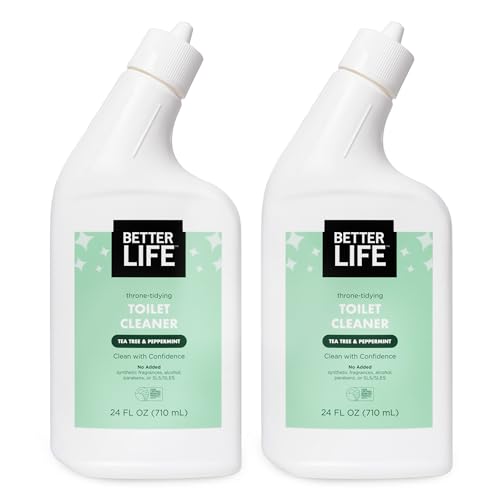
Check price on AmazonA plant-based gel with tea tree and peppermint oils and no dyes or harsh fumes, suited to homes with kids, pets or chemical sensitivities. Lifts film well and is labeled safe for septic systems, making it the go-to for households that want zero harsh chemistry.
Check price on AmazonFood-grade citric acid is the strongest natural descaler, dissolving calcium, lime and rust rings that vinegar struggles with. Sprinkle on the dry ring, leave to dwell 30 minutes to overnight, then scrub. More concentrated and more economical per gram than vinegar. Never mix with bleach.
Check price on AmazonMost natural ingredients are safe, but a few mistakes turn a gentle clean into a hazard or damage the bowl. The most serious is chemical: never combine an acid (vinegar, citric acid, lemon juice) with any bleach or chlorine product, because the reaction produces chlorine gas. This is the same reason you should never use a natural acid descale right after a bleach clean without flushing the bowl thoroughly between them. The natural ingredients are safe together, but the danger appears the moment bleach enters the picture.
The other risk is physical. Porcelain glaze is hard but can be scratched by genuinely abrasive materials, so avoid steel wool, coarse pumice on the glaze (pumice is only for heavy mineral buildup and even then with care), and gritty scouring powders. Baking soda is fine because it is a mild abrasive that does not scratch glaze, which is exactly why it is the natural scrubbing ingredient of choice. Keep the natural toolkit to vinegar, citric acid, baking soda, castile soap, borax and a little plant oil, and you stay safe and glaze-friendly.
The natural equivalent of a continuous in-bowl cleaner is a homemade fizzing tablet, sometimes called a toilet bomb. Mix one cup of baking soda, a quarter cup of citric acid and a tablespoon of water with a few drops of essential oil, press into a mold and dry overnight, then drop one in the bowl every few days. It fizzes, lightly deodorizes and leaves a fresh scent, and the citric acid gives a small ongoing descaling effect. This keeps a clean bowl fresher for longer between the real weekly cleans without resorting to chemical hangers or in-tank tablets that can degrade the rubber flapper over time.
Beyond the fizzing tablet, the simplest natural freshness habits are a small open container of baking soda kept in the bathroom to absorb ambient odor, a few drops of essential oil added to the bowl water after a clean, and good ventilation so moisture and smell do not linger. None of these replace a real clean, but they stretch the fresh feeling between cleans. For the scrubbing tools that make a natural clean quicker and more effective, our guide to the best toilet brushes of 2026 covers the brushes that reach under the rim and into the trap area.
My honest recommendation is to go natural for everything except disinfecting and serious clogs. A homemade baking-soda-and-soap scrub plus a citric-acid descale will keep a bowl spotless and fresh for years, gentler on the porcelain and the seals than a constant bleach routine. The two places we still reach for something stronger are illness, where we want a registered disinfectant on the handle and seat, and a serious clog, where natural cleaning has nothing to offer. For everything in between, natural is not a compromise, it is the better routine.
A natural cleaning routine benefits a toilet's long-term performance in ways most buyers do not consider when they are shopping for a bowl. The glaze on a quality toilet from TOTO, Kohler or American Standard is designed to resist bacterial and mineral adhesion, but harsh repeated bleach exposure can dull that glaze over time, slightly increasing the surface area where stains and bacteria can grip. TOTO's CeFiONtect glaze, found on models like the TOTO Drake II, TOTO UltraMax II and TOTO Vespin II, is particularly specified to maintain smoothness over years of gentle cleaning. Kohler's Highline and Cimarron, American Standard's Champion 4 and Cadet 3, the Woodbridge T-0001 and T-0019, and the Swiss Madison St. Tropez are all designed to be cleaned with gentle, glaze-safe products that maintain the flush channel and bowl surface without microabrasion.
The trapway and flush rim are the other area where natural cleaning is gentler over the long run. Citric acid and vinegar, used in a descaling soak rather than sprayed aggressively under pressure, remove the mineral buildup that can narrow the rim holes and degrade flush power over time on any toilet. A toilet with a fully open rim and a clean trapway performs closer to its original MaP flush-test score than one where mineral deposits have narrowed the jets. For buyers on a hard-water supply, a regular natural descaling routine is one of the best maintenance habits for preserving flush performance. For guidance on how strong flush scores relate to real-world clog prevention, our guide to the best flushing toilets covers MaP scores, trapway sizes and the brands that lead on both.
The best natural toilet cleaner is a toolkit rather than one product: citric acid or white vinegar for mineral rings, baking soda for scrubbing and odor, and castile soap for organic film, used one at a time with a 20 to 30 minute dwell. For a ready-made option, Seventh Generation Toilet Bowl Cleaner pairs a citric-acid descaler with a botanical surfactant in one clinging gel and is the strongest plant-based bottle for weekly maintenance.
Yes, white vinegar dissolves the calcium and lime in hard-water rings because it is a mild acetic acid, making it an effective descaler for mineral bands. It is only fair on organic film and does not disinfect like bleach. Pour it on the dry waterline ring and let it dwell at least 30 minutes, not as a quick wipe, to get the real benefit. Warmed vinegar works faster than cold.
Mixing them directly in the bowl is mostly wasteful, because the acid and base neutralize each other into salty water and carbon dioxide, cancelling both cleaners before they can work. Use them separately instead: scrub with baking soda and castile soap first, flush, then pour vinegar on the mineral ring and let it dwell 30 minutes. Sequenced separately, each does its full job.
For removing grime, mineral rings and odor, a correctly used natural cleaner is as good as bleach and gentler on the glaze and seals. The gap is disinfection: bleach and registered disinfectants kill germs to a verified standard that vinegar, baking soda and castile soap do not match. Use natural cleaners for routine cleaning and a registered disinfectant for the handle, seat and during illness.
Citric acid is stronger than vinegar for heavy hard-water and rust rings because it is a more concentrated food-grade acid in powder form, and it is the same acid many commercial descalers use. Vinegar is fine for light mineral bands and is cheaper and already on hand. For a serious, set-in ring, sprinkle citric acid powder on the dry deposit and leave it to dwell, even overnight, then scrub.
Baking soda alone is a good scrub and deodorizer that lifts light film and absorbs odor, but it does not dissolve mineral rings and does not disinfect. For a full clean it works best paired with castile soap for the film and an acid like vinegar or citric acid for the ring, used in separate steps. On its own it is fine for a quick freshen but not a complete cleaning solution.
Leave vinegar on a mineral ring at least 30 minutes for a light band and several hours or overnight for a heavy one, since acid dissolves minerals gradually. Lower the water level first so the vinegar sits on the deposit rather than being diluted by the water in the bowl. Warming the vinegar to just above room temperature speeds up the reaction. For a stubborn ring, press vinegar-soaked toilet paper against the band to maintain contact.
Not to the standard of bleach or an EPA-registered disinfectant. Vinegar and tea tree oil have mild antimicrobial properties but do not kill germs to the verified level needed during illness or for true sanitizing. Natural cleaners clean and deodorize effectively, so use them for routine cleaning and reserve a registered disinfectant for the high-touch handle and seat and for any period of illness in the home.
Vinegar, citric acid, baking soda, castile soap and borax are safe to use together or in sequence with each other. The serious danger appears only when any acid meets bleach, which releases toxic chlorine gas, so never use a natural acid descale alongside or right after a bleach clean without flushing thoroughly between them. Keep all acids and bleach products completely apart and the natural toolkit stays safe.
Used correctly, natural cleaners are gentler on the porcelain glaze and rubber seals than a constant bleach routine. The risks come from physically abrasive materials like steel wool or gritty scouring powders that can scratch the glaze. Baking soda is a safe mild abrasive that does not scratch. Avoid harsh scrubbing tools and undiluted essential oils that leave oily residue, and the natural approach is well suited to the glazed surfaces on TOTO, Kohler and American Standard bowls.
For an organic ring (brownish film), scrub with baking soda and castile soap on a good toilet brush. For a mineral or rust ring (chalky white or orange band), lower the water level and apply warmed vinegar or citric acid powder directly to the dry band, leave it to dwell 30 minutes to overnight, then scrub. A pumice stone can remove very heavy mineral buildup but must be used gently and only on the porcelain, not on polished chrome or seats.
Yes, plant-based and homemade natural cleaners are generally the safest choice for septic-served homes because they do not disrupt the beneficial bacteria the system relies on. Vinegar, baking soda, castile soap and citric acid all break down without harming the tank. Heavy repeated bleach use is harder on septic biology over time. Plant-based bottled cleaners labeled septic-safe are the easiest no-mix option for septic homeowners.
Lemon juice contains citric acid, so it dissolves light mineral deposits the same way vinegar does and leaves a fresh natural scent. It is a fine descaler for light rings, though pure citric acid powder is stronger and more economical per gram for heavy buildup. Like all acids, lemon juice must never be combined with bleach. Apply it to the dry ring, let it dwell at least 30 minutes, then scrub.
Mix one cup of baking soda, a quarter cup of citric acid, about a tablespoon of water and a few drops of essential oil (tea tree, lavender or eucalyptus work well) into a crumbly paste, press firmly into a silicone mold and dry overnight. Drop one in the bowl every few days for a light fizzing clean, ongoing deodorizing and a small descaling effect. This is the natural equivalent of a commercial in-bowl continuous cleaner with no harsh chemicals.
Yes. Baking soda absorbs and neutralizes odor while castile soap and acid remove the organic residue that bacteria feed on, so a thorough natural clean removes the source of most toilet smells. For lingering odor, an overnight baking soda or borax soak helps. Persistent sewer-like smell usually points to a dry trap or a failing wax seal rather than a dirty bowl, and that is a plumbing issue, not a cleaning one.
Yes, natural cleaners work the same in a low-flow or EPA WaterSense toilet as in any other. A low-flow bowl can leave a slightly more prominent waterline mark over time, so the citric acid or vinegar descaling step matters a little more. The gentler nature of natural cleaning is well suited to the modern glaze and rubber seals in efficient WaterSense-certified models from TOTO, Kohler and American Standard.
Use the same schedule as any cleaner: a full natural bowl clean once a week, a quick wipe of the handle and seat two to three times between, and a descaling pass every one to two months or every few weeks in a hard-water area. Because natural cleaning catches grime while it is fresh, the weekly rhythm keeps every job easy and the bowl never reaches the set-in stage that requires heavy scrubbing.
Borax is a mild alkaline cleaner and water softener that works well for an overnight deodorizing and stain-softening soak. Add about a tablespoon to the bowl water, leave it overnight, then scrub. It is effective on general grime and odor but, like baking soda, does not dissolve mineral rings on its own, so pair it with a separate acid step for hard-water bands. Keep borax out of reach of children and pets.
Essential oils mainly add scent and provide a small amount of antimicrobial resistance rather than doing the real cleaning, which the surfactant and acid handle. A few drops of tea tree, eucalyptus or peppermint oil in a baking soda paste or added to the bowl after cleaning give a fresh finish and a mild antiseptic effect. Use them sparingly, since undiluted oils are wasteful and can leave an oily residue on the porcelain.
Yes, and natural cleaning is particularly well matched to hard-water stains because citric acid and vinegar, both natural acids, are exactly what dissolves calcium and lime, while bleach-based commercial cleaners cannot touch those mineral deposits at all. Citric acid powder applied to the dry waterline ring and left overnight is the most effective natural method for serious hard-water buildup, and it is the same active chemistry used in many commercial descalers.
A natural toilet cleaner is genuinely as effective as a commercial one for grime, mineral rings and odor, as long as you treat it as chemistry and not magic. Use baking soda with castile soap to scrub the organic film, white vinegar or stronger citric acid to dissolve the hard-water ring, and an overnight baking soda or borax soak to revive a neglected bowl, always keeping the ingredients separate and giving them a real 20 to 30 minute dwell. For a hands-off route, Seventh Generation Toilet Bowl Cleaner delivers the same plant-based chemistry in one pour. The honest limit is disinfection: natural cleaners clean beautifully but do not sanitize like bleach, so reserve a registered disinfectant for the high-touch handle and seat and for illness, and never let any acid meet bleach. Used this way, natural cleaning is not a weaker compromise but the gentler, septic-safe, fume-free routine that keeps a bowl spotless for years, and one that is well suited to preserving the glaze and performance of any quality toilet from TOTO, Kohler, American Standard, Woodbridge, Swiss Madison or Gerber.
Clean a toilet fully once a week, wipe the handle and seat with a disinfecting cloth two to three times between weekly…
Read the guide
Orange and rust-brown streaks in a toilet bowl are iron oxide, a mineral deposit that bleach cannot dissolve and often intensifies. This…
Read the guide
The toilet tank sits out of sight and out of mind until the flush goes weak, the bowl develops a mystery ring,…
Read the guide