Why Toilet Trapways Are Curved Like an S
Toilets4.6
Learn why toilet trapways curve like an S, how each bend blocks sewer gas, and what the shape means for clogs and…
Read the guideHomes on a private well do not get the steady, high-pressure supply that a municipal main delivers. A well pump and pressure tank typically cycle between roughly 40 and 60 PSI, the pressure sags while the pump catches up during heavy use, and well water often carries minerals that scale up small jets and partly glazed surfaces. The toilets that perform best on a well share a clear profile: a true gravity flush that does not depend on incoming line pressure, a strong MaP flush-test score, a wide fully glazed trapway, and simple parts that tolerate hard water. We ranked the best low-pressure and well-water toilets using published specifications, independent MaP scores, EPA WaterSense certification, and the patterns that repeat across thousands of aggregated owner reviews.
For most well and low-pressure homes the TOTO Drake is the strongest pick: its G-Max gravity siphon posts a perfect 1000 gram MaP score and uses tank water, not line pressure, so a sagging pump never weakens the flush. If your well runs hard with minerals, the Kohler Highline and its large fully glazed trapway resist scale best.
Choosing a toilet for a home on a private well is a different problem than choosing one for a house on city water. A municipal main holds a fairly constant 50 to 80 PSI all day, but a well system stores water in a pressure tank and lets it fall through a set band, usually a 40/60 PSI cut-in and cut-out, before the pump kicks on to refill. During a busy stretch, a shower running while the washing machine fills, the pressure can dip toward the low end and stay there. On top of that, well water frequently carries dissolved minerals such as calcium, iron and manganese that leave scale on small flush jets, rim holes and any trapway surface that is not fully glazed. The toilet you choose has to flush completely at the bottom of that pressure band and shrug off hard-water buildup for years.
We do not physically test toilets or run them in a lab. Instead we compare published manufacturer specifications, independent MaP (Maximum Performance) flush-test scores, gallons-per-flush figures, EPA WaterSense certification, trapway width and glazing, flush-valve size, rim and jet design, and the consistent themes that appear across large numbers of verified owner reviews. For a well-water and low-pressure toilet the questions that matter most are these: does the flush rely on tank water or on incoming line pressure, does it clear the bowl in one pass at low supply pressure, how well does it resist mineral scale, how much water does it draw per refill, and does it stay reliable over years of hard-water use. The picks below all answer those questions well, and they span a range of budgets and styles so there is a sensible match for most well-served homes.
The pressure issue and the mineral issue are separate, and the best well-water toilets handle both. A gravity toilet neutralizes the pressure issue almost completely because it does not flush with line pressure at all; it only uses incoming pressure to refill the tank, and a slow refill is harmless. The mineral issue is about surface design: fully glazed trapways, open rim-wash designs that are easy to clean, and large simple flush valves are far more tolerant of hard water than narrow jets and small rim holes that clog with scale. We weighted both factors heavily in this ranking.
Every toilet on this list had to combine a strong, independently verified gravity flush with real-world tolerance for fluctuating pressure and hard water. We prioritized models that score 800 to 1000 grams on the MaP test, because that range translates directly into a complete one-pass flush even when supply pressure is at the bottom of the well's band. We then looked at flush mechanism (gravity versus pressure-assist), trapway design and glazing, flush-valve size, rim and jet style, water efficiency in gallons per flush, EPA WaterSense certification, and how owners on wells and low-pressure systems describe long-term reliability. We weighted verifiable specifications over marketing language, and we do not take payment for placement. For a broader look at raw flush strength across every category, see our pillar guide to the best flushing toilets.
| Toilet | Best For | MaP | GPF | Rating | Check Price |
|---|---|---|---|---|---|
| TOTO Drake | Most well homes | 1000 g | 1.28 | 4.8 | Check price |
| Kohler Highline | Hard-water scale | 1000 g | 1.28 | 4.7 | Check price |
| TOTO Drake II | Efficient gravity power | 800 g | 1.28 | 4.7 | Check price |
| American Standard Champion 4 | Low-pressure clog clearing | 1000 g | 1.6 | 4.5 | Check price |
| Kohler Cimarron | Comfort-height value | 800 g | 1.28 | 4.5 | Check price |
| Gerber Viper | Budget gravity workhorse | 800 g | 1.28 | 4.4 | Check price |
| American Standard Cadet 3 | Best value | 1000 g | 1.28 | 4.3 | Check price |
| Woodbridge T-0001 | Modern one-piece | 800 g | 1.28 | 4.5 | Check price |
| TOTO UltraMax II | One-piece premium | 800 g | 1.28 | 4.7 | Check price |
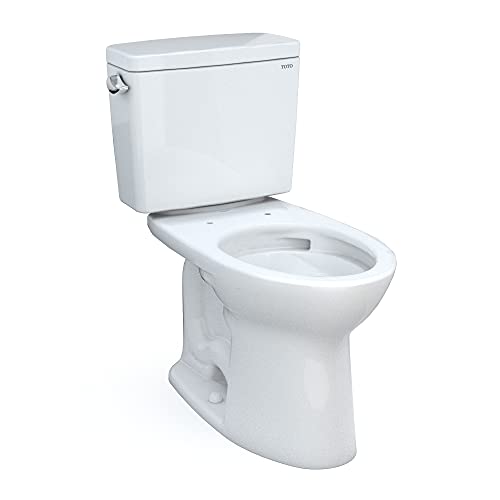
The Drake is the toilet we point most well-served homes toward because its powerful G-Max gravity flush works entirely off stored tank water, so it never cares how low your pump pressure dips during heavy use.
The Drake clears the bowl through a wide, fully glazed trapway driven by TOTO's G-Max gravity siphon, which posts the top 1000 gram MaP score. Because the flush is powered by the head of water in the tank rather than by line pressure, a well that drops to its 40 PSI cut-in mid-use does not weaken the flush at all; the only effect of low pressure is a slightly slower tank refill, which is harmless.
Owner reviews from rural and well-served homes consistently describe the Drake as the toilet they stopped thinking about because it just flushes. The fully glazed trapway resists the scale that hard well water leaves behind, and replacement flappers, fill valves and seats are inexpensive and stocked everywhere, which matters when mineral-heavy water eventually wears the working parts.
If you are on a well and want one toilet you can install and forget, buy the Drake in the comfort-height elongated configuration with the fully glazed (CeFiONtect-coated where offered) bowl. The combination of a 1000 gram gravity MaP score that ignores supply pressure, a glazed trapway that shrugs off scale, and the cheapest parts in the category is the most sensible long-term bet for low-pressure homes on this list.

The Highline pairs a strong 1000 gram gravity flush with a large, simple flush valve and a clean rim-wash design, which is exactly what you want when hard well water is constantly leaving scale.
Kohler's Class Five gravity flush uses a 3-1/4 inch canister flush valve that opens fully and dumps a large volume of water fast, so the bowl clears in one pass without any reliance on line pressure. The canister design is also easier to keep clean than a small flapper, which helps where scale would otherwise build up around a tight seal.
Owner reviews highlight the Highline as a low-fuss workhorse, and the broad rim wash spreads water around the bowl rather than relying on tiny jets that hard water can plug. Kohler parts are stocked at nearly every hardware store, so when mineral deposits eventually affect the canister or fill valve, replacements are quick and cheap to find.
If your well water tests hard or stains fixtures, the Highline's large canister valve and open rim wash are the practical choice. Fewer small jets to scale up means fewer weak-flush problems down the road. Pair it with a periodic vinegar descale of the rim and you will keep a strong flush for years.
The Drake II takes the Drake's gravity strength and wraps it in a sleeker skirted body with TOTO's Double Cyclone rim wash, a good fit for a well home that also wants to conserve water and stay easy to clean.
The Double Cyclone system feeds two large nozzles instead of dozens of small rim holes, creating a centrifugal rinse that uses water efficiently. The flush is pure gravity, so low supply pressure never touches its performance, and at 1.28 GPF it conserves water on a well where every gallon comes through your own pump.
Owner reviews praise the clean look and quiet, complete flush. The one caveat for the worst well water is that the two nozzles, while larger than typical rim holes, still benefit from an occasional descale; on very hard water the open rim wash of the Highline is marginally more forgiving.
Choose the Drake II if you want the Drake's gravity reliability with a cleaner skirted profile and slightly better water efficiency per the rim design. On a well, the 800 gram MaP score is plenty for a normal household, and the lower water draw eases the load on your pump.
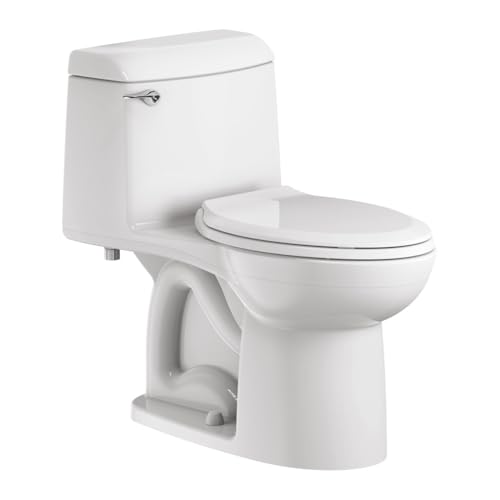
The Champion 4 is built around an oversized 4 inch flush valve and an extra-wide trapway, so it clears heavy loads in one decisive flush, which matters on rural homes that often pair a well with a septic system.
The 4 inch flush valve and an extra-wide, fully glazed 2-3/8 inch trapway move a large volume of water fast and empty the bowl in one pass. This is a gravity toilet, so it works fine at low supply pressure; the only trade-off for a well home is the 1.6 gallon draw, which asks a bit more of your pump per flush than a 1.28 gallon model.
Owner reviews from rural and septic homes single the Champion 4 out as the toilet they recommend after years of fighting clogs. The 10-year warranty is among the longest in the category, and the brawny flush is well matched to homes where a clog means a real plumbing call rather than a quick fix.
If your rural home has a history of blockages or an older drain line, the Champion 4's flush is the most forgiving on this list. Accept the 1.6 GPF water use as the cost of its standout clog clearing; on a well with a healthy pump, the extra gallon is rarely a deal-breaker for the busiest bathroom.

The Cimarron brings Kohler's Class Five gravity flush to a comfort-height body at a friendlier price, a strong all-rounder for a well home that does not need the absolute top MaP score.
The Cimarron uses the same canister-valve Class Five system as the Highline in a slightly more affordable package. The large canister opens fully and is tolerant of hard water, and the gravity flush is independent of supply pressure, so it flushes the same at 40 PSI as it does at 60.
Owner reviews call out the Cimarron as a dependable, no-drama toilet, and its comfort height suits most adults well. The 800 gram MaP score is plenty for a normal household, and the canister valve is easy to service when mineral water eventually takes a toll.
The Cimarron is the value version of the Highline for well homes. If you do not need a 1000 gram flush, it gives you the same pressure-proof gravity mechanism and easy-clean canister at a lower spend, which is a smart move for secondary bathrooms.
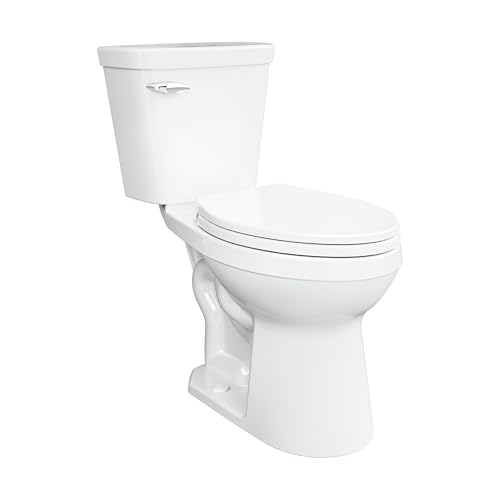
The Gerber Viper is an honest, no-frills gravity toilet with a strong flush for its price, a sensible choice for outfitting a rural home or rental on a well without overspending.
Gerber is a long-standing plumbing brand, and the Viper delivers a solid 800 gram gravity flush at a budget price. Like every gravity toilet here, it flushes off tank water rather than line pressure, so it is well suited to a well that cycles low. A 2 inch glazed trapway and standard 3 inch valve keep it simple and serviceable.
Owner reviews describe the Viper as a dependable workhorse that punches above its price. It will not match the refinement of a TOTO or Kohler, but for a rural property where you need several reliable toilets that ignore pressure swings, it is a sensible, affordable choice.
The Viper is the toilet to buy when you need pressure-proof gravity flushing on a budget, for a shop bathroom, a rental, or a second bath. It will not wow anyone, but it flushes completely at low pressure and the parts are standard and cheap to replace.

The Cadet 3 is the rare budget toilet that still posts a 1000 gram MaP score, and its gravity flush plus EverClean glazed surface make it a strong value pick for a well home.
The Cadet 3 pairs a 3 inch flush valve with a fully glazed 2-1/8 inch trapway and a gravity flush that posts a perfect 1000 gram MaP score. Its EverClean glazed surface resists the staining and mineral film that hard well water leaves on lesser finishes, and the flush is pressure-independent like every gravity model here.
Owner reviews praise it as a strong flusher for the money with a long 10-year warranty. The rim holes are more conventional than the open wash of the Highline, so on very hard water an occasional descale keeps the flush even, but for most wells it is an excellent value.
When you are outfitting more than one bathroom in a well home and want a 1000 gram gravity flush without paying TOTO prices, the Cadet 3 is the smart spend. Reserve a Drake or Highline for the busiest bath and use the Cadet 3 in the others.

The Woodbridge T-0001 is a sleek one-piece with a glazed siphon-jet gravity flush and a skirted, seamless body that wipes clean fast, useful where hard water leaves film to wipe away.
The T-0001 uses a fully glazed trapway and a siphon-jet gravity flush that clears the bowl in one pass without line pressure. The seamless one-piece body has no tank-to-bowl gap to trap grime, which is handy in a well home where mineral film needs regular wiping, and the skirted base hides the trapway for a clean look.
Owner reviews describe a quiet, strong flush and good value for a one-piece. Woodbridge parts are not as universal as TOTO or Kohler, so keep the included spares, but for the price the design and flush quality are well regarded among well and rural owners.
If you want the easy-clean, seamless look of a one-piece on a well home and do not need the deepest parts network, the T-0001 delivers a glazed, pressure-proof gravity flush at a fair price. Keep a spare flapper and fill valve on hand given the less common parts.

The UltraMax II is TOTO's refined one-piece, combining the Double Cyclone gravity flush with a CeFiONtect glazed bowl that actively resists the mineral buildup hard well water causes.
The UltraMax II uses the same pressure-proof Double Cyclone gravity flush as the Drake II in a seamless one-piece body. Its CeFiONtect ceramic glaze is engineered to keep waste and mineral particles from adhering, which is a genuine advantage on hard well water where lesser glazes pick up stains and scale faster.
Owner reviews consistently rate it among the easiest toilets to keep clean and one of the quietest, complete-flush one-pieces available. It costs more than the rest of this list, but for a well home that wants a premium, low-maintenance fixture in a main bathroom, the glaze and flush quality justify it.
For a main bathroom in a well home where hard water and cleaning are real pain points, the UltraMax II is the upgrade pick. The CeFiONtect glaze plus a pressure-independent gravity flush means fewer stains, fewer scale-weakened flushes, and less scrubbing over the life of the toilet.
If you are outfitting a whole well home, do not buy the same toilet everywhere. Put a 1000 gram MaP gravity model like the Drake or Highline in the busiest shared bathroom, use a value Cadet 3 or budget Viper in lower-traffic baths, and reserve the UltraMax II for a main bath where hard-water cleaning is a daily annoyance. Every pick here is gravity for a reason: it keeps your flush strong no matter where your pump sits in its pressure cycle.
Choose gravity, not pressure-assist. This is the most important decision. A gravity toilet flushes off stored tank water, so it is immune to the pressure swings of a well pump cycle. A pressure-assisted toilet depends on incoming line pressure to charge its air vessel and typically needs about 20 to 25 PSI minimum, which a low-cycling well cannot always guarantee. For nearly every well home, gravity is the correct answer.
Prioritize a strong MaP score. The MaP test measures how many grams of solid waste a toilet clears in a single flush. For a well home, 800 grams is strong and 1000 grams is about as powerful as a residential toilet gets. Because the gravity flush does not depend on supply pressure, that score holds up whether your pump is at 40 PSI or 60 PSI.
Favor a fully glazed trapway and an open rim wash. Hard well water leaves scale, so a fully glazed trapway and a large flush valve with an open rim wash (rather than dozens of tiny rim holes) resist mineral buildup far better. The Kohler Highline and Cimarron canister designs and the open washes on TOTO models are good examples; they keep flushing strong as scale accumulates.
Mind your water draw if your pump works hard. On a well, every gallon flushed comes through your own pump and, in summer, may draw on a limited supply. An EPA WaterSense toilet uses 1.28 gallons per flush or less and eases that load versus the older 1.6 gallon standard. The Champion 4 at 1.6 GPF is the exception many rural homes accept for its clog clearing.
Look for a scale-resistant glaze. A premium ceramic glaze such as TOTO's CeFiONtect, or American Standard's EverClean surface, keeps waste and mineral particles from adhering, which means fewer stains and less scrubbing on hard water. This is a real, measurable difference in a well home where ordinary glazes pick up film and stains quickly.
Measure the rough-in and pick comfort height. Measure from the finished wall to the center of the floor bolts; most homes use a 12 inch rough-in, but older rural homes sometimes use 10 or 14 inches. Comfort height (chair height) places the seat at roughly 16.5 to 19 inches, which suits most adults. If accessibility matters, our guide to the best toilets for seniors goes deeper on comfort height and safety.
Most of the toilets on this list use gravity flushing, where the weight of water falling from the tank creates a siphon that pulls waste through the trapway. Crucially, a gravity toilet only uses your incoming line pressure to refill the tank, never to flush. That means a well that drops to its low cut-in pressure mid-use changes nothing about flush strength; the tank still holds its full charge of water and flushes with the same force. Modern gravity toilets with large flush valves and wide trapways, like the Drake and Highline, are powerful, quiet enough for a home, and use inexpensive, widely available parts. For the vast majority of well and low-pressure homes, a top-MaP gravity toilet is the right answer.
Pressure-assisted toilets use your supply pressure to compress air inside a sealed tank vessel, then release it to force water into the bowl with extra velocity. They clear clogs aggressively and recover fast, but they have two strikes against them on a well: most require a minimum supply pressure of roughly 20 to 25 PSI to charge correctly, which a low-cycling well cannot always guarantee, and they flush loudly with pricier, less common parts. Unless you have a specific reason such as chronic drain-line clogs and a confirmed strong, steady well pressure, a strong gravity toilet is the better, more reliable choice. The broader best toilets of 2026 roundup compares both flush types across every bathroom type, and our guide to the best toilets for home covers reliable daily-use gravity picks in depth.
The biggest mistake well-home buyers make is assuming a pressure-assisted toilet will "push harder" against their low pressure. It is the opposite: pressure-assist depends on the very supply pressure your well lacks. A high-MaP gravity toilet stores its own energy in the tank and ignores your pump cycle entirely, which is why every primary recommendation here is gravity. For chronic clogs, choose a large-valve gravity model like the Drake or Champion 4 instead of reaching for pressure-assist.
The TOTO Drake is the best all-round pick for most well homes. Its G-Max gravity flush posts a perfect 1000 gram MaP score, runs on stored tank water so it ignores pump-pressure swings, and uses a fully glazed trapway that resists hard-water scale. For the hardest well water, the Kohler Highline with its large canister valve is the best alternative.
Yes. Gravity-flush toilets work fine at low water pressure because they flush using the weight of water already stored in the tank, not the incoming line pressure. Low pressure only slows the tank refill between flushes, which does not affect flush strength. Pressure-assisted toilets are the exception and can struggle below about 20 to 25 PSI.
For most well homes, yes. Pressure-assisted toilets need incoming supply pressure, usually a minimum of around 20 to 25 PSI, to charge their sealed air vessel. A well that cycles to its low cut-in can leave them flushing weakly. A strong gravity toilet sidesteps the problem entirely and is also quieter with cheaper, more common parts.
Aim for at least 800 grams, with 1000 grams being the practical maximum for a residential toilet. Since well water and low pressure do not weaken a gravity flush, the MaP score is just as meaningful on a well as on city water. An 800 to 1000 gram gravity toilet clears heavy loads in one flush regardless of your pump cycle.
Hard well water does not damage the ceramic, but its dissolved minerals leave scale on flush jets, rim holes and unglazed surfaces, which can weaken the flush over time. A fully glazed trapway, an open rim wash and a scale-resistant glaze like CeFiONtect or EverClean resist buildup, and periodic vinegar descaling keeps the flush strong.
A typical residential well system uses a pressure tank set to a 40/60 PSI band, cutting in at 40 PSI and cutting out at 60 PSI. During heavy use the pressure can sag toward the low end until the pump refills. This fluctuation is exactly why a gravity toilet, which does not flush with line pressure, is the right choice.
Yes. A 1.28 gallon WaterSense gravity toilet like the TOTO Drake or Kohler Highline uses a large flush valve and wide trapway to clear the bowl in one pass, and because it flushes off tank water, low supply pressure does not affect it. The gallons-per-flush figure does not depend on incoming pressure at all.
Yes, a low-flow WaterSense toilet is a good idea on a well. Every gallon flushed comes through your own pump, so a 1.28 GPF model reduces pump cycling and conserves a well that may be limited in summer. Modern low-flow gravity toilets clear waste as effectively as old high-volume models thanks to better flush-valve and trapway design.
A weak flush on a well is usually caused by mineral scale clogging the rim holes or flush valve, a low tank water level, or a worn flapper that closes too early, not by low line pressure itself. Descale the rim and valve with vinegar, check the tank fill level, and replace a worn flapper to restore a strong flush.
Yes. A whole-home water softener reduces the calcium and magnesium that cause scale, which keeps rim jets, the flush valve and the trapway flushing cleanly and extends the life of flappers and seals. An iron filter additionally prevents the rust staining common with iron-rich well water. Both protect every fixture, not just the toilet.
The trapway is the curved channel that carries waste out of the bowl. A fully glazed trapway has a smooth ceramic coating that lets waste slide through with less friction and resists the mineral scale hard well water deposits. An unglazed trapway is rougher, catches debris and scales up faster, so glazing is a key feature for any well-water toilet.
For most rural homes pairing a well with a septic system, a strong gravity toilet is the better fit. It clears waste reliably, flushes quietly, and uses simple, cheap parts. A large-valve gravity model like the Champion 4 or Drake handles heavy loads without the noise, higher cost or pressure dependency of a pressure-assisted unit.
Turn off the water and flush to empty the tank, then pour white vinegar into the overflow tube and around the rim wash, let it sit for several hours or overnight, and flush to clear the dissolved scale. Doing this every few months keeps the rim jets and flush valve clear so the flush stays strong on hard water.
WaterSense is an EPA certification given to toilets that use 1.28 gallons per flush or less while still meeting strict flush-performance standards. On a well, a WaterSense toilet lowers the water your pump must move per flush without sacrificing clearing power, which reduces pump cycling and conserves a limited supply.
Low pressure does not usually cause constant running, but slow refilling from a low-pressure well can make a fill valve cycle longer. Constant running is more often a worn flapper or a misadjusted fill valve. If the tank refills very slowly, check the supply shutoff is fully open and the fill valve is not partly clogged with mineral debris.
TOTO models with CeFiONtect glaze, such as the UltraMax II and many Drake configurations, and American Standard models with the EverClean surface are the most scale and stain resistant. These engineered glazes keep waste and mineral particles from adhering, which is a genuine advantage on hard well water where ordinary glazes pick up film faster.
Yes. The TOTO Drake is one of the best toilets for low water pressure because its G-Max gravity flush uses stored tank water and posts a perfect 1000 gram MaP score independent of supply pressure. A well that drops to its low cut-in pressure changes nothing about the Drake's flush strength.
Not necessarily. A standard high-MaP gravity toilet works on any cabin or off-grid system that maintains a pressurized tank, since it only needs enough pressure to refill the tank. If the site has no pressurized supply at all, a composting or macerating toilet may be required, but for a pump-and-tank well, a gravity toilet is the simplest reliable choice.
Switching from an old 3.5 gallon toilet to a 1.28 gallon WaterSense model can save thousands of gallons a year, which on a well directly reduces pump runtime and electricity use. Even moving from 1.6 gallons to 1.28 gallons trims roughly 20 percent per flush, easing the load on a limited well supply.
For most homes on a well or with low pressure, the TOTO Drake is the toilet to buy: a perfect 1000 gram gravity MaP flush that runs on tank water and ignores your pump's pressure cycle, a fully glazed scale-resistant trapway, and the cheapest, most available parts in the category. Choose the Kohler Highline if your well runs hard with minerals, the TOTO Drake II for an efficient skirted gravity flush, the American Standard Champion 4 for rural homes that battle clogs, or the budget Gerber Viper and value American Standard Cadet 3 for secondary baths. Above all, choose gravity over pressure-assist: a high-MaP gravity toilet stores its own flushing power in the tank, so your well's pressure swings never reach the bowl.
Learn why toilet trapways curve like an S, how each bend blocks sewer gas, and what the shape means for clogs and…
Read the guideAlmost every US toilet has a left-side handle. Learn the plumbing and mechanical reasons behind the layout and when it actually changes.
Read the guideHome toilets rely on tanks because household water lines lack the pressure that public flushometer systems use to flush straight from the…
Read the guide