How Much Water Does an Old Toilet Use?
Buying Guides4.6
Find out how many gallons per flush an old toilet really uses, how to check your own tank, and how much water…
Read the guideGPF stands for Gallons Per Flush, the standard metric for measuring how much water a toilet uses each time you flush. This guide explains what GPF means, why it matters for your water bill and flushing performance, and how to choose the right GPF for your home.
Research updated June 2026.
GPF (Gallons Per Flush) is the amount of water a toilet uses per flush. Standard toilets today use 1.28 GPF (WaterSense certified) or 1.6 GPF (federal maximum). Lower GPF saves water but must be paired with strong flush technology to avoid clogs. The best balance is a 1.28 GPF toilet with a MaP score of 800 grams or higher.
GPF stands for Gallons Per Flush. It is a standardized measurement that tells you exactly how much water a toilet consumes each time you press the handle. Every toilet sold in the United States must display its GPF rating, usually stamped inside the tank or printed on the box.
The GPF number directly affects two things: your water bill and the toilet's flushing power. A toilet with a higher GPF uses more water, which can move waste more easily through the trapway, but it also costs more to operate. A lower GPF toilet uses less water, saving money and conserving resources, but it requires a well-engineered bowl and trapway to flush effectively.
Federal law has set the maximum allowable GPF at 1.6 gallons since 1994. Before that, toilets commonly used 3.5 to 5 GPF. The shift to 1.6 GPF was a major step for water conservation, but early low-flow models had poor flush performance. Today's toilets, especially those with 1.28 GPF and advanced flush systems, outperform many older 3.5 GPF models.
When you see a toilet listed as "1.28 GPF," that means it uses 1.28 gallons of water per flush. A "1.6 GPF" toilet uses 1.6 gallons. The difference of 0.32 gallons per flush may seem small, but for a family of four flushing five times a day, it adds up to roughly 2,300 gallons saved per year.
The main difference is water usage: 1.28 GPF uses 20% less water per flush than 1.6 GPF. However, 1.6 GPF toilets often have higher MaP scores because they have more water volume to push waste through the trapway. Modern 1.28 GPF toilets with pressure-assisted or gravity-fed dual-flush systems can match or exceed the performance of many 1.6 GPF models.
The choice between 1.28 GPF and 1.6 GPF comes down to your priorities. If you want maximum water savings and your toilet will be used for liquid waste most of the time, a 1.28 GPF model is ideal. If you have a large family or frequently deal with solid waste, a 1.6 GPF toilet provides a larger margin for error and typically offers stronger flush performance.
Here is a direct comparison of common GPF ratings and their typical performance:
| GPF Rating | Water Use per Flush | Typical MaP Score | Best For | WaterSense Certified |
|---|---|---|---|---|
| 1.28 GPF | 1.28 gallons | 800 - 1,000g | Water savings, dual-flush | Yes |
| 1.6 GPF | 1.6 gallons | 900 - 1,200g | Maximum flush power | No (exceeds limit) |
| 1.0 GPF (urinal) | 1.0 gallon | N/A | Urinals only | Yes |
| 3.5 GPF (pre-1994) | 3.5 gallons | 1,200g+ | Not sold new | No |
Most homeowners should choose a 1.28 GPF toilet that is WaterSense certified. These toilets are tested to ensure they clear at least 350 grams of solid waste (MaP score) while using 1.28 gallons or less. Many top models achieve MaP scores of 800 grams or higher, meaning they flush better than many 1.6 GPF toilets from a decade ago.
A good GPF for a modern toilet is 1.28 gallons per flush. This is the standard for WaterSense certification and offers the best balance of water efficiency and flushing power. For households with heavy use or older plumbing, a 1.6 GPF toilet may be a better choice because it provides a stronger flush with less risk of clogs.
The "good" GPF also depends on the flush technology. A gravity-fed 1.28 GPF toilet with a large trapway (2-1/8 inches or wider) and a glazed trapway can perform just as well as a 1.6 GPF model. Pressure-assisted toilets, like the TOTO UltraMax II, use compressed air to boost flush power at 1.28 GPF, achieving MaP scores over 1,000 grams.
If you are replacing an old toilet, moving from 3.5 GPF to 1.28 GPF will save you about 16,000 gallons of water per year for a family of four. That translates to roughly $150 to $200 in annual water savings, depending on local rates. The toilet pays for itself within a few years.
We recommend looking for a 1.28 GPF toilet with a MaP score of at least 800 grams. This combination ensures you get the water savings of a low-flow toilet without sacrificing flush performance. Models like the TOTO Drake II and American Standard Champion 4 consistently achieve MaP scores above 900 grams at 1.28 GPF.
You can find the GPF of your toilet by looking inside the tank for a stamp or sticker. Most toilets have the GPF rating printed on the inside wall of the tank, near the water level mark. If you cannot find it, check the owner's manual or look up the model number online.
If the stamp is worn or missing, you can estimate the GPF by measuring the tank's dimensions. A standard tank that is about 10 inches wide, 15 inches tall, and 7 inches deep holds roughly 1.6 gallons. Older tanks are larger and hold 3.5 gallons or more. You can also flush the toilet and measure how many seconds it takes to refill; a 1.6 GPF toilet typically refills in 20 to 30 seconds.
Another way to determine GPF is to look at the date of manufacture. Toilets made after 1994 are limited to 1.6 GPF. If your toilet was made before 1994, it likely uses 3.5 GPF or more. Replacing a pre-1994 toilet with a 1.28 GPF model is one of the most effective home water conservation measures you can take.
Not necessarily. A well-designed 1.28 GPF toilet with a large trapway and a high MaP score will clog less often than a poorly designed 1.6 GPF toilet. The key factors are trapway diameter, flush valve size, and bowl design, not just the GPF number. Many modern 1.28 GPF toilets outperform older 1.6 GPF models in clog resistance.
The risk of clogs increases when a toilet has a narrow trapway (under 2 inches) or a weak flush mechanism. Some 1.28 GPF toilets use a dual-flush system that allows you to choose a lighter flush for liquid waste (0.8 to 1.1 GPF) and a full flush for solid waste (1.28 GPF). This design reduces water usage without sacrificing performance for solid waste.
To minimize clogs, look for a toilet with a trapway diameter of at least 2 inches, a fully glazed trapway, and a MaP score of 800 grams or higher. The TOTO Drake II, for example, has a 2-1/8 inch trapway and a MaP score of 1,000 grams at 1.28 GPF, making it one of the most clog-resistant toilets available.
WaterSense is an EPA certification program that labels toilets using 1.28 GPF or less and meeting strict performance standards. To earn the WaterSense label, a toilet must pass a MaP test that verifies it clears at least 350 grams of solid waste per flush. WaterSense toilets use 20% less water than the federal 1.6 GPF standard.
WaterSense certification is voluntary, but most major brands now offer WaterSense models. The program has saved billions of gallons of water since its inception. When shopping for a new toilet, look for the WaterSense label on the box or in the product specifications. It guarantees both water efficiency and a baseline level of flush performance.
Keep in mind that WaterSense does not test for clog resistance or bowl cleanliness. A toilet can pass the MaP test with 350 grams but still clog frequently if the trapway is poorly designed. For the best results, choose a WaterSense toilet with a MaP score of 800 grams or higher, which indicates excellent real-world performance.
Here are six of the best 1.28 GPF toilets available today, based on MaP scores, owner reviews, and brand reputation. Each model offers a different combination of features, height, and flush type.
The TOTO Drake II is the benchmark for 1.28 GPF performance, combining a powerful gravity flush with a massive 2-1/8 inch trapway for exceptional clog resistance.
The TOTO Drake II uses TOTO's patented Tornado Flush system, which releases water from two nozzles to create a centrifugal cleaning action. This design ensures the bowl is fully cleaned with each flush while using only 1.28 GPF. Owner reviews consistently praise its ability to handle large waste without clogging.
The elongated bowl and 16-1/2 inch rim height make it comfortable for most adults. The dual-flush option lets you choose a 1.28 GPF full flush or a 0.9 GPF light flush for liquid waste, saving even more water. It is WaterSense certified and meets all current efficiency standards.
The Drake II is our top recommendation for anyone seeking a 1.28 GPF toilet that flushes like a 1.6 GPF model. Its MaP score of 1,000 grams is exceptional for a low-flow toilet.
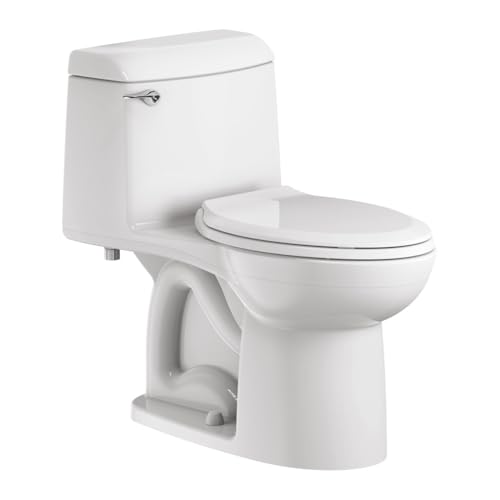
The Champion 4 delivers a powerful 1.28 GPF flush using a 4-inch flush valve and a fully glazed 2-3/8 inch trapway, making it one of the most clog-resistant toilets on the market.
The Champion 4 is famous for its ability to flush a bucket of golf balls (a common test for clog resistance). The 2-3/8 inch trapway is one of the largest available, and the 4-inch flush valve allows water to rush into the bowl quickly, creating a strong siphon. It uses 1.28 GPF but performs like a 1.6 GPF toilet.
Owner reviews highlight its reliability and low maintenance. The EverClean surface inhibits bacteria growth, keeping the bowl cleaner longer. It is available in both round and elongated bowls, and the right-height model meets ADA requirements.
The Champion 4 is the best choice for households with heavy use or frequent guests. Its trapway is the largest in this comparison, and the lifetime warranty adds peace of mind.
The Kohler Highline Classic offers a reliable 1.28 GPF gravity flush with a comfortable chair-height design and a quiet operation that is ideal for bathrooms near bedrooms.
The Highline Classic is a straightforward, no-fuss toilet that performs well for daily use. Its 1.28 GPF flush is quiet and efficient, making it a good choice for master bathrooms. The elongated bowl and 16-1/2 inch height provide comfortable seating for most adults.
While its MaP score of 800 grams is lower than the Drake II or Champion 4, it still meets WaterSense standards and handles normal household waste without issues. The toilet is available with a round bowl for smaller spaces. Kohler's Class Five flush technology ensures a strong siphon action.
The Highline Classic is a solid mid-range option for those who prioritize quiet operation and a comfortable height over maximum flush power.
The TOTO UltraMax II uses a pressure-assisted flush to achieve a MaP score of 1,100 grams at 1.28 GPF, making it the most powerful low-flow toilet available.
The UltraMax II is the top choice for those who need maximum flushing power. Its pressure-assisted system uses compressed air to force water into the bowl at high velocity, ensuring that even large waste is cleared in a single flush. The MaP score of 1,100 grams is the highest among all 1.28 GPF toilets.
The trade-off is noise. The pressure-assisted flush is significantly louder than a gravity flush, which may be an issue in quiet homes. The toilet also requires a pressure-assist tank, which adds to the cost and complexity. However, for commercial applications or households with heavy use, the performance is unmatched.
The UltraMax II is the most powerful 1.28 GPF toilet you can buy. If flush power is your top priority and noise is not a concern, this is the model to choose.
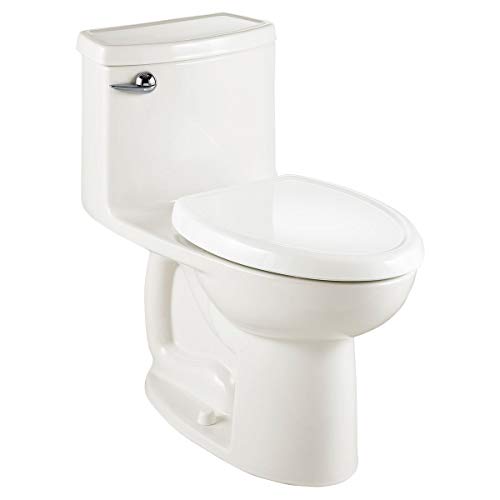
The Cadet 3 is a budget-friendly 1.28 GPF toilet that offers reliable performance and a comfortable height at a lower price point than many competitors.
The Cadet 3 is one of the most popular toilets in America, known for its balance of price and performance. It uses American Standard's PowerWash rim to clean the bowl effectively with each 1.28 GPF flush. The MaP score of 800 grams is adequate for most households.
Owner reviews note that it is easy to install and maintain. The right-height model is comfortable for taller users. While it does not have the clog resistance of the Champion 4, it is a reliable choice for budget-conscious buyers who still want WaterSense certification.
The Cadet 3 is the best value in the 1.28 GPF category. It offers dependable performance without the premium price of TOTO or Kohler.
The Swiss Madison St. Tropez is a dual-flush 1.28 GPF toilet that offers a modern one-piece design and a comfortable height at a competitive price.
The St. Tropez offers a dual-flush option that lets you use 0.9 GPF for liquid waste and 1.28 GPF for solid waste. The one-piece design eliminates the gap between tank and bowl, making cleaning easier. The elongated bowl and chair-height rim provide comfort for most users.
While the MaP score of 800 grams is acceptable, some owners report occasional double-flushing for solid waste. The toilet is best suited for households where liquid waste is the majority. It is WaterSense certified and meets all federal standards.
The St. Tropez is a good option for those who want a modern one-piece toilet with dual-flush capability, but it may not be the best choice for heavy solid waste use.
GPF stands for Gallons Per Flush. It measures how much water a toilet uses each time it is flushed. Most modern toilets use 1.28 GPF or 1.6 GPF.
1.6 GPF uses more water and typically provides a stronger flush, but 1.28 GPF toilets with modern technology can match or exceed the performance of 1.6 GPF models while saving 20% more water.
The most common GPF for new toilets is 1.28 gallons per flush, which is the standard for EPA WaterSense certification. Many homeowners also choose 1.6 GPF for maximum flush power.
Yes, you can replace a 1.6 GPF toilet with a 1.28 GPF model. The plumbing connections are the same. You will save water and money on your utility bill.
Not if you choose a well-designed model with a large trapway and a high MaP score. Many 1.28 GPF toilets, like the TOTO Drake II, are more clog-resistant than older 1.6 GPF toilets.
MaP (Maximum Performance) score measures how many grams of solid waste a toilet can flush in a single flush. A score of 800 grams or higher is considered excellent for a 1.28 GPF toilet.
WaterSense is an EPA program that certifies toilets using 1.28 GPF or less and passing a MaP test of at least 350 grams. It guarantees water efficiency and baseline performance.
A family of four switching from 3.5 GPF to 1.28 GPF saves about 16,000 gallons per year, which can reduce water bills by $150 to $200 annually.
A dual-flush toilet has two flush options: a lower GPF for liquid waste (usually 0.8 to 1.1 GPF) and a higher GPF for solid waste (usually 1.28 GPF). This saves water by using less for liquid waste.
Most 1.28 GPF toilets are WaterSense certified, but not all. Always check the product specifications for the WaterSense label to ensure it meets efficiency standards.
Gravity-fed toilets use the weight of water in the tank to create a siphon. Pressure-assisted toilets use compressed air to force water into the bowl, providing a stronger flush but with more noise.
Look inside the tank for a stamp or sticker that shows the GPF rating. If you cannot find it, check the model number online or measure the tank size.
For septic systems, a 1.28 GPF toilet is recommended because it reduces water load on the septic tank. Choose a model with a high MaP score to ensure solid waste is fully broken down.
Yes, 1.28 GPF toilets work with standard plumbing. If you have very old or narrow pipes, a 1.6 GPF toilet may provide better flow, but most modern 1.28 GPF models are designed to work with existing systems.
GPF is the most important number to understand when buying a toilet. A 1.28 GPF toilet with a MaP score of 800 grams or higher offers the best balance of water savings and flushing power. The TOTO Drake II is our top recommendation for its exceptional performance, while the American Standard Champion 4 is the best choice for maximum clog resistance. Always choose a WaterSense certified model to ensure efficiency and reliability.
How we rank & our data sources
We do not run physical lab tests. Rankings are built from published, verifiable data and real owner feedback, never paid placement.
Researched by Marcus Bell · Last updated August 14, 2026 · Our review method
Find out how many gallons per flush an old toilet really uses, how to check your own tank, and how much water…
Read the guideA higher MaP score means stronger waste removal, but not always a better toilet. Learn what MaP really measures and when the…
Read the guideModern low-flow toilets can flush as well as older models. Learn why some struggle, how to diagnose weak flushes, and which fixes…
Read the guide