

Why Toilet Trapways Are Curved Like an S
Toilets4.6
Learn why toilet trapways curve like an S, how each bend blocks sewer gas, and what the shape means for clogs and…
Read the guideHow much water is in your tank determines whether every flush clears completely or leaves waste behind. This guide explains the science, the measurement, the adjustments, and the models that get it right from the factory.
The water level in your toilet tank should sit exactly one inch below the top of the overflow tube. At that mark, a 1.28 GPF toilet delivers the hydraulic head pressure needed for a complete, single flush. Raising the level past that point wastes water; dropping it below causes weak, incomplete flushes.
The tank stores a fixed volume of water and releases it rapidly when the flapper opens. The speed and force of that release -- which directly drives flush performance -- depend on hydraulic head pressure, meaning the vertical distance the water falls before entering the bowl. A higher water level means more pressure and a faster, more forceful siphon action in the trapway. Drop the level even half an inch below the recommended mark and the siphon can stall mid-flush, leaving solids or paper in the bowl.
Every major manufacturer -- TOTO, Kohler, American Standard, Woodbridge, Swiss Madison, Gerber -- calibrates their flush valve, fill valve, and trapway geometry assuming the tank fills to a specific level. That level is almost always marked either on the inside wall of the tank or published in the installation manual as one inch below the overflow tube. When installers or DIY homeowners adjust the fill valve incorrectly, they unknowingly compromise a flush system that was engineered as a complete unit.
The relationship between water volume, head pressure, and siphon pull is not linear. Reducing the tank fill from 1.28 gallons to 1.0 gallon does not reduce flush power by 22 percent. It can reduce effective waste clearance by 40 to 60 percent because the siphon depends on a sustained pressure column to evacuate the trap. MaP (Maximum Performance) flush testing data confirms this: toilets tested at their rated GPF routinely clear 600 to 1,000 grams of simulated waste, while the same models tested at sub-rated water volumes often fail at 300 to 400 grams.
Plumbing engineers describe tank water level as the "primary tuning knob" of flush performance. The trapway size, bowl shape, and flush valve diameter all matter -- but none of them can compensate for insufficient head pressure. Before assuming a toilet needs replacement, a licensed plumber will always check the water level first because it is the cheapest, fastest fix available.
The correct water level is one inch (approximately 25 mm) below the top of the overflow tube, or at the water line mark stamped or printed on the inside tank wall. Most standard toilets hold between 1.28 and 1.6 gallons at that level. Adjusting the float arm or fill valve float cup to maintain that mark is the single most impactful, no-cost adjustment a homeowner can make to restore flush performance.
The overflow tube protects the home from flooding if the fill valve fails. Water that rises above the tube drains directly into the bowl and then down the drain, wasting gallons every hour without you knowing. The one-inch safety margin is a deliberate engineering buffer. Some toilets have a stamped arrow or the letters "WL" (water line) inside the tank; others rely solely on the one-inch-below rule. Both methods target the same hydraulic goal.
Turn off the shutoff valve below the toilet. Flush to empty the tank. Place a ruler vertically inside the tank with one end on the bottom. Note the height of the overflow tube. Then open the shutoff valve and let the tank refill completely without interference. Measure where the water surface sits. Subtract that measurement from the overflow tube height. The gap should be one inch. If the gap is larger than one inch, the level is too low. If the water is reaching or touching the tube, the level is too high.
Two types of fill valves are common in residential toilets sold in North America today:
Float cup (ballcock) valves -- Found on most toilets made after 2000. The float cup rides on the valve body itself. To raise the water level, turn the adjustment screw or pinch-and-slide clip clockwise (varies by brand). Brands like Fluidmaster 400A use a simple clockwise-turn screw at the top of the valve.
Float ball valves -- Older style with a ball on the end of a brass or plastic arm. Bend the arm slightly downward to raise the water level, upward to lower it. These are rare on toilets manufactured after 2010 but still appear in rental properties and older construction.
After adjusting, flush two or three times to confirm the level stabilizes at the correct mark on each refill. Water pressure in your supply line fluctuates slightly, so one observation is not enough.
| Water Level Relative to Overflow Tube | Effective GPF Delivered | Expected MaP Clearance | Common Symptom |
|---|---|---|---|
| At or above tube top | Over-rated (water lost to drain) | Variable / wasted | Running toilet, high water bill |
| 1 inch below tube top (optimal) | Rated GPF (1.28 or 1.6) | 600 g to 1,000 g+ | Complete single flush |
| 1.5 to 2 inches below tube top | Approx. 0.9 to 1.1 GPF | 300 to 500 g | Occasional double flush |
| 2+ inches below tube top | Below 0.9 GPF | Under 300 g | Frequent double flush, ghost flushing |
Raising the level to the recommended one-inch mark restores designed flush performance on toilets where the level has drifted too low -- but raising it above that mark offers no additional benefit and wastes water. Toilets are engineered to specific volumes; exceeding that volume does not increase siphon power because the bowl and trap geometry limit how much water the siphon can draw before air breaks it.
This is a common misconception. Homeowners dealing with weak flushes often assume the solution is more water. The real cause in most cases is either a low water level, a worn flapper that closes too quickly, a clogged rim, a partially clogged trapway, or a combination of all four. Raising the level past the one-inch mark adds water to the overflow tube drain before the flush even starts, meaning that extra water never reaches the bowl at all.
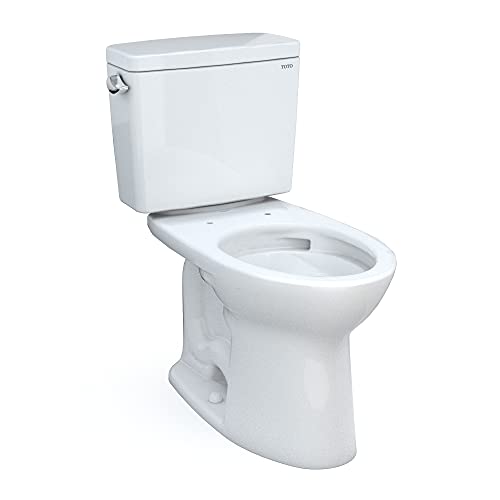
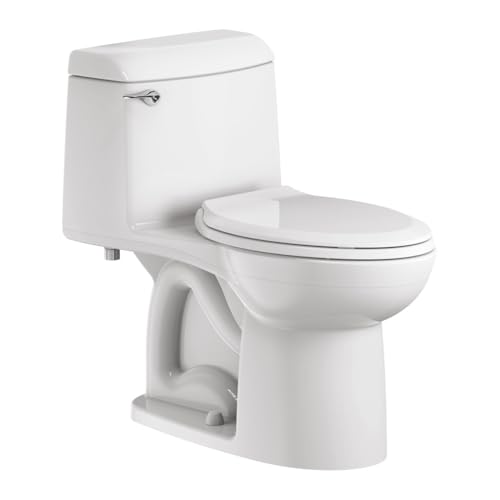
MaP testing data, published at map-testing.com, benchmarks toilets at their rated GPF. The TOTO Drake II (1.28 GPF) achieves a MaP score of 1,000 grams -- the maximum test threshold -- at its designed water level. The American Standard Champion 4 (1.6 GPF) also achieves 1,000 grams MaP at its rated volume. Artificially inflating the tank volume beyond specifications does not push these scores higher. The bowl geometry, trapway diameter, and flush valve opening speed are the limiting factors at that point.
Plumbing professionals note that every WaterSense-certified toilet passes EPA protocol testing at its declared GPF. Adding more water overrides that calibration and may actually reduce flush effectiveness in toilets with smaller, precision-engineered trapways because the slower drain rate at higher volumes can reduce siphon velocity. The rated volume is not a minimum -- it is the optimum.
EPA WaterSense certification requires a maximum flush volume of 1.28 gallons per flush (GPF) while meeting the MaP minimum of 350 grams of waste clearance. Toilets earning WaterSense certification are designed and tested to deliver that performance at precisely 1.28 GPF. The tank water level is set at the factory to deliver that volume when filled to the one-inch-below-overflow mark, so maintaining that level is essential to keeping the toilet WaterSense-compliant in practice.
The EPA WaterSense program, launched in 2006, has certified thousands of toilet models that collectively save billions of gallons of water annually across the United States. The program's flush performance floor of 350 grams MaP is relatively modest, but most certified toilets from brands like TOTO, Kohler, American Standard, Woodbridge, and Gerber score significantly higher -- often 600 to 1,000 grams -- because manufacturers compete on performance, not just compliance.
The interaction between GPF and flush power is governed by tank-to-bowl hydraulics. A toilet with a 3-inch flush valve (like the American Standard Champion 4) dumps water into the bowl faster than a 2-inch valve, even at the same GPF, because the larger opening reduces flow restriction. TOTO's G-Max and Tornado Flush systems use a different approach: dual-nozzle rim delivery that creates a cyclonic bowl wash rather than relying solely on a top-rim waterfall. Both strategies are calibrated to the tank water level as a baseline condition.
For context, here is how major flush technologies relate to tank water volume requirements:
| Brand / Model | Flush Technology | Rated GPF | MaP Score | WaterSense | Level Sensitivity | Check Price |
|---|---|---|---|---|---|---|
| TOTO Drake II | G-Max Double Cyclone | 1.28 | 1,000 g | Yes | Moderate (optimized at rated level) | Check price |
| TOTO UltraMax II | Tornado Flush | 1.28 | 1,000 g | Yes | Low (tornado nozzles less dependent on head) | Check price |
| American Standard Champion 4 | 3-inch Speed Flush | 1.6 | 1,000 g | No (1.6 GPF) | High (relies on full volume at rated level) | Check price |
| Kohler Highline | AquaPiston Canister | 1.28 / 1.6 | 800 g | Yes (1.28 model) | Moderate | Check price |
| American Standard Cadet 3 | PowerWash Rim | 1.28 / 1.6 | 1,000 g | Yes (1.28 model) | Moderate | Check price |
| Woodbridge T-0001 | Dual-Flush Siphon Jet | 1.0 / 1.6 | 600 g+ | Yes | High on full-flush setting | Check price |
| Gerber Viper | Class-5 Siphon Jet | 1.28 | 800 g | Yes | Moderate | Check price |
| Swiss Madison Sublime | Dual-Flush Gravity | 1.1 / 1.6 | 500 g+ | Yes | High on 1.6 GPF setting | Check price |
For a broader comparison of top-performing models, see our guide to the best flushing toilets ranked by MaP score, GPF, and owner satisfaction.
When tank water drops below the recommended level, the siphon jet loses enough hydraulic pressure to fully evacuate the trapway, resulting in weak flush performance, incomplete waste removal, and frequent double flushing. In severe cases, the siphon breaks entirely mid-flush, leaving solids in the bowl. This is among the most common causes of poor flush performance in toilets that worked correctly when new.
Fill valves wear over time. The float cup seal degrades, the adjustment screw loosens from vibration, or mineral deposits on the valve stem interfere with shutoff. All of these can cause the tank to under-fill over months or years, so gradually that the homeowner does not notice a single event -- they simply find that the toilet now needs two flushes for solid waste when it used to need one.
Low water level symptoms to watch for:
Before replacing any toilet based on weak flush performance, check the water level first. Replacing a fill valve costs $10 to $25 in parts and approximately 30 minutes of time. That investment resolves the majority of weak-flush complaints without requiring a new toilet purchase.
Many toilets that get replaced due to "poor flushing" are actually functioning correctly once the water level is restored. Plumbers report that in homes where the water pressure fluctuates -- common in older municipal supply systems or homes at the end of a supply branch -- fill valves can consistently under-fill because low supply pressure slows the refill and sometimes triggers premature valve shutoff. A pressure-compensating fill valve (sold by Fluidmaster and Korky) solves this in low-pressure installations.
A systematic diagnosis takes less than 10 minutes and eliminates guesswork. Work through these steps in order:
Use the ruler method described above. Confirm whether the level is at, above, or below the one-inch mark. This single measurement tells you whether a fill valve adjustment is the right fix or whether another component is involved.
A flapper that closes too quickly reduces the effective flush volume even when the tank is filled correctly. A flapper that warps, cracks, or builds mineral deposits leaks water from the tank into the bowl continuously, which can also reduce the tank level at the moment of flushing if the refill cycle has not completed. To test the flapper, add food coloring to the tank and wait 15 minutes without flushing. If color appears in the bowl, the flapper is leaking.
With the tank lid removed, watch a full refill cycle. The valve should shut off cleanly when the water reaches the target mark. If it shuts off early, adjust the float. If it shudders, cycles on and off, or makes noise, replace the valve. Fluidmaster 400A and Korky QuietFILL are two reliable replacement options available at any hardware store for under $15.
If the water level is correct and the flapper seals properly but the flush is still weak, use a toilet auger (closet auger) to probe the trapway. Mineral buildup, calcium deposits, and foreign objects can reduce the internal trapway diameter and slow siphon action. This is especially common in areas with hard water.
Mineral deposits blocking the under-rim water delivery holes reduce the bowl wash and the pre-fill of the trapway siphon jet. Use a small wire or a thin hex key to clear each hole. Soaking with a diluted muriatic acid solution (follow manufacturer safety guidance) dissolves calcium buildup more effectively than mechanical clearing alone.
| Symptom | Most Likely Cause | Fix | Difficulty |
|---|---|---|---|
| Double flush needed for solids | Low water level or worn flapper | Adjust fill valve; replace flapper | Easy |
| Weak swirl, waste stays | Blocked rim jets | Clear jets with wire/acid treatment | Easy |
| Running toilet | Level too high; flapper leak | Lower float; replace flapper | Easy |
| Gurgling mid-flush | Stalled siphon (low level or clog) | Adjust level; auger trapway | Easy to Moderate |
| Slow refill (over 90 sec) | Low supply pressure; worn fill valve | Replace fill valve with pressure-compensating model | Easy |
| Consistent single clean flush | Level at optimal 1-inch mark; healthy components | No action needed | N/A |
Some toilets are designed with internal features that reduce the risk of water level drift over time. Pressure-assist tanks (found in commercial-grade residential units like the American Standard Titan and Gerber Viper Pro series) maintain consistent pressure regardless of the water height because the flush energy comes from a pressurized vessel inside the tank rather than gravity. These toilets are far less sensitive to water level variation than standard gravity-fed models.
Among gravity-fed toilets -- the vast majority of residential models -- the TOTO Drake and Drake II are frequently cited in aggregated owner reviews for long-term consistent performance. This is partly because TOTO's G-Max and Tornado Flush systems deliver high energy efficiency per gallon, and partly because TOTO's own fill valves (used in most factory configurations) maintain accurate shutoff over many years of use. The TOTO Aquia IV dual-flush model uses a 1.0 / 0.8 GPF combination and its dual-flush valve is particularly precise in maintaining separate accurate volumes for each flush mode.
The Kohler Cimarron with AquaPiston canister valve is another model with strong long-term level consistency. The canister design opens 360 degrees (versus a standard flapper that opens roughly 180 degrees), which dumps water into the bowl faster and more completely. This means even a slightly under-filled tank delivers more energy per gallon than a flapper-based toilet at the same volume -- a useful tolerance buffer over years of use.
For related reading on flush technology differences that affect performance, see our guides on gravity vs. pressure-assist toilets, toilets for large waste, and how trapway size affects flushing.
Dual-flush toilets like the Woodbridge T-0001, Swiss Madison Sublime, and TOTO Aquia IV store the same water level for both flush modes but divert different volumes using a top-button selector. The full-flush button (1.6 GPF or 1.28 GPF depending on model) opens the valve to release the tank's full contents. The partial-flush button (typically 0.8 to 1.1 GPF) releases only a portion of that water. This means the water level mark is calibrated for the full-flush cycle, and the partial-flush performance is governed by internal valve geometry rather than the fill level itself.
For dual-flush models, maintain the standard one-inch-below-overflow level. Do not attempt to lower the level to "match" the partial flush volume -- doing so will compromise the full flush. If you find the partial flush inadequate for liquid waste, that is a toilet selection issue, not a water level issue.
Water conservation advocates and plumbing professionals align on the same advice: the most water-efficient toilet is one that performs a complete flush the first time, every time. A toilet that consistently needs two flushes at 1.28 GPF uses 2.56 GPF per waste event -- double the consumption of a 1.6 GPF model that always clears in a single flush. Optimizing the water level is the foundation of both performance and efficiency.
High-efficiency toilets (HETs) operate at 1.28 GPF or less. The engineering challenge is significant: the same waste clearance must be achieved with 20 percent less water than the previous 1.6 GPF standard. Manufacturers solve this through one or more of the following:
All of these engineering solutions assume the tank is filled to the rated level. In HETs, the margin for error is smaller than in 1.6 GPF models because the system has less reserve volume. A half-inch drop in tank level on a 1.6 GPF toilet costs roughly 0.1 gallons of flush energy. The same drop on a 1.28 GPF toilet costs the same absolute volume but represents a proportionally larger share of total flush energy -- making level accuracy more critical, not less, as toilets become more efficient.
If you are evaluating whether to upgrade a weak-flushing older toilet to a high-efficiency model, see our comparison article on 1.28 GPF vs. 1.6 GPF toilets for a detailed breakdown of performance trade-offs.
Homes above approximately 4,000 feet elevation may see slightly different fill valve behavior due to reduced atmospheric pressure affecting water flow dynamics. The target water level remains the same -- one inch below the overflow tube -- but fill times may be longer and some older ballcock valves may not shut off accurately at altitude. If you live at high elevation and experience inconsistent flush power, a modern pressure-compensating fill valve is a worthwhile upgrade regardless of altitude effects on performance.
Municipal water supply pressure below 20 PSI can also cause under-fill. Normal residential supply is 40 to 80 PSI. If you suspect low pressure, test with an inexpensive gauge attached to an outdoor hose bib or the toilet supply line stop. A reading below 30 PSI warrants a call to your water utility or a pressure-boosting solution before attributing flush weakness to the toilet itself.
The water surface should sit exactly one inch below the top of the overflow tube, or at the water line mark printed on the inside of the tank. This is the level at which the toilet delivers its rated GPF and optimal flush performance.
No. Any water above the overflow tube drains directly into the bowl without contributing to the flush. It wastes water and can cause a continuously running toilet. The recommended level is the engineering optimum, not a minimum.
Locate the fill valve (usually on the left side of the tank). If it has a float cup, turn the adjustment screw at the top of the valve clockwise to raise the shutoff level. For older float ball valves, gently bend the arm downward. Flush and let the tank refill to confirm the new level.
It is the first thing to check. Measure the level against the one-inch-below rule. If the level is low, adjust it and test again. Other causes include a worn flapper, blocked rim jets, or a partial trapway clog, all of which can be diagnosed and fixed without replacing the toilet.
MaP (Maximum Performance) testing, conducted by an independent testing organization and published at map-testing.com, measures how many grams of simulated waste a toilet can clear in a single flush at its rated GPF. A score of 1,000 grams is the maximum. All MaP tests are conducted at the toilet's rated water level, so maintaining that level is a prerequisite for achieving the published score.
WaterSense requires a minimum MaP score of 350 grams at 1.28 GPF. Most certified toilets far exceed that threshold. Look for models scoring 600 grams or above for reliable everyday performance. The certification confirms efficiency; the MaP score confirms power.
Most residential toilets with adequate water supply pressure refill in 60 to 90 seconds. Refill times exceeding 120 seconds suggest low supply pressure, a partially closed shutoff valve, or a worn fill valve that restricts flow. A slow refill is not directly a water level problem, but it can prevent the tank from reaching full level before the next flush.
Yes. Mineral deposits (calcium carbonate and magnesium) can coat the fill valve seat, causing it to shut off prematurely at a lower level. They can also block rim jets, reducing the pre-flush bowl wash and siphon initiation energy. Regular cleaning with appropriate descaling agents prevents this buildup.
The TOTO Drake series achieves high MaP scores (1,000 grams) primarily because of its large 2.125-inch fully glazed trapway, optimized flush valve geometry, and G-Max dual-nozzle design. The water level sets the baseline, but the Drake's engineering amplifies every gallon more efficiently than many competitors. Maintaining its rated 1.28 GPF level is still essential for that performance.
No. Maintain the standard one-inch-below-overflow mark for both flush modes. The dual-flush valve controls how much of the stored water is released per flush type. Lowering the overall tank level to match the partial flush volume will compromise the full flush performance.
Not inherently. Both use the same one-inch benchmark. However, 1.6 GPF models have more tolerance for level variation because they have more reserve volume. A 1.28 GPF HET requires more precise level maintenance to consistently deliver its rated flush performance because there is less margin.
Fluidmaster 400A and Korky QuietFILL are the most widely used and highly rated replacement fill valves in the United States. Both offer simple float cup adjustment, consistent shutoff accuracy, and long service lives. TOTO's OEM fill valves (included with Drake, UltraMax, and Aquia models) are also well-regarded for precise level control.
Low pressure slows refill but should not by itself lower the shutoff level unless it causes the fill valve to close early due to insufficient flow to keep the valve open. Pressure below 20 PSI may cause inconsistent fill valve behavior. Test supply pressure and consider a pressure-compensating valve if readings are low.
Hydraulic head pressure is the force generated by the weight of a column of water above a given point. In a toilet tank, it is the downward pressure that drives water through the flush valve and into the bowl at the start of a flush. More water height means more pressure and a faster, stronger initial flow that more reliably initiates the siphon pull in the trapway.
You can lower the fill level to reduce water use, but doing so will degrade flush performance and likely require double flushing, which eliminates any water savings. A better approach is to choose a WaterSense-certified 1.28 GPF or dual-flush model engineered to deliver reliable performance at low volume from the factory.
Check it when you notice any change in flush performance, and as part of an annual home plumbing check. Fill valves can drift over time. A 5-minute annual inspection prevents months of wasted water from under-fill or over-fill conditions that go unnoticed.
The AquaPiston canister opens 360 degrees and delivers water faster than a standard flapper, which means it extracts more energy per gallon at any given water level. This makes Kohler Highline and Cimarron models somewhat more tolerant of minor level variation than flapper-based designs, but the optimal level is still one inch below the overflow tube.
A toilet that runs after flushing despite a correct water level usually has a leaking flapper rather than a fill valve problem. The fill valve may be refilling correctly to the right level, but the flapper leaks water out slowly. Use the food coloring test (described above) to confirm. A $5 to $10 replacement flapper from any hardware store resolves this in minutes.
Pressure-assist toilets use a sealed pressure vessel inside the tank that stores compressed air along with water. When flushed, the compressed air forces water into the bowl at high velocity, independent of the water column height. These models deliver extremely consistent flush performance regardless of supply pressure or fill level variation. They are louder and more expensive, but virtually eliminate the water level sensitivity problem.
Tank water level is the single most overlooked and most impactful variable in toilet flush performance. Maintaining the level at exactly one inch below the overflow tube restores designed flush power, eliminates double flushing in most cases, and keeps WaterSense-certified toilets operating at their rated efficiency. Before spending hundreds of dollars on a new toilet, spend 10 minutes measuring and adjusting the fill valve. For homes that need a reliable high-performance model from the start, the TOTO Drake II, American Standard Cadet 3 at 1.28 GPF, and Kohler Cimarron represent consistently top-rated choices that deliver strong single-flush clearance at their designed water levels across years of ownership.
Learn why toilet trapways curve like an S, how each bend blocks sewer gas, and what the shape means for clogs and…
Read the guideAlmost every US toilet has a left-side handle. Learn the plumbing and mechanical reasons behind the layout and when it actually changes.
Read the guideHome toilets rely on tanks because household water lines lack the pressure that public flushometer systems use to flush straight from the…
Read the guide