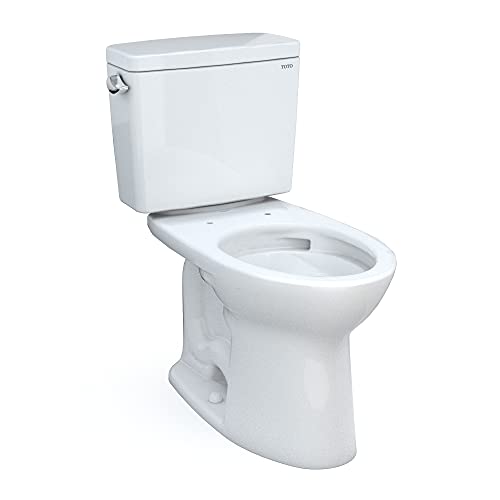
A toilet that hisses, whistles, screeches, or groans while it refills is almost always telling you about a worn or stressed fill valve, not a failing toilet. Most of these noises are fixed in under thirty minutes with a part that costs a few dollars, or with a simple adjustment that costs nothing. This guide identifies each noise by its sound, explains the mechanical cause, and walks the fixes in the order a plumber would try them, using the same spec-driven research approach we apply across the site.
Quick Answer
Most toilet fill valve noise comes from a worn diaphragm or restricted water flow, and the fastest fix is swapping in a fresh anti-siphon fill valve such as the Fluidmaster 400A, which quiets hiss, whistle, and screech for a few dollars. If you want a near-silent refill on a new toilet, the TOTO Drake pairs a quiet gravity flush with a clean tank refill at 1.28 GPF.
Every toilet makes some sound when it refills, but a healthy fill valve produces a soft, steady rush of water that fades smoothly as the tank reaches its set level. When that sound turns into a sharp whistle, a long hiss that lingers after the tank is full, a metallic screech, or a rhythmic groan in the walls, the fill valve or the water flowing through it has changed. The noise is a symptom, and once you match the sound to its cause you can usually fix it quickly and cheaply.
This guide follows the way we research everything on this site. Rather than tearing toilets apart in a lab, we compare how fill valves are engineered, the published specs that predict quiet operation, and the repair patterns that show up consistently across aggregated owner reviews and plumbing resources. We start with free adjustments, move to a low-cost valve swap, and finish with the cases where the noise is coming from the plumbing system rather than the toilet itself.
Start here. Take the tank lid off and listen during a refill. Watch the fill valve, the float, and the water level. A whistle or hiss that rises and falls with the float, a screech that comes only at the end of the fill, or water that never quite shuts off all point to different causes. That one observation, sound plus timing, sends you straight to the right fix below.
What causes a toilet fill valve to make noise?
Toilet fill valve noise is most often caused by a worn rubber diaphragm or seal inside the valve, a partly closed water supply restricting flow, or mineral and sediment buildup narrowing the valve opening. As water is forced through a restricted or vibrating part, it produces a whistle, hiss, or screech. Replacing or cleaning the fill valve resolves the large majority of these noises.
The fill valve is the tall plastic column on the left side of the tank that refills it after each flush. Inside it, a small rubber diaphragm or seal opens and closes to control the water. Noise appears when water has to squeeze past something it should not: a stiff or torn diaphragm that vibrates, a supply valve that is only half open, a fill valve set so high that water keeps trickling into the overflow, or scale that has narrowed the internal passage. Each of those produces a characteristic sound, which is why identifying the noise is the fastest path to the fix. The fill valve itself is an inexpensive, universal part, so even when the cause is wear, the repair is small. For a deeper look at how the valve works, our companion toilet fill valve guide covers anatomy and replacement step by step.
How do I identify a toilet noise by its sound?
Match the noise to its cause by sound and timing: a high whistle usually means a worn fill valve diaphragm, a long hiss means water still running into the overflow or a slow leak, a screech at the end of the fill points to a restricted valve or partly closed supply, and a knocking or groan in the walls is water hammer in the pipes. Each has a specific, low-cost fix.
The table below maps the common toilet refill noises to their likely cause and the first fix to try. Use it as a shortcut, then read the matching section for the full method. The fill valve replacement row is marked as the fix that resolves the widest range of these noises, because a fresh anti-siphon valve cures whistle, hiss, and screech in one inexpensive swap.
Noise
Likely Cause
First Fix
Cost
High whistle or squeal during fill
Worn fill valve diaphragm vibrating
Replace the fill valve
Low cost part
Long hiss after tank is full
Water running into overflow or flapper leak
Lower fill level, check flapper
Free
Screech only at end of refill
Restricted valve or partly closed supply
Open supply fully, clean valve
Free to low
Whistle, hiss, or screech, valve old
Fill valve worn or scaled internally
Replace with anti-siphon fill valve
Low cost part
Knock or bang when valve shuts
Water hammer in supply pipes
Add an arrestor, lower pressure
Free to moderate
Vibrating hum or groan in walls
High pressure or worn ballcock washer
Replace valve, check pressure
Low to moderate
Random refill with no flush (phantom)
Flapper leak dropping tank level
Replace flapper and seat
Low cost part
If the noise weakened or appeared gradually over months, suspect wear or scale inside the valve. If it appeared suddenly, suspect an adjustment that drifted, a supply valve someone touched during maintenance, or a flapper that just started leaking. A toilet that refills on its own with no one flushing is a separate problem covered in our ghost flushing fix guide, since that is a flapper or seat leak, not a fill valve noise.
The fixes, in the order to try them
These are listed from free to cheap to replacement, which is also the order of how often they are the real cause. Most fill valve noises are gone by the time you reach the valve swap.
Fix 1: Lower the fill level so water stops running into the overflow
A long hiss that continues after the tank looks full is frequently water trickling over the top of the overflow tube. The fill valve is set too high, so it never fully shuts off and keeps feeding a thin stream into the central pipe. This wastes water around the clock and produces a soft, endless hiss. It is the most common noise complaint and the easiest to fix, so check it first.
Lift the lid and watch the water line relative to the overflow tube, the open vertical pipe in the center of the tank. The water should settle about one inch below the top of that tube. If it is rising to the rim of the overflow and spilling in, lower the float. On a modern column valve, pinch the clip and slide the float cup down, or turn the top screw counterclockwise. On an older ballcock with a float ball on an arm, gently bend the arm down. Adjust in small steps, flush, and recheck until the valve shuts off cleanly about an inch below the overflow with no lingering hiss.
Tip. If you lower the float and the valve still will not shut off completely, the valve seal is worn and water keeps weeping through. That is a sign the fill valve is at the end of its life and a fresh one will both silence the noise and stop the waste. Move to Fix 4.
Fix 2: Open the supply valve fully
A screech or whistle that appears only near the end of the refill often comes from water being forced through a partly closed shutoff valve. The shutoff is the small handle on the supply line behind or below the tank, and it is sometimes left only partway open after maintenance. Water squeezing through that gap accelerates and whistles, especially as the fill valve begins to close and the flow has nowhere easy to go.
Turn the shutoff fully counterclockwise to the open position, then run a flush and listen. If the screech is gone, that was the cause. While you are there, check the supply line for kinks, which create the same restriction. A fully open, unkinked supply line lets water flow smoothly and is a free fix that resolves a surprising share of end-of-fill whistles.
Fix 3: Clean sediment and scale from the fill valve
In hard-water and well-water homes, mineral scale and grit collect inside the fill valve and on its seal, narrowing the passage so water has to force through. The result is a whistle or hiss that grew worse over time. Many fill valves are designed to be flushed clean without removing the whole unit, which makes this a free first attempt before buying a part.
Turn off the supply and flush to empty the tank. On a Fluidmaster-style valve, press down and twist the top cap a quarter turn to release it, then lift it off. Place an inverted cup over the open valve, turn the supply on briefly, and let the water blast loose debris out through the cup, then reassemble. On other valves, unscrew the cap and rinse the diaphragm and seal under running water, clearing any grit. Reassemble, run a few fills, and listen. If cleaning quiets the noise, you saved the cost of a part. If the diaphragm is cracked, stiff, or chalky, replace the valve instead.
Avoid this mistake. Do not pour acid descalers into the tank to clean the valve. The harsh chemical can attack the rubber diaphragm and flapper, which often makes the noise worse within weeks as the softened rubber starts to vibrate or leak. Mechanical flushing with plain water, or a fresh valve, is the right call.
Fix 4: Replace the fill valve
If the noise traces to the valve and cleaning did not cure it, the fastest lasting fix is a new fill valve. The internal diaphragm and seal wear out, and once they harden or tear they vibrate as water passes, producing the whistle, hiss, or screech that no adjustment will silence. A modern anti-siphon column valve such as the Fluidmaster 400A is an inexpensive, near-universal part, and the swap takes about fifteen to twenty minutes with a single adjustable wrench.
Turn off the supply, flush to empty, sponge out the remaining water, and disconnect the supply line. Unscrew the lock nut under the tank that holds the old valve, lift the valve out, then drop in the new one, tighten the nut by hand plus a quarter turn, reconnect the supply, and set the fill level an inch below the overflow. A fresh valve restores a smooth, quiet refill and usually fills faster too. This single repair is the answer to most fill valve noise complaints, which is why it is marked as the broadest fix in the table above. Full step-by-step detail lives in our toilet fill valve guide.
Fix 5: Stop water hammer when the valve shuts
A sharp knock or bang the instant the fill valve closes is water hammer, not a valve fault. When the valve shuts quickly, the moving column of water in the supply pipe slams to a stop and the shock echoes through the plumbing as a bang. It is more common on homes with high water pressure or long, unsecured pipe runs.
The simplest cure is a mini water hammer arrestor that screws onto the toilet supply line between the shutoff and the tank. It adds an air cushion that absorbs the shock. If multiple fixtures bang, the house water pressure may be high; a pressure above roughly 80 psi stresses valves and worsens both hammer and whistling, and a pressure-reducing valve at the main is the broader fix. Securing loose pipes against joists also helps. Water hammer does not damage the toilet, but it is worth quieting because the repeated shock shortens the life of valves throughout the house.
Fix 6: Cure a vibrating groan or hum
A low groan or hum that vibrates through the walls during the refill usually comes from a worn washer in an older ballcock-style fill valve resonating against the flowing water, or from high pressure exciting the valve. On an old metal ballcock, the seat washer hardens and chatters. The cleanest fix is to retire the old ballcock and install a modern quiet-fill column valve, which eliminates the chattering washer entirely. If a new valve still hums, check the house pressure, because excess pressure is the most common reason a sound valve groans. Lowering pressure with a main pressure-reducing valve calms the vibration and protects every valve and washer in the home.
Fix 7: Fix a flapper leak causing repeated refills
If the noise you are hearing is the fill valve cycling on by itself every few minutes with no one flushing, the fill valve is not faulty; it is responding to a slow leak. A worn flapper or a pitted flush-valve seat lets tank water seep into the bowl, the level drops, and the fill valve dutifully kicks on to top it up, over and over. Each cycle is a short hiss. The cure is at the flapper, not the fill valve: replace the flapper, and if the seat is rough, clean or reface it so the new flapper seals. This phantom refill is covered in depth in our ghost flushing fix guide.
Editorial Take
The highest-return move for most noisy toilets is simply replacing the fill valve rather than chasing the noise part by part. Aggregated owner reports show the same pattern over and over: people adjust the float, clean the valve, and tinker for weeks, when a fresh anti-siphon valve costs little, installs in twenty minutes, and silences the whistle permanently. If your valve is more than five years old and noisy, skip ahead and swap it. In a hard-water home, expect a fill valve to be a periodic wear item and plan to replace it every several years rather than fighting recurring scale.
Which toilet is the quietest for refilling?
The TOTO Drake is among the quietest gravity toilets, pairing a smooth 1.28 GPF refill with a powerful 1,000 gram MaP flush, so it neither whistles on fill nor needs a second flush. For the quietest overall operation, a high-MaP gravity toilet with a modern fill valve beats a pressure-assist model, which clears forcefully but refills loudly.
If a chronically noisy old toilet is pushing you toward replacement, the quietest performers combine a strong gravity flush with an efficient, smooth refill. Pressure-assist toilets are powerful but loud by design, so for a quiet bathroom a high-MaP gravity model is the better path. These three pair high independent MaP scores with quiet operation and deep, positive owner track records.
Quietest Overall
TOTO Drake
Quiet gravity flush with strong clearing
4.7
A 1,000 gram MaP score and a smooth gravity refill at 1.28 GPF make the Drake quiet on both flush and fill, with an easy-to-source parts ecosystem for future maintenance.
Kohler's Class Five flush clears with real force at 1.28 GPF while the tank refills smoothly, and the comfort-height bowl suits most family bathrooms looking for quieter operation.
A seamless one-piece design with a quiet siphon flush at 1.28 GPF, the T-0001 keeps both flush and refill subdued and is a frequent value choice for owners replacing a noisy old toilet.
If a noisy old toilet has reached the point where you would rather replace it than keep repairing the valve, the table below compares the leading quiet, high-MaP options on the specs that matter. The Drake is marked as the overall winner for combining quiet operation with strong flush performance and an easy parts supply.
For most owners the smarter sequence is to replace the fill valve first, since a noisy refill rarely justifies a whole new toilet. Replace the toilet only when the noise comes alongside a weak flush, frequent clogs, or an aging low-MaP design. If your flush has also weakened, our guide on how to improve toilet flush power walks the related fixes, and if the toilet barely flushes at all, see how to fix a toilet that is not flushing properly.
Why does my toilet keep hissing after it stops filling?
A toilet that keeps hissing after the tank looks full is usually leaking water somewhere it should not: either the fill level is set too high so water trickles into the overflow tube, or the flapper is leaking into the bowl, which drops the level and makes the fill valve weep continuously. Lower the fill level and replace the flapper to stop the hiss and the wasted water.
This lingering hiss is also a money issue, because a fill valve that never fully shuts off can waste hundreds of gallons a month. Add a few drops of food coloring to the tank and wait fifteen minutes without flushing; if color appears in the bowl, the flapper is leaking and is the cause. If no color appears but you still hear hissing, the water is going over the overflow and the fill level needs lowering, or the valve seal is worn and needs replacing. Either way the fix is small and pays for itself in water savings.
Can high water pressure cause toilet noise?
Yes. Water pressure above roughly 80 psi forces water through the fill valve faster than it is designed for, which makes worn seals whistle and causes a sharp knock, called water hammer, when the valve snaps shut. Installing a pressure-reducing valve at the main and a small hammer arrestor on the supply line quiets the noise and protects valves throughout the house.
High pressure is an underappreciated cause because it makes an otherwise sound valve noisy and shortens the life of every washer and seal in the home. You can check pressure with an inexpensive gauge that screws onto an outdoor spigot or laundry tap; the comfortable range is about 45 to 70 psi. If yours reads high, a pressure-reducing valve at the main is the broad fix that calms toilet whistle, faucet chatter, and pipe hammer at once. It is a more involved repair than a fill valve swap, so address the toilet valve first and pursue pressure only if multiple fixtures are noisy.
Editorial Take
Our honest advice is to treat persistent fill valve noise as a signal to modernize the tank components rather than nurse old parts. If your toilet still has a metal ballcock or a first-generation plastic valve, replacing it with a current quiet-fill anti-siphon valve usually solves the noise, speeds the refill, and improves reliability in one move. Do not replace the whole toilet over noise alone. Save the upgrade for when the noise arrives with a weak, low-MaP flush, and then a high-MaP gravity model from TOTO, Kohler, or Woodbridge ends both problems for good.
Putting it all together
A noisy toilet refill is a small problem with a clear diagnostic path. Match the sound to its cause: lower the fill level if water hisses into the overflow, open the supply valve fully if it screeches at the end, clean or replace the fill valve if it whistles from wear, add an arrestor and check pressure for a knock, and fix the flapper if the valve cycles on its own. The single most effective repair across all of these is a fresh anti-siphon fill valve, an inexpensive, twenty-minute swap. Replace the whole toilet only when the noise comes with a weak flush or an old low-MaP design, in which case a quiet high-MaP model from TOTO, Kohler, American Standard, Woodbridge, Swiss Madison, or Gerber is the lasting fix.
? Why does my toilet fill valve make a loud whistle?
A high whistle during the refill almost always means the rubber diaphragm or seal inside the fill valve has worn or hardened and is vibrating as water passes through it. Cleaning the valve sometimes helps if the cause is scale, but the reliable fix is to replace the fill valve with a modern anti-siphon unit, which is an inexpensive part and a fifteen to twenty minute job.
? How do I stop a toilet from hissing?
First lower the fill level so the water settles about an inch below the top of the overflow tube, since water trickling into the overflow is the most common hiss. If the hiss continues, do a dye test for a flapper leak and replace the flapper if color reaches the bowl. If the valve still weeps after both, replace the fill valve.
? Is it expensive to replace a toilet fill valve?
No. A universal anti-siphon fill valve such as the Fluidmaster 400A is one of the cheapest plumbing parts, and the swap needs only an adjustable wrench and about twenty minutes. There is no need to call a plumber for a standard fill valve replacement, which makes it the most cost-effective cure for most refill noises.
? Why does my toilet make a screeching sound when it fills?
A screech, usually toward the end of the fill, points to water being forced through a restriction. Check that the supply shutoff behind the toilet is fully open and the supply line is not kinked, then clean any sediment from the fill valve. If the screech persists, the valve seal is worn and replacing the fill valve will silence it.
? What is water hammer and how do I fix it?
Water hammer is the sharp knock or bang you hear when the fill valve shuts off quickly and the moving water in the pipe slams to a stop. Fit a small water hammer arrestor on the toilet supply line to absorb the shock. If several fixtures bang, your house pressure may be high, and a pressure-reducing valve at the main is the broader fix.
? How long does a toilet fill valve last?
A quality fill valve typically lasts about five to seven years, though hard water, sediment, and high pressure shorten that. When a valve starts whistling, hissing, or refusing to shut off cleanly, it has usually reached the end of its service life. Because the part is cheap, replacing it at the first sign of noise is more economical than repeated tinkering.
? Why does my toilet refill by itself every few minutes?
That phantom refill, sometimes called ghost flushing, means tank water is slowly leaking into the bowl, so the level drops and the fill valve cycles on to top it up. The cause is a worn flapper or a pitted flush valve seat, not the fill valve. Replace the flapper and clean or reface the seat so the new flapper seals fully.
? Can a noisy fill valve waste water?
Yes, and often a lot. A valve that never fully shuts off, or a high fill level spilling into the overflow, can quietly waste hundreds of gallons a month while producing a constant hiss. Fixing the noise by lowering the fill level or replacing the valve usually pays for itself quickly through the water you stop wasting.
? What is an anti-siphon fill valve?
An anti-siphon fill valve has a built-in air gap that prevents tank water from being siphoned back into the household supply if pressure drops. Modern code requires this design, and these valves also tend to run quieter than older ballcock units. When replacing a noisy valve, an anti-siphon column valve is the standard, code-compliant choice.
? Why is my toilet groaning or humming in the walls?
A low groan or hum during the refill usually comes from a worn washer in an older ballcock valve vibrating, or from high water pressure exciting the valve. Replacing the old ballcock with a modern quiet-fill column valve removes the chattering washer. If a new valve still hums, check and reduce your house water pressure.
? Will cleaning the fill valve fix the noise?
Often, if the cause is sediment or scale narrowing the valve. Many fill valves let you flush them clean without removing the whole unit: lift the cap, cover the opening, and let water blast the debris out. If cleaning quiets the noise you save the cost of a part, but if the diaphragm is cracked or stiff a replacement is the better fix.
? What fill level should a toilet tank have?
The water should sit about one inch below the top of the overflow tube, the open vertical pipe in the center of the tank. Most tanks also have a molded fill line on the inside back wall. A level set too high spills into the overflow and hisses, while a level too low weakens the flush, so adjusting the float to that mark fixes both.
? Does high water pressure damage toilet valves?
Yes. Pressure above roughly 80 psi forces water through valves faster than they are designed for, which causes whistling, water hammer, and premature wear of seals and washers throughout the house. The comfortable range is about 45 to 70 psi. A pressure-reducing valve at the main protects the toilet and every other fixture.
? Can I replace a fill valve without calling a plumber?
Yes. Replacing a fill valve is a beginner-friendly job: shut off the supply, flush and sponge the tank dry, disconnect the supply line, unscrew the lock nut under the tank, swap in the new valve, reconnect, and set the fill level. It takes about twenty minutes and one adjustable wrench, so most owners handle it themselves.
? Why does my new fill valve still make noise?
If a freshly installed valve is noisy, the usual culprits are high water pressure, a partly closed supply valve, or debris that entered during installation. Confirm the shutoff is fully open, flush the line before final assembly, and check your house pressure. Excess pressure is the most common reason a brand new, sound valve still whistles or knocks.
? Are some toilet brands quieter than others?
Yes. TOTO gravity models like the Drake and UltraMax II are widely noted for quiet flush and smooth refill, and Kohler's Class Five and Woodbridge one-piece toilets also run quietly. Pressure-assist toilets, by contrast, are powerful but loud by design. For a quiet bathroom, a high-MaP gravity toilet with a modern fill valve is the better choice.
? Should I replace my whole toilet because of fill valve noise?
Usually not. Fill valve noise is a cheap, isolated repair, so replacing the valve is almost always the right answer. Replace the entire toilet only when the noise comes alongside a weak flush, frequent clogs, or an old low-MaP design. In that case a quiet high-MaP gravity model fixes the noise and the performance together.
? Does a noisy fill valve mean my toilet is broken?
No. A noisy fill valve is a normal wear symptom, not a sign the toilet itself has failed. The bowl, tank, and flushing mechanism can be in fine shape while a worn valve diaphragm vibrates. Address the valve with cleaning or a low-cost replacement and the toilet returns to quiet, normal operation.
Manufacturer published specifications (TOTO, Kohler, American Standard)
Our Verdict
Toilet fill valve noise is a small, cheap problem in nearly every case. Match the sound to its cause, lower the fill level for a hiss, open the supply for a screech, clean or replace the valve for a whistle, and add an arrestor for a knock. The single broadest fix is a fresh anti-siphon fill valve, an inexpensive twenty-minute swap that silences most refills. Replace the whole toilet only when the noise comes with a weak, low-MaP flush, and then a quiet high-MaP model like the TOTO Drake at 1,000 grams and 1.28 GPF ends both problems at once. Confirm the part fits your tank and check the current price on Amazon before you order.
D
Researched by Derek Whitman
Derek researches plumbing specifications, installation requirements and parts availability, cross-checking manufacturer claims against owner-reported reliability. Rankings are based on documented data and real owner reports, never paid placement.
Updated August 2026 · Toilets
Keep reading
Related guides
Installing a Toilet Where There Is No Flange, Just a Pipe
Toilets
4.6
No flange, just a bare pipe in concrete? Here is how to install a toilet flange on a raw drain stub the…