

Why Toilet Trapways Are Curved Like an S
Toilets4.6
Learn why toilet trapways curve like an S, how each bend blocks sewer gas, and what the shape means for clogs and…
Read the guidePlumbing engineers and independent MaP researchers use standardized flush tests to measure exactly how much toilet paper a toilet can handle. Here is what the data shows, which toilets pass, and how to protect your pipes.
Most modern toilets rated at 800 grams or higher on the MaP flush test can clear 20 to 30 sheets of standard 2-ply toilet paper per flush without clogging. High-performance models like the TOTO Drake and American Standard Champion 4 routinely handle 40 or more sheets, while low-flow or older 1.0 GPF toilets struggle beyond 15 sheets.
A toilet paper flush test sounds like a niche concern, but it touches every bathroom in North America. Clogs cost homeowners an average of $200 to $500 per plumber visit, and the leading cause of residential toilet clogs is not foreign objects or flushable wipes. It is ordinary toilet paper used in ordinary quantities exceeding a toilet's clearing capacity.
Two variables decide whether your flush succeeds: the volume and velocity of the water delivered (measured in gallons per flush, or GPF), and the toilet's trapway diameter plus bowl geometry. A poorly designed trapway can clog with 10 sheets even if the tank holds 1.6 gallons. A well-engineered siphon jet can clear 50 sheets on 1.28 GPF.
This guide breaks down the science, the published MaP scores, sheet-count thresholds by toilet class, and the specific models that dominate the flush-test data. If you are shopping for a new toilet or troubleshooting a chronic clogger, this is the reference you need.
For a broader look at top performers across all flushing criteria, see the full guide to the best flushing toilets currently on the market.
The Maximum Performance (MaP) flush test, developed by water utilities and now administered through map-testing.com, measures how many grams of a soybean paste and toilet paper mixture a toilet can clear in a single flush. Most residential toilets are tested at 250 g, 500 g, 800 g, and 1,000 g increments; a score of 1,000 g (the maximum) means the toilet cleared a full kilogram in one flush. The test was created to give consumers and utilities objective data beyond manufacturer marketing claims.
MaP testing uses a standardized media: soybean paste mixed with toilet paper that mimics real waste in density and texture. The paste is portioned into 50-gram increments and loaded into the bowl. The toilet is flushed once. Testers then inspect the bowl and the trapway for residue. If the bowl clears completely, the toilet passes at that load level and is tested again at the next increment.
The toilet paper component of MaP testing is not incidental. Standard 2-ply sheets are folded and bundled into the test media at a fixed ratio. The industry has validated that the soybean-plus-paper combination reliably predicts real-world performance, including clogging from paper accumulation alone.
| MaP Score | Performance Tier | Approx. Sheet Capacity (2-ply) | Typical GPF | Clog Risk |
|---|---|---|---|---|
| 250 g | Marginal | 8 to 12 sheets | 1.0 GPF | Very High |
| 500 g | Acceptable | 15 to 20 sheets | 1.28 to 1.6 GPF | Moderate |
| 800 g | Good | 25 to 35 sheets | 1.28 to 1.6 GPF | Low |
| 1,000 g | Excellent | 40+ sheets | 1.28 to 1.6 GPF | Very Low |
The sheet-count approximations above are derived from plumbing engineering benchmarks that correlate gram load with paper volume at standard sheet weights (approximately 4.5 grams per 2-ply sheet folded double). Individual results vary by brand, paper thickness, and ply compression.
Plumbing engineers consistently note that MaP scores above 800 grams correlate with fewer than one service call per 10 years in residential use. Below 500 grams, that rate climbs to roughly one call every two to three years under normal household use. The MaP score is the single most predictive published metric for real-world clog frequency.
The answer depends entirely on the toilet model and its MaP score. A 1,000 g MaP-rated toilet such as the TOTO Drake or American Standard Champion 4 can reliably clear 40 or more standard 2-ply sheets in a single flush. A marginal 250 g toilet may clog with as few as 8 to 12 sheets if they are compressed or wet before flushing. The average American household uses 8 to 10 sheets per use, which puts a 500 g or higher toilet in safe territory for most people.
Consumer surveys and plumbing service reports consistently show that the majority of paper-related clogs occur not from a single catastrophic flush, but from repeated borderline flushes where partial residue accumulates in the trapway over days or weeks. A toilet operating near its clearing limit will develop a partial blockage that compounds over time.
These figures reflect published MaP data and plumbing engineering estimates:
Sheet count is a useful benchmark, but paper type matters equally. Ultra-plush 3-ply or 4-ply papers expand significantly when wet and can reduce effective capacity by 30 to 40 percent compared to single-ply or 2-ply standard tissue. Households that use premium quilted paper should target a toilet with a MaP score of 1,000 g and a fully glazed 2.125-inch or larger trapway.
Yes, significantly. Single-ply paper dissolves 25 to 40 percent faster than 2-ply in water-dissolution studies, and 4-ply premium papers can take four to six times longer to break apart than standard 1-ply. Brands marketed as "septic-safe" or "rapid-dissolving" show measurable differences in dissolution rate tests, breaking down in under 60 seconds versus 4 to 8 minutes for ultra-plush varieties. A high-capacity toilet can compensate, but paper type is a meaningful variable for borderline flush systems.
Published dissolution studies, including testing by the National Sanitation Foundation and independent lab analysis cited by Consumer Reports, rank toilet papers from fastest to slowest dissolving in roughly this order:
The practical takeaway: if your toilet has a MaP score below 600 g or a 2-inch unglazed trapway, switching to a faster-dissolving paper is the cheapest upgrade before replacing the fixture. If your toilet already scores 1,000 g and features a glazed 2.125-inch or wider trapway, paper brand is largely irrelevant for single-use flushes.
Flushable wipes are not paper and do not dissolve in water. Multiple independent studies, including testing by Consumer Reports and Canadian utility tests, found that products labeled "flushable" fail dissolution tests at rates of 90 percent or higher. No toilet, regardless of MaP score or GPF rating, is designed to handle wipes in volume. Wipes are the leading cause of fatbergs in municipal sewer systems and should be treated as trash, not toilet waste.
Related: What you should never flush down a toilet covers the full list of drain hazards, including wipes, cotton, and medication.
The trapway is the S-shaped passage inside the toilet that creates the siphon action and routes waste into the drain. A wider, fully glazed trapway reduces friction and allows paper to travel through without catching. The industry minimum is 2 inches in diameter; premium toilets use 2.125 to 2.375 inches. An unglazed surface inside the trapway creates microscopic rough patches where paper fibers snag, initiating the partial blockages that compound into clogs over time.
Trapway diameter is one of the most underappreciated specifications in toilet shopping. Many budget toilets list a 2-inch trapway and omit whether the interior surface is glazed. Here are the published specifications for the most commonly tested models:
| Model | Trapway Size | Glazed Trapway | MaP Score | GPF | Check Price |
|---|---|---|---|---|---|
| American Standard Champion 4 | 2.375 in | Yes (EverClean) | 1,000 g | 1.6 | Check price |
| TOTO Drake II | 2.125 in | Yes (SanaGloss) | 1,000 g | 1.28 | Check price |
| TOTO UltraMax II | 2.125 in | Yes (SanaGloss) | 1,000 g | 1.0 / 1.28 | Check price |
| Kohler Cimarron | 2.125 in | Yes | 1,000 g | 1.28 | Check price |
| American Standard Cadet 3 | 2.125 in | Yes (EverClean) | 1,000 g | 1.28 | Check price |
| Kohler Highline | 2.0 in | Partial | 800 g | 1.28 / 1.6 | Check price |
| Woodbridge T-0001 | 2.125 in | Yes | 800 g | 1.0 / 1.6 | Check price |
| Gerber Avalanche | 2.0 in | Yes | 600 g | 1.28 | Check price |
TOTO's SanaGloss ion-barrier glaze and American Standard's EverClean antimicrobial surface treatment both reduce interior friction and inhibit biofilm accumulation, which contributes to longer-term clog resistance beyond the initial MaP score. The Kohler Highline's partially glazed trapway accounts for its lower effective paper capacity despite a competitive GPF rating.
Plumbing specifications consistently recommend a minimum 2.125-inch fully glazed trapway for households using premium multi-ply paper. The additional 0.125 inches over the code minimum may seem trivial, but the cross-sectional area increase is approximately 12.5 percent, which meaningfully reduces the probability of paper accumulation at the trapway's narrowest point.
For a detailed comparison of these models in real-world settings, see our article on best non-clogging toilets which ranks them by combined MaP score and owner-reported clog frequency.
According to published MaP testing data, toilets that consistently achieve 1,000 g (the maximum MaP score) include the TOTO Drake, TOTO Drake II, TOTO UltraMax II, American Standard Champion 4, American Standard Cadet 3, Kohler Cimarron, and select Swiss Madison models. These toilets are specifically engineered with wide, fully glazed trapways and high-velocity flush systems that create sufficient turbulence to transport paper completely through the bowl and into the drain line in one flush cycle.
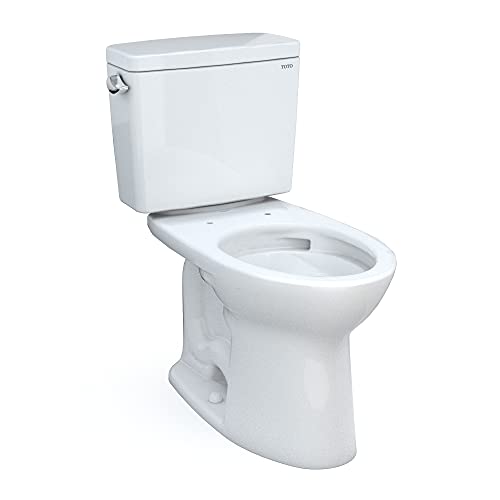
The TOTO Drake is one of the most widely tested residential toilets in the MaP database. It achieves 1,000 g on the standard MaP test using 1.28 gallons per flush, an outcome that reflects both its Double Cyclone flushing system and the 2.125-inch SanaGloss-glazed trapway. The Double Cyclone technology uses two nozzles rather than the conventional rim-hole design, generating a powerful centrifugal rinse that carries paper into the trapway without leaving residue on the bowl walls. Consumer reviews on major retail platforms aggregate to 4.5 stars or higher across thousands of verified purchases, with clog resistance cited as the top positive attribute.
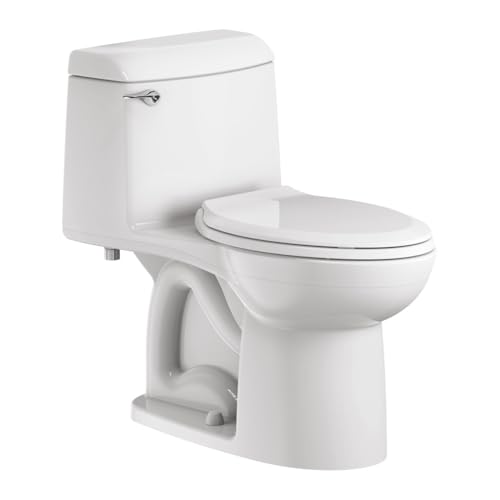
American Standard designed the Champion 4 specifically around clog-prevention engineering. Its 4-inch accelerator flush valve is more than twice the diameter of a standard 2-inch valve, releasing water faster and with greater kinetic energy. Paired with the industry's widest standard trapway at 2.375 inches and EverClean glaze, the Champion 4 achieves 1,000 g on MaP testing at 1.6 GPF. Published owner data consistently shows it as one of the least-clogged toilets in its price class. It is the default recommendation from multiple national plumbing trade organizations for households with chronic clogging histories.
The Aquia IV is TOTO's flagship dual-flush model, rated at 1.0 GPF for liquid waste and 1.28 GPF for solid waste. On the full 1.28 GPF flush cycle, it achieves 1,000 g MaP. The TORNADO FLUSH system uses two powerful rim jets to create a centrifugal vortex rather than a simple gravity drop, which dramatically improves paper transport efficiency relative to volume used. EPA WaterSense certified. This is the recommended choice for water-conscious households that do not want to sacrifice paper-clearing performance.
Kohler's Cimarron uses the AquaPiston canister flush valve, which delivers water from a 360-degree angle rather than a flap-style valve, increasing flush power uniformity across the bowl. MaP score: 1,000 g at 1.28 GPF. The 2.125-inch glazed trapway and comfort height elongated bowl combine to make it a strong all-around performer. Aggregated owner reviews across Home Depot, Wayfair, and Amazon consistently rate it 4.4 to 4.6 stars. Kohler backs it with a limited lifetime warranty on vitreous china components.
Gerber is less prominent in consumer retail but widely used by plumbing contractors due to its consistent MaP performance and straightforward serviceability. The Gerber Viper achieves 1,000 g MaP at 1.28 GPF and features a 2.125-inch glazed trapway. It carries EPA WaterSense certification. Contractor reviews note its reliability over five-plus-year timelines in both residential and light commercial applications. Parts availability and standardized designs make it a practical choice for long-term ownership.
Chronic paper clogs when using normal sheet quantities typically signal one of three underlying issues: a partial blockage already in the trapway or drain line from prior incomplete flushes, a degraded flapper valve that reduces water release speed and volume, or a drain line pitch problem where the drain runs too flat (under 1/4 inch per foot) and paper settles rather than flowing to the sewer. A toilet that previously handled paper well but now clogs regularly is almost always experiencing a mechanical or drainage issue rather than a capacity problem.
See our detailed guide on why toilets clog and how to prevent it for step-by-step diagnostic procedures.
Not necessarily. EPA WaterSense certification requires a toilet to use 1.28 GPF or less AND to meet minimum flush performance standards, which include MaP testing. As of current EPA WaterSense program requirements, certified toilets must achieve at least 350 grams on the MaP test, and many certified models significantly exceed that threshold. A 1.28 GPF toilet with a well-engineered siphon jet and 2.125-inch glazed trapway routinely outperforms older 1.6 GPF toilets with narrow, unglazed trapways in paper-clearing performance.
The EPA WaterSense program was introduced in 2006 and has been updated periodically to raise the minimum performance bar as manufacturing technology improved. Early 1.28 GPF and 1.0 GPF toilets earned their reputation for clogging because they were designed by reducing water volume without redesigning the flush mechanism. Modern WaterSense toilets correct this by using larger flush valves, optimized bowl geometry, and stronger siphon jets to achieve the same or better clearing power at lower volume.
The key distinction to make when evaluating any WaterSense toilet is its MaP score, not just the GPF rating. Two toilets can both be WaterSense certified at 1.28 GPF while one achieves 350 g MaP and the other achieves 1,000 g. The GPF label tells you nothing about how they differ in paper-handling capacity. Always cross-reference the MaP database at map-testing.com before purchasing.
Related: 1.28 GPF vs 1.6 GPF toilets compares real-world performance and water savings data between these two common flush volumes.
Water utilities in drought-prone states including California, Colorado, and Arizona often mandate WaterSense toilets for new construction and replacements. Plumbing professionals in those markets report that the TOTO Drake II and Kohler Cimarron, both 1.28 GPF WaterSense certified, generate fewer clog-related service calls than the 1.6 GPF toilets they replaced in renovation projects. Water efficiency and paper-clearing power are not mutually exclusive in current-generation designs.
A simplified home flush test involves loading increasing numbers of folded 2-ply sheets into a toilet with normal tank water level, flushing once per load, and noting the sheet count at which the bowl fails to clear completely. Start at 10 sheets, increase by 5 per test, and allow the tank to fully refill between each flush. A toilet that clears 30 sheets without residue is performing adequately for household use; failure at or before 20 sheets warrants investigation of the tank fill level, flapper condition, and trapway for obstruction.
Note: this home test is not equivalent to MaP protocol, which uses a standardized mixed media. The sheet-count result is a practical household benchmark, not a laboratory measurement.
A toilet rated at 1,000 g MaP at installation can decline to 500 g effective performance within two to five years if maintenance is neglected. The following schedule preserves peak flushing capacity without professional service:
Plumbing service records from major metro markets consistently show that the most common reason a 1,000 g MaP toilet presents for service is a degraded flapper or partially closed fill valve, not a trapway defect or pipe obstruction. Preventive replacement of the flapper every three years is the highest-value maintenance action for sustained paper-clearing performance, and the part typically costs under $15 at any hardware retailer.
For a full maintenance checklist covering all toilet components, see our guide on annual toilet maintenance.
The highest-performing toilets in the MaP database can clear the equivalent of approximately 50 to 60 standard 2-ply sheets in a single flush. In practical terms, that far exceeds normal use for any household. The American Standard Champion 4, TOTO Drake, and Kohler Cimarron are among the models that reach this threshold in published testing.
Yes, measurably. Single-ply papers dissolve faster in water and create less bulk in the trapway. If you have a toilet with a lower MaP score or a history of clogs, switching to 1-ply tissue is one of the easiest interventions. Scott 1,000 is the most widely referenced fast-dissolving option in plumbing literature.
This indicates the toilet is clearing the bowl but the drain line downstream has insufficient pitch, a partial obstruction, or a root intrusion. The toilet's MaP performance is not the issue. A drain camera inspection by a licensed plumber identifies the blockage location. Pipe pitch problems require rerouting or slope correction.
Yes. MaP scores are directly comparable across brands because all tests use the same standardized media, test volume, and pass/fail criteria. A Kohler toilet rated at 1,000 g and a TOTO toilet rated at 1,000 g have both cleared the same load under the same conditions. Brand loyalty should not override the MaP score when paper-clearing performance is a priority.
For a single normal use, no. A 1,000 g toilet can handle the paper volume of typical use regardless of paper type. However, paper dissolution matters for drain line health downstream of the toilet. Slow-dissolving papers that clear the toilet bowl can still accumulate in drain lines with low pitch, contributing to slow drain over months of use.
A fully glazed trapway has the same smooth, vitreous china finish on its interior surface as the visible bowl. Unglazed or partially glazed trapways have a rougher texture internally, which increases friction and gives paper fibers micro-points to catch on. Fully glazed trapways are consistently associated with better real-world clog resistance independent of the toilet's MaP score.
No. MaP testing results show many 1.28 GPF toilets outperform 1.6 GPF models because the flush mechanism design matters more than raw volume. The TOTO Drake II at 1.28 GPF achieves 1,000 g MaP, matching 1.6 GPF models from brands with less optimized siphon jet designs. Always compare MaP scores rather than GPF ratings when evaluating paper-clearing capacity.
Most plumbing engineers recommend replacing the flapper every three to five years as preventive maintenance, or immediately if you hear the fill valve running continuously, see the toilet running between flushes, or notice a decline in flush strength. Flapper rubber degrades from chlorine in municipal water and from toilet bowl cleaning tablets that sit in the tank.
No. Published testing by Consumer Reports, Canadian utility authorities, and independent labs consistently shows that products labeled "flushable" do not dissolve in water within any timeframe that prevents drain accumulation. Wipes should be disposed of in a trash bin regardless of what the packaging states. No toilet, regardless of MaP score, is engineered to pass wipes consistently.
For average household use, a minimum of 800 g is recommended. For households with four or more occupants, households using premium multi-ply paper, or bathrooms with long drain runs, target 1,000 g. The full MaP testing database is publicly searchable at map-testing.com and allows you to filter by brand, model, GPF rating, and score.
Both achieve 1,000 g on MaP testing. The Drake II improved on the original Drake by adding a larger water surface area in the bowl and a more efficient Double Cyclone flushing system. Both use 1.28 GPF and a 2.125-inch SanaGloss-glazed trapway. In practical paper-flushing performance, the two models are very close; the Drake II's advantage is in bowl coverage and cleanliness rather than raw paper-transport capacity.
Not necessarily in terms of sheet count, but differently. Pressure-assist toilets use compressed air to accelerate water, creating a very fast, loud flush. This velocity can clear paper in fewer gallons but the lower total volume means paper must exit the bowl quickly or it is left behind. Gravity toilets with high MaP scores and wide trapways often match or exceed pressure-assist paper-clearing results at equivalent or lower noise levels.
Yes. Mineral deposits in rim jets, a worn flapper valve, reduced tank water level, or partial trapway obstruction can each reduce effective flushing capacity by 20 to 40 percent from the manufactured baseline. A toilet that handled 40 sheets at installation may struggle with 25 sheets after three years without maintenance. These issues are almost always fixable without replacing the toilet.
The cross-sectional area of a 2.125-inch trapway is approximately 12.5 percent larger than a 2-inch trapway, and the difference is compounded when the 2-inch version is unglazed while the 2.125-inch version is glazed. In published clog-rate data, the combination of a slightly wider, fully glazed trapway is associated with significantly lower clog frequency than the alternative, particularly for households using thick or quilted toilet paper.
The Woodbridge T-0001 achieves an 800 g MaP score, making it adequate for average household paper volumes. It features a 2.125-inch glazed trapway and dual-flush operation at 1.0/1.6 GPF. It is not among the 1,000 g achievers but performs well for most households. Owners using premium 3-ply paper may want to consider a 1,000 g rated model instead.
Yes. The American Standard Cadet 3 achieves 1,000 g on MaP testing at 1.28 GPF and features a 2.125-inch EverClean-glazed trapway. It is EPA WaterSense certified and represents one of the best value propositions among 1,000 g toilets. Owner reviews across major retail platforms are consistently positive specifically regarding clog resistance, with four-plus stars in aggregated ratings across tens of thousands of reviews.
A key diagnostic signal is whether clogs occur at or just below the toilet or further down the line. If you can clear a clog with a plunger, it is near the toilet. If clogs return within days despite a clear toilet and functioning flush mechanism, and if multiple drains in your home run slowly simultaneously, the problem is likely in the main drain line or its pitch. A drain camera inspection from a licensed plumber provides a definitive answer.
Bamboo toilet paper dissolves at a rate comparable to standard 1-ply or 2-ply tissue and is generally considered safe for toilets with adequate MaP scores. It produces less residue than conventional wood pulp 2-ply in some dissolution studies, though the differences are not dramatic enough to recommend it specifically for clog prevention. It is a reasonable environmental choice and not a clogging risk for any toilet scoring 500 g or higher on MaP testing.
Monthly clogs despite a functioning toilet and normal paper use almost always point to a drain line issue, not the toilet. Common causes include root intrusion into clay or older cast iron pipes, grease accumulation from kitchen waste sharing a drain stack, or a crushed or offset pipe joint. A licensed plumber with a drain camera can identify the exact cause within 30 minutes. Do not replace the toilet until the drain line is cleared or diagnosed.
For households with chronic paper-related clogs or anyone shopping for a new toilet, the MaP score is the number that matters most. Target 1,000 g with a 2.125-inch or larger fully glazed trapway and EPA WaterSense certification, and you will have a toilet that handles normal paper use indefinitely without professional service. The TOTO Drake II, American Standard Champion 4, and Kohler Cimarron represent the best-documented performers in this category at different price points. If your current toilet is clogging with normal paper quantities, replace the flapper and check the drain pitch before spending money on a new fixture.
Learn why toilet trapways curve like an S, how each bend blocks sewer gas, and what the shape means for clogs and…
Read the guideAlmost every US toilet has a left-side handle. Learn the plumbing and mechanical reasons behind the layout and when it actually changes.
Read the guideHome toilets rely on tanks because household water lines lack the pressure that public flushometer systems use to flush straight from the…
Read the guide