

Why Toilet Trapways Are Curved Like an S
Toilets4.6
Learn why toilet trapways curve like an S, how each bend blocks sewer gas, and what the shape means for clogs and…
Read the guideA practical, data-backed guide to understanding how supply pressure shapes flush performance, how to measure what you actually have, and which fixes deliver real results without a full replumb.
Low water pressure reduces tank fill volume and rim-jet velocity, weakening the siphon that clears the bowl. Most gravity toilets need at least 8 PSI static pressure at the supply valve. Pressure-assist models require 20 to 80 PSI. Diagnosing starts with a simple gauge test; fixes range from a free fill-valve adjustment to a booster pump for whole-house deficiencies.
A gravity-flush toilet stores a predetermined volume of water in its tank and releases it in a controlled rush. Supply line pressure determines how quickly that tank refills between flushes and, critically, how fully the tank reaches its designed fill level before the next use. If the fill valve cannot deliver enough water within a normal cycle, the tank runs partially empty and the flush is weaker than the manufacturer engineered it to be.
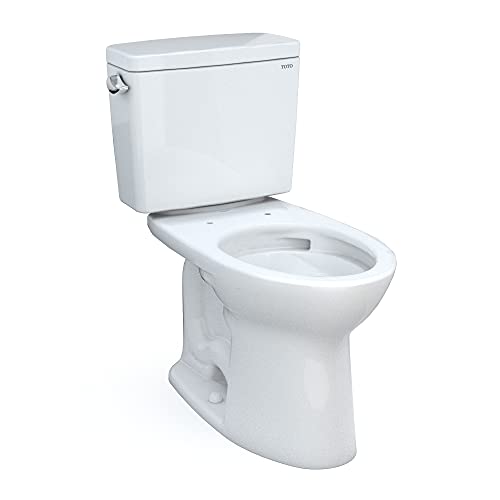
The relationship is direct but often misunderstood. Most homeowners assume the toilet itself is the culprit when flush power degrades. In reality, a 1.28 GPF toilet like the TOTO Drake II is precisely calibrated to deliver its MaP score of 1,000 grams of solid waste per flush only when the tank fills to the correct waterline, which requires adequate pressure at the supply stop valve.
The International Plumbing Code sets a minimum residential supply pressure of 15 PSI at the point of use. The Uniform Plumbing Code allows as low as 15 PSI. In practice, however, utility companies deliver water to the property line at anywhere from 40 to 80 PSI; by the time it reaches upper-floor bathrooms through aging galvanized or corroded copper lines, measured pressure can fall to 20 to 25 PSI or even lower. That drop matters differently depending on toilet type:
Plumbing engineers often describe the fill-valve as the "memory" of your water supply. A slow fill or a perpetually low waterline in the tank is rarely a toilet defect -- it is the toilet honestly reporting what the supply line is delivering. Check static pressure with a hose bib gauge before ordering any replacement parts.
For a standard gravity-flush toilet, the practical minimum to avoid noticeable flush degradation is 20 PSI at the stop valve. At 20 PSI, most fill valves flow at roughly 1.5 to 2.0 gallons per minute, enough to refill a 1.28 GPF tank in under 90 seconds. Below 15 PSI, refill times stretch beyond two minutes and incomplete fills become common. Pressure-assist toilets need a firm 20 PSI floor but perform better at 40 PSI or above, where the Flushmate vessel can achieve full air compression.
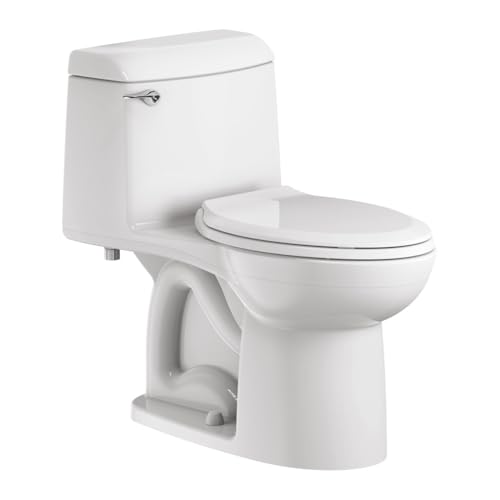
Toilet manufacturers publish minimum pressure requirements in their installation instructions. TOTO specifies 8 PSI minimum for most gravity models; Kohler's pressure-assisted Highline Pressure Lite calls out 20 PSI minimum; American Standard's Champion 4 gravity system is rated for 8 to 125 PSI static at the supply valve.
To put those numbers in context, MaP (Maximum Performance) testing -- the industry's independent flush benchmark run by Veritec Consulting and IAPMO -- tests toilets at a standardized static water pressure of 45 PSI at the rough-in stop valve location. Scores reported on map-testing.com assume that pressure. If your home delivers only 20 PSI, a toilet rated for a MaP score of 800 grams at 45 PSI will likely perform closer to 500 to 600 grams under real conditions, meaning larger waste loads may require a second flush.
| Supply Pressure at Stop Valve | Fill Speed (approx.) | Gravity Flush Quality | Pressure-Assist Activation | Action Required |
|---|---|---|---|---|
| 40 to 80 PSI | 45 to 75 seconds | Full rated performance | Yes, full compression | None |
| 25 to 39 PSI | 75 to 120 seconds | Near-rated, minor variance | Yes, adequate | Monitor only |
| 15 to 24 PSI | 2 to 4 minutes | Noticeably weaker | Marginal or no activation | Diagnose cause, adjust valve |
| 8 to 14 PSI | 4 to 8 minutes | Severely reduced, incomplete fills | None | Fill-valve upgrade or booster |
| Below 8 PSI | Extremely slow or no fill | Barely functional | None | Booster pump or pressure regulator check |
Start with a pressure gauge test at the nearest hose bib or directly at the toilet's stop valve using an inexpensive threaded gauge (available for under $15 at most hardware stores). Take a static reading (no water running) and a dynamic reading (flush and measure during tank fill). Static pressure below 40 PSI warrants investigation; static below 20 PSI is a confirmed deficiency that will impact flush performance.
Next, time the tank refill cycle by marking the fill waterline, flushing, and counting seconds until the fill valve closes. A healthy 1.28 GPF toilet should refill in 60 to 90 seconds at normal pressure. Refill times exceeding 3 minutes point to pressure or fill-valve issues rather than the toilet bowl or trap geometry.
A step-by-step diagnostic sequence helps isolate whether the problem is whole-house, zone-specific, or isolated to one fixture:
The most commonly overlooked culprit is the braided supply line itself. Even a new-looking 12-inch stainless-steel braided hose with a 3/8-inch bore can reduce flow noticeably compared to a 1/2-inch line, especially when the stop valve is only partially open. Replacing a $6 supply hose and fully opening the stop valve has resolved "weak flush" complaints that appeared to require a new toilet.
Yes. The siphon in a gravity toilet bowl is created by water rushing through the trapway fast enough to displace all air and establish a continuous water column, not by the force of water alone. When tank volume is reduced because the tank did not fill completely, the initial rush through the rim jets is slower and may fail to establish a full siphon, leaving waste in the bowl or requiring a second flush to complete drainage.
Rim-jet design also plays a role. Toilets with fewer, larger rim jets (like TOTO's Tornado Flush, which uses two large nozzles instead of dozens of small holes) are less prone to clogged jets and more tolerant of moderate pressure variation, because each jet delivers a concentrated water sheet that is more efficient at initiating bowl rotation and siphon formation.
The physics of siphon formation explain why partially-filled tanks are disproportionately bad news. A tank that is only 80 percent full does not just deliver 80 percent of the designed flush energy. The siphon requires a minimum threshold of velocity to activate. If the rush of water is just below that threshold, siphon formation is inconsistent -- sometimes it activates, sometimes it does not -- producing erratic flush results that look like a mechanical fault in the toilet when the real issue is intermittent supply pressure dropping the tank fill below the critical level.
Understanding this threshold also explains why certain toilets handle low pressure better than others. The American Standard Champion 4 uses a 4-inch flush valve (most competitors use 2 to 3 inches) and a fully glazed 2-3/8-inch trapway, releasing water faster per unit of tank volume. A larger valve opening means the same 1.28 gallons accelerates through the system at higher velocity, making siphon activation more reliable even when tank fill is slightly below optimal. Its published MaP score is 1,000 grams, achieved consistently across a range of supply pressures in independent testing.
Toilets engineered with large-diameter flush valves, wide fully-glazed trapways, and efficient rim-jet designs maintain stronger siphon action with partial tank fills and lower supply pressure. The TOTO Drake II (3-inch flush valve, Tornado Flush rim jets), American Standard Champion 4 (4-inch flush valve), and Gerber Avalanche Elite (3-inch flush valve) consistently earn top MaP scores of 1,000 grams and receive positive owner feedback in low-pressure situations. Pressure-assist models like the Kohler Highline Pressure Lite remain the most pressure-dependent but the most powerful when pressure is adequate.
Dual-flush toilets from brands like Woodbridge T-0001 and Swiss Madison Concorde use 3-inch flush valves and show reasonable performance at moderate pressure because their full-flush setting releases the full tank volume at once, maintaining adequate velocity even when tank fill is slightly short.
For households with confirmed chronic low pressure (static below 25 PSI), here is how prominent models compare on features that matter most in that scenario:
| Model | Flush Valve Size | Trapway Size | MaP Score | Flush Type | Low-Pressure Tolerance | Check Price |
|---|---|---|---|---|---|---|
| American Standard Champion 4 | 4 inch | 2-3/8 inch fully glazed | 1,000 g | Gravity single-flush | Excellent | Check price |
| TOTO Drake II | 3 inch | 2-1/8 inch fully glazed | 1,000 g | Gravity, Tornado Flush | Very Good | Check price |
| TOTO UltraMax II | 3 inch | 2-1/8 inch fully glazed | 1,000 g | Gravity, Tornado Flush | Very Good | Check price |
| Gerber Avalanche Elite | 3 inch | 2-1/8 inch fully glazed | 1,000 g | Gravity single-flush | Very Good | Check price |
| Woodbridge T-0001 | 3 inch dual-flush | 2 inch fully glazed | 800 g (full flush) | Gravity dual-flush | Good | Check price |
| Swiss Madison Concorde | 3 inch dual-flush | 2 inch | 800 g (full flush) | Gravity dual-flush | Good | Check price |
| Kohler Highline Pressure Lite | Pressure-assist | 2-1/8 inch | 1,000 g | Pressure-assist | Poor below 20 PSI | Check price |
| American Standard Cadet 3 | 3 inch | 2-1/8 inch fully glazed | 1,000 g | Gravity single-flush | Good | Check price |
If you are evaluating a full replacement, see our roundup of the best flushing toilets for current MaP scores, pricing context, and flush-valve size comparisons across 20 models. For context on water efficiency alongside power, our 1.28 GPF vs 1.6 GPF comparison explains how flow rate and pressure interact at the tank level.
The most impactful no-replacement fixes are: (1) fully opening or replacing the stop valve to eliminate restriction, (2) adjusting the fill-valve float to the maximum allowable waterline, (3) upgrading from a 3/8-inch to a 1/2-inch supply line, and (4) adjusting or replacing the whole-house pressure-reducing valve if it has drifted below 40 PSI. These four steps cost $5 to $200 in parts and frequently restore full flush performance without touching the toilet itself.
For chronic whole-house low pressure caused by municipal supply deficiency or long undersized runs, an inline booster pump ($200 to $600 installed) raises dynamic pressure to the target range and resolves flush problems across all fixtures simultaneously.
Below is a structured repair sequence ordered by cost and invasiveness:
Turn the angle-stop valve at the base of the toilet counter-clockwise until it stops. Many contractors leave these partially closed after installation. On older gate valves, full open means turning until the valve wheel begins to turn back slightly. This single step restores full supply flow at zero cost.
Remove the tank lid and locate the fill-valve float. On Fluidmaster 400A-style valves, there is a clip on the float arm or a pinch-and-slide adjustment. Raise the float until the water level rises to within 1 inch of the overflow tube, which is typically the manufacturer's intended waterline. A higher waterline means more water in the tank and a stronger flush. If the fill valve is a worn ballcock more than 10 years old, replace it with a Fluidmaster 400A or Korky 528 for $8 to $15 -- both deliver higher flow rates than aging ballcock designs.
Swap the existing supply hose for a 1/2-inch bore braided hose of the correct length. Most supply lines sold at big-box stores have a 3/8-inch inner bore. Specialty supply lines with a true 1/2-inch bore flow nearly twice the volume per minute at equivalent pressure. Confirm both the stop valve output and the fill-valve inlet can accept the larger diameter before purchasing.
Locate the PRV on the main incoming line. It typically looks like a bell-shaped brass fitting with an adjustment screw under a lock nut. Use a pressure gauge at the hose bib to verify current static pressure, then adjust the PRV to deliver 50 to 60 PSI. If the PRV is more than 7 to 10 years old or will not hold its set point, replacement is warranted. A licensed plumber should perform this work; typical cost is $200 to $400 including parts.
When static pressure at the meter is genuinely below 40 PSI -- common in older urban neighborhoods or at the end of long distribution mains -- a demand-type booster pump raises pressure on demand. Brands like Grundfos and DAB offer residential booster pump kits rated for 45 to 70 PSI output. Professional installation is recommended; budget $400 to $800 for parts and labor. Once installed, all fixtures in the home benefit, including showers and faucets.
Plumbing contractors report that a significant portion of "new toilet needed" calls resolve completely after a stop-valve adjustment and a $12 fill-valve float correction. Before spending money on a replacement toilet, verify your tank waterline is exactly where the overflow tube marks indicate, and confirm the stop valve is fully open. These two free checks eliminate most weak-flush complaints tied to supply pressure rather than toilet design.
Tank geometry shapes how available water translates into flush energy. A taller, narrower tank stores water at greater average height above the flush valve, converting more potential energy to kinetic energy when the flush is triggered. This is why traditional two-piece toilets with elevated tanks historically flushed reliably even at low pressure -- the height differential did much of the work.
Modern elongated one-piece toilets like the TOTO UltraMax II and Woodbridge T-0001 feature lower-profile tanks to achieve a sleek silhouette. Manufacturers compensate with larger-diameter flush valves (3 inches versus the old 2-inch standard) and high-efficiency rim jet designs. The TOTO Tornado Flush system, used across the Aquia IV, Drake, Drake II, and UltraMax II lines, uses two angled nozzles that create a centrifugal rinse of the entire bowl surface rather than dozens of small rim holes that can clog with mineral deposits. This design delivers more cleaning coverage per gallon and is less sensitive to minor pressure variation because the nozzle geometry concentrates flow into a more effective rinse pattern.
The TOTO Aquia IV dual-flush model demonstrates how valve design can partially compensate for pressure. Its 0.8/1.0 GPF dual-flush mechanism uses a tower-style flush valve that releases water faster than older canister designs, maintaining reasonable siphon activation even when tank fill is slightly short. Owner reviews on retail sites consistently note that the full-flush (1.0 GPF) setting clears the bowl in one pass the vast majority of the time, though individual results depend heavily on local water pressure and the specific waste load.
For related reading on how flush valve design affects clog resistance at normal pressure, see our guide on best toilets that do not clog, and for comparisons of specific TOTO models, our TOTO Drake vs UltraMax II analysis covers flush-valve differences in detail.
Dual-flush toilets are more pressure-sensitive on the partial (liquid waste) setting than the full flush. The partial flush typically releases only 0.8 GPF -- sometimes as little as 0.6 GPF on ultra-high-efficiency models -- which is enough water to clear liquid waste at normal pressure (40 to 60 PSI) but may leave residue on the bowl at pressures below 25 PSI. The full flush setting of a dual-flush toilet behaves comparably to a single-flush toilet of the same GPF rating and is more tolerant of moderate pressure drops.
Households with consistently low pressure who prefer a dual-flush toilet should choose models with a 1.0 GPF full-flush option rather than the 1.6 GPF/0.8 GPF split, since the lower full-flush volume is still EPA WaterSense certified (threshold: 1.28 GPF or less) while providing a more reliable siphon at borderline pressure than a split that offers no middle option.
EPA WaterSense certification requires that a toilet use no more than 1.28 GPF on the full flush. Both 1.0 GPF and 1.28 GPF single-flush toilets qualify, as do dual-flush models whose flush volume average (calculated across a simulated mix of full and partial flushes) falls at or below 1.28 GPF. This means a 1.6 GPF / 0.8 GPF dual-flush toilet does not carry the WaterSense label because its full-flush setting exceeds the threshold. The Woodbridge T-0001 and Swiss Madison Concorde use 1.28 GPF / 0.8 GPF splits, keeping both settings within the WaterSense framework while delivering a full flush that is more pressure-tolerant than the ultra-low 1.0 GPF ceiling.
Gravity toilets require a minimum of approximately 8 PSI static pressure at the stop valve, but functional and consistent performance generally needs at least 20 PSI. Pressure-assist toilets require a minimum of 20 PSI and work best above 40 PSI. Below 8 PSI, even a gravity toilet will struggle to refill the tank to the correct level.
Yes. When pressure is too low, the fill valve may not generate enough water velocity to fully close the float mechanism, leaving the valve partially open and allowing a slow trickle into the tank. This can produce a continuous or intermittent running sound. The problem worsens as ballcock valves age and their seals become less responsive to partial flow.
Purchase a threaded water-pressure gauge (under $15 at hardware stores). Shut off the toilet supply, disconnect the supply line from the stop valve, thread the gauge directly onto the stop valve outlet, then open the valve slowly. The reading is your static supply pressure at that fixture. Take a second reading with the valve open and a faucet running elsewhere to capture dynamic pressure under load.
Often yes. If the tank waterline is below the manufacturer's mark (usually stamped or molded inside the tank), raising the float increases the stored water volume and flush energy. This adjustment takes less than five minutes and costs nothing. If the waterline is already correct, low pressure or a worn flush valve is the more likely cause.
No, and it can make things worse. Pressure-assist toilets (Flushmate-equipped Kohler and American Standard models) actually require higher minimum supply pressure (20 PSI at minimum, ideally 40+ PSI) to compress air in the vessel. If your home has low pressure, a pressure-assist toilet may not activate at all, producing a weaker flush than a well-chosen gravity model.
This pattern indicates dynamic pressure drop during peak demand. Municipal mains and building supply lines experience their lowest pressure when the most users are drawing water simultaneously, typically early morning and early evening. The toilet is functioning normally at your home's minimum pressure. Solutions include a booster pump or PRV adjustment to ensure adequate dynamic pressure during peak periods.
At normal residential pressure (40 to 60 PSI), a 1.28 GPF toilet should refill in 60 to 90 seconds. A 1.6 GPF tank takes 80 to 110 seconds. Refill times exceeding 150 seconds (2.5 minutes) suggest pressure below 20 PSI, a partially closed stop valve, a worn fill valve, or a kinked supply line. Times above 4 minutes indicate a significant supply restriction.
Yes, and this is frequently the actual cause. Clogged rim jets reduce water velocity entering the bowl and can prevent full siphon formation, mimicking the effect of low supply pressure. Before diagnosing a pressure problem, check the rim jets by holding a small mirror under the rim and looking for orange or brown buildup blocking the openings. A vinegar soak (pour vinegar into the overflow tube to fill the rim channel) dissolves most mineral deposits overnight.
Generally yes. A wider valve opening releases stored tank water faster, increasing peak flow velocity through the trap regardless of supply pressure. This means siphon activation is more reliable with a partially filled tank. The American Standard Champion 4's 4-inch valve is the largest commercially available in the residential market and is a meaningful advantage in borderline pressure scenarios.
A pressure-reducing valve (PRV) is installed on the main supply line to prevent high municipal pressure (sometimes 100+ PSI) from damaging household plumbing and appliances. PRVs are factory-set to deliver 50 to 60 PSI but can drift lower over time, especially after 7 to 10 years. A PRV set below 35 PSI will noticeably reduce flush performance in upper-floor bathrooms. A plumber can test and readjust the set point in under 30 minutes.
WaterSense certification confirms a toilet passes a MaP flush test of at least 350 grams (and most exceed 500 grams) while using no more than 1.28 GPF. The testing occurs at 45 PSI. Certification does not guarantee equivalent performance at lower pressures. For low-pressure households, focus on models with a MaP score of 800 grams or higher and a 3-inch or larger flush valve, which provide more margin when actual pressure falls below the test standard.
Potentially, yes. A 1.0 GPF toilet has less water volume available to establish the siphon. At normal pressure, modern 1.0 GPF designs compensate with larger valves and optimized bowl geometry. At pressures below 25 PSI, the smaller volume may not provide enough rush velocity to consistently activate siphon. A 1.28 GPF model provides a slightly larger buffer of flush energy for the same valve and trapway design.
Yes. Point-of-use booster pumps are available for approximately $100 to $200 and can be installed inline on the bathroom supply branch. They are a practical solution when only one bathroom has pressure issues due to its location at the end of a long supply run or on an upper floor. However, ensure the pump is compatible with your pipe size and local plumbing code before purchasing.
Yes. The supply line from stop valve to fill valve is typically 3/8 inch in diameter, which restricts flow compared to the 1/2-inch branch supply pipe in the wall. Upgrading to a 1/2-inch bore supply line reduces restriction and allows faster tank fill at equivalent pressure. For the internal house piping, 1/2-inch supply branches are standard for toilets; 3/8-inch branch pipes are undersized and can cause low flow at the fixture even when main pressure is adequate.
TOTO's gravity models (Drake, Drake II, UltraMax II) generally perform better at borderline pressure than Kohler's pressure-assist line, because they do not require a pressure minimum to activate a mechanical assist system. Both brands offer excellent gravity models, but TOTO's Tornado Flush rim-jet design is particularly efficient, delivering a thorough bowl rinse with the water volume available even when fill is slightly incomplete.
Well systems use a pressure tank and switch to maintain pressure in a set range, typically 30/50 PSI or 40/60 PSI (cut-in/cut-out). When the pump cycles, pressure at the toilet varies between the cut-in and cut-out values. If the pressure tank is undersized or the bladder is waterlogged, pressure can drop rapidly during demand, causing inconsistent flush performance. Well owners should check tank pressure and pump switch settings annually.
Low pressure itself does not damage the porcelain, trapway, or tank. However, prolonged low pressure can accelerate fill-valve wear because the valve operates partially open for longer, increasing seal friction. A fill valve operating continuously due to inability to shut off can also cause minor tank and bowl staining from constant small water movement. Addressing the pressure or valve condition prevents these secondary issues.
The Kohler Cimarron is a gravity-flush toilet with a 3-inch flush valve and a published MaP score of 1,000 grams. As a gravity model, it does not require elevated pressure to activate an assist mechanism. Owner reviews indicate reliable flushing at typical residential pressures, though like all gravity toilets, performance will diminish below 20 PSI. It is a reasonable choice for moderate low-pressure situations.
Indirectly. A slow-filling toilet that requires multiple flushes to clear waste sends more total water to the septic system per use, increasing hydraulic load. Over time this can saturate the drain field faster than a properly functioning single-flush toilet. Resolving the low-pressure cause reduces both water consumption and septic loading, especially in homes where two or more toilets are affected simultaneously.
Prioritize: a 3-inch or 4-inch flush valve, a fully glazed trapway of at least 2-1/8 inches, a MaP score of 800 grams or higher, and gravity-flush technology (not pressure-assist). Single-flush models are generally more reliable at low pressure than dual-flush because the full tank volume is always deployed. The American Standard Champion 4, TOTO Drake II, and Gerber Avalanche Elite are the most consistently recommended models in this category based on independent MaP test data and aggregated owner reviews.
Low water pressure is one of the most common and most misdiagnosed causes of weak toilet flushing. Before assuming the toilet itself is at fault, measure static and dynamic pressure at the stop valve, check that the stop valve is fully open, verify the fill-valve float is set to the maximum waterline, and time the tank refill. Most pressure-related flush problems resolve with a stop-valve adjustment, a float correction, or a supply hose upgrade -- all under $20 in parts. For chronic whole-house pressure deficiency, adjusting or replacing the PRV and, in severe cases, installing a booster pump restores full flush performance across all fixtures. When a toilet replacement is warranted, prioritize large flush valves, wide fully-glazed trapways, and proven MaP scores over 800 grams -- the American Standard Champion 4, TOTO Drake II, and Gerber Avalanche Elite lead this category and deliver reliable siphon action even when pressure is marginally lower than ideal.
Learn why toilet trapways curve like an S, how each bend blocks sewer gas, and what the shape means for clogs and…
Read the guideAlmost every US toilet has a left-side handle. Learn the plumbing and mechanical reasons behind the layout and when it actually changes.
Read the guideHome toilets rely on tanks because household water lines lack the pressure that public flushometer systems use to flush straight from the…
Read the guide