


Best 30-Inch Bathroom Vanities (2026)
Bathroom Remodeling4.6
Thirty inches is the sweet spot between a cramped 24-inch vanity and a full 36-inch cabinet, giving a single-sink bathroom real drawer…
Read the guideActual project data, cost breakdowns by scope, and the upgrades that deliver the biggest impact -- from a simple toilet swap to a full gut renovation.
A full primary bathroom remodel averages $12,000 to $21,000 in the US, while cosmetic refreshes (toilet, vanity, paint, fixtures) run $2,500 to $5,000. The highest-ROI single upgrade is replacing an old 3.5 GPF toilet with a dual-flush or 1.28 GPF model, cutting water bills and qualifying for utility rebates.
Bathroom remodels rank among the most frequently researched home projects -- and for good reason. A tired, dated bathroom drags down perceived home value, wastes water through inefficient fixtures, and turns an everyday routine into a frustration. But "remodel" means very different things depending on scope, and costs vary by a factor of ten or more between a targeted refresh and a high-end gut renovation.
This guide documents real project ranges, before-and-after outcomes by upgrade category, and the specific decisions that separate remodels with strong returns from overbuilt money pits. Toilet replacement gets particular attention here because it is the single most impactful plumbing upgrade in terms of water savings, clog resistance, and daily comfort -- and because choosing the wrong fixture early forces expensive do-overs.
For a deep dive on which toilets perform best in independent flush testing, see our best flushing toilets guide.
According to data aggregated from contractor platforms and the National Kitchen and Bath Association (NKBA), the median primary bathroom remodel runs between $12,000 and $21,000 for a mid-range scope in 2026. Cosmetic-only projects average $2,500 to $5,000, while luxury renovations in high-cost metros regularly exceed $50,000.
Labor accounts for roughly 40 to 60 percent of total cost. Materials, fixtures, and finishes make up the rest. Structural surprises -- subfloor rot, outdated wiring, mold remediation -- add an average of $1,800 to $4,500 when they occur, which is why a 15 to 20 percent contingency budget is standard advice from licensed contractors.
| Scope | Typical Total Cost | What Changes | Average ROI at Resale |
|---|---|---|---|
| Cosmetic refresh | $1,500 -- $5,000 | Toilet, vanity, mirrors, paint, hardware | 65 -- 80% |
| Mid-range remodel | $10,000 -- $22,000 | Tile, tub/shower, toilet, vanity, lighting, ventilation | 60 -- 72% |
| High-end remodel | $25,000 -- $55,000+ | Full gut, heated floors, custom tile, frameless glass, smart fixtures | 45 -- 60% |
| ADA/accessible remodel | $8,000 -- $28,000 | Walk-in shower, grab bars, comfort height toilet, widened doorway | N/A (functional gain) |
The mid-range remodel row is marked as the value leader because it captures the highest return on real estate comps while still delivering a meaningfully transformed space. Going luxury adds diminishing resale returns in most markets, though it can make sense for forever-homes and high-end neighborhoods where buyers expect premium finishes.
Remodeling Magazine's annual Cost vs. Value report consistently shows that mid-range bathroom remodels recoup approximately 60 to 72 percent at resale, making them one of the better-performing home improvement categories. Within any remodel, high-ROI individual upgrades are toilet replacement (especially replacing pre-1994 3.5 GPF models), vanity and mirror updates, recessed lighting, and improved ventilation.
Walk-in showers replacing tub-shower combos add measurable appeal in primary bathrooms, particularly for buyers aged 45 and older. However, removing the only bathtub in a home with young families can hurt resale, so tub-shower combos remain safer for single-bathroom homes.
| Upgrade | Typical Cost | ROI Range | Notes |
|---|---|---|---|
| Toilet replacement (3.5 to 1.28 GPF) | $300 -- $900 installed | 80 -- 100%+ with water savings | Utility rebates often available |
| Vanity and mirror update | $400 -- $2,500 | 70 -- 85% | Storage gain valued by buyers |
| Tile floor replacement | $900 -- $3,500 | 60 -- 75% | Heated floor adds comfort, not much ROI |
| Tub resurfacing | $300 -- $700 | 55 -- 70% | Short lifespan vs replacement |
| Walk-in shower conversion | $3,500 -- $12,000 | 50 -- 68% | Risky if only tub in home |
| Lighting upgrade (LED + dimmer) | $200 -- $800 | 65 -- 80% | High perceived value vs cost |
| Exhaust fan replacement | $150 -- $400 | 60 -- 75% | Mold prevention is primary benefit |
Contractor consensus on NKBA forums and home improvement boards consistently flags the toilet as the most underrated ROI upgrade. A buyer or appraiser opening the lid of a comfort-height, WaterSense-certified toilet signals the whole bathroom has been thoughtfully updated. Conversely, a leaking, running, or pre-1994 toilet immediately signals deferred maintenance -- and buyers price that in.
During a remodel, toilet selection should be guided by three factors: rough-in measurement (standard 12 inches, but 10-inch and 14-inch exist in older homes), flush performance as measured by MaP flush-test scores (350 grams minimum, 800+ grams recommended), and water efficiency certified by EPA WaterSense at 1.28 GPF or less. Height matters too -- comfort-height models (16.5 to 18 inches) are preferred by most adults and are required for ADA compliance.
The MaP (Maximum Performance) testing program, run by the Veritec Consulting and IAPMO Research and Testing, is the most reliable independent benchmark for flush power, testing how many grams of waste material a toilet can clear in a single flush. Scores above 800 grams are considered excellent.
| Model | MaP Score | GPF | WaterSense | Best For | Check Price |
|---|---|---|---|---|---|
| TOTO Drake II 2-Piece (CST454CEFG) | 1,000g | 1.28 | Yes | Best all-round performer | Check price |
| TOTO UltraMax II 1-Piece (MS604114CEFG) | 1,000g | 1.28 | Yes | Clean design, easy maintenance | Check price |
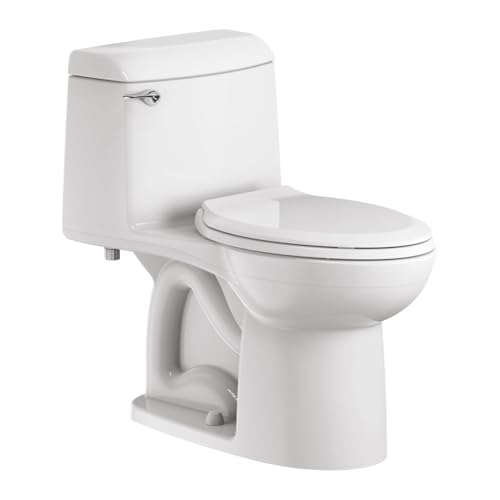
| American Standard Champion 4 | 1,000g | 1.6 | No | Clog resistance priority | Check price |
| Kohler Cimarron | 800g | 1.28 | Yes | Value mid-range remodel | Check price |
| Woodbridge T-0001 | 800g | 1.28 / 0.9 | Yes (dual) | Modern one-piece aesthetic | Check price |
| TOTO Aquia IV Dual Flush | 800g | 1.0 / 0.8 | Yes | Maximum water savings | Check price |
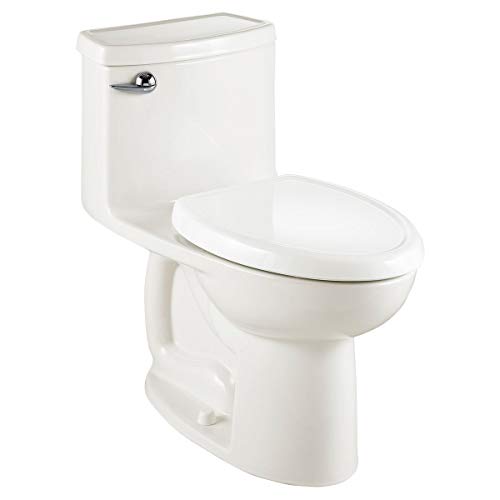
| American Standard Cadet 3 | 800g | 1.28 | Yes | Budget-friendly remodel | Check price |
The TOTO Drake II consistently earns the highest MaP scores and appears on utility rebate lists across dozens of US water districts. Its 3-inch flush valve and fully glazed 2.125-inch trapway are the mechanical reasons for that performance. For remodels where the toilet will see heavy daily use, this model or the UltraMax II one-piece equivalent should be the default choice.
If water savings are the primary driver -- particularly in drought-prone states like California, Arizona, and Nevada -- the TOTO Aquia IV's dual-flush 1.0/0.8 GPF system offers the lowest water use while maintaining MaP scores sufficient for practical daily performance. Many municipal water utilities in the Southwest offer rebates of $50 to $200 per qualifying toilet replacement.
For related reading on individual models, see our guides on the TOTO Drake review and American Standard Champion 4 review.
The following project profiles represent composite data from contractor estimates, permit records, and homeowner accounts shared on platforms like Houzz, Reddit's r/DIY community, and the NKBA project database. Costs reflect 2025 to 2026 national averages, though labor costs in coastal metros run 20 to 40 percent higher.
| Element | Before | After | Cost | Check Price |
|---|---|---|---|---|
| Toilet | 3.5 GPF avocado green, running | Kohler Highline 1.28 GPF comfort height | $380 installed | Check price |
| Vanity | Original oak laminate, rusted hardware | 36-inch shaker-style, brushed nickel | $680 | Check price |
| Mirror / medicine cabinet | Builder mirror strip | Framed medicine cabinet | $220 | Check price |
| Lighting | Single incandescent bar | 3-bulb LED vanity bar + dimmer | $195 | Check price |
| Paint + accessories | Almond painted walls, dated towel bars | Light gray paint, matte black hardware | $340 | Check price |
| Total | $1,815 | Check price |
This is the highest-efficiency remodel category: cosmetic only, no tile work, no plumbing relocation. The toilet replacement alone eliminated a running fill valve wasting roughly 30 gallons per day, translating to approximately $90 to $140 in annual water savings depending on local rates. The switch from 3.5 GPF to 1.28 GPF saves around 26,000 gallons per year for an average household of four.
Cosmetic refreshes in the $1,500 to $3,500 range often return dollar-for-dollar in perceived home value, particularly in competitive resale markets where buyers make quick decisions based on first impressions. The bathroom is one of the two rooms (along with the kitchen) where visual condition most directly correlates with offer price.
| Element | Before | After | Cost | Check Price |
|---|---|---|---|---|
| Toilet | 1.6 GPF builder-grade, no MaP data | TOTO Drake II 1.28 GPF, 1,000g MaP | $650 installed | Check price |
| Tub / shower | Fiberglass tub-shower combo, stained | Walk-in shower, subway tile, frameless door | $4,800 | Check price |
| Tile floor | Vinyl sheet flooring | 12x24 porcelain tile | $1,900 | Check price |
| Vanity | Single-sink laminate, 48 inch | Double-sink solid wood, 60 inch | $1,400 | Check price |
| Lighting + electrical | Single overhead fixture | Vanity bar + overhead recessed LED | $880 | Check price |
| Exhaust fan | 40 CFM, noisy | 110 CFM with humidity sensor | $320 | Check price |
| Labor (total) | Tile, plumbing, carpentry, painting | $5,200 | Check price | |
| Total | $15,150 | Check price |
This represents the archetypal mid-range primary bathroom remodel: new shower, tile floor, double vanity, and high-performance fixtures. The TOTO Drake II was selected specifically because the homeowners reported frequent clogging with the builder-grade toilet -- a common complaint with early 1990s 1.6 GPF models that used minimal water pressure technology. The switch to a 1,000g MaP-rated model eliminated clog callbacks entirely according to the installer.
A primary bathroom remodel for aging-in-place requirements adds specific costs but serves a distinct functional need. ADA-compliant changes include widened doorways (minimum 32 inches clear opening), comfort-height or ADA-compliant toilets (typically 17 to 19 inches seat height), grab bars, roll-in or low-threshold showers, and non-slip flooring. Gerber Viper and American Standard Right Height Elongated are two toilet models frequently specified in accessible bathroom designs, both offering 17-inch-plus seat heights and strong MaP scores.
For more detail on this category, see our guide on ADA compliant toilet selection.
The most common and costly bathroom remodel mistakes are: (1) skipping the rough-in measurement before buying a toilet, leading to fixtures that do not fit; (2) choosing tile based on appearance without checking slip resistance ratings (DCOF score of 0.42 or higher is recommended for wet floor tile); and (3) underestimating labor costs, which routinely run 40 to 60 percent of total project cost.
A fourth frequent error is selecting fixtures based on price alone rather than performance data. Budget-tier toilets often lack independent MaP testing data, meaning clog resistance is unknown. Investing $150 to $200 more in a tested model like the TOTO Drake or Kohler Cimarron typically eliminates future plumber service calls, which average $200 to $400 each.
Licensed plumbers and contractors consistently report that toilet selection is one of the last decisions homeowners make in a remodel -- and often the most rushed. That order should be reversed. The toilet rough-in dimension, height, and footprint affect floor tile layout and clearance from adjacent fixtures. Lock in the toilet model early so the rest of the bathroom can be designed around it.
Replacing a 3.5 GPF pre-1994 toilet with a 1.28 GPF EPA WaterSense certified model saves approximately 26,000 gallons per year for an average household, according to EPA estimates. At national average water rates (roughly $0.003 per gallon for combined water and sewer), that translates to $75 to $130 in annual savings. Upgrading from a 1.6 GPF model to 1.28 GPF saves approximately 6,000 gallons and $18 to $30 per year per toilet.
Many municipalities offer one-time rebates of $50 to $200 per qualifying toilet, making the payback period on a mid-tier replacement like the TOTO Drake II as short as two to four years when rebates are factored in. The EPA WaterSense website maintains a searchable database of rebate programs by zip code.
| Old Toilet GPF | New Toilet GPF | Annual Savings (4-person household) | WaterSense Eligible |
|---|---|---|---|
| 3.5 GPF (pre-1994) | 1.28 GPF | ~26,500 gallons / ~$90 -- $130 | Yes (new model) |
| 3.5 GPF (pre-1994) | 0.9 / 1.0 GPF dual-flush | ~28,000 gallons / ~$100 -- $145 | Yes (new model) |
| 1.6 GPF (1994--2010) | 1.28 GPF | ~5,800 gallons / ~$18 -- $30 | Yes (new model) |
| 1.6 GPF | 0.9 / 1.0 GPF dual-flush | ~9,500 gallons / ~$30 -- $50 | Yes (new model) |
Swiss Madison and Woodbridge are two brands worth considering for dual-flush buyers seeking modern rectangular aesthetics at a lower price point than TOTO. The Woodbridge T-0001 in particular pairs a skirted one-piece design with 1.28/0.9 GPF dual-flush action and EPA WaterSense certification, at a cost well below comparable TOTO or Kohler models. See our dual flush toilet guide for a full comparison.
Contractors can only give accurate bids when scope is clear. Create a written list of every element being changed, every element being kept, and any work that might involve structural, electrical, or plumbing permits. Verbal descriptions produce wildly variable bids. Written scope sheets produce comparable bids you can evaluate side by side.
Research national and local cost data (Remodeling Magazine, HomeAdvisor, NKBA) before meeting with contractors. Build in 15 to 20 percent contingency. If your budget is $15,000, plan for $12,000 in scope and hold $2,250 to $3,000 for surprises. This is not pessimism -- it is what seasoned project managers do on every bathroom remodel.
Toilet, vanity, tub or shower base, and faucets should all be ordered and on-site before demo begins. Lead times for specific finishes or models can run 2 to 8 weeks. Waiting causes project delays that cost more in contractor re-scheduling fees than the original shipping cost would have.
Measure the distance from the finished wall to the center of the toilet bolt caps. Write it down. The vast majority of US homes have a 12-inch rough-in, but a meaningful percentage -- particularly older homes built before 1960 -- have 10-inch or 14-inch rough-ins. Buying the wrong rough-in size results in a non-returnable problem.
Standard remodel sequence: demo, rough plumbing and electrical, waterproofing, cement board, tile (floor first, then walls), paint, vanity, toilet, accessories. Installing the toilet or vanity before tile is complete means moving it again -- or leaving an untiled gap at the base.
Any work that required permits -- typically structural changes, new circuits, and plumbing relocations -- requires a final inspection before closing walls. Skipping this step may create issues during home sale disclosure or homeowner's insurance claims.
The single variable that most reliably separates on-budget remodels from over-budget ones is how clearly scope was defined before work started. Scope creep -- "while you're in there, could you also..." -- is responsible for more budget overruns than material cost increases or labor rate surprises combined. Every addition mid-project costs more than it would have in the original bid.
A cosmetic-only refresh (no tile, no plumbing relocation) takes 2 to 5 days for a single contractor. A mid-range remodel with tile work and new fixtures takes 1 to 3 weeks. Full gut renovations with structural changes can run 4 to 8 weeks, longer if permits and inspections are required.
Yes, in almost every case. If the existing toilet is more than 15 years old, replacing it during the remodel avoids a second disruption later. New toilets also benefit from the fresh wax ring and floor work already being done, and upgrading to a WaterSense model may qualify for utility rebates that offset part of the cost.
The rough-in distance: from the finished wall to the center of the floor bolt caps. Standard is 12 inches in most US homes, but 10-inch and 14-inch rough-ins exist in older construction. Buying the wrong size creates an expensive, often non-returnable problem.
MaP (Maximum Performance) testing measures how many grams of simulated waste a toilet can clear in one flush. Scores range from 250g to 1,000g. Anything above 600g is acceptable for light residential use; 800g or above is recommended for families; 1,000g (the maximum) is what the TOTO Drake II and UltraMax II achieve and is considered best-in-class.
Yes, for two practical reasons: it confirms the toilet uses 1.28 GPF or less (reducing water bills), and it is the qualifying criterion for utility rebates in most US municipalities. Many water districts offer $50 to $200 per toilet to encourage replacement of older high-flow models. The EPA WaterSense website lets you search for rebates by zip code.
Standard height toilet seats sit 14 to 15 inches from the floor. Comfort height (also called ADA height or chair height) seats sit 16.5 to 18 inches from the floor. Most adults find comfort height easier to sit and rise from, particularly for people over 50 or anyone with knee or hip issues. ADA compliance requires a seat height of 17 to 19 inches.
Toilet installation by a licensed plumber typically runs $150 to $350 for a straightforward swap with no rough-in changes. If the shutoff valve needs replacement or the floor flange is damaged, expect $250 to $500. A toilet installed as part of a larger remodel project is usually negotiated as part of the overall labor quote, often reducing the per-fixture cost.
TOTO is the most consistently recommended brand among plumbers and independent flush testing data. The Drake II and UltraMax II both achieve 1,000g MaP scores with 1.28 GPF WaterSense certification. Kohler (Cimarron, Highline) and American Standard (Champion 4, Cadet 3) are strong alternatives, particularly for buyers who prioritize North American parts availability and service networks.
Yes, and it is strongly recommended unless a new layout is necessary. Moving the toilet requires relocating the drain stack, which is one of the most expensive plumbing operations in a bathroom remodel -- often adding $1,500 to $3,500 in labor and materials. Keeping the toilet in place and simply replacing the fixture avoids all of that cost.
Porcelain tile is the dominant choice for bathroom floors due to its water resistance, durability, and wide format options. For wet areas, look for a Dynamic Coefficient of Friction (DCOF) rating of 0.42 or higher to meet slip resistance standards. Matte and textured finishes generally outperform polished tiles in wet conditions. Ceramic tile is a lower-cost alternative that works well in low-traffic bathrooms.
It can in specific situations. Removing the only bathtub in a home is a known negative for buyers with young children and can reduce appraised value in some markets. In primary bathrooms where a separate soaking tub exists, converting a tub-shower combo to a walk-in shower typically adds value. A real estate professional familiar with your local market is the best source for guidance on this decision.
HVI (Home Ventilating Institute) recommends 1 CFM per square foot of bathroom area, with a minimum of 50 CFM for bathrooms up to 50 square feet. Bathrooms over 100 square feet should use 110 CFM or higher. Models with humidity sensors run automatically when moisture levels rise, which is more effective than timer-based switches at preventing mold growth.
A dual-flush toilet uses one button for liquid waste (typically 0.8 to 1.0 GPF) and a second for solid waste (1.28 to 1.6 GPF). For households in drought-prone states or areas with high water rates, the additional water savings can justify the slightly higher purchase cost. The TOTO Aquia IV and Woodbridge T-0001 are two well-reviewed options. The main downside is that some dual-flush buttons require stronger activation than traditional trip levers, which can be a consideration for users with limited hand strength.
Toilet replacement, painting, vanity swaps, and fixture hardware are within the skill set of most DIYers with basic tools. Tile work, electrical, plumbing rough-in, and waterproofing for shower enclosures involve higher stakes: water damage from improper shower waterproofing can cost $5,000 to $15,000 in remediation. Many homeowners opt for a hybrid approach -- hiring out tile and rough-in work, DIYing toilet installation and painting.
It depends on scope and jurisdiction. Cosmetic work (paint, vanity swap, toilet replacement in the same location) typically does not require permits. Structural changes, adding or relocating electrical circuits, and moving plumbing drains almost always require permits. Building without required permits can complicate home sales and void insurance in some states. Check with your local building department before demo begins.
The Gerber Viper is a two-piece elongated toilet with a 1.28 GPF WaterSense certification and MaP scores that typically test at 1000g. It is a solid mid-range option often specified in accessible bathroom remodels due to its comfort-height seat and simple, reliable trip lever. Gerber maintains strong parts availability through plumbing supply houses, which is an advantage for long-term serviceability.
The EEPA WaterSense rebate finder at epa.gov/watersense lets you search by state and zip code for local utility programs that offer cash back for replacing inefficient toilets. Programs vary widely -- some reimburse $50 per toilet, others up to $200. Most require proof of purchase and a photo of the old toilet serial number to confirm pre-1994 or 1.6 GPF status.
TOTO UltraMax II, Woodbridge T-0001, and Swiss Madison Sublime II are frequently cited in design communities for combining clean skirted silhouettes with strong flush performance. All three are available with comfort height seats and WaterSense certification. Swiss Madison in particular has gained traction for its elongated rectangular tank designs at competitive prices.
Check the inside of the tank lid -- most toilets manufactured after 1994 have the flush volume stamped there (e.g., "1.6 GPF"). If your toilet was manufactured before 1994, it almost certainly uses 3.5 or 5.0 GPF. You can also dye-test for silent leaks: add food coloring to the tank; if color appears in the bowl within 15 minutes without flushing, the flapper is leaking and can waste 100 to 200 gallons per day.
Building codes vary by jurisdiction, but most US residential codes require a minimum of 5 feet by 8 feet (40 square feet) for a full bathroom with tub, toilet, and vanity. Toilet clearance codes typically require 15 inches from toilet centerline to any sidewall or obstruction and 21 to 30 inches of clearance in front of the toilet (21 inches is the minimum, 30 inches preferred). ADA accessible bathrooms require more clearance -- a minimum 60-inch turning radius in the toilet area.
Bathroom remodels deliver meaningful returns when scope matches budget and decisions are data-driven. For most homeowners, a mid-range remodel anchored by a high-MaP toilet (TOTO Drake II or UltraMax II), updated vanity, improved lighting, and quality tile will return 60 to 72 cents on the dollar at resale while creating a meaningfully better daily experience. Skip the toilet upgrade and you leave the most impactful single plumbing decision on the table -- the one that affects flush reliability, water bills, and buyer perception for the next 20 years. Confirm rough-in measurements, verify MaP scores, and check local utility rebates before finalizing any fixture order.
Thirty inches is the sweet spot between a cramped 24-inch vanity and a full 36-inch cabinet, giving a single-sink bathroom real drawer…
Read the guide
Cast iron is the material homeowners choose when heat retention and permanence matter more than installation weight, and Kohler remains the brand…
Read the guideStep-by-step fixes for the bathroom vanity problems that show up most often, from misaligned drawers and doors to water damage at the…
Read the guide