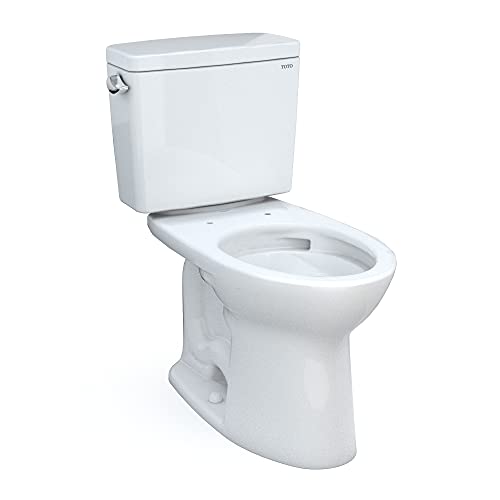
How to Fix a Toilet That Will Not Flush
Plumbing4.6
When a toilet will not flush at all, the cause is almost never the bowl itself. It is one of a short…
Read the guideEverything you need to know about air admittance valves -- how they work, where they are code-legal, which size to choose, and how to install one so your toilet drains silently without sewer gas entering your home.
Research updated June 2026.
An air admittance valve (AAV) is a mechanical one-way valve that lets air into a drain line to balance pressure, replacing a traditional vent pipe run through the roof. For most toilet installations, a 3-inch or 4-inch AAV rated for the drain size covers the load. Always verify local code acceptance before purchasing.
An air admittance valve is a gravity-controlled, one-way mechanical device that opens to admit air when negative pressure develops in a drain line, then closes by gravity when flow stops. This prevents the partial vacuum that otherwise sucks water out of trap seals. Because it only opens inward, it blocks sewer gas from flowing back toward living spaces while eliminating the need for a dedicated vent stack penetrating the roof.
Conventional plumbing venting routes a pipe -- usually 3 or 4 inches in diameter -- from the drain line up through wall cavities and through the roof deck. That open-air column equalizes pressure every time a toilet, sink, or shower drains. The physics is identical to covering the top of a straw and lifting it out of a glass: liquid clings instead of flowing freely. In a drain line, that clinging pulls water out of the P-trap beneath your toilet or sink, leaving the trap dry and creating a direct odor pathway from the sewer into the bathroom.
An AAV replaces that atmospheric air column with a local mechanical solution. Inside the valve body sits a sealing disc -- often made from EPDM rubber -- held against a seat by its own weight. When the drain runs, negative pressure in the pipe lifts the disc off its seat, air rushes in from the room or a nearby void space, and pressure equalizes instantly. The disc drops back onto its seat within milliseconds of flow stopping, creating a gas-tight seal. The entire cycle happens passively, with no electricity or moving parts beyond the lightweight disc.
This matters especially for toilets because a toilet flush generates a particularly sharp pressure pulse. A 1.28-gallon-per-flush toilet -- the current EPA WaterSense standard -- evacuates its bowl in roughly two to four seconds, creating a momentary pressure spike that can strip trap seals from every fixture on the same branch drain. An AAV positioned within the code-specified distance from the toilet's drain connection equalizes that pulse before it propagates further down the line.
Licensed plumbers commonly install AAVs during kitchen and bathroom remodels where running a traditional vent stack is structurally impractical -- through a concrete slab, a finished ceiling, or an exterior wall in a cold climate. The valve costs under $30 for most residential sizes, while the labor and materials saved by avoiding a new roof penetration easily reach several hundred dollars per fixture group.
AAVs are permitted under the International Plumbing Code (IPC) and the Uniform Plumbing Code (UPC) in many jurisdictions, but acceptance varies by state and municipality. Some states, including Massachusetts and portions of the Southeast, still restrict or prohibit AAVs under local amendments. Checking with your local building department before purchase is mandatory -- not optional.
The primary national model codes -- the IPC (adopted in most of the Eastern and Midwestern US) and the UPC (dominant in California and many Western states) -- both include provisions for air admittance valves, typically under sections governing mechanical venting or individual fixture venting. The IPC Section 917 and UPC Section 908 each describe acceptable AAV applications, required locations, installation heights, and access requirements.
However, model codes are not law. Every state and many cities adopt model codes with local amendments. As of mid-2026, California allows AAVs under the CPC for individual fixtures and branch venting but prohibits them as the sole vent for an entire drainage system. New York City follows its own Plumbing Code, which has historically been more restrictive. Massachusetts prohibited AAVs under older code cycles, and while recent amendments have opened the door in some circumstances, inspector interpretation still varies by region.
Key IPC requirements for toilet-serving AAVs include:
ASSE (American Society of Sanitary Engineering) publishes the performance standards that manufacturers test against. An AAV bearing the ASSE 1051 mark has been verified to open at no more than 0.01 inch of water column negative pressure, to cycle 500,000 times without failure, and to seal gas-tight at 1.5 inches of water column positive pressure. Look for this listing on the valve body or packaging before purchase.
Pulling a permit is almost always worthwhile for AAV installations, even for a simple under-sink retrofit. A failed inspection after finishing drywall costs far more than the permit fee. Inspectors in code-compliant jurisdictions are generally familiar with AAVs and will approve a properly installed, ASSE-listed valve in an accessible location with no issues.
A toilet drain runs on a 3-inch or 4-inch pipe, so the AAV must match that diameter -- typically a 3-inch or 4-inch unit. Branch AAVs rated at 4 inches can vent multiple fixtures simultaneously. Individual fixture AAVs (1.5-inch or 2-inch) are sized for sinks and tubs, not toilets, and must never be used as the sole vent for a water closet.
Pipe sizing for residential toilets is set by code based on fixture units. A water closet carries 4 drainage fixture units (DFUs) under the IPC. A 3-inch drain supports up to 20 DFUs in a horizontal branch, and a 4-inch drain supports 160 DFUs -- either is more than adequate for a single toilet. In practice, most builders use 3-inch drain lines for individual toilets in newer construction and 4-inch lines in older homes or when connecting multiple fixtures.
The AAV diameter must equal the drain pipe diameter it connects to. Using a reducer to fit a smaller AAV is not code-compliant and may cause the valve to be undersized for the airflow demand of the fixture. A toilet flush can require 20 to 35 cubic feet per minute of air intake in the first two seconds of flush to prevent pressure loss exceeding 1 inch of water column -- the threshold at which a standard P-trap seal becomes vulnerable.
| Fixture | Drain Size | DFUs | AAV Size Needed | ASSE Standard |
|---|---|---|---|---|
| Toilet (water closet) | 3" or 4" | 4 | 3" or 4" branch AAV | ASSE 1051 / 1050 |
| Bathroom sink | 1.5" or 2" | 1 | 1.5" or 2" individual AAV | ASSE 1051 |
| Bathtub / shower | 2" | 2 | 2" individual AAV | ASSE 1051 |
| Kitchen sink | 1.5" or 2" | 2 | 1.5" or 2" individual AAV | ASSE 1051 |
| Full bathroom group (toilet + sink + tub) | 3" or 4" branch | 7 | 3" or 4" branch AAV | ASSE 1050 |
Installation requires cutting into the drain vent stack or drain line downstream of the toilet trap, adding a sanitary tee or wye fitting, and threading the AAV into the branch opening in a vertical or near-vertical orientation. The valve must be above the horizontal drain centerline, accessible for inspection, and installed in a space with adequate volume or airflow to supply the required makeup air.
Below is a step-by-step overview of a typical AAV installation for a toilet in a finished bathroom where routing a new vent stack is impractical. This description assumes PVC or ABS drain piping, which covers the vast majority of residential applications built or remodeled after 1990.
Shut off the water supply to the toilet at the angle stop valve behind the bowl. Flush the toilet to empty the tank and bowl. Clear the cabinet or access panel near the drain stack to expose the pipe.
The AAV must be installed on the drain pipe between the toilet's trap outlet and the main stack, within 4 feet horizontally of the trap weir. Identify a section of vertical or near-vertical pipe (within 15 degrees of vertical) that allows enough clearance to add a tee fitting. Mark the cut lines, accounting for the tee's face-to-face dimension plus any coupling sockets.
Cut out the marked section of pipe with a pipe cutter or fine-toothed saw. Dry-fit the sanitary tee with its branch pointing straight up. Confirm the branch outlet will be above the horizontal drain centerline by at least 4 inches when installed. Apply primer and cement per manufacturer instructions, assemble the tee, and hold for 30 seconds. Allow the manufacturer's recommended cure time before introducing flow.
Most residential AAVs thread onto a 1.5-inch or 2-inch hub, but larger 3-inch and 4-inch units typically solvent-weld into a socket. Read the specific installation instructions for the valve you purchased. If threaded, wrap the male threads with two passes of Teflon tape and hand-tighten plus one quarter turn with a strap wrench -- overtightening cracks the valve body. If solvent-weld, apply cement to both the pipe stub and valve socket and insert with a quarter-turn motion.
The valve must be vertical or within 15 degrees of vertical -- horizontal installation is not permitted because gravity is what closes the disc against the seat. Confirm the valve cap is accessible without tools (most snap or screw on for replacement access). Verify at least 4 inches of air space exists around the valve body if it is installed inside a cabinet or enclosure. A small drilled vent hole in the cabinet back can satisfy makeup air requirements where the space would otherwise be completely sealed.
Restore water supply, flush the toilet three times in rapid succession, and immediately smell-test the bathroom for any sewer odor. Listen for gurgling in any nearby sinks or showers -- persistent gurgling after three flushes suggests the AAV is either undersized, installed incorrectly, or not opening properly. If gurgling continues, remove the valve cap and confirm the sealing disc moves freely and returns to its seat by gravity.
A common DIY mistake is installing an individual fixture AAV (1.5-inch, rated for sinks) on a 3-inch or 4-inch toilet drain using a reducer bushing. The valve cannot supply enough air volume for the toilet's flush demand. Always match valve diameter to drain pipe diameter, and always verify the ASSE listing on the valve body before installation.
An AAV makes the most sense when a toilet is added to a basement, converted garage, island bathroom, or other location where routing a vent pipe to open air would require penetrating concrete, structural members, or existing finished surfaces. In new construction with open wall cavities, a traditional vent is often simpler and cost-neutral. AAVs are never a substitute for the minimum one open-air vent required per drainage system.
Here are the most common scenarios where an AAV serves a toilet better than a traditional vent:
Basement bathrooms on a slab: Cutting through a concrete slab to route a vent pipe upward through a finished first floor is expensive and disruptive. An AAV installed in an accessible location -- inside a utility area or behind a removable access panel -- avoids the slab penetration entirely while providing the same pressure-equalizing function.
Island or peninsula bathrooms: In open-plan homes, a toilet or vanity positioned away from an exterior wall has no practical path for a vent stack without running pipe through the ceiling and then laterally to an exterior wall, creating code-minimum slope and support challenges. An AAV within the sink cabinet or an accessible chase satisfies the venting requirement with minimal disruption.
Additions and ADUs: Accessory dwelling units and additions often connect to an existing drainage system where the original vent stack is not easily accessible. Tying into the stack with a long horizontal vent run is possible but creates the risk of improper slope or a wet vent condition. An AAV near the new toilet keeps the additional vent path short and properly sloped.
Renovation of older homes: Pre-1950 homes were sometimes built with inadequate venting that failed to meet modern codes. When replacing a toilet in such a home, a plumber may add a branch AAV to supplement the existing undersized vent rather than opening walls to upsize the vent pipe.
Traditional vent pipes remain the better choice in new construction where wall cavities are open, in any installation where the AAV would not be accessible for inspection, or in jurisdictions where the local code explicitly prohibits AAVs for toilet applications. When planning a toilet installation or replacement, a review of the best flushing toilets should consider drain line and venting compatibility alongside flush performance and efficiency ratings.
A quality ASSE-listed AAV is rated for a minimum of 500,000 open-close cycles, which translates to decades of service under typical residential use. Most valves fail gradually rather than abruptly -- the EPDM sealing disc hardens over time, allowing minor sewer gas to bypass. Replace the valve if you detect persistent sewer odor that cannot be attributed to a dry trap or other fixture.
AAV lifespan depends primarily on three factors: material quality, installation environment, and frequency of use. Valves installed in warm, dry spaces -- inside a bathroom vanity with moderate temperature swings -- outlast those in cold basements or hot attic runs where EPDM experiences accelerated thermal cycling. Exposure to cleaning chemical vapors or solvent fumes can also degrade the disc seal faster than normal.
Practical lifespan estimates from plumbing field experience suggest quality AAVs last 10 to 30 years under normal residential conditions. Budget valves without ASSE listings have failed in as little as 3 to 5 years. The repair cost is minimal -- AAV bodies typically cost $15 to $40, and replacement requires only removing the old valve and installing a new one in the existing tee fitting, assuming the fitting remains intact.
Signs that an AAV serving a toilet needs replacement:
In jurisdictions that permit AAVs, you may use one as the primary vent for a toilet -- but the entire drainage system must retain at least one open-air vent somewhere. You cannot replace every vent with AAVs. Check your local code for the minimum number of required open-air connections.
Toilets drain through a 3-inch or 4-inch pipe, so the AAV must match -- either a 3-inch or 4-inch branch-rated valve listed to ASSE 1051 or ASSE 1050. Never use a 1.5-inch or 2-inch individual fixture AAV on a toilet drain, even with a bushing reducer.
The AAV should be installed on the drain line as close to the toilet as practical, within 4 feet horizontally of the trap weir. It must be on a vertical or near-vertical section of pipe, with the inlet at least 4 inches above the horizontal drain it serves, and accessible for inspection without cutting into permanent structure.
A properly installed, undamaged AAV seals gas-tight in the closed position, preventing sewer gas from entering the home. Sewer odors associated with AAVs typically result from a failed or aging disc seal, an improperly seated valve, or a dry P-trap on a nearby fixture. Replace the valve if the disc seal is compromised.
California follows the California Plumbing Code (CPC), which permits AAVs for individual fixtures and branch applications but prohibits their use as the sole vent for a building's entire drainage system. Always confirm with your local building department because municipalities can amend the state code.
No -- in fact, AAVs must be accessible, which means inside a cabinet, behind a removable access panel, or in an exposed utility space. Installing one permanently behind sealed drywall violates code because the valve cannot be inspected or replaced without destructive access.
No. AAVs use gravity to close the sealing disc against its seat. A horizontal or inverted installation prevents the disc from seating properly, allowing sewer gas to pass through continuously. The valve must be within 15 degrees of vertical, inlet facing up, at all times.
ASSE 1051 covers individual fixture AAVs designed to vent a single drain connection, typically in smaller pipe sizes up to 4 inches. ASSE 1050 covers branch and stack AAVs designed to serve multiple fixture branches simultaneously and are generally larger-diameter high-capacity units. For a single toilet installation, ASSE 1051 is most common.
The first sign is usually a persistent sewer odor in the bathroom that does not go away after running water into all nearby traps. You may also hear gurgling from the toilet or nearby drains after flushing, indicating the valve is not opening to let air in. Remove the cap and test the disc for free movement -- a stiff or stuck disc means replacement is needed.
A properly sized AAV improves flush performance by preventing negative pressure from resisting drain flow. Toilets on poorly vented systems often flush slowly or gurgle because the partial vacuum in the drain resists the water leaving the bowl. Adding an adequately sized AAV eliminates that backpressure and can noticeably improve drain speed.
Replacing an existing AAV in an accessible, already-fitted tee is a straightforward DIY task -- unscrew or cut out the old valve, install the new one of the same size and listing. Adding a new AAV by cutting into existing drain pipe and installing a tee fitting requires more plumbing skill and typically a permit; many homeowners hire a licensed plumber for this step.
A correctly installed AAV operates silently. You may hear a brief, faint air intake sound when the disc opens during a flush -- this is normal and lasts only a second or two. Persistent hissing or sucking sounds after the flush ends suggest the disc is not reseating properly and the valve should be inspected.
A 3-inch or 4-inch branch AAV rated to ASSE 1050 can vent a full bathroom group in most code jurisdictions. The valve must be sized for the total drainage fixture units of all connected fixtures and installed at the correct point in the branch drain. Verify the DFU capacity listed on the valve matches or exceeds the combined load of your fixtures.
Studor is a brand name for AAVs -- not a different product category. Studor vents are air admittance valves manufactured by a specific company and are among the most widely specified and code-cited units on the market. The terms are used interchangeably in trade conversation, though the technically accurate generic term is "air admittance valve."
Studor, Oatey, Sioux Chief, and Rectorseal are among the most commonly specified and inspector-accepted AAV brands in the US residential market. All produce ASSE-listed units. The key requirement is the ASSE listing on the label -- any brand bearing ASSE 1051 or 1050 certification should be accepted in code-compliant jurisdictions.
Macerating toilet systems (such as the Saniflo SaniACCESS or SaniPLUS) discharge through a 2-inch pump-pressurized line rather than a gravity drain, which changes the venting requirement. Saniflo's published installation guides specify venting requirements specific to each unit -- consult the manufacturer's documentation before selecting any AAV for these systems.
No. Code requires at least one vent-to-open-air connection for any building's drainage system, regardless of how many AAVs are installed. The existing roof stack vent must remain functional. AAVs eliminate the need for additional vent runs to the roof when adding new toilet or fixture locations.
High-efficiency toilets that meet the EPA WaterSense 1.28 GPF threshold -- such as the TOTO Drake II, Kohler Cimarron, and American Standard Cadet 3 -- produce a strong, fast flush that generates more momentary negative pressure than older 3.5 GPF models. Proper AAV sizing is more critical with these efficient toilets because their high-velocity flush creates a sharper pressure drop in the drain line.
EPDM disc seals can harden and lose flexibility in sustained temperatures below freezing, potentially preventing the disc from seating or opening correctly. If the AAV will be in an unheated space that regularly drops below 32 degrees Fahrenheit, choose a valve rated for cold-weather installation or insulate the surrounding area. Some manufacturers specify a minimum operating temperature on the product data sheet.
Yes, always. The P-trap beneath the toilet (integral to the toilet's ceramic trap design) and beneath any adjacent sinks or tubs must remain fully water-sealed at all times. The AAV prevents the vacuum that empties traps but cannot function as a substitute for the trap itself. Every fixture must have its own properly installed trap.
The shift toward high-efficiency flushing has implications for drain line venting that often go unmentioned in toilet marketing materials. A standard 1.6 GPF toilet from the 1990s drains more slowly and generates a less sharp pressure pulse than a 1.28 GPF WaterSense toilet engineered with a wide trapway and a powerful siphon-jet flushing system. Models built around MaP testing -- the industry's independent flush performance benchmark, using 250-gram increments to test solid waste removal -- often achieve maximum MaP scores of 1,000 grams at the cost of very fast bowl evacuation. That speed is a feature in terms of clog resistance, but it demands adequate venting to match.
Consider how this plays out across commonly recommended models. The TOTO Drake and TOTO UltraMax II both carry MaP scores of 1,000 grams with 1.28 GPF consumption and a wide 2.125-inch glazed trapway. Their Tornado Flush system routes water from two nozzles rather than the traditional rim holes, creating a centrifugal action that evacuates the bowl in approximately 2 to 3 seconds -- among the fastest available. A drain line without adequate venting will gurgle or exhibit slow bowl refill on these models in a way that a less efficient toilet on the same plumbing would not.
The Kohler Highline and Kohler Cimarron, both EPA WaterSense certified at 1.28 GPF, use Kohler's Class Five flushing technology with a 3.25-inch flush valve -- larger than the industry standard 2-inch valve -- which also increases the momentary flow velocity through the drain. American Standard's Champion 4, while a 1.6 GPF model rather than 1.28 GPF, earns its name from a 4-inch flush valve and 2.625-inch fully glazed trapway that can flush a bucket of golf balls in manufacturer demonstrations. Its drain line impact is significant.
The Woodbridge T-0001 dual flush toilet allows users to select 1.0 GPF for liquid waste or 1.6 GPF for solid waste. Dual flush valves create two distinct pressure-pulse signatures in the drain line, and an AAV serving a Woodbridge dual flush toilet should be sized for the full 1.6 GPF setting regardless of typical usage patterns. The Swiss Madison Sublime is another dual flush unit frequently installed in basement and ADU bathrooms where AAVs are common, with the same sizing consideration applying.
The Gerber Viper, a lesser-known but well-reviewed option in the 1.0 GPF ultra-high-efficiency category, draws particular scrutiny in discussions of venting because its extremely low water volume makes it highly sensitive to any restriction in drain line airflow. Plumbers who have installed Gerber Viper units in poorly vented bathrooms consistently report gurgling and slow trap refill until venting is corrected. Pairing the Viper with a properly sized ASSE-listed AAV typically resolves these symptoms immediately.
For homeowners choosing a toilet for a bathroom where an AAV is the primary or sole venting solution, the recommendation is to select models with a fully glazed trapway of at least 2 inches in diameter and a MaP score of 800 grams or higher. Trapway glazing reduces the friction that could compound any residual venting restriction, and high MaP scores confirm the toilet clears waste reliably under the pressure conditions the AAV maintains. See our best flushing toilets guide for MaP scores and trapway dimensions across all major models, and our clog-resistant toilet guide for a deep look at trapway design.
Venting and toilet selection are more connected than most homeowners realize. Choosing a toilet with EPA WaterSense certification and a high MaP score is half the equation -- ensuring the drain line has adequate air supply through a properly sized AAV or traditional vent is the other half. A top-rated toilet on a poorly vented drain will underperform a mid-tier toilet on a properly vented one every time.
An air admittance valve is a proven, code-accepted solution for venting a toilet in locations where routing a traditional vent stack is impractical or prohibitively expensive. Select a 3-inch or 4-inch unit bearing an ASSE 1051 or ASSE 1050 listing, verify acceptance with your local building department before purchase, and install it vertically in an accessible location within 4 feet of the toilet's trap weir. A correctly specified and installed AAV eliminates drain gurgling, protects trap seals, and serves reliably for a decade or more -- without a single roof penetration.
How we rank & our data sources
We do not run physical lab tests. Rankings are built from published, verifiable data and real owner feedback, never paid placement.
Researched by Derek Whitman · Last updated May 15, 2026 · Our review method
When a toilet will not flush at all, the cause is almost never the bowl itself. It is one of a short…
Read the guideEverything you need to know about drain pitch requirements, horizontal drain sizing, code compliance, and how poor slope causes slow drains and…
Read the guideEverything you need to know about choosing the right closet bolts, understanding the correct dimensions, picking the right material, and installing them…
Read the guide