Common Bidets Problems and How to Fix Them (2026)
Bidets4.6
Step-by-step fixes for the bidet problems reported most often, from a unit that won't spray and weak water pressure to a seat…
Read the guideA data-rich look at how different cultures approach bidet use, which countries have near-universal adoption, where bidets are still rare, and what drives adoption rates globally.
Japan leads global bidet adoption at roughly 80% of households, followed by South Korea and the Middle East. Western Europe uses standalone bidets widely, while the United States sits near 12% adoption. Cultural norms, plumbing infrastructure, and water access shape every country's trajectory.
Globally, bidet adoption is highly uneven. In Japan and South Korea, electronic bidet seats (washlets) are standard in most homes and public spaces. In much of Western Europe, standalone ceramic bidets have been part of bathroom design since the 1700s, though electronic seat attachments are now gaining ground. The United States, Canada, and the United Kingdom remain outliers with sub-15% adoption, though all three markets recorded accelerating growth after the 2020 toilet-paper supply disruptions.
Understanding bidet adoption by country requires separating three distinct product categories: the standalone ceramic bidet fixture, the bidet toilet seat (electronic washlet), and the handheld bidet sprayer. A country may show low rates for one while showing high rates for another. Japan almost exclusively uses integrated electronic washlets. The Middle East and South Asia favor handheld sprayers called shattafs or health faucets. Southern Europe typically installed standalone ceramic fixtures alongside the toilet.
With those distinctions in mind, the table below summarizes estimated household bidet penetration by region as of 2025, combining market-research reports, government sanitation surveys, and plumbing-industry trade data.
| Country / Region | Estimated Household Adoption | Dominant Type | Key Driver |
|---|---|---|---|
| Japan | ~80% | Electronic washlet seat | TOTO innovation + cultural hygiene norms |
| South Korea | ~60-70% | Electronic washlet seat | National hygiene campaigns + tech adoption |
| Middle East (GCC) | ~85-90% | Handheld sprayer (shattaf) | Islamic hygiene requirements (istinja) |
| South Asia (India, Pakistan, Bangladesh) | ~70-80% urban | Handheld sprayer / health faucet | Religious practice + low cost |
| Italy / Portugal / Spain / France | ~50-60% | Standalone ceramic bidet | Building codes + cultural tradition |
| Argentina / Brazil / Venezuela | ~40-50% | Standalone ceramic bidet | European cultural influence |
| United States | ~12% | Bidet seat attachment | Post-2020 paper shortage awareness |
| Canada | ~10% | Bidet seat attachment | Growing awareness + Japanese imports |
| United Kingdom | ~5-8% | Bidet seat attachment | Small bathrooms, low traditional install base |
| Sub-Saharan Africa | <5% formal bidet | Manual water vessel | Infrastructure and cost constraints |
The global bidet market was valued at approximately USD 1.5 billion in 2023 and is projected to exceed USD 2.8 billion by 2030, driven by growth in North America, Asia-Pacific, and the Middle East, according to industry market research. The fastest-growing segment is the non-electric bidet seat attachment, which is affordable and compatible with existing toilet plumbing without the need for a nearby electrical outlet.
Japan's near-universal bidet adoption is the direct result of TOTO's 1980 launch of the Washlet, which combined warm-water washing, heated seats, and air drying into a single integrated product. Government buildings, convenience stores, train stations, and hotels adopted washlets rapidly, normalizing the technology across all income levels. Cultural emphasis on cleanliness (seiketsu as a workplace principle) reinforced consumer demand and turned bidet ownership into a baseline expectation rather than a luxury.
TOTO, headquartered in Kitakyushu, Japan, holds the dominant market position domestically and exports globally. Their product lineup spans basic non-electric seats up to the flagship Neorest series, which integrates an ultraviolet light self-cleaning wand, automatic lid opening and closing, tornado-flush bowl technology, and a touchscreen remote. Japan's Internal Affairs and Communications Ministry has tracked washlet penetration in household surveys since the 1990s, placing adoption above 75% for the past decade.
Beyond TOTO, Japanese brands Panasonic, INAX (now Lixil), and Toshiba produce competing washlet models. The competition keeps prices relatively low and features dense, which is why Japanese consumers view a toilet without a washlet the way American consumers would view a kitchen without a microwave: technically functional, but noticeably incomplete.
Japanese public infrastructure reinforces the expectation. Narita and Haneda airports, Tokyo's Shinkansen rail stations, major department stores, and most convenience chains (Seven-Eleven, FamilyMart, Lawson) maintain washlet-equipped restrooms, often with bilingual control panels for international travelers. This ubiquity means first-time visitors typically encounter a washlet within hours of arriving.
TOTO's Washlet patent portfolio, built from their 1980 introduction, allowed them to dominate the category for nearly two decades before competitors could enter with comparable quality. That head start, combined with aggressive retail placement through Japan's large home-center chains, created network effects that are very difficult for imported alternatives to displace.
Islamic jurisprudence prescribes a specific post-toilet cleansing practice called istinja, which requires washing with water after using the toilet. This religious obligation makes water-based cleansing the expected standard across Muslim-majority countries, creating structural demand for bidets, handheld sprayers, or dedicated water vessels regardless of economic development level. The result is that Saudi Arabia, the UAE, Pakistan, Bangladesh, Malaysia, and Indonesia all show very high rates of water-based cleansing even where formal bidet hardware penetration statistics are low.
In Gulf Cooperation Council (GCC) countries including Saudi Arabia, the UAE, Qatar, Kuwait, Bahrain, and Oman, the shattaf (also called a bidet shower or bum gun) is nearly universal. It is a handheld spray nozzle mounted beside the toilet, connected to the cold water supply with a flexible hose. Installation cost is under USD 30 in most markets, and local building codes in GCC nations commonly require shattaf connections in new construction.
In South Asia, the equivalent is the health faucet, which is functionally identical but named differently in the Indian subcontinent. Market research from Indian housing surveys suggests that health faucets are installed in over 70% of urban Indian households and approaching 50% of rural households where piped water is available. In Pakistan and Bangladesh, the rate is similarly high in areas with reliable water supply.
Indonesia and Malaysia, as Muslim-majority Southeast Asian nations, follow the same pattern. Public restrooms in both countries are expected to have either a shattaf or a water dipper vessel as a minimum. The absence of water provision in a public toilet is considered a sanitation deficiency rather than a neutral design choice.
Turkey occupies an interesting position: historically part of the Mediterranean ceramic-bidet tradition through European influence, but also shaped by Islamic hygiene requirements. The result is that both standalone ceramic bidets and handheld sprayers are common, giving Turkey one of the highest combined water-cleansing adoption rates in the world.
Low bidet adoption in the US and UK traces to a combination of historical path dependency, bathroom design norms, and cultural attitudes. American bathrooms were standardized without bidet fixtures during the 20th-century housing boom, making retrofitting awkward. A persistent cultural association of bidets with foreign luxury or with unfamiliarity kept consumer demand low. The UK faces the additional constraint that most bathrooms lack a hot-water supply line near the toilet and have limited floor space for a standalone fixture.
The United States is the world's largest toilet market by unit volume, and its household penetration of bidets sits near 12% as of 2025 surveys. That figure represents significant growth from under 3% in 2019. The 2020 toilet-paper shortage during supply-chain disruptions introduced millions of American households to bidet seat attachments for the first time, and a substantial portion retained the habit. Non-electric bidet attachments from brands like Tushy, Bio Bidet, and Brondell drove the entry-level segment, while TOTO's S-series washlet seats attracted higher-spending early adopters.
The American Standard Spalet bidet seat introduced American Standard's first integrated bidet toilet seat targeting the North American market. Similarly, Kohler's C3 series bidet seats expanded the offering from a brand Americans already trusted for toilets. These mid-range products at accessible price points have been important for normalizing the category.
In the United Kingdom, bathroom size is the primary structural constraint. The average UK bathroom is considerably smaller than its American or European equivalent, and standalone bidet fixtures require floor space and a dedicated plumbing stub-out that most existing bathrooms lack. UK builders removed standalone bidet installations from standard construction specs decades ago in response to space pressures and low consumer demand, creating a self-reinforcing cycle. Electronic bidet seats that attach to the existing toilet require only a cold-water connection and an electrical outlet, which is more feasible in UK bathrooms, but awareness of this option remains low.
North American toilet manufacturers including TOTO, Kohler, and American Standard have begun bundling bidet seats with their toilet lines specifically to reduce the perceived complexity of installation. When the consumer purchases a complete toilet-plus-seat package, they are more likely to install and use the bidet functionality rather than leaving the seat in its box. This bundling strategy has measurably accelerated adoption in Canadian retail data from the past three years.
Southern Europe is experiencing a shift away from the traditional standalone ceramic bidet toward electronic washlet seats, driven by younger buyers who prefer the integrated look and added features of seat-based bidets. In Latin America, countries with strong European heritage such as Argentina, Uruguay, and Venezuela maintain high standalone bidet rates, while Brazil's market is diversifying toward electronic seats. Northern European countries including Germany, the Netherlands, and Scandinavia are seeing bidet interest grow from a very low baseline as environmental messaging around paper reduction gains traction.
Italy has arguably the strongest bidet culture outside Asia. Italian building regulations have historically required bidet fixtures in bathrooms, and the habit is so ingrained that many Italians report feeling genuinely unable to stay comfortable in accommodation that lacks one. Market research suggests over 55% of Italian homes have a functional bidet fixture. France, Portugal, and Spain show similar but slightly lower rates, generally in the 40-50% range.
Argentina is the standout in Latin America. Surveys by Argentine real-estate and sanitation bodies consistently show bidet presence in over 40% of urban households, with rates considerably higher in Buenos Aires and other large cities. The influence of Italian and Spanish immigration through the 19th and 20th centuries transplanted bidet norms directly. Uruguay shows similar penetration. Brazil is more complex: bidet fixtures are common in upper-middle and high-income homes, but the enormous range of housing stock means overall national penetration is lower.
Northern Europe, including Germany, Sweden, Norway, and the Netherlands, historically showed limited bidet adoption. Environmental advocacy around paper reduction and water efficiency has begun changing this narrative, particularly among younger urban consumers. Germany's building materials trade data shows bidet seat attachment imports rising consistently from 2021 forward.
For homeowners evaluating toilet efficiency alongside bidet adoption, the best flushing toilets guide covers the top-rated models combining bowl performance with bidet-seat compatibility, including which rough-in dimensions and seat sizes to check for fit.
The same concept carries different names depending on the market. Understanding these terms helps when researching local plumbing requirements or reading country-specific data.
| Term | Country / Region | Type |
|---|---|---|
| Bidet | France, Italy, Spain, Portugal, US | Standalone fixture or general term |
| Washlet | Japan (TOTO brand name, widely genericized) | Electronic integrated seat |
| Shower toilet / WC-Dusche | Germany, Switzerland, Austria | Electronic seat |
| Shattaf / bidet shower | Middle East, Turkey, Southeast Asia | Handheld sprayer |
| Health faucet / jet spray | India, Pakistan, Sri Lanka | Handheld sprayer |
| Bum gun | Thailand, Malaysia, Singapore (colloquial) | Handheld sprayer |
| Bidet douche | Netherlands, Belgium | Handheld sprayer |
| Spalet | North America (American Standard brand term) | Electronic seat / toilet combo |
| Integrated toilet / smart toilet | US, Canada, UK (retail marketing) | One-piece toilet with built-in bidet |
A common question in the EPA WaterSense framework context is whether bidets increase net water consumption. The comparison is bidet water use versus toilet-paper manufacturing water use, which are very different types of consumption.
A single bidet wash cycle uses roughly 0.1 to 0.25 gallons of water depending on the model and user settings. Toilet paper production, by contrast, requires an estimated 37 gallons of water per roll when accounting for pulp processing, papermaking, and transport. A household using one roll per person per week across a four-person household consumes the equivalent water footprint of several hundred bidet washes annually in toilet-paper production alone.
From an EPA WaterSense perspective, bidet adoption does not meaningfully increase household water use at the meter, because the wash volume is small relative to other toilet flushes, showers, and faucet use. The environmental case for bidets centers on reducing paper consumption and the associated forestry, water, and transport footprint.
Toilets certified under the EPA WaterSense program use 1.28 GPF or less. Models like the TOTO Drake II, TOTO UltraMax II, American Standard Champion 4, American Standard Cadet 3, and Kohler Highline are all WaterSense-certified and compatible with bidet seat additions without affecting flush performance. For homes focused on water conservation, pairing a high-efficiency 1.28 GPF toilet with a bidet seat is one of the more measurable bathroom efficiency improvements available.
Related reading: water-saving toilets guide, dual flush toilet comparison, and bidet toilet seat buying guide for North American installation details.
The product type that dominates a country's bidet market correlates strongly with the era in which bidet use was normalized. Countries that adopted bidets before the 1980s predominantly use standalone ceramic fixtures because that was the only option available. Countries that adopted bidets after 1990 -- particularly in Asia -- adopted the electronic washlet as the primary form. Countries now beginning the adoption curve (US, UK, Northern Europe) are adopting bidet seat attachments and electronic seats because standalone fixtures are impractical retrofits in existing bathrooms.
This dynamic has practical implications for travelers. A hotel in Rome is more likely to have a standalone bidet fixture in the bathroom. A hotel in Tokyo is almost certain to have an electronic washlet integrated with the toilet. A hotel in Riyadh will have a shattaf sprayer mounted by the toilet. A hotel in New York may have none of the above, though upscale properties increasingly offer Japanese-brand electronic seats as a selling point.
The transition from standalone ceramic bidets to electronic washlet seats is accelerating even in traditionally standalone-bidet markets like Italy and France. Bathroom footprints are shrinking in urban renovation projects, and the electronic seat achieves the same cleansing function without requiring a second fixture footprint. Woodbridge, Swiss Madison, and Gerber have all introduced bidet-compatible toilet lines specifically marketed for the European renovation segment alongside their North American offerings.
A handful of countries or regions include bidet provisions in their building regulations, which is one of the strongest drivers of adoption. Italy's National Building Code historically required bidets in residential bathrooms. Several GCC nations specify shattaf connections in new construction standards. Argentina's major municipal codes have historically encouraged bidet installation as a sanitation requirement.
In the United States, no federal or state building code requires bidet installation. Some accessibility regulations under the Americans with Disabilities Act address toilet grab bar placements and clearance zones, and bidet seats are recognized as a potentially useful accessibility aid, but they are not mandated. Several hospital systems and senior living facility operators have voluntarily adopted bidet seats to reduce staff assistance requirements and improve patient dignity.
Japan's building code does not mandate washlets, but the ubiquity of public washlets created the expectation without regulatory force. South Korea similarly reached high adoption through market and cultural mechanisms rather than legal requirements.
Five barriers consistently explain low bidet adoption in markets where it has not been traditional:
1. Upfront cost perception. Bidet seat attachments start under USD 30 for a non-electric cold-water model, which most consumers do not realize. The perception is that bidets are expensive because high-end washlets carry four-figure price points. Entry-level products from brands like Tushy, LUXE, and Brondell have changed this perception for consumers who research the category.
2. Installation complexity fear. Most bidet seat attachments require only a T-valve connection at the toilet supply line, a task achievable in under 30 minutes without specialized tools. Electronic washlet seats require an electrical outlet within reach. Neither task requires a plumber for most installations.
3. Bathroom design incompatibility. Small bathrooms may lack the outlet proximity required for electronic seats. Non-electric attachment bidets resolve this, but they only provide cold water, which reduces comfort in cold climates.
4. Cultural unfamiliarity. In countries where bidet use is not standard, there is no childhood socialization with the product. First-time adult adoption requires overcoming the inertia of an established habit.
5. Hygiene misconceptions. Some consumers assume that a bidet seat sprayer is difficult to keep clean or that shared-use bidets in hotels are unsanitary. TOTO's self-cleaning wand technology, which coats the spray wand in electrolyzed water before and after each use, directly addresses this concern. American Standard's Spalet and Kohler's C3 seats use similar self-cleaning mechanisms.
Environmental messaging has been the most effective recent driver of adoption in markets where prior adoption was low. The argument that switching to a bidet reduces toilet-paper consumption by 75-80%, saving money and reducing paper waste, resonates with a demographic that might not otherwise prioritize bathroom-product research.
Japan has the highest adoption of electronic bidet seats (washlets) at roughly 80% of households. If handheld sprayers are included, several Middle Eastern countries including Saudi Arabia and the UAE approach 85-90% of households using water-based cleansing.
No. Southern Europe -- Italy, Portugal, Spain, and France -- has the highest bidet rates in Europe, in the 40-60% range. Northern European countries like Germany, Sweden, and the UK have much lower adoption, typically under 10%, though this is growing.
American bathrooms were designed and standardized without bidet plumbing fixtures, making retrofits less convenient. Cultural familiarity with toilet paper as the primary hygiene tool was never disrupted the way it was in Japan or the Middle East. Adoption is now accelerating, up from under 3% in 2019 to roughly 12% in 2025.
Italy's building code historically required bidet fixtures in residential bathrooms, making it one of the few countries where installation was a regulatory requirement. Several Gulf states require shattaf connections in new residential construction. Most countries leave bidet installation as a consumer choice.
A shattaf is a handheld bidet sprayer mounted beside the toilet, connected to the water supply by a flexible hose. It is standard in Middle Eastern and South Asian bathrooms and fulfills the Islamic hygiene requirement of water-based post-toilet cleansing (istinja). The equivalent term in South Asia is health faucet or jet spray.
Washlet is TOTO's brand name for their electronic bidet toilet seat, introduced in Japan in 1980. The term has become genericized in Japan to refer to any electronic bidet seat, similar to how "Kleenex" is used generically for facial tissue. TOTO holds the dominant market position for washlets both in Japan and globally.
A typical bidet wash cycle uses 0.1 to 0.25 gallons of water, which is significantly less than a single toilet flush. For context, a 1.28 GPF toilet like the TOTO Drake II or American Standard Champion 4 uses 1.28 gallons per flush, making the bidet wash a minor fraction of total bathroom water use.
Peer-reviewed studies published in medical literature consistently show that water cleansing achieves better fecal coliform removal than dry wiping with paper. Several gastroenterology and dermatology publications note benefits for patients with irritable bowel syndrome, hemorrhoids, and post-surgical recovery. The comparison is water washing versus dry paper, not between specific product brands.
A standalone bidet is a separate ceramic fixture beside the toilet, requiring dedicated floor space and plumbing stub-outs for hot and cold water. A bidet seat replaces the existing toilet seat and draws water from the toilet's existing supply line. A bidet seat is the practical retrofit solution for bathrooms not originally plumbed for a standalone fixture.
Yes. Both the TOTO Drake and TOTO Drake II have elongated bowl options that are compatible with TOTO's S-series washlet seats. The Kohler Highline has elongated bowl versions compatible with Kohler's C3 bidet seats. Always verify the bowl shape (elongated vs. round) and seat mounting dimensions before purchasing a bidet seat.
Non-electric bidet attachment models require no electricity and provide cold water only. Electronic washlet seats require a standard grounded outlet (GFCI-protected outlet required near water) and can provide heated water, heated seat, air drying, and other functions. Non-electric models are a practical option where outlet access near the toilet is limited.
South Korea's electronic bidet seat penetration is estimated at 60-70% of households, below Japan's roughly 80%. South Korean brands including Coway and Brondell produce competing washlet seats. The South Korean government ran national hygiene campaigns in the 1990s and 2000s that contributed to mainstream adoption, creating a parallel pathway to Japan's TOTO-led adoption.
China's urban bidet adoption has been growing rapidly, but remains below 10% nationally as of 2025. Government-led sanitation infrastructure improvement programs in rural areas have focused on flush-toilet installation rather than bidet adoption. The premium end of the urban market shows strong demand for Japanese-style washlet toilets, and several domestic Chinese brands now produce competing electronic toilet seats.
Argentina has one of the highest bidet penetration rates in the Western Hemisphere at over 40% of urban households, driven by Italian and Spanish immigration in the 19th and early 20th centuries. Buenos Aires hotels typically include bidet fixtures as standard. Argentine consumers are increasingly adding electronic bidet seats to existing standalone-bidet bathrooms for additional functionality.
Yes. US bidet adoption grew from under 3% in 2019 to roughly 12% in 2025, with non-electric bidet attachments leading entry-level adoption and brands like TOTO, Kohler, and American Standard driving the premium electronic seat segment. The 2020 toilet-paper supply disruptions are widely cited as the primary catalyst for accelerated consumer interest.
Most bidet seats are designed for elongated or round toilet bowls following standard North American dimensions and will fit toilets from TOTO, Kohler, American Standard, Woodbridge, Swiss Madison, Gerber, and most other brands. One-piece toilets with integrated seat curves (like the TOTO UltraMax II) may require the manufacturer's own bidet seat. Always check compatibility charts before purchasing.
Urban-rural gaps in bidet adoption are significant in most countries. In South Asia, urban health faucet installation rates approach 70-80% while rural rates are lower due to plumbing infrastructure availability. In the US, urban and suburban adoption is higher than rural because electronic seat installations require a nearby outlet, which older rural housing may lack.
The primary environmental argument for bidets is the reduction of toilet-paper consumption. Toilet-paper production requires substantial water, wood pulp, and energy per roll. Bidet adoption reduces household toilet-paper use by an estimated 75-80%, which compounds across populations into meaningful forestry and manufacturing impact reductions. The bidet's own water use per wash cycle is small by comparison.
Bidet adoption is shaped by a mix of religious practice, cultural inheritance, building codes, and product innovation. Japan and the Middle East show that near-universal water-based cleansing is achievable through different pathways. The United States and United Kingdom are the largest underserved markets, with structural barriers (outlet placement, small bathrooms, unfamiliarity) being eroded by affordable non-electric bidet attachments and growing environmental awareness. Homeowners evaluating bathroom upgrades should consider bidet seat compatibility when selecting their next toilet, since any WaterSense-certified model from TOTO, Kohler, American Standard, Woodbridge, Swiss Madison, or Gerber can support a bidet seat addition without modification to the toilet itself.
Step-by-step fixes for the bidet problems reported most often, from a unit that won't spray and weak water pressure to a seat…
Read the guideA step-by-step framework for picking the right bidet type, features, and fit based on your toilet, your bathroom's electrical access, and how…
Read the guide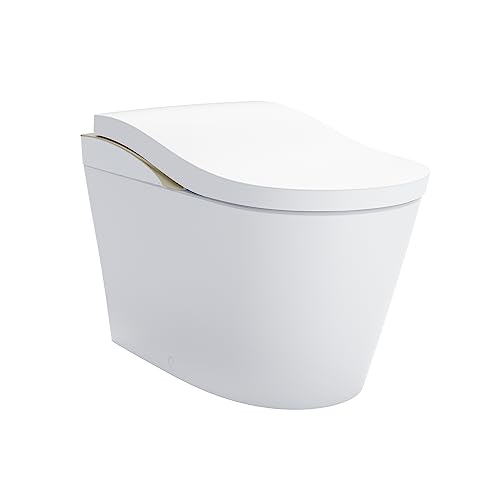
A luxury bidet is judged on a different set of criteria than a standard seat: automatic lid function, a full remote-controlled preset…
Read the guide