

Where Does Toilet Water Go After You Flush
Buying Guides4.6
When you flush, where does it go? Follow toilet water from the bowl through the trap, drain, and stack to a septic…
Read the guideEverything you need to know about how your bathroom plumbing system works, what keeps it running efficiently, and how to make smart decisions when something breaks or needs upgrading.
Bathroom plumbing operates on two systems: supply lines (pressurized, 40-80 PSI) delivering hot and cold water, and drain-waste-vent (DWV) lines removing waste by gravity. Understanding both lets you diagnose problems faster, choose compliant fixtures, and avoid costly contractor surprises during any remodel.
Bathroom plumbing is split into two independent systems. The supply system uses pressurized lines (typically 40-80 PSI) to deliver cold and hot water to every fixture. The drain-waste-vent (DWV) system then removes used water and waste by gravity through sloped pipes to the municipal sewer or a septic tank, while vent pipes equalize air pressure so traps remain sealed and sewer gas stays out.
Most homeowners only think about their plumbing when something goes wrong, but a basic mental model of the two systems saves significant money. Supply lines are under constant pressure, so leaks from them are urgent. DWV lines rely on gravity and air pressure balance, so slow drains or gurgling sounds usually point to blockages or venting problems rather than pressure faults.
Both systems converge at each fixture. A toilet, for example, connects to a cold-water supply shut-off valve on the wall, a wax ring and flange to the drain line, and indirectly to the vent stack through the DWV network. Understanding those three connection points demystifies nearly every toilet-related complaint.
The single most important concept for homeowners is the trap-seal. Every fixture drain contains a U-shaped trap holding 2-4 inches of water that physically blocks sewer gas. If a bathroom goes unused for weeks, that water can evaporate, allowing hydrogen sulfide and methane into living space. Running water for 30 seconds monthly prevents this entirely.
Supply lines are pressurized pipes that deliver cold and hot water from the main shutoff to each fixture. In residential construction, the main line entering the home is typically 3/4 inch diameter, branch lines to individual bathrooms are 1/2 inch, and the short flexible connector from the shutoff valve to the toilet or faucet is 3/8 inch. Using undersized branch lines reduces pressure and flow noticeably, especially in multi-bathroom homes.
Modern supply lines are made from one of four materials:
| Material | Lifespan | Corrosion Resistance | DIY-Friendly | Common Use |
|---|---|---|---|---|
| PEX (cross-linked polyethylene) | 50+ years | Excellent | Yes (push-fit or crimp) | New construction, remodels |
| Copper | 70+ years | Good (can pit in acidic water) | Requires soldering | Older homes, high-end remodels |
| CPVC | 25-40 years | Good | Moderate (solvent cement) | Budget renovations |
| Galvanized steel | 20-50 years | Poor (rusts internally) | Difficult | Pre-1960s homes, replace when found |
PEX has become the dominant choice in new construction since roughly 2010 because it resists freeze damage better than copper, costs significantly less per linear foot, and installs without torches or flux. However, PEX cannot be used outdoors where UV light degrades the material, and certain municipalities still require copper in specific code applications.
The short flexible connectors under toilets and sinks deserve special attention. Braided stainless steel connectors rated for 125 PSI are the industry standard. Plastic or unbraided supply lines should be replaced during any fixture swap, as they are a common source of catastrophic slow leaks that go unnoticed behind vanities.
Always install individual shutoff valves (angle stops) at every toilet and under every sink if your home lacks them. Quarter-turn ball valves are more reliable than the older compression-style valves, which seize up over decades of non-use and fail exactly when you need them most during an emergency.
The drain-waste-vent (DWV) system removes wastewater and sewage from the home using gravity and atmospheric pressure. Drain pipes slope at 1/4 inch per foot toward the main stack. Vent pipes, which exit through the roof, equalize pressure in the drain lines so water flows freely and trap seals are not siphoned out. Without proper venting, drains gurgle, slow down, and eventually allow sewer gas indoors.
The DWV system has three functional components working together:
Slope is critical. A 1/4-inch per foot slope (2% grade) moves waste efficiently. Too steep (more than 1/2 inch per foot) and liquid runs ahead of solids, leaving them behind. Too shallow and solids accumulate and cause blockages. This is why adding a toilet in a basement or ground floor far from the main stack sometimes requires a sewage ejector pump rather than gravity drainage.
Gurgling sounds from a toilet or sink drain after flushing are almost always a venting problem, not a partial clog. A blocked vent stack -- often caused by bird nests, leaves, or ice in cold climates -- creates negative pressure that pulls air through trap water, producing that telltale gurgle. Checking the roof vent before snake-rodding drain lines saves significant time.
Air admittance valves (AAVs), also called Studor vents, are mechanical one-way valves that open to admit air when negative pressure occurs and close otherwise. They are code-approved in most jurisdictions for secondary venting (adding a bathroom island sink, for example) but are not permitted as the sole vent for an entire system. Check local code before installing them.
A gravity-fed toilet has two main assemblies: the tank (which stores water and controls the flush cycle) and the bowl (which holds water at the trap seal and channels waste to the drain). Inside the tank, the fill valve refills water after a flush, the flush valve releases water into the bowl during a flush, and the flapper seals the flush valve between uses. A faulty flapper is the leading cause of phantom running toilets.
Breaking down each component helps diagnose problems precisely:
| Component | Function | Failure Symptom | DIY Fix Difficulty |
|---|---|---|---|
| Flapper | Seals flush valve; opens on flush | Phantom running, water in bowl noise | Easy (under $10, 5 minutes) |
| Fill valve (ballcock) | Refills tank to set level | Constant hissing, slow refill | Moderate (30 minutes, ~$15) |
| Flush valve seat | Seating surface for flapper | Leaks even with new flapper | Moderate to Hard (may need tank removal) |
| Wax ring | Seals toilet base to floor flange | Floor water, sewer odor | Moderate (toilet must be removed) |
| Supply line | Connects shutoff valve to tank | Drip at connection points | Easy (hand-tighten, then 1/4 turn) |
| Float | Signals fill valve to stop at target level | Overfill running into overflow tube | Easy (adjust float arm or cup) |
| Trapway | S-curve in bowl that maintains water seal | Clogs, poor flush performance | Moderate (plunger or auger) |
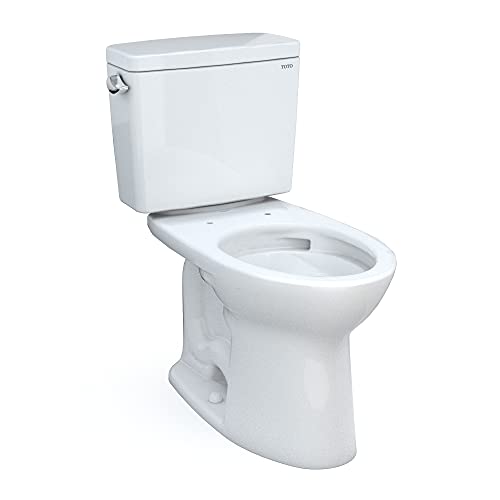
Premium toilet lines differ from budget models primarily in trapway and flush valve design. The TOTO Drake series uses a 3-inch flush valve compared to the 2-inch valves common in entry-level toilets, releasing water significantly faster and improving flush effectiveness. Similarly, the American Standard Champion 4 uses a fully glazed 2-3/8 inch trapway, one of the widest in residential toilets, which MaP testing at 1000 grams consistently demonstrates as clog-resistant.
For a detailed guide on choosing the right toilet based on flush performance, see our guide to best flushing toilets.
Residential water pressure should fall between 40 PSI and 80 PSI, with 60 PSI considered optimal by the International Plumbing Code. Pressure below 40 PSI causes weak toilet fills, poor shower performance, and slow faucet flow. Pressure above 80 PSI accelerates wear on flappers, supply lines, and appliance valves, and increases water hammer noise. A pressure-reducing valve (PRV) installs near the main shutoff to maintain safe levels in high-pressure municipal zones.
Testing home water pressure is straightforward. A threaded pressure gauge ($15-$25 at hardware stores) attaches to any hose bib or laundry valve. With all fixtures off, an accurate static pressure reading takes about 30 seconds. Pressure above 80 PSI is extremely common in homes near municipal pumping stations or at lower elevations than surrounding neighborhoods.
High water pressure has cascading effects homeowners often attribute to product defects:
A pressure-reducing valve (PRV) typically costs $50-$150 for the part, with professional installation adding $150-$400. Given that it protects all appliances and plumbing in the home, it is one of the highest-ROI preventive plumbing investments available to homeowners.
Gravity-fed toilets like the TOTO UltraMax II and Kohler Highline are engineered assuming normal supply pressure of 20-80 PSI. However, toilets fill faster and more completely at higher tank refill rates -- which is why in low-pressure situations (under 30 PSI), a pressure-assisted toilet from brands like Gerber or American Standard may actually flush more reliably than a gravity model.
Rough-in distance is the measurement from the finished wall behind a toilet to the center of the floor drain flange. The standard in North American homes built after roughly 1960 is 12 inches. Older homes frequently have 10-inch or 14-inch rough-ins. Buying a toilet with the wrong rough-in leaves the tank touching the wall or the bowl not reaching the flange, and neither is field-adjustable.
Measuring rough-in correctly takes less than two minutes. From the finished wall (not baseboard), measure horizontally to the center of the two floor bolts that secure the toilet to the flange. If there is an existing toilet, measure from the wall to the center of the side bolts (not the rear bolts, which are a different distance on two-piece toilets). Round to the nearest common size: 10, 12, or 14 inches.
| Rough-In | Prevalence | Compatible Models (Examples) | Check Price |
|---|---|---|---|
| 12 inch | ~85% of US homes | TOTO Drake, TOTO UltraMax II, Kohler Highline, American Standard Cadet 3, Woodbridge T-0001 | Check price |
| 10 inch | ~10% (older homes) | TOTO Drake (10-inch version), Kohler Cimarron (10-inch), American Standard Champion 4 (10-inch) | Check price |
| 14 inch | ~5% (older homes) | TOTO Drake (14-inch version), limited Kohler and American Standard SKUs | Check price |
Beyond rough-in, homeowners also need to confirm available floor-to-ceiling height (for elongated vs. round bowls), the direction the door swings (elongated bowls project 2-3 inches further from the wall than round bowls), and whether there is clearance for the tank lid when opening a side cabinet. These measurements prevent costly return shipping on large fixtures.
For a step-by-step approach to these measurements, see our dedicated article on how to measure toilet rough-in.
Most bathroom plumbing complaints fall into a small set of recurring categories. Diagnosing correctly before spending money on parts or contractors makes a significant difference.
A toilet that runs continuously is almost always a flapper or float problem. Add a few drops of food coloring to the tank (without flushing) and wait 10 minutes. If color appears in the bowl, the flapper is not sealing. Replace the flapper first ($5-$10). If the float is set too high, water flows into the overflow tube constantly -- adjust the float arm or cup until tank water sits 1 inch below the overflow tube top.
Single slow drain: almost always a localized clog in the trap or P-trap arm. A drain snake (hand auger) clears most clogs within 5-10 minutes. Multiple slow drains in one bathroom: indicates a partial blockage further down the branch drain line or a venting problem. Multiple slow drains throughout the home: main line blockage, requiring professional augering or hydro-jetting.
Water appearing only during or right after a flush indicates a failed wax ring. Water present between flushes suggests a cracked bowl or condensation on a cold toilet in a humid bathroom. Replacing a wax ring is a DIY job requiring toilet removal, re-seating, and bolt tightening -- typically 60-90 minutes with basic tools.
Weak flushing has several causes. Partially closed supply shut-off valve reduces fill rate. Clogged rim feed holes (the small holes under the bowl rim) reduce flow volume -- a dental pick and white vinegar address mineral buildup. A worn flapper that closes too quickly cuts the flush short. For toilets with MaP scores below 500 grams, the unit may simply lack sufficient flush capacity and replacement is the practical solution.
Before calling a plumber for a weak-flushing toilet, remove the tank lid and watch a full flush cycle. If the flapper drops before the tank is 75% empty, it is closing too early -- often because the lift chain has too much slack or the flapper is waterlogged. Adjust chain slack to 1/2 inch and replace flappers every 3-5 years preventively regardless of visible wear.
Water hammer -- the banging or thudding when a valve closes suddenly -- is caused by pressure waves traveling through pipe when flow stops abruptly. Solutions include water hammer arrestors ($15-$30 each, installed at the supply connections of washing machines and toilets), reducing overall supply pressure to under 60 PSI, or securing loose pipe runs with pipe hangers to prevent vibration amplification.
Water efficiency in bathroom plumbing is governed by three intersecting standards that every homeowner shopping for a new toilet should understand.
Federal law (Energy Policy Act of 1992) set the maximum flush volume for new toilets at 1.6 GPF. High-Efficiency Toilets (HETs) flush at 1.28 GPF or less. Ultra-High Efficiency Toilets (UHETs) flush at 1.0 GPF or less. Dual-flush toilets offer a partial flush (typically 0.8-1.1 GPF for liquid waste) and a full flush (1.28-1.6 GPF for solid waste). The Woodbridge T-0001 and TOTO Aquia IV are examples of dual-flush designs with strong owner satisfaction ratings.
The EPA WaterSense label certifies that a toilet flushes at 1.28 GPF or less AND meets minimum performance thresholds. WaterSense does not specify a performance score numerically -- it only requires that toilets pass a minimum bulk media test. This is where MaP testing becomes essential for differentiating performance within the WaterSense tier.
Maximum Performance (MaP) testing, conducted independently at map-testing.com, measures how many grams of soybean paste (a solid waste simulant) a toilet can flush in a single pass. Scores range from 250 grams (minimum for residential use) to 1000 grams (the MaP Premium benchmark). For everyday reliability, a score of 600 grams or higher is recommended. Toilets earning MaP Premium certification (1000g) include the TOTO Drake II (1.28 GPF), TOTO UltraMax II, American Standard Champion 4, and Kohler Cimarron with AquaPiston.
| Toilet Model | GPF | MaP Score | WaterSense | Bowl Shape | Check Price |
|---|---|---|---|---|---|
| TOTO Drake II | 1.28 | 1000g (MaP Premium) | Yes | Elongated | Check price |
| American Standard Champion 4 | 1.6 | 1000g (MaP Premium) | No (1.6 GPF) | Elongated | Check price |
| Kohler Cimarron (AquaPiston) | 1.28 | 1000g (MaP Premium) | Yes | Elongated / Round | Check price |
| TOTO Aquia IV | 1.0 / 0.8 | 800g (full flush) | Yes | Elongated | Check price |
| Swiss Madison Well Made Forever | 1.28 | 800g | Yes | Elongated | Check price |
| Gerber Viper | 1.28 | 1000g (MaP Premium) | Yes | Round / Elongated | Check price |
Many states and municipalities have adopted stricter efficiency requirements. California, Colorado, Georgia, and Texas each have regulations requiring 1.28 GPF or less in new construction or replacement installs. Some California water districts require 1.0 GPF or less. Before purchasing, verify local requirements rather than assuming federal minimums apply.
A common misconception is that lower GPF always means weaker flushing. The TOTO Drake series and Kohler Cimarron both flush at 1.28 GPF while achieving MaP Premium 1000g scores -- outperforming many 1.6 GPF toilets. Flush valve diameter, tower height, bowl design, and trapway geometry all matter more than the raw water volume number.
Plumbing codes govern what materials, configurations, and fixture ratings are permitted in residential construction and renovation. In the United States, most jurisdictions adopt the International Plumbing Code (IPC) or the Uniform Plumbing Code (UPC) as their base, then layer on state and local amendments. Not knowing which applies can result in failed inspections, voided insurance claims, or expensive rework.
The distinction between permit-required work and simple replacement is important. Moving a toilet even a few inches to improve layout requires cutting and re-sloping the drain line, which is permit work in virtually every jurisdiction. Swapping an existing toilet for a new one with the same rough-in is DIY-legal in most areas without a permit -- but always verify with the local building department first.
Skip-the-permit work on drain line modifications is one of the most common causes of deferred home sale complications. When buyers commission a sewer scope inspection during due diligence, improperly sloped or inadequately vented drain lines are flagged. Correcting code violations during a sale negotiation is far more expensive than pulling a permit during the original work.
The repair-versus-replace calculation depends on part availability, the age of the fixture, the severity of the problem, and whether upgrading would yield meaningful efficiency or performance gains.
Internal tank components (flapper, fill valve, handle) are worth replacing regardless of toilet age if the porcelain is in good condition. A $20-$40 rebuild kit can extend toilet life another 10-20 years. However, toilets manufactured before 1994 typically flush at 3.5-5.0 GPF -- replacing them with a modern 1.28 GPF WaterSense model saves approximately 16,500 gallons per person per year according to EPA estimates. That water savings typically offsets a mid-range toilet purchase within 2-4 years in areas with average water rates.
Compression-style shut-off valves (the oval-handled type common in homes built before 1990) should be replaced with quarter-turn ball valves during any bathroom remodel. They cost $10-$20 each and are one of the most reliable plumbing upgrades available. Corroded supply line braiding is another replacement trigger -- do not wait for a visible leak.
Cast iron drain lines from the mid-20th century can last 80-100 years in good conditions, but many are approaching end of life now. Signs of failure include persistent sewage odor from walls (indicating cracks), chronic slow drains that do not respond to augering (indicating interior scaling or belly in the pipe), or visible rust staining in cleanout access points. A sewer scope inspection ($150-$300) provides a definitive answer before committing to full drain line replacement.
For guidance on specific toilet models that balance durability and performance, see our overview of how long toilets last and our comparison of TOTO vs. Kohler reliability.
The standard rough-in distance is 12 inches, measured from the finished wall to the center of the floor drain flange. Older homes built before the 1960s may have 10-inch or 14-inch rough-ins. Always measure before purchasing a replacement toilet.
Add 10-15 drops of food coloring to the tank and wait 10-15 minutes without flushing. If color appears in the bowl, the flapper is not sealing properly. This phantom leak is one of the most common causes of high water bills in homes with older toilets.
EPA WaterSense certifies that a toilet uses 1.28 gallons per flush (GPF) or less and passes a minimum bulk media flush test. It does not guarantee a specific performance score. To compare performance within WaterSense-certified models, check MaP flush testing scores at map-testing.com.
A MaP score of 600 grams or higher is recommended for typical household use. MaP Premium certification requires 1000 grams -- the maximum tested -- and is achieved by toilets including the TOTO Drake II, Kohler Cimarron with AquaPiston, American Standard Champion 4, and Gerber Viper.
Gurgling typically indicates a partial venting problem. Negative pressure in the drain line pulls air through the toilet trap water when another fixture creates drain flow. Check that the roof vent stack is unobstructed, and consult a plumber if the problem persists, as insufficient venting can allow sewer gas into the home.
Water pressure above 80 PSI is considered excessive and accelerates wear on flappers, supply lines, appliance valves, and pipe joints. Most residential plumbing is rated for up to 80 PSI. A pressure-reducing valve (PRV) at the main shutoff reduces pressure to a safe 60 PSI target throughout the home.
Replacing a toilet in the same location with the same rough-in is a common DIY project requiring basic tools, a wax ring, and approximately 60-90 minutes. Moving a toilet or adding a new bathroom requires permit work in virtually all jurisdictions and typically requires a licensed plumber to ensure correct drain slope and venting.
Wax rings do not have a scheduled replacement interval -- they typically last as long as the toilet is in place and undisturbed. Replace the wax ring any time you remove the toilet for any reason, when you notice water at the base during or after flushing, or when you detect sewer odor near the toilet base.
PEX (cross-linked polyethylene) is flexible, freeze-resistant, and costs less per foot than copper. Copper is rigid, can be soldered for very reliable joints, and has a slightly longer track record of 70+ years of service. Both are excellent choices; PEX has become dominant in new residential construction since roughly 2010 due to lower installed cost and easier DIY handling.
Water hammer is caused by pressure waves when water flow stops abruptly -- most commonly when a fill valve or washing machine valve closes quickly. Fixes include installing water hammer arrestors at the affected fixture supply connections, reducing overall house water pressure to under 60 PSI, and securing loose pipe runs with pipe hangers to prevent vibration amplification.
A running toilet typically wastes 200-400 gallons per day, depending on the severity of the leak. At average US water rates of $0.006-$0.008 per gallon, that equates to $1.20-$3.20 per day or $440-$1,170 per year in water costs alone. A $5-$10 replacement flapper almost always resolves the problem.
Not necessarily. WaterSense certifies a toilet based on its full flush volume being 1.28 GPF or less and passing performance tests. Some dual-flush models use 1.6 GPF on the full flush and do not qualify. The TOTO Aquia IV and Woodbridge T-0001 are examples of dual-flush models that do carry WaterSense certification.
The International Plumbing Code (IPC) requires a minimum of 21 inches of clear space in front of a toilet. Many local codes and the International Residential Code (IRC) require 24 inches for residential bathrooms. The centerline of the toilet must also be at least 15 inches from any side wall or obstruction.
Common causes include a partially closed supply shut-off valve (turn it fully counterclockwise), a worn or malfunctioning fill valve that is not opening fully, or a float set too low that cuts off the fill cycle before the tank reaches its design level. Fill valve replacement is a straightforward DIY repair costing $10-$20 in parts.
Supply pipe lifespan varies by material: PEX 50+ years, copper 70+ years, CPVC 25-40 years, galvanized steel 20-50 years. Cast iron drain lines can last 80-100 years. Fixture components like flappers last 3-7 years, fill valves 5-10 years, and wax rings indefinitely as long as the toilet is not moved. Water quality, pressure, and usage frequency all affect actual service life.
Pressure-assisted toilets use compressed air stored in a sealed vessel inside the tank to forcefully eject waste -- producing a louder but more powerful flush. They perform better in low-pressure supply situations (under 30 PSI) and in commercial settings with heavy use. For most residential applications with normal pressure, high-quality gravity toilets like the TOTO Drake or Kohler Cimarron with MaP Premium ratings perform just as well with less noise and lower maintenance.
Yes. Hard water (above 7 grains per gallon, or 120 mg/L) deposits calcium and magnesium scale on fill valve seats, rim feed holes, and flush valve components. Scale buildup restricts water flow and causes flapper seats to seal improperly. Descaling with white vinegar annually and replacing flappers every 3-4 years in hard water areas reduces ongoing repair needs significantly.
From a water savings standpoint, switching from 1.6 to 1.28 GPF saves roughly 20% per flush -- significant over a year but not as dramatic as replacing a pre-1994 3.5-5.0 GPF toilet. The stronger financial case for upgrading a 1.6 GPF toilet is performance: a modern 1.28 GPF toilet with a MaP Premium score will typically flush more reliably than an older 1.6 GPF unit with worn internals and a smaller flush valve.
Understanding bathroom plumbing does not require a contractor's license -- it requires knowing how the two-system model (supply and DWV) works, what each toilet component does, and how to read efficiency data like GPF and MaP scores. Homeowners who can diagnose a running toilet, measure a rough-in correctly, and interpret WaterSense certification will make better fixture choices, avoid unnecessary service calls, and maintain their plumbing confidently for decades. For specific toilet recommendations, our best flushing toilets guide applies these standards to the top-rated models currently available.
When you flush, where does it go? Follow toilet water from the bowl through the trap, drain, and stack to a septic…
Read the guideDo toilets need electricity to flush? Most do not. Learn which toilets use power, how a standard flush works, and how to…
Read the guideFind out how many gallons per flush an old toilet really uses, how to check your own tank, and how much water…
Read the guide