A toilet that flushes but then sits there empty, or fills painfully slowly, or fills the tank but leaves the bowl too low, is one of the more confusing toilet problems because the flush itself looked fine. The reassuring part is that the refill stage is a small, self-contained system, and almost every cause is a cheap part or a free adjustment. When you flush, the flapper opens and the tank dumps its water, the flapper drops back to seal, and the fill valve senses the empty tank and opens to refill it. At the same time a thin refill tube squirts a measured stream down the overflow to restore the standing water in the bowl. When the toilet will not fill, one of those steps has stalled, and the whole job is figuring out which one.
This guide is built the way we research everything on this site. We do not physically install toilets or run flush tests in a lab. Instead we compare manufacturer flush specifications, independent MaP (Maximum Performance) flush-test scores that measure how many grams of waste a toilet clears in one flush, EPA WaterSense water-efficiency standards, and the repair patterns that appear consistently across thousands of verified owner reviews. That combination is what lets us put these fixes in a reliable order, beginning with the no-cost checks that fix the majority of cases and ending with the point at which a replacement toilet genuinely is the smarter call.
Before you touch anything. Take the tank lid off and flush once while watching from above. Note whether the fill valve hisses and water flows in at all, where the level stops if it does fill, whether the float rises with the water, and whether the thin refill tube is squirting into the overflow pipe. Thirty seconds of watching tells you which fix below to start with and saves an hour of guessing.
Why will my toilet not fill up after I flush it?
A toilet that flushes but will not refill has a problem in the refill system, not the flush. The most common causes are a partly or fully closed water supply valve, a stuck or worn-out fill valve, a float set too low or jammed, a refill tube that has fallen out of the overflow, or a flapper that will not seal so water cannot stay in the tank. Check the supply valve first, then the fill valve and float inside the tank.
The word "fill" actually covers two separate problems, and telling them apart is the first step. If the tank itself will not fill, the issue is upstream: water is not getting into the tank, or it is leaking back out as fast as it comes in. That points at the supply valve, the fill valve, the float, or a flapper that will not seal. If the tank fills normally but the bowl water sits too low after the flush, the issue is the refill tube that feeds the bowl, not the tank at all. Decide which of these you have by watching one flush from above, then jump to the matching fix below.
How do I diagnose why my toilet will not fill?
Lift the tank lid and flush once while watching. First confirm water enters the tank at all: if nothing flows, the supply valve is closed or the fill valve is dead. If water trickles in slowly, the supply valve is partly closed or the fill valve is clogged. If the tank fills but stops too low, the float is set low. If the tank empties back out, the flapper is not sealing. If the tank fills fine but the bowl is low, the refill tube has slipped out.
Diagnosis is a single observed flush plus one easy check. Flush and watch from above. No water entering at all sends you to the supply valve and fill valve. A weak trickle sends you to a partly closed valve or a debris-clogged fill valve. A tank that fills but stops below the line sends you to the float. A tank that fills and then slowly drains back down, with the fill valve cycling on every few minutes, sends you to the flapper. And a full tank with a low bowl sends you to the refill tube. Once you have matched your symptom, the fix is usually a few minutes of work or a cheap part. Reach behind the toilet first and confirm the shutoff valve is open, because that one check resolves a surprising share of "won't fill" calls on its own.
Fix 1: Confirm the water supply valve is fully open
Always start here, because it is free, it takes ten seconds, and it is one of the most common reasons a toilet stops filling. The supply valve is the small shutoff on the wall or floor behind the toilet where the flexible supply line connects. It feeds water into the fill valve in the tank. If it has been turned off after a repair, bumped closed by a mop or a box stored behind the toilet, or only opened part way, the tank will not refill or will refill far too slowly.
Turn the valve handle fully counterclockwise to open it all the way. Most of these valves are quarter-turn or multi-turn, and they should open with light hand pressure. After opening it, flush and watch the tank fill. If water now rushes in and the tank fills to the line, you are done. If the valve was already open and water still will not enter, the supply line could be kinked or the fill valve itself has failed, which moves you to the next fixes. Older multi-turn valves can also seize or clog internally with mineral debris over years of never being touched, so if the handle turns but no water comes through, the valve may need replacing.
Tip. If you cannot tell whether the supply valve is open, briefly disconnect the supply line at the tank, point it into a bucket, and crack the valve. A strong gush means the valve and line are fine and the problem is inside the tank. A weak dribble or nothing means the valve or line is the restriction. Reconnect snugly before testing the flush.
Fix 2: Check the float so the fill valve refills to the line
If water enters the tank but stops well below the molded fill line, the float is telling the fill valve to shut off too early. The float is the part that senses the water level and closes the valve when the tank is full. On modern cup-style fill valves it is a plastic cylinder that rides up and down the valve body; on older toilets it is a ball on the end of a metal arm. A float set too low starves the tank, and since the flush uses the volume of water in the tank, a low tank means a weak or incomplete flush even though nothing else is wrong.
Find the molded fill line stamped on the inside back wall of the tank or marked on the overflow tube. The water should rest right at that line, usually about an inch below the top of the overflow. To raise the level on a cup-style valve, turn the adjustment screw on top or twist the float clip to move the cup higher; on a ball-and-arm float, gently bend the arm upward or use its adjustment clip. Flush and recheck. Also make sure the float is not physically jammed against the tank wall, a stuck flapper chain, or a part that has shifted, because a snagged float cannot rise and the valve never refills to the line. For a deeper walkthrough of restoring power once the level is right, our guide to how to improve toilet flush power covers seven proven fixes in order.
Tip. Set the float so the valve shuts off exactly at the fill line, not above it. Water above the line just spills down the overflow tube and wastes water, and it can keep the fill valve cycling. The fill line is the engineered maximum for that tank. Hit it precisely.
Fix 3: Clean or replace a failed fill valve
If the supply is open and the float is set correctly but the tank still fills slowly, intermittently, or not at all, the fill valve itself is the suspect. The fill valve, sometimes called the ballcock, is the tall assembly on the left side of the tank that opens to refill and shuts off at the set level. Over the years its internal seal and cap collect mineral debris and sediment, which can clog the intake so water only trickles, or wear out so the valve will not open or will not shut off cleanly.
First try cleaning it. Shut the supply, remove the cap on top of the fill valve following its design, and flush a little water through with the supply briefly on to wash out grit, then reassemble. A clogged cap is a common cause of a slow refill and costs nothing to clear. If cleaning does not restore a fast, full refill, replace the whole fill valve. Modern universal fill valves are inexpensive, install in about fifteen minutes with the water shut off, and instantly cure a slow, noisy, or dead refill. A worn fill valve that hums, runs constantly, or refills in fits and starts is past cleaning and should simply be swapped. A weak refill that drags the next flush down can read as a chronic flush complaint, so if yours feels gutless, see our weak toilet flush fix guide for the full diagnostic.
Fix 4: Inspect the flapper so the tank can hold water
Here is the trap many people fall into: the tank seems like it will not fill, but it is actually filling and then quietly leaking back out through a flapper that will not seal. The flapper is the rubber or silicone seal at the bottom of the tank that opens to flush and drops to reseal. If it is warped, stiff, cracked or crusted with minerals, or if the lift chain is too long and slips under it to prop it open, water escapes into the bowl as fast as the fill valve adds it. The fill valve keeps cycling on, the tank never reaches a stable level, and it looks like a refill failure.
Watch the tank after it appears to fill. If the water level slowly drops and the fill valve clicks back on every few minutes with no one flushing, the flapper is leaking. Confirm it with a dye test: add a few drops of food coloring to the tank, wait fifteen minutes without flushing, and if color appears in the bowl, the flapper is not sealing. Replace it, since flappers are inexpensive, mostly universal, and a two-minute swap with the water shut off. While you are there, set the lift chain with only slight slack so it cannot slip under the flapper. A flapper leak is also the classic cause of a phantom run, and it can masquerade as a recurring problem when the real issue is a slow tank leak, similar to the patterns we cover in why does my toilet keep clogging.
Why does my toilet tank fill but the bowl water stays low?
When the tank refills normally but the bowl water sits too low after a flush, the small refill tube has slipped out of the overflow pipe. That thin tube squirts a measured stream into the overflow to restore the standing water in the bowl. If it falls out or points the wrong way, the bowl never gets its refill. Clip it back so it discharges into the overflow tube, not into the tank.
This is a distinct problem from a tank that will not fill, and it is one of the easiest to fix. The fill valve has two outputs: most of its water refills the tank, and a thin flexible refill tube diverts a small stream into the top of the overflow pipe to refill the bowl after the flush. If that tube has slipped off, fallen into the tank, or is aimed so its water lands in the tank instead of down the overflow, the bowl will sit low even though the tank is full. A low bowl can also let sewer gas through and makes the next flush start with too little water.
Reattach the refill tube so it discharges into the overflow pipe, using the small angled clip that most tanks include to hold it in place. Make sure the tip sits above the rim of the overflow and points down into it, not below the waterline, which can cause a siphon that wastes water. Flush once and watch the bowl refill to its normal standing level. If the tube is intact and positioned right but the bowl still fills low, the fill valve may not be delivering enough refill flow, which points back to a clogged or worn fill valve from Fix 3.
Tip. Do not push the refill tube down inside the overflow pipe below the water level. It should sit just above the top of the overflow and aim into it. A tube jammed deep into the overflow can create a constant siphon that slowly drains the tank and keeps the fill valve running, which then looks like a separate refill problem.
Fix 5: Rule out low household water pressure
If every part inside the tank checks out but the refill is still slow everywhere in the house, the cause may be upstream of the toilet entirely. Low incoming water pressure, a partly closed main shutoff, a clogged supply line, or work being done on the municipal supply can all slow a tank refill. The giveaway is that other fixtures are also weak: faucets dribble, the shower loses pressure, and the toilet is just one symptom of a whole-house issue rather than its own broken part.
Check a nearby sink at full open. If it also runs weak, the problem is system-wide and the toilet is fine. Confirm the main shutoff for the house is fully open, check for a partly closed valve at the meter, and inspect the toilet supply line for kinks or a crimped braided hose. If the whole house is low and nothing is closed, you may have a pressure or supply issue worth a plumber's look. But if only the toilet is slow and every faucet runs strong, the fault is in the toilet, and you should return to the supply valve, fill valve and float checks above.
Editorial TakeThe single most common reason we see a toilet "won't fill" is a supply valve that someone closed during a repair and forgot to reopen, followed closely by a worn fill valve that just needs a fifteen-minute swap. Work in order and resist the urge to buy a new toilet over a refill problem. The fill valve, flapper, float and refill tube together cost a fraction of a new fixture and cure the overwhelming majority of these cases. A toilet almost never needs replacing because it will not fill.
When does a toilet that will not fill actually need replacing?
A toilet rarely needs replacing because it will not fill, since the refill system is all cheap, replaceable parts. Replace the toilet only when the tank or bowl is cracked, the porcelain is leaking, or the fixture is so old that it pairs a worn-out tank with a weak, water-wasting bowl. At that point choose a model with a MaP score of 800 grams or higher and EPA WaterSense certification.
The refill mechanism is intentionally modular: the fill valve, flapper, float and refill tube are all standardized parts you can replace for very little money, so a refill fault almost never justifies a new toilet. The honest case for replacing is different. If the tank or bowl has a hairline crack that leaks, if the porcelain itself is failing, or if you are dealing with an aging 3.5 GPF or first-generation low-flow toilet that already flushes weakly and you are tired of nursing it, then replacing the whole fixture makes sense. In that scenario you are not really fixing a fill problem, you are upgrading a worn-out toilet, and the MaP score becomes your buying signal. For the full ranked list, see our roundup of the best flushing toilets.
If you do replace, choose for flush power and efficiency
When the decision is to replace, choose specifically for clearing power and water efficiency together. Look for a high MaP score (aim for 800 grams or higher), a large trapway (2 inches or more), a reliable fill and flush mechanism, and EPA WaterSense certification so you get strong performance and low water use at once. The three models below are consistent strong performers across published specifications and aggregated owner feedback, and they cover the most common needs.
Best Overall Flush
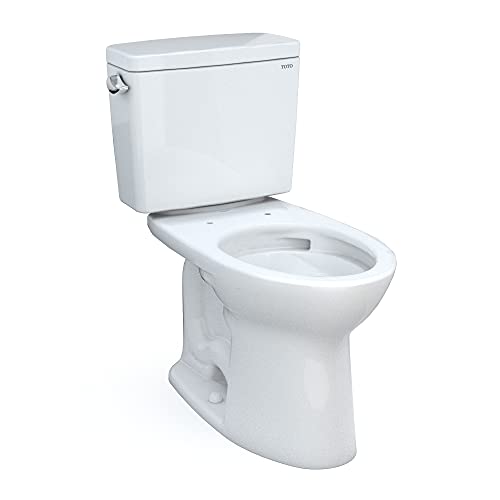
TOTO Drake II
Powerful single-flush clearing for daily use
The Drake II pairs a top-tier MaP score with TOTO's Double Cyclone flush and a 1.28 GPF rating, and its fill and flush parts are widely stocked, so refills stay fast and quiet for years.
Check price on Amazon
Strongest Power
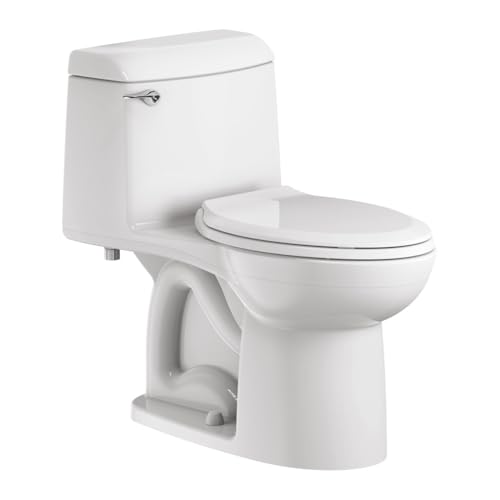
American Standard Champion 4
High-traffic bathrooms that fight clogs
A wide 2-3/8 inch trapway and a large flush valve give the Champion 4 a forceful, clog-resistant flush, making it a strong upgrade when an old toilet is worn out and slow to refill.
Check price on Amazon
Best Value Upgrade
Kohler Cimarron
A reliable, efficient replacement on a budget
Kohler's AquaPiston canister flush moves a fast, full volume at 1.28 GPF, and the Cimarron's standard fill valve and flapper are easy to source, giving a dependable refill and a strong rinse.
Check price on Amazon
Other proven options worth a look include the one-piece TOTO UltraMax II for a seamless easy-clean body, the Kohler Highline for wide availability and parts support, the dual-flush TOTO Aquia IV for water savings, and value-focused Woodbridge T-0019, Swiss Madison St. Tropez and Gerber Avalanche models that deliver strong flush specs at a lower position. Whatever you choose, confirm the rough-in distance matches your existing toilet before ordering.
Editorial TakeIf you are buying a new toilet anyway, do not pick on looks alone. The spec that predicts whether you will be happy is the MaP score, and for a primary bathroom we steer people to 800 grams or higher every time. Just as important for a "won't fill" headache, choose a brand with stocked, standard fill valves and flappers, which is why TOTO, Kohler and American Standard keep coming up. A toilet whose parts you can replace in fifteen minutes will outlast a stylish bowl with proprietary internals you cannot find when one fails.
How to keep the refill working once you have fixed it
Once the tank and bowl refill properly, a little maintenance keeps them that way, especially in hard-water homes where mineral buildup is the slow enemy of fill valves and flappers alike.
Service the fill valve and flapper before they fail
Fill valves and flappers are wear items. A flapper that is a few years old and starting to stiffen, or a fill valve that has begun to hum or refill slowly, is cheap insurance to swap on a quiet weekend rather than during a no-water emergency. A fresh fill valve and a correctly seating flapper keep the tank refilling fast and holding water between flushes.
Flush the supply line and valve periodically
Sediment collects at the supply valve and in the fill valve cap over time. Once a year, with the supply briefly off, clean the fill valve cap and confirm the shutoff valve still opens and closes smoothly. In very hard-water areas this single habit prevents the gradual slow-refill that sends people searching for problems that are really just scale.
Check the refill tube position after any tank work
Any time you work in the tank, confirm the thin refill tube is clipped into the overflow and pointed down into it, sitting just above the waterline. It is easy to knock loose, and a displaced refill tube is the most common reason a perfectly good tank leaves the bowl water low after the next flush.
Keep reading
Related guides
FAQ
Frequently asked questions
? Why will my toilet not fill back up after flushing?
The refill side of the toilet has stalled. The most common reasons are a supply valve that is closed or partly closed, a worn or clogged fill valve, a float set too low, or a flapper that will not seal so the tank cannot hold water. Lift the lid, flush once, and watch from above to see which step has failed, then start with the supply valve since it is the fastest free check.
? Why is the toilet tank filling so slowly?
A slow refill usually means a partly closed supply valve or a fill valve clogged with sediment. Open the wall valve fully counterclockwise first, then shut the water off and clean the cap on top of the fill valve to wash out grit. If it is still slow after cleaning, the fill valve is worn and should be replaced, which is an inexpensive fifteen-minute swap.
? The tank fills but the bowl water is low. What is wrong?
The thin refill tube has slipped out of the overflow pipe. That tube squirts a small stream into the overflow to restore the standing water in the bowl after each flush. Clip it back so it discharges down into the overflow tube, with the tip just above the waterline, not below it. The bowl should refill to its normal level on the next flush.
? Why does my fill valve keep running and never shut off?
A fill valve that runs constantly is usually leaking water back out faster than it can fill, which is a flapper that will not seal, or the float is set so high that water spills down the overflow and the valve never satisfies. Check the flapper with a dye test, set the float so the valve shuts off at the fill line, and make sure the refill tube is not siphoning. If the valve still runs, replace it.
? Could a closed water valve be why my toilet will not fill?
Yes, and it is one of the most common causes. The shutoff valve on the wall or floor behind the toilet should be turned fully counterclockwise to open. It is often left closed or only part way open after a repair, or bumped shut by something stored behind the toilet. Open it all the way and confirm water rushes in and fills to the line.
? How do I know if my fill valve is bad?
A bad fill valve fills the tank slowly, refills in fits and starts, hums or whistles, runs constantly, or will not open at all even with the supply on and the float set correctly. Cleaning the cap clears a clog, but a valve that still misbehaves after cleaning is worn out. Modern universal fill valves are cheap and install in about fifteen minutes with the water off.
? Why does the toilet fill but then slowly drain back down?
The flapper is not sealing, so water leaks from the tank into the bowl as fast as the fill valve adds it, and the valve cycles back on every few minutes. Confirm it with a dye test by adding food coloring to the tank and waiting fifteen minutes without flushing. If color reaches the bowl, replace the flapper and set the lift chain with only slight slack so it cannot prop the flapper open.
? Where is the float and how do I adjust it?
The float senses the water level and shuts the fill valve when the tank is full. On modern fill valves it is a plastic cup riding the valve body; on older toilets it is a ball on a metal arm. Raise it to fill higher by turning the adjustment screw or twisting the float clip on a cup style, or gently bending the arm up on a ball style, until the water rests right at the molded fill line.
? Can low water pressure stop my toilet from filling?
Yes. Low incoming pressure, a partly closed main shutoff, or a kinked supply line can all slow or stop a refill. The tell is that other fixtures are weak too. Check a nearby faucet at full open: if it also dribbles, the problem is system-wide and the toilet is fine. If only the toilet is slow and faucets run strong, the fault is in the tank parts or the supply valve.
? What is the refill tube and where should it point?
The refill tube is the thin flexible hose that runs from the fill valve to the overflow pipe. It diverts a small stream of water down the overflow to refill the bowl after each flush. It should clip to the top of the overflow and point down into it, with the tip just above the waterline. If it falls out or aims into the tank instead, the bowl water will sit too low.
? Why is my toilet bowl water too low after every flush?
A consistently low bowl after each flush points to the refill tube being displaced or the fill valve not sending enough refill flow. Reseat the refill tube into the overflow first. If it is positioned correctly and the bowl still fills low, clean or replace the fill valve, since a clogged or worn valve may not deliver enough water to the bowl side of the system.
? Will a toilet that will not fill ever need full replacement?
Rarely. The refill system is all cheap, standard parts, so a fill fault almost never justifies a new toilet. Replace the fixture only if the tank or bowl is cracked and leaking, the porcelain is failing, or it is an old weak-flushing model you are ready to upgrade anyway. In that case choose a MaP score of 800 grams or higher and EPA WaterSense certification.
? How long should a toilet tank take to refill?
A healthy tank with a modern fill valve and a fully open supply valve usually refills in about sixty to ninety seconds, depending on water pressure. If yours takes several minutes, the supply valve is partly closed, the fill valve is clogged or worn, or household pressure is low. A refill that drags out is worth diagnosing because it leaves the next flush starved if you flush again quickly.
? What is a good MaP score if I decide to replace the toilet?
MaP (Maximum Performance) testing reports how many grams of solid waste a toilet clears in a single flush. A score of 600 grams handles an average household, 800 grams is strong, and 1000 grams is the maximum for a residential gravity toilet. For a primary or high-traffic bathroom, aim for 800 grams or higher so a full tank always clears the bowl in one flush.
? Can a kinked supply line stop the tank from filling?
Yes. The braided or vinyl supply line that runs from the wall valve to the tank can crimp or kink, especially if the toilet was moved or the line was installed too long. A kink restricts flow and slows or stops the refill. Straighten it, or replace a crimped line with a fresh braided stainless supply hose, which is inexpensive and a common cause of a mysterious slow fill.
? Is a higher GPF toilet less likely to have fill problems?
No. Fill problems come from the supply valve, fill valve, float, flapper and refill tube, not from the flush volume. Modern 1.28 GPF WaterSense toilets like the TOTO Drake II use the same kind of standard, reliable fill hardware as older high-volume models. Choose by MaP score for flush power and by parts availability for easy refill repairs, not by gallons per flush.
? Why does my toilet fill, stop, then start again on its own?
A fill valve that turns on by itself between flushes, called ghost flushing, means water is slowly leaking out of the tank, almost always through a flapper that no longer seals. The dropping level triggers the valve to top off the tank. Replace the flapper and confirm the refill tube is not siphoning into the overflow below the waterline, and the cycling will stop.
? Which brands are most reliable if I replace the toilet?
TOTO, Kohler and American Standard lead for flush performance, parts availability and warranty support, which is why they appear most across strong aggregated owner reviews and make refill repairs easy with standard internals. Woodbridge, Swiss Madison and Gerber offer competitive flush specs at lower positions if value is the priority. For any brand, prioritize a MaP score of 800 grams or higher and EPA WaterSense certification.
Sources
- EPA WaterSense, epa.gov/watersense
- MaP (Maximum Performance) flush testing, map-testing.com
- Manufacturer published specifications (TOTO, Kohler, American Standard)
Our Verdict
A toilet that will not fill after flushing is almost always a quick, cheap fix rather than a dead fixture, because the entire refill system is made of standard, replaceable parts. Lift the lid and work in order: open the supply valve fully, set the float to the fill line, clean or replace the fill valve, replace a flapper that will not seal, and reseat the refill tube if the bowl sits low. That sequence solves the large majority of cases for little or no money, and low household water pressure explains most of the rest. A refill fault almost never justifies a new toilet. Replace the fixture only if the porcelain is cracked or you are upgrading a worn-out weak flusher anyway, and when you do, choose a high-MaP, WaterSense-certified model like the TOTO Drake II, American Standard Champion 4 or Kohler Cimarron. Diagnose before you replace, and your money goes to the real problem.